a & p ch 3 : cells
 Call Kai
 Learn
Learn Practice Test
 Spaced Repetition
 Match
Match Flashcards
 Knowt Play
1/36

There's no tags or description
Looks like no tags are added yet.
Name | Mastery | Learn | Test | Matching | Spaced | Call with Kai | Chat |
|---|
No analytics yet
Send a link to your students to track their progress
37 Terms
what is cell theory (3 things)
cell is smallest unit of life
all organisms are made of one or more cells
cells arise only from other cells
how many different types of cells are there
over 250
are phosphate heads hydrophobic or hydrophilic
hydrophilic
are phosphate tails hydrophobic or hydrophilic
hydrophobic
what allows for cells to adhere and communicate to other cells
tight junctions
desmosomes
gap junctions
what is a tight junction
proteins on adjacent cells fuse to form a tight, waterproof junction that encircles the whole cell and allows for connection.
prevents fluids and molecules from moving between cells
what is a desmosome
rivet-like junctions formed with linker proteins lock with other desmosomes; have an appearance of a zipper
helps keep cells from tearing apart
what is a gap junction
transmembrane proteins form tunnels that allow molecules to pass between cells
allows signals to be shared quickly from one cell to another
what is passive transport?
no energy required for transport across the membrane
what is active transport?
ATP is needed for transport across the membrane
what is diffusion
molecule movement from high to low concentration
what are 3 things that can speed up diffusion?
the concentration between two areas
molecule size (bigger is slower, smaller is faster)
temperature; higher temps increase energy which makes diffusion faster
when does a system reach equilibrium
when there is no net movement of molecules in one direction
what is facilitated diffusion
water soluble and large molecules needing help crossing the membrane
what is simple diffusion
lipid soluble molecules and small molecules can cross the membrane with no help
what are 2 ways molecules can be passed through the membrane in facilitated diffusion
through carriers; substances binding to protein carriers
channel diffusion; substances move through water filled channels

what does the sodium-potassium pump do?
moves 3 NA+ out of the cell and 2 K+ into the cell against (up) the concentration gradient
ATP is used to move the substances in and out of the cell
affinity (shape) of the protein changes to fit thee NA or the K in the carrier
what is osmolarity
total concentration of all solute particles
what is tonicity
ability of a solution to change the shape of cells by altering their internal water volume
what is an isotonic solution
same concentration of solute and solvent in and out the cell. equal.

what is a hyportonic solution
higher concentration inside the cell, causing it to grow and potentially lyse.
water flows into the cell causing it to grow.

what is a hypertonic solution
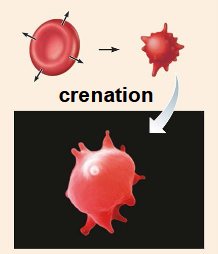
higher concentration outside the cell, causing water to be pulled out of the cell and shrink (crenation)
what is a symporter
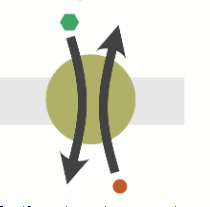
transport molecules the same direction

what is an antiporter
transports molecules in opposite direction
what is vesicular transport
moves large substances or large amount of substances across the membrane in vesicles (membrane sacs)
what do lysosomes do
contain digestive enzymes
digest bacterias, viruses and toxins
what do peroxisomes do
neutralize toxins,
what are the mitosis phases
prophase
metaphase
anaphase
telophase
what is cytokinesis
division of the cytoplasm, after telophase
what is phase g1
growth phase; restriction point
what is S phase
growth and DNA synthesis
what is g2 phase
growth and final prep for division; M checkpoint
what are the 3 phases of transcription
initiation
elongation
termination
what is initiation phase
RNA polymerase separates DNA strands
what is elongation phase
RNA polymerase creates DNA strands based off of different codons
what is termination phase
when RNA polymerase hits a STOP codon, it stops transcription
what is translation ?
protein synthesis where language of nucleic acid base codon is translated into protein (amino acid) sequences