Gen Chem Chapters 1-3 Exam
 Call Kai
 Learn
Learn Practice Test
 Spaced Repetition
 Match
Match Flashcards
 Knowt Play
1/56

There's no tags or description
Looks like no tags are added yet.
Name | Mastery | Learn | Test | Matching | Spaced | Call with Kai | Chat |
|---|
No analytics yet
Send a link to your students to track their progress
57 Terms
Chemistry is the study of?
Matter and its Properties
What is Matter?
Anything that has mass and takes up space. Basically they physical material that is all around us.
What are Properties?
Properties of matter are characteristics that help us identify the substance. These include: size, color, flammability, reactivity.
What are physical properties of matter?
displayed without a change in chemical composition. such as:
temperature where phases changes occur (boiling point, melting point, sublimation point)
color
odor
size
density
malleability and ductility
compressibility
What are chemical properties of matter?
displayed during a chemical change (change in composition). such as:
flammability
stability
acidity
toxicity
corrosiveness
What are Physical Properties?
Characteristics of matter that are not associated with the matter changing chemical composition. Such as:
Color
Odor
Size
Density
Temperature
Electrical Conductivity
Boiling Point
Freezing Point
What are Physical Changes?
Changes that can occur to matter that do NOT affect the chemical nature of the matter. Such as:
Freezing
Melting
Dissolving
Cutting up the objects into smaller pieces
Warming or cooling the object
Changing the objects shape
NOTE!!
SOME Physical Properties are not observed unless the substance is undergoing a Physical CHANGE
What are Chemical Properties?
Characteristics of matter that are displayed when matter changing chemical composition. Such as:
Flammability
Reactivity
Stability
Acidity
Temperature of thermal decomposition
What are Chemical Changes?
Changes that ALWAYS result in one or more types of matter that are different than what you had before. Such as:
Burning
Chemical Reaction
Wait until decomposition occurs spontaneously
Heat added until decomposition noted
Physical Properties:
Red
Shiney
Density (slightly less dense than water)
85% is water
Physical Changes:
Dehydrating
Cutting
Juicing
Chemical Properties:
Easily Oxidized
Rots Quickly
Flammable
Acidic
Chemical Changes:
Oxidation
Burns after water is removed
Reacts with bases to neutralize them
States of Matter (Physical Property)
Solid
Liquid
Gas
States of Matter: SOLID
Molecular Spacing:
Very closely spaced
Molecules DO NOT move past each other
Compressible?
NO
Flow? (Assume Shape of Container?)
NO
States of Matter: LIQUID
Molecular Spacing:
Very closely spaced
Molecules DO move past each other (packed jr. high hallway)
Compressible?
NO
Flow? (Assume Shape of Container?)
YES
States of Matter: GAS
Molecular Spacing:
Widely spaced
Molecules move independently (kansas)
Compressible?
YES
Flow? (Assume Shape of Container?)
YES
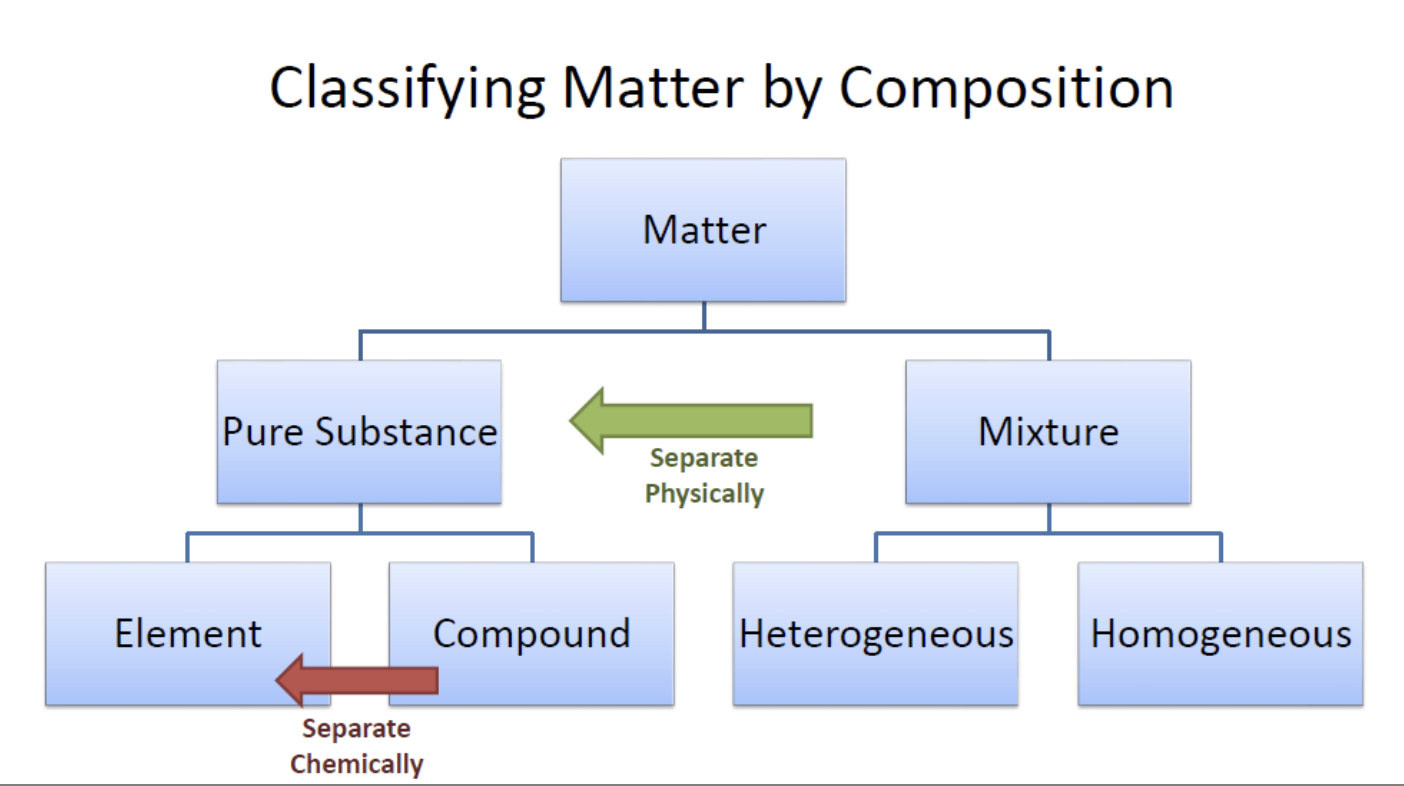
Classifying Matter by Composition
Classifying matter based on its composition involves categorizing substances into pure substances, which can be elements or compounds, and mixtures, which can be homogeneous or heterogeneous.
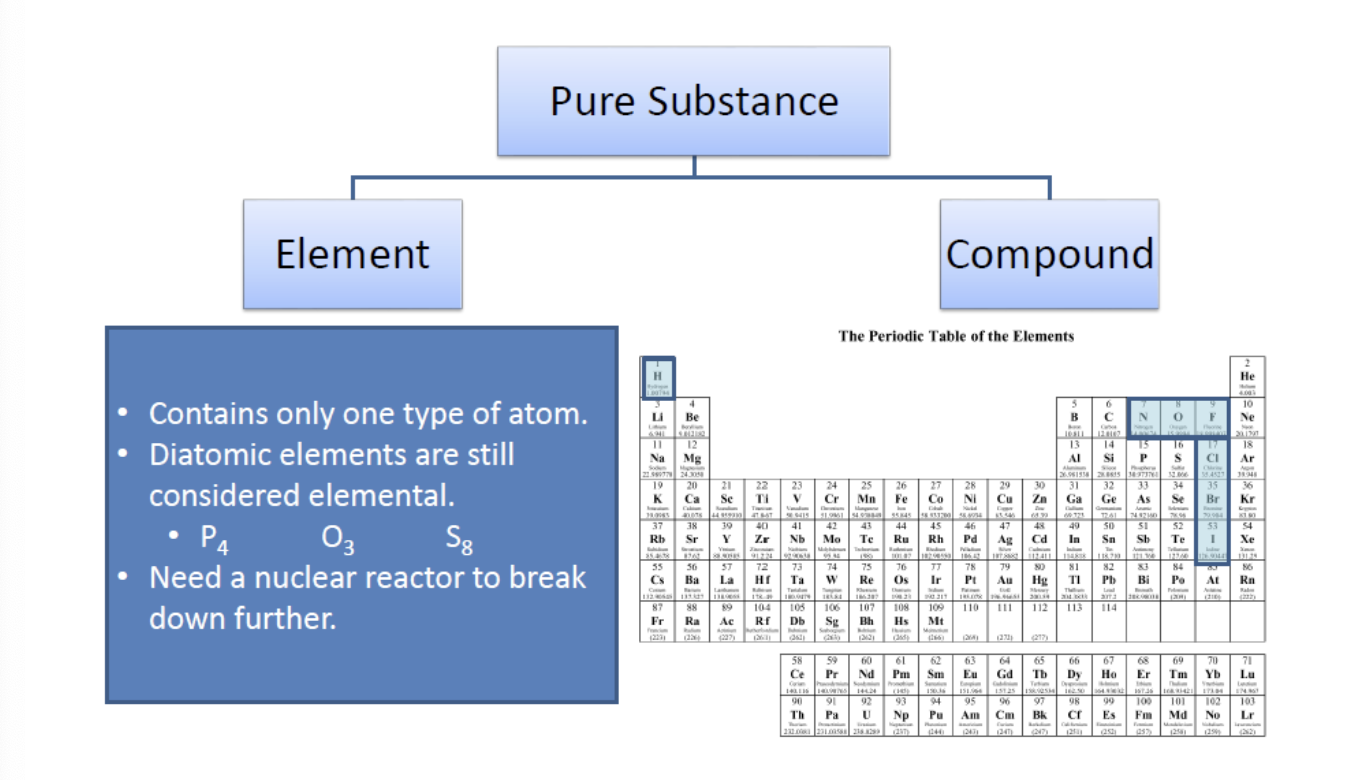
Pure Substance (Element and Compound)
Contains only one type of atom
Diatomic elements are still considered elemental
P4, O3, S8
Need a nuclear reactor to break down further

Pure Substance (Compound)
Contains more than one type of atom, but the atoms must be separated through chemical means
Each unit in this substance is the same, with the same atoms bonded in the same way
Mixtures (Homogeneous and Heterogeneous)
Homogeneous:
Mixed on the molecular level
Same composition throughout
EX (Saltwater, Air, Vinegar, Steel, Black Coffee)
Heterogeneous:
Often, you can see the components
Composition varies from one area to another
EX (Oil and Water, Salad, Chicken Noodle Soup, Sand and Water, Pizza)

Homogeneous Mixture: Aqueous Solution
Awuenous (aq): Dissolved in water
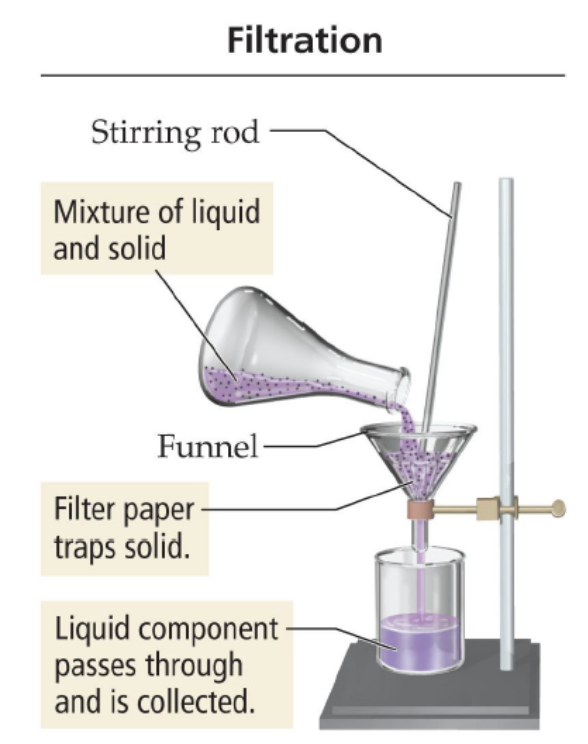
What are the differences in components?
State of matter (solid and liquid)
NOTE!!
All substances of the same state will stay together. You may still need to separate further to get to pure substances/
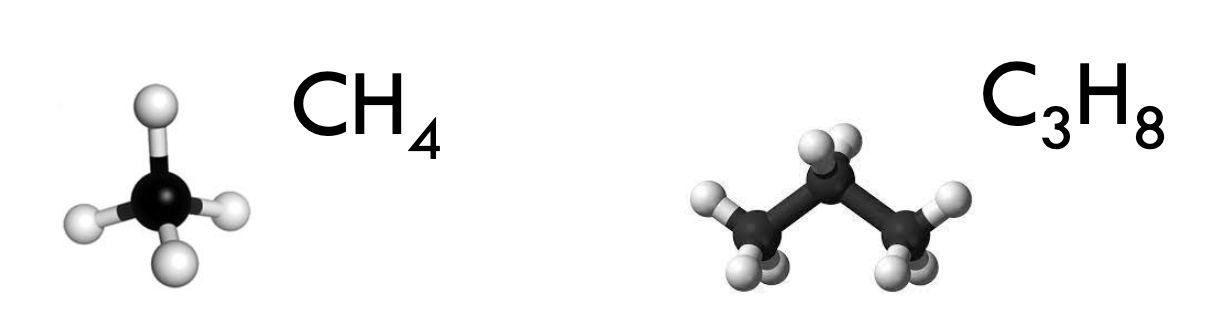
Chemical Notation
Elements are identified by their symbols which are one or two letters long.
The first letter is ALWAYS capitalized and is the ONLY letter capitalized in a chemical symbol
Elements bond together to form compounds
The compound will have unique chemical and physical properties
Writing Reactions
Reactants → Products (Read this arrow as “yields” or “forms”)
Chemical: CH4(g) + 02(g) → CO2(g) + H20(g)
Physical: (physical changes are also sometimes described using reactions)
H20(I) → H20(g) = boiling
H20(I) → H20(s) = freezing
C6H12O6(s) → C6H12O6 (aq) = dissolving
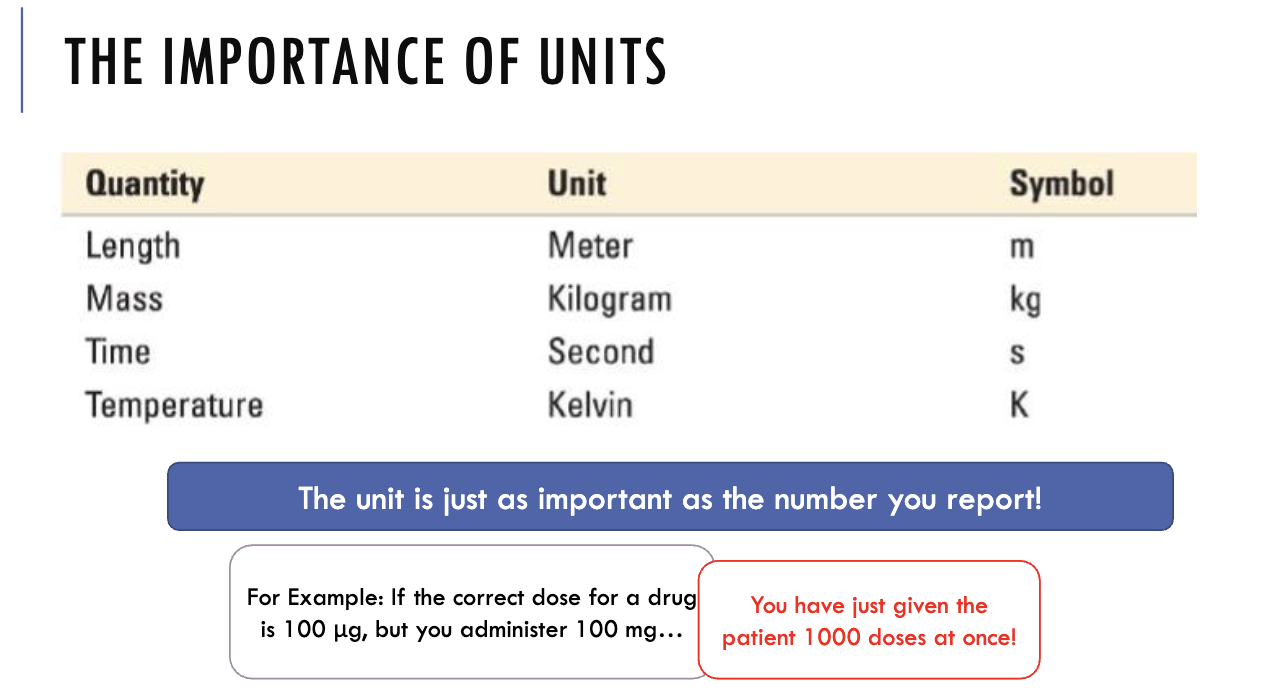
The importance of units
The unit is just as important as the number you report!
Scientific Notation
Large numbers in standard notation always have POSITIVE EXPONENTS:
4,605 = 4.605 × 10³
46,052,222 = 4.6052222 × 10^7
Small numbers in standard notation always have NEGATIVE EXPONENTS:
.0258 = 2.58 × 10^-2
.0000258 = 2.58 × 10^-5

Prefixes and Scientific Notation
Often, we use a prefix in front of a metric unit to replace the “x10” part of a large or small number. For example:
14 × 10³ g → 14 kg
14 × 10^-6 g → 14 μg
14 × 10^-3 g → 14 mg
Note: the portion of the number in green is directly replaced by the symbol for the prefix
Prefixes you need to memorize!!
We will begin to use these prefixes to MAKE unit conversion factors!
The most important concept that I can pass to you is that the letter literally is a placeholder for the number given.
“kilo” is code for “times ten to the third” when you see it used with a unit.

What is temperature?
Temperature is a measure of the average kinetic energy of a sample.
What is Absolute Zero?
Absolute Zero is the coldest temperature possible. It is where all motion ceases. A lower temperature cannot exist.

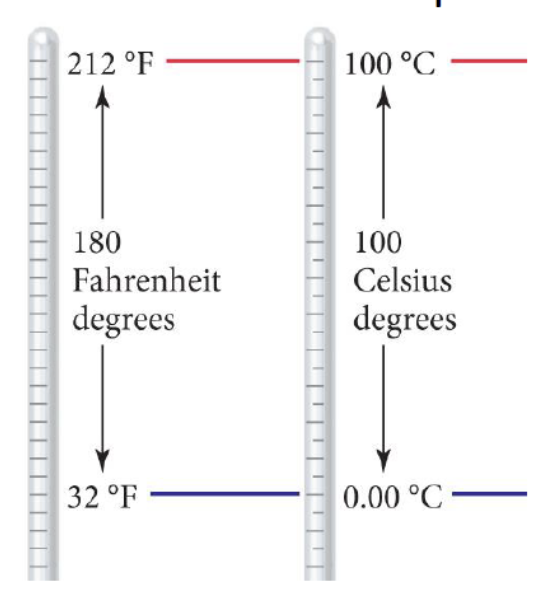
Temperature
Not only are the temperatures different, but the size of a degree is different for celsius and fahrenheit
In contrast, the size of a Kelvin is the same as a degree Celcius
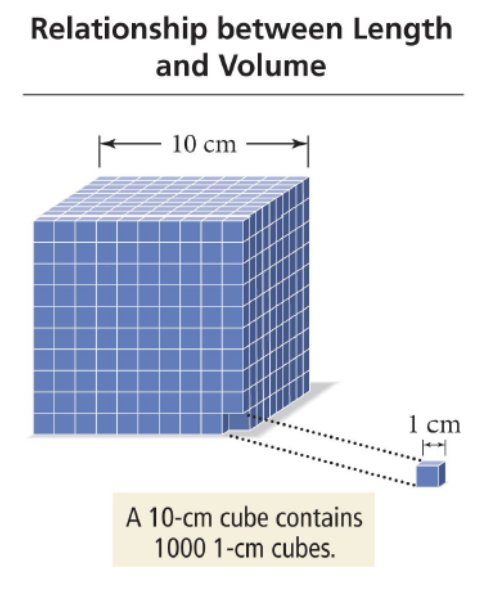
Derived Units
Units formed by multiplying or dividing basic SI units
Volume (distance³): cm³ m³ ft³
1 dm³ = 1 cm³
Speed (distance/time): m/s mi/hr km/hr
60 mi/hr → 60 mi = 1hr
234 m/s → 234m = 1s
Density (mass/volume): g/cm³ kg/L kg/m³
.862 g/cm³ → .862g = 1cm³
2.3 kg/L → 2.3 kg = 1L
Sig Fig Rules:
All nonzero digits ARE significant
Zeros
Interior zeros ARE significant
Leading zeros ARE NOT significant
Trailing zeros ARE significant IF they are after a decimal point
Exact numbers (counted, or integral numbers used in an equation) have infinite sig figs.
Sig Fig Math:
In Multiplication of Division, the result carries the same number of sig figs as the factore with the least
In add/subtract, the result carries the same number of decimal places as the quantity with the fewest decimal places.
Rounding
When rounding, round up if the digit dropped is 5 or more
Avoid rounding errors by rounding only the final answer
Dimensional Analysis:
Simple: Where the conversion factors are given
Metric/Prefix: Still pretty simple, but the conversion factors are built by you from the prefixes you memorized
Derived Units: How to use a derived unit as a conversion factor. Also, how to conver one set of derived units to another
From word problems. Here, you use the words in the problem to build conversion factors to use.
Modern Atomic Theory (model of nature that explains those laws)
All matter is composed of atoms
All atoms of a given element share the same chemical properties that are unique to that element
Atoms combine in simple, whole number ratios to form compounds
Atoms of one element cannot change into atoms of a different element
In a chemical reaction, atoms only change the way that they are bound to each other, the atoms themselves do not change.
Subatomic Particles (modern): PROTONS
POSITIVE charge
Relatively large mass
Located in nucleus
Determines the elemental identity of the atom
Subatomic Particles (modern): NEUTRONS
NO charge
Relatively large mass (Almost the same as the proton)
Also located in nucleus
(Isotopes)
Subatomic Particles (modern): ELECTRONS
NEGATIVE charge (Charge is the same magnitude as the proton, but opposite sign)
Very small mass compared to proton and neutron
Located outside of the nucleus
AMU (Atomic Mass Units)
A unit that was invented to deal with the very small masses of subatomic particles. It was defined as 1/12 of the mass of a carbon atom (with 6 protons and 6 neutrons)
Atomic Theory:
The protons and neutrons are packed closely together in a dense core called the NUCLUES
Surrounding the nucleus, the electrons move about rapidly through a large volume of space
Atomic Theory: Electrical Charge
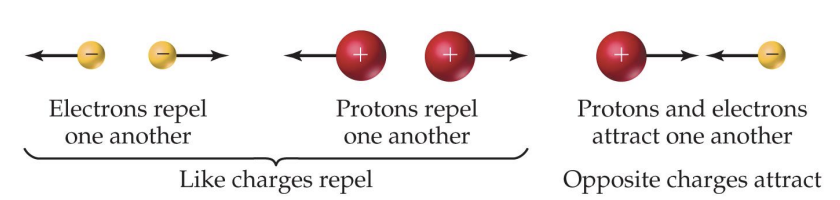
Opposite electrical charges attract each other
The negative charged electrons are held near the positively charged nucleus
Like charges repel each other
The electrons try to get as far away from one another as possible
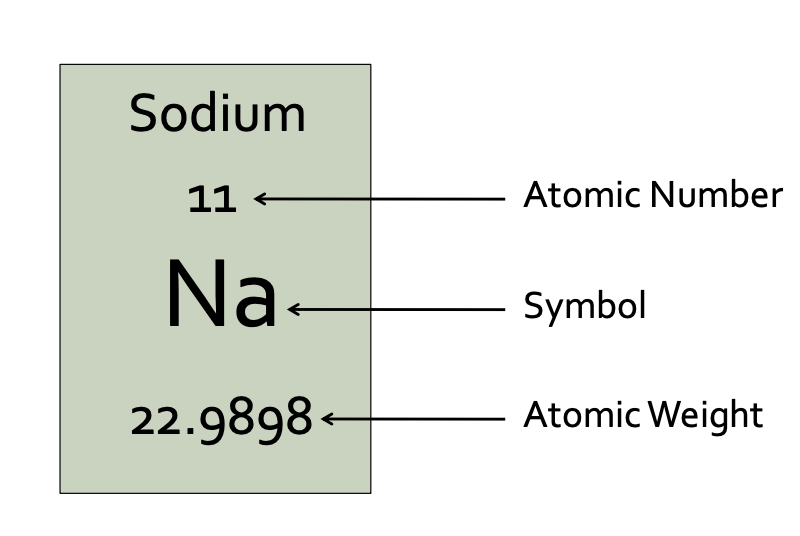
Atomic Number & Mass Number
Atomic Number: Z = Number of protons in all atoms of that element
Mass Number: A = Number of protons AND neutrons
What are Isotopes?
Atoms with the same atomic number but different masses are called ISOTOPES
Since the chemical behavior of atoms is determined by electrostatic attraction between the nuclei and the electrons, atoms with the same number of protons (Z) behave identically

Isotope Symbol:
Mass Number = Number of Protons + Number of Neutrons
Atomic Number = Number of Protons

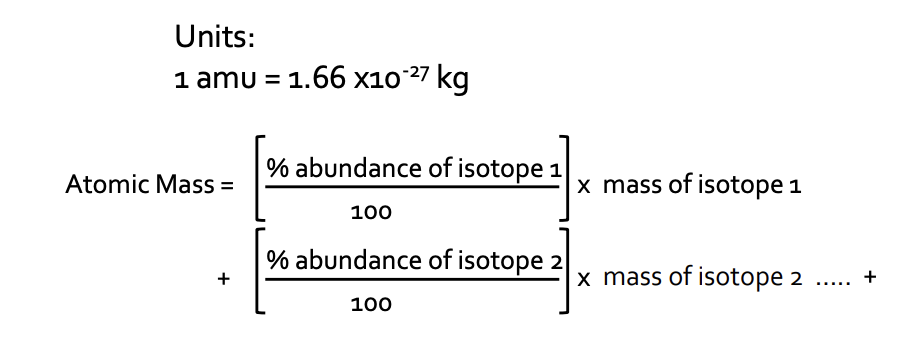
Atomic Mass:
Atoms have measurable masses
The Atomic Mass of an element is the average mass of an atom of the element
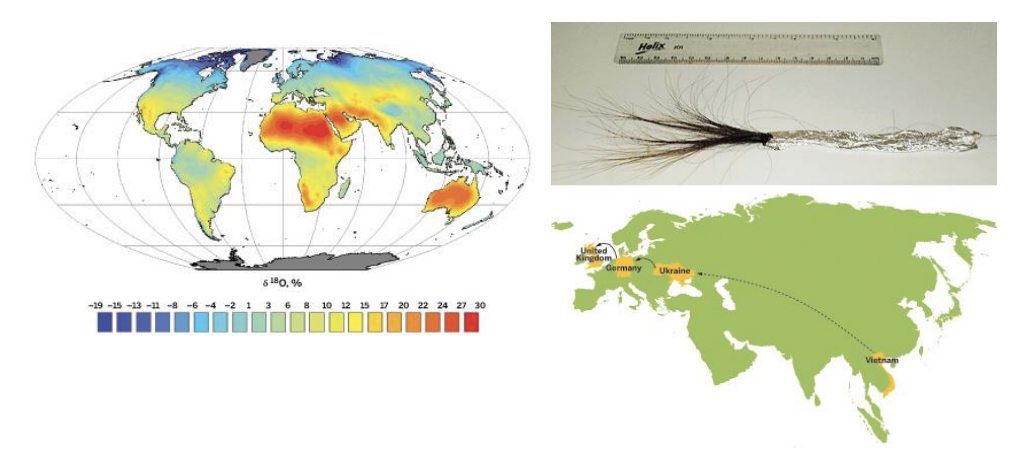
Isotopes Mart the Spot
Ratios of stable isotopes help locate the origin of corpses, follow migration routes, and authenticate items as different as bottled water and expensive cheese
Monatomic Ions:
Ions are atoms or groups of atoms with electric charge
CATIONS: have a POSITIVE charge
ANIONS: have a NEGATIVE charge
Because removing protons would change the atom’s identity, when we form ions, we are implying that the number of electrons in the atoms is changing
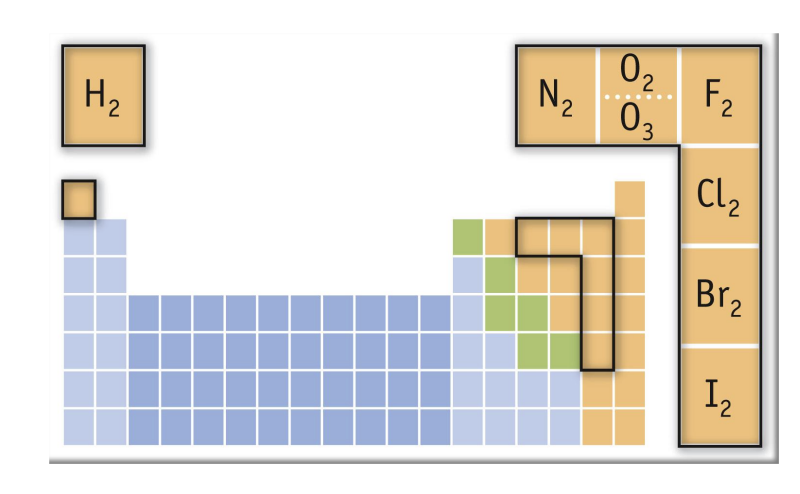
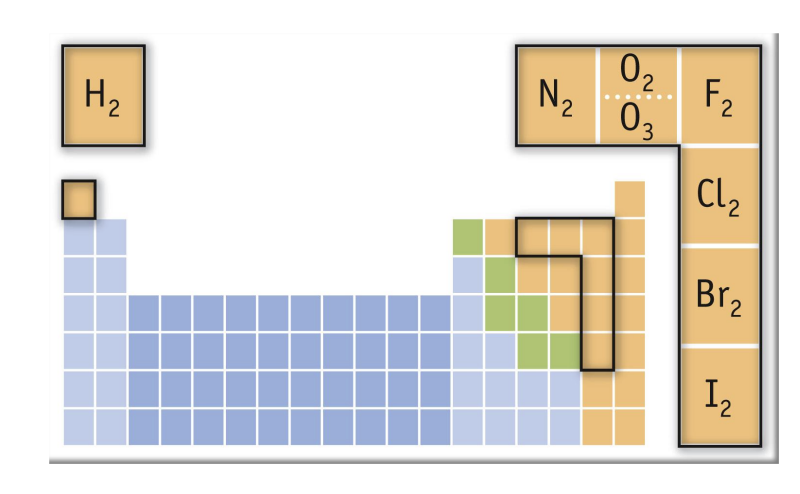
Elements that exists as diatomic or Triatomic Molecules
The Periodic Table of Elements (Dmitri Mendeleev)
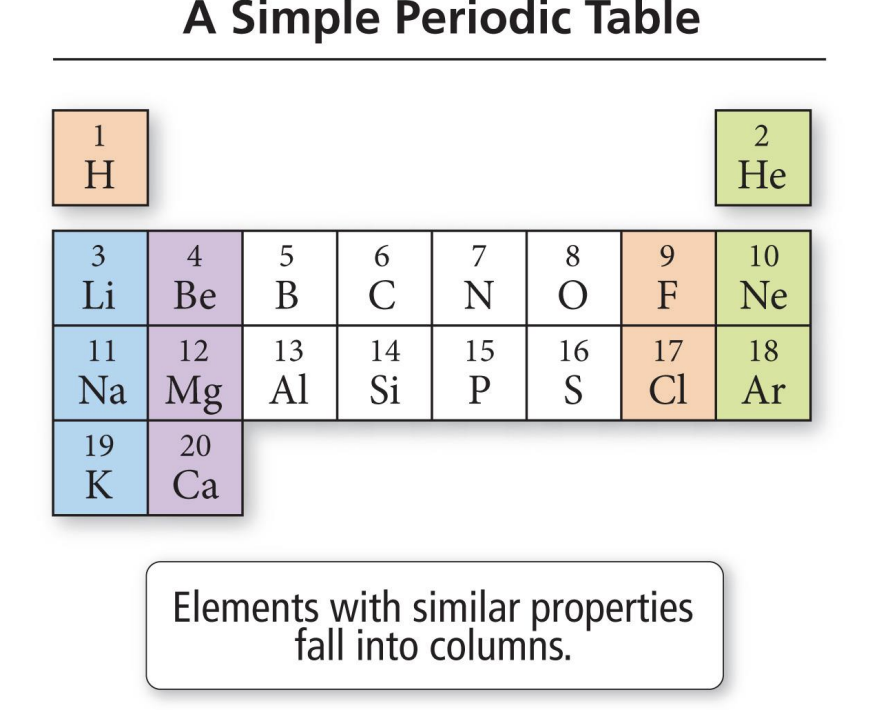
A Simple Periodic Table
Periodicity
Periodicity: Note how the pattern of this plot repeats for each “Period” or row of the periodic table

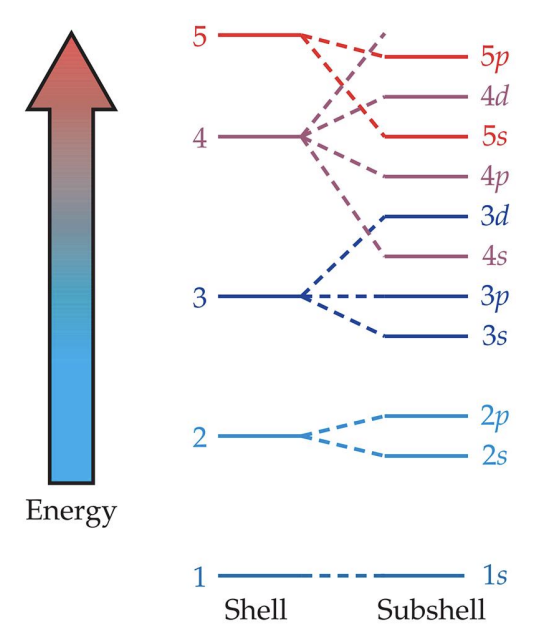
Electron Configuration: How are electrons distributed in an atom?
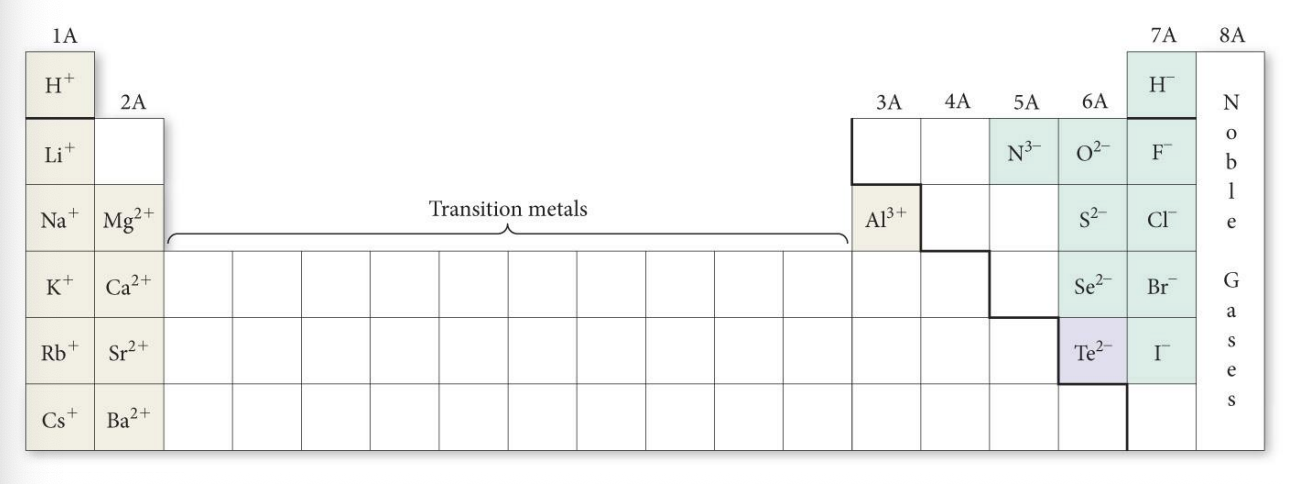
Elements That Forms Ions with Predictable Charges