L7 NEUROCLIN II:ADHD II
 Call Kai
 Learn
Learn Practice Test
 Spaced Repetition
 Match
Match Flashcards
 Knowt Play
1/42

Earn XP
Description and Tags
1. Understand Frontal Cortex + Dopamine theories of ADHD, 2. Critique Frontal Cortex + Dopamine Theories of ADHD, 3. Explain the clinical heterogeneity of ADHD, 4. Understand emerging symptom-based approaches for ADHD
Name | Mastery | Learn | Test | Matching | Spaced | Call with Kai | Chat |
|---|
No analytics yet
Send a link to your students to track their progress
43 Terms
ADHD: story so far
frontal issues (executive function)
neuropsychological tests
structural imaging
functional imaging
dopamine issues (reward processing)
mechanisms of drugs
changes in dopamine receptors
differences in reward processing
some relevant genetic evidence
- DAT, D4, D5 receptors
- gene environment interactions?
- DAT1 gene + exposure to prenatal smoking (Kahn et al., 2003)
IOWA Gambling Task
neuropsychological test of impulsivity
ADHD and frontal cortex
ADHD and the frontal cortex: Iowa Gambling Task and Delay Aversion
measures cognitive impulsivity
advantageous (decks C+D) vs disadvantageous decks (decks A+B)
ADHD groups typically ‘seduced’ by large immediate gains despite long term loss
e.g. garon et al., 2006; miller et al., 2013
similar changes seen following frontal lobe insult
represents delay aversion
adhd associated w strong preference for smaller soon vs larger late rewards → manipulating delay period can further increase preference for small-soon rewards
characteristic of behavioural disinhibition
also linked to dopamine systems

ADHD and the frontal cortex: Iowa Gambling Task and Delay Aversion → led to development of…
Barkley’s behavioural inhibition model
Barkley’s behavioural inhibition model- foundation
model of ADHD (1997)
posits ADHD symptoms present as a failure to inhibit behaviour:
attention problems- distractibility
kinetic symptoms- movement
i.e. executive function deficits (neural basis = frontal cortex)
Barkley’s behavioural inhibition model of ADHD, 1997

behavioural inhibition (inhibit prepotent response, stop an ongoing response, interference control) (1)
arrows to:
(2)
a) working memory
b) self-regulation of affect/ motivation/ arousal
c) internalisation of speech
d) reconstruction- facilitate the response fluence
(3)
motor control/fluency/syntax
a) inhibition taks-irrelevant responses
b) executing goal-directed responses
c) execution of novel/complex motor sequence
d) goal-directed persistence
e) sensitivity to response feedback
f) task re-engagement following disruption
g) control of behaviour by internally represented information
adhd and the frontal cortex- evidence of frontal cortex insult and behaviour change
classic case = phineas gage
post injury- impulsive, impatient, rude
introduced link between frontal lobe damage/ changes and executive control
also:
neurocognitive disorders (NCDs) - Huntington’s disease, Alzheimer’s, etc; post-concussive syndrome; TBIs
schizophrenia
lesion studies in animal models- risk aversion, impulsivity, response inhibition
ADHD and the frontal cortex- structural evidence
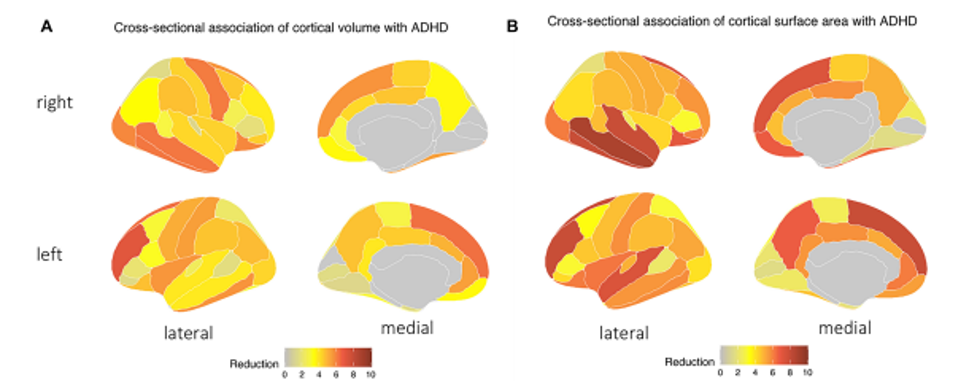
Lin et al., (2023) analysis of 1798 ADHD brains vs 6007 without ADHD
range of targets, but consistent reductions in frontal lobe compared to age matched controls
but..
may be a developmental delay , rather than chronic underdevelopment, e.g. Shaw et al., (2007)
effect sizes quite small, and with high variance
purely correlational
ADHD and the frontal cortex: function evidence
evidence of frontal hypoactivity in ADHD groups during cognitive tasks of attention
PET/fMRI: Dickstein et al., (2006), Weyandt et al., (2013)
but…

reviews show areas where ADHD patients have greater levels of activation → compensatory recruitment of other regions?
limited research on adults → delayed maturation?
real world deficits, or task performance?
- continuous performance task = sustained attention
- go-no go = response inhibition
- ADHD associated w periods of hyperfocus (Ashinoff & Abu-Akel, 2019)
structural and functional evidence suggests…
insult to frontal regions can produce ADHD-like behaviours
frontal regions are undeveloped in ADHD-kids relative to age matched controls
frontal regions show hypoactivation during cog tasks of attention in ADHD-kids relative to age matched controls
ADHD and dopamine
ADHD associated with increased dopamine clearance:
dopamine vacuuming- DA does not hang around long enough to have an effect
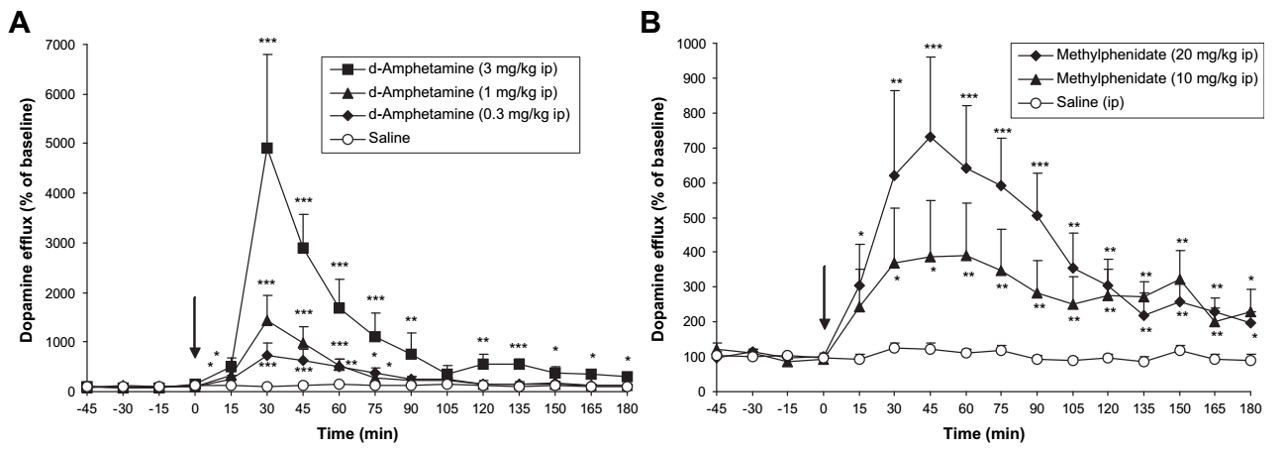
consistent evidence that ADHD drugs increase DA levels in murine forebrain
microdialysis
invasive technique that enables sampling of neurotransmitters
allows us to monitor drug-induced changes

ADHD and dopamine: effects of stimulants on dopamine levels
both d-Amphetamine and Methylphenidate significantly increase DA levels
d-Amphetamine more potent
methlyphenidate longer lasting
ADHD and dopamine: stimulant mechanisms
both drugs primarily interfere with dopamine support
methlyphenidate - antagonises dopamine transporters → blocks reuptake of DA
amphetamine - enters pre-synaptic neuron → reverses transporters DA out

ADHD and dopmaine: DAT and the Dopamine ‘ Vacuum’
Cheon et al., (2002):
drug-naive ADHD kids have more dopamine transporters
dopamine cleared too quickly, creating low dopamine state
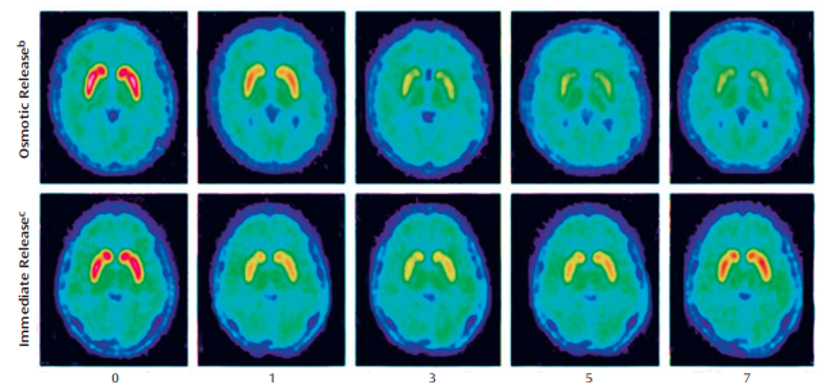
Spencer et al., (2006):
PET evidence that methylphenidate occupies DAT
suggests thereapeutic benefits are achieved thru impeding DA reuptake
ADHD and dopmaine: reward and reinforcement
robust evidence that dopamine is released during reward- food,water,sex,etc
evidence disrupted in ADHD
how? historically mixed findings. some increases, some decreases
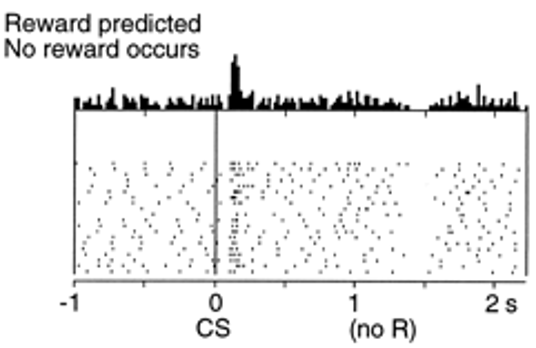
may be due to tonic vs phasic activity- phasic DA response signals rewards
ADHD and dopmaine: tonic vs phasic dopamine
dopamine activity in striatum (basal ganglia) are key to efficient reward processing
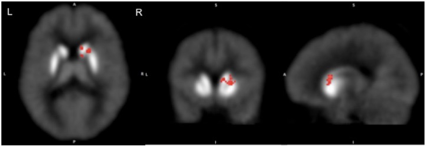
Badagaiyan et al., (2015)
PET study looking at DA receptors in striatum during reward
ADHD vs non ADHD
higher binding = reduced DA activity
findings
higher binding at rest → reduced tonic DA activity
lower binding during rewards → enhanced phasic da

level of extracellular dopamine modulated by two mechanisms…
tonic and phasic transmission
tonic DA transmission
occurs when small amounts of dopamine are released without being preceded by presynaptic action potentials.
regulated by a variety of factors, including the activity of other neurons and neurotransmitter reuptake.
→ sustsained
phasic DA transmission
release
like most neurotransmitter release in the nervous system, is driven directly by action potentials in the dopamine-containing cells
→ momentary
drugs used to target adhd
have mechanisms targeting dopamine transportation
increases dopamine levels in various regions
ADHD kids + dopamine
appear to have increased availability of dopamine transports (DAT)
reward processing + ADHD
disrupted
may be due to decreased tonic and increased phasic DA activity
frontal processing vs dopamine models
not likely to be one or the other
integrate models
dopamine- the engine- altered responses to reward
frontal processing- the brakes- executive control

classical conceptualisation of ADHD
differences in top down executive control and bottom up reward processing
issues with classic adhd theories
classic theories alone cannot explain all cases of ADHD
critiquing frontal theories
lack of diagnostic specificity → frontal dysfunction found in almost all conditions (E.g. Hoogman et al., 2022)
other non-frontal areas implicated in symptoms
inconsistent findings in frontal research (hypo vs hyper activity and connectivity)
evidence of deficits in experimental EF tasks but: high variability; only 50-60% of ADHD patients show deficits in most sensitive EF tasks (Luo et al., 2019)

critiquing dopamine theories
stimulants not always effective in treating adhd
newer drugs do not target DA
atomoxetine, viloxazine → selective noradrenaline (norephinephrine) reuptake inhibitor
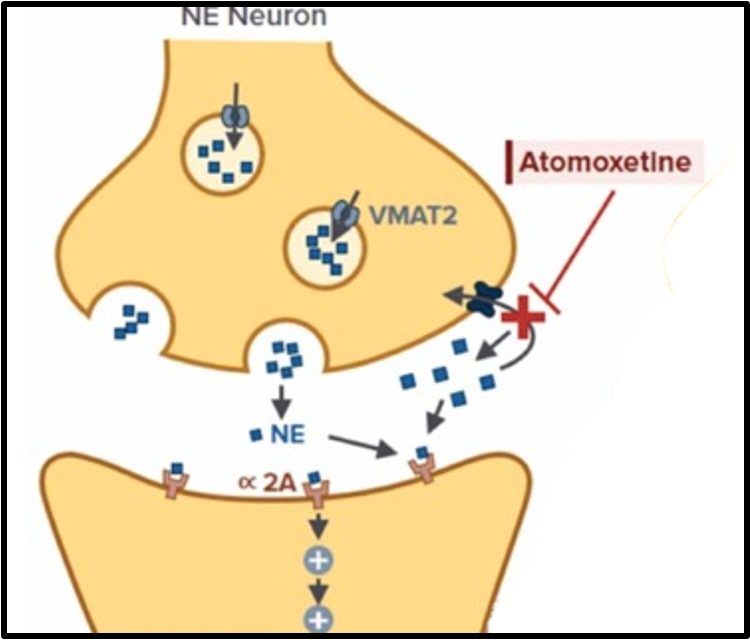
guanfacine → selective alpha 2a adrenergic agonist
d-amphetamine also has affinity for NA and (to lesser extent) 5-HT receptor transporters
recent evidence of 5-HT differences in DHD (Jackson et al., 2025)
→ suggests of diff neurotransmitters mediating different ADHD symptoms
what we know about ADHD
primary behavioural features are inattention and/or hyperactivity/impulsivity → but presentation varies across patients
most common treatments are methylphenidate, amphetamines, and non-stimulants (e.g. atomoxetine, viloxazine, guanfacine) → but responses to treatment and side effect presentation varies across patients
classically believed to be deficit of frontal cortex and DA activity → but extent of differences varies across patients and does not explain all cases
genetic/familial component → but each candidate gene has small effect, meaning genetic impact varies across patients
key characteristic in adhd
heterogeneity
in symptoms
in treatment response
in underlying neural changes
in causes/genetic basis
problem: classical theories alone cannot explain all cases of ADHD
proposed solution….
move towards conceptualising ADHD as a heterogenous disorder, try to understand homogenous subgroups as targets for novel interventions (Luo et al., 2019) → looking at smaller symptom clusters
benefits to new proposed solution
more effective/personalised treatment options
accelerated genetic/biomarker research
improved developmental prognosis
is there evidence for focussing on individual symptoms/ homogenous subgroups?
evidence from latent analyses shows diff trajectories even when accounting for DSM presentations → suggests more than 3 presentations?
is it likely can all be explained by single theory/pathological loci , or focus on individual symptoms?
ADHD symptom networks (Liu et al., 2022)
network analysis of ADHD symptoms

thicker lines - stronger correlation
blue- positive relationship, red - negative rls
blue ring - extent a node predicted by neighbours
more lines - more central
distractibility and fidgeting = most common and connected symptoms
inferences:
some symptoms v unlikely to present together, some v likely to → different pathological loci?
latent class ADHD trajectories: Murray et al., (2021)
tracked H-I latent trajectories of ADHD symptoms over 11 years in UK Millenium Cohort Study
6 clusters identified:
Pre-school onset persistent (6.4%): Classical ADHD trajectory
Developmentally increasing (7.6%): Later onset group that starts with moderate symptoms
Pre-school onset partially remitting (14.1%): Borderline symptoms that decline into the non-clinical range
Subclinical remitting (12.8%): Elevated sub-clinical symptoms that decrease over time.
Mildly affected (24.1%): Constant slightly elevated but sub-clinical symptoms.
Unaffected (34.9%): Consistently low levels of symptoms

latent class ADHD trajectories: Arnold et al., (2014)
tracked latent class ADHD symptoms over 36 months in sub-clinical ADHD cohort
3 inattentive trajectories: mild, intermediate, severe
4 H-I trajectories: consistently mild, consistently severe, improving dramatically, worsening over time

example of symptom-based approach to adhd
distractibility
distractibility
core ft of adhd since 40/50s
central node in adhd symptom network analysis (Liu et al., 2022)
most common symptom in ADHD (Wilens et al., 2009) and most persistent with age
importantly- neural substrate mediating distractibility well known
ADHD, distractibility- neural substrate
superior colliculus (SC)
ADHD, distractibility, superior colliculus
SC associated w D
SC key role in diversion of attentional and motor resources towards novel stimuli
tasks relying on SC input are impaired in ADHD → projection from SC to substania nigra- influence over DA response?

SC has necessary architecture for psychostimulant action
→ visual activity in SC depressed by d-amphetamine and methylphenidate (Gowan et al., 2008; Dommett et al., 2005) → effects of ADHD drug mimicked by 5-HT
potential to develop drugs to improve distractibility in ADHD by targeting SC
rats, superior colliculus
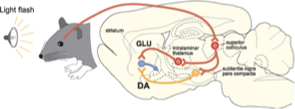
lesions on bilateral SC → ignore distraction and go straight to task
serotonin + distractibility
effects of stimulants in SC mediated by 5-HT and SSRIs mimic effects of stimulants in SC
converging research suggests 5-HT more relevant in ADHD than thought- Jackson et al., (2025)
pharma and/or dietary targets

tectonigral projection
superior colliculus → substantia nigra
summary
• ADHD traditionally viewed as a deficit in frontal ‘Brakes’ (executive functions) and dopamine ‘engines’ (reward processing).
• But these theories cannot explain all cases of ADHD
• Contemporary approaches view ADHD as not a single condition but a cluster of varying trajectories
• Research is shifting away from applying a one-size-fits-all approach to focusing on addressing symptom clusters
• Focusing on specific symptoms like distractibility may be a fruitful approach to more personalised drug interventions for ADHD