WHI.8 (2015) Byzantine Empire and Eastern Europe Vocab
 Call Kai
 Learn
Learn Practice Test
 Spaced Repetition
 Match
Match Flashcards
1/8

There's no tags or description
Looks like no tags are added yet.
Name | Mastery | Learn | Test | Matching | Spaced | Call with Kai | Chat |
|---|
No analytics yet
Send a link to your students to track their progress
9 Terms
Location of Constantinople
- Protection of the eastern frontier
- Distance from Germanic invasions in the western empire
- Crossroads of trade between Asian and European continents
- Easily fortified site on a peninsula bordered by natural harbors of Black Sea and Sea of Marmara
Justinian's Code
Laws of the Byzantine empire based the Twelve Tables of Roman law; became a basis for laws in many European nations
Justinian
- Codified Roman law
- Reconquered territory that once belonged to the Roman Empire
Mosaics
Art made with pieces of colored stone or glass; heavily associated with the Byzantine Empire
Byzantine Culture
- Greek language
- Greek Orthodox Christianity (also known as Eastern Orthodox)
- Greek and Roman knowledge preserved in libraries
- strongly influenced Russia's religion, culture, and politics
Eastern Orthodox Church
- Centered in Constantinople
- Uses Greek in liturgy (sermons, religious services)
- Patriarch is the leader of the church
- Use of icons in worship
- Contributed to the unification of Russia
Roman Catholic Church
- Centered in Rome
- Uses Latin in liturgy (sermons, religious services)
- Pope is the leader of the church
- Banned use of icons; thought to it was too close to pagan idol worship
The Great Schism
the official split between the Roman Catholic and Byzantine churches
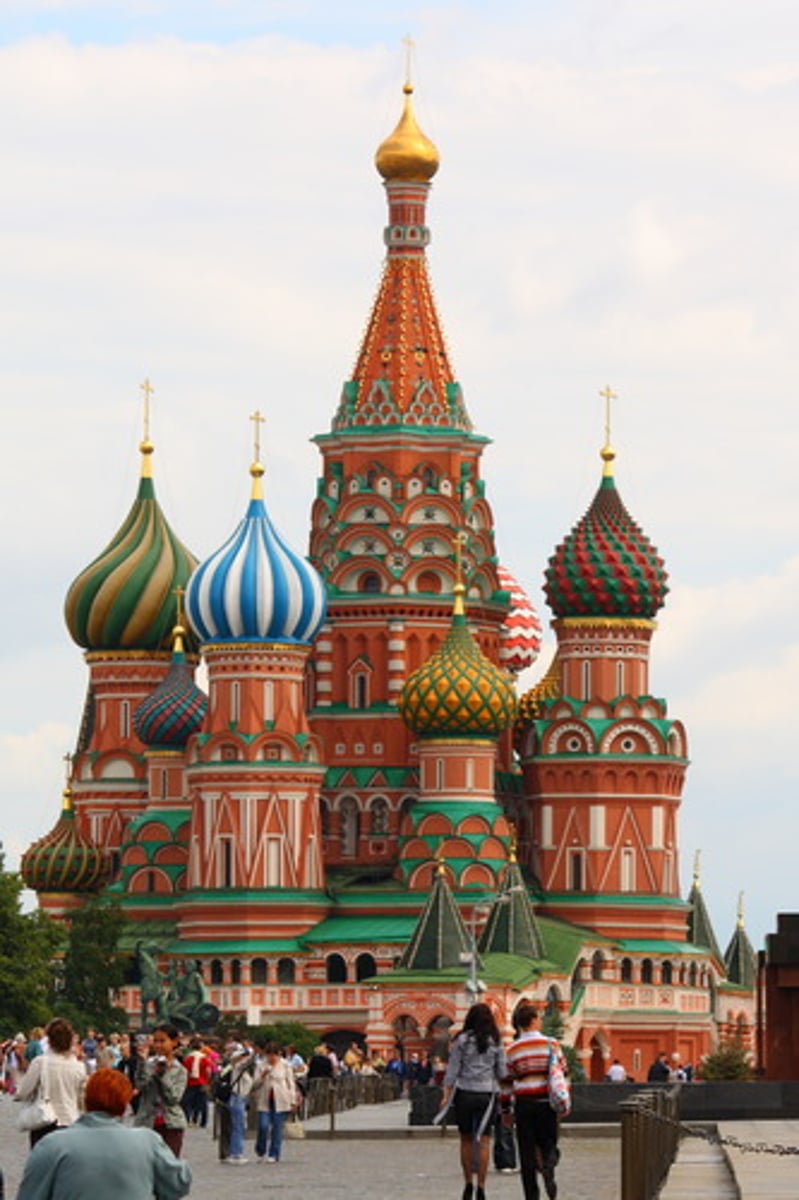
Architecture heavily influenced by the Byzantine empire
St. Basil's Cathedral, Moscow, Russia