11 Extractions I
 Call Kai
 Learn
Learn Practice Test
 Spaced Repetition
 Match
Match Flashcards
 Knowt Play
1/60

There's no tags or description
Looks like no tags are added yet.
Name | Mastery | Learn | Test | Matching | Spaced | Call with Kai | Chat |
|---|
No analytics yet
Send a link to your students to track their progress
61 Terms
MAXILLA ONLY: 108, 109, 110
208, 209, 210
What are the three rooted teeth in dogs?
106, 107
206, 207
306, 307, 308, 309, 310
406, 407, 408, 409, 410
What are the two rooted teeth in dogs?
101, 102, 103, 104, 105
201, 202, 203, 204, 205
301, 302, 303, 304, 305, 311
401, 402, 403, 404, 405, 411
What are the single rooted teeth in dogs?
MAXILLA ONLY: 108
208
What are the three rooted teeth in cats?
107, 109
207, 209
307, 308, 309
407, 408, 409
What are the two rooted teeth in cats?
incisors, canines, 106 and 206
What are the single rooted teeth in cats?
Parotid: opens near maxilary 4th premolar
Zygomatic: opens near 1st and 2nd maxillary molars
What is the difference in the opening between the parotid and zygomatic ducts?
Simple extraction, close/nonsurgical extraction
This is an extraction not requiring a gingival incision or sectioning of the tooth
Surgical extraction, open/complicated extraction
This is an extraction that requires a gingival incision, bone removal, and or sectioning of the tooth
Elevation
This is the process by which the periodontal ligament is *fatigued or torn* and alveolar bone is expanded to facilitate removal of the tooth from the alveolus
Luxation
This is the process by which the periodontal ligament is *cut or severed* to loosen teeth from the surrounding alveolar bone
1. *Ethics* (disarming procedures like removing canine teeth on an aggressive dog)
2. *Severe systemic disease* (congestive heart failure, uremia, coagulopathies)
3. *previous radiation therapy* (leads to osteonecrosis bc the radiation has damaged pathways for healing)
What are some contraindications for extractions?
Endodontic therapy
Pulp necrosis, fractured adult teeth and traumatic malocclusion are all indications for extractions, but what other possibility is there?
1. adequate visualization
2. unimpeded pathway
3. CONTROLLED force
What are the 3 fundamental steps for successful extraction?
4-0 or 5-0 absorbable (often monocryl)
What type of suture should you use for dental extractions?
Elevators AKA levers
This instrument transmits a modest force into a small movement against great resistance, where the rotation in the periodontal ligament space utilized the surrounding alveolar bone as a fulcrum
Luxator AKA wedge
This instrument directs pressure apically once in the periodontal ligament space. They are made of softer metal and cannot be used as a lever
Elevator
What is this, applying apical pressure to rip or exhaust the periodontal ligament?
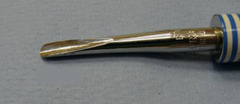
Luxator (wedge)
What is this, used to tear the periodontal ligament?
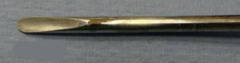
Twist and pull
When extracting with forceps, it is recommended to *twist and pull* or *rotate and twist back and forth*
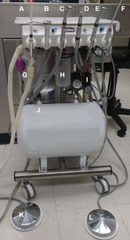
Suction tip
What is A in the dental machine?
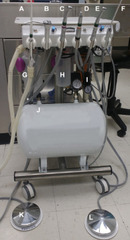
Air/water syringe
What is B in the dental machine?
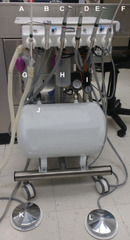
High speed handpiece
What is C in the dental machine?
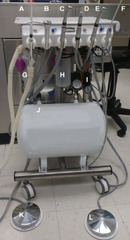
Low speed handpiece
What is D in the dental machine?
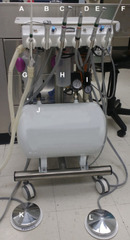
Optional second high speed handpiece
What is E in the dental machine?
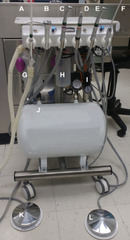
Fiber optic light
What is F in the dental machine?
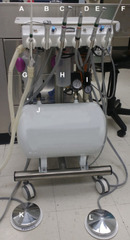
Suction bottle
What is G in the dental machine?
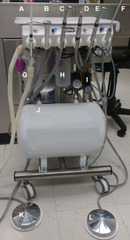
Exhaust air bottle/filter
What is H in the dental machine?
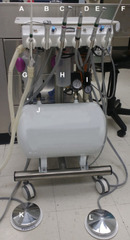
Pressure regulator
What is I in the dental machine?
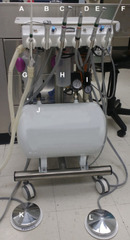
Compressor tank
What is J in the dental machine?
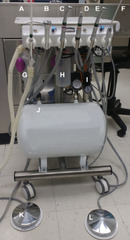
Suction rheostat (foot pedal)
What is K in the dental machine?
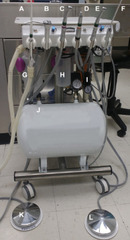
Rheostat (foot pedal)
What is L in the dental machine?
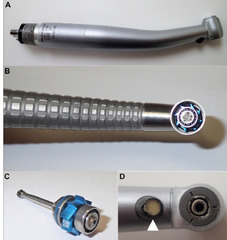
They can only rotate in ONE DIRECTION (so if you get gauze or soft tissue stuck in it you need to get a new bur or you'll damage the turbine)
What do you need to know about the direction of the turbines in the high speed handpiece?
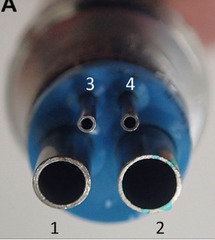
The smaller of the two larger holes (1) is where the oil goes to lubricate the turbines
What is the difference between oil and water holes?
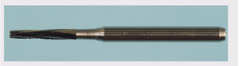
701 cross cut taper fissure bur
What is this, used to remove hard tissue quickly?
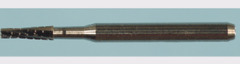
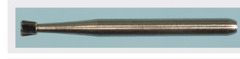
Inverted cone bur
What is this, used to make an undercut?
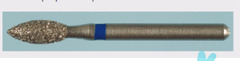
Diamond bur
What is this, used for crown preparation procedures?
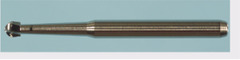
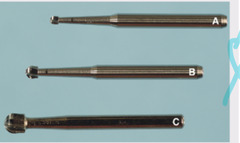
#4 round bur
What is this, used for penetrating bone or tooth material?
Cutting surface of a taper fissure bur
What is this, used for sectioning teeth?
Round burs of different size
What is this?
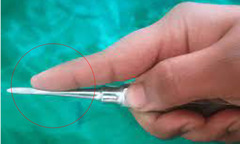
To show you the proper hand position for holding a luxator or elevator
What is this for?
Preserve blood supply and non-tension closure
What are some surgical principles of good flap design?
Design A is preferred (left). These incisions are oblique to allow a wide base flap since the flap needs to be 2x as wide as the defect you're trying to cover. Design B (right) will not work because it will not allow for adequate surgical exposure and cut off blood supply
Which flap design is preferred and why?
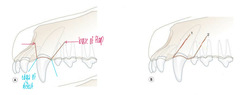
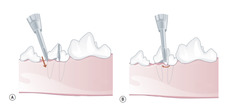
Image A: wedge/luxator cutting the periodontal lig.
Image B: elevator (wheel and axle style) to rip and tear
Which image shows the wedge/luxator? Which image shows elevator/lever?
Before AND after radiographs are REQUIRED for extraction patients
When should you do x-rays for extraction patients and why?
NSAIDs, gabapentin, locoregional block combo. Soft food for 5-7 days. No chew toys or treats for 7-10 days. Ice packs. Oral chlorhexidine twice daily after meals. No abx normally
What is the post-op care like for dental extractions?
Does NOT apply to canine teeth (will cause oronasal fistulae if you don't do flap)
Typically, closed/simple extractions WITHOUT flap creation are indicated for single rooted teeth. Which single rooted teeth does this principle NOT APPLY TO?
ALWAYS close the gingiva even if you didn't make a flap
Even when you do closed extraction technique, what do you ALWAYS do?
TRUE
TRUE OR FALSE: luxators are made of softer steel and are NOT intended for rotational forces
Maxillary PM4, Mandibular M1, Canine teeth
PLUS maxillary/mandibular premolars not affected by advance stage periodontal disease AND maxillary 3rd incisor not affected by advance stage periodontal disease (because the root is bigger than other incisors)
Which teeth, when requiring extraction, typically need it to be surgical/open?
Fracture, periodontal disease, non-vital tooth
Why would you do surgical extractions on 2 rooted teeth?
Fracture, periodontal disease, non-vital tooth
Why would you do surgical extraction in the maxillary canine teeth?
Maxillary canine extraction
What is this sequence of events indicating?
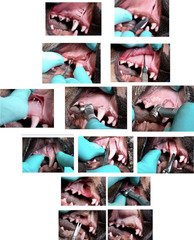
Diamond bur (coarse grit)
How can you remove alveolar bone across the root surface to expose the root and periodontal ligament in canine maxillary extractions?
Not recommended until you have perfected your feather touch
You can use a 701L for maxillary canine extractions and alveolar bone removal. But it is not recommended until you can do what?
Using LaGrange scissors
How can you perform periosteal release in surgical maxillary canine extractions? What tool do you use?
Mandibular canine
Which teeth, when surgically extracted, are the most likely to cause jaw fracture, and should NEVER be removed on the lingual aspect of the tooth because of this?
Fracture, periodontal disease, non-vital tooth
What are the surgical extraction indications for mandibular canines?
Do not penetrate into nasal cavity
What structure do you have to be careful of when doing surgical extraction of the maxillary canine?
05 on top and 05 and 06 on bottom
What teeth are cats missing compared to dogs?
Might have to cut across frenulum
What structure might you have to cut across to make a flap for felines in mandibular canines but should be AVOIDED in large breed dogs?