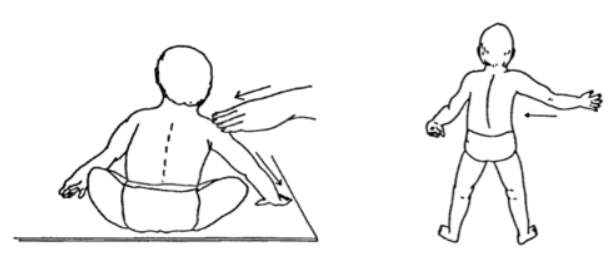
Infant Reflexes/Reactions
 Call Kai
 Learn
Learn Practice Test
 Spaced Repetition
 Match
Match Flashcards
 Knowt Play
1/40

There's no tags or description
Looks like no tags are added yet.
Name | Mastery | Learn | Test | Matching | Spaced | Call with Kai | Chat |
|---|
No analytics yet
Send a link to your students to track their progress
41 Terms
cephalocaudal
direction of development “head to tail”
proximal-distal
direction of development “trunk to edge”
infantile reflexes
involuntary, stereotypical movement response to a specific stimulus that is seen only during early infancy
the presence and strength of a reflex is an important sign of ________ system development and function
nervous
primitive reflexes
reflexes that appear during gestation or at birth and become integrated by 6 months of age (some exceptions such as plantar grasp integrating up to 9 months after birth)
if you see _______ reflexes at a later age they are considered pathological, but they are not pathological in newborns as they should be present in all newborns
primitive
righting reactions
reactions (responses) which help the infant learn to keep the head oriented in relation to the body. remains throughout life even though it appears in infancy or childhood
equilibrium reactions
reactions which are automatic responses requiring adaptation by the entire body to restore balance after displacement of the COG (center of gravity) of the body
pathological reflex
an obligatory reflex as a result of a pathological condition which caused damage to the CNS
primitive reflexes are mediated in the _______ and _______
spinal cord; brainstem
righting reactions are mediated in the _______ and lead to ________
midbrain; quadrupedal function (crawling)
equilibrium reactions are mediated in the ______ and lead to _________
cortex; bipedal function (walking)
________ and _______ areas of the brain provide more coordinated complicated reflexes and reactions
midbrain; cortical
_______ level reflex responses exert dominance over ______ level responses
higher; lower (can be seen in the fact that individuals with a spinal cord injury will show equilibrium reactions because those are mediated by the brain cortex which is not injured, while those with a brain injury may not have that high level of reaction)
Level of control: cortex,,, leads to what
equilibrium reactions
Level of control: thalamus and midbrain,,, leads to what
righting reactions
Level of control: pons, medulla, spinal cord,,, leads to what
primitive reflexes
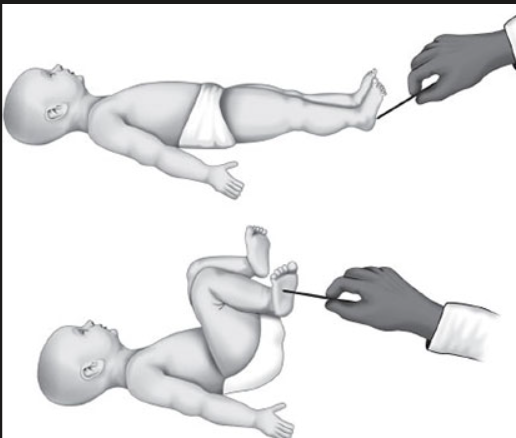
flexor withdrawal
primitive reflex - spinal cord
protective, develops balance between flexor and extensor toe
stimulate sole of foot => dorsiflexion of foot and flexion of hip and knee
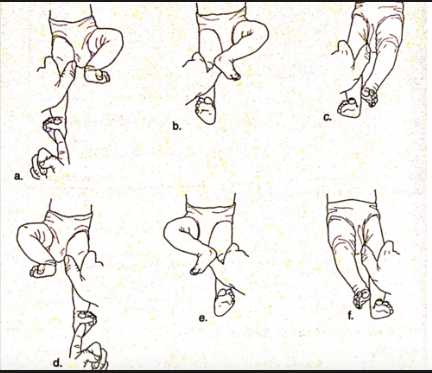
crossed extension
primitive reflex - spinal cord
develops extensor tone in lower extremities, precursor to creeping and walking
stimulate sole of foot with extremity fixed => flexion of opposite lower extremity then extension to push examiner away
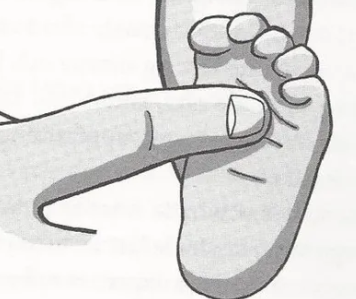
plantar grasp
primitive reflex - spinal cord
place finger at base of toes => toes curl around finger
integrates at 9 months (just before walking)
galant reflex
primitive reflex - spinal cord
unilateral curving of the trunk, provides trunk flexion needed to initiate crawling
stimulate along the paraspinals => unilateral trunk flexion toward the stimulus
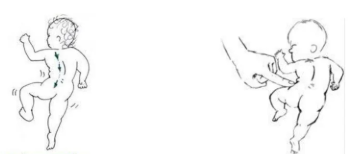
positive support
primitive reflex - spinal cord
develops extensor tone
stimulate feet with firm contact to floor or table => co-contraction of flexors and extensors of the legs
other wording from internet: elicited when placing weight on the sole of the foot resulting in extension of the legs
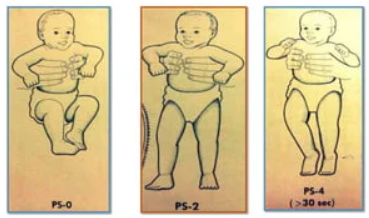
rooting reflex
primitive reflex - brainstem
survival, aids in finding nourishment, promotes active contraction of neck muscles
stimulate peri-oral area => turns head toward stimulus with mouth opening
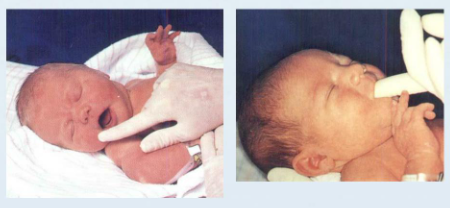
sucking reflex
primitive reflex - brainstem
prerequisite for speech and head control, develops oral muscles, tongue placement, swallowing, inhibits gag reflex
stimulate with finger or nipple in baby’s mouth => sucking
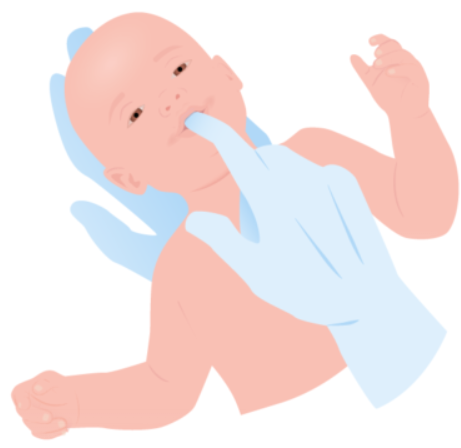
traction reflex
primitive reflex - brainstem
to develop tone in upper extremities
pull child towards sitting position => flexion and adduction at the shoulders, flexion of elbows, wrist, and fingers
think baby pull up
moro reflex
primitive - brainstem
baby in supine position; support baby’s head. allow head to drop back 20 to 30 degrees (in relation to trunk) => abduction and extension of upper extremity followed by flexion and adduction
look for symmetry of response
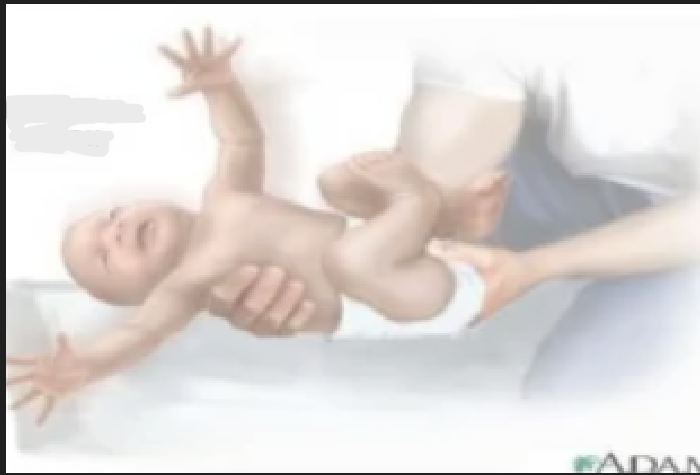
spontaneous stepping reflex
primitive reflex - brainstem
baby supported vertically around the chest. allow feet to touch support surface. tilt child forward => reciprocal, rhythmical, automatic stepping movement
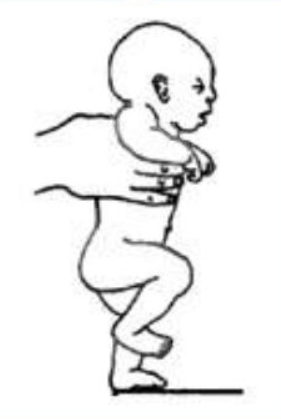
palmar grasp reflex
primitive reflex - brainstem
baby in supine position, head in midline, handsfree. press examiner’s index finger against baby’s palm from ulnar side => baby’s fingers will flex around examiner’s index finger
tonic neck reflexes (list the three types)
ATNR (asymmetric tonic neck reflex), tonic labyrinthine, STNR (symmetric tonic neck reflex)
ATNR (asymmetric tonic neck reflex)
primitive relfex - brainstem
supine turn their head. upper extremity on same side will extend and opposite will flex into the “fencing” position
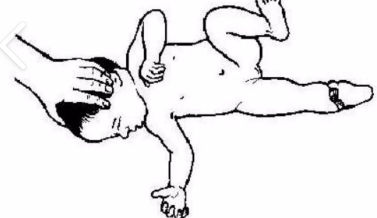
Tonic labyrinthine reflex
primitive reflex - brainstem
in prone position with head in midposition, see flexion of extremtiies/increase in flexor tone
in supine position see extension of extremities or increase in extensor tone
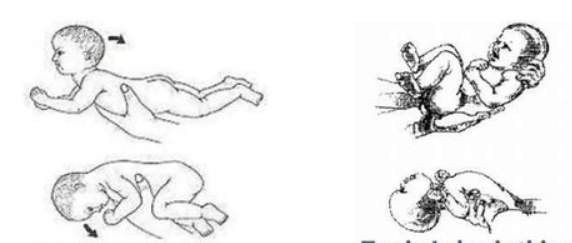
STNR (symmetric tonic neck reflex)
primitive reflex - brainstem
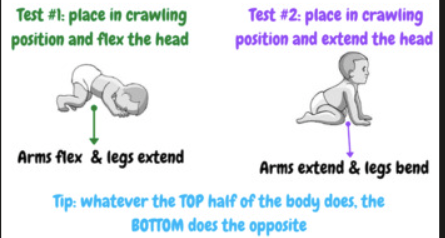
sitting/on knees, flexion of the head to chin to chest causes flexed hand and upper extremities and extension of the lower extremities,,, extension of the head causes extension of the upper extremities and flexed lower extremities
integrates at 8-12 months
true righting reactions
neck on body: once I turn my neck, body will align
body on body: upper body turns, lower body will follow
body on head: once I turn my body, my head will try to alight
basically orient your head with the ground or in line with your body
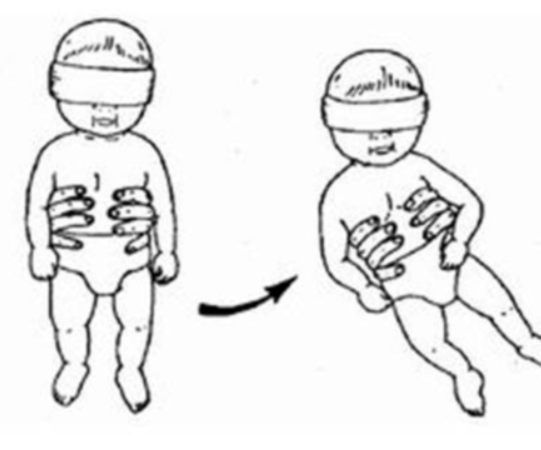
Labyrinthine
righting reaction - midbrain/red nucleus
onset: birth - 2 months and then persists throughout life
drives child to lift head from prone or supine, babies eyes need to be covered to ensure they are not leading with sight (this part is not shown in the photo)
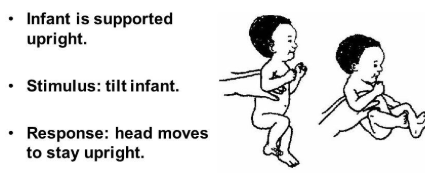
optical
righting reaction - occipital cortex
onset: birth - 2months, persists throughout life
child will lead with eyes to right head to vertical in response to tilt greater than 45 degrees
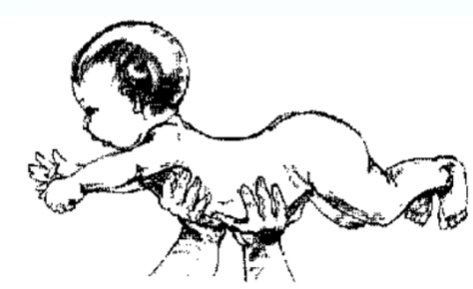
Landau
righting reaction
inset is 3-5 months w/ peak at 5-6 months
helps integrate TLR
extension of head, neck, back, and hips; allows pivot on abdomen
basically when suspend baby from belly, the baby will extend arms/legs and raise the head
list the 3 equilibrium reactions we went over
protective extension, tilting, postural fixation
equilibrium reactions occur where
in the cortex
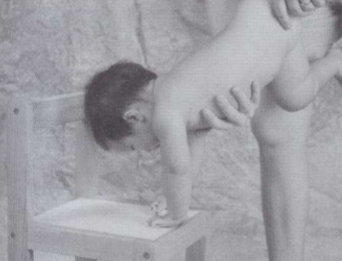
protective extension
equilibrium reaction
an infant will put hands out to protect from a fall, but can also be done in sitting position by putting arm out sideways or backwards when falling to the side or to the back
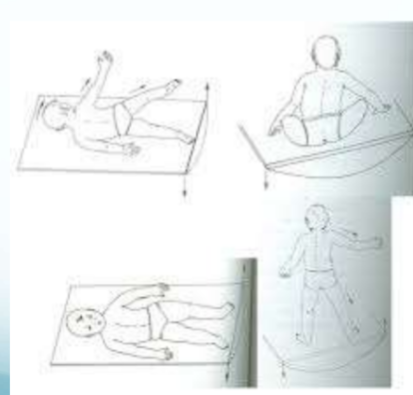
tilting reaction
equilibrium reaction
response that the body has when placed on a tilt board. if you are sitting on the tilt board and it goes down on the left side, then the body will shift to keep itself upright with lateral flexion of the opposite side
if you’re standing it’s a similar pattern with extending an arm on the opposite side and flexing the knee or the side that went down
postural fixation
equilibrium reaction
allows infants to maintain their position in space when their body is acted on by a displacing force (such as being pushed)
this is a more advanced reaction so a young infant would not have developed this yet