apoptotic necrosis
 Studied by 0 people
 Call with Kai
 Learn
Learn Practice Test
 Spaced Repetition
 Match
Match Flashcards
 Knowt Play
1/9

There's no tags or description
Looks like no tags are added yet.
Name | Mastery | Learn | Test | Matching | Spaced | Call with Kai |
|---|
No study sessions yet.
10 Terms
what is apoptosis?
very well controlled pathologic cell death, related to viral disease, immunological damage, or chemical damage. it needs a stimulus and energy to occur.
what are the 4 phases of apoptosis?
1. initiation- stimulus
2. control and integration- done by regulatory proteins in the Bcl-2 family
3. execution- caspases break apart cellular component
4. dead cell removal- apoptotic cell presents surface molecules that are recognized by phagocytes
does apoptosis cause inflammation?
no
what are the possible stimuli for apoptosis to begin?
-receptor-ligand interaction
-deprivation of growth factors or hormones
-DNA damaging agents
-cytotoxic T lymphocytes
what proteins regulate apoptosis?
proteins in the Bcl-2 family
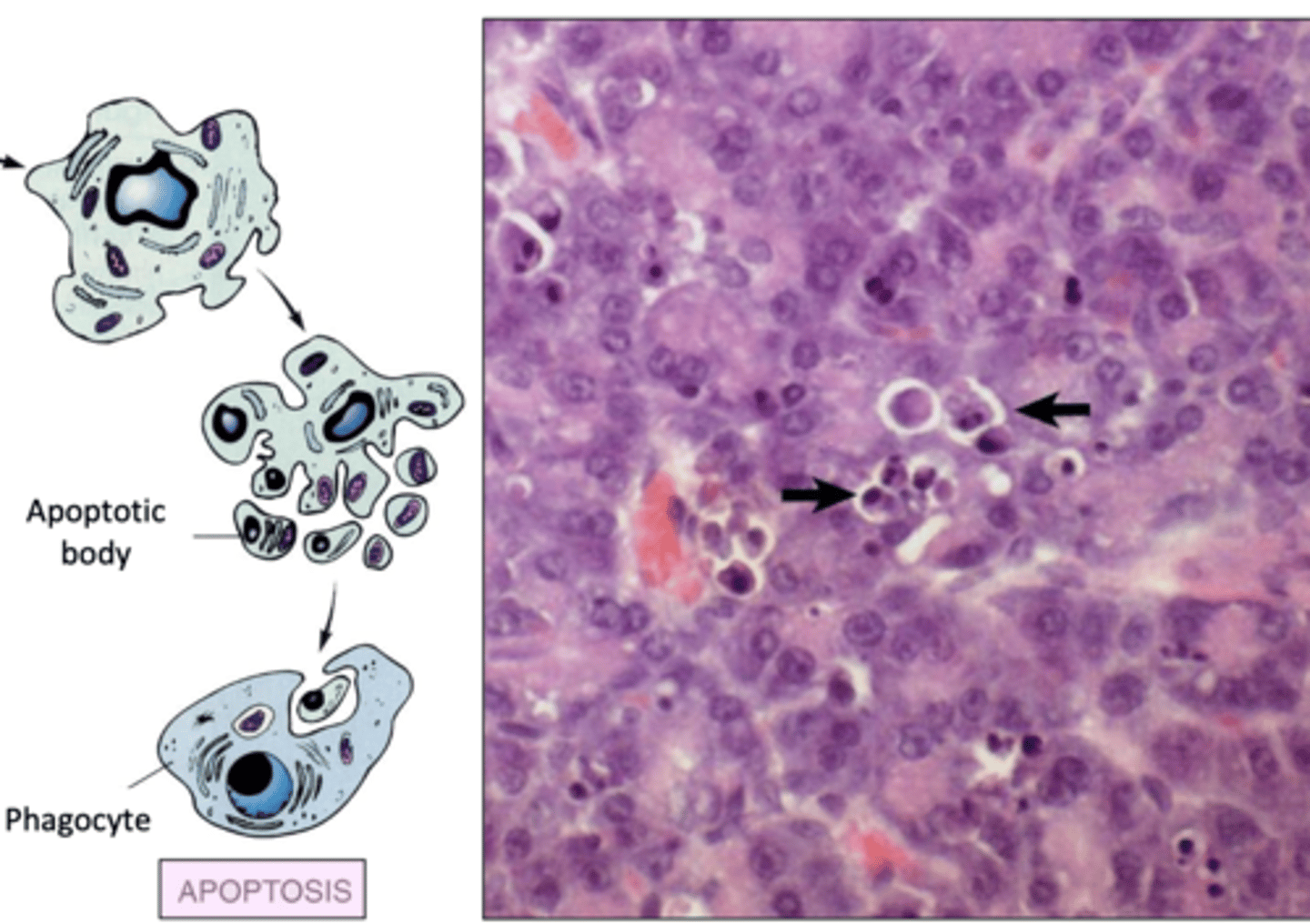
what are the morphological characteristics of apoptosis?
cellular constriction- smaller cell with a dense cytoplasm and grouped granules
chromatin condensation- at the periphery in dense, crescent shaped masses
cytoplasmic vesicle and apoptotic body formation
apoptotic body phagocytosis
what are caspases?
enzymes that break apart cell proteins by cleaving nuclear and cytoskeletal structure
what is the role of endonucleases in apoptosis?
they are triggered by caspases to break the nucleic acid inside of the nucleus
in apoptosis, is the flow of Ca2+ and Mg2+ controlled?
yes- this allows the endonucleases to act
how do phagocytes recognize an apoptotic cell?
apoptotic cells and apoptotic bodies express antigens on their surface (this is to allow early recognition so that phagocytosis can occur without triggering an inflammatory response)