Population & Community Health
 Call Kai
 Learn
Learn Practice Test
 Spaced Repetition
 Match
Match Flashcards
 Knowt Play
1/31

There's no tags or description
Looks like no tags are added yet.
Name | Mastery | Learn | Test | Matching | Spaced | Call with Kai | Chat |
|---|
No analytics yet
Send a link to your students to track their progress
32 Terms
population health
The health of all people living in a given place, such as New York City, Galveston, or Rome. It also refers to differences in health - for example, between the rich and the poor.
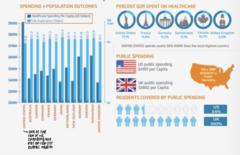
product of many causes
Population health is the _______________________________, operating at many levels "from cells to society"
population health
provides "an opportunity for health care systems, agencies and organizations to work together in order to improve the health outcomes of the communities they serve external icon"
public health
works to protect and improve the health of communities through policy
recommendations, health education and outreach, and research for disease detection and injury prevention.
public health
defined as what "we as a society do collectively to assure the conditions in which people can be healthy"
epidemiology
The study of the distribution, frequencies, and determinants of disease, injury, and disability in human populations.
- incidence, prevalence, risk factors, resiliency factors
incidence
number of new cases of disease, injury, or disability within a specific time frame (usually a year)
prevalence
total number of cases of disease, injury, or disability in a community, city, state, or nation existing at a point in time
risk factors
precursors that increase an individual's or population's vulnerability to developing a disease or disability or sustaining an injury
resiliency factors
precursors that appear to increase an individual's or population's resistance to developing a disease or disability or sustaining an injury
population health from an OT perspective
• A collaborative and interdisciplinary approach
• Includes
- Advocacy
- Program development- > needs assessment 1st
- Program implementation & evaluation- > Trialing- collecting data to see if goals are being met
- Policy revision and development
- Occupational justice
- doing, being, belonging, becoming
doing
• Everything of meaning that people do in their lives
- anything the population does
- Promotion of occupational well-being
- Occupational balance
- Balance lifestyle
- Examining personal and community factors
being
• People's essential nature that drives them to do things
- Shared myths
- Shared values
- Tolerance for different ways of "being" in this world
belonging
Being accepted by others and feeling secure in relationships and connected to a place
- group cohesion
group cohesion
network of relationships holding a group together, and collected occupations that create bonds, a sense of common identity and shared history
becoming
- People's development over their lifetimes
- Fulfilling occupational potential
- Finding occupations which are fulfilling allowing the person to gain competence and challenge them at the same time
- Largely based on the opportunities afforded to a population based on societal properties
occupational justice in public health
People have the right to participate in a range of occupations that enable them to flourish, fulfill their potential, and experience satisfaction in a manner consistent with their culture and beliefs
community
a combination of individuals, their needs and desires, and the environment in which they reside, work, play, etc.
community health
Physical, emotional, social, and spiritual well-being of a group of people who are linked together in some way
well-being
a state of flourishing that consists of 5 elements: positive emotion, engagement, positive relationships, meaning, & accomplishment
occupation
a fundamental process for achieving health and well-being by facilitating engagement meaning and accomplishment
Using it leads to:
• Decrease occupational risk factors
• Increase occupational resiliency factors
occupational dysfunction risk factors
- occupational imbalance
- occupational deprivation
- occupational alienation
- occupational delay
- occupational interruption
- occupational disparities
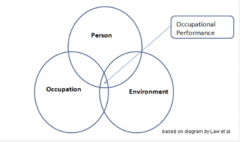
ways to build resilience
• Occupational Adaptation- now does a community adapt to continue to engage
• Occupational coherence
• Occupational continuity- over desired period
• Occupational competence- at a certain level of effectiveness
• Occupational identity
• Occupational orchestration- how the community designs the structure of QOL.
• Occupational self- efficacy
role of OT in community and population health
• Prevention or reduction in the incidence of illness or disease, accidents, and injuries in the population backpack awareness campaign
• Promotion of positive mental health through competence enhancement strategies
• Mitigation of mental illness through risk reduction
• Reduction of health disparities among racial and ethnic minority groups and other underserved populations (e.g., through advocacy and support for self advocacy)
• Enhancement of mental health, resilience, and QoL
• Prevention of secondary conditions and improvement of the overall health and well-being of people with chronic conditions or disabilities and their caregivers
healthy lifestyles
• Promote ______ ________ for all clients, their families, communities, and populations
• Identify lifestyle risk factors
- Tobacco use
- Unhealthy diet
- Sedentary lifestyle
- Substance abuse
• Do not overlook these in people living with disabilities
health promotion programming
• Infuse occupation into proven ______ _________ ____________
- Adapt already credible programs to assist people living with disabilities
- Meal preparation programming for people living with disabilities
• Nutrition in your Kitchen at TIRR
occupation-based
- Develop and implement _______________________community and population health promotion programming
- Targeting people with and without disabilities
community-centered practice framework
- Focus on achievement of the community's occupational goals and enables community participation
- A process and outcome of community-based, community centered practice
• 4 main components
1. Community identity
2. Community occupations
3. Community resources and barriers
4. Participation enablement
community identity
• Individuals, groups, organizations, social networks, that are members of the community
• Membership in the community is fluid and changes over time
• Members have specific roles that support the community's shared purpose and goals
• Geographic location, climate, natural and built environments, population characteristics, and sociocultural elements
community occupations
• Occupations important and meaningful to the community as a whole
- Provide a sense of meaning and purpose, community
identity and belonging
• Community members participate in co-occupations to move in the direction of the shared goal with everyone drawing on their own diverse skill sets, experiences, and expertise
community resources and barriers
• Finding factors that facilitate and inhibit community participation
• Resources and social capital- what is available
• Barriers including policies
• Infrastructure can be both a resource and a barrier
participation enablement
• Building and sustaining partnerships
• Recruiting, educating, and supporting volunteers
• Increase community's public profile and attract members/funders
• Negotiate and advocate with power holders, coach members to complete applications for grants, and/or council permits