1500
 Call Kai
 Learn
Learn Practice Test
 Spaced Repetition
 Match
Match Flashcards
 Knowt Play
1/15

There's no tags or description
Looks like no tags are added yet.
Name | Mastery | Learn | Test | Matching | Spaced | Call with Kai | Chat |
|---|
No analytics yet
Send a link to your students to track their progress
16 Terms
Extensive and intensive property
extensive properties are dependent on system mass - e.g. mass, volume
intensive properties are independent of system mass - e.g. temperature, pressure
Heat Transfer
Heat flows from high temperature to low
Difference in tempearture is given by Thigh - Tlow
Modes of heat transfer
Radiation (electromagnetic waves) - requres no medium
Conduction (molecular collisions)
Convection (bulk fluid motion)
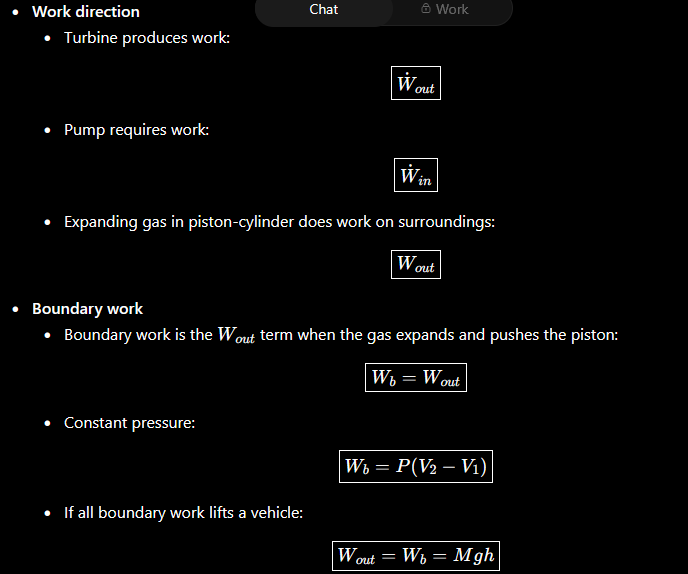
Work transfer
Energy transfer associated with a force acting over a distance
Shaft work
Mechanical energy transferred across a system boundary via a shaft or other mechanical connection
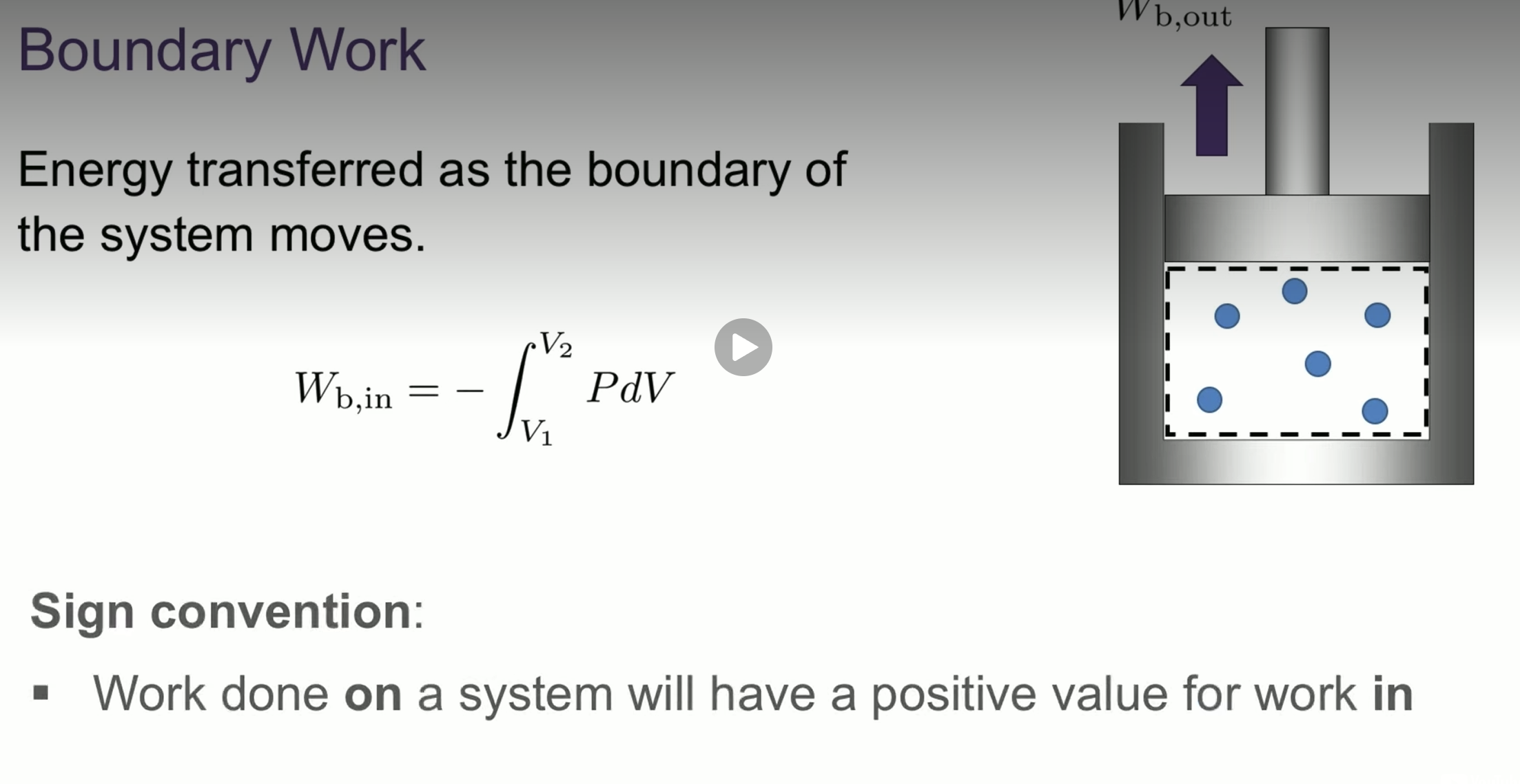
Boundary work
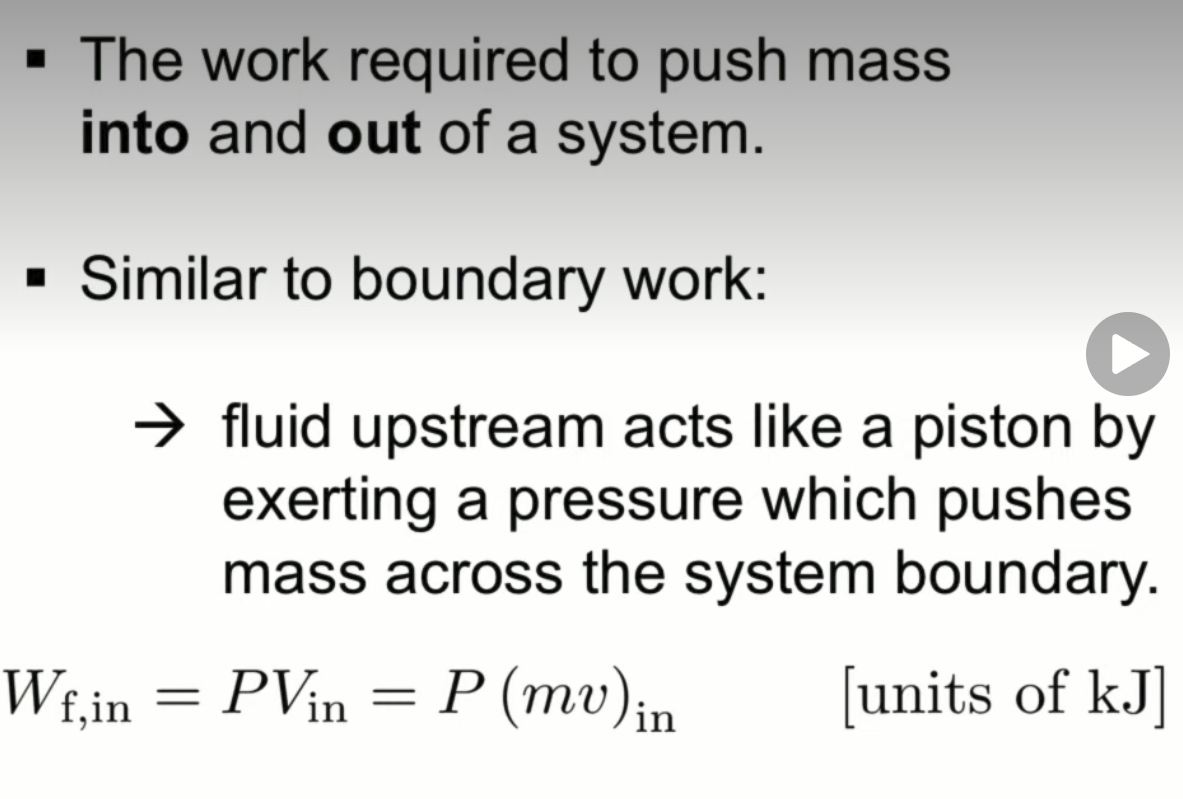
Flow work
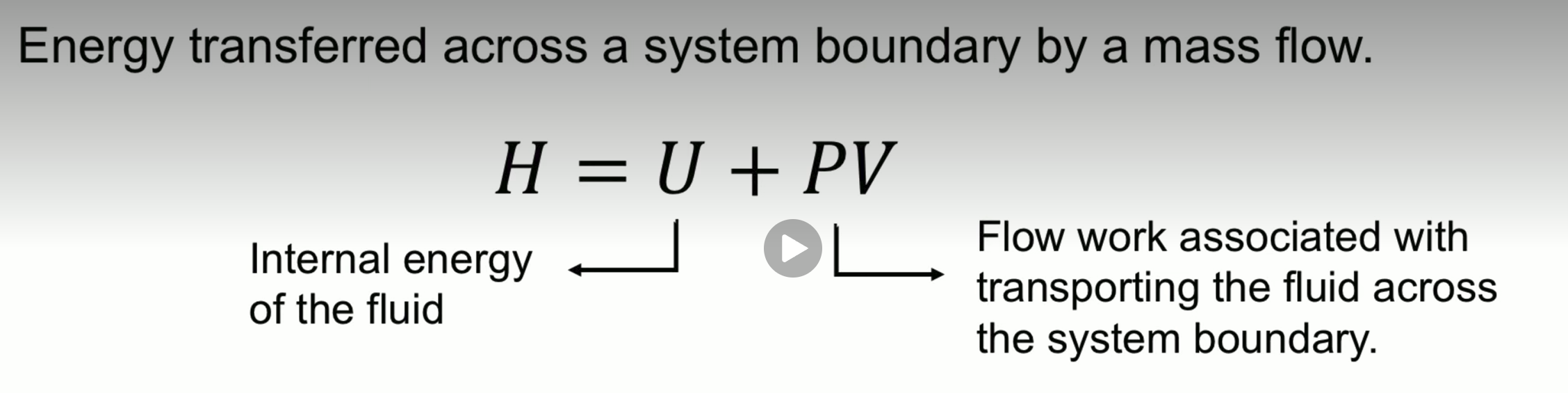
Enthalpy
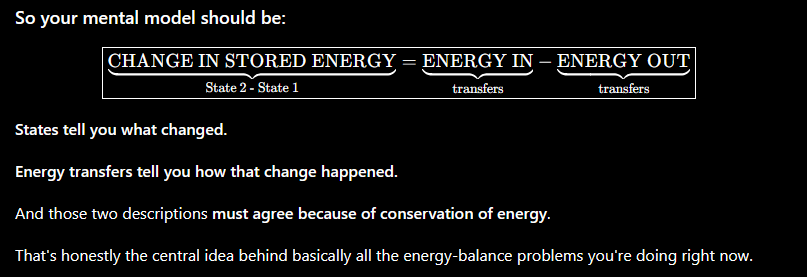
Mental model for energy balance
So your mental model should be: State 2 - State 1CHANGE IN STORED ENERGY=transfersENERGY IN−transfersENERGY OUT
States tell you what changed.
Energy transfers tell you how that change happened.
And those two descriptions must agree because of conservation of energy.
That's honestly the central idea behind basically all the energy-balance problems you're doing right now.
How to tell the phase from what you're given
If you're given x (quality) directly → it's already telling you the phase:
0 < x < 1 → saturated liquid-vapor mixture
x = 1 → saturated vapor
x = 0 → saturated liquid
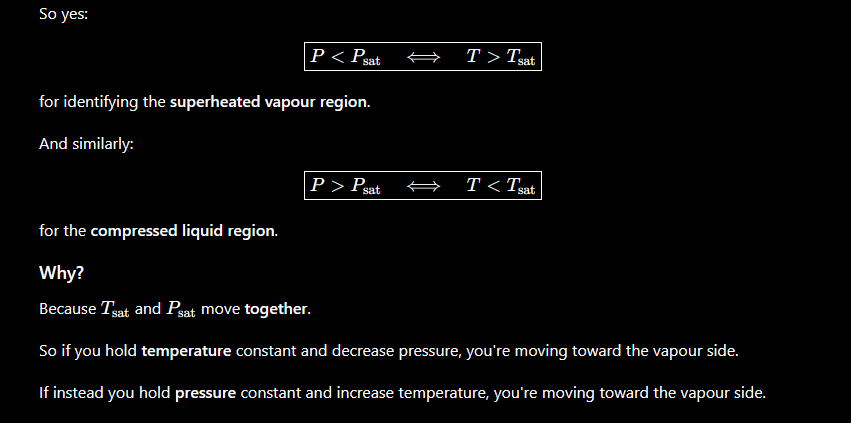
If you're given T and P together → compare the actual P to the saturation pressure at that T (look up P_sat at that T in the saturation table):
Actual P > P_sat(T) → compressed (sub-cooled) liquid
Actual P < P_sat(T) → superheated vapor
Actual P = P_sat(T) → sitting exactly on the saturation line (mixture — need more info like h or x to pin down exactly where)
Saturation
Think of saturation = the point where liquid water is just ready to turn into vapour.
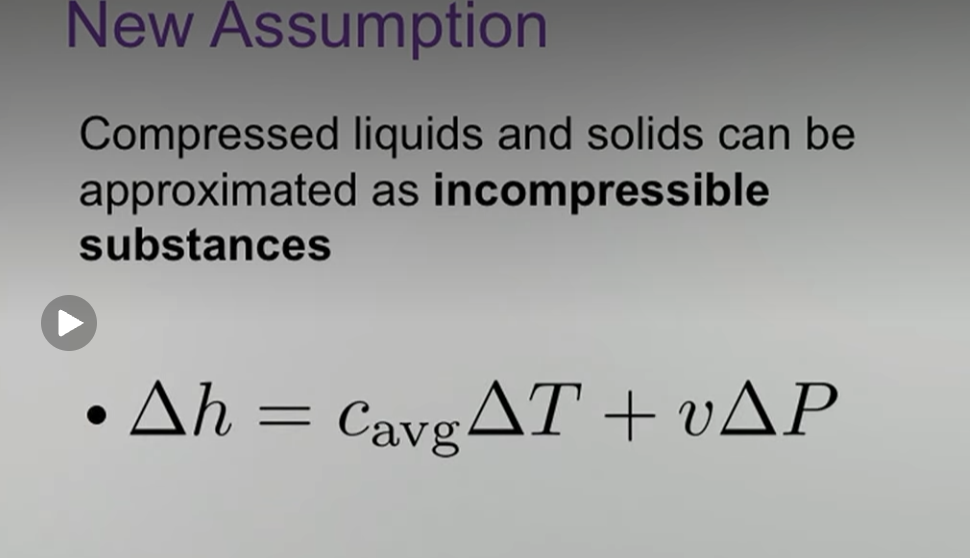
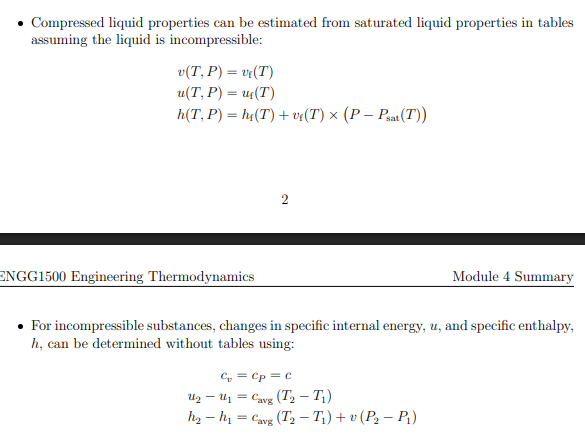
How to find the enthalpy of an incompressible liquid at a specific state

Incompressible liquids
Work out or In for pumps, turbine and pistons