Lower Motor Control and Neural Mechanisms
 Call Kai
 Learn
Learn Practice Test
 Spaced Repetition
 Match
Match Flashcards
 Knowt Play
1/64

There's no tags or description
Looks like no tags are added yet.
Name | Mastery | Learn | Test | Matching | Spaced | Call with Kai | Chat |
|---|
No analytics yet
Send a link to your students to track their progress
65 Terms
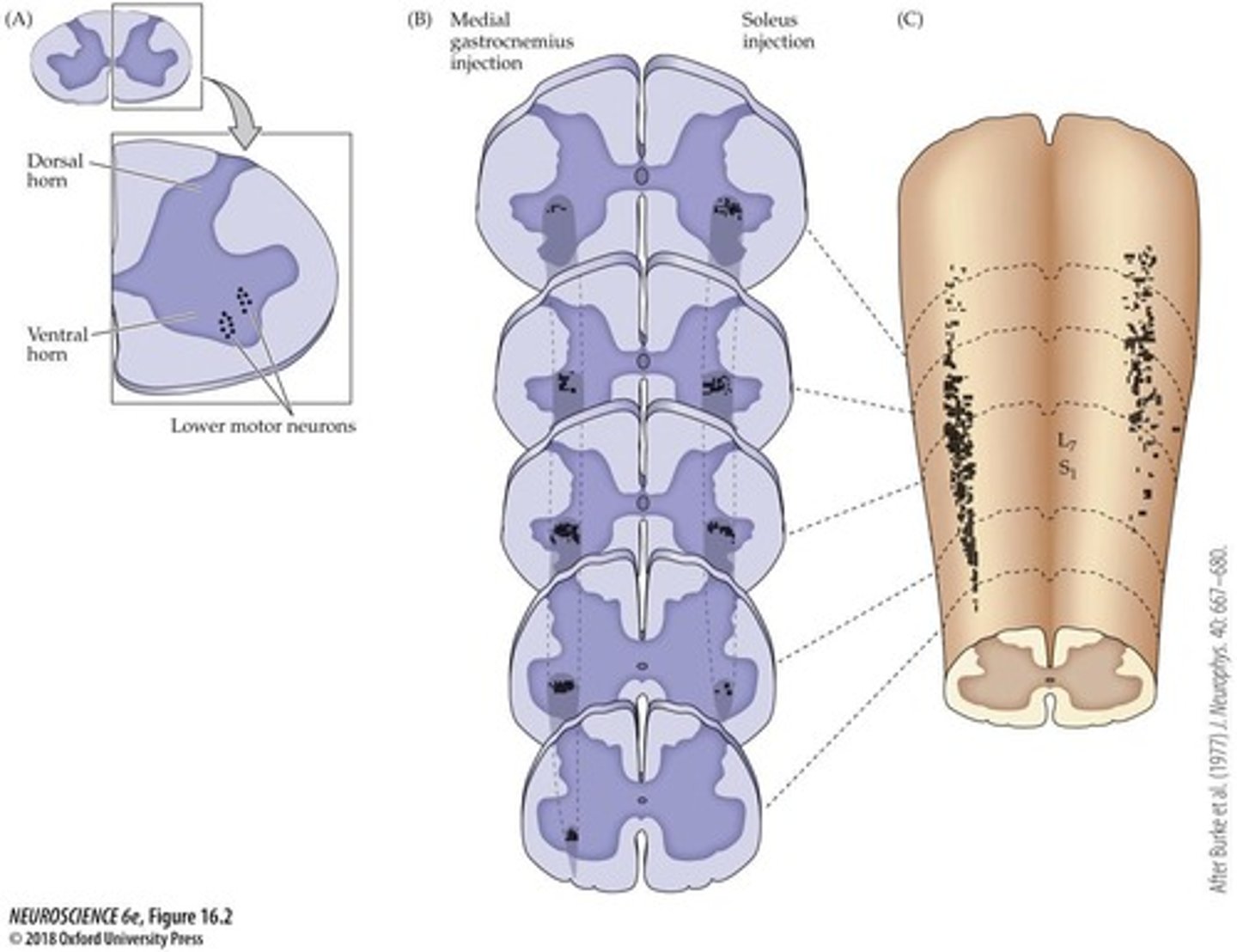
What are the general locations of lower motor neuron cell bodies?
Lower motor neuron cell bodies are located in the spinal cord's ventral horn and in the motor nuclei of cranial nerves in the brainstem.
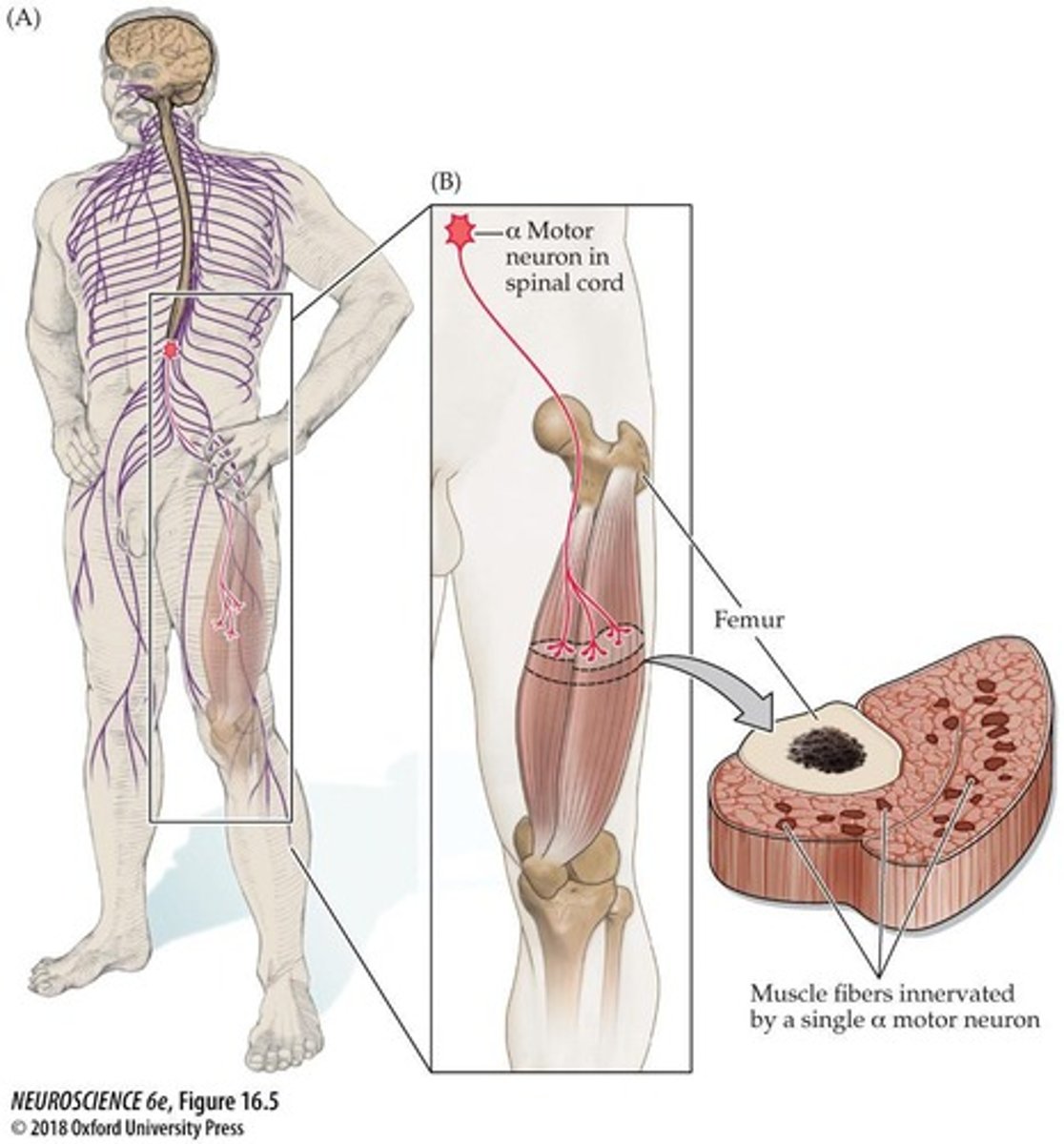
What is a motor unit?
A motor unit consists of a single alpha motor neuron and all the muscle fibers it innervates.
How are lower motor neurons organized in the spinal cord?
Lower motor neurons are organized into rod-shaped clusters, forming a spatial map of the muscles they control.
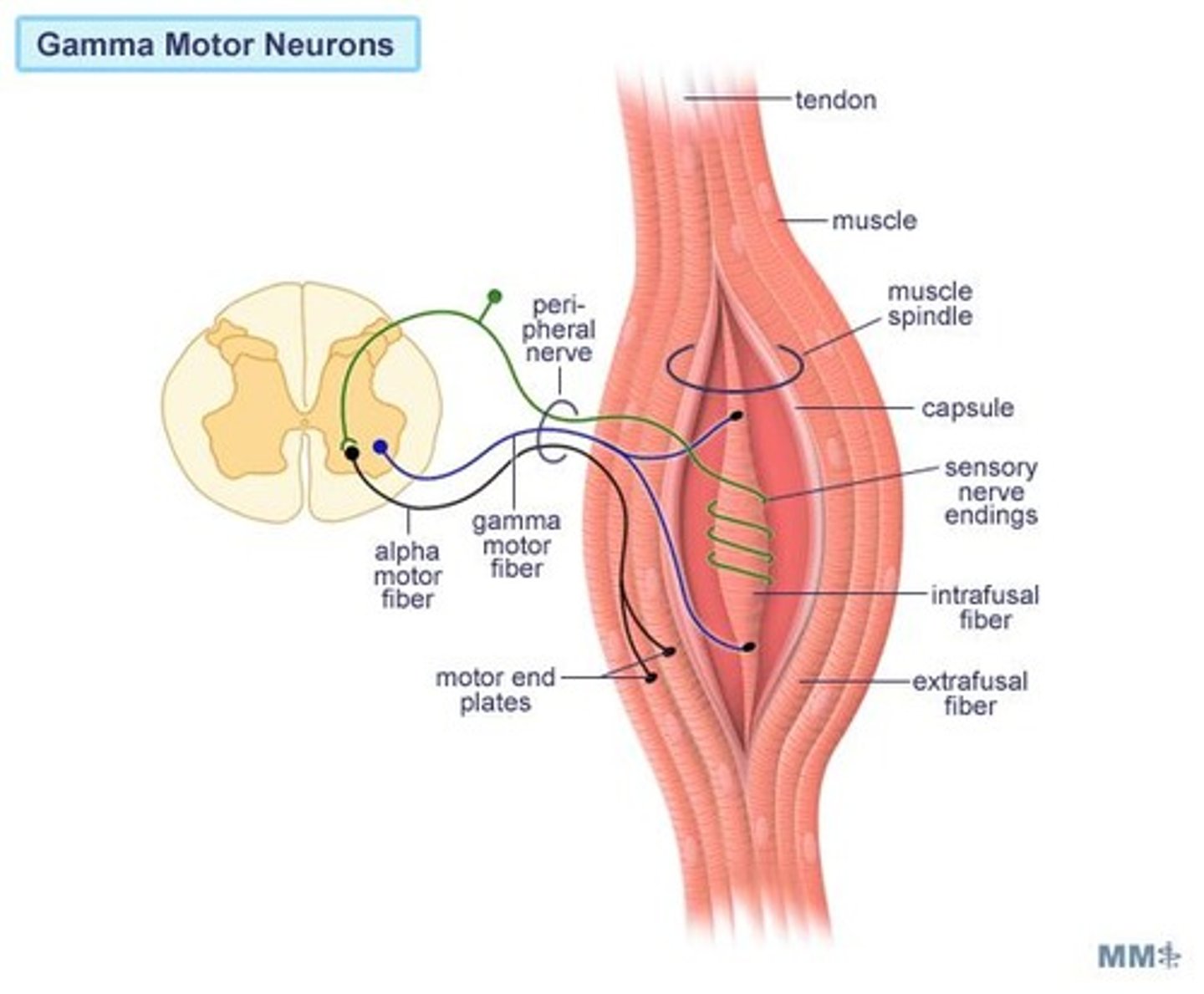
What is the role of gamma motor neurons?
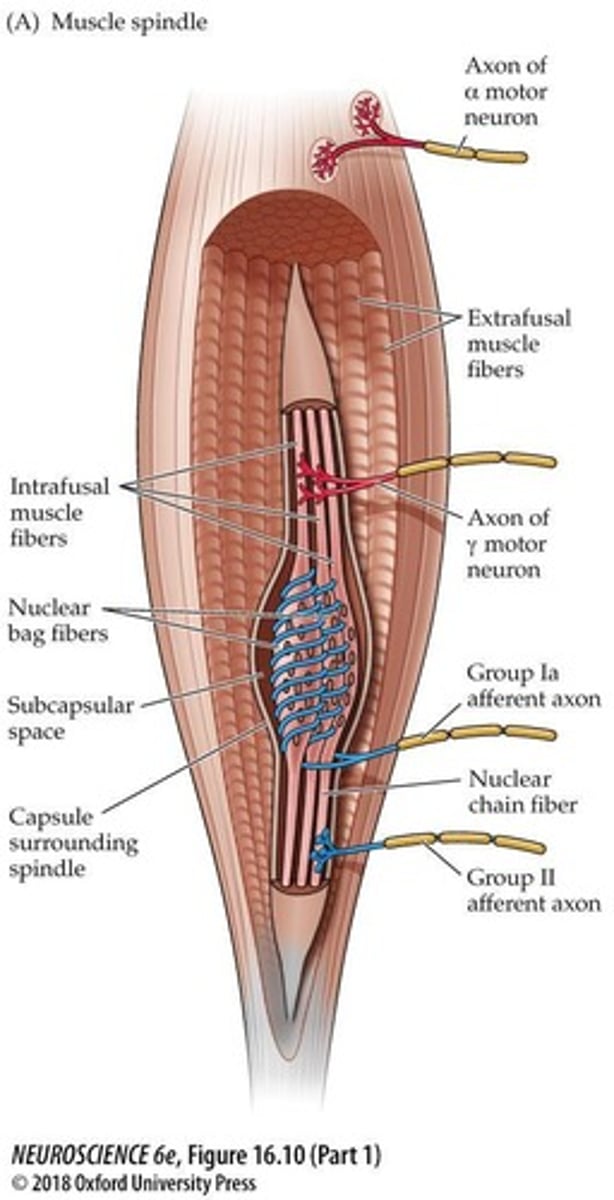
Gamma motor neurons innervate intrafusal muscle fibers, controlling their length and acting as sensory receptors.
What is the myotatic reflex and its function?
The myotatic reflex monitors and adjusts muscle length to maintain posture and balance.
What is the Golgi tendon reflex?
The Golgi tendon reflex involves sensory receptors that monitor muscle tension and help regulate the force of muscle contraction.
What is the flexion/crossed-extension reflex?
The flexion/crossed-extension reflex is a protective reflex that withdraws a limb from a noxious stimulus while stabilizing the opposite limb.
What do central pattern generators do?
Central pattern generators are neural circuits that produce rhythmic patterns of motor activity, essential for behaviors like locomotion.
What are the signs associated with lower motor neuron syndrome?
Signs of lower motor neuron syndrome include muscle weakness, atrophy, and diminished reflexes.
How are medial and lateral lower motor neuron pools organized?
Medial lower motor neuron pools control posture and modulate movement, while lateral pools control skilled behaviors.
What distinguishes small slow (S) motor units from large fast fatigable (FF) motor units?
Small slow (S) motor units are rich in myoglobin and mitochondria for sustained contractions, while large fast fatigable (FF) motor units have few mitochondria and myoglobin for brief, powerful contractions.
What is the significance of the 'Final Common Pathway' in motor control?
The 'Final Common Pathway' refers to alpha motor neurons, which are essential for muscle contraction and controlled by upper motor neurons and sensory afferents.
What is the function of local circuit neurons in the spinal cord?
Local circuit neurons integrate sensory input and coordinate motor activity, controlling muscle groups for posture and movement.
What happens to muscle tension after a single action potential?
Muscle tension increases after a single action potential, leading to muscle contraction.
What is the relationship between motor neuron recruitment and muscle force?
Increasing the number of active motor units (motor neuron recruitment) increases the force produced by a muscle.
What is the primary function of alpha motor neurons?
Alpha motor neurons innervate extrafusal muscle fibers, controlling movement and posture.
How do medial local circuits differ from lateral local circuits in the spinal cord?
Medial local circuits span several spinal segments and control axial muscles and posture, while lateral circuits span fewer segments and control fine movements of distal extremities.
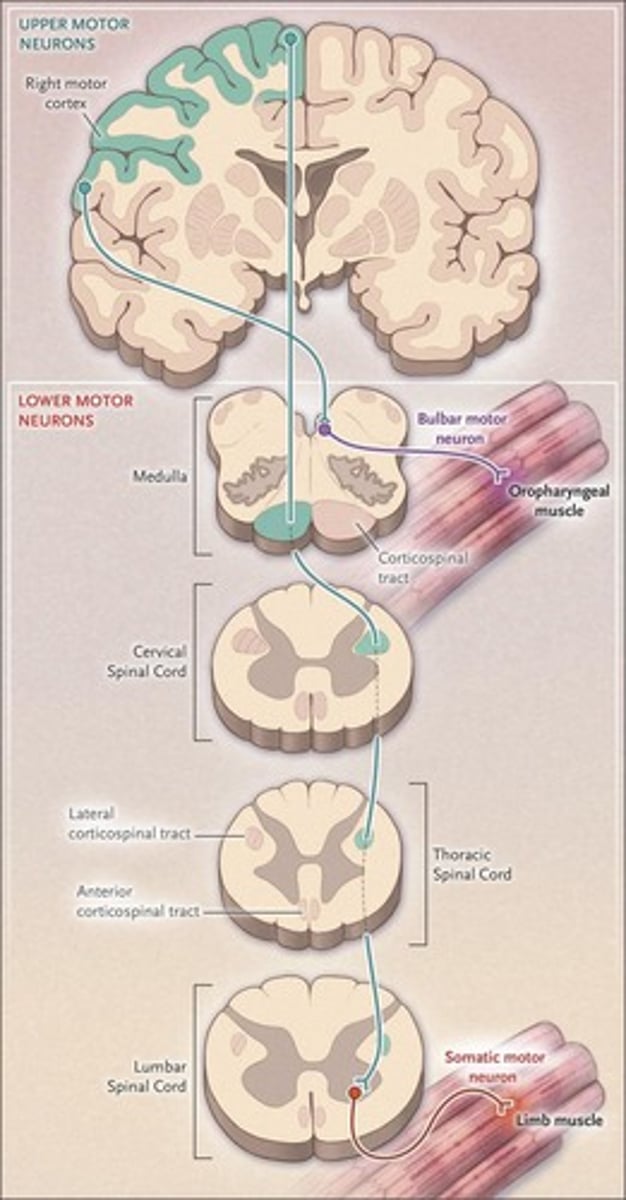
What is the role of upper motor neurons in controlling lower motor neurons?
Upper motor neurons provide input to lower motor neurons, influencing voluntary movement and reflexes.
What is the effect of spinal cord injury on motor control?
Spinal cord injury can disrupt the function of lower motor neurons, leading to loss of movement and muscle control in affected areas.
What is the importance of muscle tone modulation?
Muscle tone modulation is crucial for maintaining posture and readiness for movement.
What are the characteristics of intermediate fast fatigue-resistant (FR) motor units?
Intermediate fast fatigue-resistant (FR) motor units are designed for sustained activity with moderate force production.
What is the Size Principle in motor unit recruitment?
Motor unit recruitment occurs in a fixed order, with small fibers recruited first.
What happens when you squeeze your fist harder?
Larger motor units are recruited when you squeeze harder than the ones first activated.
What is the effect of stimulation rate on muscle tension?
Higher stimulation rates can increase muscle tension.
What are annulospiral endings and their function?
Annulospiral endings are sensory receptors that respond to the velocity of muscle stretch.
What are flower-spray endings and their function?
Flower-spray endings are sensory receptors that respond to sustained fiber stretch.
What is the myotatic stretch reflex?
A protective mechanism that prevents muscle tearing through a monosynaptic reflex arc.
What role do gamma (γ) motor neurons play in muscle spindle responses?
Gamma motor neurons control the excitability of muscle spindles and regulate their sensitivity to stretch.
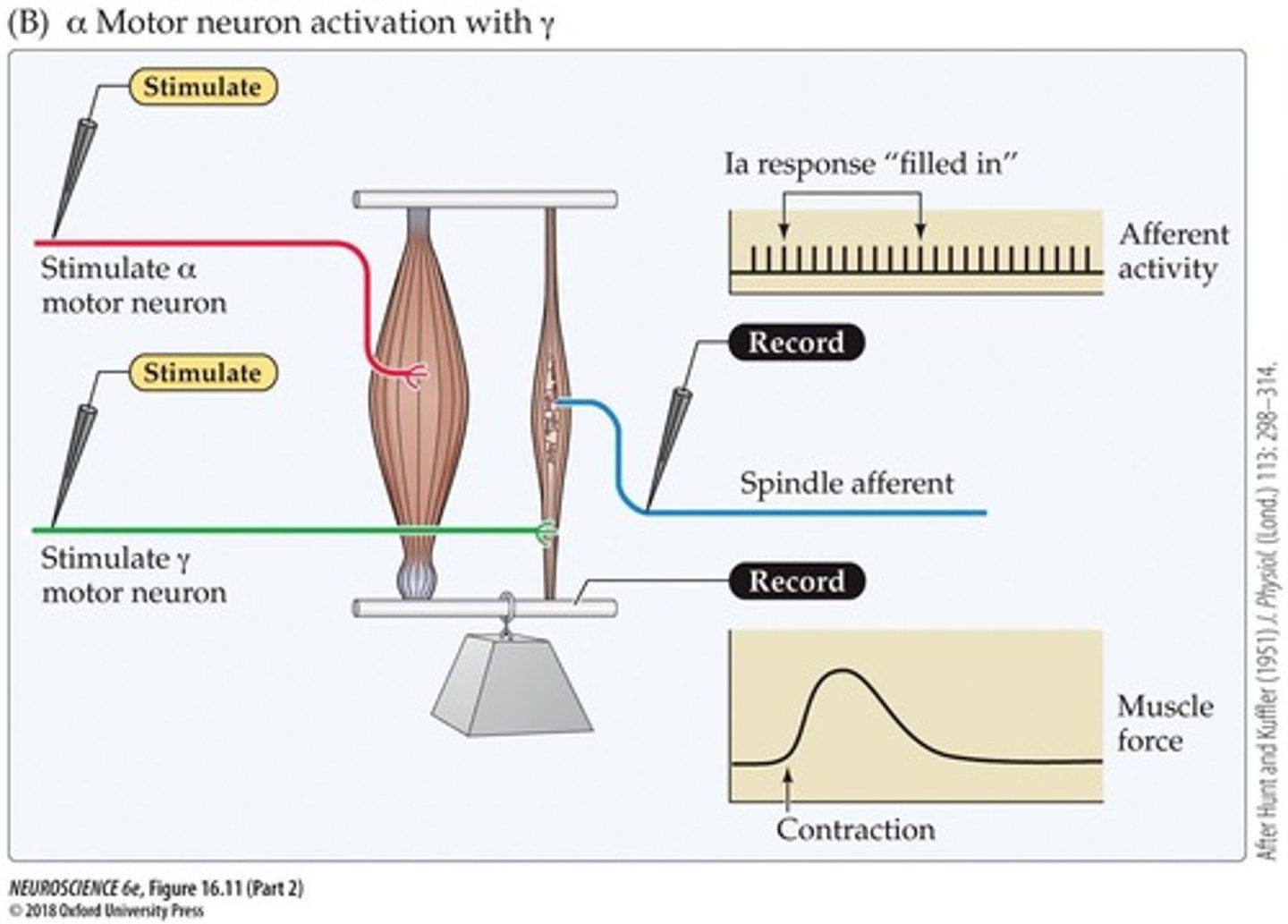
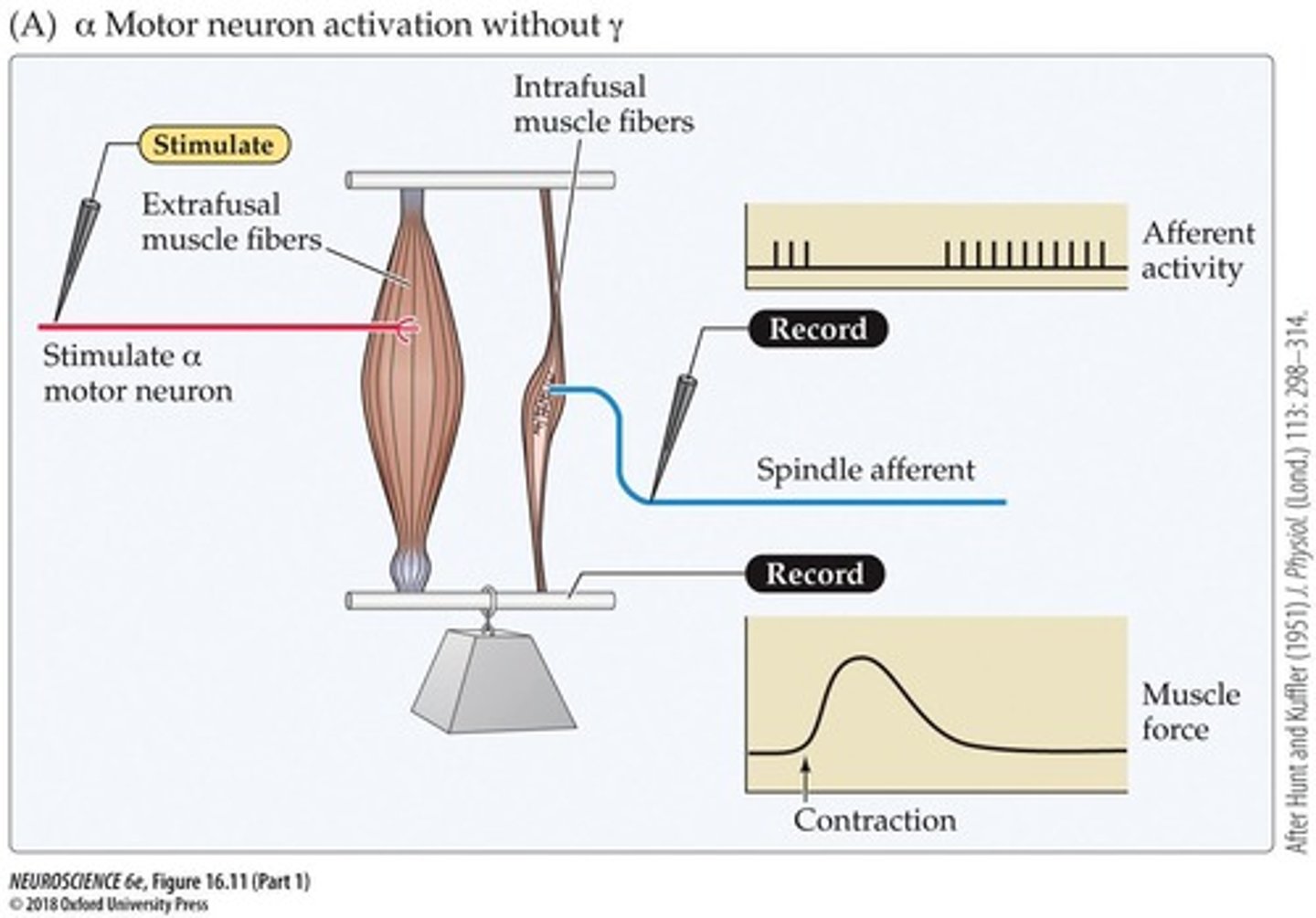
What happens when only α motor neurons are stimulated?
There is a decrease in Ia afferent firing during muscle contraction.
What is meant by the 'gain' of the myotatic reflex?
Gain refers to the level of γ motor neuron activity; a high gain means a small stretch results in a large α motor neuron response.
How do higher centers prevent muscle spindle overactivation?
Higher centers co-activate to maintain balance and prevent overactivation of muscle spindles.
What is resting muscle tone and its significance?
Resting muscle tone maintains posture and assists in quicker movements.
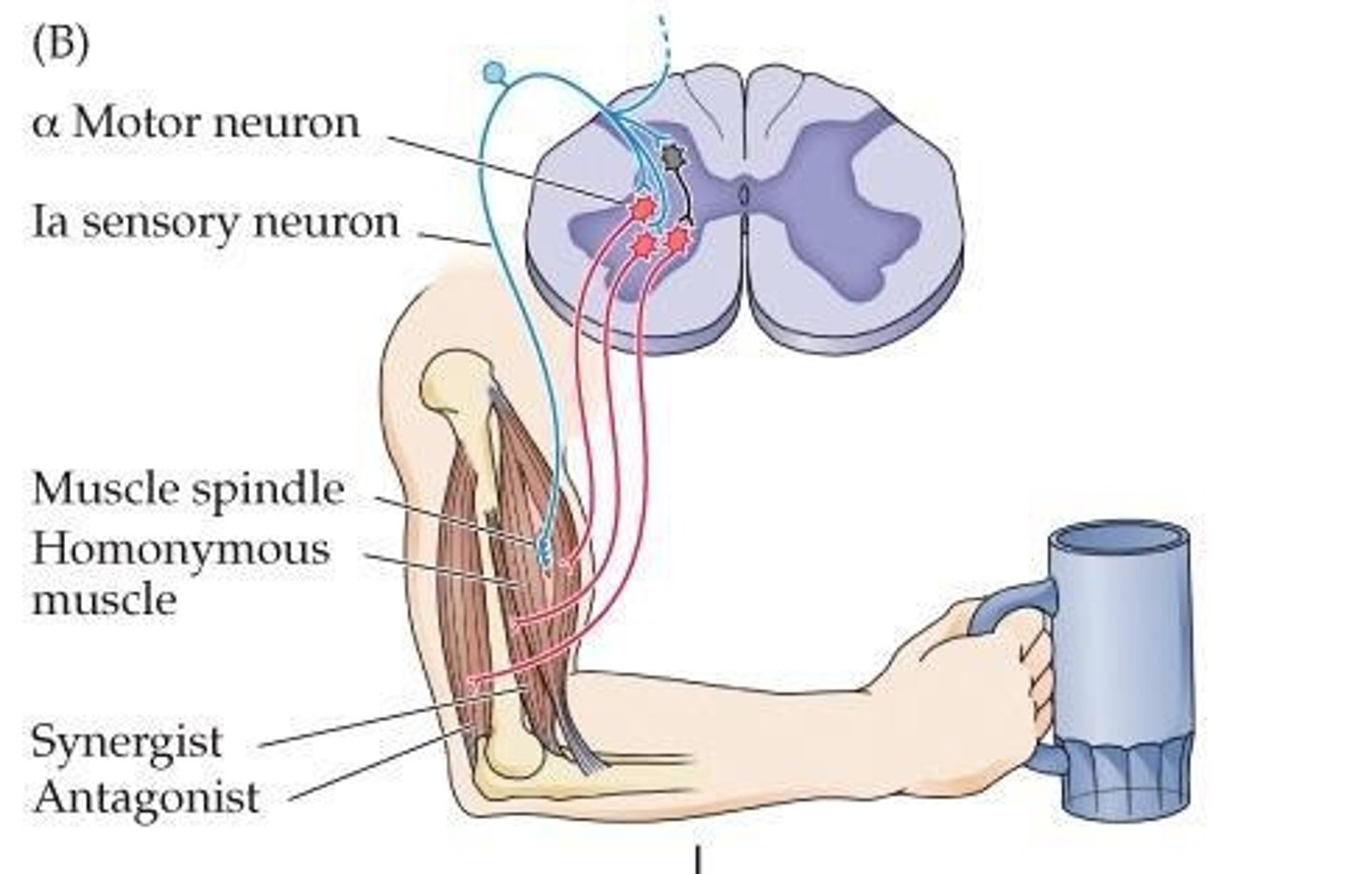
How do Ia afferents contribute to muscle contraction?
Ia afferents sense stretch and stimulate α motor neurons, leading to muscle contraction.
What is the role of γ motor neurons in voluntary movement?
Both γ and α motor neurons are activated simultaneously to maintain muscle spindle sensitivity during movement.
What is the effect of tonic discharge of γ motor neurons?
It increases muscle tone by making muscle spindles hypersensitive to stretch.
What is hypotonia and its cause?
Hypotonia is decreased muscle tone due to lower motor neuron disease or decreased Ia afferent activity.
What is hypertonia and its cause?
Hypertonia is increased muscle tone due to upper motor neuron disease, leading to increased responsiveness of α motor neurons.
What are Golgi tendon organs?
Encapsulated afferent nerve endings located at the junction of muscle and tendon, innervated by a single Ib afferent nerve.
How do Golgi tendon organs respond to muscle contraction?
They increase tension on collagen fibrils, compressing sensory nerve endings and activating mechanosensory ion channels.
What is the role of Golgi tendon organs in muscle tension regulation?
They synapse on GABAergic inhibitory neurons in the spinal cord, regulating motor neurons innervating the same muscle.
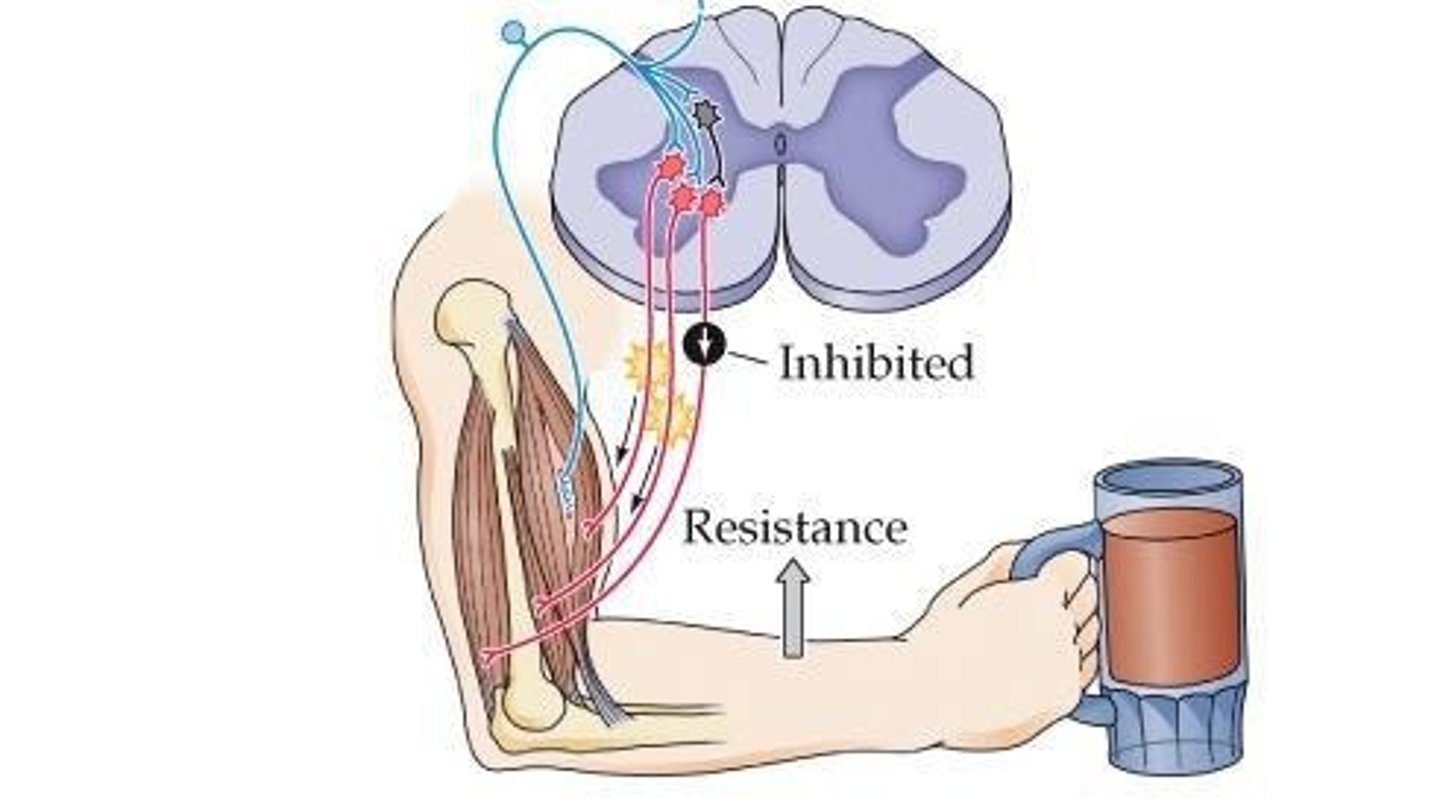
How do Golgi tendon organs affect antagonistic muscles?
They also act on excitatory neurons innervating antagonistic muscles, providing negative feedback.
What external stimuli can affect Ib inhibitory neurons?
External stimuli can also act on Ib inhibitory neurons, influencing muscle tension regulation.
What are the primary functions of muscle spindles and Golgi tendon organs during passive stretch?
Little change in Golgi tendon organ firing; muscle spindles monitor and maintain muscle length.
What role do muscle spindles and Golgi tendon organs play during active contraction?
Muscle spindles monitor and maintain muscle length; Golgi tendon organs monitor and maintain muscle force.
What is the Flexion-Crossed Extension Reflex?
A reflex where a noxious stimulus stimulates nociceptors, causing withdrawal of a limb, stimulating ipsilateral flexors, inhibiting ipsilateral extensors, and causing the opposite response in the contralateral limb.
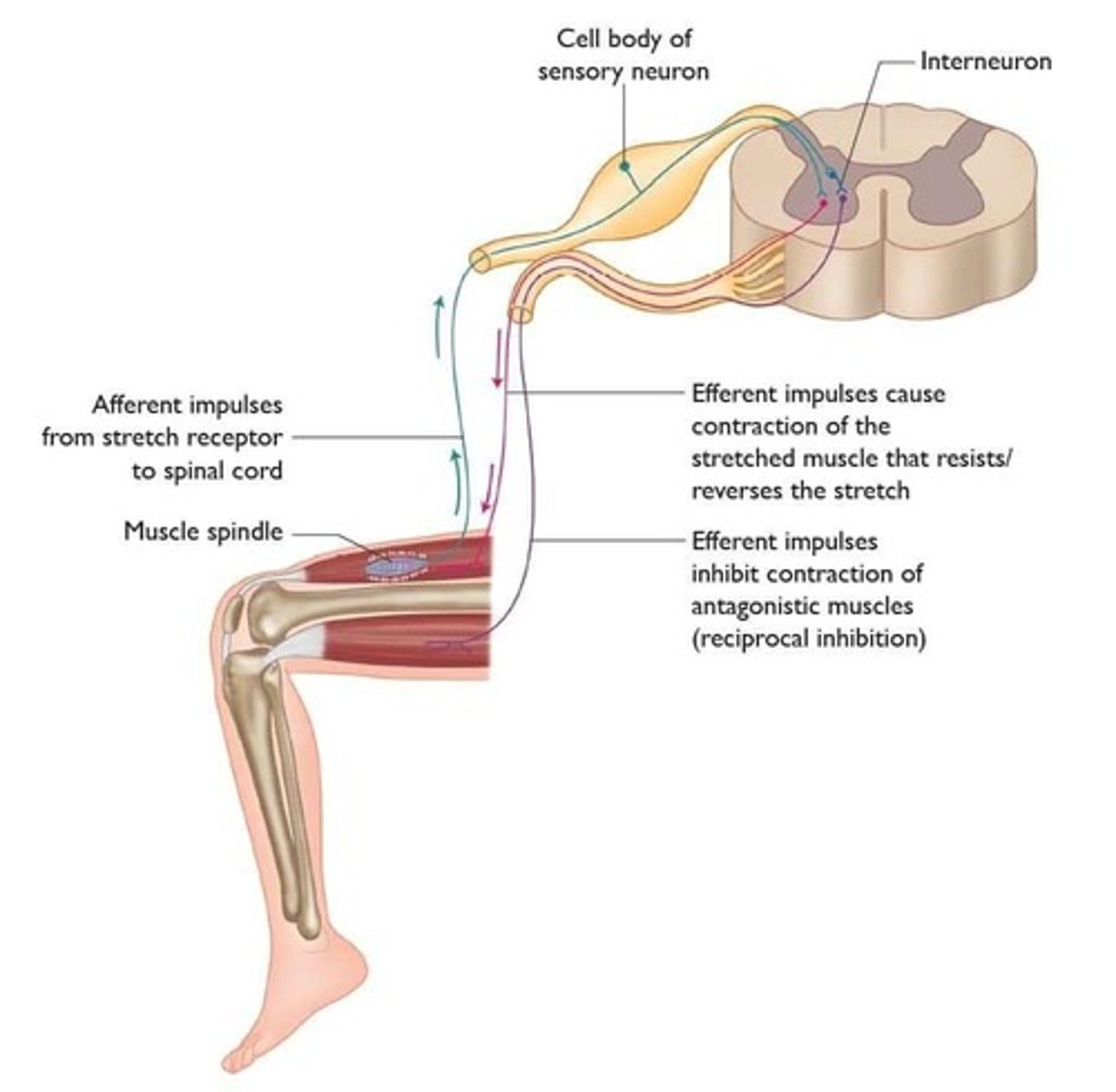
What is the function of local circuit neurons in the Flexion-Crossed Extension Reflex?
They relay information from afferents to efferent motor neurons.
What happens to Ia afferent activity when you squeeze your fist harder?
Ia afferent activity increases.
What is associated with an increase in the gain of myotatic reflexes?
An increase in the firing of gamma motor neurons.
What are Central Pattern Generators (CPGs)?
Neural circuits in the spinal cord that control rhythmic movements and complex patterns of locomotion.
What are the two phases of locomotion?
Stance phase (limb extended and planted) and swing phase (limb flexed to leave the ground).
How does the stance phase change with increased locomotion speed?
The stance phase shortens.
What is the significance of local circuitry in hindlimbs with a transected spinal cord?
Rhythmic patterns of limb movement are maintained independently of higher centers.
What types of neurons are involved in the central pattern generator for locomotion?
Excitatory glutamatergic and inhibitory GABAergic neurons.
Which behaviors are mediated by central pattern generators?
Walking, running, swimming, breathing, scratching, and chewing.
What are the signs of lower motor neuron syndrome?
Muscle paralysis or paresis, areflexia, significant reduction in muscle tone, muscle atrophy, fibrillations, and fasciculations.
What is spinal muscular atrophy (SMA)?
A disease caused by defects in the SMN1 gene leading to the deterioration of lower motor neurons and muscle weakness.
What is progressive bulbar palsy (Kennedy's disease)?
A hereditary condition affecting the brainstem, leading to difficulties in chewing and swallowing.
What are some examples of immune-mediated neuropathies?
Guillain Barre and chronic immune-mediated neuropathies.
What is Amyotrophic Lateral Sclerosis (ALS)?
A progressive neurodegenerative disease that attacks motor neurons in the brain and spinal cord, leading to muscle weakness and atrophy.
What characterizes the symptoms of ALS?
Muscle wasting, weakness, atrophy, fasciculations, spasticity, hyper-reactive reflexes, and paralysis.
What percentage of ALS cases are sporadic, and what is the typical prognosis?
90% of cases are sporadic, usually deadly within 3-5 years after first symptoms.
What are the potential causes of ALS?
Unknown, but may involve a combination of genetics and environmental exposures.
Which sign would NOT indicate a lower motor neuron injury?
Increased myotatic reflexes in the affected limb.
What is the role of alpha motor neurons in muscle contraction?
They are responsible for initiating muscle contraction.
What happens to muscle tone in lower motor neuron syndrome?
There is a significant reduction in muscle tone.