Pain management
 Call Kai
 Learn
Learn Practice Test
 Spaced Repetition
 Match
Match Flashcards
 Knowt Play
1/29

There's no tags or description
Looks like no tags are added yet.
Name | Mastery | Learn | Test | Matching | Spaced | Call with Kai | Chat |
|---|
No analytics yet
Send a link to your students to track their progress
30 Terms
relationship between pain and problem behavior
presenting complaint as a direct manifestation of pain, unidentified pain underpinning secondary concerns within the initial behavior problems, exacerbation of one or more signs of problem behavior as a result of pain, adjunctive behavioral signs associated with pain
preemptive method of pain control vs proactive approach to pain control
preemptive: treat pain as early as possible acute pain= before sx chronic= tx early as possible
proactive: understanding when pain may be present, actively assessing for pain, engaging the entire veterinary team and pet owners, make owners aware of risks and early signs, especially in at risk breeds or age groups
assessment tools for acute pain in cats
owners input of observation sudden behavioral changes
assessment tools: grimace pain scale, glasgow pain scale, colorado pain scale
assessment tools for chronic pain in cats
owner has a central role
clinical metrology instruments= screening, diagnosis and monitoring
assessment:
screening six behaviors: running, jumping up, jumping down, going up stairs, chasing objects
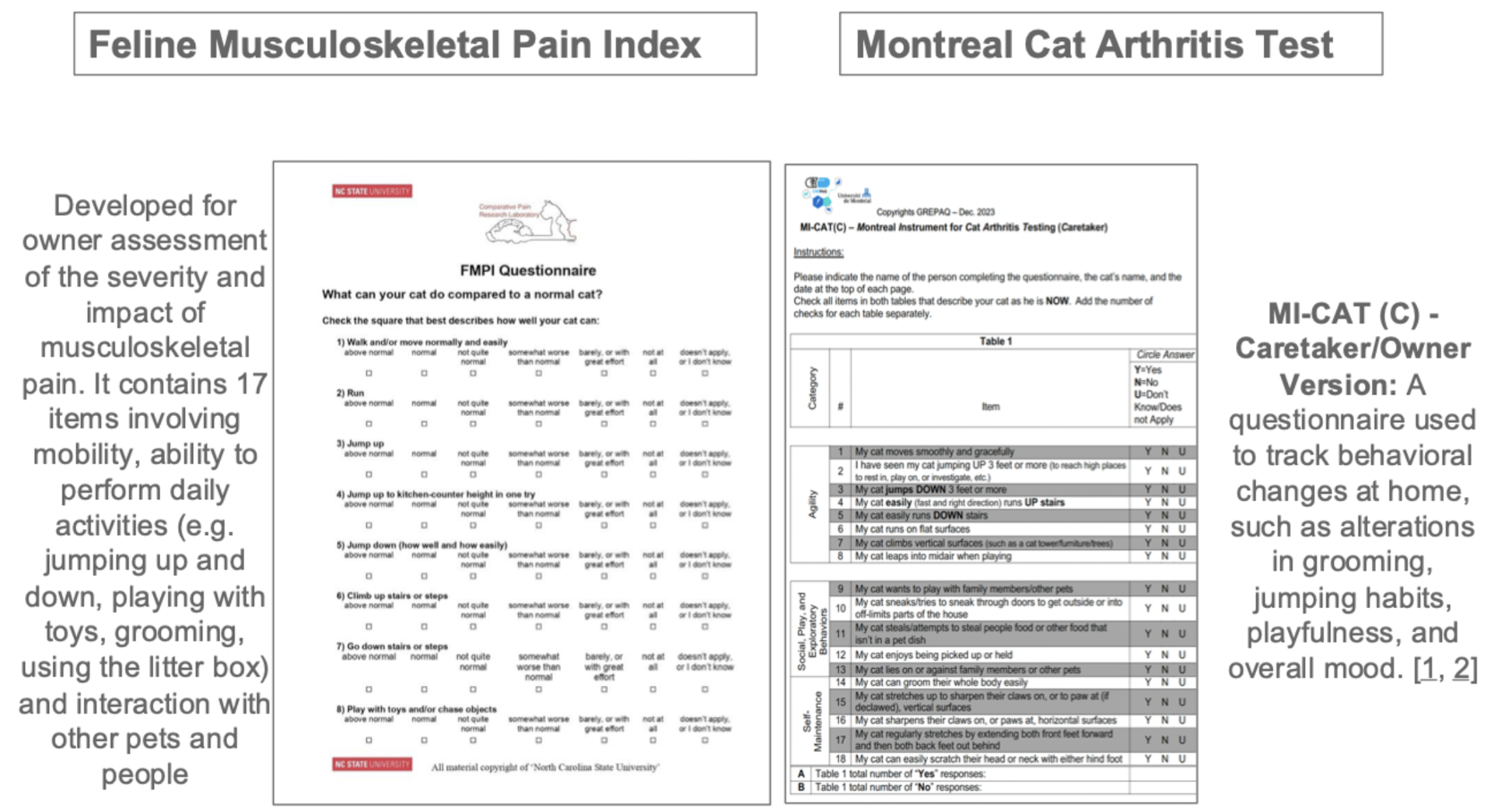
diagnosis= feline musculoskeletal pain index, Montreal cat arthritis test
monitoring= client specific outcome measures developed for owner assessment of the impact of pain on the cats ability to perform activities that are specific to each individual cat

assessment tools for acute pain in dogs
in clinic: appetite, demeanor, behavior and palpation
clinical metrology instruments: pain scales
owner: observations of sudden changes in normal behavior
assessment tools for chronic pain in dogs
musculoskeletal most common type of chronic pain
in clinic: observation of motion, posture, hands on evaluation
owner: observation of gradual changes in their dog behavior
questionaries for owners: canine brief pain inventory, liverpool OA in dogs, canine orthopedic index

acute vs chronic pain
acute: adaptive/protective pain: nociceptive and inflammatory
chronic: maladaptive/ pathological pain: neuropathic and functional (no longer protective, causes changes in the physiological pain pathway, amplifying pain) longer it goes on the more difficult it is to treat
1st tier chronic pain management for dogs/cats

2nd tier chronic pain management for dogs/cats

3rd tier chronic pain management for dogs/cats

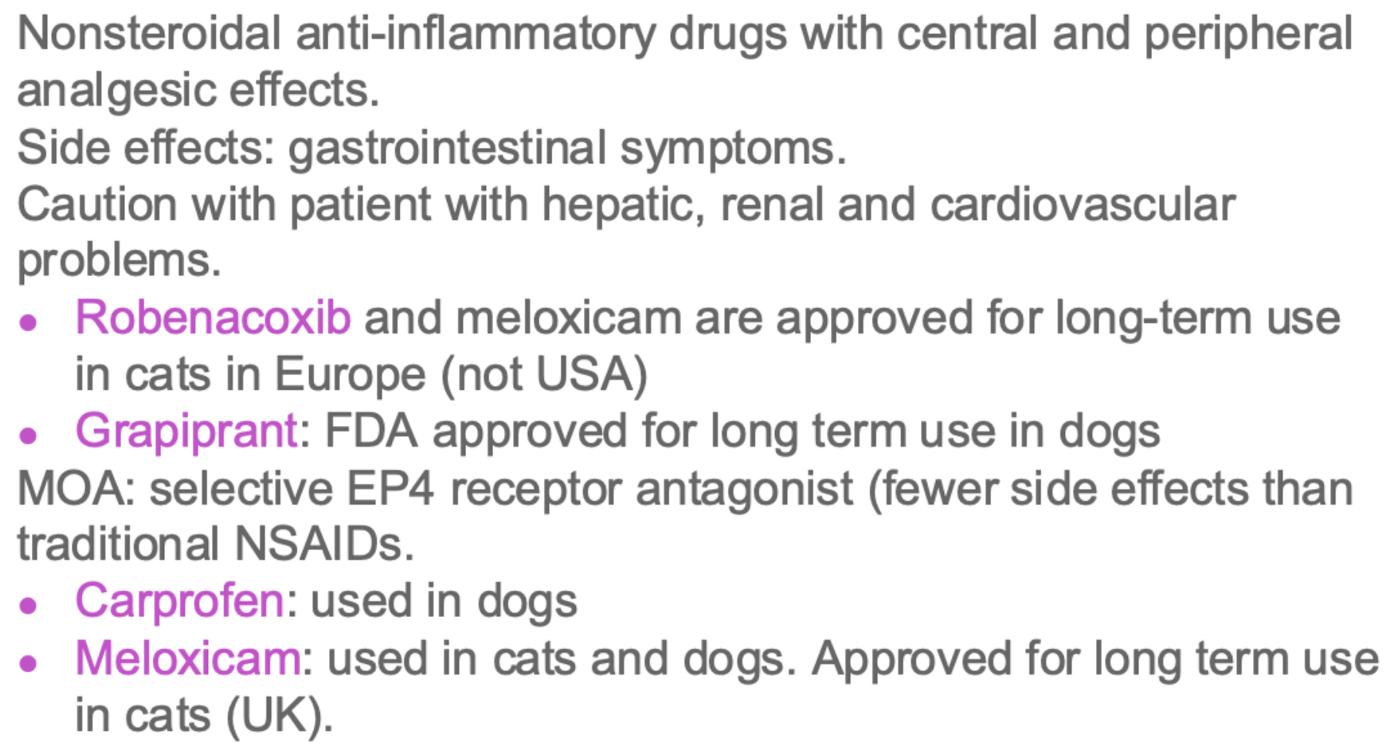
NSAIDS
opioids

long term no recommended for chronic pain control (risk of human abuse, poor oral absorption)
Gabapentin and pregabalin

nt: gaba-amino butyric acid (GABA)
Acetaminophen

intraarticular treatments

Amantadine

Amytriptyline

cannabinoids (CBD)

not fda approved
Medications to treat chronic pain in dogs: chart with MOA and frequency

Medications to treat chronic pain in cats: chart with MOA and frequency

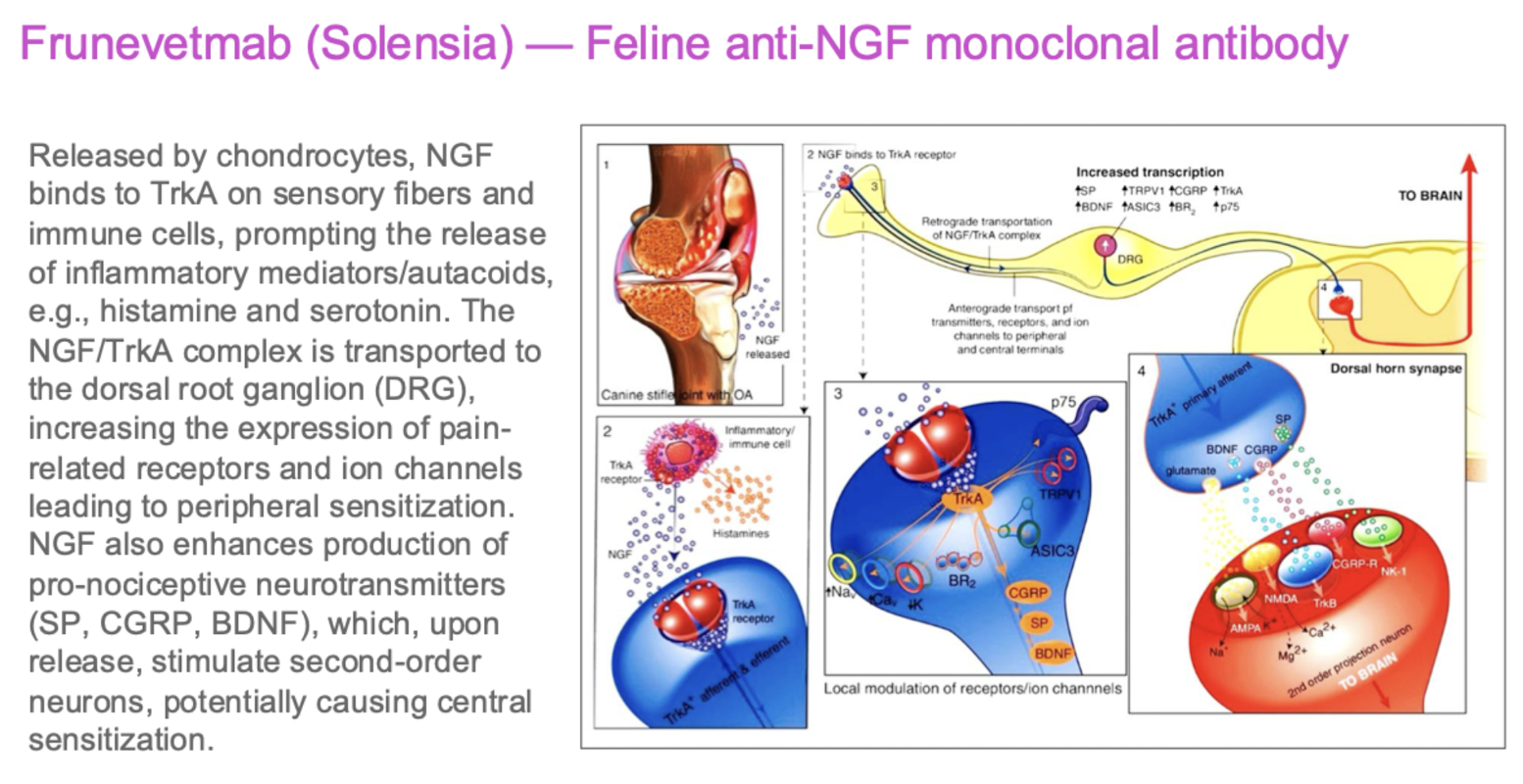
Frunevetmab (solensia) feline anti NGF monocolonal antibody

Lenivia (bedinvetmab)
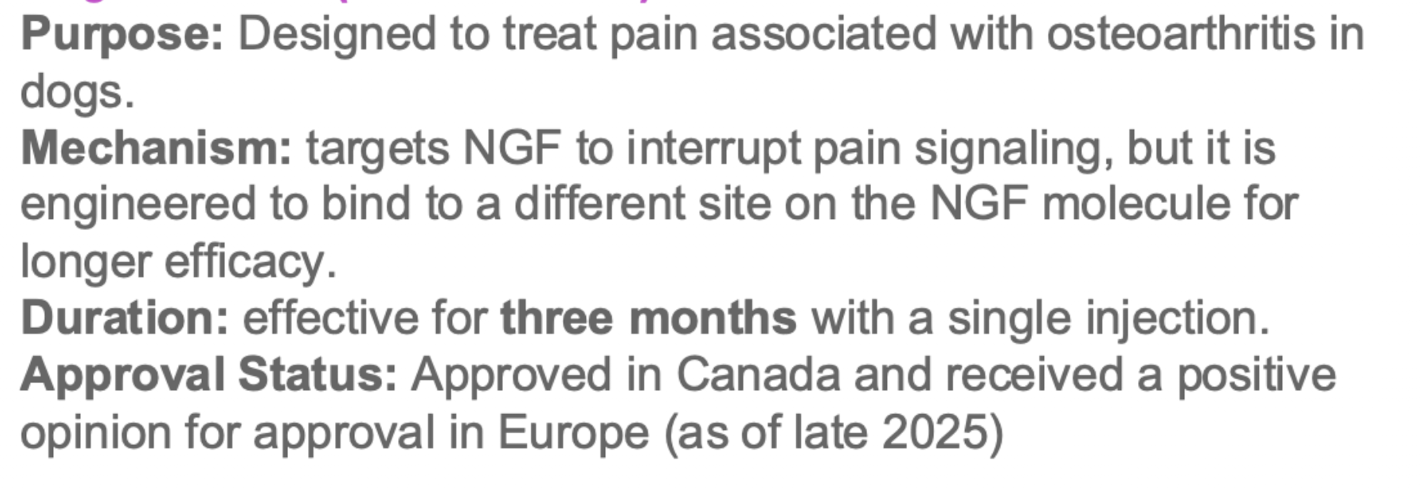
Portela (frunevetmab)

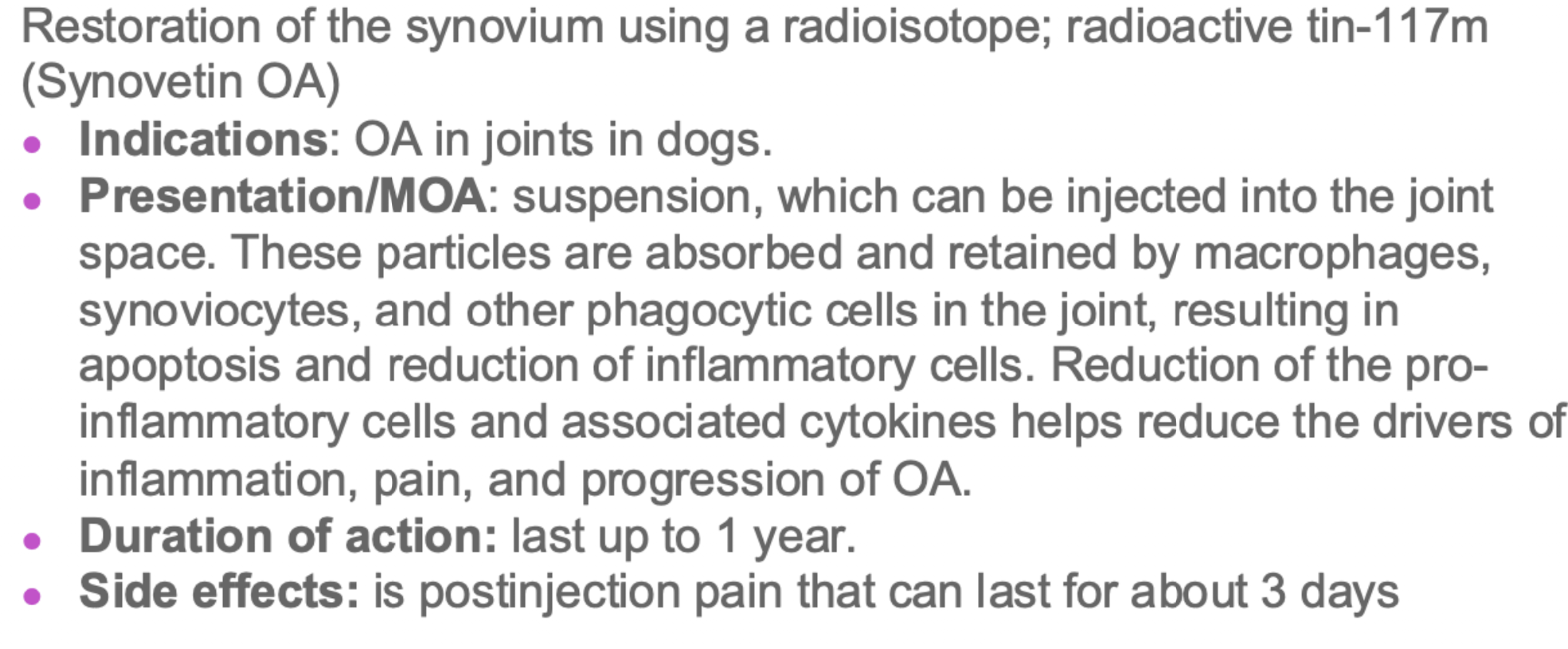
Radiosynoviorthesis
nonpharmacological approaches
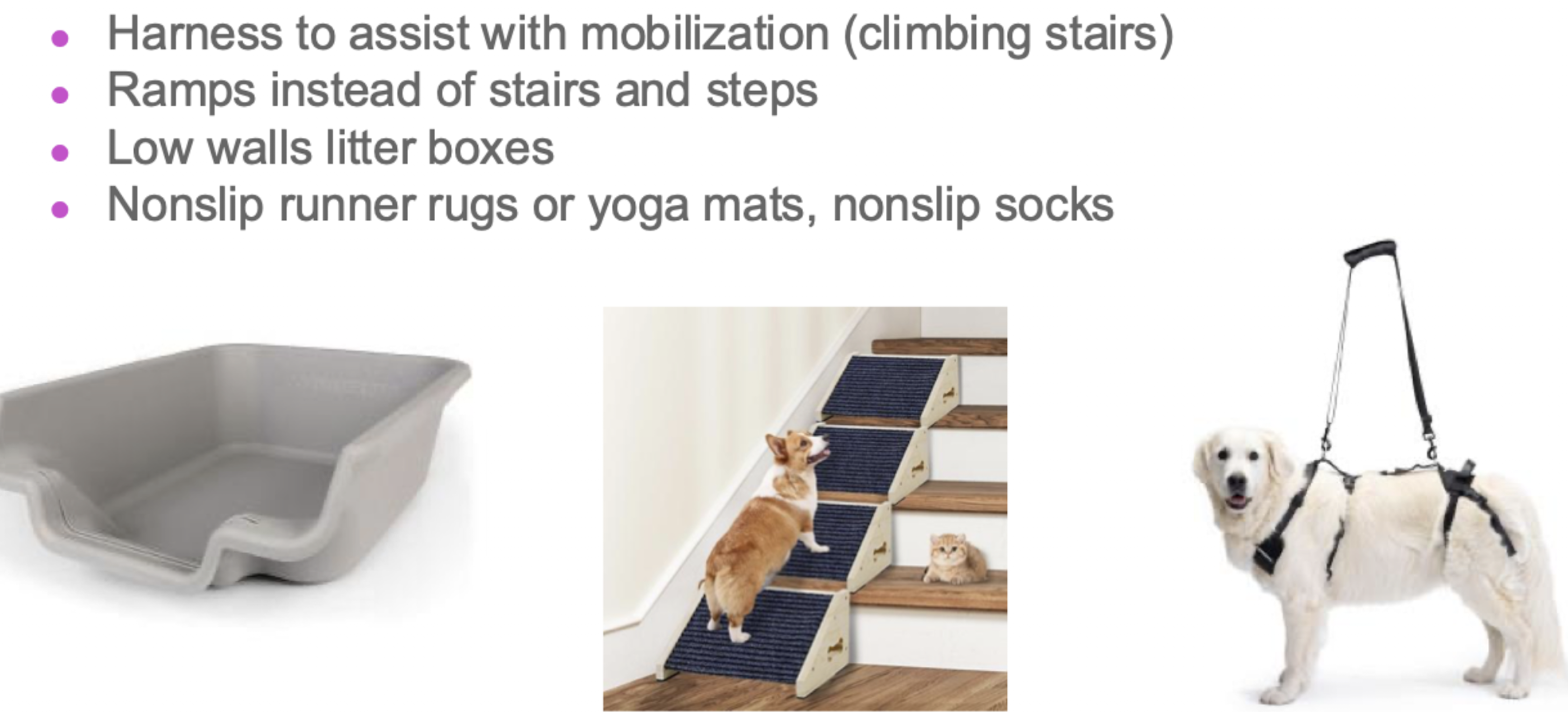
low level laser therapy, hydrotherapy, weight control, nutrition: omega 3 fatty acids and caloric restriction, acupuncture, environmental modifications, physical therapy
nutraceuticals (3)

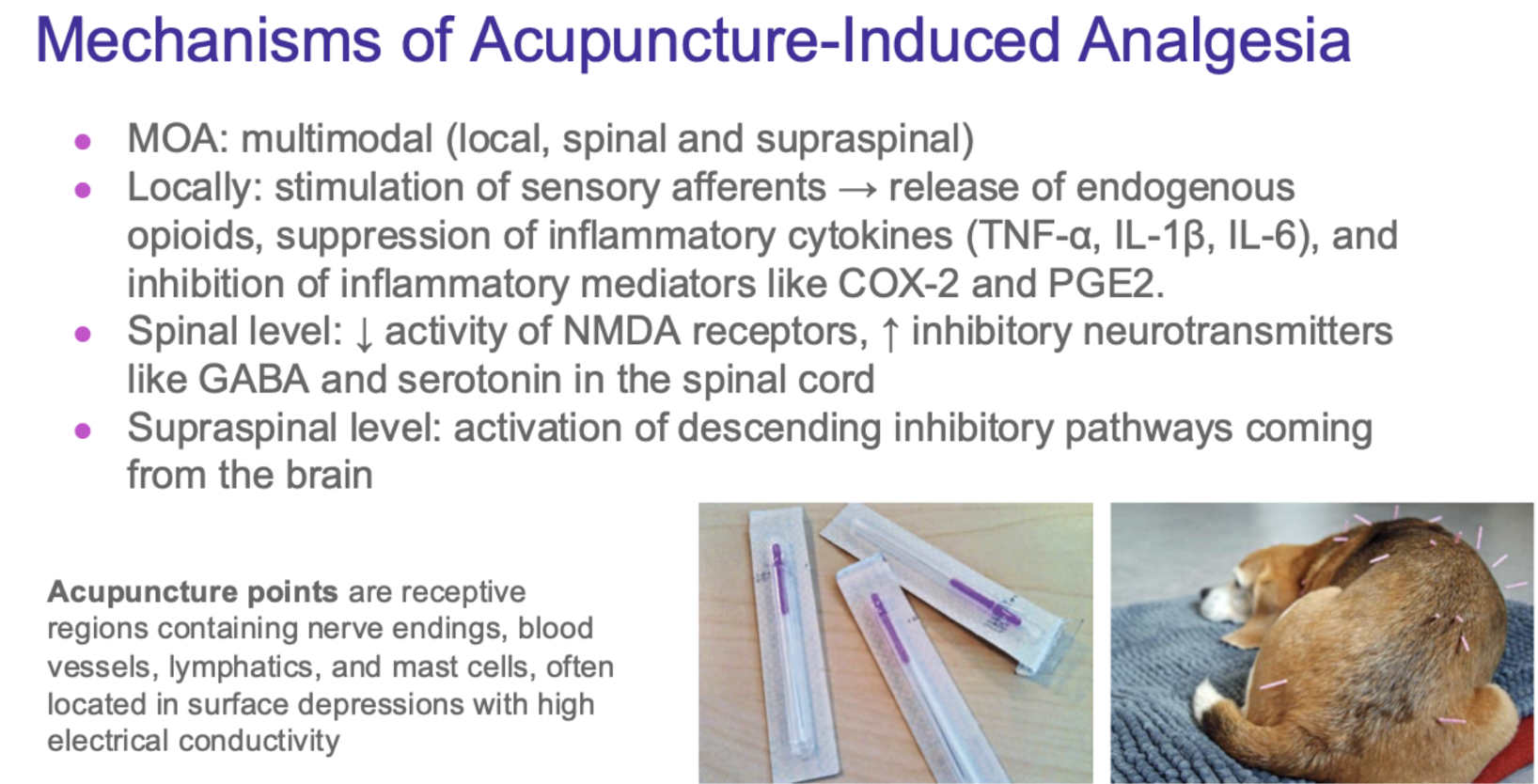
acupuncture MOA and techniques


hydrotherapy

Photobiomodulation therapy


Environmental modifications