math formula (basic edition)
 Studied by 0 people
 Call Kai
 Learn
Learn Practice Test
 Spaced Repetition
 Match
Match Flashcards
 Knowt Play
1/28

Earn XP
Name | Mastery | Learn | Test | Matching | Spaced | Call with Kai |
|---|
No study sessions yet.
29 Terms
What are the three trigonometric rations?
opposite, hypotenuse, adjacent
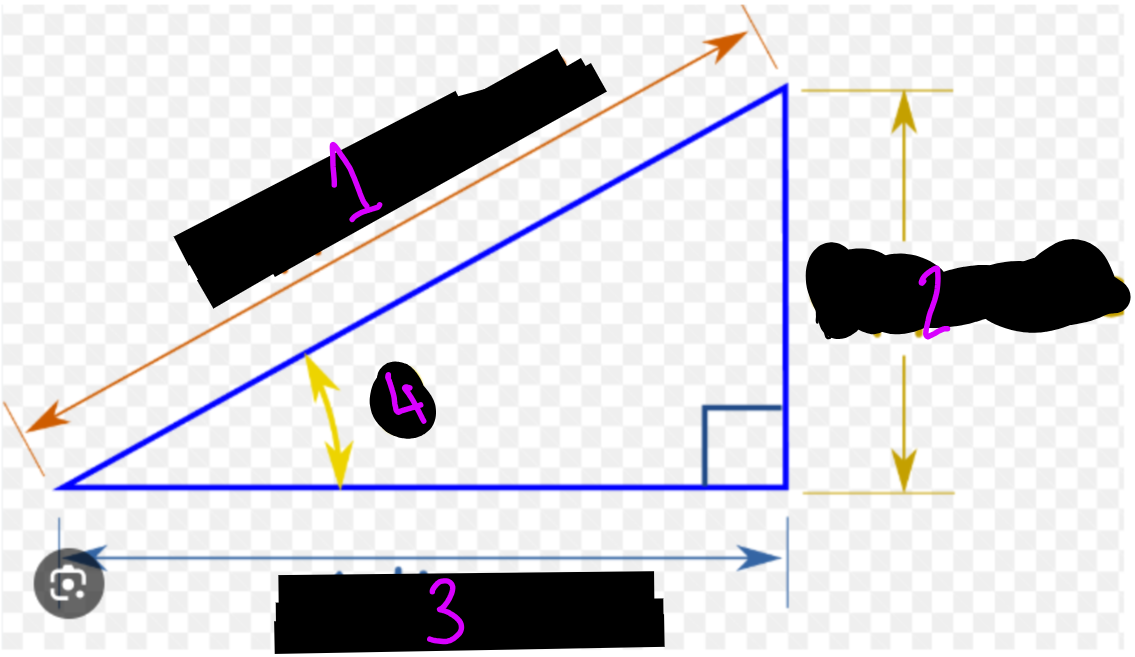
What is 1?
the hypotenuse
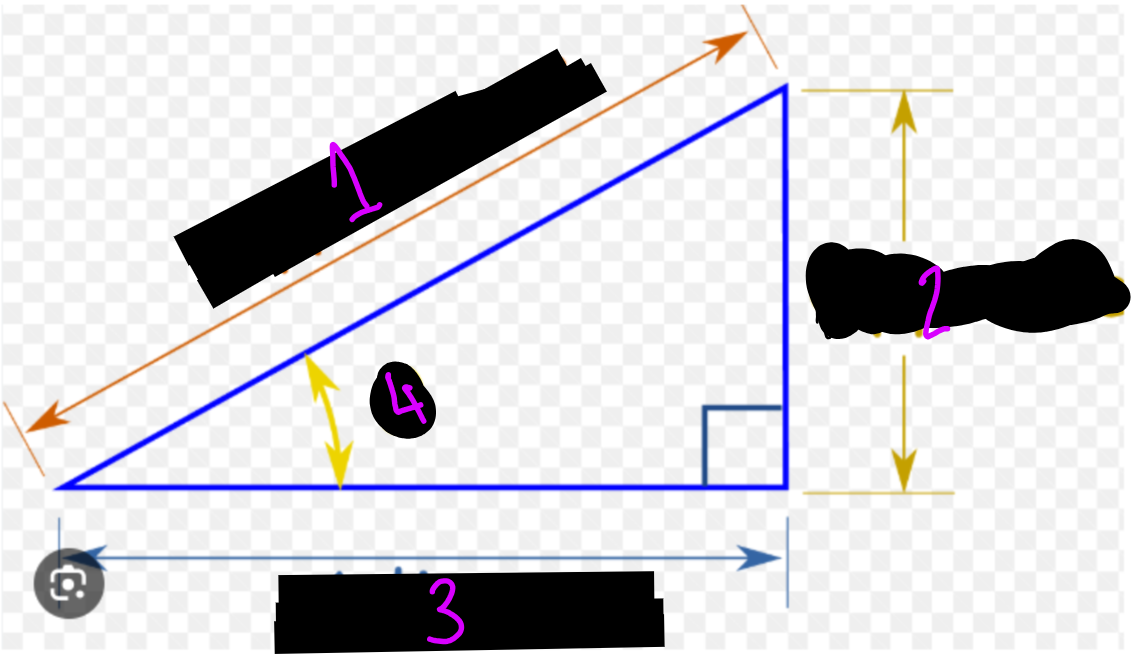
What is 2?
the opposite
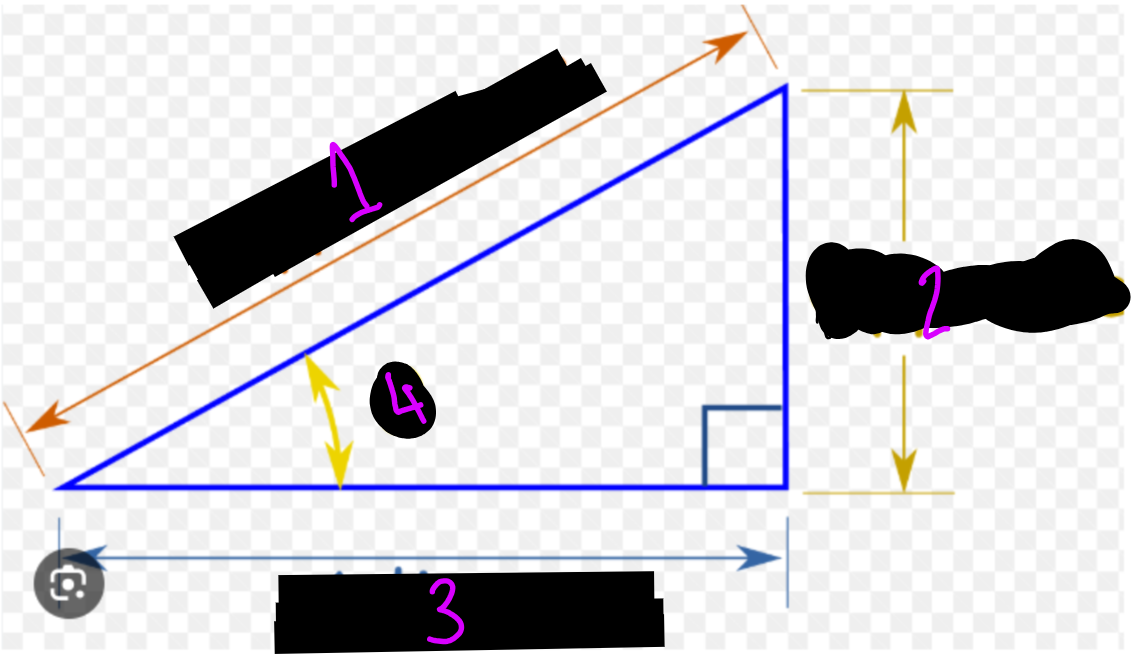
What is 3?
the adjacent
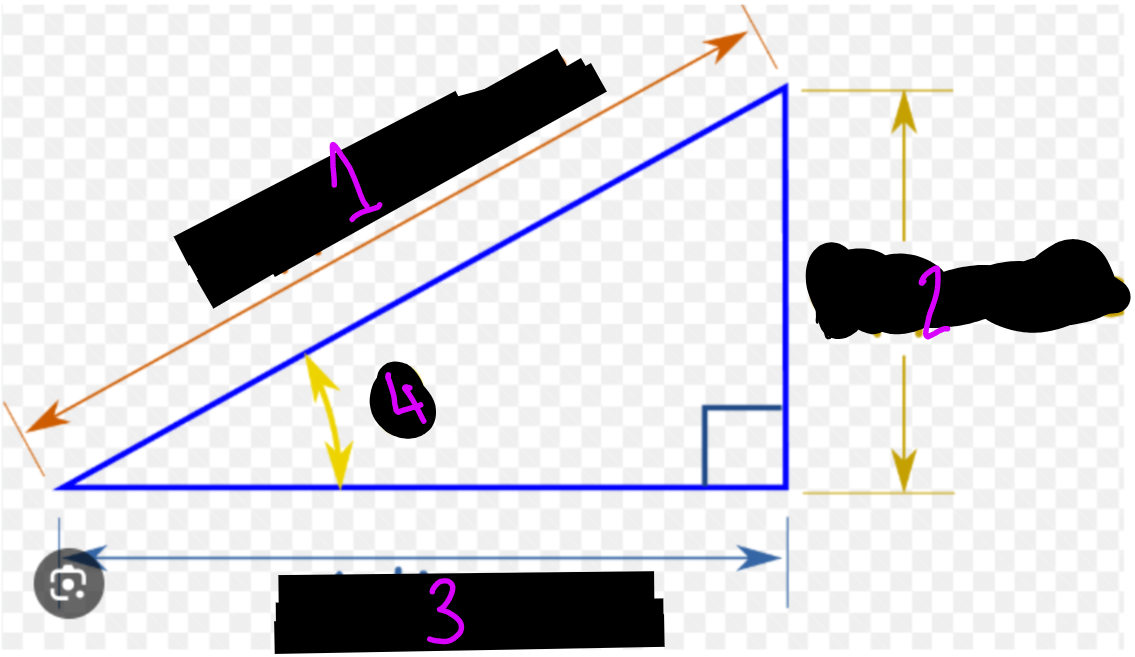
What is 4?
theta (θ)
How to spot the hypotenuse?
it is the longest horizontal line
How to spot the opposite?
it is opposite from the theta
How to spot the adjacent?
it is right next to the theta
How to tell when you need to use sin?
if the lines you using for the calculation are the opposite and the hypotenuse
How to tell when you need to use cos?
if the lines you are using for the calculation are the adjacent and the hypotenuse
How can you tell when you need to use tan?
if the lines you are using for the calculation are the opposite and the adjacent
Calculation for sin?
O/H
Calculation for cos?
A/H
Calculation for tan?
O/A
How to remember the calculation for sin, cos and tan?
SOCAHTOA
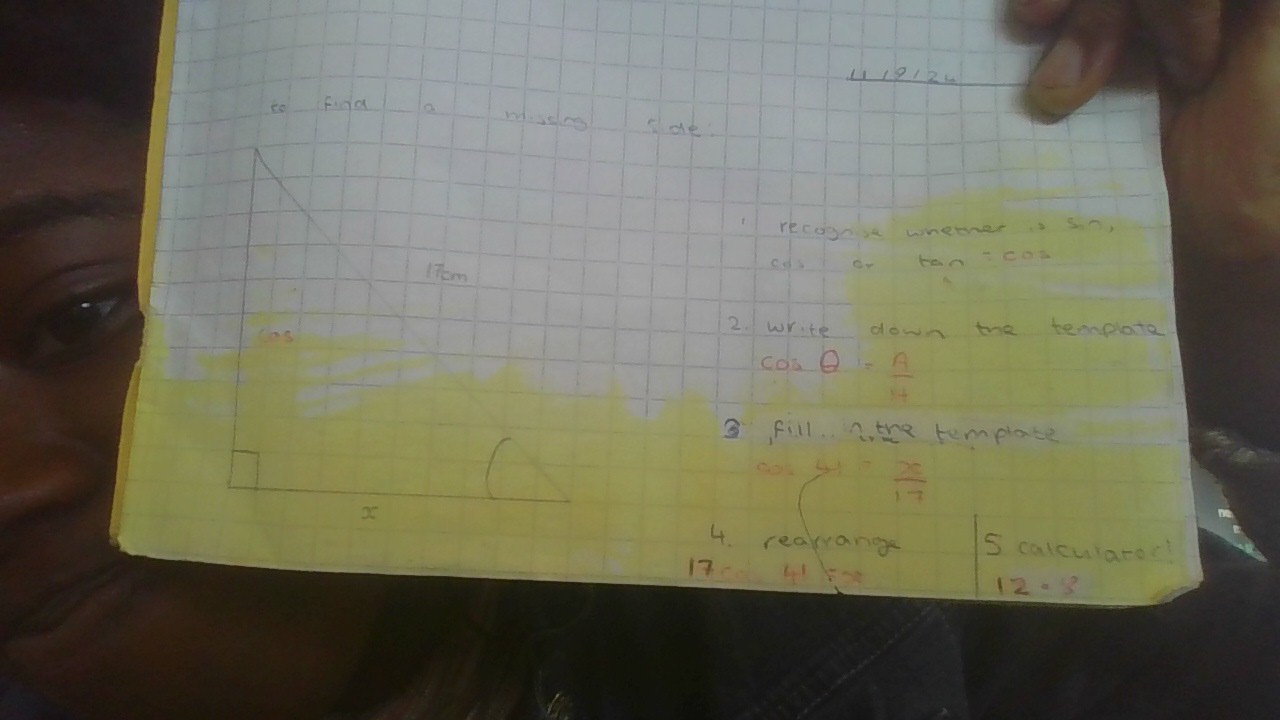
How do you find a missing side on a triangle
sin θ = O/H // cos θ = A/H // tan θ = O/A
rearrange
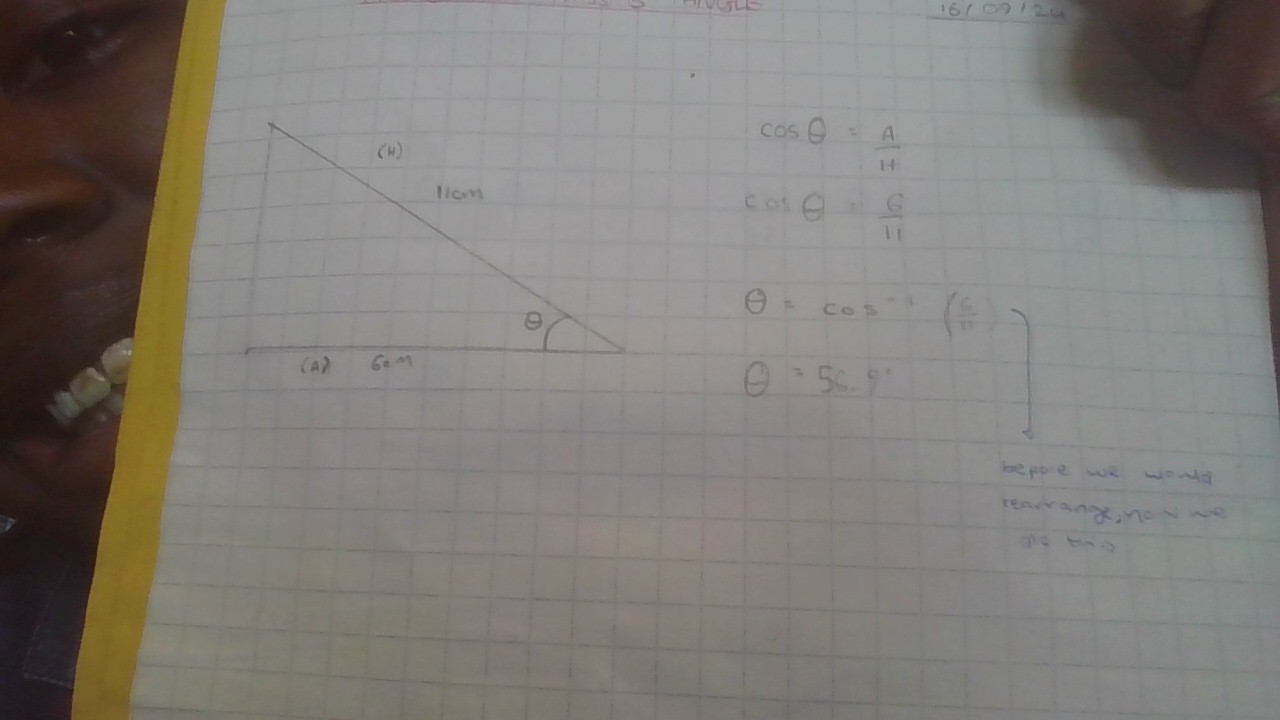
How to find a missing angle on a triangle?
sin θ = O/H // cos θ = A/H // tan θ = O/A
use sin/tan/cos-1
How do you adapt this to an isosceles triangle?
split the triangle in half vertically to make 2 right angle triangles and proceed as usual
What are the averages?
mode, median, mean and range
What is the mean?
total of numbers/number of numbers
What is the mode?
the most commonly occurring number
What is the median?
middle value in an ordered list
What is the range?
largest-smallest
What is cumulative frequency?
a running total of the frequency column
what is the equation of a straight line
y = mx + c
How do you find the gradient?
change in y / change in x
What gradient do parallel lines have?
the same gradient
What gradient do perpendicular lines do?
meet and 90° and have different, but related gradient
How do the perpendicular gradients appear?
in pairs, b/a and -a/b