Audiology Exam 1
 Call Kai
 Learn
Learn Practice Test
 Spaced Repetition
 Match
Match Flashcards
 Knowt Play
1/55

There's no tags or description
Looks like no tags are added yet.
Name | Mastery | Learn | Test | Matching | Spaced | Call with Kai | Chat |
|---|
No analytics yet
Send a link to your students to track their progress
56 Terms

Label (a, b, c, e, h, k)
a pinna
b external auditory canal
c tympanic membrane
e eustachian tube
h cochlea
k semicircular canals
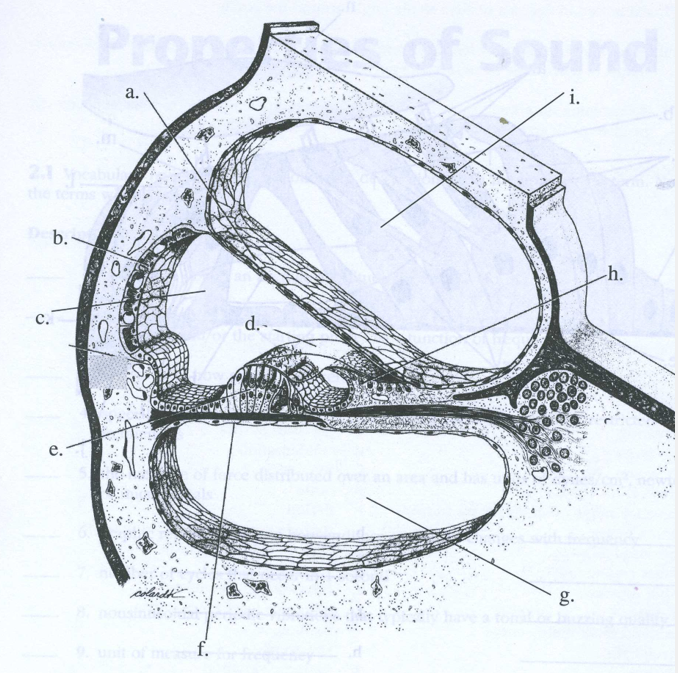
Label (a, c, d, e, f, g, i)
a Reissner's Membrane
c scala media
d tectorial membrane
e Organ of Corti
f Basilar Membrane
g Scala Tympani
i scala vestibuli
List the three ossicles beginning at the tympanic membrane.
malleus, incus, stapes
5 Divisions of the Ear
Outer (pinna, external auditory meatus)
Middle (eardrum, ossicles, eustachian tube)
Inner (vestibular for balance-semicircular canals, auditory for hearing-cochlea)
Auditory nerve (sends signal to brain)
Central nervous system (interprets signal)
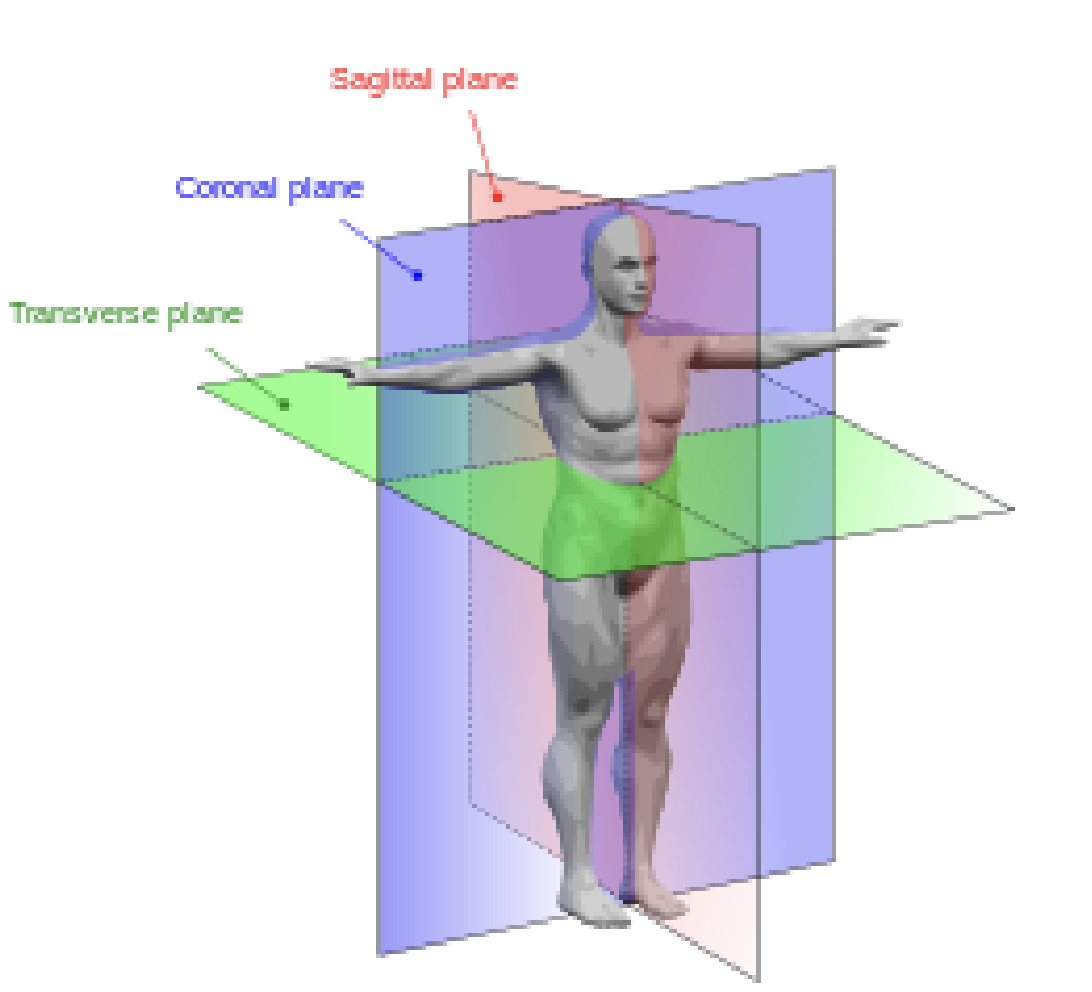
Anatomical Planes
sagittal- divides right and left
coronal- divides front and back
transverse- divides top and bottom
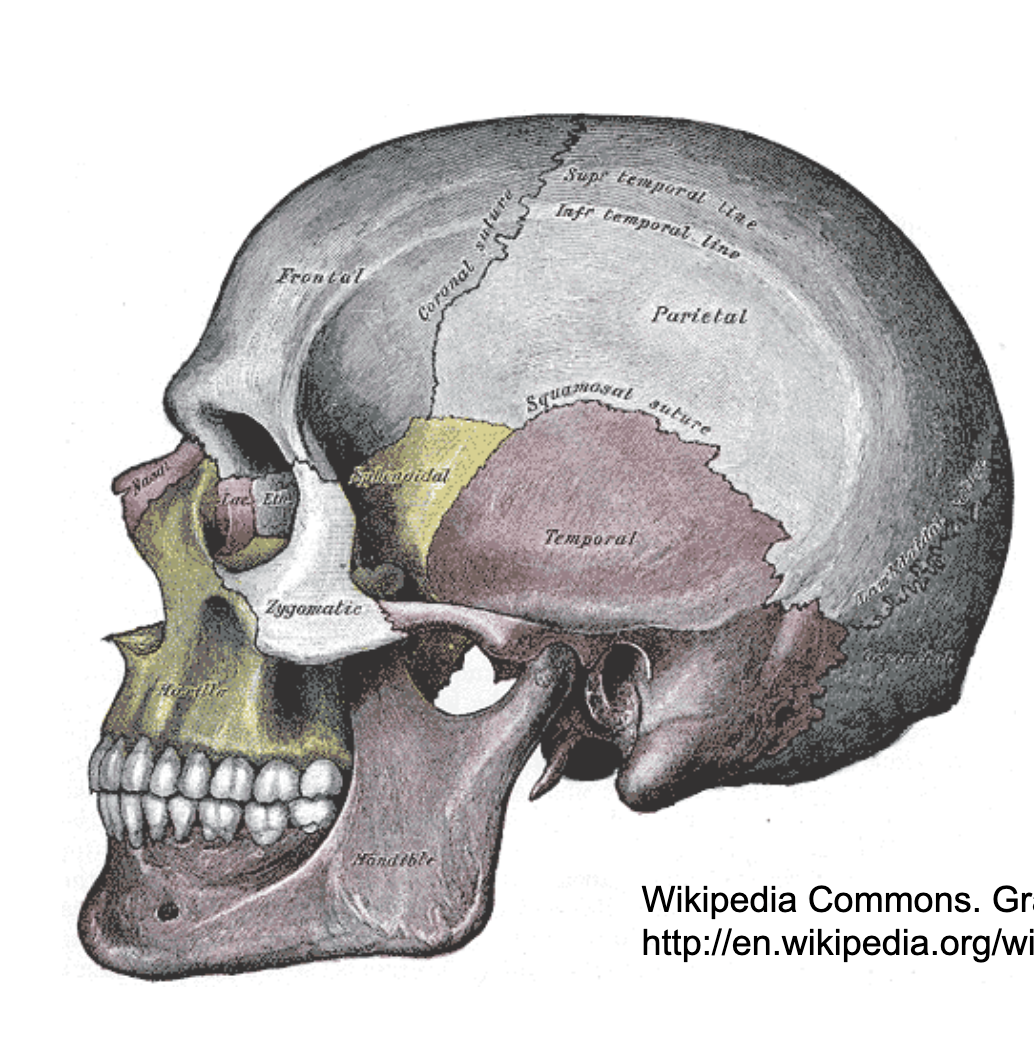
Label
• Tympanic
• Petrous-houses cochlea
• Mastoid
• Squamous

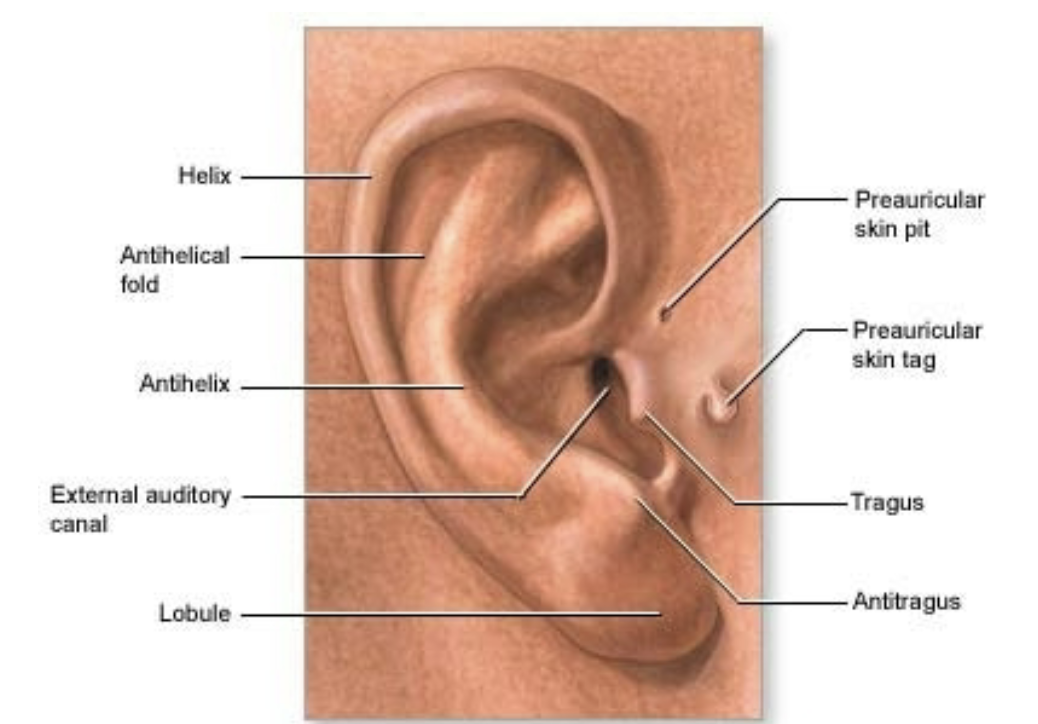
Outer Ear- parts and functions
Pinna and Ear canal/EAM
Functions:
protection
funnel sound
timing (localize sound) and intensity (emphasizes certain frequencies)
mechanism of resonance- prolongation of sound through reflection or reverbation
transfer of function- enhances certain frequencies by outer ear contributing 15-20dB at tympanic membrane

Label Middle Ear
• Tympanic Membrane- 3 layers (epithelial-continuous of ear canal, middle-fibrous, inner mucosal- continuous with lining of tympanic membrane in middle ear)
▫ Malleous
Manubrium
▫ Umbo
▫ Cone of Light- light from otoscope, point to nose, light on the right = right ear
▫ Pars Flaccida- no middle layer
▫ Pars Tensa- has fibrous middle layer
• Ossicular Chain
• Eustachian Tube

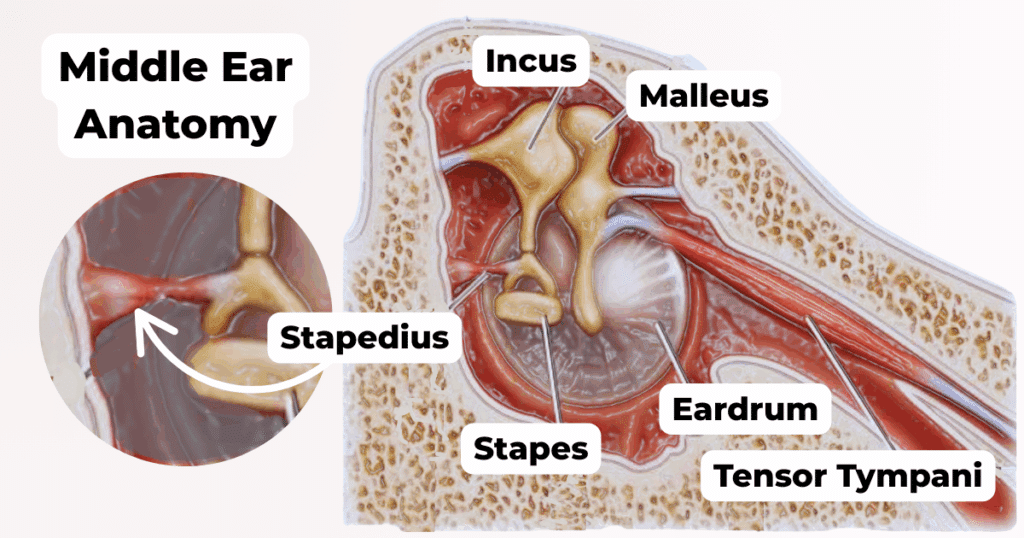
Muscles of Middle Ear
Stapedius and Tensor Tympani
both make up acoustic reflex, initiated at 80 dB as a protective mechanism but not a true protective mechanism because they only perform a pulling motion, they don’t vibrate
Eustachian Tube
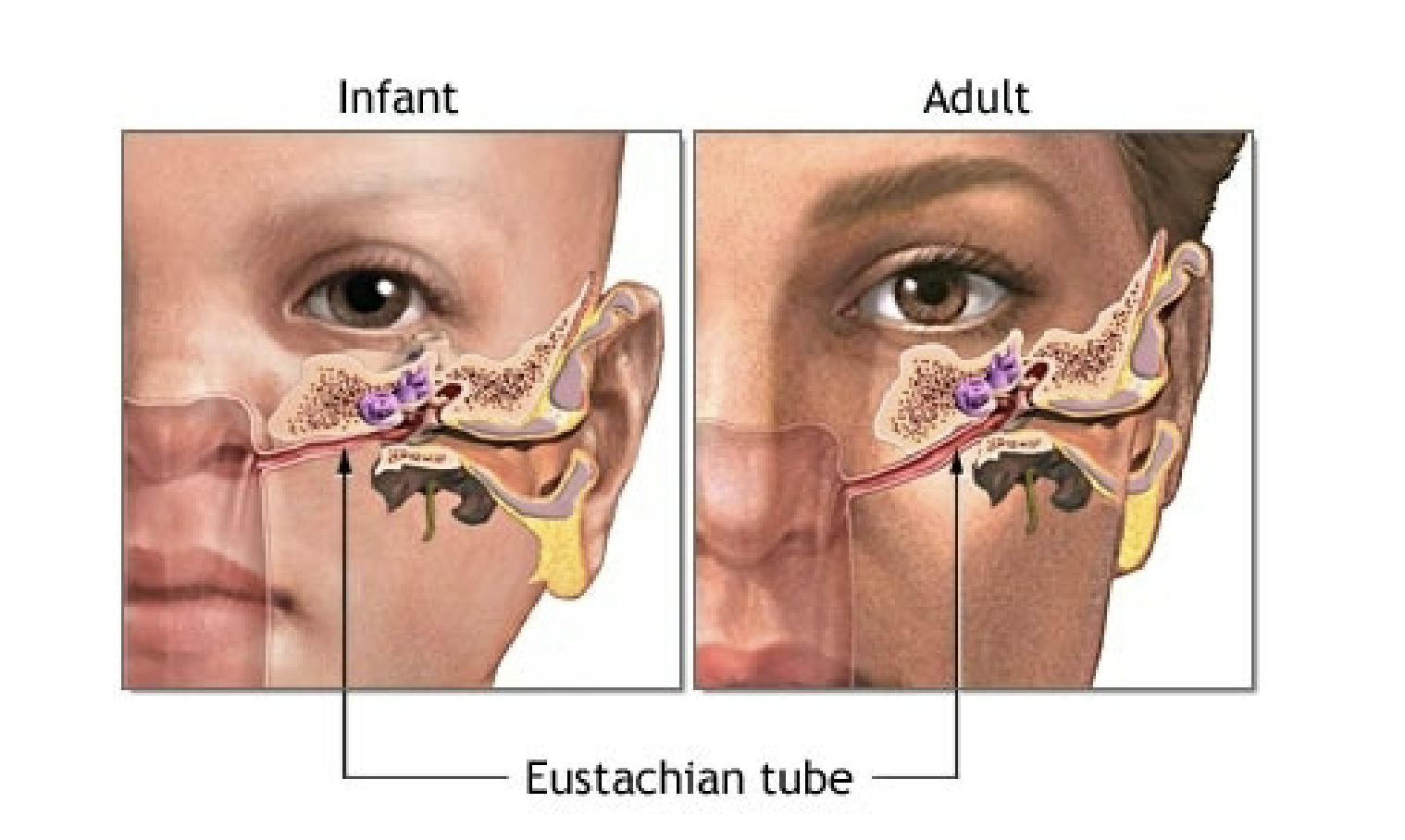
Resting/normal state= closed
opens multiple times daily by the tensor veli palatini to allow the middle ear to maintain atmospheric pressure, it helps pressure equalization
Infants (180 degrees) Adult (45 degrees)
since infants eustachian tube is at less of an angle, there is less fluid drainage so they get more ear infections
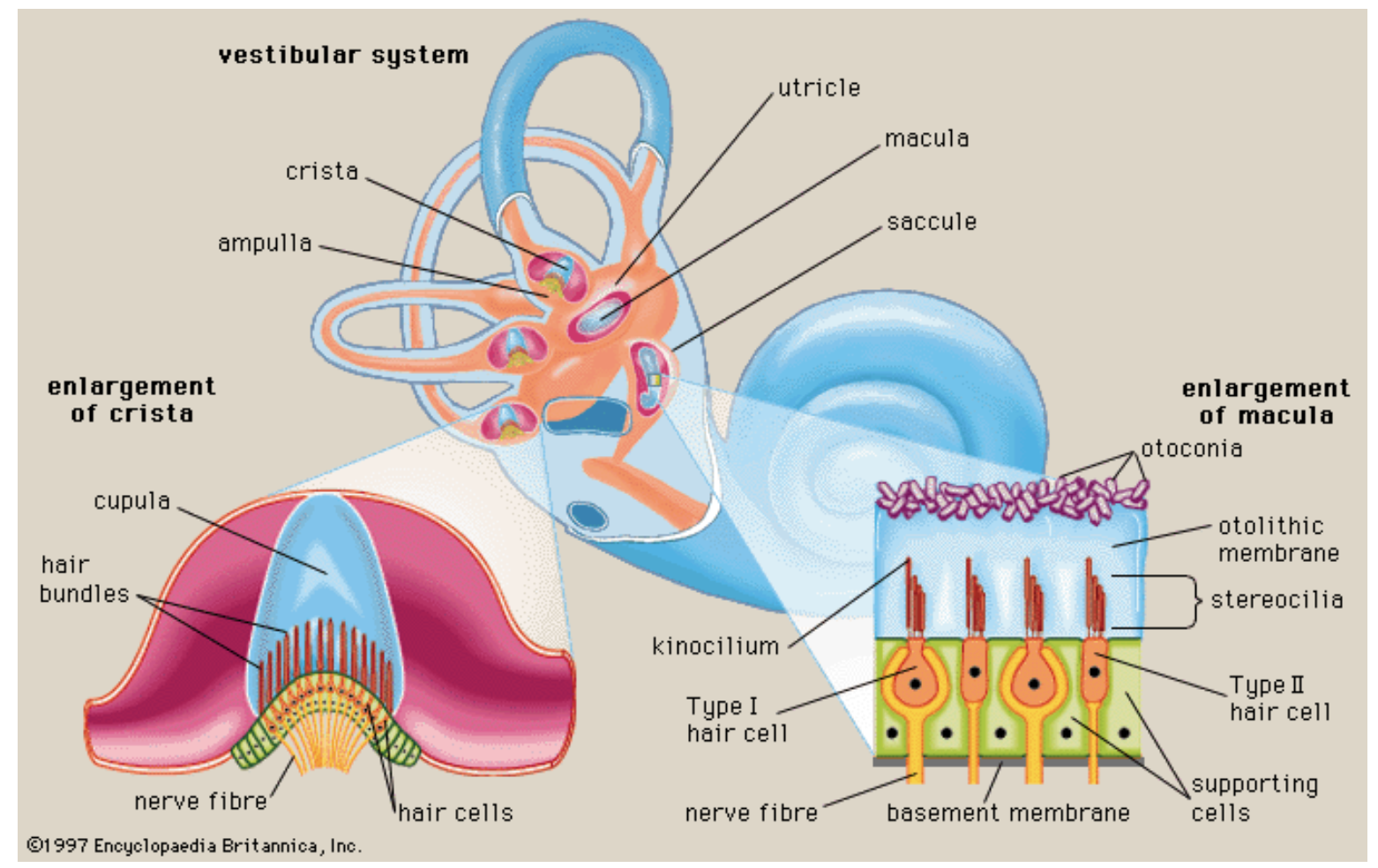
Inner Ear Structures
bony and membranous, attached to temporal bone
semi circular canals- sense movement of head in space, balance
anterior
posterior
horizontal
Vestibule (encompasses utricle and saccule)-between cochlea and semi circular canals, balance
utricle
saccule
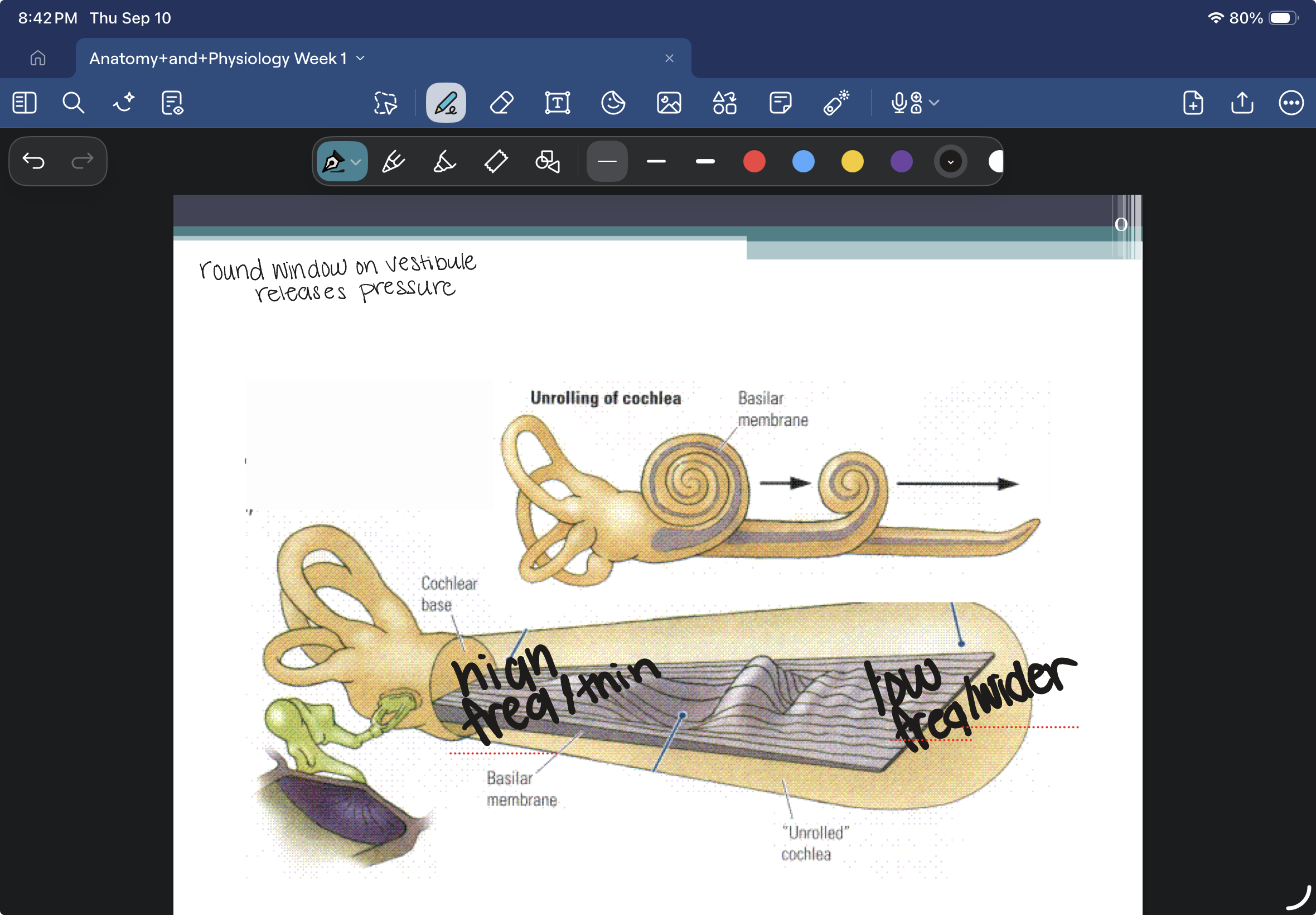
Cochlea- 2 ¾ turns, hearing
Cochlea
2 ¾ turns
Basilar membrane is inside the cochlea
narrow base with high frequencies
wide apex with low frequencies

Cross section of cochlea-know image
Chambers
scala vestibuli- filled w/ perilymph, fills bony portion of cochlea, similar to CSF, Sodium up, Potassium down
scala media- filled w/ endolymph (positive, similar to intracellular fluid, high potassium), houses organ of corti
scala tympani- filled w/ perilymph, fills bony portion of cochlea

sound traveling to ear pathway
Pinna funnels acoustic energy into the external auditory meatus
As sound waves travel through the EAM, they are compressed and gain ~20 dB
This acoustic energy sets the tympanic membrane into motion, which then sets the ossicles (malleus, incus, stapes) into motion, and the acoustic energy is converted into mechanical energy
Because the area of the tympanic membrane is so much larger than the area of the footplate of the stapes, this results in another 20-30 dB gain to overcome acoustic impedance
The stapes pistons in and out of the oval window of the cochlea, which transfers the mechanical energy into the Scala vestibuli, which is fluid filled (perilymph). This disrupts the fluid, resulting in a fluid wave (energy is converted into hydromechanical energy at this point)
Fluid wave travels up the Scala vestibuli reaches the helicotrema, where the Scala vestibuli joins the Scala tympani.
Fluid wave then travels down the Scala tympani. As the fluid wave reaches the base, it hits the round window which stretches to release pressure - fluid here is still perilymph. This fluid wave sets the basilar membrane into motion which transfers the energy to the Scala media/organ of Corti and hair cells (fluid in the Scala media is endolymph). Reissners membrane moves the fluid in the scala media.
Tectorial membrane brushes up against the hair cells. This stretches the tip links; energy is converted from hydromechanical to electrochemical.
As the tip links are stretched, potassium channels open and the cell is depolarized top to bottom. At the base, calcium channels open which releases neurotransmitters to the fibers of the auditory portion of CN VIII. This is where energy is converted to neurochemical.

• Inner hair cells-passive, 1 row(towards middle) and Outer hair cells-active, 3 rows, “W” (towards scala vascularis)
• Reticular lamina- covers top of hair cells for barrier between fluids
• Stereocilia- on top of hair cells ordered from shortest to tallest connected by cross links and tip links, tallest=killocillium
• Tectorial membrane- outer hair cells embedded here, inner are NOT
The separation of different fluids in the cochlea is very important to maintain the function of the cochlea itself; this is done by reissner’s membrane

shearing force
stereocillia have shearing force
shearing force moves towards kinocillium
tectorial membrane rubs against stereocilia, causing friction and moving to shear
therefore, causing depolarization of the hair cell
which causes the neuro signal to be sent along the nerve fibers, then go to the brain
hair cells
IHC- sends afferent (sensory info from body to brain)
OHC- sends efferent (motor info from brain to body), look like a “W”


Central Auditory Pathway
• Auditory nerve exits IAC
• Ascending pathway to the
brain
• Same nuclei on both sides
▫ Cochlear nucleus
▫ Superior Olivary Complex
▫ Lateral Lemniscus
▫ Inferior Coliculus
▫ Medial Geniculate
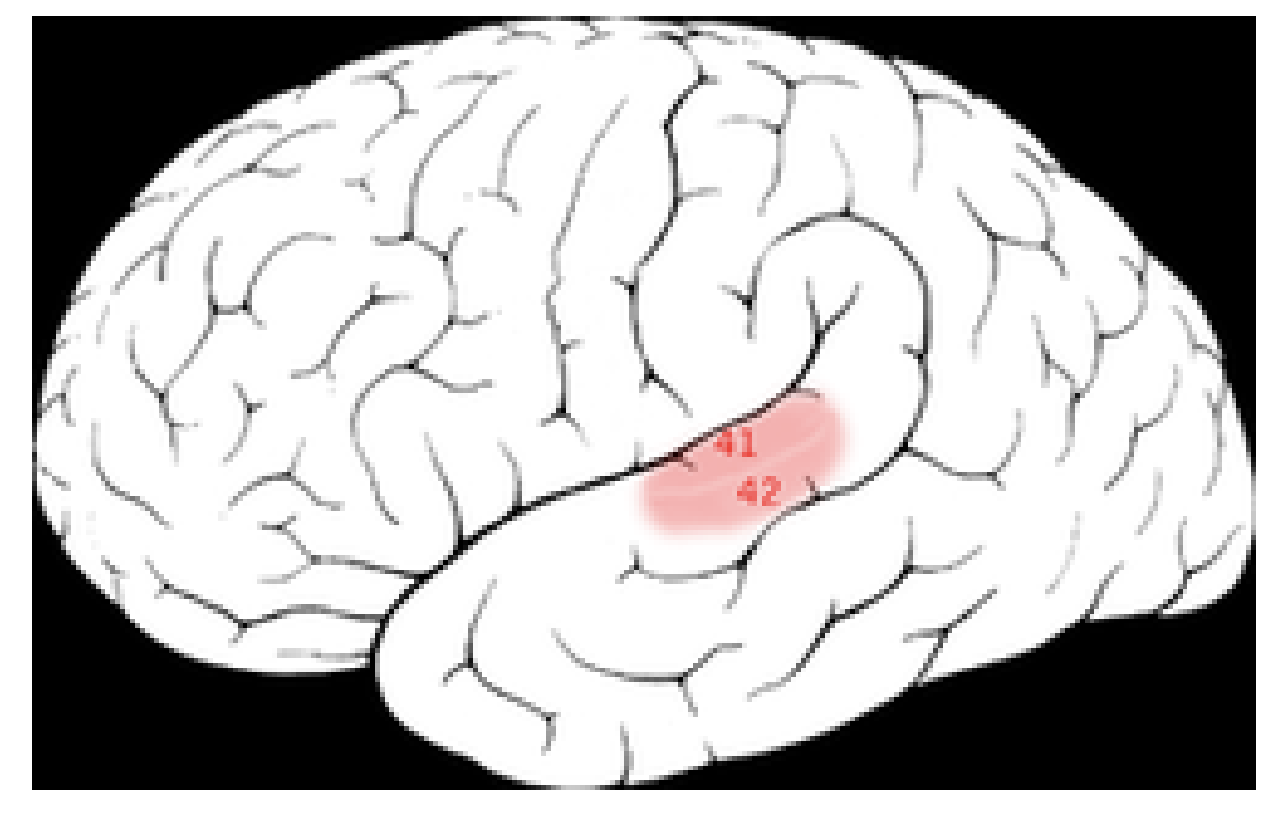
primary auditory cortex=herschels gyrus
What is a transducer, as it pertains to audiology?
Converts energy from one form to another
What type of transducer should you use if the patient has collapsing canals?
inserts
What color is used for the left ear vs right ear?
blue- Left
red- Right
What is the interaural attenuation values for headphones? Inserts? Bone Conduction?
Headphones: 40dB; Inserts: 55 dB; Bone conduction: 0
Middle Ear-how many db boost
Once you hit the ear drum, you are in the middle ear (air filled that has to be equalized to hear perfectly)
converts acoustic vibrations into mechanical vibrations, which then sends to the ossicles
Impedance matching-get a boost of 33dB increase of loudness
the oval and round windows move in opposites allowing fluid in the cochlea to move correctly, therefore the middle ear is specifically designed to overcome mismatch between the air filled and fluid filled space-less important?
Acoustic Reflex-draw and explain function
Tensor Tympani and Stapedius
the acoustic relfex is a bilateral response triggered by loud noise
there is stiffening that reduces mobility of the ossicles, lowers SPL at oval window (10-20 dB SPL)
protection but also more so reduction of distortion which lowers the perceived volume of your own voice when you talk, making it easier to hear other sounds around you.

inner ear
The Hydro mechanical events in the Cochlea involve the movement of the Basilar membrane due to the traveling wave that we’ve elicited with the opposite movement of the oval and round windows. This is happening because of the stapes footplate opening and closing the oval window.
The chemical events in the cochlea relate to the changes in the hair cells cellular potentials as the stereocilia on the top of the hair cells bend and sheer with the movement of the basilar membrane
These are chemical changes that occur due to the very different types of fluids in the different parts of the Cochlea. The cellular changes cause a depolarization or an action potential. Which is going to cause The nerves of the cochlea to fire And then transmit sound to the eighth nerve up to the higher centers of the brain
tonotopical organization-high freq 1st at base/beginning of cochlea
cochlear potentials- stereocilia bathed and barrier
Stria vascularis maintains the highest endolymphic potential
Stereocilia are bathed in endolymph and there is perilymph at the base of the hair cell, the barrier is the recticular lamina
When the basilar membrane rubs against the stereocilia and opens the ion channels, there is an exchange of ions from the highly charged endolymph to the very negatively charged inner and outer hair cell fluid so the intracellular potential is negative but the flow of the positive potassium ions into the cell raises, the resting potential which causes depolarization
ion channels open after shearing force
game of telephone
back to rest
if tip links open channels long enough, fluid enters, depolarizes the cell, and action potential begins
outer hair cells
more rigid because they generate their own movement in response to the basilar membrane movement, therefore, the elongation of hair cells enhances the movement of basilar membrane allowing inner hair cells to make contact with the tectorial membrane and allows them to depolarize
the basilar membrane is specifically tuned to react best at certain frequencies
Frequency coding- 2 theories
freqeuncy theory- assumes there is a firing pattern that codes for the frequencies/pattern of discharge
place theory- frequency info coded where peak of traveling wave occurs
simple vibrations/sound transmission
sound=vibration
SOUND WAVES DO NOT PROPAGATE OR MOVE IN 1 DIRECTION
Vibrating source causes propagation of sound through some medium such as solid liquid gas. The distance the sound will travel depends on the medium, and the friction the medium will provide. Sound waves are propagated by a back-and-forth movement of molecules, which displaces the molecules in that medium
When sound travels through the air, the molecules closest to the vibrating object to move back-and-forth due to the elastic properties of the air molecules then you have the inertial elastic properties of the air molecules that cause pressure variations, which are known as condensation and rare fraction.
propagation is the act of the sound spreading
as sound propagates, it diminishes with intensity with an increased distance from the source of the sound
more friction and distance = quieter
sound travels fastest through water and most other solids than air

waveform example
terms
acoustics- study of physical properties of sound in the environment and how the sound waves travel
frequency (hz)-measure of sound for perception of pitch, shape of sound wave, high freq=shorter wavelength
amplitude (dB)-magnitude of sound, loudness,
phase- where the waveforms cycle of vibration begins
period(t/time)-amount of time it takes to complete one cycle
pure tones- examples of sound that hace one specific frequency and amplitude, this is what we are measuring when we assess peoples hearing
frequency and period have an inverse relationship, as f increases, p decreases, and vice versa
intensity- power distributed over an area, used to describe sound
pressure- force distributed over an area, used to describe sound
decibels
most common unit of measure for intensity, it is a logarithmic scale
0 dB does not mean the absence of sound, its a value of intensity which is a starting point for sound pressure with reference to human hearing
0 dB sound pressure level that will cause the eardrum to vibrate in the average adult
reference level= 0 db SPL
measured as a ratio between the sound pressure and a reference level
dB levels
dB IL-intensity level
dB SPL- sound pressure level
dB HL- hearing level
dB SL- sensation level (later)
wavelength
speed of sound over frequency, lower freq= larger wavelengths can move around objects easily
Periodic vs Aperiodic
periodic- waveform that repeats itself, fundamental frequency is the lowest frequency (has longest period) of the complex tone
Aperiodic- noise like a fricative
filtering
allowing some frequencies to pass through while others excluded, used in hearing aids
high pass- let high frequency pass through
low pass- let low frequency pass through
band pass- specific area let through
band reject- specific area not let through

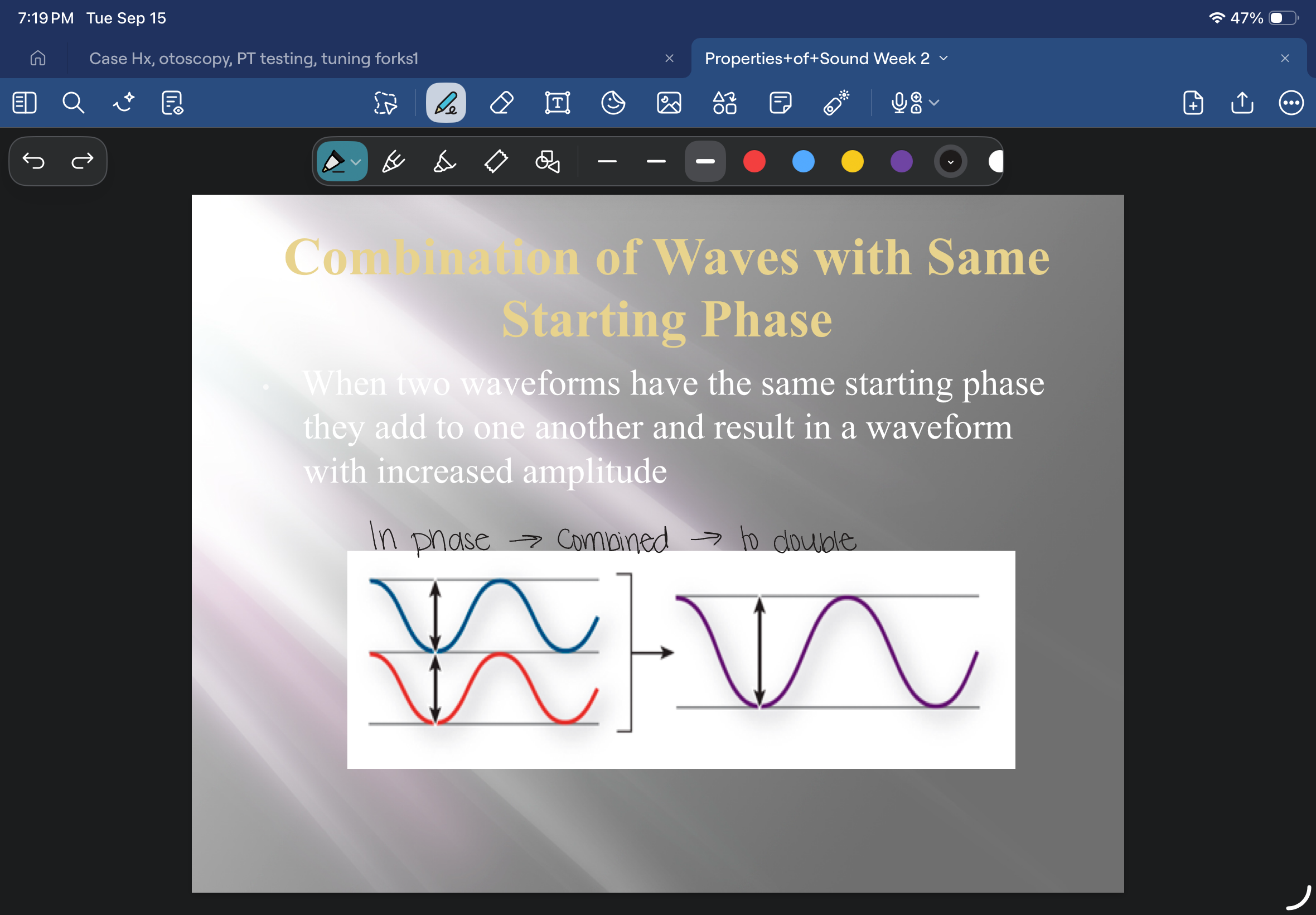
Complex Waveforms
most everyday sounds are complex



case history
Key component of a successful hearing evaluation
observing the patient is an important part of the case history
hearing loss
congenital-born with vs acquired
tinnitus-ear ringing
vertigo-dizzy

otoscopy
prior to placing anything in ear
it is to detect collapsing canals
before insertion-examine pinna
insert, then…
ensure canals are not occluded with cerumen ot foreign objects
push on pinna and watch for collapsing canals
pull up and back on pinna to straighten canal
insert speculum into canal
very tip=speculum
hold otoscope like a pencil and bridge with the fingers against the side of patients face in order to prevent injury to the patient in case of movement
audiometry
audiometer- a medical device used to evaluate a person's hearing acuity and detect hearing loss
basic hearing test objective is to find hearing threshold
threshold is the lowest sound that a person can reliably respond to 50% of the time
test 250-8000 hz (pure tones)
describes degree of hearing loss
determines type of hearing loss
audiometers
audiometer- a medical device used to evaluate a person's hearing acuity and detect hearing loss
parts
frequency selector- change freq of tone
attenuator dial- change intensity of signal
transducer selector- how signals delivered
router switch- presents sound
interrupter switch- presents signal to patient
patient response indicator- light/sound saying patient responded
VU meter- monitor output level
transducers
device capable of vibrating when activated by electrical signal from the oscillator converting (transducing) electrical signals into vibrations that can be heard
there are 5 audiometry transducers
all are specifically calibrated to transmit equivalent sound pressure level to patient
types
insert earphones- insert fully
supra aural/TDH-bad for collapsing canal, higher output
high frequency (circum-aural)- high frequency tests
speakers-key to testing kids
bone oscillator-tells you type of hearing loss, delivers vibrations through skull to both ears, makes sure they are responding
air conduction (AC) vs bone conduction (BC)
headphones transmit sound via air conduction
bone conduction simulates the cochlea directly
testing both air conduction and bone conduction can determine cause of hearing loss
degree of hearing loss
Normal (Adult): 0-25
Normal (Child): 0-15
Slight (Child): 16-25
Mild: 26-40
Moderate: 41-55
Moderately Severe: 56-70
Severe: 71-90
Profound: 91+
Equations for Masking
Bone Conduction: TE AC-TE BC= >10 ->Masking
Air Conduction: TE AC- NTE BC= IA -> Masking
hearing loss types
sensorineural
air and bone conduction scores will be similar
conductive
bone conduction is within normal limits, a gap between air conduction and bone conduction scores
mixed
combined conductive and sensorineural, bones scores outside of normal limits
testing
air conduction
250-8000Hz, octave frequencies
test interoctaves when there is a 20db difference between octaves
bone conduction
250-4000Hz, octave frequencies
when testing, anytime you get a response, go down 10db, until they stop responding, then go up 5db (down 10, up 5) repeat until 50% rate is obtained on ascending runs
testing types
standard- push button, raise hand
visual reinforcement activity- reward system
conditioned play audiometry- play a game
team testing- assistant helps in booth

tuning forks
quick way to determine asymmetrical or conductive vs sensorineural hearing loss but it is variable intensity range depending upon force and its not callibrated
Weber test
determines if affected ear has conductive or sensorineural hearing loss, helpful for unilateral hearing loss
stem is placed on midline of head, asks if patient hears it in middle of head or on one side or another
if hearing is normal or symmetrical SNHL (sensorineural hearing loss) should percieve midline, if percieves tone in normal hearing ear it is SNHL, if percieves tone in poorer ear it is CHL (conductive hearing loss)
Rinne test
tests air (AC) vs bone conduction (BC)
hold tuning fork at mastoid and then at auditory meatus, ask patient to report if sound is louder on the mastoid process or next to auricle
abnormal-negative, or when BC tone is percieved as louder than the AC tone
normal-positive, or when AC tone is heard louder than BC tone

wavelength- low frequency has longer wavelength
condensation-particles closer together, increased air pressure
rarefaction-particles spread out, decreased air pressure