Chad Wayne - Human Anatomy and Physiology 1 - Exam 1
 Call Kai
 Learn
Learn Practice Test
 Spaced Repetition
 Match
Match Flashcards
 Knowt Play
1/46

There's no tags or description
Looks like no tags are added yet.
Name | Mastery | Learn | Test | Matching | Spaced | Call with Kai | Chat |
|---|
No analytics yet
Send a link to your students to track their progress
47 Terms
What are characteristics that describe living things?
Energy Production & Consumption, Growth & Repair, Adaptation, and Reproduction
What are the levels of organization in the body? (smallest to largest)
Chemical Level, Cellular Level, Tissue Level, Organ Level, System Level, and Organismal level
What is cell theory? (List the 3 parts)
1) All living things are made of cells. 2) Cells are the basic unit of life. 3) All cells come from pre-existing cells.
What are the 4 types of tissue?
• Epithelium = Covering
• Connective = Support
• Muscle = Movement
• Nervous = Control

Regional Anatomical (two main regions)
• Axial: Includes head, neck, and trunk
• Appendicular: includes arms and legs and their girdles
What is a cavity?
A hollow space within the body
Posterior Aspect (Dorsal Cavity)
• Completely encased in bone
Two continuous cavities:
• Cranial cavity - houses the brain
• Vertebral (spinal) cavity - houses spinal cord

Ventral Cavity
• Larger and anteriorly placed
• Lined with a serous membrane
Divided into 2 subdivisions by the diaphragm:
• Thoracic cavity
• Abdominopelvic cavity

Serosa or Serous Membranes
Are membranes that surround the organs in the ventral cavities

Parietal
Fused to the cavity wall
Visceral
Nearest the organs (viscera)
Serous
The space between the two walls are filled with a thin layer of fluid
Thoracic Cavity
• Pleural cavities (surrounds the lungs)
• Mediastinum (middle)
• Pericardial Cavity (surrounds the heart)
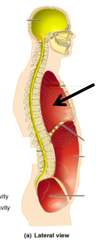
Abdominopelvic Cavity
• Abdominal cavity (superior ridge of the hips)
• Pelvic cavity (inferior cavity below the superior ridge of the hips)

Abdominopelvic Regions (anatomists)
• Left & right (relative to the patient, not you)
Prefixes:
• Hypo = below
• Epi = above
Regions:
• Umbilical = named for the umbilicus (navel)
• -gastric = belly; medial regions
• -chondriac = cartilage; refers to the overlying costal cartilage
• Lumbar = region matching the lumbar
• Iliac = region protected by ilium (hip)

Abdominopelvic Regions (health care)
RUQ, RLQ, LUQ, LLQ

3 Major Anatomic Planes
• Coronal
• Transverse
• Midsaggital (Medial)

Homeostasis
Process by which organisms maintain a relatively stable internal environment

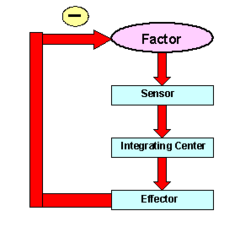
Negative Feedback (most common)
A mechanism of response in which a stimulus initiates reactions that reduce the stimulus
Positive Feedback
A type of regulation that responds to a change in conditions by initiating responses that will amplify the change. Takes organism away from a steady state

Condensation/Dehydration Reactions
Newly formed bond results in the loss of a water molecule

Hydrolysis Reactions (-lysis = break down)
A chemical reaction that utilizes water to break apart molecules

Lipids
• Elements: C,H,O
• Storage of nutrients, Components of cellular membranes, Hormones
Four classes:
• Acylglycerides (neutral fats)
• Phospholipids
• Steroids
• Waxes
Lipids: Triacylglycerides
• Known as fats (solid) and oils (liquid)
• Composed of glycerol (an alcohol) and three fatty acids (hydrocarbon)
• Saturated = no double bonds (solid)
• Unsaturated = one double bond (kinks = liquid)

Lipids: Triacylglycerides - Lipogenesis (-genesis = beginning)
Condensation reaction to form triglycerides from glyceride and fatty acids
Lipids: Triacylglycerides - Lipolysis (-lysis = break down)
Hydrolysis reaction breaking a triglyceride into the glycerol and the free fatty acids
Lipids: Phospholipids
•Polar (hydrophilic) at one end; nonpolar (hydrophobic) at the other
•Function: important structural component of cell membranes

Lipids: Steroids
Lipids with four fused carbon rings
•Cholesterol
•Produced naturally in the body
•Gives cell membranes pliability

Lipids: Waxes
Contain one long-chain fatty acid covalently linked to long-chain alcohol by ester bond, lack hydrophilic head, completely insoluble in water

Carbohydrates
The starches and sugars present in foods

Carbohydrates Function
•Main source of energy (short term)
•Tagging other biomolecules for identification purposes
•Glycosylation refers to tagging of biomolecules with carbohydrate chains
Nucleic Acids
•DNA and RNA
•Covalent linkage (by condensation) is called a phosphodiester bond

Components of a Nucleotide
Phosphate group, 5 Carbon sugar, Nitrogenous base (A,T, C, G)
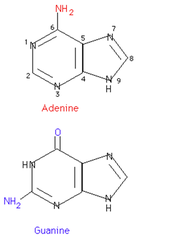
Pure as Gold
Purines = A & G (way to remember)
ATP: The battery of the cell
•Energy is stored in the bonds between the phosphate groups
•Structure:
Adenine bound to Ribose sugar with 3 phosphate groups

DNA
•Deoxyribonucleic Acid (double stranded)
•Antiparallel
•A always pairs with T
•C always pairs with G

RNA
•A single-stranded nucleic acid that passes along genetic messages
•U replaces T
•RNA uses the information stored in DNA to determine the sequence of amino acids in proteins

Central Dogma of Genetics
•DNA -> RNA -> Protein
•DNA -> Transcription -> Translation

Proteins
•Nutrients the body uses to build and maintain its cells and tissues
• Chains of amino acids
•Shape determines the function
•R) group makes each amino acid unique
Two functional groups:
•Amine group (-NH2)
•Carboxyl group (-COOH)

Peptide Bonds
The bonds connecting amino acids together to form polypeptide chains

Chaperone Proteins
Assist in folding other proteins

Structure Levels of Proteins
1. primary- linear sequence of aminos
2. secondary - helix coils, pleated sheets
3. tertiary - how secondary interact
4. quaternary - how tertiary interact

Denaturation of Proteins
•Proteins go to inactive form (back to their primary sequence)
•Can take place with changes to pH, salt concentration, temperature, or exposure to toxic compounds

Enzymes
•Proteins that speed up chemical reactions
•Lowers the activation energy required

Mechanism of Enzyme Actions
1. Enzymes and substrates stick together with hydrogen bonds, electrical attractions, or covalent bonds
2. The enzyme might change shape when it binds to the substrate, but it goes back to its original shape afterward
3. The enzyme's active site binds with the substrate to form the enzyme-substrate complex (ES)
4. The enzyme-substrate complex changes shape slightly (this is called "induced fit") and turns into the product (P)
5. The enzyme then releases the product and is ready to bind with a new substrate
In summary: Enzyme (E) + Substrate (S) → [Enzyme-Substrate Complex (ES)] → [Enzyme-Product Complex (EP)] → Enzyme (E) + Product (P).
Enzymes Reaction Rates are Affected by
Concentration:
•Increasing either substrate or enzyme can increase the rate of reaction
•Saturation is so high that all enzymes are actively engaged and no further increase in reaction rates can occur
Temperature:
•Has an optimal temperature range in which it functions
•Most enzymes in human body are most efficient between 95and 104°C
pH:
•Each enzyme has an optimal pH range in which it functions
•Changes in pH = denaturation
•Most enzymes in human body are most efficient between pH of 6 and 8
LECTURE 3 FINSIH.... (start of lecture 3)