OCR A LEVEL BIOLOGY - Biological Molecules
 Call Kai
 Learn
Learn Practice Test
 Spaced Repetition
 Match
Match Flashcards
 Knowt Play
1/5

There's no tags or description
Looks like no tags are added yet.
Name | Mastery | Learn | Test | Matching | Spaced | Call with Kai | Chat |
|---|
No analytics yet
Send a link to your students to track their progress
6 Terms
Structure of water molecules?
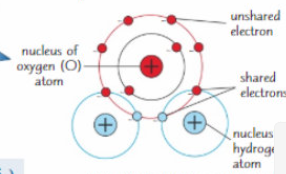
Molecule of water = one atom of oxygen joined to 2 atoms of hydrogen by shared electrons
Shared negative electrons from the hydrogen are pulled towards the oxygen atom → makes one side of each hydrogen atom slightly positively charged
Unshared negative electrons on the oxygen atom gives it a slight negative charge
Water is now a polar molecule - has both partially negative + positive charges on either side
Functions of water
Reactant → chemical reactions
Solvent → substances can dissolve + most biological reactions occur in solution (e.g. cytoplasm)
Transports substances - (liquid + solvent) → oxygen in red blood cells, glucose
Aids with temperature control → high specific heat capacity + high latent heat of evaporation
Habitat → organisms can survive + reproduce in it
Relation of water’s structure to its properties/functions
Hydrogen bonds
provide water with a high specific heat capacity
energy required to raise temperature by 1 gram of a substance by 1C
H bonds between water molecules can absorb a lot of energy → water has a high specific heat capacity → takes a lot of energy to heat up
Water’s temperature does not rapidly fluctuate → makes it a good habit → acts stable - enzymes can work, organisms will not suffer from thermal shock (breaking of living organism due to change in temperature)
provide water with a high latent heat of evaporation
Lots of energy required to break hydrogen bonds between water molecules
Lots of water is used up when water evaporates
Useful for living organisms → water can cool organisms through sweating - takes away heat
Polarity
makes water molecules cohesive → attracted to each other → allowing it to flow - important for transporting substances → especially in plant stems as part of transpiration stream
makes water a good solvent → ionic substances
What are polymers?
Chain of monomers (small, simple molecules) bonded together
What are the monomers that make up carbohydrates called?
Monosaccharides