D2.1 Cell and nuclear division SL
 Call Kai
 Learn
Learn Practice Test
 Spaced Repetition
 Match
Match Flashcards
 Knowt Play
1/35

There's no tags or description
Looks like no tags are added yet.
Name | Mastery | Learn | Test | Matching | Spaced | Call with Kai |
|---|
No analytics yet
Send a link to your students to track their progress
36 Terms
processes in a living organism requiring cell division
growth
maintenance
reproduction tissue repair
mother cell
cell that divides in cell division
daughter cells
cells produced from mother cell in cell division
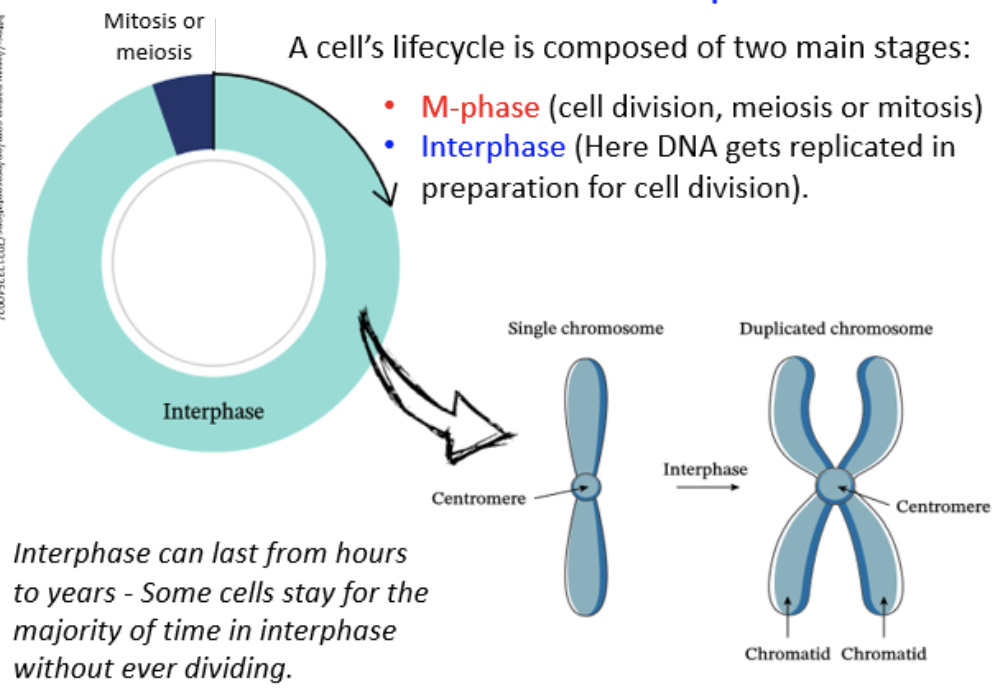
interphase
DNA replication in preparation for cell division
a single chromosome is duplicated to form two identical chromatids
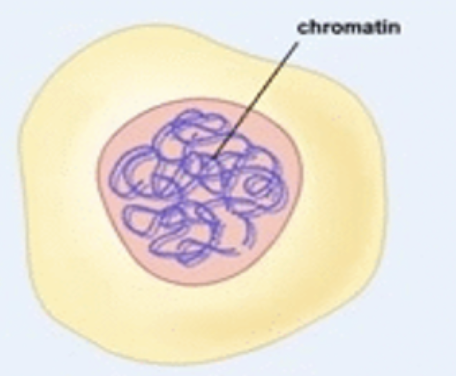
DNA is in chromatin form
chromatin
uncoiled and loosely packed form of DNA
interphase duration
hours to years
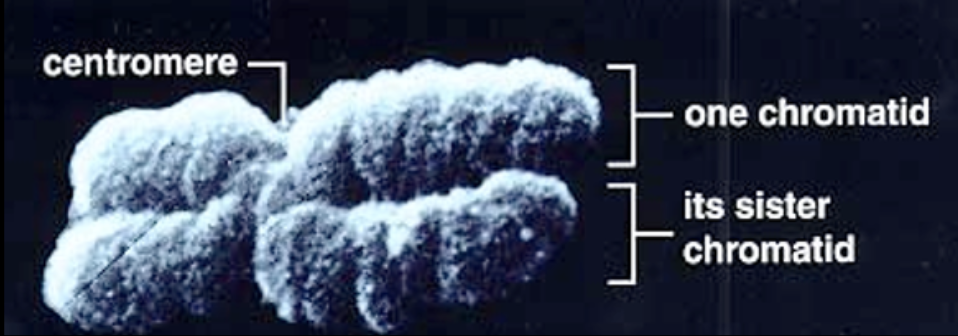
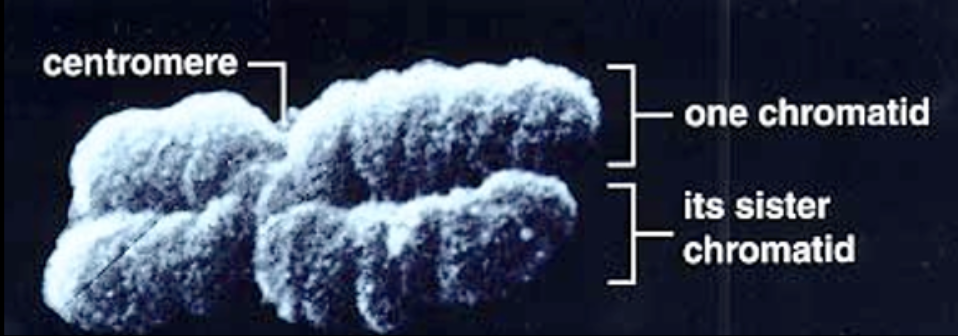
sister chromatids
two identical chromosomes created after DNA replication in interphase, separated when the cell divides into two daughter cells
cohesin
protein complex whose loops hold together sister chromatids before cell division
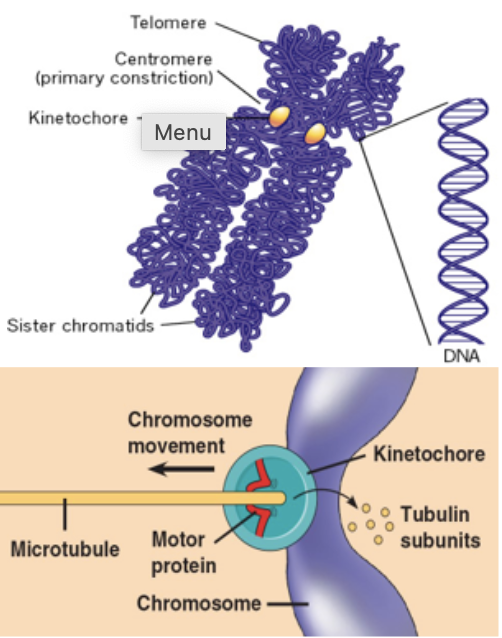
centromere
constricted region that joins the two sister chromatids
requirements for the functional separation of sister chromatids
supercoiling
microtubule and spindle fiber organization
movement of chromosomes by kinetochores
supercoiling
condensation of chromatin into chromosome
wrapping double helix of DNA around histone proteins to produce nucleosomes
nucleosomes coil further to produce chromosome structure
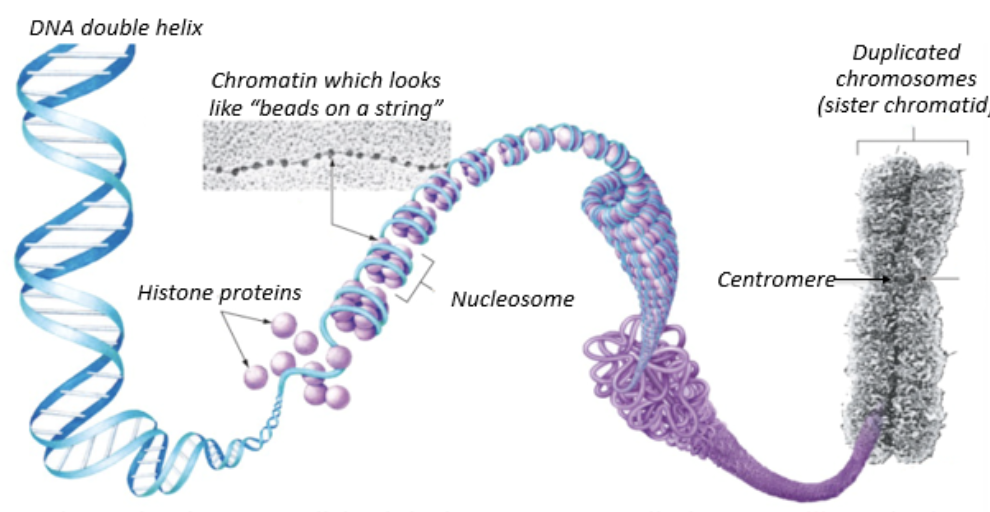
reason for supercoiling
allows DNA to be moved during cell division without knots, tangles, or breaks
spindle fibers
move chromosomes to opposite sides of cells during cell division
made up of microtubules
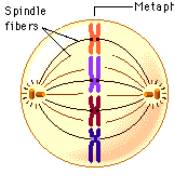
microtubules
hollow cylinders composed of tubulin which make up spindle fibers
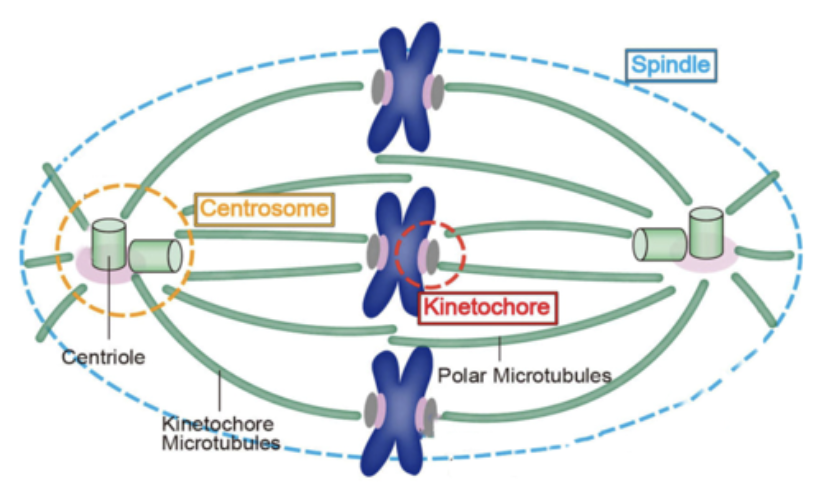
different functions of microtubulin fibers
pull apart sister chomatids during mitosis or homologous pairs during meiosis
push spindle poles apart, contributing to cell elongation
anchor microtubule organizing center to the poles
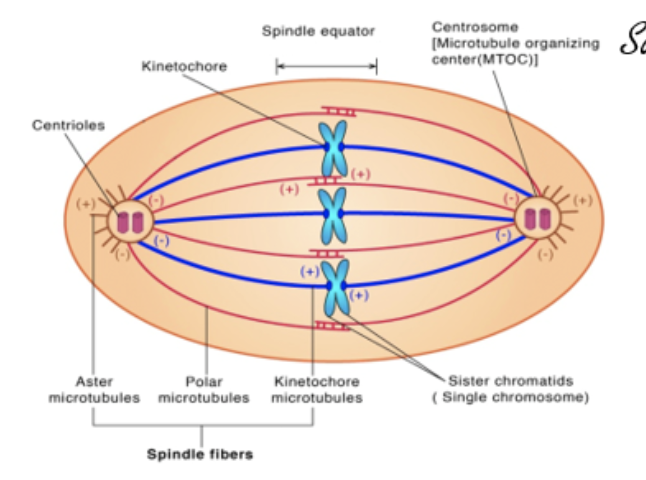
centrosome/microtubule organizing center (MTOC)
site of assembly of microtubule spindle fibers, contains a pair of centrioles
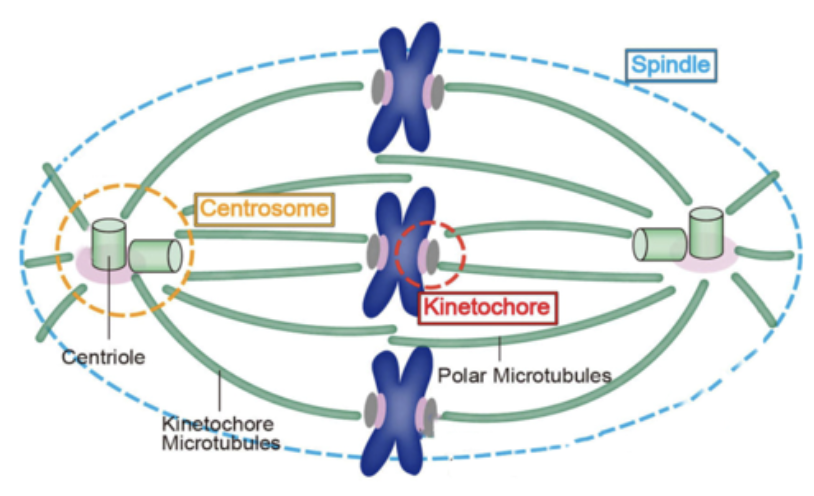
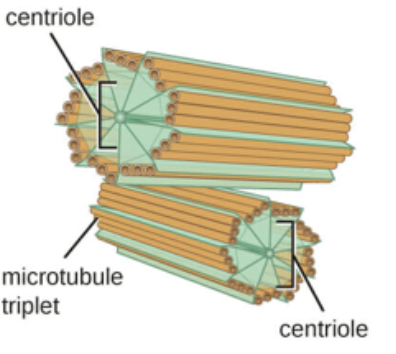
centriole
cylindrical organelle in animal cells composed of microtubules which help to anchor growing microtubules and organize spindle tubules during the separation of sister chromatids in mitosis and meiosis
kinetochore
protein complex associated with centromere, acts as microtubule motor, causing shortening of microtubule fibers and movement of sister chromatids to opposite sides of the cell
types of cell division (M-phase)
mitosis and meiosis
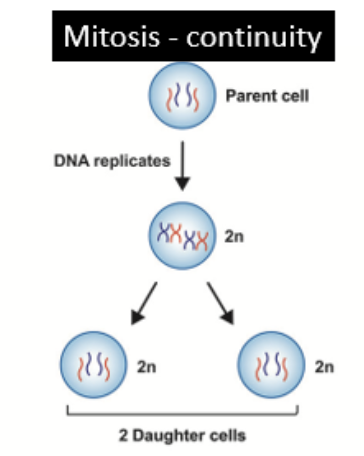
mitosis
maintains chromosome number and genome of cells, producing diploid cells
4 main phases of mitosis
PMAT
prophase
metaphase
anaphase
telophase
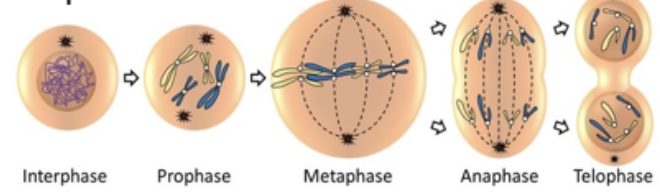
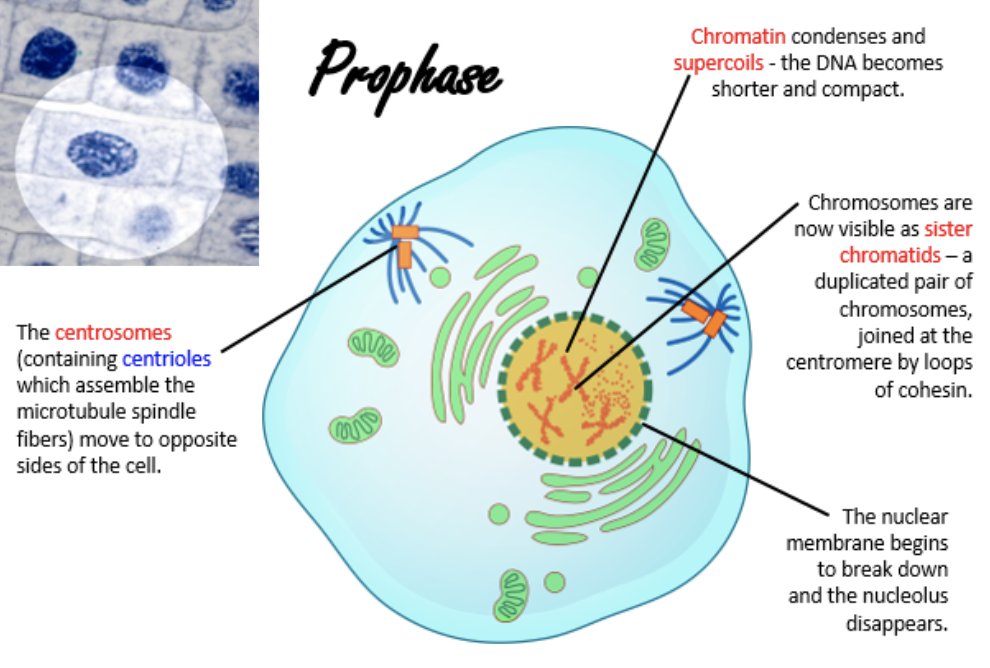
prophase (mitosis)
chromatin supercoils into chromosomes
chromosomes are now visible as sister chromatids
nuclear membrane begins to break down and the nucleolus disappears
centrosomes move to opposite sides of the cell
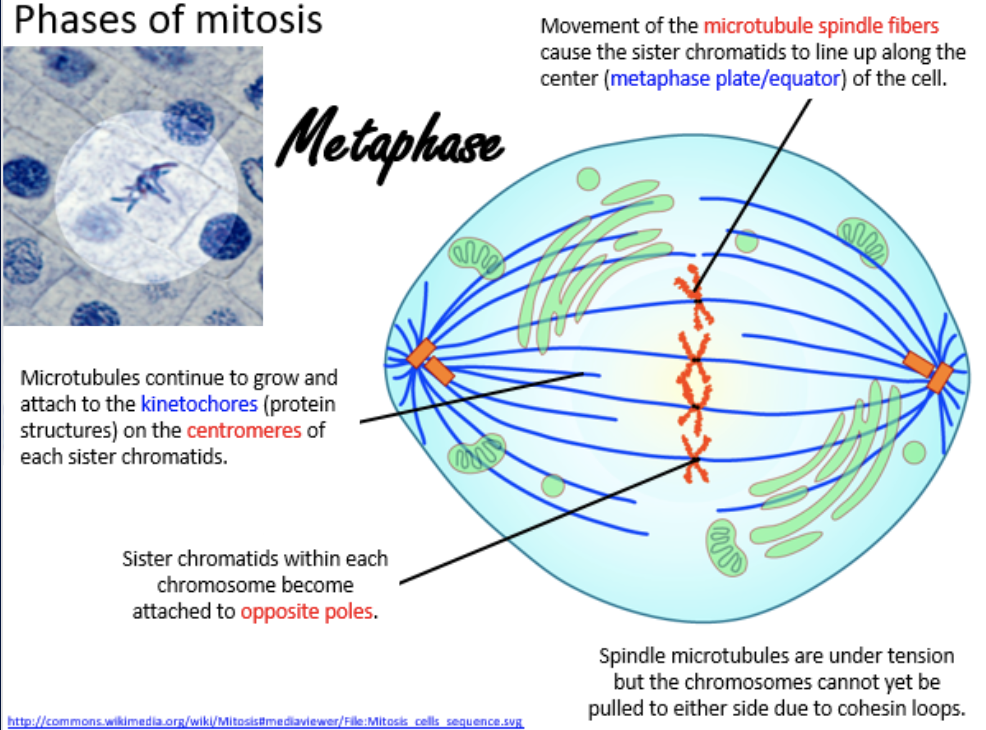
metaphase (mitosis)
microtubules continue to grow and attach to the kinetochores on the centromeres of each sister chromatid
movement of the microtubule spindle fibers cause the sister chromatids to line up along the center (metaphase plate/equator) of the cell
sister chromatids within each chromosome become attached to opposite poles
spindle microtubules are under tension but the chromosomes cannot yet be pulled to either side due to cohesin loops
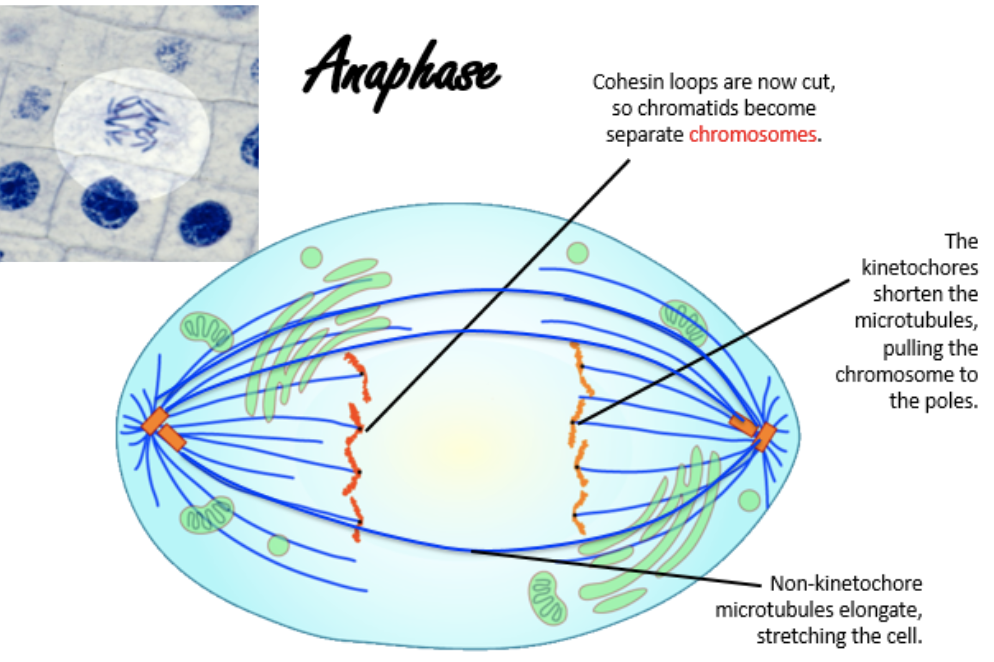
anaphase (mitosis)
cohesin loops are cut, allowing chromatids to become separate chromosomes
kinetochores shorten the microtubules, pulling the chromosome to the poles
non-kinetochore microtubules elongate, stretching the cell
telophase (mitosis)
chromosomes arrive at opposite poles of the cell
chromosomes uncoil into chromatin
nucleoli reappear
microtubule spindle fibers disappear
cytokinesis
plasma membrane is pulled in around the equator
two new daughter cells are formed
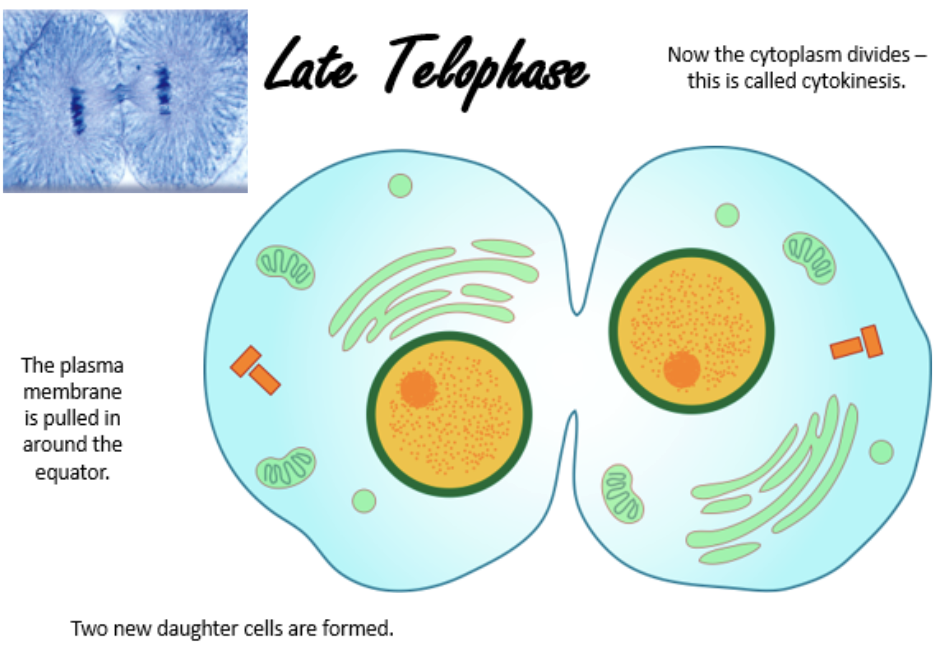
cytokinesis
division of cytoplasm which occurs to separate a daughter cell from its parent cell
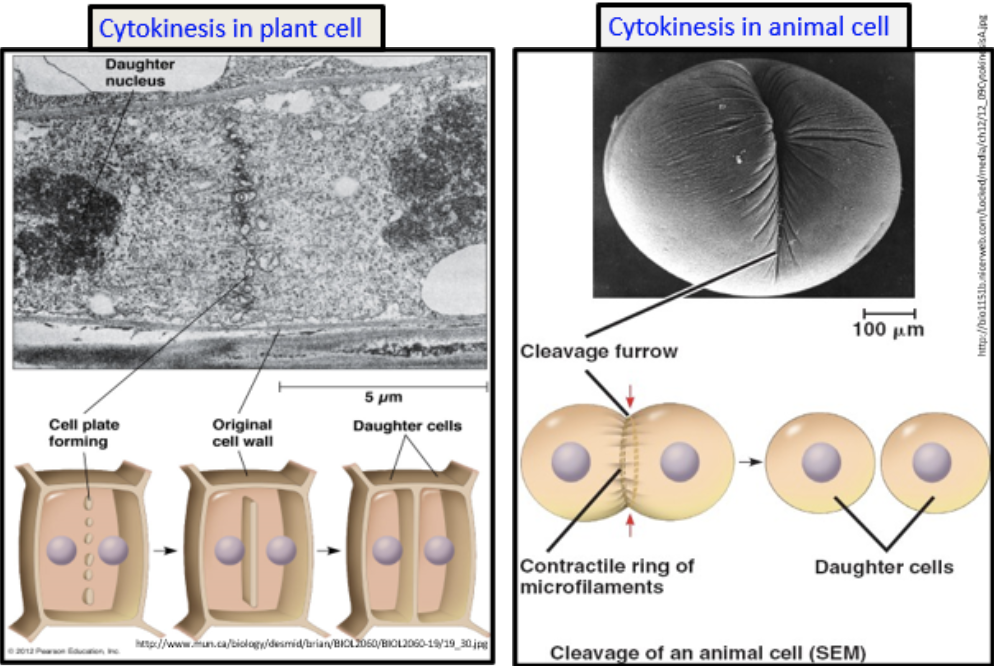
cytokinesis in a plant cell
vesicles derived from the Golgi apparatus filled with sugars and complex carbohydrates migrate to the center of the cell
vesicles fuse together and form a cell plate (two layers of plasma membrane)
cell plate grows to both sides until connected to existing cell’s plasma membrane, complete separation occurs
daughters cells secrete cellulose to form cell walls, creating two separate daughter cells
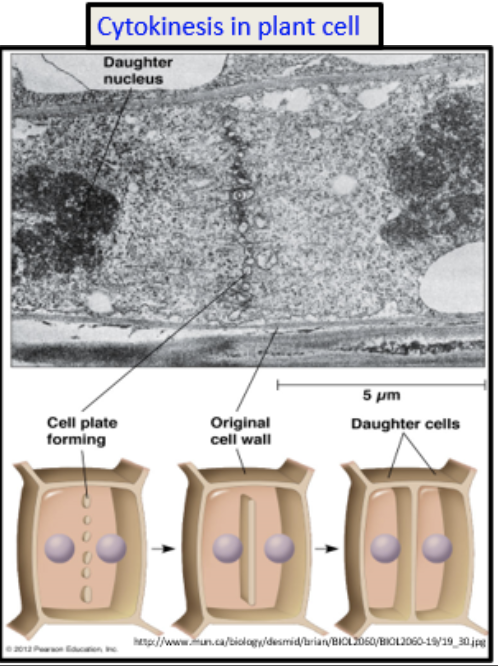
cytokinesis in an animal cell
a ring of contractile actin and myosin filaments forms around the center of the cell
filaments constrict, pinching in the cell and forming a cleavage furrow
cleavage furrow reaches the center of the cells, cells are further pinched until full separation into daughter cells
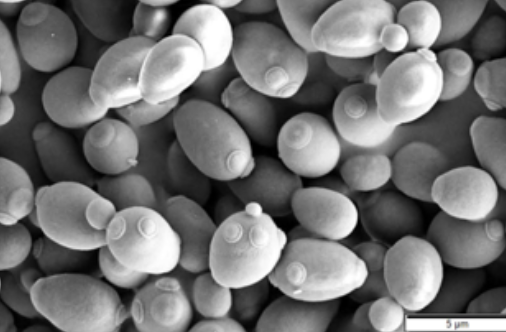
unequal cytokinesis
daughter cells do not receive the same amount of cytoplasm
small cells produced can still survive if they receive a nucleus and at least one organelle which cannot be assembled by itself
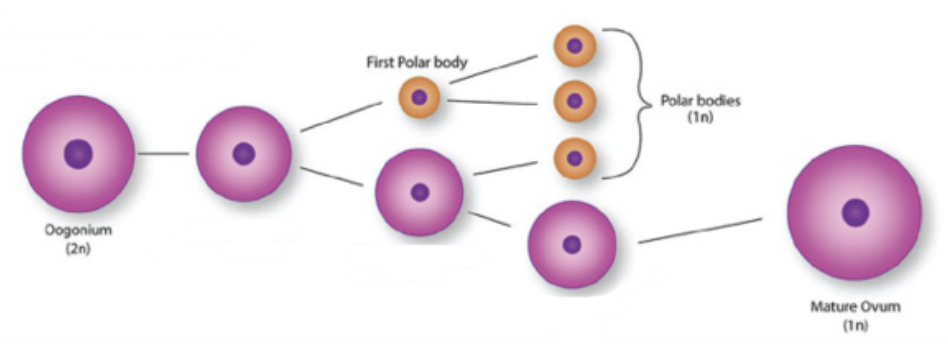
oogenesis as an example of unequal cytokinesis
polar bodies received after two cell divisions contain much less cytoplasm and degenerate, while the larger cell continues to mature into an ovum with enough stored food in its cytoplasm
meiosis
halves the chromosome number, producing haploid cells during sex cell formation, generating genetic diversity
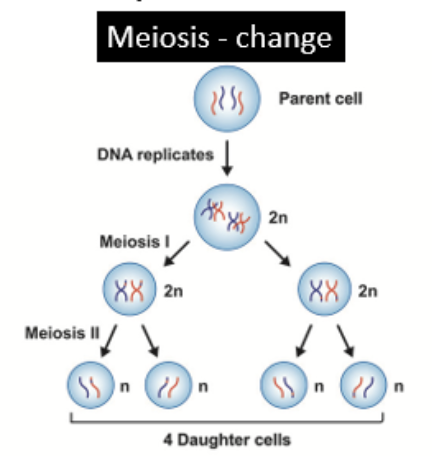
meiosis as reduction division
reduces diploid cell (2n, 46 chromosomes, 23 chromosome pairs) into four haploid cells (n, 23 chromosomes)
maternal and paternal chromosomes carrying the same genes join together to form homologous pairs
one chromosome from each homologous pair is passed on, creating haploid gamete cells
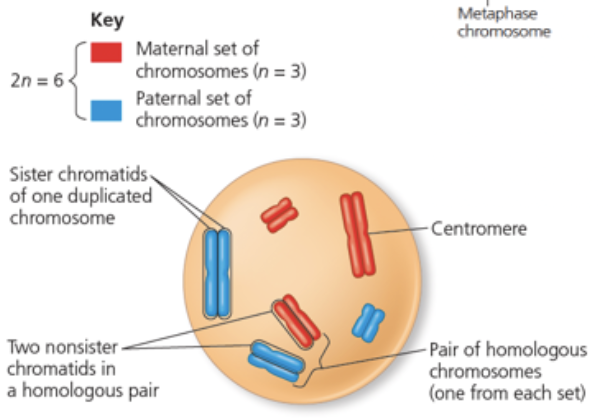
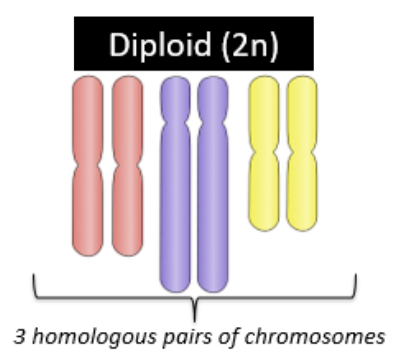
diploid nucleus
contains two chromosomes (one homologous pair) of each type
two copies of every gene with different versions of genes
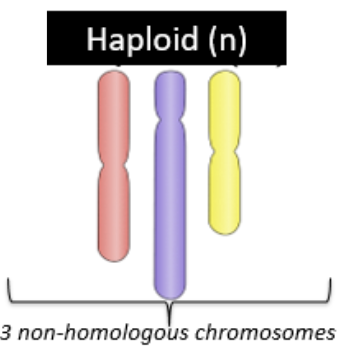
haploid nucleus
contains only one set of genes, half of genetic material
homologous chromosome
a pair of chromosomes which have the same genes in the same order with different alleles
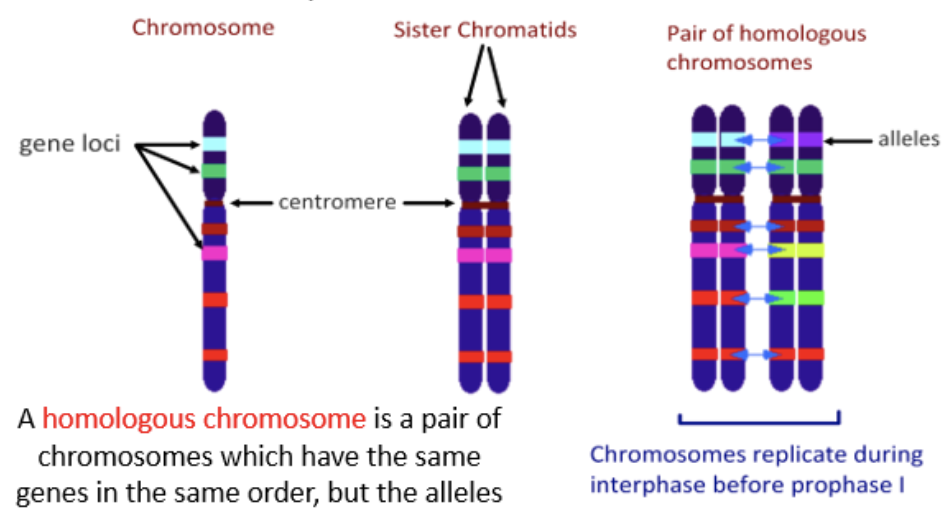
allele
variation of a gene

