2.13 The Art of the Aegean: Cycladic Art
 Call Kai
 Learn
Learn Practice Test
 Spaced Repetition
 Match
Match Flashcards
 Knowt Play
1/4

Earn XP
Description and Tags
Prehistoric in Timeline; Modern in Aesthetic--Cycladic Sculpture->
Name | Mastery | Learn | Test | Matching | Spaced | Call with Kai | Chat |
|---|
No analytics yet
Send a link to your students to track their progress
5 Terms
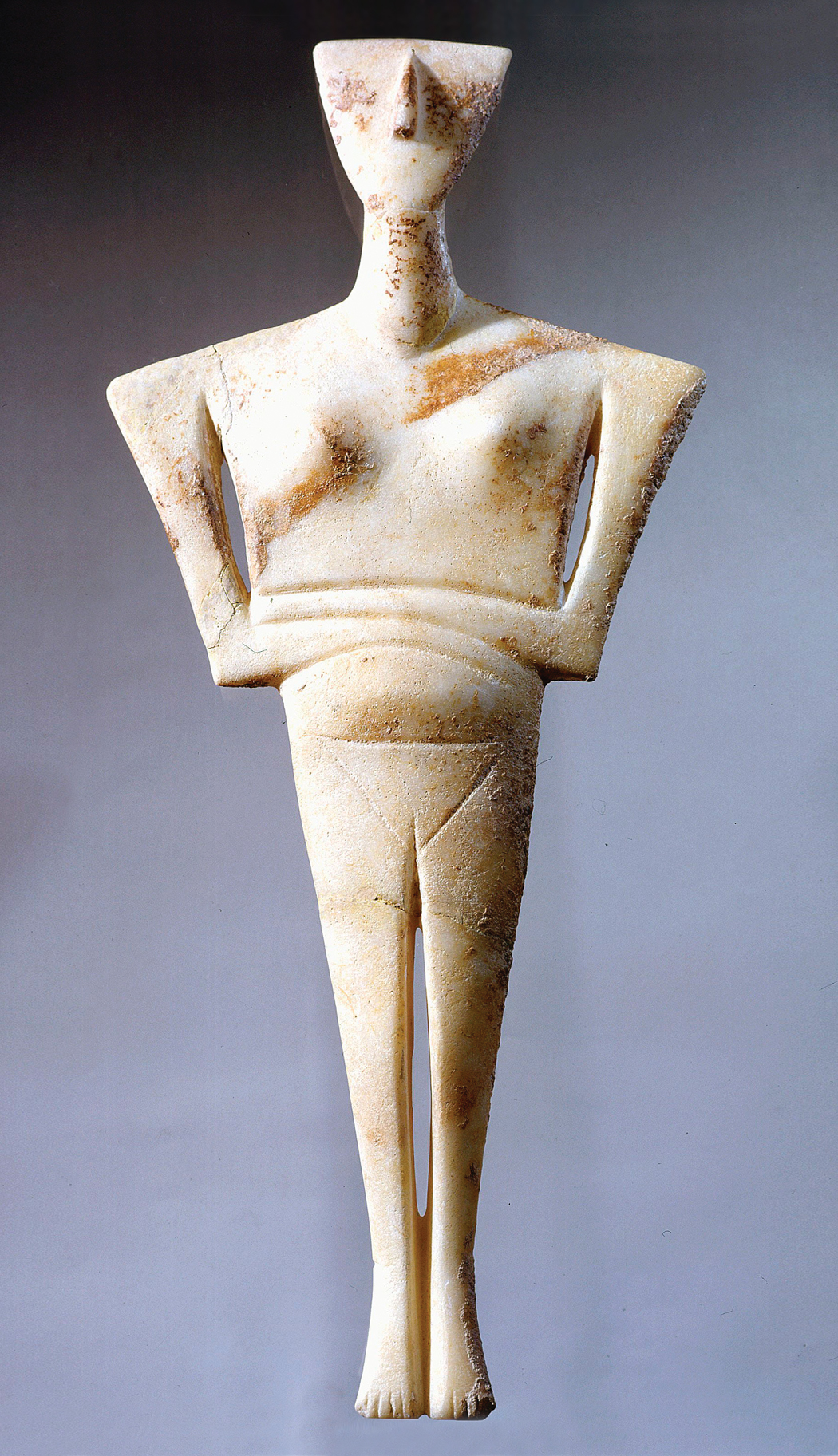
Figurine of a woman, ca. 2600-2300 BCE. Marble, 1.6' high.
What are similar characteristics of these female sculptures
They have strong, geometric forms: triangular-shaped heads, noses, upper arms, and bodies. Subtle incised lines delineate their gender along with the presence of small breasts.
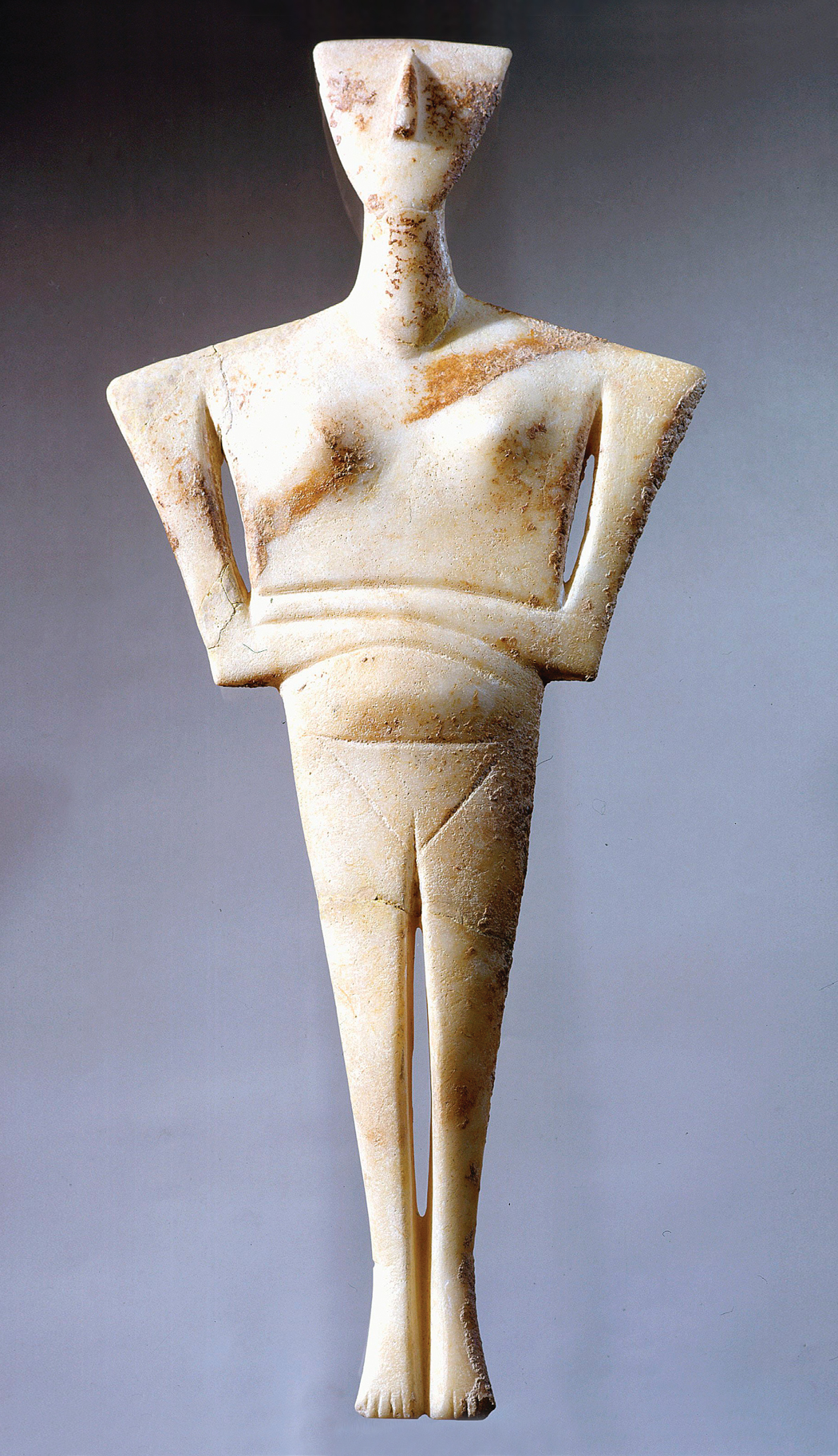
What’s the meaning of the additional incised lines?
Through additional incised lines, they were often shown with their arms crossed across their abdomens, which slightly bulge out, as if the figure was meant to show pregnancy. Some believe these were fertility figures, yet they are most found in digs around gravesites. Could they represent someone who's departed? Or a reference to the life cycle?
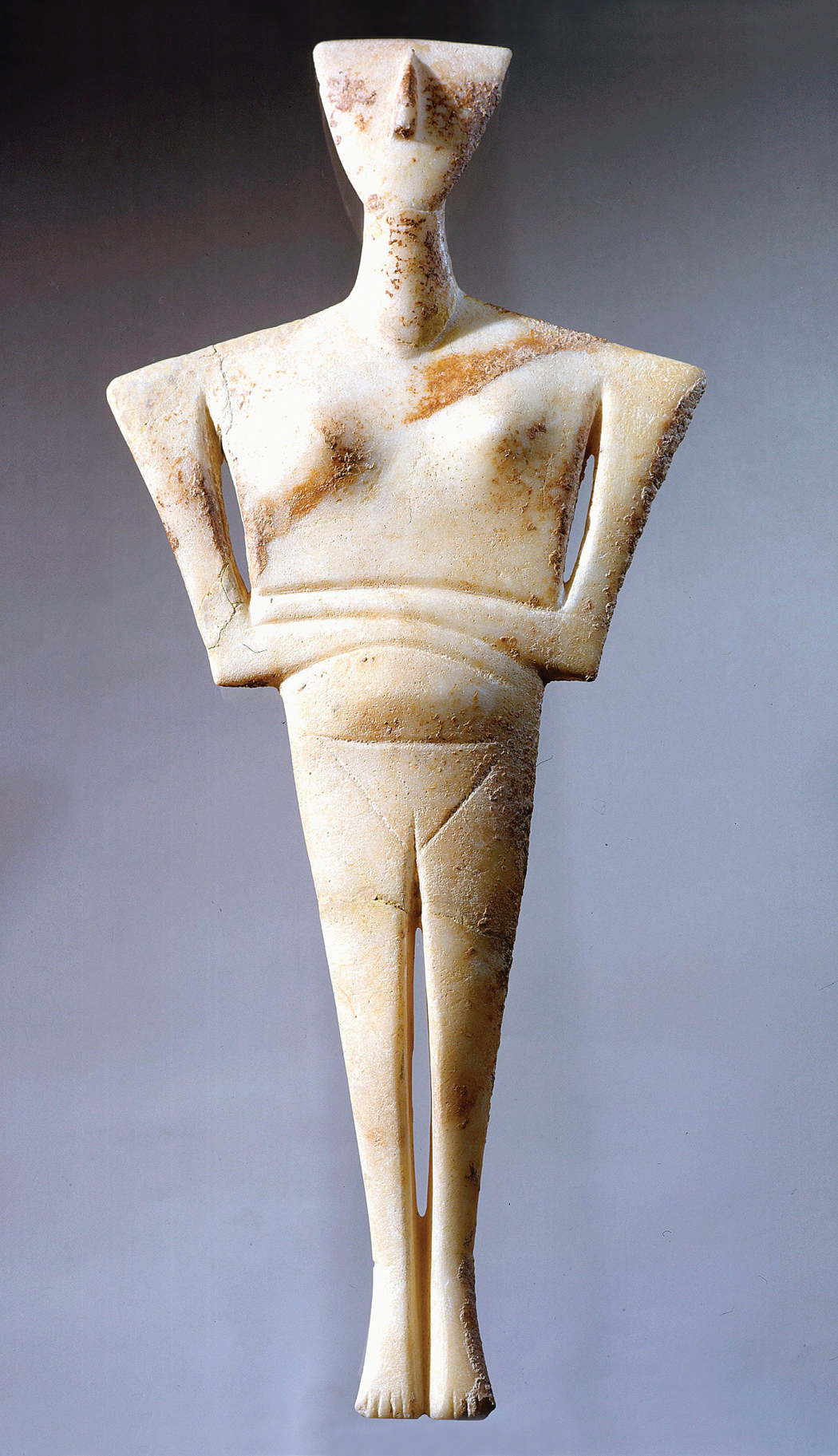
-Since she was found near grave sites, it could simply represent someone who is departed. With her toes pointed downward, these were not meant to stand.
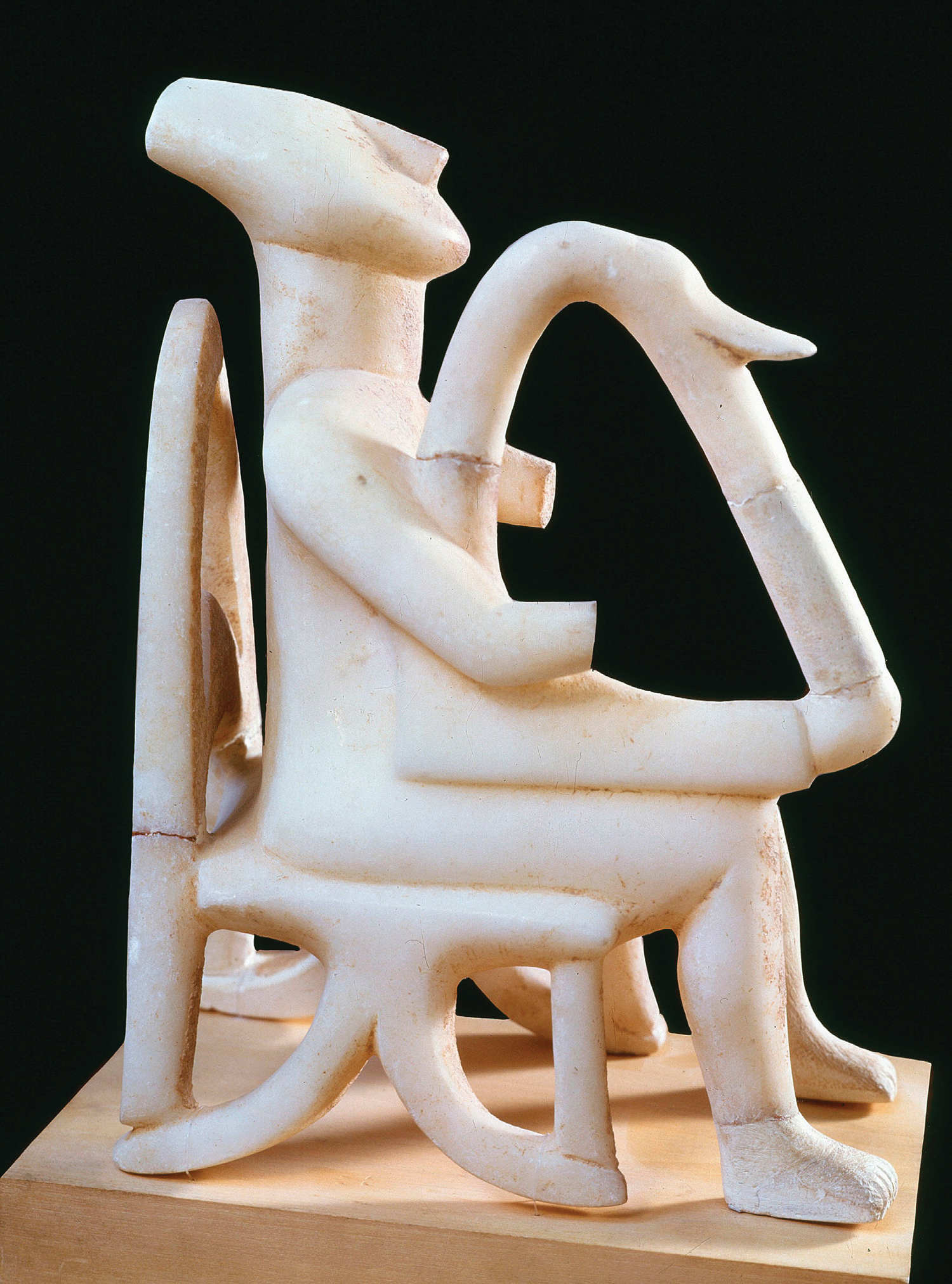
Male harp player, ca. 2600-2300 BCE; marble, 9" high.
Analysis of Male harp player
This male figure is likely a musician playing a harp. He's shown seated, holding a handheld harp with not a bull's face, as we saw in Sumerian art, but the bill of a bird, likely a goose or duck. Once again, he's made up of simple shapes and flat planes. Is he the deceased or is he playing music for someone in the afterlife? He, too, is a mystery!