Characterizing aphasic errors
 Call Kai
 Learn
Learn Practice Test
 Spaced Repetition
 Match
Match Flashcards
 Knowt Play
1/8

There's no tags or description
Looks like no tags are added yet.
Name | Mastery | Learn | Test | Matching | Spaced | Call with Kai | Chat |
|---|
No analytics yet
Send a link to your students to track their progress
9 Terms
what are some main kinds of aphasic errors?
agrammatism
jaron
anomia
circumlocutions
paraphasias (3 main kinds)
stereotypic utterances

what is agrammatism? what kind of lesions or impairment is it associated with?
agrammatism: speech that mainly contains content words, some grammatical morphemes drop out of utterances
associated with frontal lesions, expressive impairment, telegraphic speech
example: “go store. buy milk”
what is jargon? what kind of aphasia is it associated with?
jargon: fluent, effortless speech that is completely incomprehensible to others. has regular melody/prosody
associated with fluent aphasia
example: “the blenzy is cooking in the frambit”
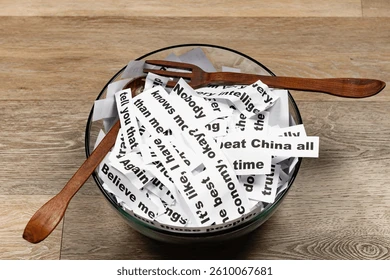

what is anomia?
inability to find words or name objects. most common complaint by people with aphasia
what are circumlocutions?
when a person can’t come up with a word so they talk around it or try to explain it. can be an error, but can also be a strategy

what are paraphasias? what are the 3 main kinds?
paraphasias: incorrect word/nonword is substituted for an intended target word
3 kinds: phonemic paraphasias, semantic paraphasias, neologistic paraphasias
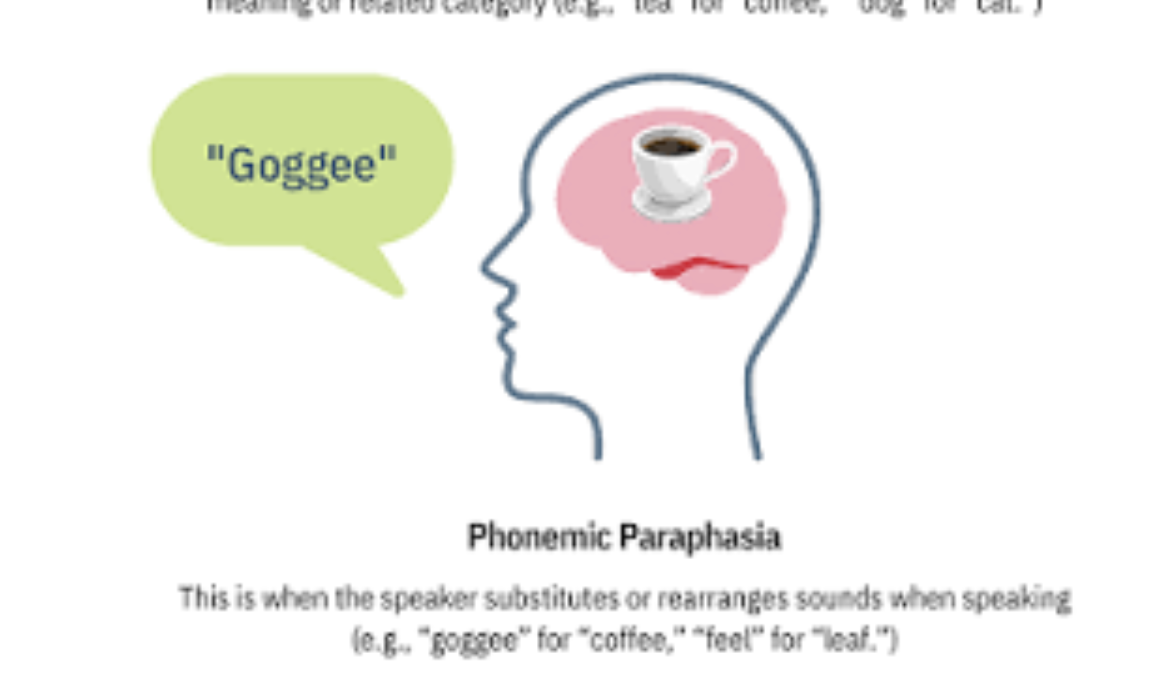
what are phonemic paraphasias (aka literal paraphasias)? give an example
a person substitutes, adds, rearranges, or removes sounds within a word, resulting in a mispronounced word that is still recognizable. sound-based error
example: “goggee” for “coffee”

what are semantic paraphasias? what are the 4 kinds? give an example for each
a person substitutes an intended word for a different word that is usually related in meaning or category
4 kinds:
coordinate error → same level: eg. truck for car, tea for coffee
subordinate error → too specific: eg. sedan for car
superordinate error → too general: eg. vehicle for car
unpredictably related → related in meaning but no pattern: eg. garage for car

what are neologistic paraphasias? give an example
when a person substitutes an intended word with a made-up, non-real word. random nonwords that are used consistently
eg. “planker” for comb