Exam CLAS108 Slide IDs
 Call Kai
 Learn
Learn Practice Test
 Spaced Repetition
 Match
Match Flashcards
 Knowt Play
1/24

There's no tags or description
Looks like no tags are added yet.
Name | Mastery | Learn | Test | Matching | Spaced | Call with Kai | Chat |
|---|
No analytics yet
Send a link to your students to track their progress
25 Terms
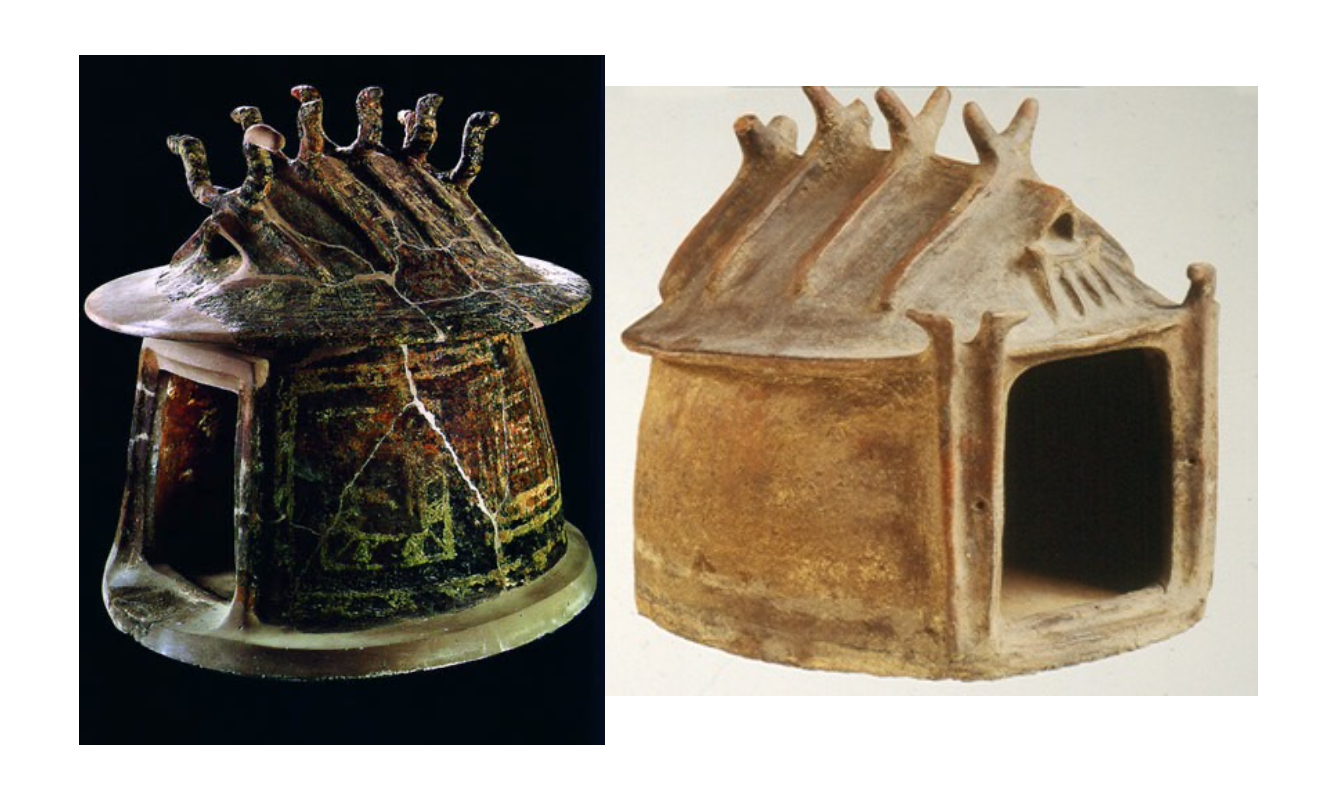
Hut urns
Pre-Roman Italy, the Etruscans
8th - 7th c. BCE
Clay or bronze
Central Italy, necropolises
Burial method practiced by the Etruscans. Ash placed in the urn in the style of a house. Reflects what houses would have looked like for both the Etruscans and Romans, used for reconstructions of huts from the Palatine Hill.
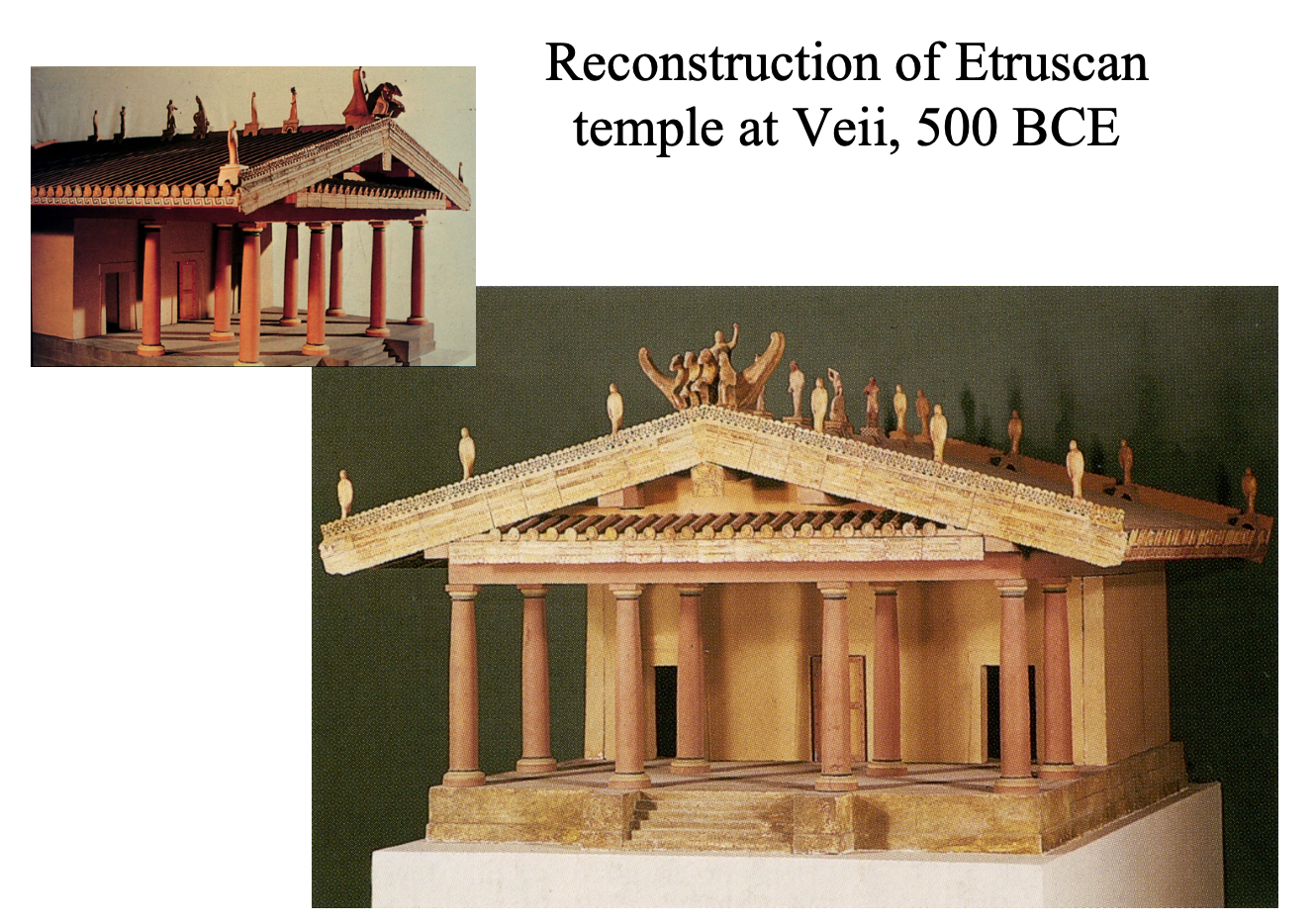
Reconstruction of Etruscan temple
500 BCE
Likely perishable material like timber
Akroteria/sculpture on the roof made of terracotta
High podium, frontal stairs, deep pronaos, tripartite cella, prostyle
Veii
Example of typical Etruscan temple features
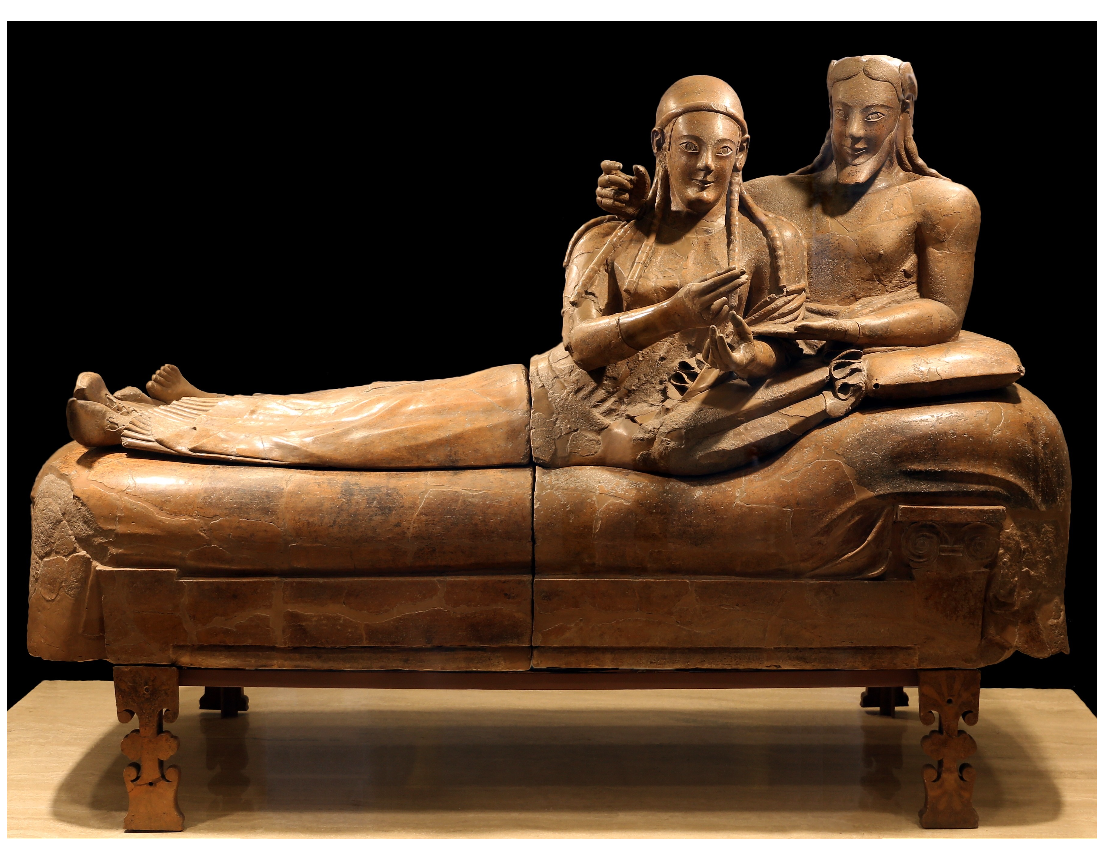
Etrsucan sarcophagus
Likely mass produced
2.06 m. long
520-510 BCE
Terracotta
Cerveteri
Man and woman depicted together, equal status
Elements rely on the model of Greek Archaic sculpture
Expressive - shows Etruscan interest in accurately portraying the details of nature
Could depict tradition of dining at a funeral
Shows rapid change from small scale urn to the sarcophagus
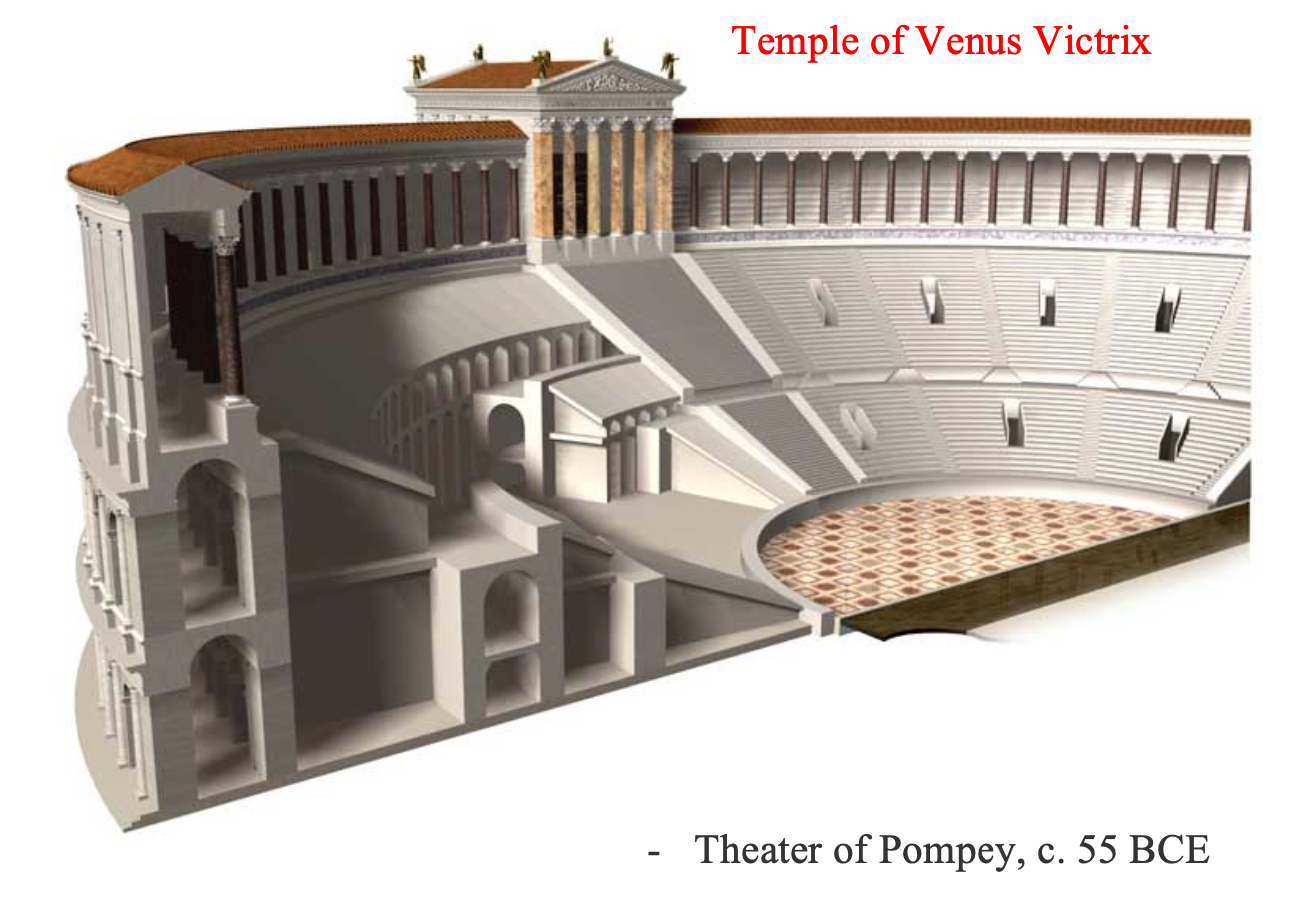
Theatre of Pompey
Pompey had it built
c. 55 BCE
Stone
Hellenistic style
Celebrates the military victories of Pompey the Great
First permanent theatre in Rome
Includes Temple of Venus Victrix, may have made the senate more amenable to building it as it was historically inappropriate - theatres were usually temporary for certain festivals then taken down
Transitional monument between the Republic tradition of temple construction and the grand patronage of the imperial period
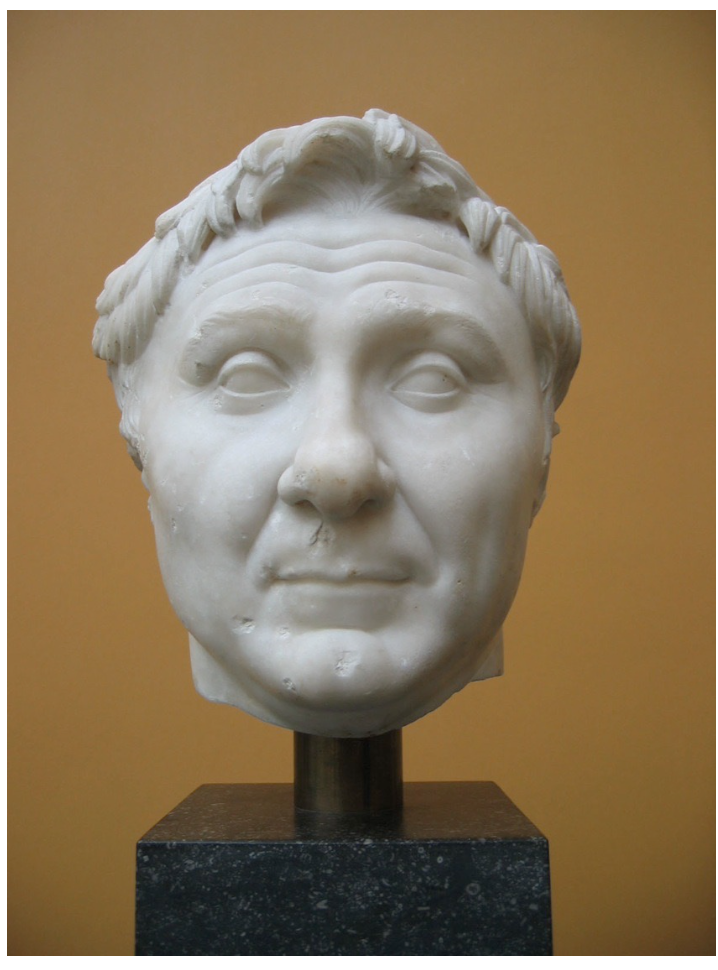
Pompey the Great
30-50 CE
Pompey ruled from 106-48 BCE
Marble
Propagandistic image, mostly idealised and inspired by earlier Hellenistic examples e.g. Alexander the Great for hairstyle
Veristic composition with classicising features
Example of verism, the idealisation of wrinkles, furrows and sagging skin
Shows Pompey’s years of experience, wisdom, character and intelligence. Done so he is easily remembered as a great Roman general.
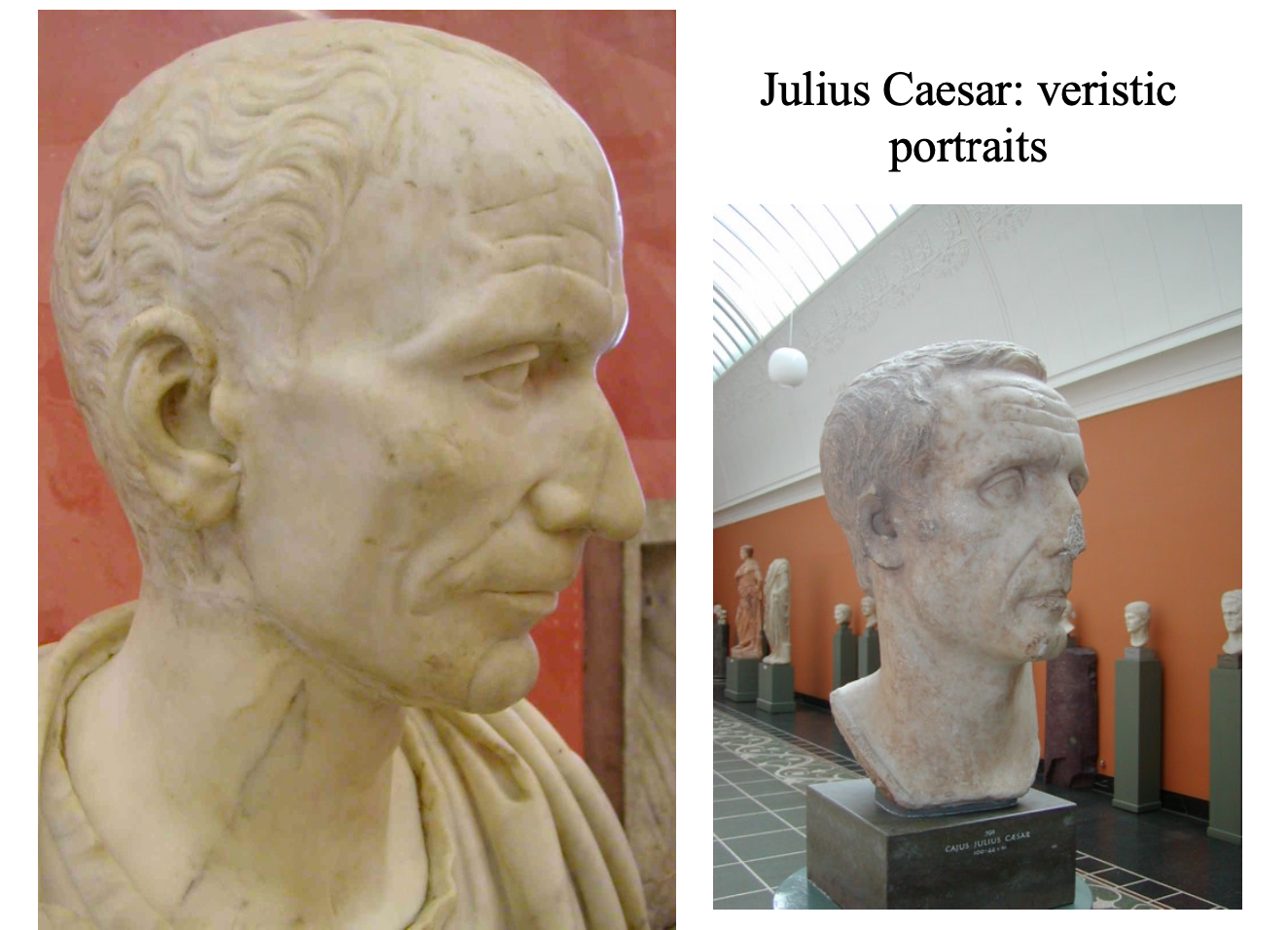
Julius Caesar: veristic portraits
d. 44 BCE
Marble
Evidence of the veristic style of portraiture depicted through Julius Caesar
Idealisation of wrinkles, furrows and sagging skin.
Shows Julius’ years of experience, wisdom, character and intelligence.
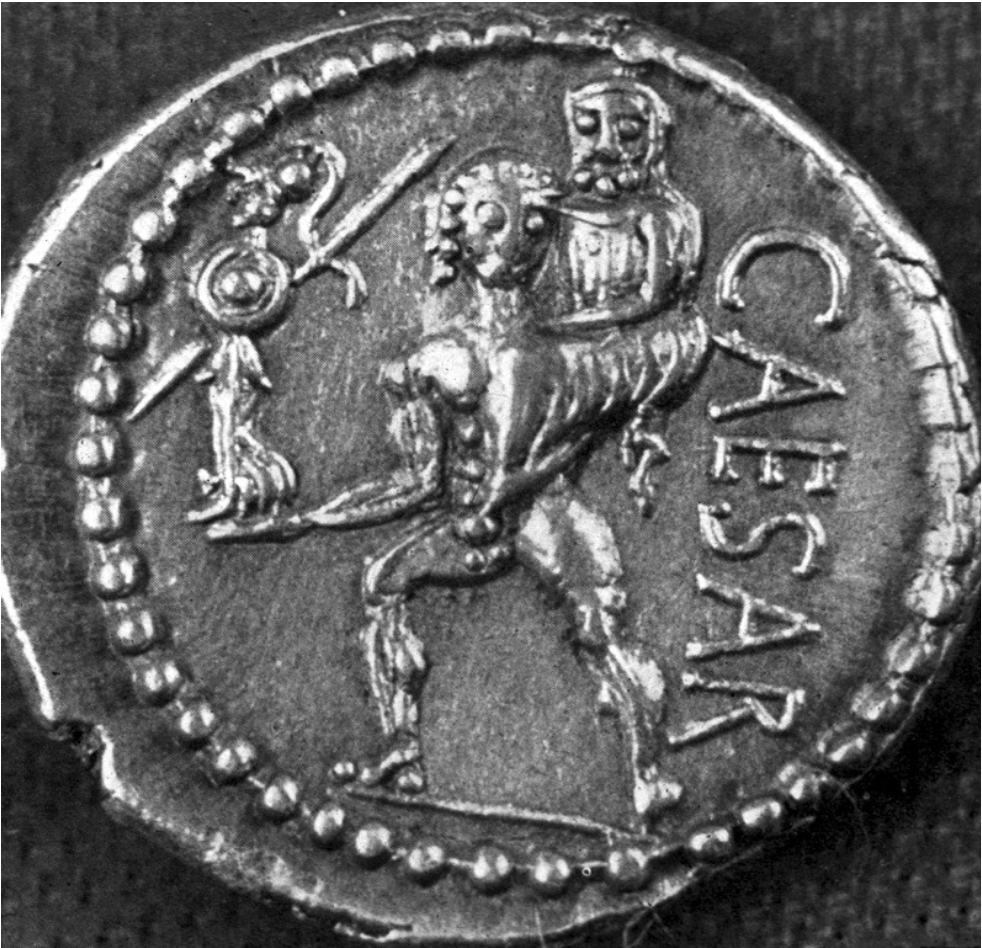
Denarius of Julius Caesar
Caesar had it made
Roman Republic period - Caesar’s reign
47 BCE
Silver
Evidence of Caesar claiming descent from Venus via Aeneas - depicted on the coin, carrying his father and palladium
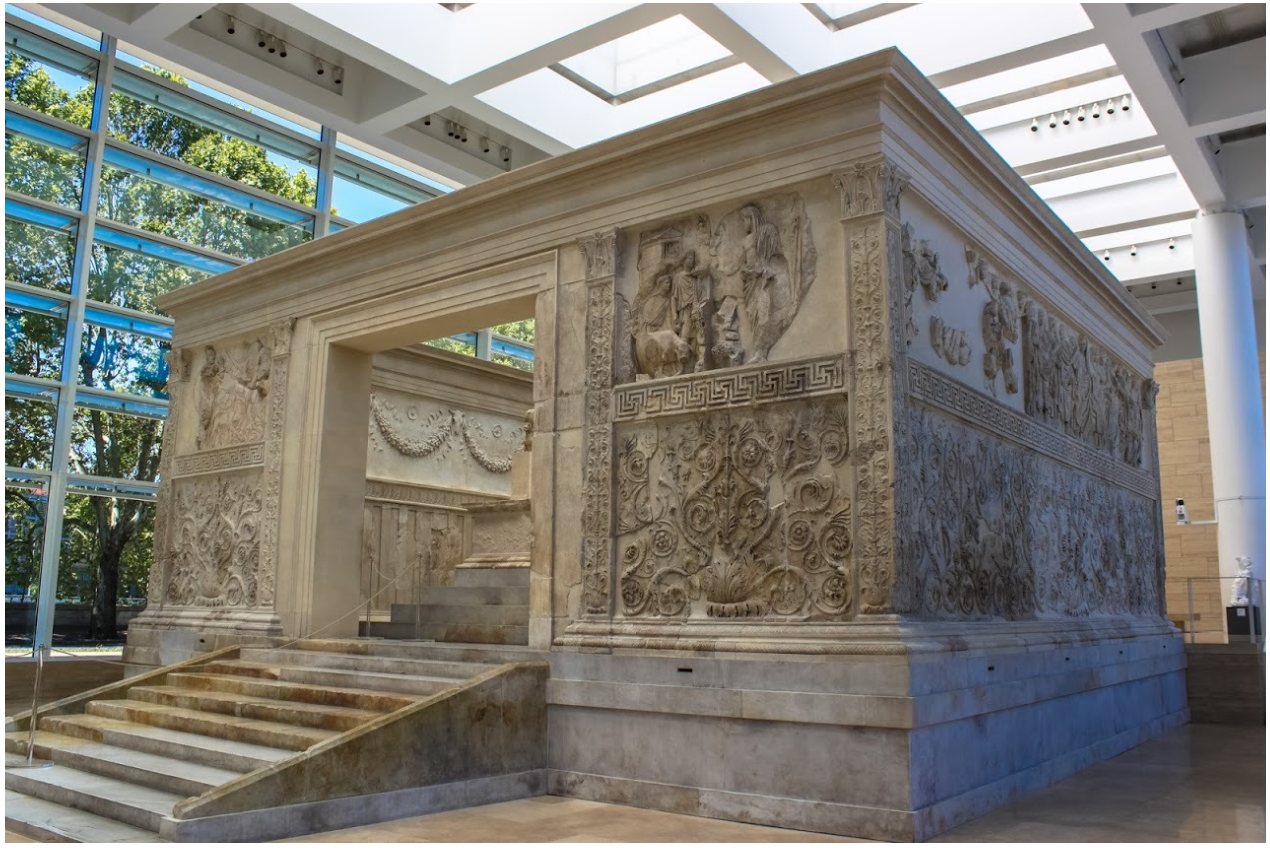
Ara Pacis of Augustus
Augustus had it built
Pledged in 13 BCE and inaugurated in 9 BCE
Marble, would have been painted over
Built in the Campus Martius
Features mythological scenes/figures: Roma, Pax/Italia/Venus Genitrix/Tellus, Aeneas and his sons, Remus and Romulus
Features Augustus and his family - connects himself to the mythological figures, establishes dynasty as legitimate part of his rule
Functions as a temple - offerings, sacrifices
Massive propaganda piece for Augustus - commemorates the peace Augustus brought to Rome
Celebrates Augustus’ traditional Roman values: Piety, family, foreign conquest, honouring Rome’s founders
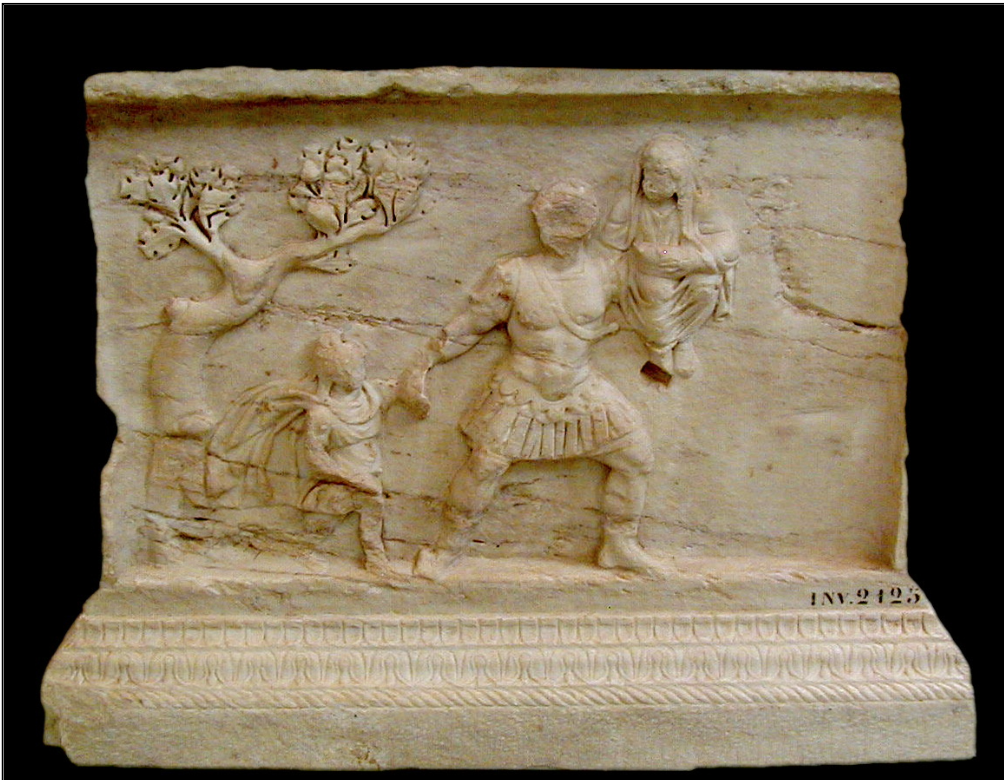
Relief from the altar of the Gens Augusta
1st c. CE
Carrara marble
Carthage, near the temple of the Gens Augusta
Functions as an altar for sacrifices and Augustan propaganda
This side features Aeneas with his father and son - Augustus’ ancestor. Fleeing Carthage. Supposedly went to Carthage
Family line associated with religion - religious stuff delegated to the family of the emperor. Line between religious practice + pious act has become blurred - divine lineage of the Julio-Claudians
Combines with the other imagery on the altar to connect the Imperial family with the divine
Early evidence of the Roman imperial cult in the provinces
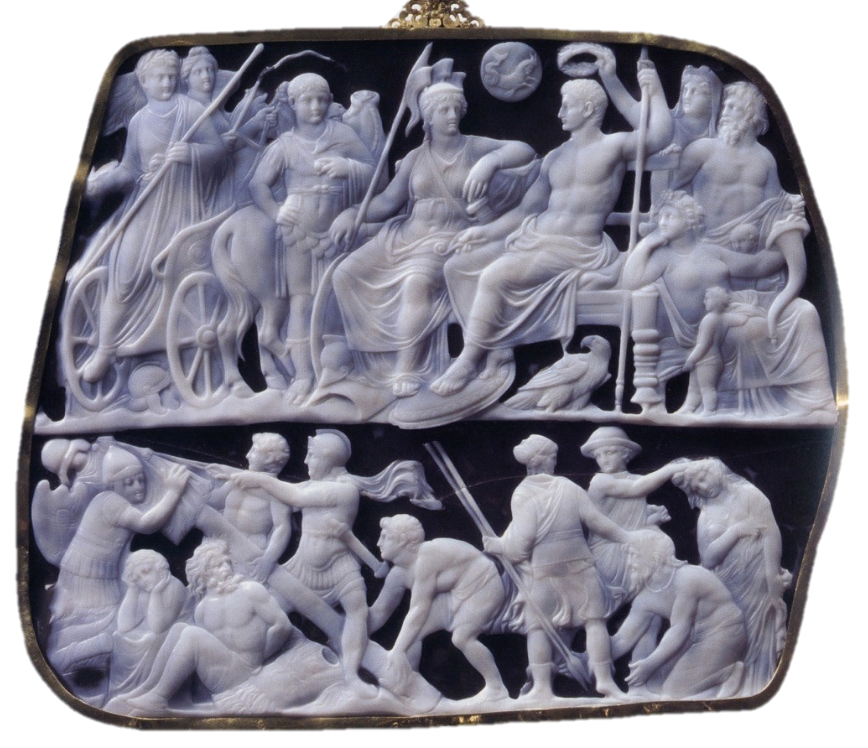
Gemma Augustea
19×23 cm
During Tiberius’ reign
9-12 AD
Onyx stone
Augustan classicism: Idealised, tranquil, wet drapery
Lower register = Aftermath of a Roman military victory by Tiberius; defeated captive barbarians, Roman soldiers raising a trophy. Scorpio (Tiberius's birth sign) included so may be his victory
Upper register = Augustus and Roma on a double throne. Augustus has a laurel of victory. Enemy shields and armor at their feet. Eagle under the throne = Jupiter's support. Capricorn, Augustus's birth sign, replaces the sun. 4 deities on the right, personifications of geographical areas. Tiberius steps down from a chariot driven by Victory
Statement of imperial power and dynasty - Tiberius associating himself with the now-divine Augustus
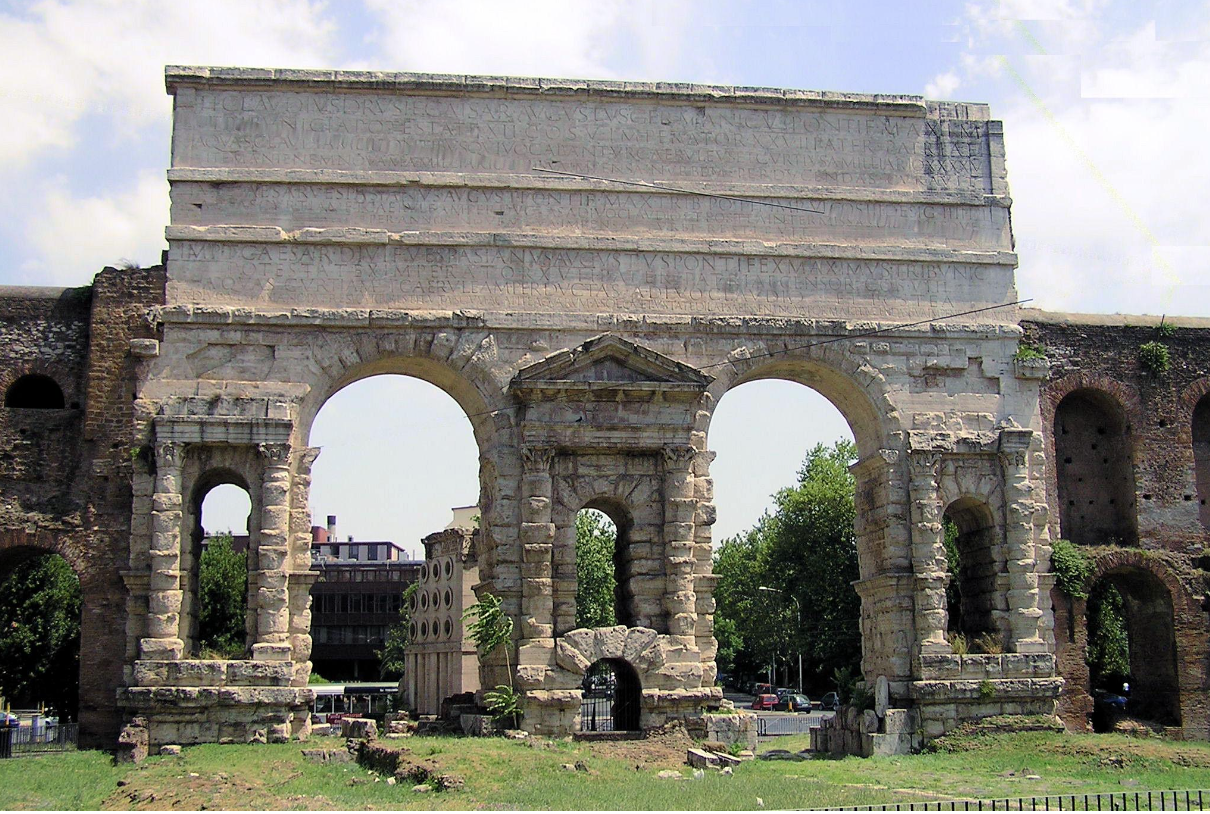
Porta Maggiore
Built by Claudius
Claudian
52 AD
Travertine stone
Eastern Rome
Rusticated style - blocks look “aged” on purpose, alludes to Republican architecture
Serves as a bridge over the road for the aqueducts
Proclaimed boundaries of the city
Aqueducts announced power and generosity of Claudius
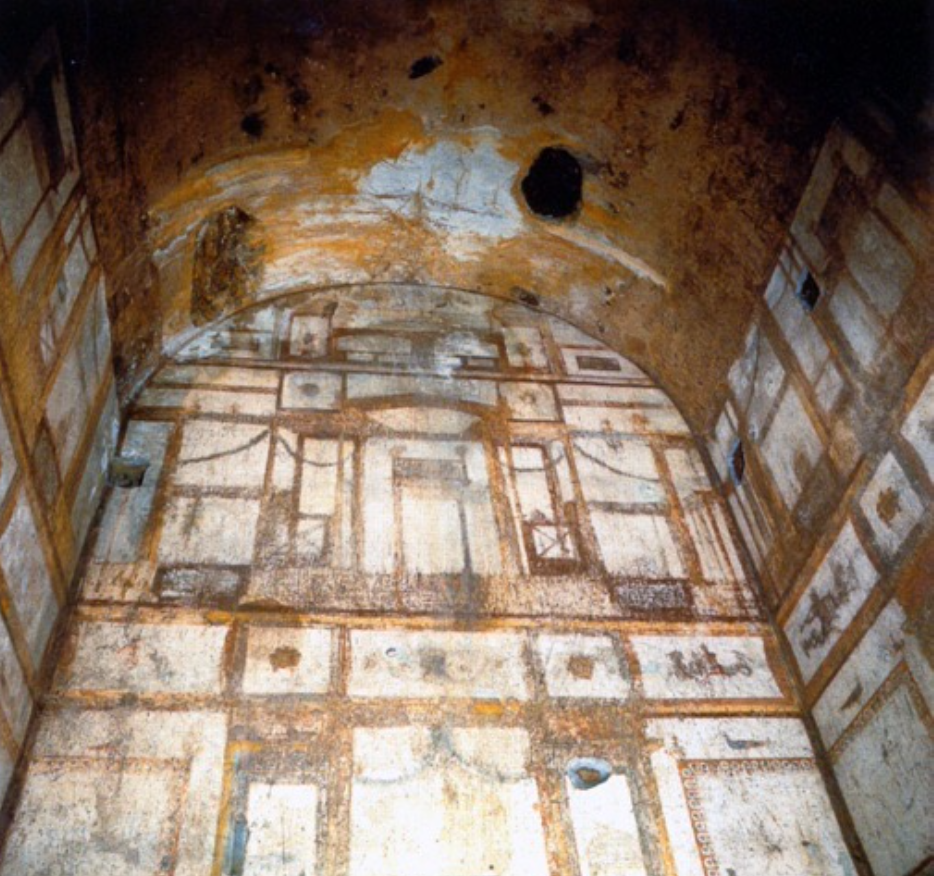
Frescoes of Nero’s Domus Area
Built by Nero
Designed by Severus and Celer
Covered 300 acres, front portico is 1 mile long
64-84 AD
Concrete and brick, colour mixed with water
Preserved throughout ruined underground rooms
Architectural frame - multi-story decorated backdrop
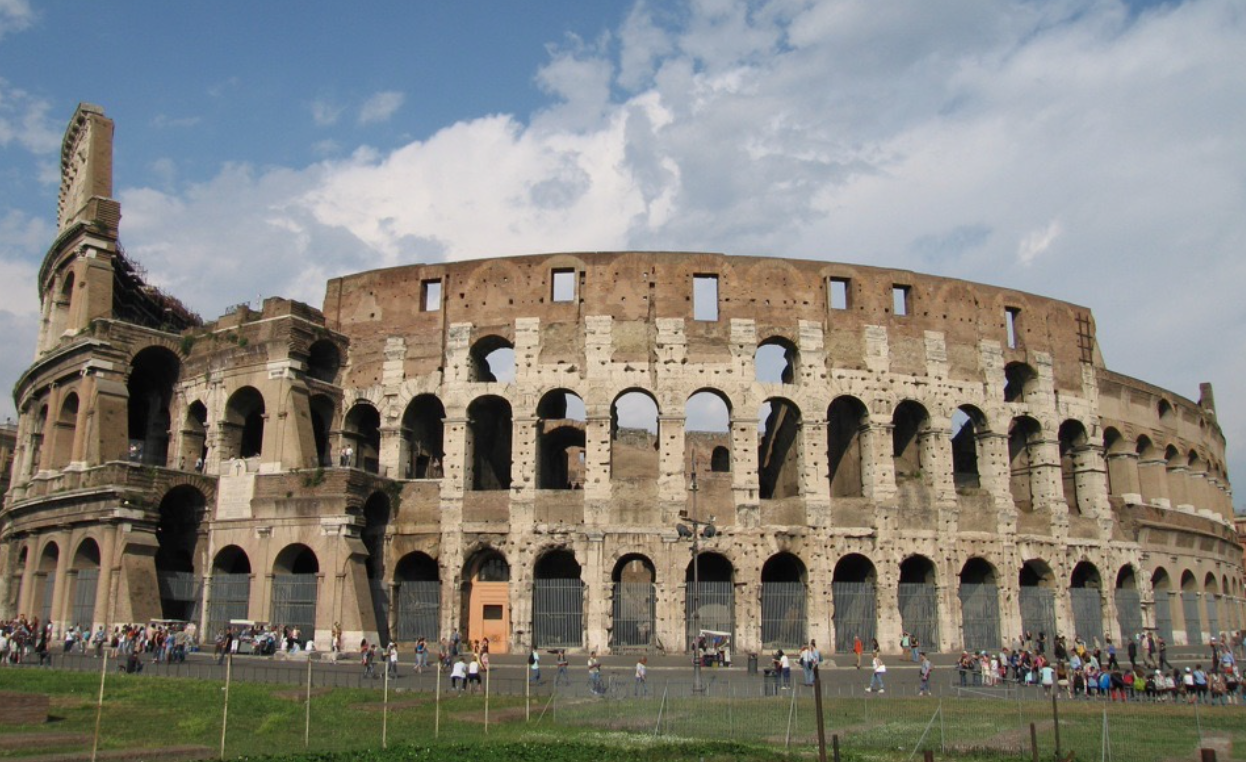
Flavian Ampitheater
Built by Vespasian and Titus
188×156 m. and 50 m. high
Period of the Flavians
Made between 72-80 AD
Concrete structural support, skeleton of travertine blocks
Network of tunnels + stairs freed up space, 45000 spectators to move quickly to and from seats
Conservative and traditional facade
4-story
Half columns carved in the blocks separated the arches – Doric on GF, Ionic on 2F, Corinthian on 3F
Below ground level = cages for animals, gladiators, passageways
Animal hunts, gladiator fights, executions, music
Largest, grandest, most important amphitheater in Rome
Themes: Power of Flavian emperors + their control over empire resources + benefits of the rule over Romans
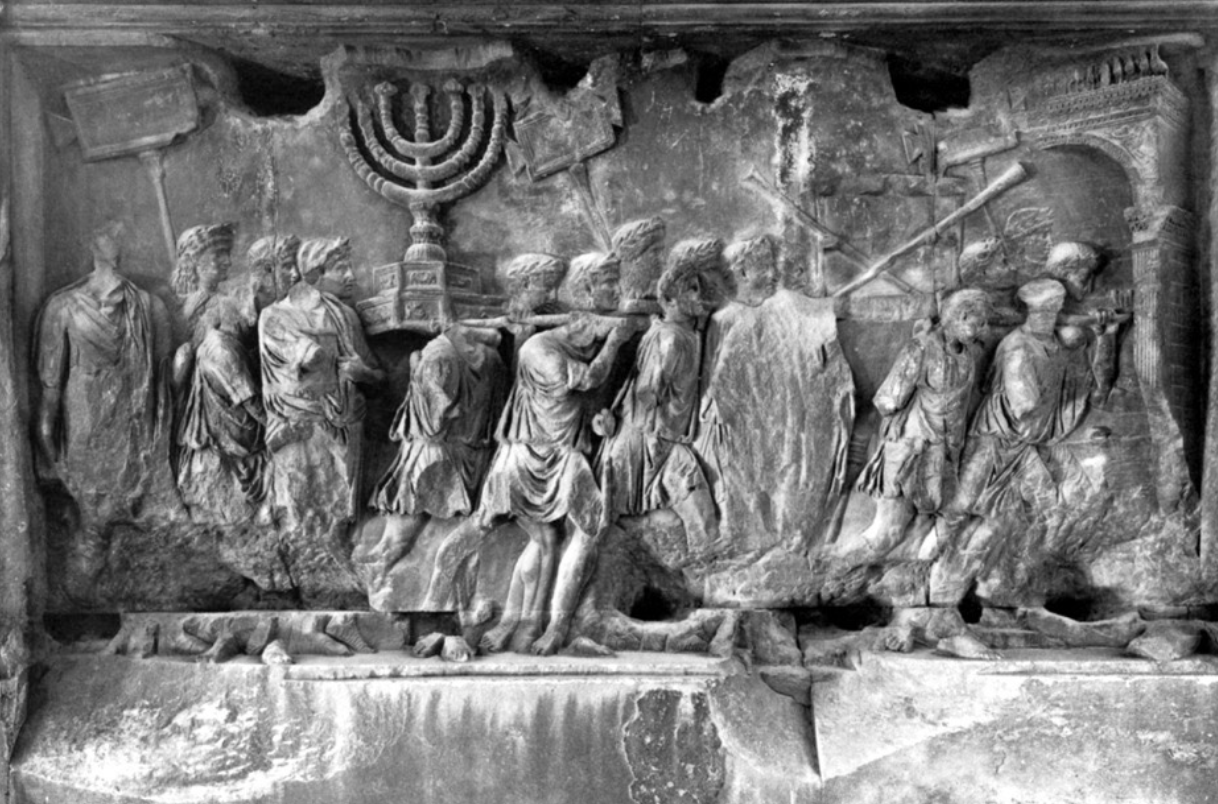
Arch of Titus
Built by Domitian
Dedicated in 81 AD
Marble
Rome, on the Sacred Way
Depicts victory parade with menorah (candles)
Plunder from 2nd temple in Jerusalem
Captives carrying the table of showbread
Commemorates Titus’ victory in Judaea
Divine Titus insinuates maybe Domitian is also a god
Going into a triumphal arch - viewer brought into the scene as they are also passing through a triumphal arch.
Celebrating themselves
Depiction of Roman triumph - spoils being carried around Rome - one of the only ones existing
Domitian uplifting his own image by uplifting that of Titus
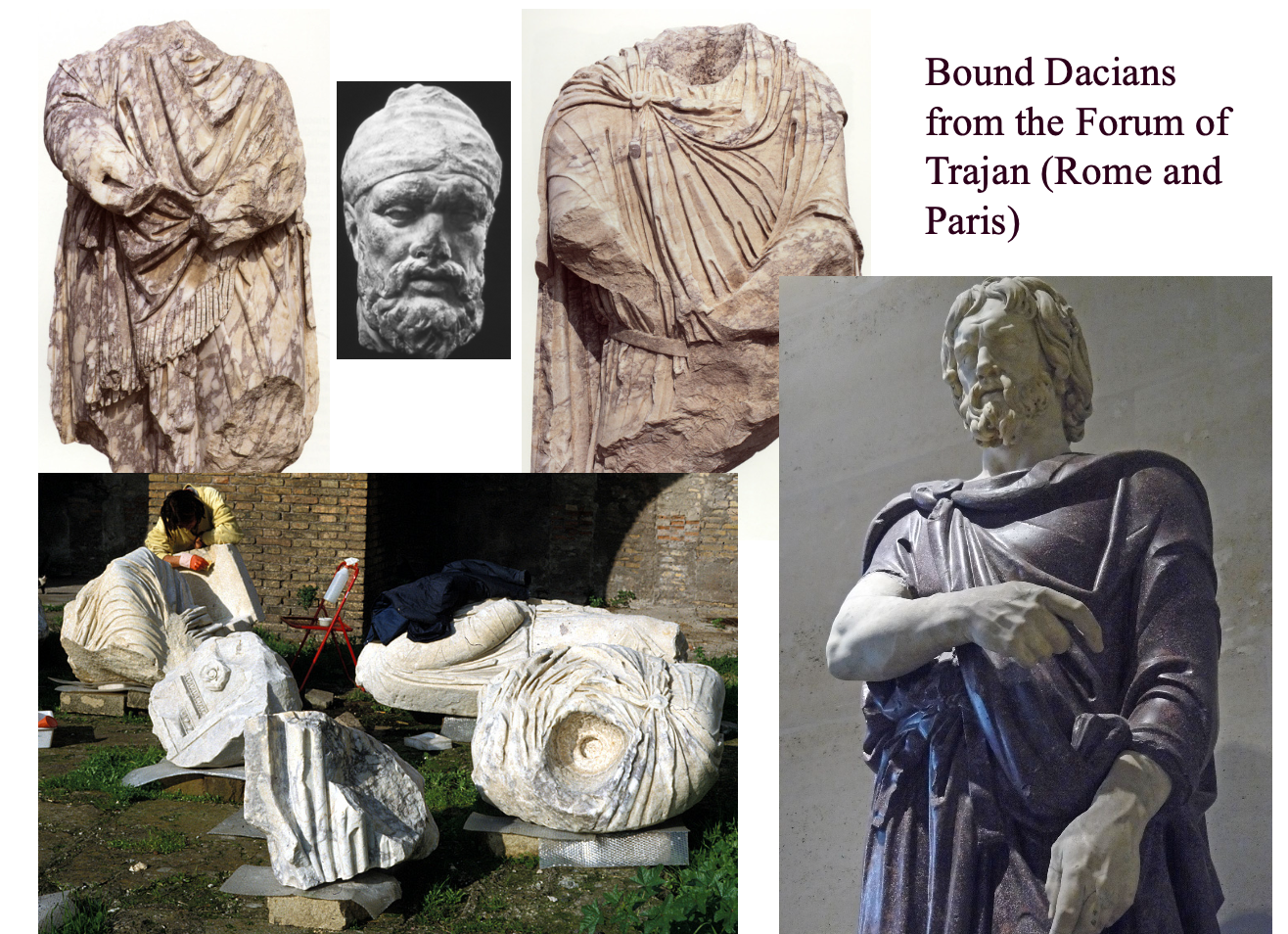
Bound Dacians
Trajan likely had them made
Trajan’s period
Built 105-107 AD
Inaugurated 112 AD
Marble
Forum of Trajan
Trajan had military victories in Dacia in 101-102 and 105-106 AD - sculptures of Dacian captives were placed in his forum to commemorate them
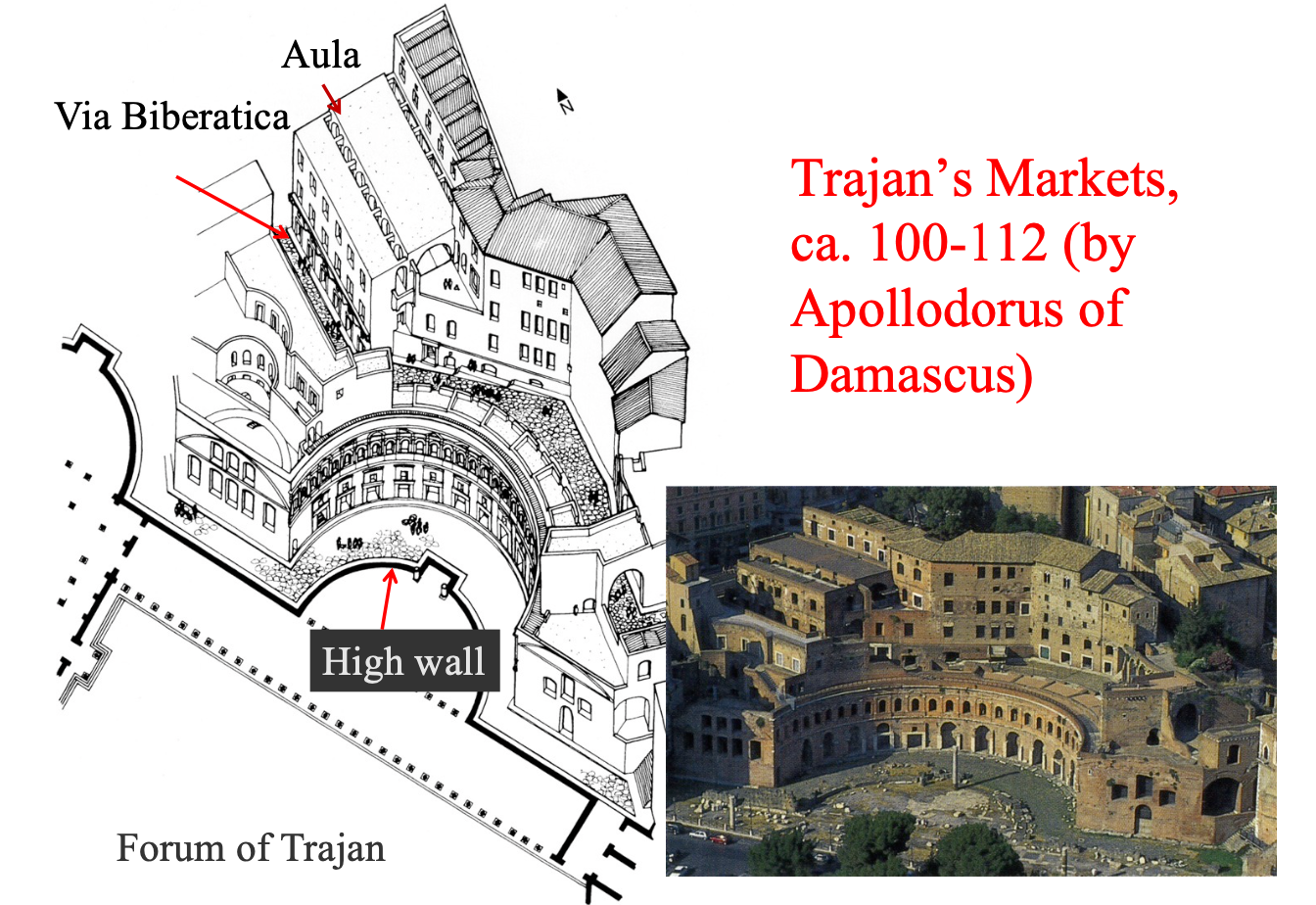
Trajan’s Markets
Built by Trajan
Designed by Apollodorus of Damascus
Trajan’s period
100-112 AD
Brick-faced concrete terraces
Six levels of streets rising up the side of the Quirinal Hill
170 rooms
Fenestrated sequence, so well-lit
Series of groin vaults
Architecturally ambitious - used a massive amount of concrete to keep the dirt in place, if not a landslip would’ve occurred below the Quirinal
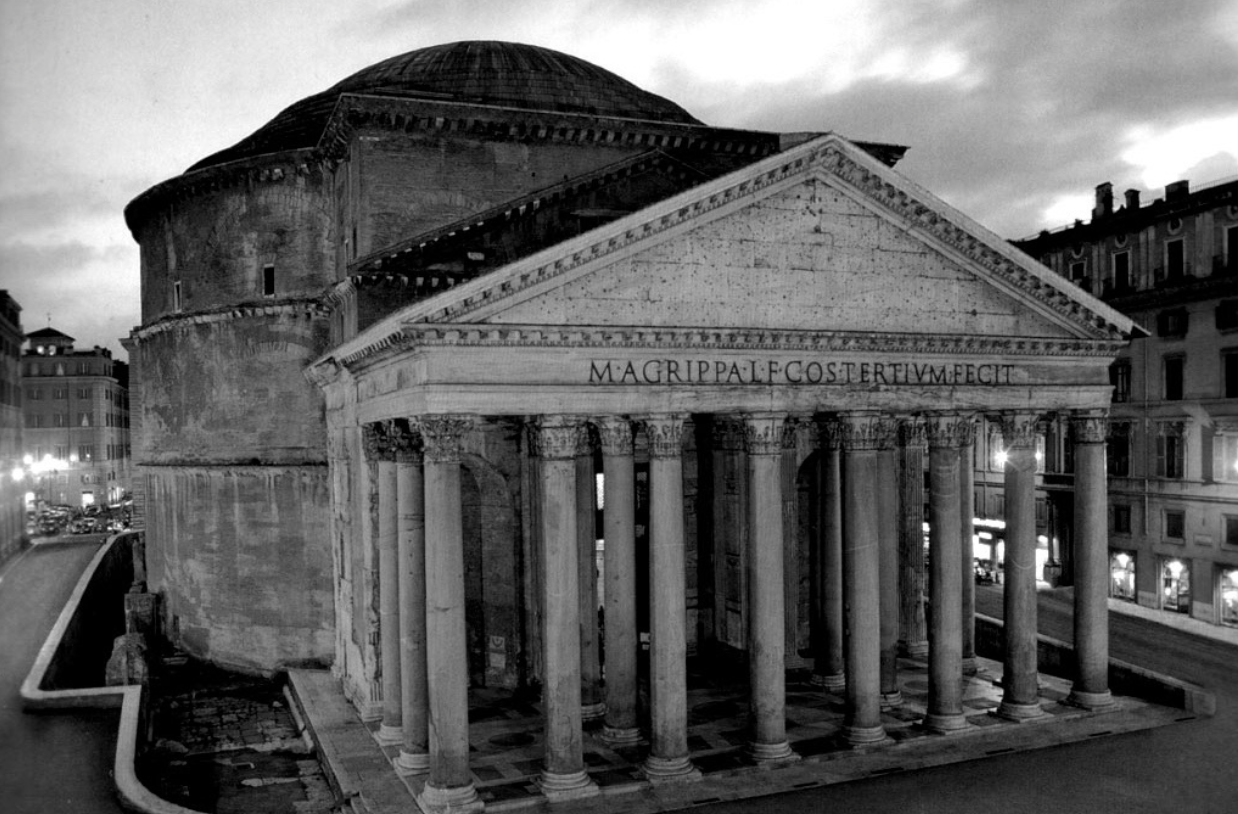
Pantheon
Rededicated to Agrippa
c. 125 AD
Concrete containing basalt, floor and walls decorated with marble veneer
Porch: monolithic granite columns in Corinthian order - Greek influence
Main building (cella) - cylindrical domed drum - Roman structure
Functions as temple to all the gods
Walls are 6.1m thick
Lighter materials used from bottom to top
Relieving arches
Light through oculus travels in a beam across the dome - sun
Dome becomes vault of the heavens
Each coffer had a gold rosette + exterior of the dome was gilded
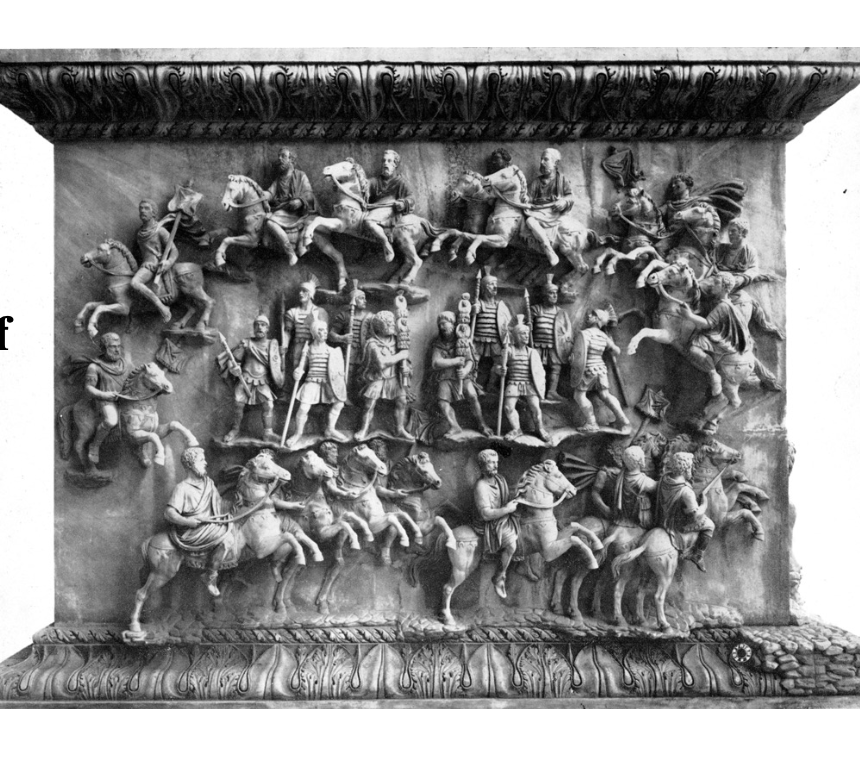
Column of Antoninus Pius
Built by Marcus Aurelius and Lucius Verus
Dedicated to Antoninus Pius
Antonine period
Dedicated in 161 after his death
Marble
Built in Campus Martius
Base of the column
Relief sculpture depicting infantry in a parade activity - riding in a circle, infantry in the center
Italic style - shows shift from classical styles preferred by other Roman emperors - people want something new, so move away from Classicizing
Bird’s-eye-view + shown in profile = 2 different perspectives in the same scene
Rocks underneath figures so it doesn’t look like they’re floating
Horses + costumes = High-class
Cape = general
Centurion = breast plate = higher status
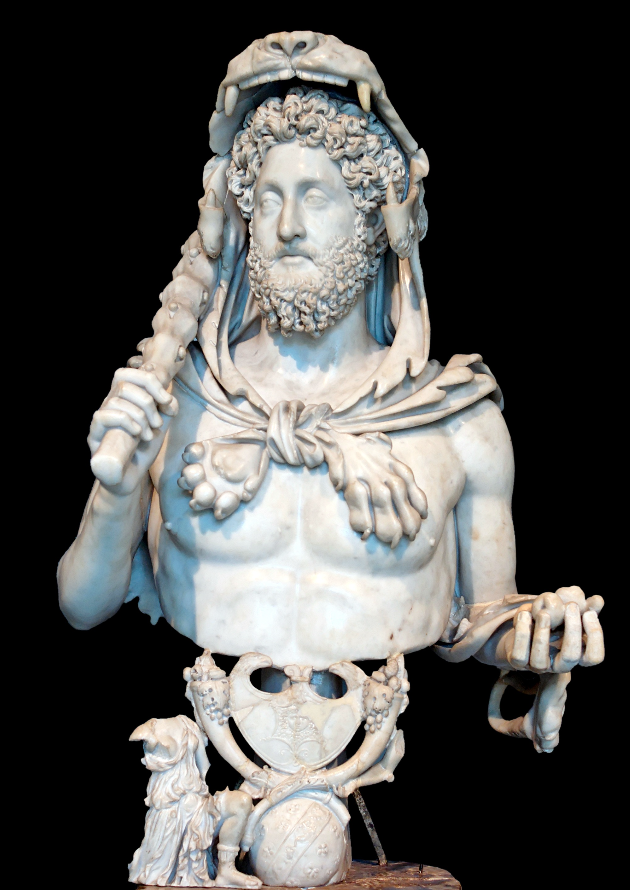
Commodus
Commodus likely had it made
During Commodus’ rule, 180-190 AD
Marble
Commodus depicted as Hercules - Lion skin, apples of Hesperides, club
Example of using art/sculpture as propaganda
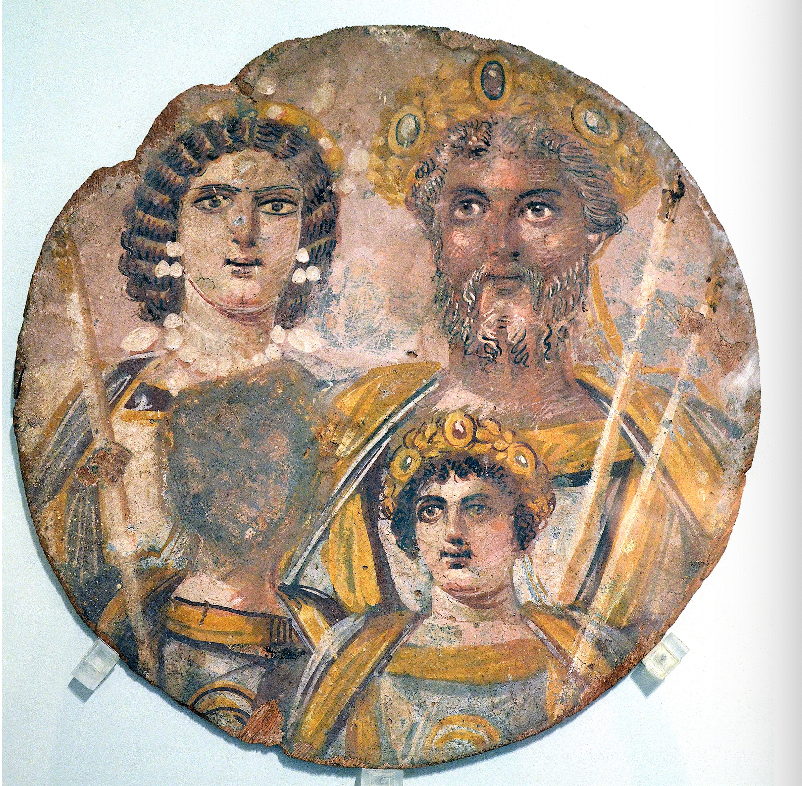
Severan Tondo
Severan dynasty period
c. 200 CE
Wooden panel
Likely Egypt
Depicts Septimius Severus with his family - wife Julia Donna and children Caracalla and Geta
Geta’s face has been removed by Caracalla - evidence of damnatio memoriae, “condemnation of memory”
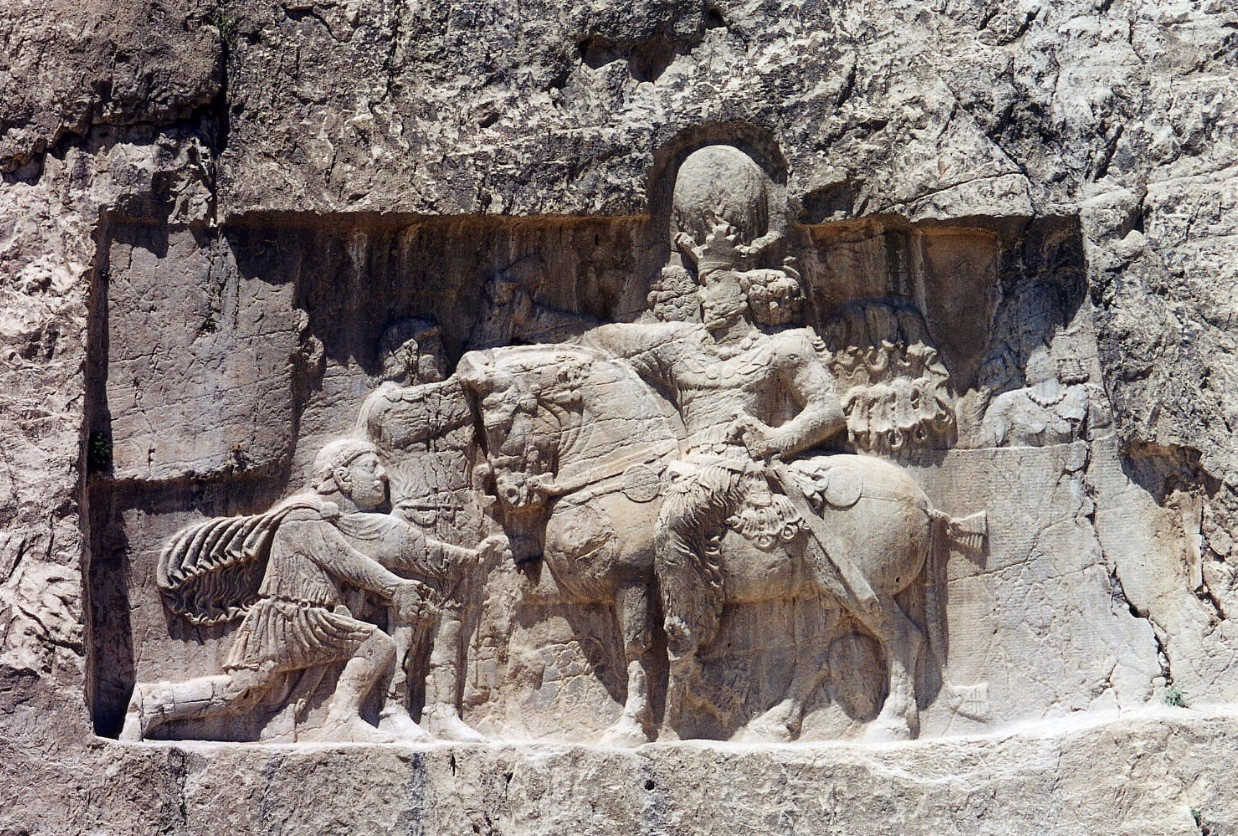
Valerian and Persian Emperor Shapur I
During crisis of the 3rd century
260s AD
Rock relief
Shiraz, Iran
Depicts emperor Valerian as a captive, paying homage to the Persian Emperor Shapur I
This was shameful for Rome as this has never happened to an emperor before, reflects the struggle of the 3rd century
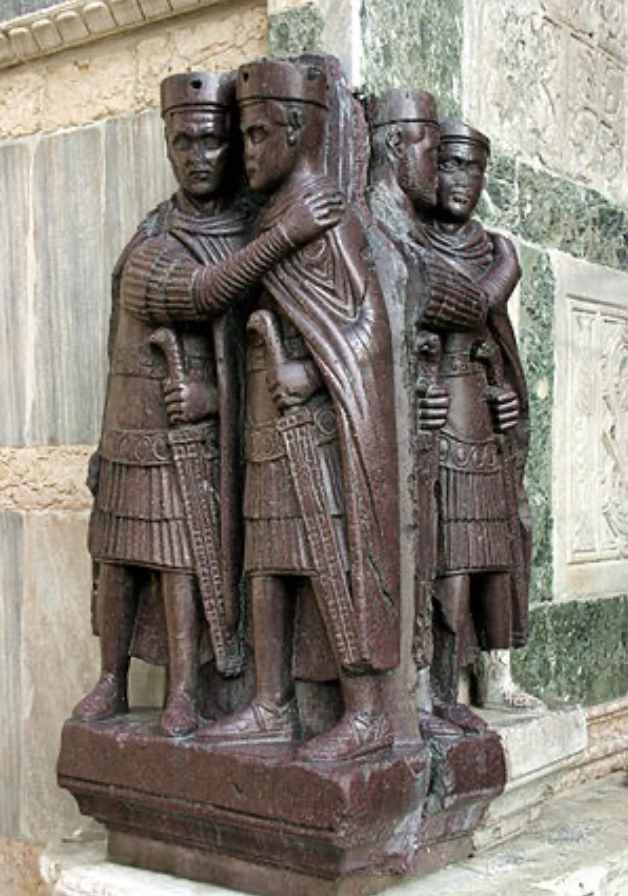
Diocletian and the Tetrarchy
Diocletian had it built
During crisis of the 3rd century
c. 300 AD
Granite - poryphory
Depicts the 4 tetrarchs - Diocletian promoting the system of tetrarchy - he subdivided the Empire into 4 sections
2 Augustae, 2 Caesars
Shows their equal standing + look the same = emphasises their power and strength as a collective
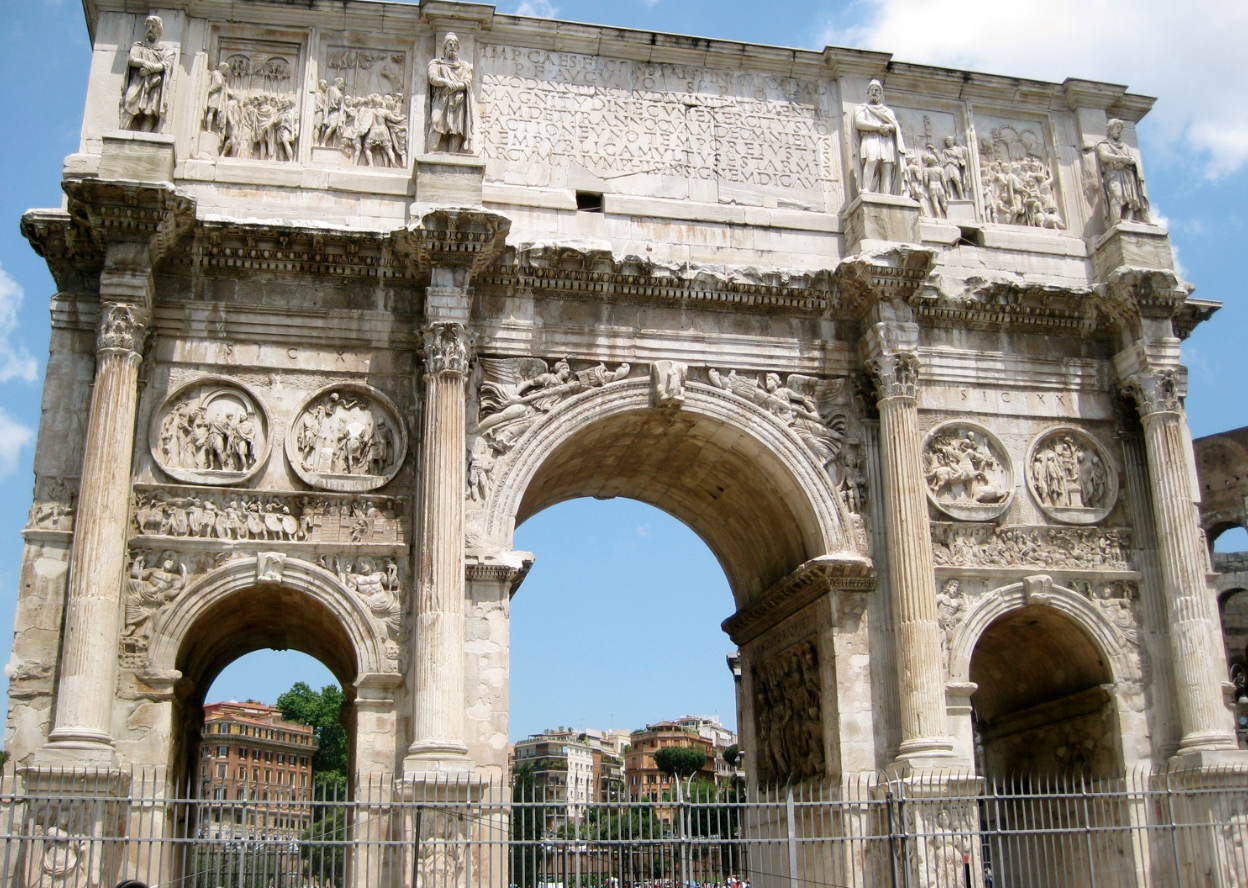
Arch of Constantine
Constantine had it made
During Constantine’s reign
312-315 AD
Brick-faced concrete, marble
Found in Rome, along the ancient Triumphal Route next to the Flavian Amphitheatre
Built largely of spolia (materials intentionally taken from older monuments), mostly imperial.
Rectangular panels taken from other monuments
Bound Dacians at the top are from Trajan
Scenes of other emperors re-carved to look like Constantine - Trajan, Hadrian, Vespasian and Titus. Taking their powers and achievements
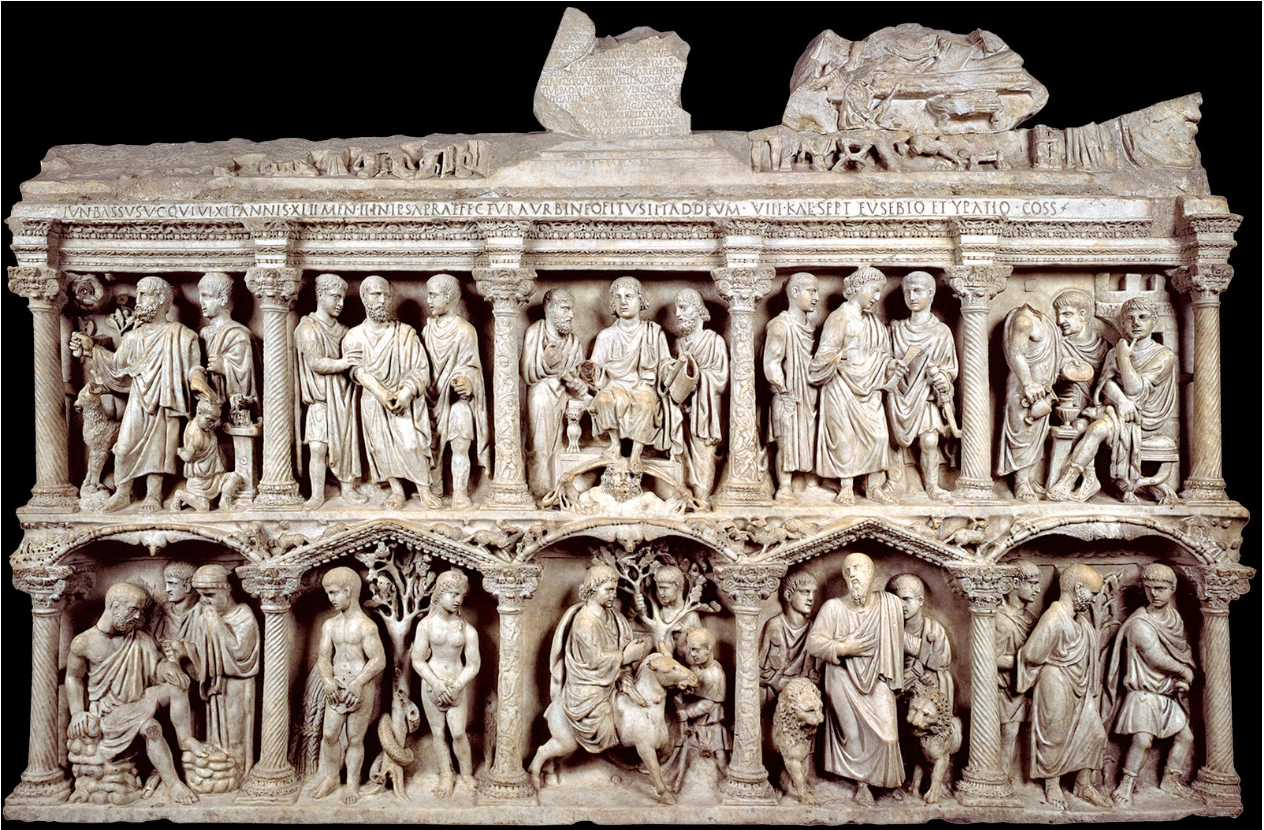
Sarcophagus of Junius Bassus
c. 360 AD
Marble
Found in the Vatican Hill necropolis
Junius Bassus = prefect of Rome
Christian language on grave materials
Inscription: Only lived to be 42 years old. Went to God as a recent convert to Christianity. Openly celebrating that fact
Imagery = stories from the Bible e.g. Adam and Eve, Daniel and the lions, Abraham and Isaac
Mayor of Rome (not an imperial capital anymore) celebrating himself through the series of biblical images
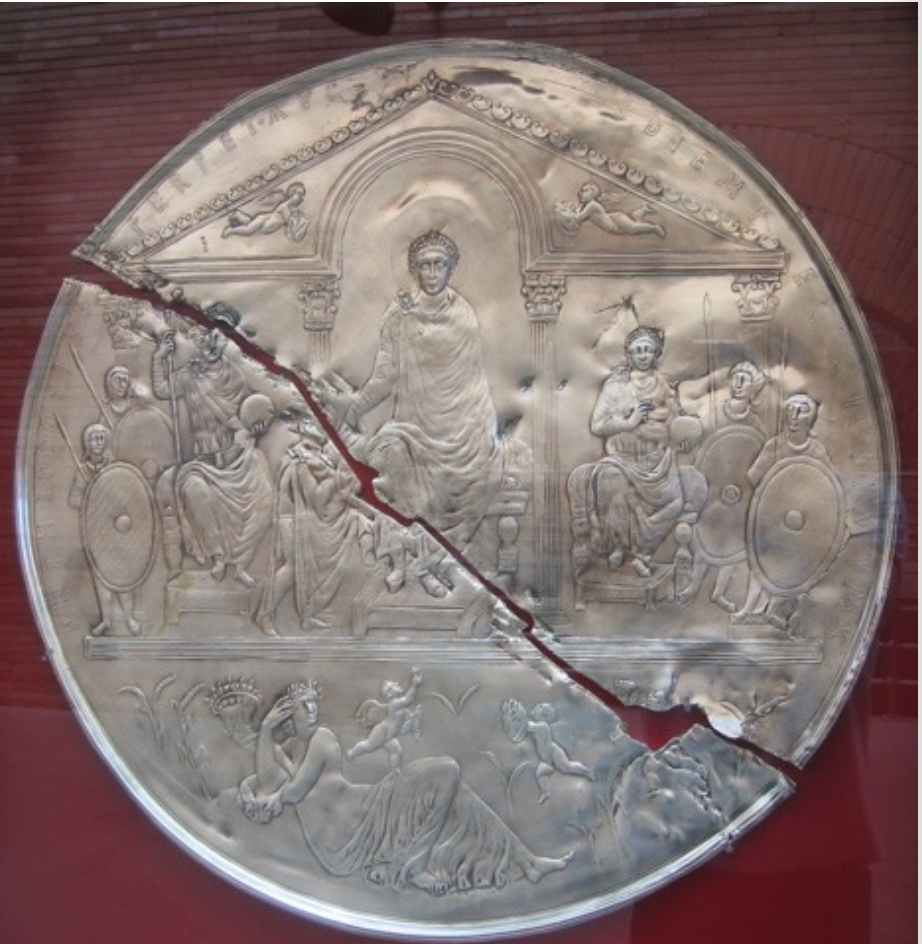
Missorium of Theodosius I
Made in a workshop
388 AD
Giant silver disk
Weighs 19kg
Almendralejo, Spain
Commemorates the 10-year anniversary of Theodosius’ reign
Ceres depicted on the bottom - Christian art/language not well-documented in this age so it didn't matter that a figure from a pagan religion was being depicted, so this was an acceptable artwork and wasn’t yet considered blasphemy