Hematology: The Basic Function of Blood & Lab Values
 Call Kai
 Learn
Learn Practice Test
 Spaced Repetition
 Match
Match Flashcards
 Knowt Play
1/34

Earn XP
Description and Tags
Pathology
Name | Mastery | Learn | Test | Matching | Spaced | Call with Kai | Chat |
|---|
No analytics yet
Send a link to your students to track their progress
35 Terms
functions of blood
delivery and transport of substances for cellular metabolism
O2, CO2, and other nutrients
defense against microorganisms and injury
movement of immune elements
prevention of exsanguinations (bleeding out) through clotting
maintain acid-base balance
homeostasis
plasma
55% of blood composition
clotting factors
albumin/proteins
humoral immunity
electrolytes
cellular component
45% of blood composition
red blood cells (erythrocytes)
white blood cells (lymphocytes)
platelets (kind of)
blood composition
plasma, buffy coat (WBCs, PLTs), packed red cells
crow’s foot
white blood cell, hemoglobin, hematocrit, platelet
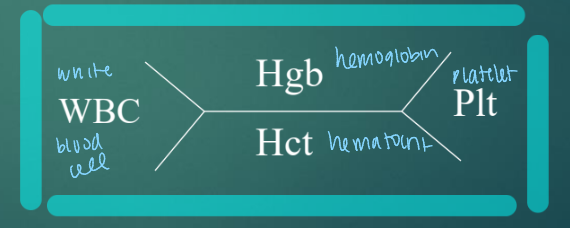
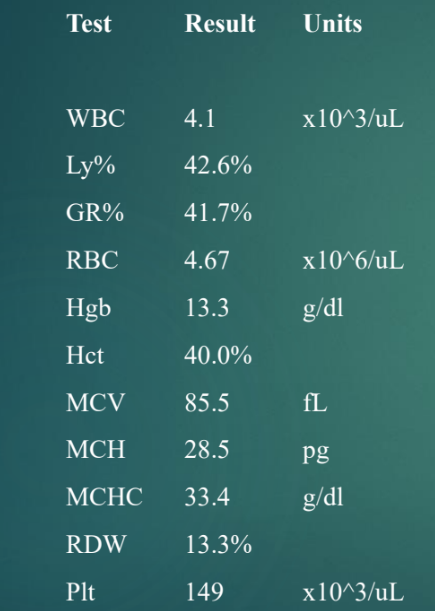
information in the CBC (complete blood count)
white blood cell count (total leukocytes)
lymphocyte percentage
granulocyte percentage
red blood cell count
hemoglobin
hematocrit
mean corpuscular volume
mean corpuscular hemoglobin
mean corpuscular hemoglobin concentration
red cell distribution width
platelet count
reference range is age and sex dependent!
includes eos/basos/neutros/bands/blast
erythrocytes (RBC)
abundant on a peripheral smear
have a “central pallor” 1/3 the size of the cell
about the size of a lymphocyte nucleus
carries hemoglobin
about 120 days
lifespan of a red blood cell
removed from circulation by reticuloendothelial cells, mostly within spleen
RBC count
number of RBC in the PCV
along with Hct, RBC can help determine the hematologic pathologies
adult normal RBC count
male: 4.7-6.1 million/ml
female: 4.2-5.4 million/ml
hematocrit
the percent of RBC in a given volume of whole blood
adult normal hematocrit values
male: 42-52%
female: 37-47%
fixed volume
size of the RBC determines RBC count in a
Hct
patients may have the same ____ but vastly different RBC counts
RBC
patients also may have the same ___ count but different Hct
mean corpuscle volume (MCV)
average volume of 1 RBC
derive from PCV/RBC count
quite helpful in differentiating anemias
measure of the size of the RBC
reference range: 80-100 fl
reticulocytes
slightly immature form of RBC (baby rbcs!)
reference range: 0.5-1.5%
decrease seen in bone marrow failure
increase seen when bone marrow is pumping out RBC at a higher rate than normal
hemoglobin
transports O2 and CO2, high affinity for oxygen
up to 300 molecules per RBC
__ and hct rise or fall together
is typically 1/3 of the hct
hemoglobin normal adult values
male: 14-18 g/dl
female: 12-16 g/dl
iron stores
as “heme” provides the site for binding oxygen
men have about 1000 mg and lose 1 mg/day
women have about 300-400 mg and lose about 2mg/day particularly during menstruation
menstruating women, lactating women
are predisposed to iron deficiency and thereby anemia
mean corpuscular hemoglobin (MCH)
amount of hemoglobin carried on 1 rbc
derived from hgb/rbc count
reference range: 27-33 picograms/cell
mean corpuscular hemoglobin concentration (MCHC)
percentage of hgb carried on 1 rbc
derived from hgb/mcv
reference range: 33-36 g/dL
erythrocyte sedimentation rate (ESR)
measure of how fast the RBCs sink to the bottom of a solution
non-specific test for inflammation and inflammatory disorders
cancer, auto-immune disease, pregnancy and infections
increased rate is caused by clumping of the RBCs due to proteins in the blood formed from the inflammatory cycle
non-specific for diagnosis, but can be used for monitoring of disease progression or effectiveness of treatment
erythrocyte sedimentation rate reference ranges
male: 0-17 mm/hr
female: 1-25 mm/hr
leukocytes (WBC)
defenders of the body against organisms that cause infection
kills microorganisms with enzymes contained within
remove debris from host cells and offending organisms
phagocytosis of debris
work specifically at tissue sites but are circulated via the blood
broken up into granulocytes (neutrophils, eosinophils) and agranulocytes (monocytes, lymphocytes, nk cells)
leukocytes normal adult value
5,000-10,000
less: something affecting bone marrow
greater: infection
neutrophils
most numerous of the WBCs (55% of leukocyte count)
have large multi-lobated nuclei (2 to 5)
are responsible for management of bacterial infection primarily
respond to immune complexes and release non-specific cytotoxic material from their granule
chief phagocytes in early inflammation
immature neutrophils are “bands” or “stabs”, develop in 14 days
eosinophils
less common WBC (1-4% of count)
granules stain red
mainly used for parasite management
involved in the control of inflammatory process
increased in asthma/allergy
agranulocytes
powerful phagocytes
lack the microorganism kililng enzymes of the granulocytes
3 major groups: monocytes, lymphocytes, NK cells
monocytes
horseshoe shaped
develop into macrophages at the site of inflammation
macrophages are the initiators of inflammatory response
lymphocytes
large part of the WBC (36%)
countless types but the major ones are T-cells and B-cells
NK cells
attack cells infected by virus without prior exposure
5-10% of the WBC count
platelets
disc shaped cytoplasmic fragments (not cells)
no nucleus or DNA
responsible for part of the clotting cascade
made in the bone marrow
released and 1/3 go to the spleen, 2/3 are released in circulation
life span 7-10 days
platelet count normal values
150,000-450,000
less than 50,000/uL increases the risk of bleeding with trauma
less than 10-30,000/uL increases risk of spontaneous bleeding