reduction of 9-fluorenone
 Call Kai
 Learn
Learn Practice Test
 Spaced Repetition
 Match
Match Flashcards
 Knowt Play
1/27

There's no tags or description
Looks like no tags are added yet.
Name | Mastery | Learn | Test | Matching | Spaced | Call with Kai | Chat |
|---|
No analytics yet
Send a link to your students to track their progress
28 Terms
2 ways to do reduction reactions
1. catalytic hydrogenation
2. reducing agent
catalytic hydrogenation
take a catalyst (typically metal, Ni, H2), preferred method
why is catalytic hydrogenation the preferred method for reduction?
financial incentive for green chemistry, metal catalysts can be isolated and reused multiple times + not a lot of waste produced
- incentive: compound can be sold at cheaper amount + helps green side of chemistry
reducing agent
hydride reducing agents (common reducing agent classes)
- LiAlH4
- NaBH4
hydride reducing agents produce?
hydride ion (H-)
if dealing with hydride ion, need to worry about?
proton sources (H+)
- must be careful of solvent, no water/acid
why are we using methanol as solvent then?
bc NaBH4 is a weak RA that allows acidic solvents to be used
reducing agent strength
has to do with electronegativity difference between metal and hydrogen
hydrgen electronegativity
2.1
where does extra H- electron come from
from metal
- thats why we use difference in electronegativity
which electrons are being taken?
valence shell electrons
smaller atoms?
have electrons closer to protons, meaning electrons are harder to give up
atoms that give up electrons easier have lower/higher electronegativity
lower
LiH and CaH2
very very powerful reducing agents, can create fires
LiAlH4
can't use acidic protons sources, have to use aprotic solvents
NaBH4
weaker RA
- safer to work with
- can use acidic solvents
- give us more flexibility w/solvent choices
what can NaBH4 not reduce
cannot reduce esters
what can NaBH4 reduce
can reduce ketones
reaction mechanism
ratio NaBH4 to 9-fluorenone
1:4
general reaction
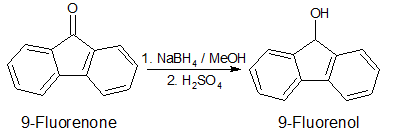
MP
152-158
good % yield
65%
most % yield
30-40%
- done at microscale levels, small mistake leads to big loss
how to tell reduction works?
bright canary yellow --> white yellow
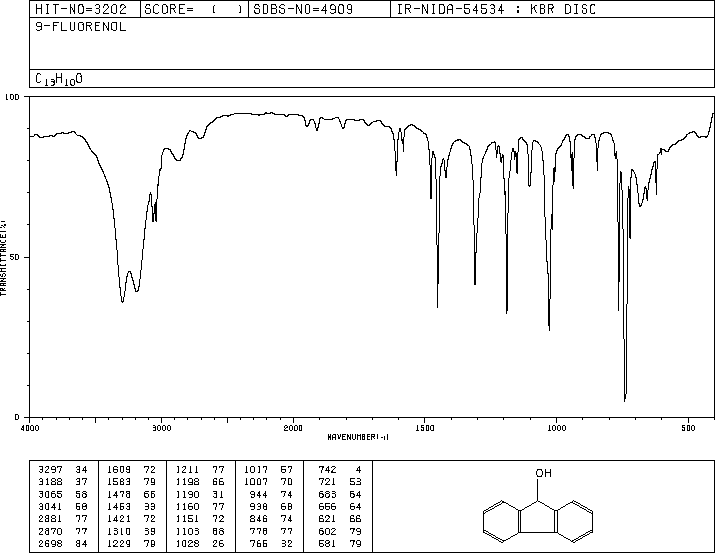
IR
- disappearance of carbonyl ketone (1725-1705)
- small narrow OH peak bc its solid (3400-3300)
IR image
intermediate of reaction?
secondary alkoxide