Bacterial Meningitis and Other CNS Infections
 Call Kai
 Learn
Learn Practice Test
 Spaced Repetition
 Match
Match Flashcards
 Knowt Play
1/28

There's no tags or description
Looks like no tags are added yet.
Name | Mastery | Learn | Test | Matching | Spaced | Call with Kai | Chat |
|---|
No analytics yet
Send a link to your students to track their progress
29 Terms
Objectives
Identify the most common causes of bacterial meningitis in each patient population.
Utilize diagnostic tests to determine the likely and definitive pathogens in bacterial meningitis
Design an empiric pharmacotherapy regimen for bacterial meningitis taking into account:
Likely pathogens, antibiotic penetration, and dosing
Based on culture and sensitivity data, refine antibiotic regimen for a patient with bacterial meningitis
List advantages and disadvantages of each antimicrobial regimen in the treatment of bacterial meningitis
Determine treatment options for viral encephalitis given laboratory diagnostic test results
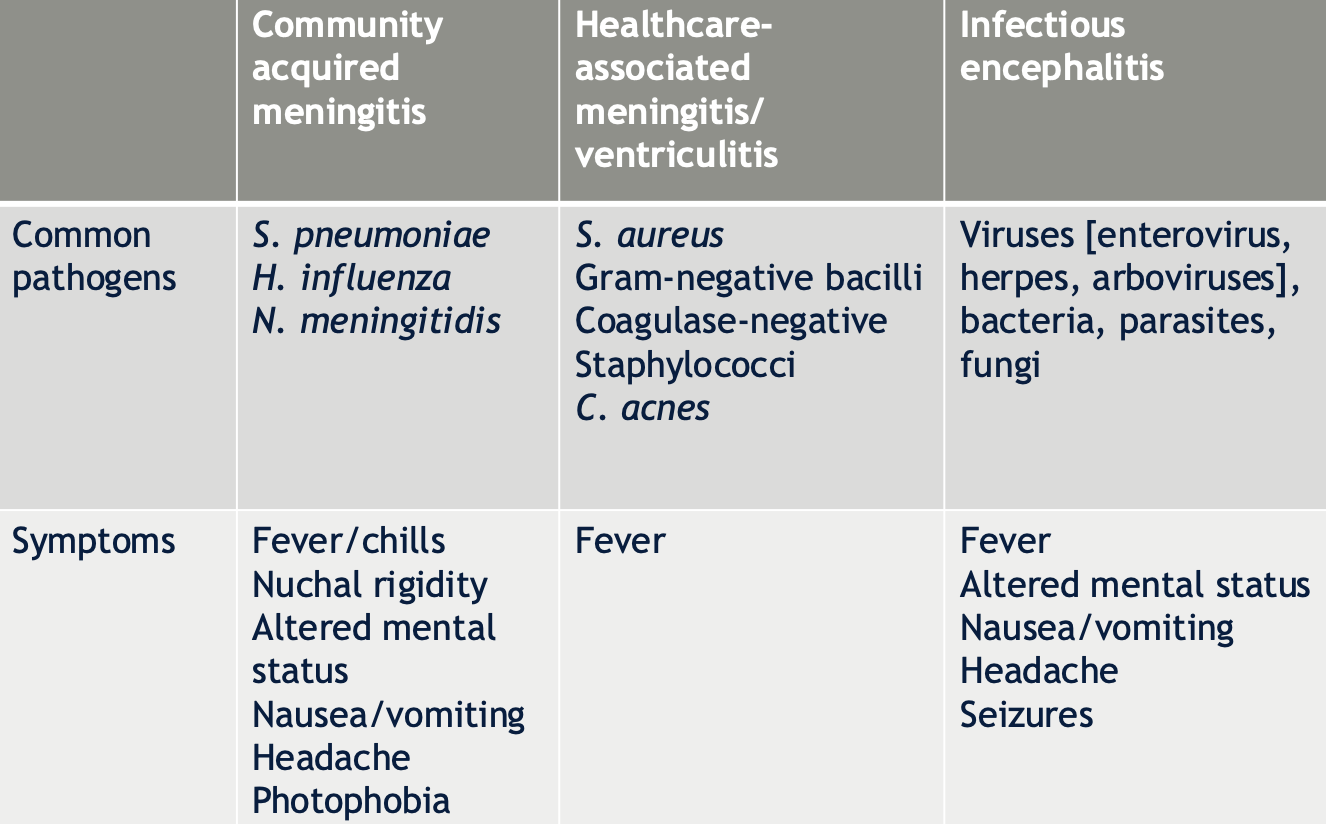
What symptoms/labs suggest meningitis?
Headache
Stiff neck
Elevated temperature (febrile)
Increased serum WBC count (Neut dominant)
Presence of ventriculostomy drain
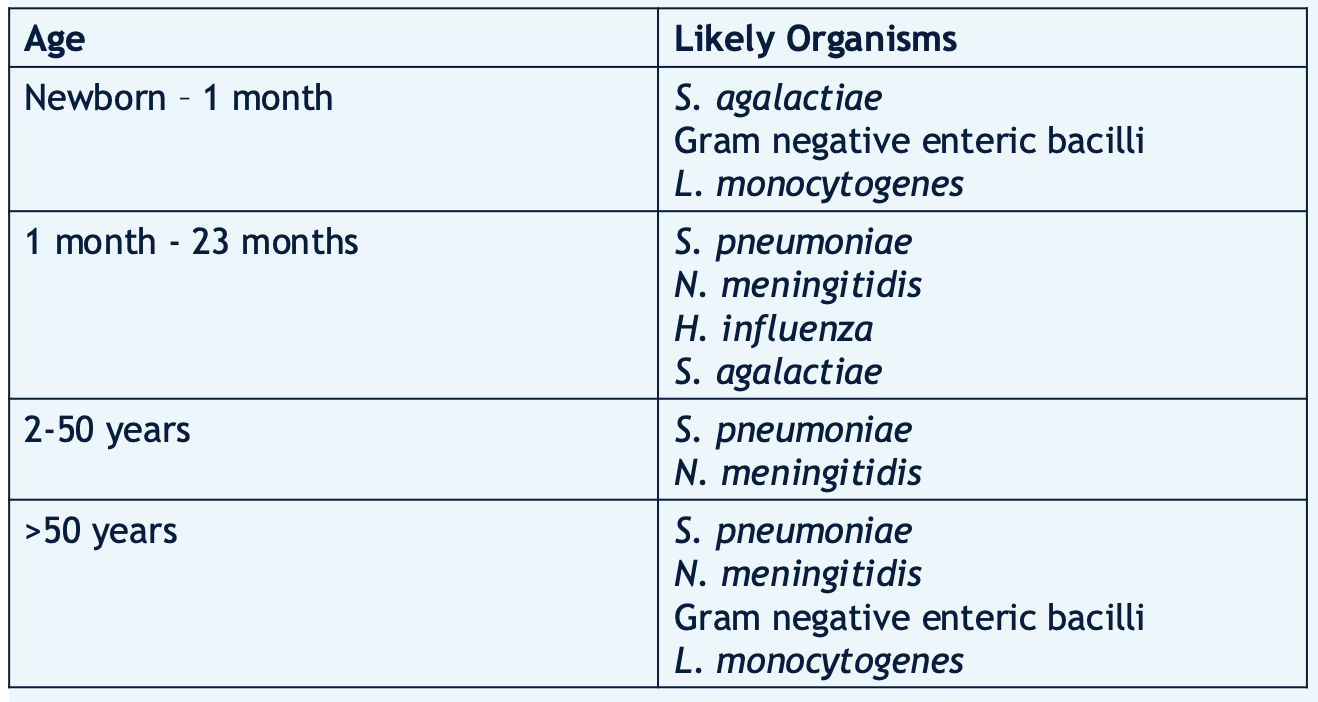
Pathogens in Bacterial Meningitis by Age Group
Newborn-1 month
S. agalactiae
Gram negative enteric bacilli
L. monocytogenes
1 month - 23 months
H. influenza
S. agalactiae
>50 years
Gram negative enteric bacilli
L. monocytogenes
**1 month - >50 years → everyone is susceptible to:
S. pneumoniae
N. meningitidis
What is criteria for neuroimaging?
Age greater than 60
History of CNS disease
Immunocompromised state
Recent seizure activity
Altered consciousness/focal neurologic deficit
Patient Management
Identify likely organism based on patient presentation, age, and comorbid conditions
Perform lumbar puncture (LP) to collect CSF sample
Start empiric regimen to cover above pathogens
If LP delayed for neuroimaging, initiate empiric treatment within 3 hours of presentation
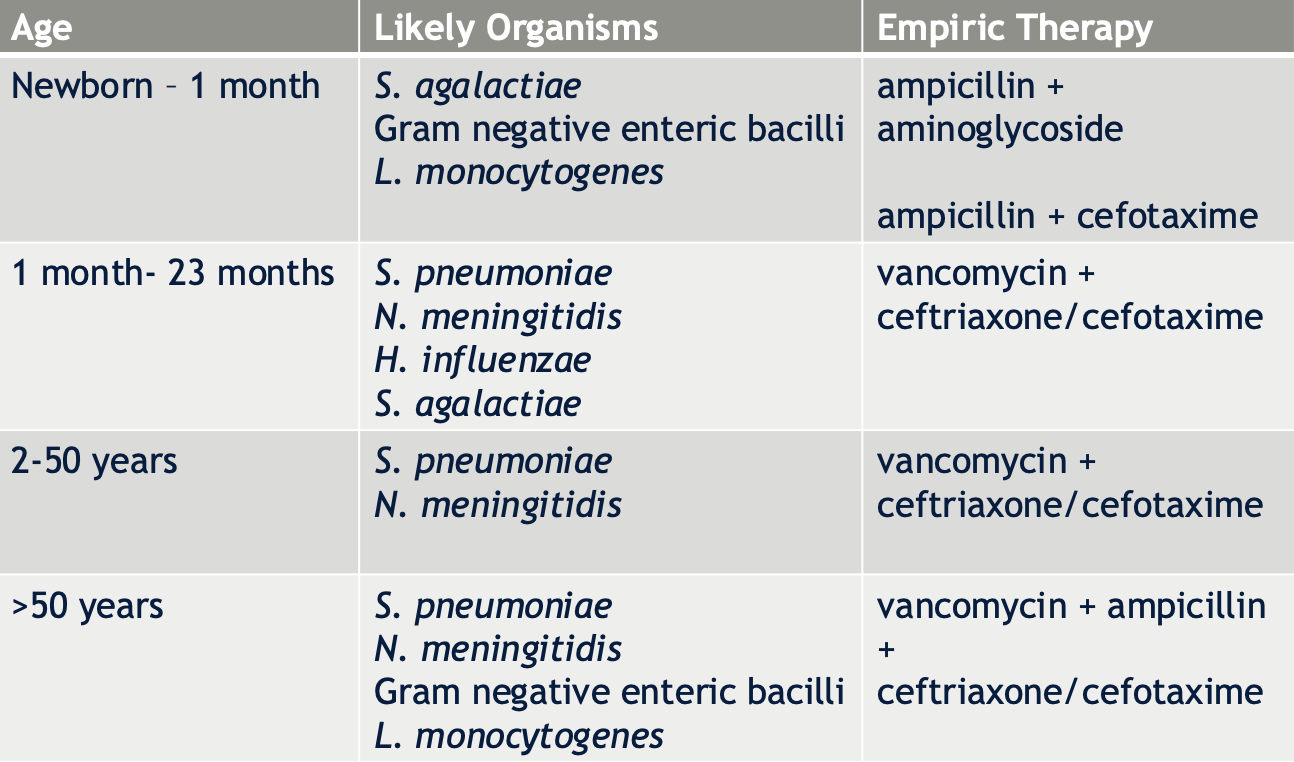
Empiric Antimicrobial Therapy - Drug
Empiric treatment + Dosing
Ceftriaxone → q12h at least
Vancomycin → 25mg/kg loading dose
Both are given because Ceftriaxone covers both pathogens. Vanco is added to make sure it is right the first time. penicillin and cephalosporin resistant.
Two advantages/characteristics of Ceftriaxone and Vancomycin
Bactericidal
Penetration into CSF
Molecular weight
Ionization
Lipid solubility
Protein binding
Bactericidal drugs
Cell wall active agents
Beta lactams (rapidly bactericidal → cause apoptosis)
Vancomycin (slowly bactericidal)
Aminoglycosides
Fluoroquinolones
Daptomycin
Sulfamethoxazole/Trimethoprim
Bacteriostatic drugs
Linezolid
Tetracyclines
Macrolides
Empiric Antimicrobial Therapy
Drugs with nontherapeutic levels in CSF (with or without inflammation)
Aminoglycosides
Early generation IV cephalosporins (1st and 2nd generation)
All oral beta lactams
Clindamycin
Macrolides
Beta lactamase inhibitors (pip-tazo)
Drugs with therapeutic CSF levels
Penicillins
ampicillin, penicillin G, nafcillin, piperacillin
3 rd/4th gen IV cephalosporins
Fluoroquinolones
Aztreonam
Vancomycin
Daptomycin
Sulfonamides
From Cetriaxone + Vancomycin → If this patient had a documented prior allergy to PCN/Ceph (anaphylaxis) what alternative regimen would you recommend?
A. Aztreonam + vancomycin
B. Moxifloxacin + vancomycin
C. Gentamicin + vancomycin
D. Meropenem/vaborbactam + vancomycin
A. Aztreonam + vancomycin
Moxifloxacin is not favored
Aminoglycosides are given in addition to systemic IV
Beta-lactamase inhibitor too big.
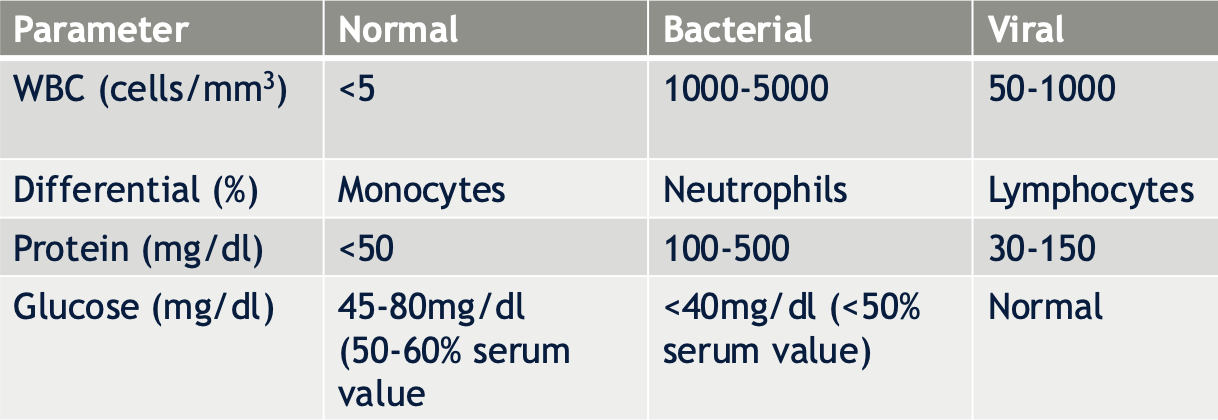
What lab values indicate meningitis?
Increased WBC count
Increased protein
Decreased glucose
Cerebrospinal Fluid Values
Definitive Antimicrobial Therapy
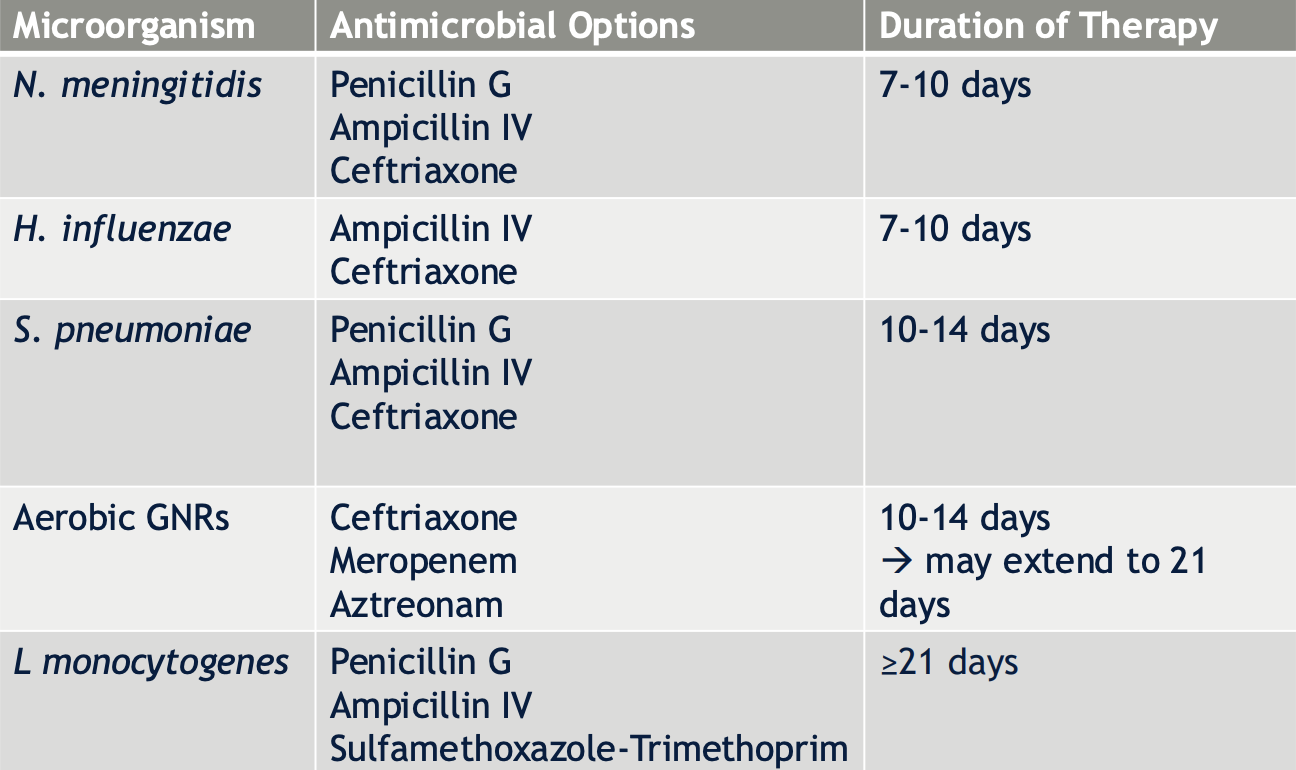
Assuming the patient is still on ceftriaxone and vancomycin, what changes would you make to the regimen?
A. Continue ceftriaxone monotherapy (discontinue vancomycin)
B. Continue vancomycin monotherapy (discontinue ceftriaxone)
C. Discontinue vancomycin and ceftriaxone and start meropenem
D. Discontinue ceftriaxone and vancomycin and start oral linezolid
A. Continue ceftriaxone monotherapy (discontinue vancomycin)
B → not wrong, beta lactam bactericial (vanco is not → ceftriaxone preferred)
C → Meropenem →not wrong but don’t need to use (we have a less borad spectrum)
D → not ideal Linezolid is bacteriostatic
Should any other medications be administered for meningitis?
Dexamethasone 0.15mg/kg iv q6h
Administer 10-20 minutes prior to first dose of antibiotics → only for strep pnemno
How long should the patient receive treatment?
Continue IV antibiotics for 10-14 days
Continue dexamethasone for 2-4 days
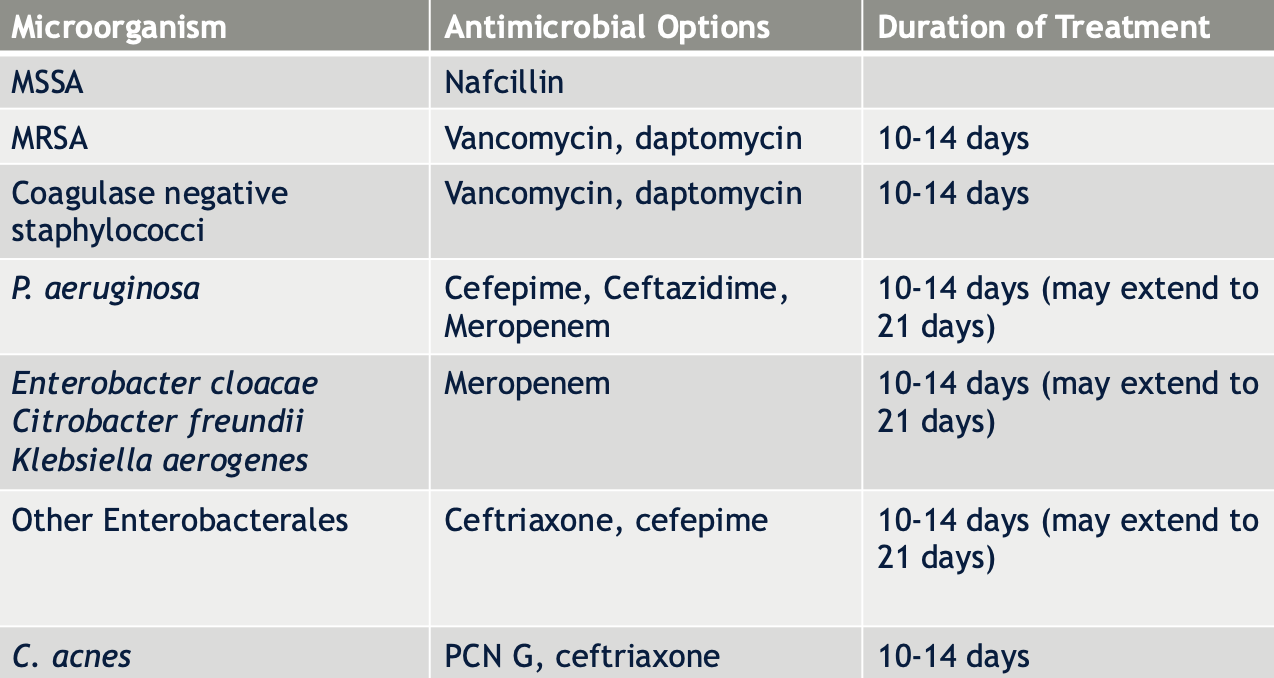
What organisms would be suspected causes of infection in Healthcare-associated/acquired meningitis?
Post neurosurgery = nosocomial setting
Head/Trauma/Neurosurgery
Aerobic gram neg bacilli including Pseudomonas aeruginosa
Staphylococcus aureus
Including methicillin-resistant S. aureus (MRSA)
Coagulase negative staphylococci
Cutibacterium acnes
What empiric regimen would you start?
A. Amikacin 15mg/kg iv q24h + Vancomycin 15mg/kg iv q8-12h
B. Cefepime 2gm iv q8h + Vancomycin 15mg/kg iv q8-12h
C. Imipenem 1gm iv q8h + Vancomycin 15mg/kg iv q8-12h
D. Piperacillin/tazobactam 4.5gm iv q6h + Vancomycin 15mg/kg iv q8-12h
D → Pip-tazo (beta-lactamase inhibitor) not going to penetrate CSF (not going to site of infection).
A → Aminoglycosides don’t really penetrate
C → Seizure risk + does not penetrate CNS
B → Cefepime (has CNS side effects but will penetrate)
Cefepime 2gm iv q8h + Vancomycin 15mg/kg iv q8-12h
List two advantages of selected regimen
Bactericidal
Penetration into CSF
Check vanco troughs!
Less risk of neurotoxicity
Avoid imipenem
What changes to the current regimen would you make → If culture comes back resistant to Cefepime
A. Continue cefepime and discontinue vancomycin B. Discontinue cefepime and vancomycin and change to meropenem
C. Discontinue cefepime and vancomycin and change to amikacin
B. Discontinue cefepime and vancomycin and change to meropenem
Amikacin cannot be given alone → Aminoglycoside has to be given with gram naegtive drug
Vanco not doing anything (not covering gram negative)
After 2 days of meropenem the repeat CSF cultures are still positive • Would you make any changes?
Could add intraventricular preservative-free tobramycin
Definitive Therapy
Acyclovir 10mg/kg IV
(interval based on crcl)
viral encephalitis symptoms
Normal CSF glucose
Increased CSF protein
Lymphocyte increased
Summary acquired meningitis