College Bio - Chemistry of Life
 Call Kai
 Learn
Learn Practice Test
 Spaced Repetition
 Match
Match Flashcards
 Knowt Play
1/112

There's no tags or description
Looks like no tags are added yet.
Name | Mastery | Learn | Test | Matching | Spaced | Call with Kai | Chat |
|---|
No analytics yet
Send a link to your students to track their progress
113 Terms
Why are Triglycerides better for long term energy than Carbohydrates?
Triglycerides have more Carbon-Hydrogen bonds, meaning a higher energy yield
Why can people only digest certain polysaccharides?
The shape of the polysaccharide can block enzymes from reaching the glucose (if the shape is a big filled in square, the enzymes cant reach the middle area)
Because the subunits of glucose bond differently, this means…
they have a different structure, and therefore a different function
What is the chemical formula of maltose
C12,H22,O11
what cellular function of carbs and lipids are the same?
Energy storage
glucose is not…
a main source of energy for all rates of activity
What do carbs NOT contain
Nitrogen or Phosphorus
Glucose is a _______ and a monomer of _______
simple sugar, carbohydrates
Glycine is a __________ and a monomer of ____________
amino acid, protein
Why do glucose and fructose differ in metabolic pathway
the placement of the functional grounds alter the enzymatic interactions requried for breakdown
What is a monomer of Carbohydrates
Glucose/sugar

Explain this image
CHON: main elements in organic compounds
Organic compounds: carbon-based compounds
Protein, Carbs, DNA, Fats: all types of organic compounds found in living things
Note: Not ALL organic compounds always contain CHON. Carbon is the key element and different organic molecules contain different combinations of elements
define element
pure substance that cannot be broken down further
atomic theory
elements are made up of atoms
compound
pure substance of 2 or more elements in a fixed ratio
subatomic particles
protons - positive
neutrons - neutral
electrons - negative
p+ and n0 are in the nucleus
e- in electron shells
atomic number
number of protons in the nucleus that determines the unique properties of that element
mass number
number of p+ and n0 in the nucleus
atomic mass
avg mass for all isotopes
groups of the periodic table
rows
columns with similar chemical properties
isotopes
atom of the same element with different neutrons
they have the same number of protons but different atomic masses
chemical bond
attraction between atoms
valence electrons
electrons found in orbits farthest from the nucleus of the atom
determines the way in which the atom will combine with other atoms and also determine its chemical properties
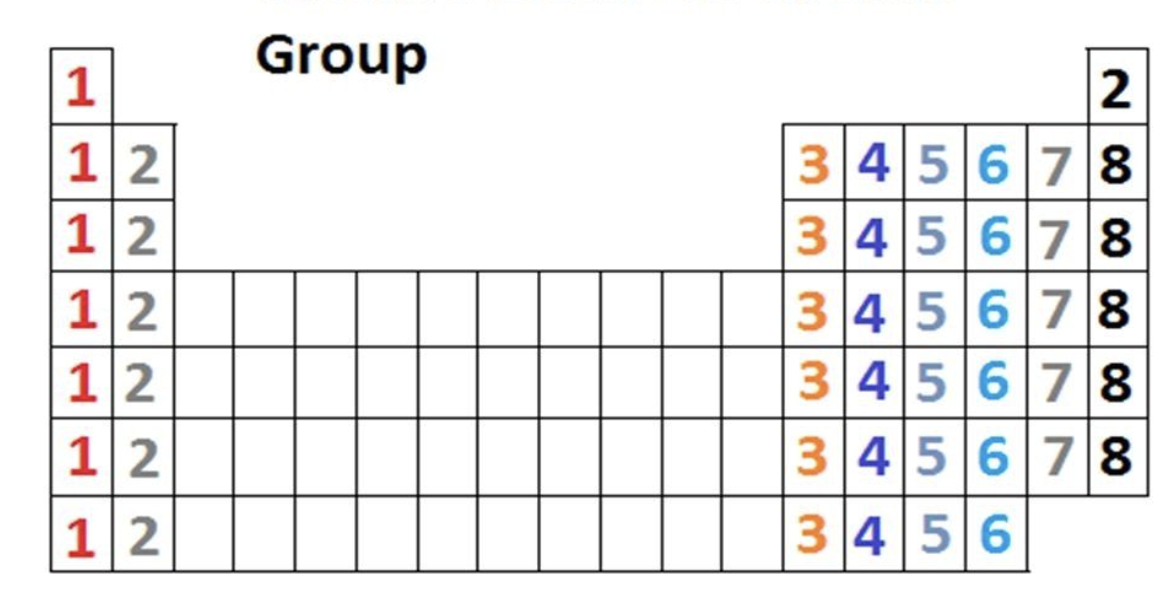
how to find valence electrons by atomic number
look to group number
for group 13-18, subtract 10 from the atomic number
the octet rule
atoms want 8 valence electrons and they will give or share valence electrons to meet that number (form covalent or ionic bonds)
how many electrons must be present to form a bond
two
covalent bonds
when two atoms share electrons to fill octet rule
ionic bonds
atoms that are held togther by an attraction between pos and neg ions
molecule
combination of elements connected by chemical bonds
compound
molecule that includes more than one element
molecular formula
formula showing number of atoms in each element
CHNOPS

molecular structure
formula showing how various atoms in molecule are bonded
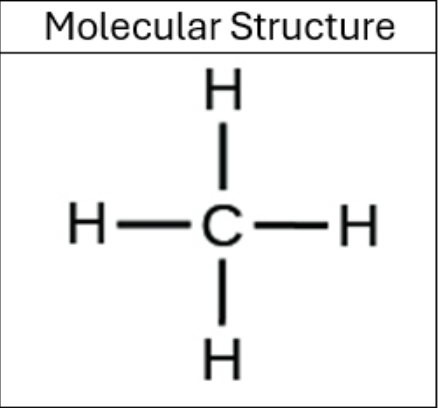
isomers
organic molecules that have identical molecular formulas but different arrangement of atoms
electronegativity
chemical property, attraction of electrons toward itself
nonpolar covalent bonds
occurs when two atoms share bonds equally
Electronegativity: 0–0.4 = Nonpolar covalent
polar covalent bonds
occurs when electrons are not shared equally creating positive and negative charges
Electronegativety: 0.5–1.7 = Polar covalent
traits of water
polar molecule
polar covalent bonds that create pos and neg regions
universal solvent
polar dissolves polar, nonpolar dissolves nonpolar
hydrogen bonds
attraction between slightly negative and slightly positive ends of atoms (in DNA)
weak bonds represented by dotted lines
cohesion
attraction between water molecules
adhesion
attraction between water molecules and other molecules
surface tension
Attraction between water molecules creates strong surface tension
The molecules act together to support whatever is placed on the surface
Property of water and how it helps life
density and high heat capacity (water holds onto heat very well b/c of high specific heat)
Solid water is less dense than liquid water, allowing marine life to survive when ice coats the top of lakes or ponds during winter instead of freezing the entire body of water with the animals inside
pH scale
0-7 is acidic
8-14 is basic
each step is 10x weaker or stronger than the last (logarithmic scale)
Ions
An ion is an atom (or group of atoms) that has a charge because it has gained or lost electrons
organic molecules
a molecule that contains carbon and hydrogen but may also have NOPS
carbon…
has 4 valence electrons
creates covalent bonds with other elements CHONPS
carbon skeleton
straight carbon chain in an organic molecule
functional group
specific combination of bonded atoms that always reacts in the same way
R is the remainder of the molecule
dehydration synthesis
reaction that binds monomers together to form polymers
covalent bonds form between monomers
hydrolysis reaction
reaction that breaks down polymers into monomers
DNA to RNA
A - T/U
G-C

Carbohydrate traits
use
bond
monomer
polymer
elements
isomers
energy source for living organisms
bonds - glycosidic
monomer - monosaccharides C6H12O6
polymer - polysaccharides
elements - CHO
isomers - glucose, fructose, galactose
disaccharide
contains two monosaccharides
oligosaccharides
3-10 saccharides
Has glycoproteins and glycolipids
important for cell recognition
polysaccharides
use
shape
plant version
animal version
bacteria version
polymer
energy
long chains of monosaccharides
plants - glucose as starch
cellulose
animals - glucose as glycogen
chitin
bacteria - peptidoglycan
polymers differ due to functional groups
Lipids
monomer
elements
bond
hydrophobic or hydrophillic
monomer - fatty acid
elements CHO
bond, ester COC
hydrophobic
fatty acids
shape/form
Are the hydrocarbon tails polar or nonpolar
What does it mean to have a saturated fatty acid
unsaturated?
long hydrocarbon chain ending in -COOH - called a carboxyl group
nonpolar
saturated - no double bonds - butter
unsaturated - at least one double bond, bent
triglycerides
long term energy storage molecule
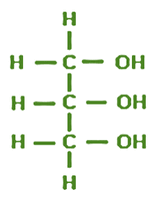
made of glycerol and three fatty acids
glycerol
3 carbon compound with 3-OH groups attached at each carbpon
phospholipids
contains
heads are polar or non polar
heads are hydrophobic or hydrophilic
tails are non polar or polar
tails are hydrophobic or hydrophilic
glycerol, two fatty acids, and a phosphate group
heads are polar, hydrophilic
tails are nonpolar, hydrophobic
double membrane due to polarity
waxes
two fatty acids are connected to alcohol molecule
steroids
shape
function
example
four carbon rings bonded together
different functional groups regulate what the function of steroid will be
cholesterol is an example of a steroid that is used in the plasma membrane
vitamins
use
which are water soluble
which are not water soluble
essential for efficient metabolic processes
water soluble - b,c
fat soluble - a, d, e, k

proteins
monomer
polymer
element
bond
function
made of:
monomer - amino acids
polymer - polypeptide
elements - CHON
bond - peptide bond
function - workers of the cell
sequence of amino acids is important to shape of protein (20 kinds of aa)
Amino acid structure: central carbon atom of Protein with… (4)
amino group
carboxylic acid
hydrogen atom
r group

primary structure (1o) of proteins
linear sequence of amino acids
covalent bonds
secondary structure of proteins (2o)
protein will twist into coil called an alpha helix and beta pleated sheets
hydrogen bonds
tertiary structure (3o)
folding of the alphas helix and beta sheets, creates 3D proteins
hydrogen bonds, ionic bonds, dipole-dipole interactions
quaternary structure (4o)
some proteins are made up of several polypeptides
denaturing
Proteins will unfold when heated or pH changes
This process breaks bonds between secondary and tertiary structures

Nucleic acids
monomer
polymer
element
function
bond
monomers - nucleotides
polymers - nucleic acids
elements - CHONP
function - holds genetic info (in DNA, RNA)
bond - phosphodiester
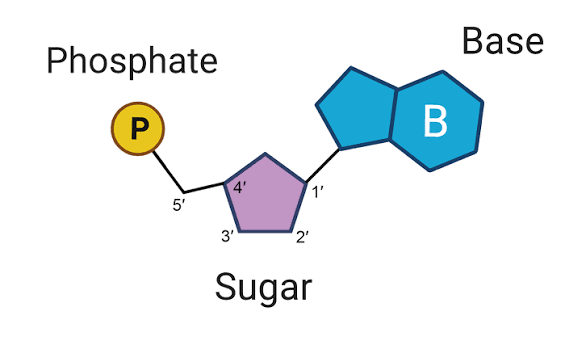
nucleotides parts/subunits (3)
5 carbon sugar (pentose sugar)
phosphate group
nitrogenous base

nucleic acids
purpose
made of ATP and ADP; whats the difference?
hold genetic code in DNA & RNA
ATP: adenosine triphosphate
three phosphate groups, energy currency of the cell
ADP (ATP after it releases energy): Adenosine diphosphate
energy must be transferred back
^^^ATP and ADP are nucleotides, which are the building blocks related to nucleic acids.
ATP = charged battery 🔋
ADP = partially discharged battery
Energy from food = charger ⚡
The last two phosphates are unstable bonds. When broken, last phosphate group is removed and usable energy is released for cellular work.
DNA runs
antiparallel
what is the monomer of protein
amino acids

what is the monomer of lipids
fatty acids and glycerol

what is the monomer of carbs
monosaccharides

what is the monomer of DNA/RNA
Nucleotides

what is a sucrose
CHON
what is a triglyceride
CHO
What is an insulin
CHONP
What is a DNA nucleotide
CHONS
describe the difference between a hypothesis and prediction
hypothesis - proposed explanation
prediction - specific outcome if hypothesis is correct
what are the 8 common characteristics of life
contain cells
use energy
grow and develop
reproduce
respond to stimuli
maintain homeostasis
contain genetic material
adapt and evolve

is this polar or nonpolar covalent? how do you know
nonpolar covalent - sharing of electrons equally

is this polar or nonpolar covalent? how do you know
polar covalent - electrons are not shared equally

what is an ionic bond
An ionic bond is a chemical bond formed when one atom gives electrons to another atom.

what type of bond is this
hydrogen bond
how can carbon form diverse structures
Because of its unique ability to bond with itself and with many other elements.

what is this?
DNA

what is this? how do you know
amino acid

what is this
nucleotide

what is this
Monosaccharide

what is this
Polysaccharide
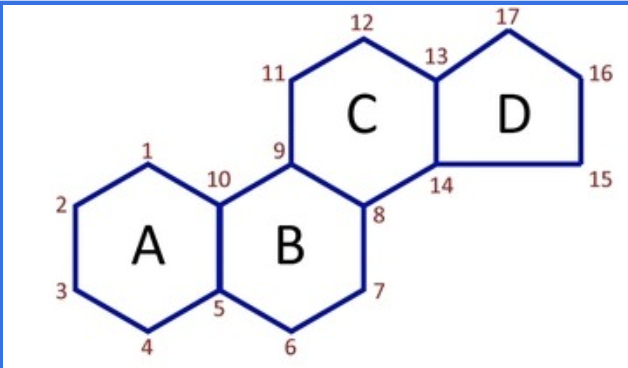
what is this
steroid
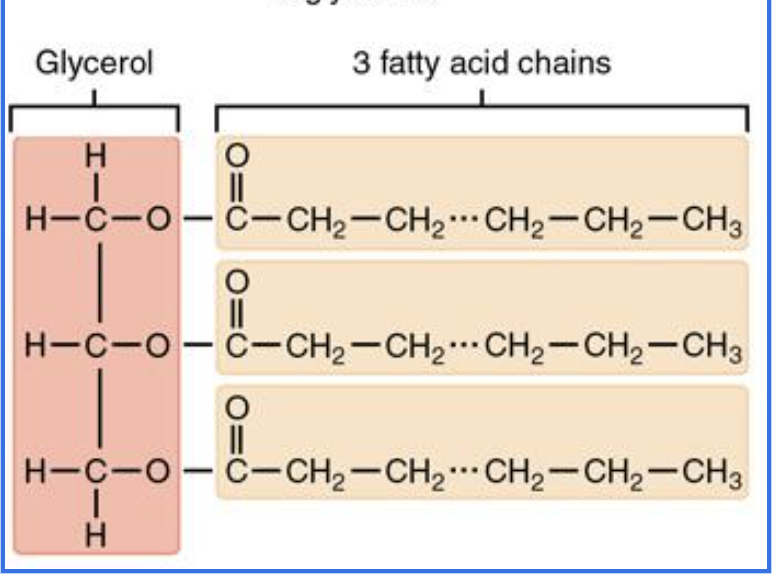
what is this
triglyceride

what is this
protein

what is this
hydroxyl group

what is this
carboxyl group

what is this
amino group