Imm - filler notes
 Call Kai
 Learn
Learn Practice Test
 Spaced Repetition
 Match
Match Flashcards
 Knowt Play
1/55

There's no tags or description
Looks like no tags are added yet.
Name | Mastery | Learn | Test | Matching | Spaced | Call with Kai | Chat |
|---|
No analytics yet
Send a link to your students to track their progress
56 Terms
b vs t cell origin
b = bone marrow (originiate and mature here)
t = thymus(originiate in bone marrow → travel to thymus to mature)
what are the scouts that live in the peripheral tissues (near the lymph nodes) that look for pathogens to assist B and T cells?
dendritic cells
where do cells from the b and T cells go?
lymph nodes
cell-mediated immunity and antibody0mediated immunity (humoral) are the two main branches of what immune system?
adaptive
_______ immunity is driven by T cells (such as cytotoxic and helper T cells) and macrophages, whereas ________ immunity is driven by B cells that mature into antibody-secreting plasma cells.
Cell-mediated; antibody-mediated
Cell-mediated immunity does not rely on ______ to perform its primary functions, while antibody-mediated immunity depends entirely on the production of free-floating _____ in bodily fluids
antibodies; antibodies
__________immunity targets intracellular pathogens (like viruses and bacteria hiding inside host cells) as well as cancer cells and transplanted tissues. _________ immunity targets extracellular pathogens(such as free-floating bacteria, toxins, and viruses in blood or lymph). [1, 2, 3, 4, 5]
Cell-mediated; Antibody-mediated
Antibody-mediated immunity generally develops a _____ response upon re-exposure, whereas cell-mediated immunity typically exhibits a _______ response
quick;slower, delayed
An _____ is a whole foreign substance that triggers an immune response, while an _____ is the tiny, specific part of that antigen where an antibody or immune cell actually binds
antigen; epitope
What are dendritic cells?
Antigen presenting (they have MHC) cells that are located originally out of the lymph node (in peripheral tissue) that bring peptides (pieces of pathogen) into the lymph nodes for T and B cells to look at
______ basically means the B or T cell has been “turned on” to respond to a specific antigen.
how does this start?
Activation
When a pathogen enters the body
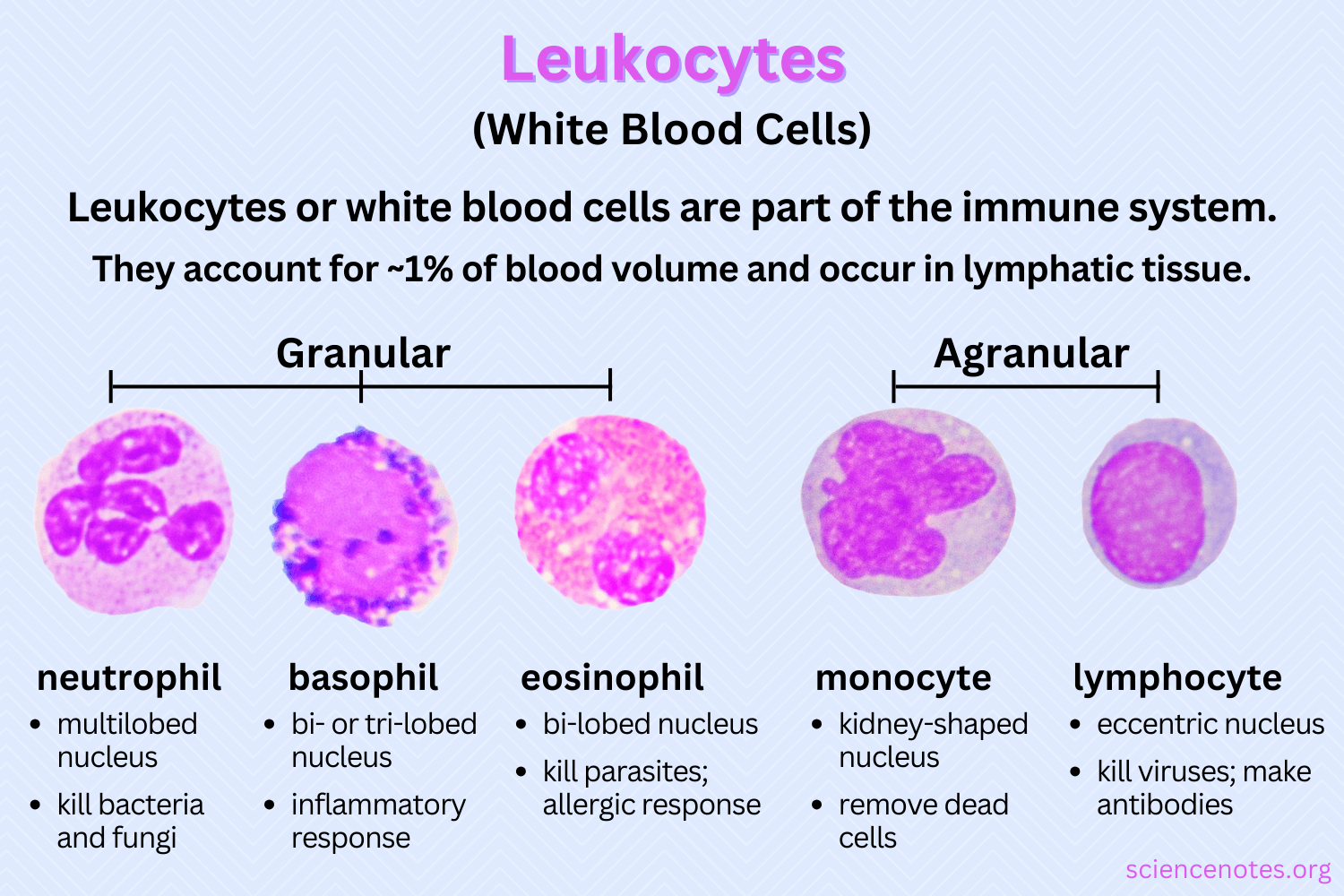
______ are all white blood cells that protect your body, while _______ are just one specific type of those white blood cells
Leukocytes; lymphocytes
what is BCR?
B-cell receptor — the receptor on a B cell that directly binds a matching antigen
what is TCR?
T-cell receptor —the receptor on a T cell that checks for a matching antigen peptide presented on an MHC molecule.
What is MHC?
MHC (Major Histocompatibility Complex) = a protein on the surface of a cell that displays pieces of antigen to T cells.
(display tray or peptide)
MHC I is fround on?
MHC II is found on?
all nucleated cells (Ex. Leukocytes, fibroblasts, etc.)
Professional antigen-presenting cells (APCs - dendritic cells, macrophages, B cells)
B cells, macrophages, and dendritic cells have BOTH ______ and _____ because they are nucleated andprofessional APCs.
MHC I and MHC II
MHC I shows antigen (foreign substance that triggers an immune response) to what?
MHC II shows antigen (foreign substance that triggers an immune response) to what?
CD8+ cytotoxic T cells
CD4+ helper cells
MHC __ mainly displays antigens from inside the cell with the message "Something is wrong inside me"
MHC ___ mainly displays antigens taken up from outside the cell with the message "I found something outside"
What is the result?
MHC I - CD8 can kill infected/abnormal cell
MHC II - CD4 coordinates immune response
MHC I → CD8
MHC II → CD4
Tip to remember
Notice:
1 × 8 = 8
2 × 4 = 8
For a T cell to recognize an antigen, what does it need? Can it recognize a free floating bacteria that may have entered the lymph node along side the dendritic cell?
What happens as a result?
No - T cells need an antigen presenting cell (the dendritic cell) to show it what it found
Once this happens, the T cell binds to this antigen and becomes activated to kill
For a B cell to recognize an antigen, what does it need? Can it recognize a free floating bacteria that may have entered the lymph node along side the dendritic cell?
it just needs to see the antigen of the free floating pathogen, it does not need the dendritic cell to present anything.
once it recognzes the free floater, it can become activated
are all B and T cells activated at the response of a pathogen?
No - only those that have been randomly selected to bind to a specific antigen
what happens when B and T cells activate?
The undergo clonal expansion - for the specific pathogen, infection, etc.
(close have the same receptor as the parent)
when T and B cells become activated, they undergo clonal expansion. What happens with these clones that is significant?
these clones all have a receptor for the specific pathogen, bacteria, etc.
However - not all of these will go on to fight the pathogen.
Some will stay incase the pathogen comes back (memory cells)
Some will fight (effector cells)
MHC I → recognized by ?
CD8⁺ T cells (faster, direct killing without antibodies)
MHC II → recognized by?
CD4+ (slower, need antibodies)
______________: B cell → MHC II → CD4 → HELP → antibodies
Antibody-mediated (humoral)
____________: MHC I → CD8 → KILL → infected/abnormal cells
Cell-mediated
_____ immunity = rapid, nonspecific defense
_____ immunity = antigen-specific B- and T-cell response
Innate
Adaptive
These can work together whenever you encounter a pathogen.
Where did the specific immunity come from?
_____ immunity = your own immune system generated the response
_____ immunity = you received pre-made antibodies from somewhere else
Active
Passive
_______________ = WHAT TYPE of immune response?
_______________ = WHERE did the acquired protection come from?
Innate vs Adaptive
Active vs Passive
Vaccine = _____ immunity
Antivenom = _____ immunity
ACTIVE
PASSIVE