BIO 231 General Human Anatomy - Chapters 1-3, and 5 for Lecture Exam 1
 Call Kai
 Learn
Learn Practice Test
 Spaced Repetition
 Match
Match Flashcards
 Knowt Play
1/422

There's no tags or description
Looks like no tags are added yet.
Name | Mastery | Learn | Test | Matching | Spaced | Call with Kai | Chat |
|---|
No analytics yet
Send a link to your students to track their progress
423 Terms
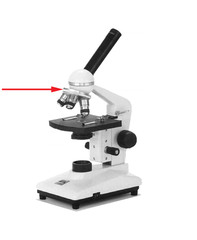
ocular lens
Magnification lens located at the top of the microscope
what is structure number 9?

body tube
what is structure number 1?
The part of the microscope that connects the ocular lenses and the rotating nosepiece with the objective lenses; contains lens that helps to focus but not magnify

arm
The part of the microscope that support the lenses, body tube, and nose piece; is used to carry the microscope.

rotating nosepiece
contains the three to four objective lenses of the microscope, and is used to rotate the desired lens into place
scanning objective lens
The lowest power lens that has a magnification of 5x; the lens that is used to start with

low power objective lens (LP)
the lens with the third highest power and a magnification of 10x
what is structure number 3?

high power objective lens (HP)
the lens with the second highest power and a magnification of 40x - 45x

oil immersion lens
the highest power lens with a magnification of 100x; this lens cannot be used without oil

course focus
Moves the nose piece up and down to focus the specimen; can only be used with scanning and low power objective lenses

fine focus
focuses the specimen without moving the nosepiece up and down; used to focus all lenses
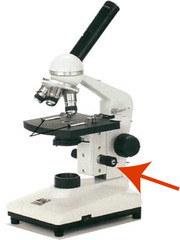
slide manipulator
Moves the slide around on the stage so that different parts of the slide can be viewed
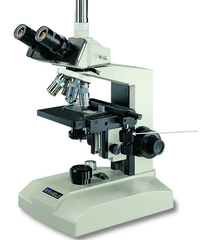
stage clips
Holds the slide in place; are connected to the slide manipulator

stage
The platform of the microscope that holds the slides
what is the structure pointed out by the red arrow?

iris diaphragm
The switch that moves the condenser to adjust the amount of light that shines through the specimen slide

condenser
Can be opened or closed to adjust the amount of light that shines through the specimen slide for better contrast and sharpness

illuminator
Provides the light that shines through the specimen slide so that the specimen is visible
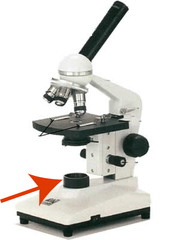
base
The bottom part of the microscope; is used to carry the microscope

anatomy
study of structure
physiology
study of function
microscopic anatomy
consists of structures to small to see with the unaided eye
cytology
the study of cells, branch of microscopic anatomy
histology
the study of tissues, branch of microscopic anatomy
gross anatomy
consists of structures seen with the unaided eye
organization of the human body
consists of the chemical, cellular, tissue, organ, organ system, and organismal levels
chemical level
consists of atoms and molecules
cellular level
consists of cells, or the smallest living units
tissue level
consists of groups of cells performing a common function
organ level
consists of groups of tissues performing a common function
organ system level
consists of a group of organs performing a common function
organismal level
consists of organ systems working together to make an individual living being
tissues
four types; epithelial, connective, muscle, and nervous
organ systems
organs working together to perform specific functions; eleven total in the human body; integumentary, muscular, skeletal, respiratory, urinary, reproductive, digestive, cardiovascular, lymphatic, endocrine, and nervous
integumentary system
consists of skin, hair, nails, sweat, and oil glands for protection and temperature regulation
skeletal system
consists of 206 bones, cartilage, and ligaments for protection, support, production of blood cells, and storage of minerals
muscular system
consists of over 700 muscles for movement of bones and heat production
nervous system
consists of the brain, spinal cord, and nerves for communication via electrical signals
endocrine system
consists of the pituitary gland, thyroid gland, and pancreas for communication via hormones
cardiovascular system
consists of the heart and blood vessels for pumping of blood and distribution of materials
lymphatic system
consists of the spleen, lymph nodes, and tonsils for immunity and fluid balance
respiratory system
consists of the lungs, trachea, larynx, and diaphragm for the exchange of gas
digestive system
consists of the stomach, small and large intestines, liver, pancreas, and gallbladder for the breakdown and absorption of nutrients from food
urinary system
consists of the kidneys, ureters, and urinary bladder for filtering blood and removing wastes
reproductive system
consists of the ovaries, uterus, testes, and penis for the production of gametes (eggs and sperm) and sex hormones (estrogen and testosterone)
anatomic position
frame of reference when using directional terminology
directional terminology
terminology that allows the description of relative positions of body structures
superior
toward the head; above

inferior
away from the head; below

anterior or ventral
in front of; toward the front of the body

posterior or dorsal
behind; toward the back of the body

medial
toward the midline of the body
lateral
away from the midline of the body
proximal
closer to the trunk of the body or point of reference
distal
farther from the trunk of the body or point of reference
deep
on the inside; underneath
superficial
closer to the surface
section
cut or slice through a structure
plane
imaginary flat surface passing through a structure usually sectioned into a particular plane
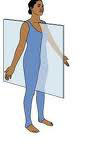
coronal plane

transverse plane

sagittal plane

midsagittal plane
a sagittal plane going straight down the midline
regional anatomy
consists of two general regions, axial and appendicular, which are divided into many smaller anatomical regions
body cavities
spaces within the body that contain and protect internal organs
dorsal cavity
consists of the cranial and vertebral cavities
ventral cavity
consists of the thoracic and the abdominopelvic cavities which are physically separated by the diaphragm
thoracic cavity
consists of the mediastinum, pericardial cavity, and pleural cavities
abdominopelvic cavity
consists of the abdominal cavity and the pelvic cavity
cavity membranes
thin serous membrane that lines the ventral cavities which consists of two continuous layers; the parietal and the visceral layers which produce serous fluid
serous fluid
fluid produced by the layers of cavity membrane to protect against friction
pericardium
serous membrane surrounding the heart; consists of the visceral and the parietal layers
pleura
serous membrane surrounding the lungs; consists of the visceral and the parietal layers
peritoneum
serous membrane surrounding the abdominal cavity; consists of the visceral and the parietal layers
abdominal
region inferior to the thorax (chest) and superior to the hip bones
antebrachial
forearm (the portion of the upper limb between the elbow and the wrist)
antecubital
region anterior to the elbow; also known as the cubital region
auricular
ear (visible structures of the ear and the ears internal organs)
axillary
armpit
brachial
arm (the portion of the upper limb between the shoulder and the elbow)
buccal
cheek
calcaneal
heel of the foot
carpal
wrist
cephalic
head
cervical
neck
coxal
hip
cranial
skull
crural
leg (the portion of the lower limb between the Knee and the ankle)
deltoid
shoulder
digital
fingers and toes (also called phalangeal)
dorsal
back
femoral
thigh
fibular
lateral aspect of the leg
frontal
forehead
gluteal
buttock
hallux
great toe
inguinal
groin (sometimes used to indicate just the crease int eh junction of the thigh with the trunk)
lumbar
relating to the loins, or the part of the back and sides between the ribs and pelvis
mammary
breast
manus
hand
mental
chin
nasal
nose