A&P Exam 1
 Call Kai
 Learn
Learn Practice Test
 Spaced Repetition
 Match
Match Flashcards
 Knowt Play
1/89

Earn XP
Description and Tags
Ch. 1-4
Name | Mastery | Learn | Test | Matching | Spaced | Call with Kai | Chat |
|---|
No analytics yet
Send a link to your students to track their progress
90 Terms
Superior
Toward head/Above
Inferior
Away from head/Below
Anterior (Ventral)
Toward Front
Posterior (Dorsal)
Toward the back
Medial
Toward Midline (vertical)
Lateral
Sides of body (vertical)
Proximal
Close to Torso
Distal
Far from Torso
Superficial
Toward/near the surface of skin
Deep
Under surface of skin
The heart is ____ to the lungs.
Medial
The skin is ___ to the muscles.
Superficial
The nose is _____ to the ears.
Medial
The elbow is ____ to the wrist.
Proximal
Top Of Head (brain area)
Cranial
Neck
Cervical
Chest
Thoracic
Abdomen
Abdominal
Pelvis
Pelvic
Arm
Brachial
Forearm
Antebrachial
Wrist
Carpal
Thigh
Femoral
Lower leg
Crural
Ankle
Tarsal
Foot
Pedal
Saggittal
Left and Right Split (down the middle)
Frontal/Coronal
Anterior/Posterior Split (front/back)
Transverse
Superior/Inferior Split (upper/lower)
Oblique
Angle split cut
Posterior/Dorsal Body Cavity
Cranial Cavity
Brain
Vertebral Cavity
Spinal cord
Anterior/Ventral Body Cavity
Thoracic Cavity
Pleural Cavity - Lungs
Mediastinum - Esophagus/Trachea
Pericardial Cavity - Heart
Abdominopelvic Cavity
Abdominal Cavity - Stomach, Liver, Gallbladder, Pancreas, Spleen, Kidneys, Small intestine, Large intestine
Pelvic Cavity - Bladder, Rectum, Reproductive organs
Serous Membranes
Parietal - Lines outside wall of cavity (parent hugs outside)
Visceral - Covers the organ directly
Pleura - Lungs
Pericardium - Heart
Peritoneum - Abdominal/pelvic Organs
ex:
Parietal Pericardium - lines the cavity of heart
Visceral Pleura - covers lungs
Abdominal Quadrants
Right Upper Quadrant
Liver
Gallbladder
Right Kidney
Pancreas
Large Intestine
Left Upper Quadrant
Stomach
Spleen
Left Kidney
Pancreas
Large Intestine
Right Lower Quadrant
Appendix
Cecum
Small Intestine
Right Ureter
Reproductive Organs
Left Lower Quadrant
Small Intestine
Colon
Left Ureter
Reproductive Organs
Abdominal Regions (9)
Right Hypochondriac ; Epigastric ; Left Hypochondriac
Right Lumbar ; Umbilical ; Left Lumbar
Right Iliac ; Hypogastric ; Left Iliac
Inorganic Molecules + Organic Molecules
Inorganic: No Carbon atoms (except CO,CO2)
ex: Water, Salts, Acids, Bases
Organic: Contain Carbon, Covalently Bonded
Water (Inorganic)
High Heat Capacity
High Heat Vaporization
Solvent/Polarity (universal solvent)
Reactivity (hydrolysis & dehydration reactions)
Hydrolysis: Reaction-Water Mol is added
Dehydration: Reaction-Water Mol is removed
Cushioning
Salts (Inorganic)
Ionic compound w/ cations + anions
Roles:
Impulse Transmission
Muscle Contraction
Acid (Inorganic)
Proton donors: releases H+ ions

Carbohydrates (Organic)
Contents: Sugar + Starch
Basic structure C, H, O 1:2:1
Functions:
Fuel - Glucose broken down to synthesize ATP
Cell Structure - cell membrane
ex: Monosaccharide, Disaccharide, Polysaccharide (Glycogen, Starch)
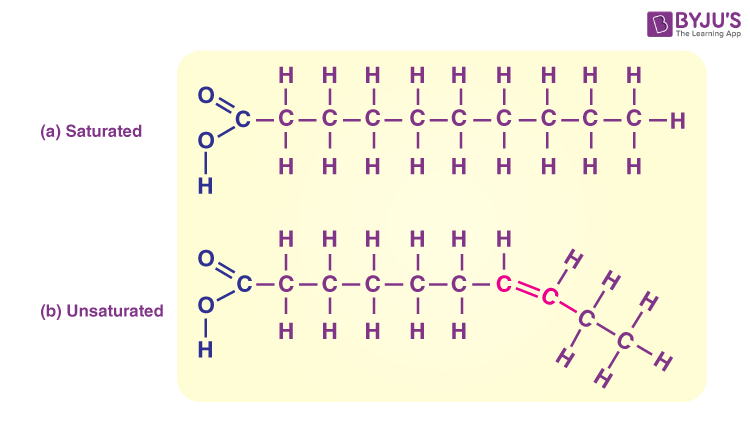
Lipids (Organic)
Nonpolar (not water-soluble)
ex: Phospholipids, Triglycerides, Steroids, Glycerol, Fatty Acids

Proteins (Organic)
Categories
Transport - Blood hemoglobin transports O2
Hormones - Regulate metabolism
Defense - Antibodies, inflammatory response
Molecular Chaperones - Protein folding
Fibrous Proteins:
Structural Protein: Collagen/Kertain
Movement: Actin/Myosin
Globular Proteins: Functional: Enzymes
ex: Amino Acids, Polypeptides
Cell Theory - What is it?
Cell: Structural & functional unit of life
Organism’s activities depend on individual and collective cell activities
Principle of Complementarity: biochem cell activities dictated by cell structures
Continuity of life: cellular basis
Membrane Proteins (functions)
Transport
Signal Receptors
Enzymatic activity
Cell-cell recognition + joining
Attachment to Extracellular Matrix (ecm)
Passive transport + Active transport
Passive:
No ATP needed
Diffusion down concentration gradient
Kinetic Eng dependent
Speed determined by size + temp (small/warm=fast)
Occurs if molecule is: lipid-soluble, small, uses carrier
Ex: Simple Diffusion, Osmosis, Carrier-mediated facilitated diffusion, Channel-mediated facilitated Diffusion
Active:
ATP as energy source
Large/Solute non-dissolvable in water
Unable to move w/ conc gradient
Exocytosis - Active transport process where mem-bound vesicle moves to plasma mem → proteins at vesicle surface bind w/ plasma mem→vesicle+plasma mem fuse and open a “pore”→ vesicle releases contents(waste) outside cell
Endocytosis (3 types) - Active transport process where a cell brings in outside substances by folding its plasma mem inwards to create a vesicle.
Phagocytosis: “cell eating”
Pinocytosis: “cell drinking”
Receptor-mediated: “targets mols and binds them to surface receptors before being brought inside”
Tonicity + Osmosis
Osmosis: Diffusion of a SOLVENT (water) thru a channel protein/ the lipid bilayer
Isotonic: Same solute concentration inside/outside cell
Hypertonic: Higher solute concentration outside cell; loses water→shrink
Hypotonic: Lower solute concentration outside cell; gains water→bursts
Mitochondria
Cell Resp - creates ATP (glucose + oxygen → h2o + co2 + ATP)

Rough ER
Protein synthesis + folding → sends to Golgi Apparatus

Ribosome
Site of protein synthesis (translation)

Smooth ER
Its proteins catalyze reactions

Golgi Apparatus
Modifies, packages, releases proteins

Lysosome
Uses enzymes to breakdown cell waste + glycogen

Peroxisome
Detoxifies substances; membranous sacs of powerful enzymes
SMALLER than Lysosome
Cytoskeleton
Structure + Support via microtubules, intermediate filaments, microfilaments

Centrosome + Centrioles
Organize mitotic spindle during cell division

Nuclear Envelope
Double mem, Big pores (selectively permeable)

Nucleolus
Produces/Assembles Ribosomes
Chromosome
Made up of condensed Chromatin, compact to protect DNA
Chromatin: DNA wrapped around protein histones

Protein Synthesis
1) Transcription: in nucleus, copies DNA into RNA
2) Translation: in the cytoplasm on ribosome, mRNA binds ribosome→tRNA transfers amino acids to ribosome→peptide bonds form→protein created
Anticodon
Start codon: AUG
Stop codon: UGA, UAG, UAA
Transfer tRNA: tail = holds amino acid, head = holds anticodon
Ribosomal rRNA: part of ribosome
Messenger mRNA: nucleotide strands (half DNA)
Tissues: Levels of Organization
Subatomic particles
Atoms
Molecule
Organelle
Cell
Tissue
Organ (Connective tissue→Smooth muscle tissue→Epithelial tissue)
Organ system
Organism
4 Tissue Types
Nervous: Internal comms (Brain, Nerves)
Muscle: Contracts to cause movement.
Skeletal: Voluntary movement in Bones
Cardiac: Involuntary movement in Heart
Smooth: Involuntary movement in Body Cavities
Epithelial (Epidermis): Protects, secretes, absorbs, filters. Classified by # cell layers, cell shape
Connective: Connects between brain→body (Bones,Cartilage,Blood)
Epithelial Tissues
Function; Location
Simple Squamous: Diffusion; Areoli of lung/capillaries.
Simple Cuboidal: Filtration/absorption; Kidney
Simple Columnar: Absorption; Small intestine
Pseudostratified Columnar: Secretion; Trachea
Stratified Squamous: Protection; Skin/Mouth/Esophagus/Rectum
Transitional Epithelium: Stretch/Distend; Urinary System
Connective Tissues
Cartilage: Hyaline, Elastic, Fibrocartilage
Blood: Soluble, Liquid ECM
Bone:
Osteoblasts secrete ECM
Osteocytes mature bone cells
CT Proper:
Loose: Areolar, Adipose, Reticular
Dense: Regular, Irregular, Elastic
Groin
Inguinal
Reproductive region
Pubic
Back of knee
Popliteal
Knee
Patellar
Fingers
Digital
Lower back
Lumbar
Bottom of foot
Plantar
Back of Hand
Manual
Belly button
Umbilical
Back of foot/Heel
Calcaneal
Full head
Cephalic
Front of Hand
Palmar
Calf
Sural
Butt
Gluteal
Ear
Otic
Mouth
Oral
Chin
Mental
Forehead
Frontal
Cheek
Buccal
Nose
Nasal
Back of neck
Nuchal
Spine
Vertebral
Middle of chest
Sternal
Eye
Occipital
Shoulder blade (Back)
Scapular
Nipple
Mammary
Shoulder
Acromial