Microbiology Lab 1
 Call Kai
 Learn
Learn Practice Test
 Spaced Repetition
 Match
Match Flashcards
 Knowt Play
1/28

There's no tags or description
Looks like no tags are added yet.
Name | Mastery | Learn | Test | Matching | Spaced | Call with Kai | Chat |
|---|
No analytics yet
Send a link to your students to track their progress
29 Terms
Microorganisms can be grown in
the laboratory or in a culture medium
Culture Medium
Contains nutrients, such as carbon and nitrogen, required for the cells to grow
Complex medium
A growth medium that contains nutrient rich ingredients whose exact chemical composition is not fully known
Defined medium
One for which a precise chemical composition is known
Culture Media
A substance that provides the nutrients and conditions microorganisms need to grow in the laboratory. Basically food for microorganisms. Can be liquid or solid
Broth
Liquid Medium
Agar
Solid medium. Gets its name because it contains a solidifying agent (usually agar). After being heated to 100 C it will solidify at 40-42 C.
Agar Plate
Solid media in Petri dishes. Used for isolation and growth of microorganisms
Agar Deep
Test tubes containing solid media. Used for anaerobic growth.
Agar Slant
Contains solid media that solidifies at an angle. Surface used for the maintenance of stock cultures of microorganisms
Selective medium
Nutrient medium designed to favor the growth of certain microbes
Differential Medium
Nutient medium designed to distinguish between different types of microbes based on their growth or metabolic reactions
PEA
Phenyl ethyl alchohol agar. Selective medium. Selects for gram positive organisms but tells nothing of the physiology of the organism growing on it.
Whole colony shapes
Round, irregular, Rhizoid
Margin Shapes
smooth, entire. lobate. filamentous
Elevation (height or profile of a microbial colony viewed from the side) types
Convex, umbonate (button like), flat

Whole colony shape. Round

Whole colony shape. Irregular
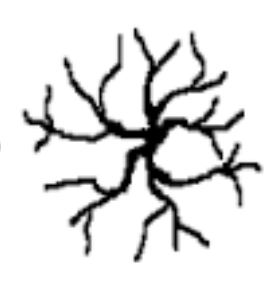
Whole colony shape. Rhizoid

Margin shape. Smooth, entire

Margin shape. Lobate
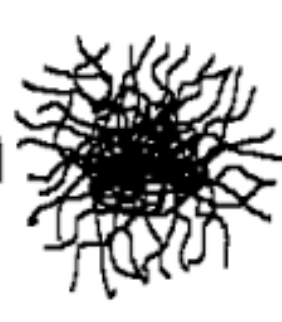
Margin shape. Filamentous

Elevation. convex

Elevation. Umbonate

Elevation. Flat
Alicaligenes Faecalis
ATCC # - 8750
Medium - tryptic soy agar (TSA)
Incubation - 37 degrees celsius
Gram Negative
Shape - Rod
Oxygen - Aerobic
Disease - Opportunistic
Key tests - Oxidase+
Appearance - Non-pigmented, grayish white colonies
Found - Soil, water, intestinal tract of humans/animals
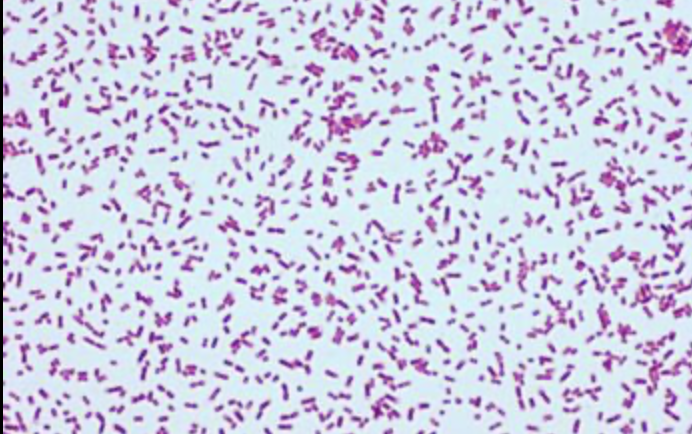
ATCC # - 478
Medium - Burke’s N-free or mannitol salts
Incubation - 30 degrees celsius
Gram Negative
Shape - Rod (ovalish)
Oxygen - Aerobic
Disease - Nonpathogenic
Key tests - Oxidase+
Appearance - Large, smooth, mucoid colonies
Found - Soil
Azotobacter vinelandii
ATCC # - 8750
Medium - tryptic soy agar (TSA)
Incubation - 37 degrees celsius
Gram Negative
Shape - Rod
Oxygen - Aerobic
Disease - Opportunistic
Key tests - Oxidase+
Appearance - Non-pigmented, grayish white colonies
Found - Soil, water, intestinal tract of humans/animals
Alicaligenes Faecalis
Alicaligenes Faecalis
ATCC # - 478
Medium - Burke’s N-free or mannitol salts
Incubation - 30 degrees celsius
Gram Negative
Shape - Rod (ovalish)
Oxygen - Aerobic
Disease - Nonpathogenic
Key tests - Oxidase+
Appearance - Large, smooth, mucoid colonies
Found - Soil
Azotobacter vinelandii