Heart Failure 266
 Call Kai
 Learn
Learn Practice Test
 Spaced Repetition
 Match
Match Flashcards
 Knowt Play
1/106

There's no tags or description
Looks like no tags are added yet.
Name | Mastery | Learn | Test | Matching | Spaced | Call with Kai | Chat |
|---|
No analytics yet
Send a link to your students to track their progress
107 Terms
What is Heart failure?
Complex clinical syndrome of symptoms and signs that pumping of heart is inefficient
Less blood being pumped = Left ventricular hypertrophy
Definition = Inability of heart to meet circulatory demands of the body
What are 5 causes of HF?
IHD
Blockage of arteries results in ischaemia and damage downstream
Results in myocardial fibrosis and scarring of heart muscle tissue
NSTEMI common cause of HF
HTN
1/3 causes of HF
Heart wall thickens and loses elasticity meaning it cannot pump properly
Valve disease
Aortic stenosis - Narrowing of aorta meaning less blood flows out (Calcification)
Mitral regurgitation - Valves don’t shut properly so blood flows back into left atria when left ventricle contracts
Cardiomyopathies
Increased thickening and stiffness of the heart muscle which affects its ability to pump
Hypertrophic obstructive cardiomyopathy
Dilated cardiomyopathy
Arrhythmogenic right ventricular cardiomyopathy
Restrictive cardiomyopathy
Alcohol, drugs and pregnancy
Drug example is herceptin
What is EF?
Ejection fraction is amount of blood pumped out ventricles each beat compared to the total amount in the ventricle each time the heart contracts
How to calculate EF
EF = (SV/EDV) x 100
3 types of EF
normal EF = >50 - 60%
HFrEF - reduced less than 40%
HFmrEF - mildy reduced 40-49%
HFpEF - preserved ≥50
What 6 things precipitate HF?
Arrythmias
Myocardial infarction
Infection
Excess alcohol/fluid
Anaemia
Non-compliance
What are 6 signs of HF?
Hypotension
Cold peripheries
Raised JVP
3rd heart sound
Lung crackles
Fluid retention
What are 8 symptoms of HF?
SoB
Oedema
Fatigue
Paroxysmal nocturnal dyspnoea
Swollen or tender abdomen with loss of appetite
Cough with frothy sputum
Polyuria
Confusion
What is the prognosis of HF?
Poor survival rates
Over 20% of patients diagnosed with HF die within a year
Treatment can improve QOL or improve prognosis
What 3 risk factors for HFrEF?
Volume overload - too much blood entering ventricles
Myocarditis - damage to muscle cells
MI - Can cause scarring which results in reduced contraction ability
What 3 risk factors for HFpEF?
Inflammation
COPD
Age
What 4 risk factors for HF?
Obesity
Hypertension
Diabetes
Kidney disease
What is acute HF and how is it caused?
When fluid is being administered too quickly causing volume overload
What does the Frank-Starling law suggest?
Increased volume returning to heart = Increased force required to pump back out
This causes actin and myosin filaments to stretch but if they stretch too much there is not enough overlap to cause contraction
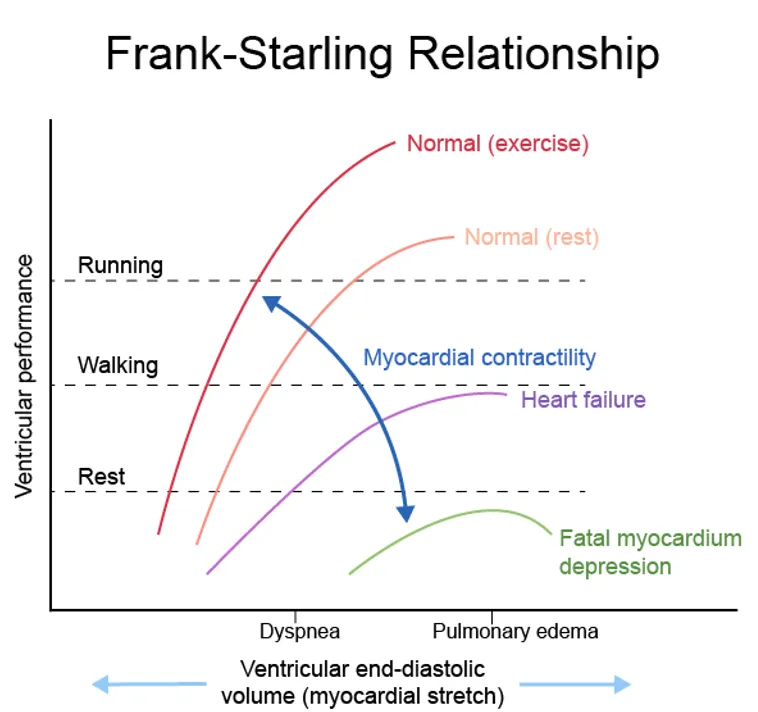
Describe what is happening in this graph
In heart failure, these patients cannot get their cardiac output high enough when conducting activities like walking, therefore they start to feel SoB
They need more blood to return to the heart, even at rest
This can cause the triggering of the RAAS system
Their myocardial contractility is also much less then a normal heart
How can changes in afterload affect functioning of a failing heart?
When afterload increases (The amount of resistance the heart must overcome to pump the blood into the periphery), the heart cannot generate enough force to pump blood to periphery from heart
Stroke volume decreases
Why is untreated hypertension in HF problematic?
Due to the blood pressure issues caused by HTN, HF hearts cannot reach the higher levels of cardiac output needed to overcome total peripheral resistance so there is insufficient pumping
This is caused by further cardiac hypertrophy which puts even more stress on the heart
What happens in left-sided HF?
Blood is coming from lungs to heart so lots of pulmonary effects
Symptoms:
Restlessness
Confusion because not enough blood goes to brain
Reflex Tachycardia (baro receptors send signals to SNS to try and increase HR)
Pulmonary congestion
Paroxysmal nocturnal dyspnoea / exertional dyspnoea
Orthopnea
Fatigue
Cyanosis
What happens in right-sided HF?
Blood comes back from body to heart
Symptoms:
Fatigue
Increase in peripheral venous pressure
Enlarged spleen and liver
Ascites
Anorexia and GI distress
Weight gain
Dependent oedema
Nocturia
Why does oedema occur in HF patients?
CO is impaired which is detected by baroreceptors
Systems increase CO by increasing blood returning to heart
The more blood comes back, the more pumped into circulation
In HF, pumping is not efficient so blood hangs around in ventricle
This causes ventricle to get bigger and pressure in ventricles increase
This causes atrial pressure increase so arterial pressure increases
Hydrostatic pressure in arterials increase so fluid leaks out capillaries into interstitial space
How does paroxsymal nocturnal dyspnoea / orthopnoea occur?
As you lay down you remove gravity effect, venous return goes up
Fluid in the peripheries will start to be reabsorbed in the CV system and return to the heart which increases pressure in ventricles
Increase in pressure in the ventricle = increase in atrial pressure = increase in pressure in capillaries = fluid leaks out of capillaries in the lungs making it harder to breathe
Need to prop up with pillows at night to introduce gravity and reduce amount of blood coming back
How to diagnose HF?
Signs and symptoms
Brain natriuretic peptide (BNP) levels = >400pg/ml
400-2000 = urgently seen within 6 weeks
2000 = urgently seen within 2 weeks
BNP and ANP released from heart as walls start to stretch
They cause reduction in blood volume by increasing salt and water diuresis
2D doppler echocardiography (EF <35%)
Raised JVP
Why is BNP not always a good marker?
Can be raised:
AF
PE
Renal impairment (GFR <60mL/min
COPD
LVH
Age >70
Can be reduced if
Obese
Afro-Caribbean
Patients already on treatment with other diuretics, ACE inhibs, beta blockers, ARB's, MRA, SGLT-2i
What is an index event?
Something causing pumping capacity of heart to be impaired
What does reduced pumping capacity activate?
SNS
RAAS due to adrenaline release by SNS which binds B1 on kidneys
compensatory mechanism: work together to restore cardiovascular homeostasis - short term
Why does sustained neurohormonal activation drive HFrEF?
Acute increases in both are fine as they return back to baseline
Sustained activation leads to progression of HFrEF
this is due to SNS and RAAS being further stimulated which creates a positive feedback loop of damage and at some point you will maximally stimulate all the systems
Long term effects on the heart from sustained neurohormonal activation include:
Decreased beta receptor responsiveness
Myocyte hypertrophy
Myocyte necrosis and fibrosis
Reduced norepinephrine stores and reduced sympathetic innervation
Increased risk of arrythmias
Long term effects on the kidney from sustained neurohormonal activation include:
Decreased renal blood flow
Increased renin release and RAAS activation
Increased renal vascular resistance
Desensitisation and downregulation of NPRA and NPRB
What is the SNS response to ↓CO?
Reduced cardiac output is sensed by baroreceptors in the aortic arch
This triggers SNS to be activated due to decreased aortic blood flow which releases NA
NA can activate 4 pathways to increase CO
binds B1 on heart to increase frequency and force of contraction
binds a1 on arterioles to cause constriction = ↑afterload
binds a1 on venules to cause constriction = ↑preload
binds B1 on kidneys to activate RAAS
= INCREASED cardiac WORKLOAD
What is the RAAS response to ↓CO?
Decreased renal blood flow is detected by baroreceptors by the kidneys which activates RAAS
Angiotensin II is released which:
Binds AT-1R on arterioles causing constriction to increase afterload which will increase cardiac workload
This results in remodelling as the structure of the heart is damaged reduced CO
Binds AT-1R on venules causing constriction to increase preload which will increase cardiac workload
Also releases Aldosterone which increases Na+ and H2O retention which will increase fluid volume increasing preload
What is the natriuretic peptide response to ↓CO?
BNP has opposite effect to RAAS
Veins are dilated decreasing venous return decreasing CO
Same with arteries which prevents remodelling
Also drives Na and H2O secretion
Receptors for peptides become desensitised from chronic over-activation of RAAS
Therefore things get worse and more BNP released but that has no effect as this point and more keeps getting released
What happens in remodelling?
Cardiomyocyte loss
Necrosis
Apoptosis
Cardiomyocyte hypertrophy
Fibrosis
RAAS activation, inflammation
Additional connective tissue results in heart getting bigger however contraction is less efficient
Build up of non-conductive tissue provide pathway for alternative electrical conduction
Insulin resistance
Electrophysical changes
Structural alterations
What are the problems with prolonged compensation?
Desensitisation of b1 receptors due to overproduction of noradrenaline
Abnormal NA levels can result in arrythmias
Frank starling - heart is overstretched and this leads to loss of function
Increased angiotensin = increased afterload = remodelling
Myocardial hypertrophy
Treatment for HFrEF drugs
Diuretics
Furosemide
SGLT2i
Dapagliflozin
Empagliflozin
ACE/ARNI/ARB
Ramipril
Sacubitril/Valsartan
Candesartan
MRA
Spironolactone
Beta-blockers
Bisoprolol
Carvedilol
Nebivolol
Treatment of HFpEF
Diuretics
SGLT2i
Treatment for Co-morbidities
What are the role of diuretics?
Loop diuretics are most effective in HF
symptomatic relief
Decrease sodium retention and increase diuresis for pulmonary and peripheral oedema
Decrease pre load and afterload by:
Blocks NKCC2 in ascending LoH to prevent fluid retention
Decreasing blood volume which decreases blood returning to heart
Works on potassium channels on arterial side and dilates them which makes it easier for ventricles to pump blood forwards
What are the side effects of diuretics
Dehydration
Hypotension
Hypokalaemia
Gout and hyperuricaemia
If normal Loop diuretics don’t work, what do we add in and why?
Metazolone (thiazide diuretic) can be used in combo to overcome resistance
What are ACEi role?
Improves mortality
Decreases pre load and afterload
Important to decrease both because if you just decreased preload, you would decrease cardiac output = bad
By decreasing both, less blood returns to the heart but it will become easier to pump blood forward into the systemic circulation (ejection fraction is likely to improve)
Decreases remodelling as its driven by aldosterone and Ang 2
E.g. captopril, lisinopril, enalapril, quinapril, ramipril
What are the side effects of ACEI?
Dizziness
Cough
Hypotension
Hyperkalaemia
MOA of ACEi
Prevents conversion of Ang 1 to Ang 2 by blocking ACE
With no Ang 2, vasodilation occurs and the blood pressure decreases
This decreases cardiac workload
Why are ARBs better than ACEi in some patients?
Less SE - increasing ace inhibitor conc will increase side effects too
ACEi dont completely block production of AngII in all patients (e.g. Afro-caribbean patients may have chymase enzyme which can convert Angi to AngII) therefore you can get competition of ACE inhibitors
Due to no negative feedback, renin can still be produced and will produce AngI which will compete with ACEi for ACE = some AngII production
by giving an ARB in these patients, the AngII receptor is completely blocked, and therefore this is more beneficial/ favourable in these patients
What are the role of BBs?
Improve mortality
Frontline with ACEI
Start on low dose and increase until optimal level is achieved
What is MOA of BBs?
BB bind to B1 receptors on the heart to block action of NA to slow heart rate
This increases diastolic filling time of ventricles = Increase EDV = Increase preload
Ventricles can contract and push out more blood, even if their ejection fraction is still the same (e.g. reduced ejection fraction 35%)
CO remains constant as increased filling time compensates for decreased force of contraction
What are SE of BBs?
DO NOT START IN COMMUNITY, ONLY IN HOSPITAL
Hypotension
Bradycardia
Peripheral vasoconstriction
Impotence
Bronchospasm
Why are all BBs not equivalent?
Bisoprolol - Inverse agonist of B1
Carvedilol - Inverse agonist of B1 and a1 antagonist (dilates arteries)
Nebivolol - Inverse agonist of B1 and increases NO = dilates veins and arteries
What do inverse agonists do and how do BB use this mechanism?
Work to reduce response of tissue through a particular receptor in the absence of any agonist molecules
absence of agonist molecules, receptor shifts into the resting state. if you give an inverse agonist when its in this state, you are preventing it from moving back into its active state, therefore agonist molecule cant bind and you get no response.
Inverse agonists like Bisoprolol bind to B1 receptor in its inactivated state and prevent conversion back to active state preventing NA binding to B1
Why are inverse BB useful in HF?
Reduces NA on muscle tissue = reduces force and frequency of contraction
Stabilises inactive receptors, upregulating the number of receptors on muscle cells and therefore making tissue more sensitive to the agonist so their levels can be reduced again
Aim is to resensitise B1 receptors again and upregulate them so levels of NA/A return back to baseline
Role of ARNIs
Sacubitril/Valsartan
Given in patients
With NYHA class 2 to 4
Left ventricular EF of <35%
Pts. taking stable dose of ACEi or ARB
MOA of ARNIs
Has dual action by targeting RAAS and Natriuretic peptide system
Valsartan (ARB)
Block Ang2 binding to Ang2R
Vasodilation = Decreases BP
Decreases Aldosterone effects on the heart and blood vessels
Sacubitril (Neprilising inhibitor)
Inhibits Neprilysin enzyme = Increases levels of BNP and ANP = Vasodilation = inhibits RAAS system
What is used if ACE/ARB/BB are not tolerated?
Venodilators (nitrates) = Decreases preload
Arterial dilators (Hydralazine) = Decreases afterload
What is the SE of ACE/ARB/BB?
Hypotension
Headache
Tachycardia
Role of Spironolactone
Aldosterone antagonist by blocking MR receptor = Decreases remodelling
Improves mortality
Only small doses required
MOA of Spironolactone
Mineralocorticoid receptor is blocked which reduces expression of sodium channels in the distal tubule, therefore less sodium is reabsorbed
More sodium excreted = more water excreted
Potassium is not involved and is therefore unchanged
SE of Spironolactone
Gynaecomastia
Hyperkalaemia
Alternative option to reduce SE of Spironolactone?
Eplerenone = More selective for MR = no anti-androgen effects (less man boobies)
Role of digoxin
Increases QoL
No effect on mortality
Has narrow therapeutic index
Renal clearance so use is dependant on age, weight, and renal function
MOA of Digoxin
Binds to K binding site of Na/K pump on cardiac myocytes = inhibition
Leads to increased Na levels intracellularly
Na/Ca pump exchanges the Na for Ca influx
Increase in calcium results in enhanced myocardial contractility = increase force of contraction = Increased CO
SE of Digoxin
Arrhythmias
Heart block
Why are SGLT-2 inhibitors useful in HF?
there are multiple mechanisms of action however most prominent two include:
increased urinary sodium and glucose excretion will result in diuresis which will decrease blood volume = reduction in ventricular preload and therefore how hard the heart is having to work
increased sodium and glucose excretion will increase the glucagon vs.insulin ratio
as the blood glucose concentration decreases, these will work to increase blood glucose again
however if you are taking this drug, it will continue to remove the glucose and decrease glucose stores
= lipolysis and improved glycaemic control which is beneficial and protective for the heart (diabetes is a risk factor, and this will decrease arterial risk factors)
Why is the bioavailability of an oral solution likely less than an oral tablet?
Less stable in the GIT - in solution the drug is already available as molecules to automatically available for attack via hydrolysis etc.
May be ionised/unionised in the wrong part of the GIT for absorption to occur (tablet may get farther into the GIT where drug can be adequately released)
Dissolution of a tablet gives it more protection through the GIT to get to the correct place for absorption
Why might bioavailability of a tablet be less than that of a solution?
Inability to fully dissolve out of the formulation
Incomplete disintegration
Drug itself does not have correct physiochemical properties or particle size to be able to dissolve rapidly enough
How to calculate absolute bioavailability?
Absolute bioavailability = F
F = AUC absorbed ÷ AUC IV bolus
To correct for different doses
F = (AUC absorbed/Dose absorbed) ÷ AUC IV bolus/Dose IV)
What are the 4 factors affecting oral bioavailability measurement/assessment?
Release of drug from dosage form
Stability in biological fluids
Permeability
Pre-systemic metabolism
We often measure invitro (in glass) and then extrapolate to invivo (in living forms - animal or humans)
Therefore for measurement to be effective, there needs to be a good correlation between in vitro results and observations made in vivo
What is the biopharmaceutical classification system?
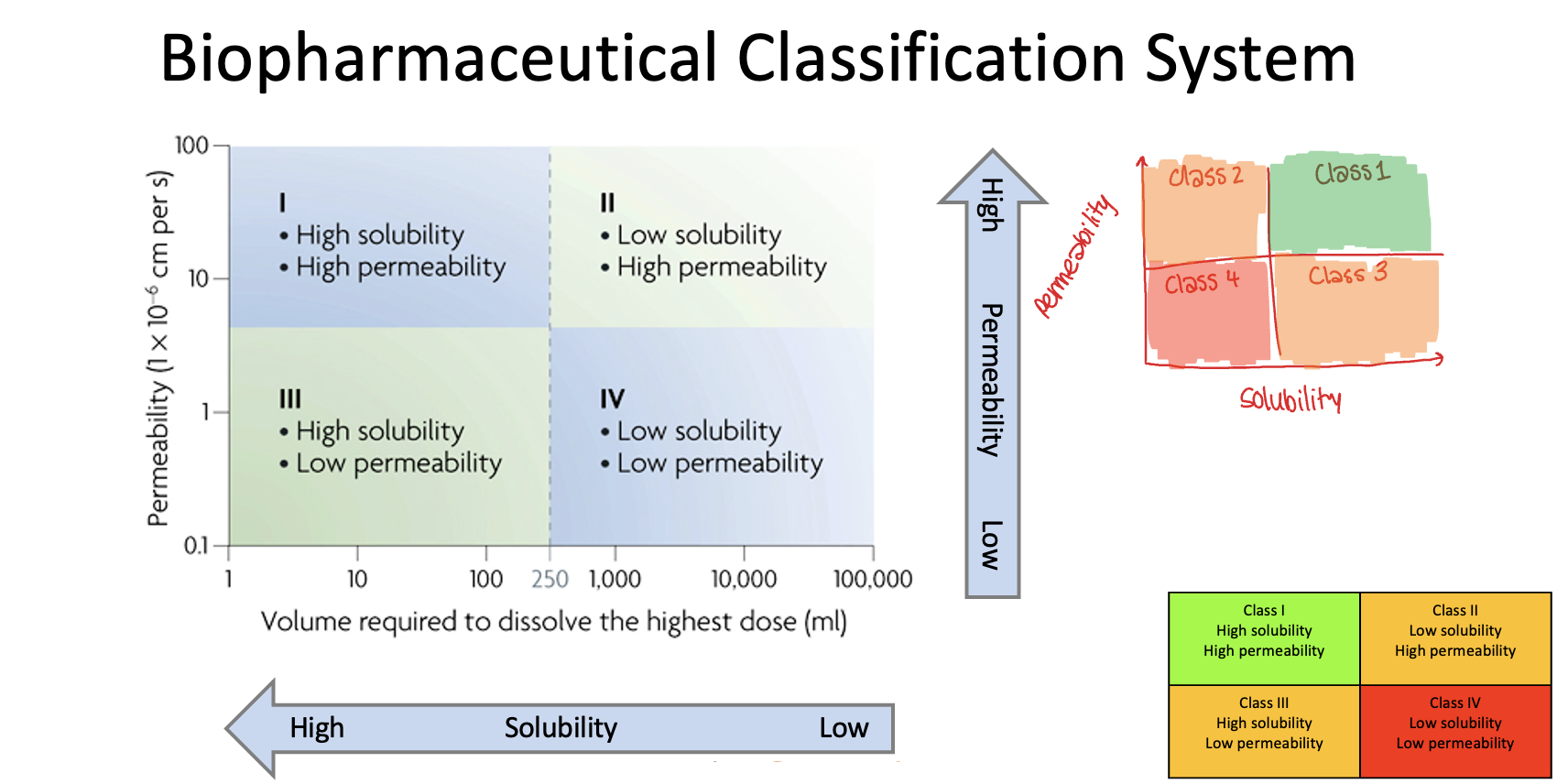
What are 3 class boundaries?
Solubility: drug substance considered highly soluble when the highest dose strength is soluble in 250mL or less of water over a pH range of 1-7.5 at 37ºC
Permeability: A drug substance is considered highly permeable when the extent of absorption in humans is greater than 90% of an administered dose, based on mass-balance or compared with an intravenous reference dose
Dissolution: A drug product is considered rapidly dissolving when 85% or more of the labelled amount of drug substance dissolves within 30 min using USP Apparatus 1 or 2 in a volume of 900 mL or less of buffer solutions.
What is dissolution testing used for?
Formulation development
Product characterisation (How product behaves)
QC
In basic dissolution testing, the focus is on in vitro and not compared with in vivo
Release of drug from its dosage form and how it affects oral bioavailability measurement/assessment
In-vitro to in-vivo correlation is essential because here we are trying to mimic GIT conditions (but only if dissolution is the rate limiting step - if permeability is the slowest step, we probably wont see good correlation)
What can we alter to improve in vitro - in vivo correlation for drug release?
Need to use biorelevant media:
dissolution medium which:
Simulates GI fluids in fed and fasted states
Gastric= dilute HCl pH 1.2
Intestinal=Phosphate buffered solution pH 6.8
Consider pH, ion composition, surface tension, buffer capacity, bile, lecithin
Homogenise the meal to be used in clinical study to see how drug interacts with food
Long-life milk - its pH and its fats and surfactants
How can food influence dissolution of a drug?
In the fed state, presence of food raises pH
This increases dissolution of the drug in the stomach
In SI, pH is higher so fed and fasted states dont influence dissolution
What else can be altered to mimic the dissolution of the drug?
Agitation to simulate mixing and stomach churning
Change volume of fluid drug is dissolving in to mimic fed or fasted state
Change how long the test is run for
Drug may be absorbed further along upper intestine
Even further for colon
Note that a short test would run for 15-30 in medium to mimic the gastric fluid in a fasted state
How do we ensure drug is well absorbed in GI (In-vitro)?
Start in acid for 20 minutes (mimic stomach)
Mimic pH and enzyme changes from stomach to intestine
Stability in physiological fluids and how it affects oral bioavailability measurement/assessment
The chemical stability across pH range of gut (1-8)
Done with buffers
Enzymatic stability:
GI fluids
Incubate with real or stimulated GI fluid
Loss of 5% = Potential instability
Bacterial enzymes in colon
SR formulations
Permeability methods can be used to identify wether stability of drug is a problem
For drugs that are still in GIT in colon, stability in bacteria presence considered
If absorption here still required, bioavailability can be reduced by bacterial enzymes
Permeability and how it affects oral bioavailability measurement/assessment
A drug is considered highly permeable when extent of absorption in humans is greater than 90% of administered dose, based on mass-balance or compared with IV dose reference
Most difficult criteria to establish due to requiring absolute bioavailability studies
What models are used to predict or measure permeability?
Computational
c Log P
Physiochemical
Partition coefficient
Immobilised artificial membrane
Biological
In vitro
Cell culture models like Caco-2
Excised tissues - cells and membrane vesicles
In situ - vascularly perfused intestine
In vivo
Animal - intestinal loop
Human - Loc-I gut
What physiochemical approaches are used to predict permeability?
Partition coefficient
Shake flask method (LogP or LogD)
Computational - aka In Silico (cLogP or mLogP)
Looks at structure of different fragments of the molecule and how they contribute different amounts to lipophilicity, cLogP and mLogP
HPLC (coat column with octanol)
Immobilised artificial membranes (IAM) - well correlated with in vitro method of predicting transcellular absorption
Log P between an oil (octanol to model biological membranes) and a water phase can predict how well it will cross a membrane
Log D measured if aqueous phase is at particular pH - ionisation of molecule
What is the in vitro method for permeability?
Cell culture techniques: Caco-2 model small intestine
Immortalised cells that come from colonic cancer cells
Have tight junctions, act as model for drugs absorbed in gut
Limitations to the in vitro method for permeability
Tight junctions in these cancer colonic cells are tighter than colonic cells
No secretion of mucus and digestive enzymes
What are transport experiments?
Transport experiments are carried out by replacing culture medium with a buffer and measuring TER.
Then replace the buffer with fresh buffer containing the drug in the apical chamber
Sample at regular intervals from the basolateral chamber and determine concentration of drug in the basolateral chamber
Sample basolaterally measures rate at which drug crosses membrane
Mannitol used as marker to check membrane integrity
Other than permeability what do transport experiments help figure out?
Helps us work out absorption mechanism:
Passive
Active
Involvement of pGP
Paracellular
Transcellular
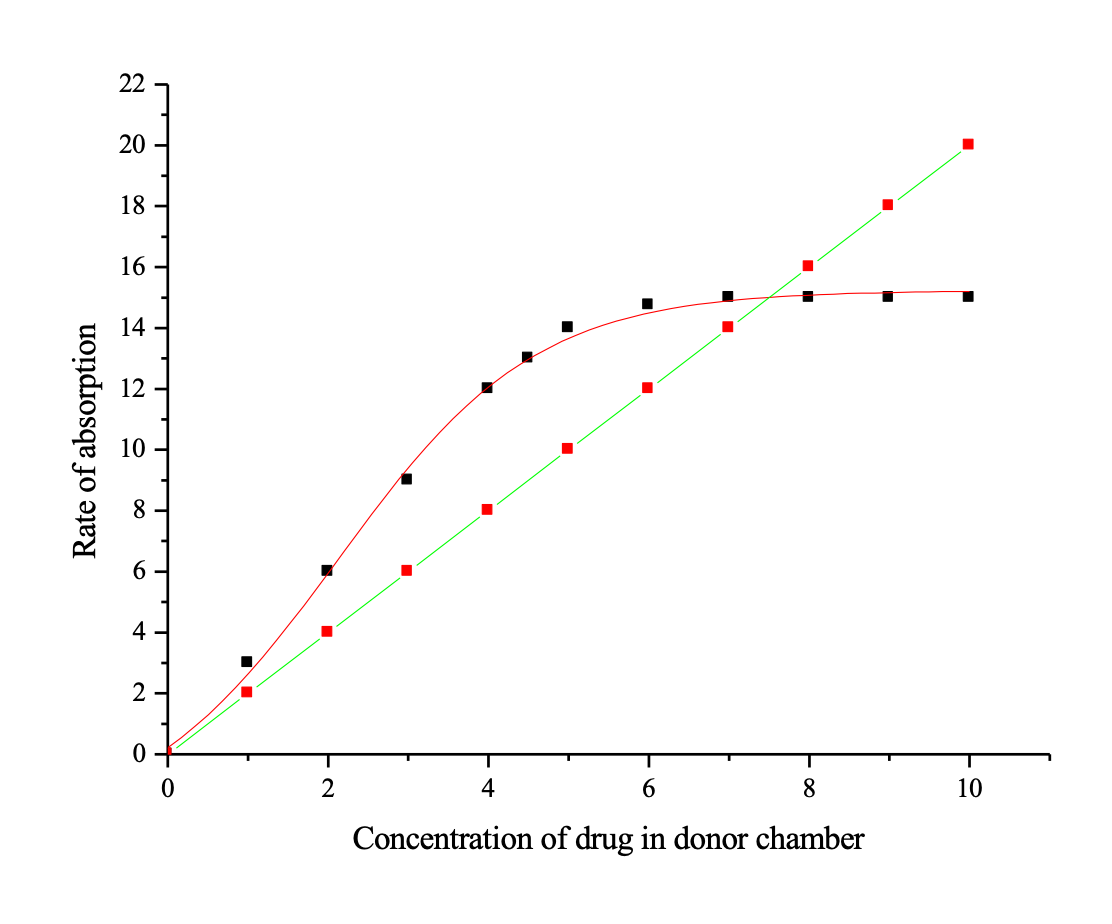
How does this model show absorption mechanisms too
As we increase the concentration in donor chamber, we see linear increase in green line = passive diffusion
Red line = active process with saturation of a transporter
Start to see a plateau because the transporter or protein has been saturated.
Then do more experiments to work out the transporter
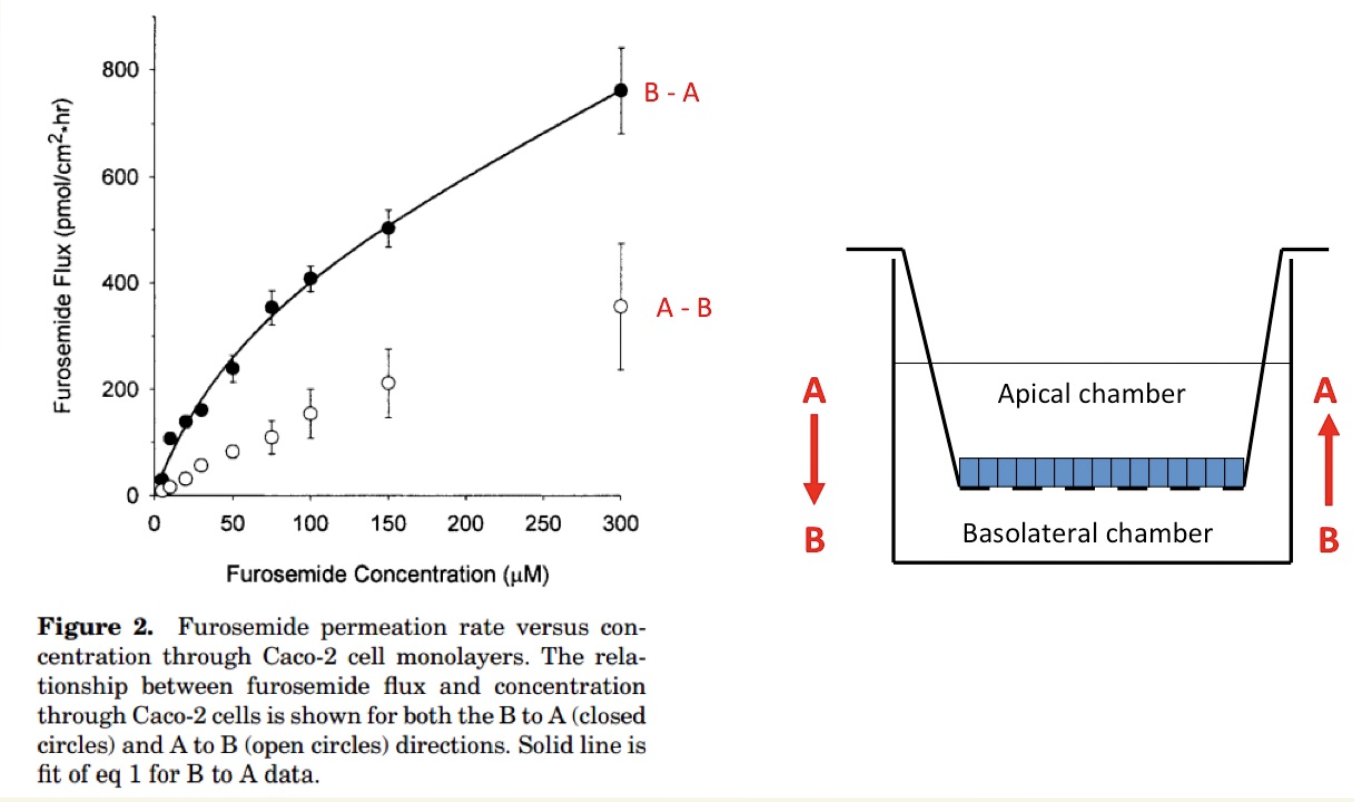
Explain the graph showing Furosemide permeability
Graph shows that furosemide has better permeability going from the basolateral membrane to apical rather than the other way round. This could be due to action of pGP
Going from A to B is more difficult than going from B to A, therefore our values going from B to A are much higher than going from A to B
These are typical results for efflux pumps – the efflux pumps go from B to A, therefore if the drug goes from B to A it gets actively pumped into chamber A
If our drug goes from A to B, we have efflux pumps that pump the drug back into A, therefore we get a much lower concentration
If we had passive diffusion taking place both these lines would be the same
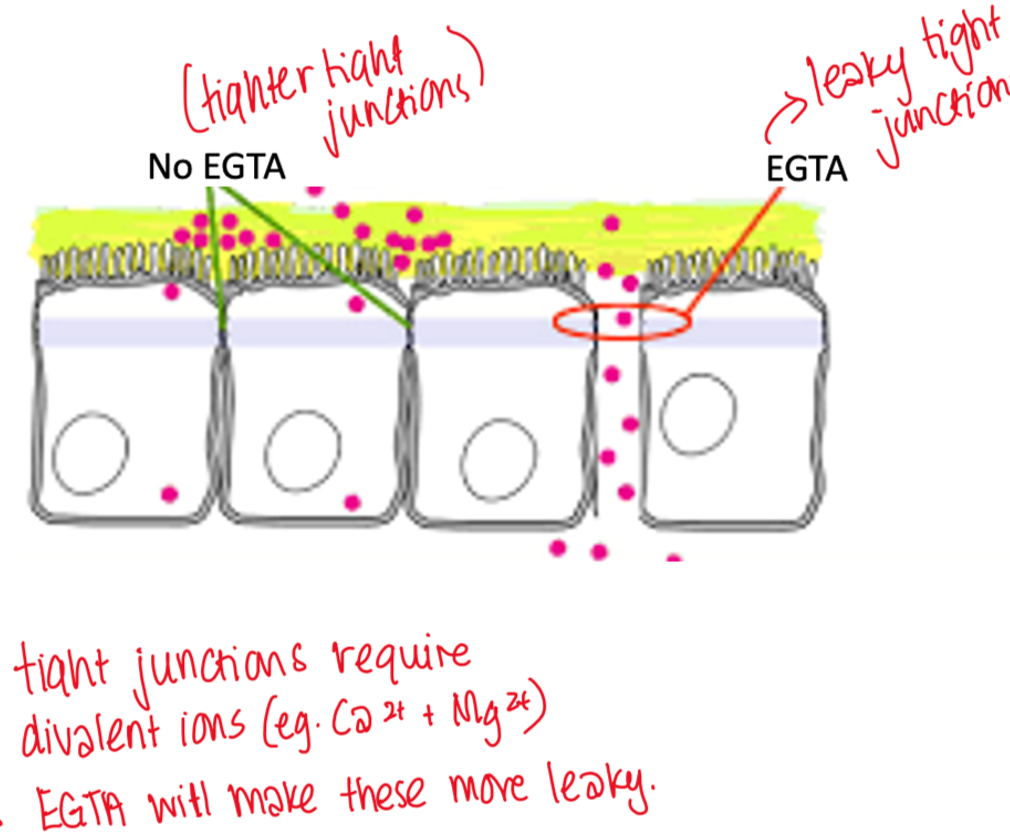
What is EGTA and what does it help us see in this model
Chelating agent for free ions
Ca ions responsible for tight junctions in between cells because they are divalent
EGTA helps open tight junctions
This helps us see if the drug can move paracellularly if the drug concentration goes up
What are the advantages of the Caco-2 model
Can give mechanisms of drug absorption
Non-animal - Human colon cancer cells
Can use small amounts of drug (Less than in vivo)
Rapid screening of many potential new drugs
Potential toxicity can be seen
What are the limitations of the Caco-2 model
The paracellular route is too tight in comparison to the intestinal cells and has no mucus
If the drug is going through the paracellular route, this model may underestimate it
This model does not take into account drugs that bind intestinal mucus
Name another permeability model?
In situ rat perfusion model - tissue stay in the animal and still has nerve, lymphatic and blood system
Tissue should remain viable with transport mechanism functional
What do we do after pumping drug solution into intestine of animal?
We measure absorption and excretion of drug
We can then assume that any drug that is lost is absorbed in the intestine of the rat
What is the experimental value of both models?
Measures drug absorption from lumen
Need to check there was no degradation of drug in lumen or intestinal wall
Assessment of permeability with Loc-I-Gut
Drug absorption calculated from rate of disappearance of drug from perfused section
Pre-systemic metabolism and how it affects oral bioavailability measurement/assessment
Gut wall
brush border membranes
Remove vesicles from within them and incubate with drug to see if it gets taken up or destroyed
gut wall homogenate
Mash up and liquidise whole gut, put drug into contact and then look at the breakdown of the drug
Only really beneficial if you know the drug is going transcellularly
Liver
Cut up liver and incubate with drug
PBPK modelling - in silico
Describe concentration profile of drug in various over time on basis of:
Physiochemical properties of the drug
Site and means of admin
Physiological processes to which drug is subjected
We use this as computer model incorporating blood flow and tissue composition to define PK of drugs
What effect does chronic HF have on bioavailability?
Lower Cmax
Longer Tmax
CHF leads to decreased ability to transport drug into urine
Likely causes of this
Delayed gastric emptying
Decreased GI motility
Decreased renal function
Bowel wall oedema
What is the aim of HF treatment?
Relieves signs and symptoms
Prevent hospital admission
Improves survival
Improves QOL
Prevents disease progression
What 4 things do you give guidance for based on EBM?
Drugs
Devices
Exercise
Lifestyle
HF clinical trials based on EF <35%
How do we achieve these aims?
Early and accurate diagnosis
Prescribe in line with evidence based drugs, exercise and devices
Encourage self assessment
Good access to professional help - reduces hospital admission
Good end of life care
What do we take from patient upon hospital admission?
Detailed history
Patient examination
Signs and symptoms
ECG
Chest X-ray
Blood tests
Renal function
FBC
Thyroid
HbA1C
LFTs
NT-pro BNP
ECG
What diuretics are used for HF control?
Loop
IV then step down to oral after ensuring stability
Smallest dose to control congestion
Bumetanide for ascites pts. as better absorbed
Thiazide
Used alone in mild HF
Ineffective in poor renal function <30mL/min
Monitor potassium, sodium, magnesium and calcium
May exacerbate diabetes and gout
Loop and thiazide combination
Only when fluid retention is very resistant
Can happen when new drug started but previous isn’t held - CHECK KIDNEY FUNCTION
Name the 4 pillars of HF treatment
ACEI/ARB or ARNI
BB
MRA
SGLT2i
What are some SE of ACEI?
Hypotension
Dizziness
Start small dose then increase and take at bedtime
Persistent dry cough
Non-productive and worse and night
May need alt. drug
Affects kidneys and electrolytes
Routine blood tests and kidney function and potassium levels check
Angioedema - Swelling of lips, tongue, airways
Why are ARNI’s not combined with ACEi instead?
Sacubitril and ACEi = high risk of angioedema
NEPRILYSIN + ACEi = HIGHLY CONTRAINDICATED