Lab Practical - Endocrine
 Call Kai
 Learn
Learn Practice Test
 Spaced Repetition
 Match
Match Flashcards
 Knowt Play
1/78

There's no tags or description
Looks like no tags are added yet.
Name | Mastery | Learn | Test | Matching | Spaced | Call with Kai | Chat |
|---|
No analytics yet
Send a link to your students to track their progress
79 Terms
Embryonic origin of anterior pituitary gland cells & what they contain
glandular epithelium → secretory apparatus
Embryonic origin of posterior pituitary gland cells & what they contain
neural → axons & glial cells
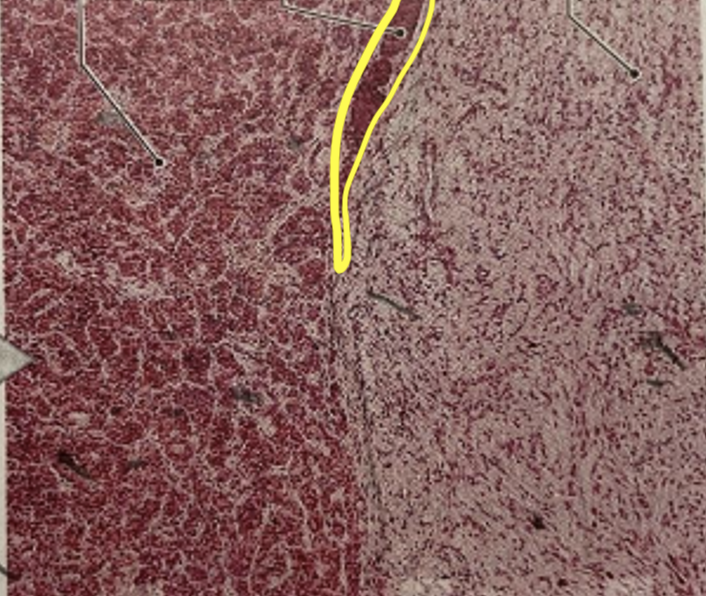
What separates the lobes in the pituitary?
pars intermedia
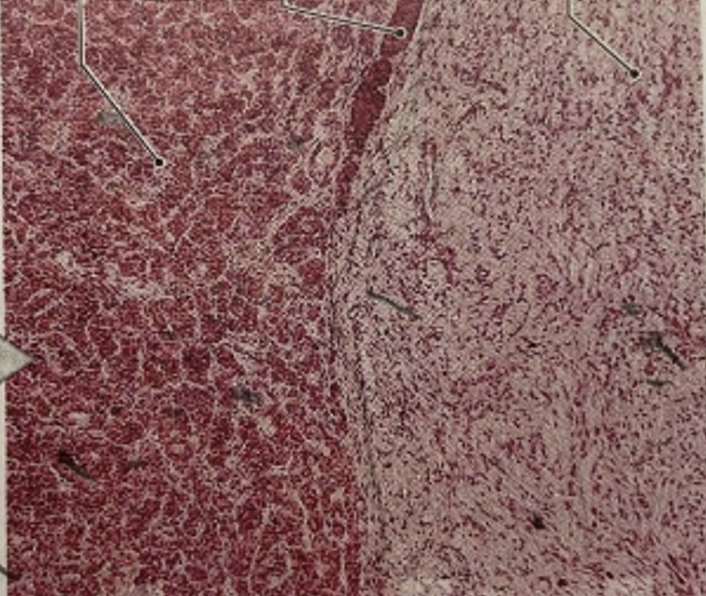
What gland is this microscopic image of?
pituitary gland
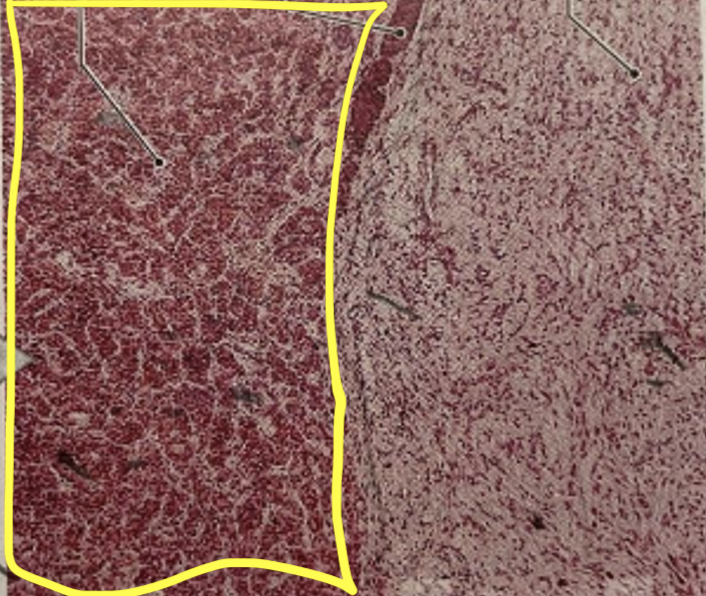
What lobe of the pituitary is this?
anterior lobe
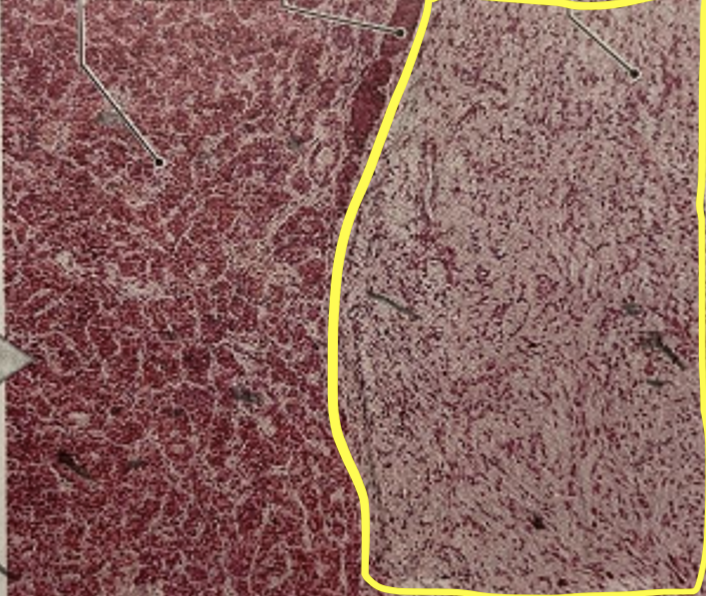
What lobe of the pituitary is this?
posterior lobe
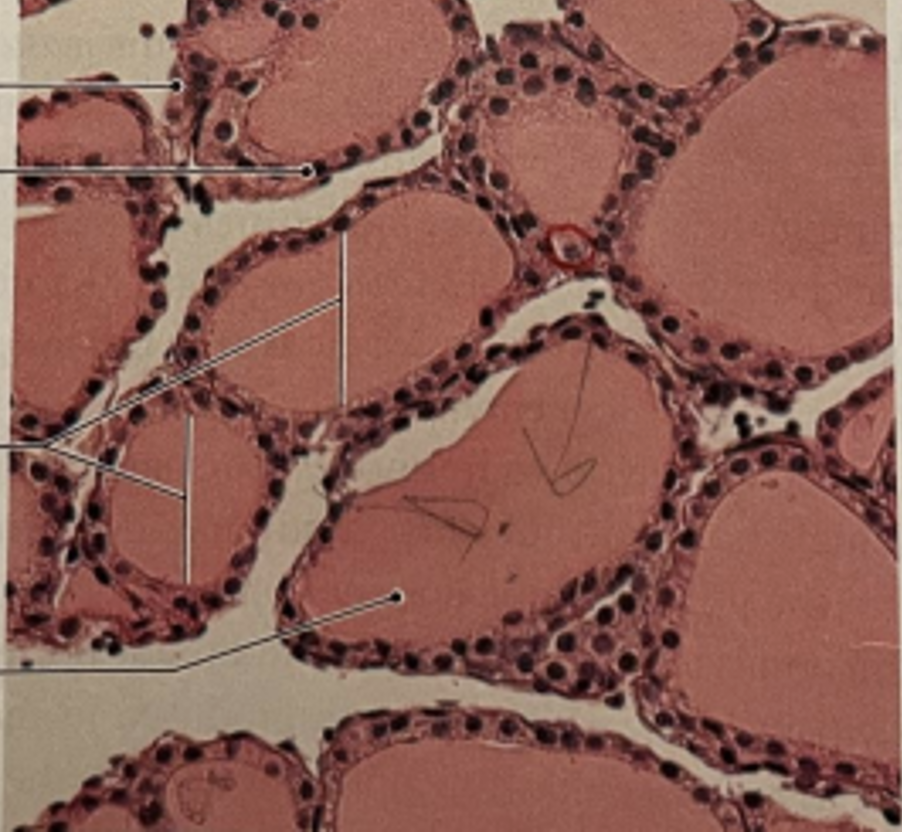
What gland is this microscopic image of?
thyroid gland
What makes up a thyroid gland follicle?
colloid
follicular cells
parafollicular cells
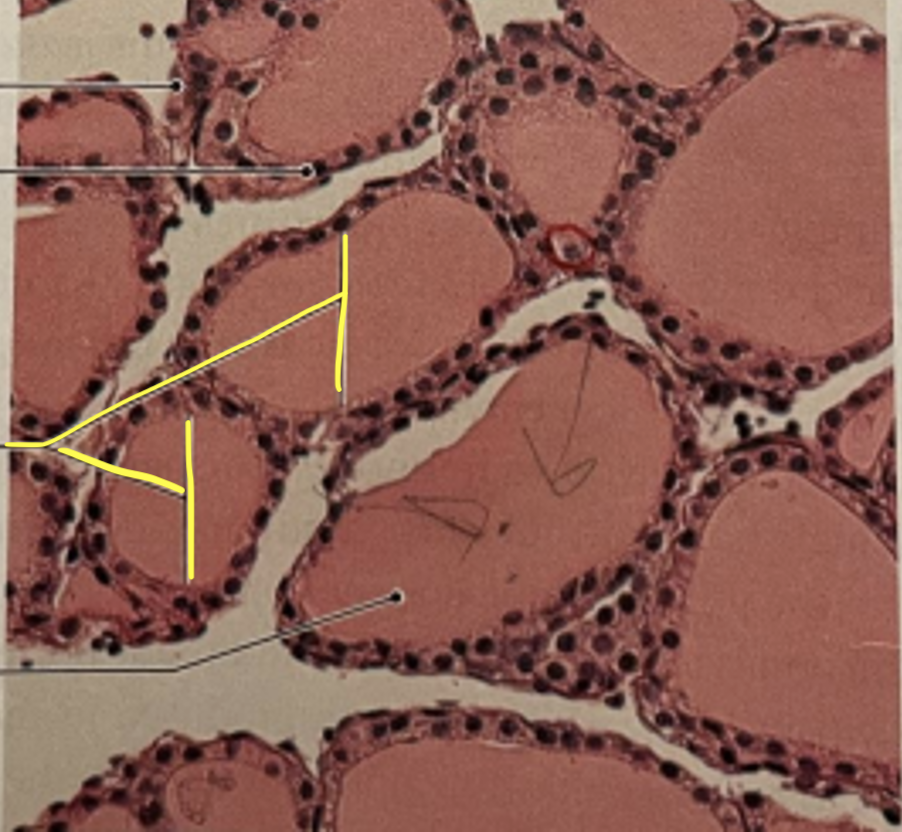
What part of the thyroid gland follicle is this?
colloid
What is the colloid?
the liquid center of follicles in the thyroid gland
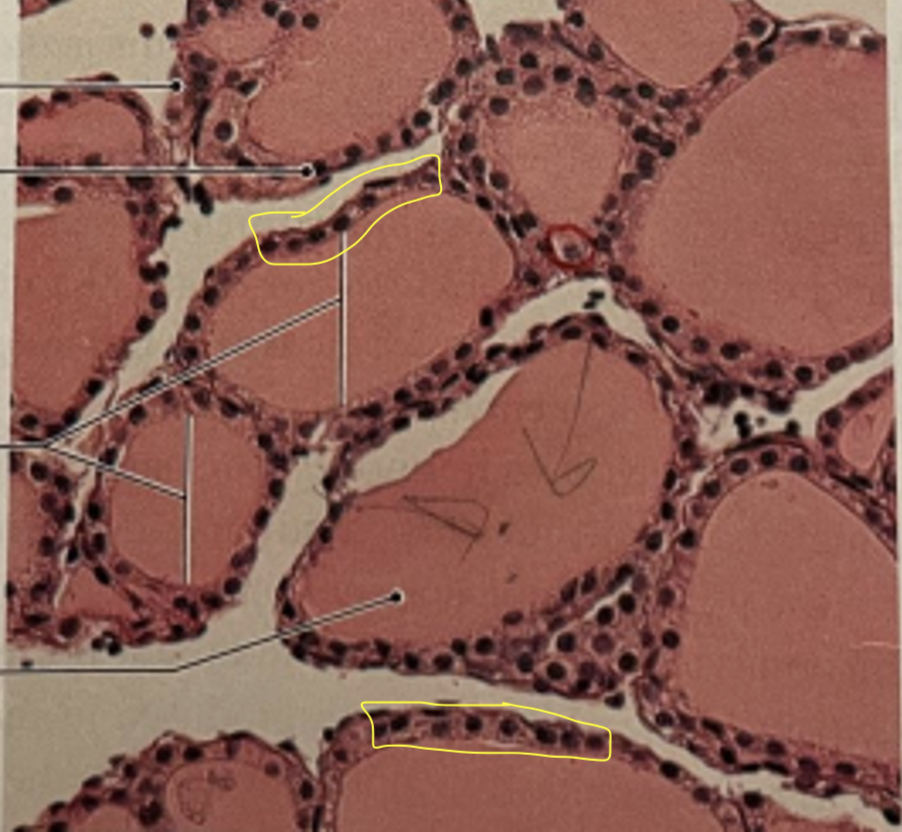
What part of the thyroid gland follicle is this?
follicular cells
What type of cells are follicular cells?
simple cuboidal and/or squamous epithelial cells
What is the function of follicular cells?
synthesize materials of the follicles
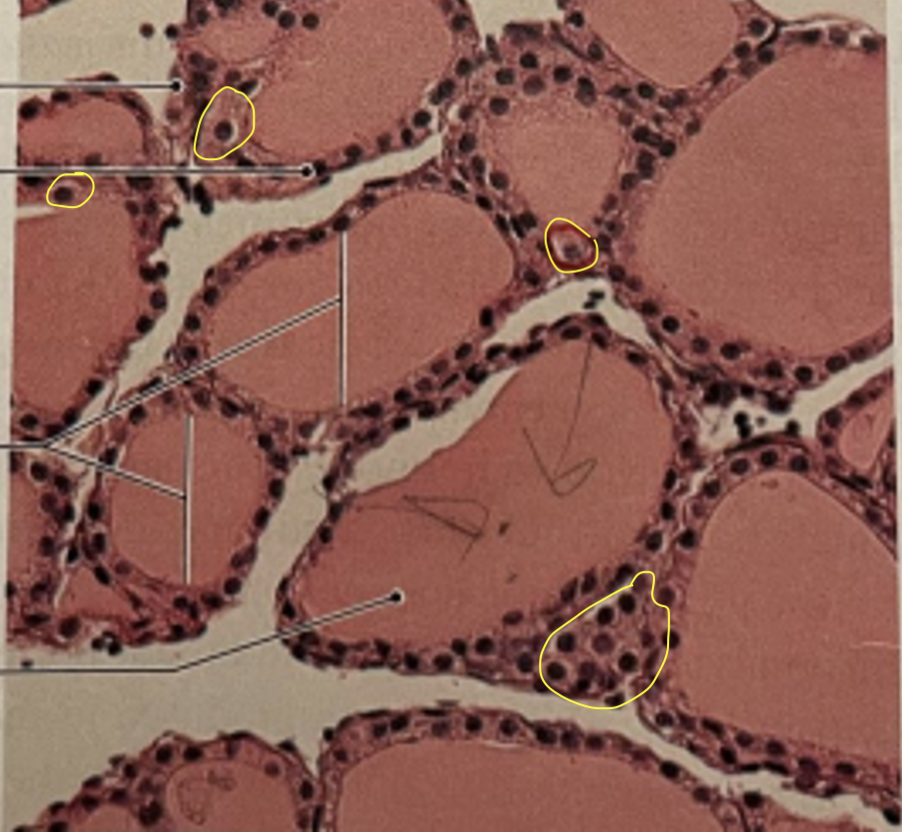
What part of the thyroid gland follicle is this?
parafollicular cells
What is the function of the parafollicular cells?
production of the hormone calcitonin
Where is the thyroid gland located?
it wraps around the front of the larynx and the windpipe (in front of the parathyroid)
Where is the parathyroid gland located?
the posterior aspect of the thyroid lobes (behind the thyroid)
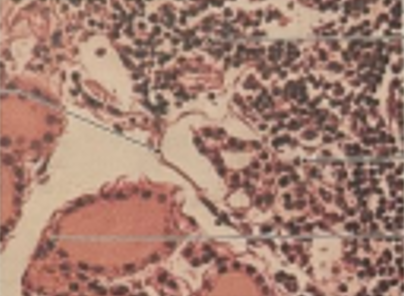
What glands are this microscopic image of?
thyroid and parathyroid glands
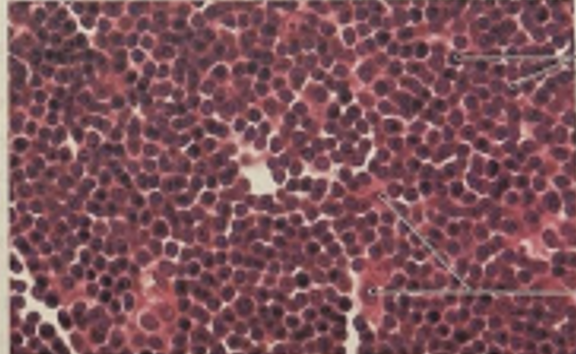
What gland is this microscopic image of?
parathyroid gland
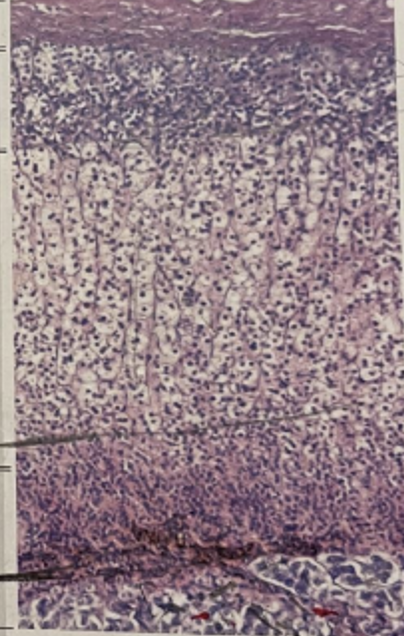
What gland is this microscopic image of?
adrenal gland
What is the function of the adrenal gland?
secretion of hormones
What are the two main layers of the adrenal gland called?
cortex: outer
medulla: inner
Order of adrenal gland layers (superior → inferior)
capsule
zona glomerulosa
zona fasciculata
zona reticularis
adrenal medulla
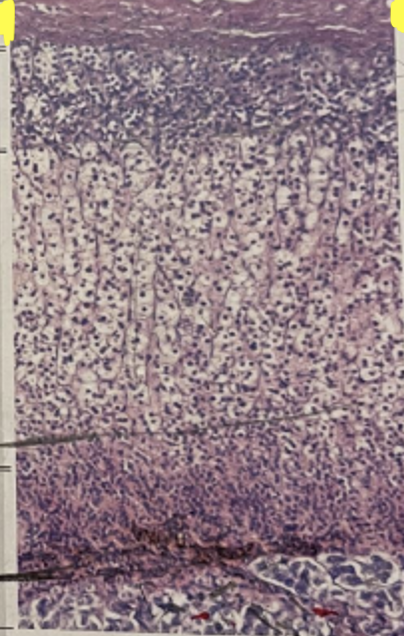
What layer is this in the adrenal gland?
capsule
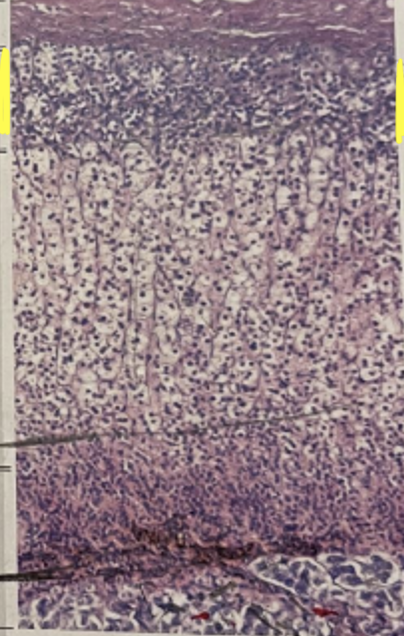
What layer is this in the adrenal gland?
zona glomerulosa
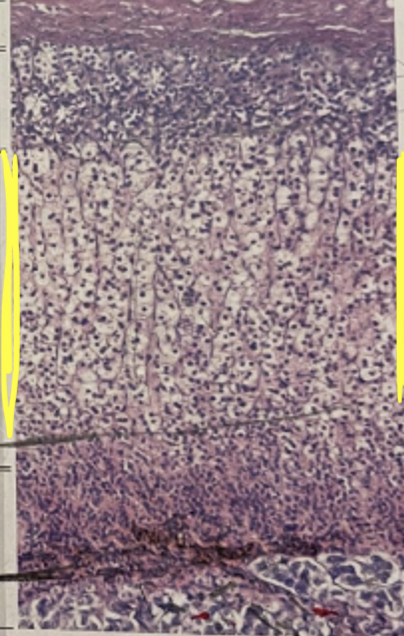
What layer is this in the adrenal gland?
zona fasciculata
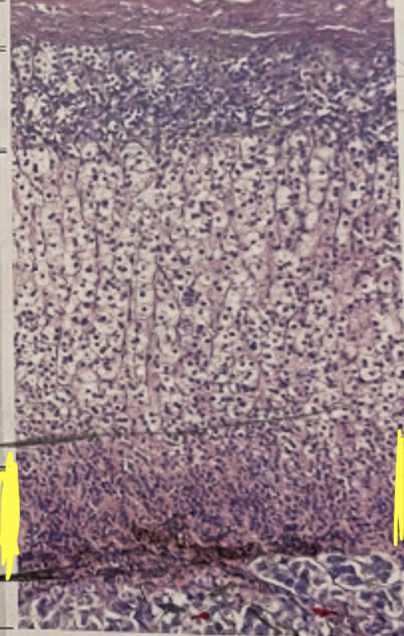
What layer is this in the adrenal gland?
zona reticularis
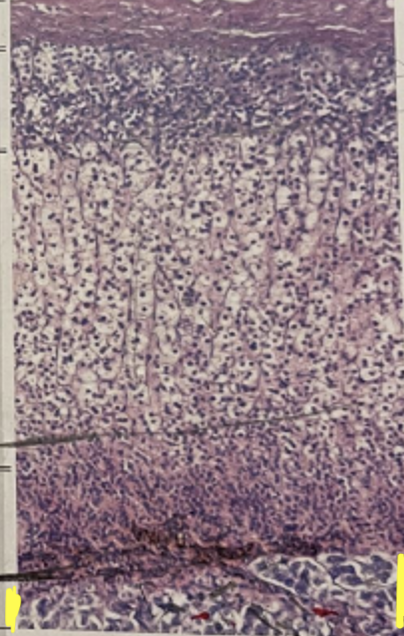
What layer is this in the adrenal gland?
adrenal medulla
What hormones do medullary cells in the adrenal gland release?
epinephrine and norepinephrine
What are the 3 regions of the adrenal gland cortex?
zone glomerulosa
zona fasciculata
zona reticularis
What hormone is released from the zona glomerulosa in the adrenal gland?
mineralocorticoids (aldosterone)
What hormone is released from the zona fasciculata in the adrenal gland?
glucocorticoids (cortisol)
What hormone is released from the zona reticularis in the adrenal gland?
androgens (DHEA: precursor of estrogen)
What is special concerning the function of the pancreas?
it is a mixed function organ (both exocrine and endocrine)
What type of cells make up exocrine tissues in the pancreas?
acini cells
What type of cells make up endocrine tissues in the pancreas?
islet cells
What is another name for a pancreatic islet?
islet of Langerhans
What is important about viewing alpha and beta cells of the islets?
both are present but they are not seen well
What do alpha and beta cells of the islets secrete?
approximately antagonistic hormones
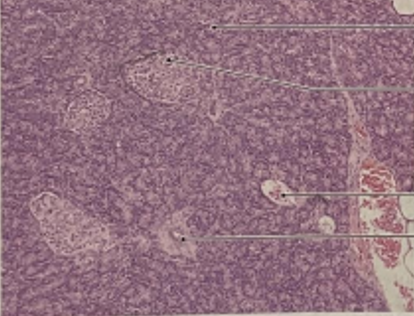
What is this microscopic image of?
pancreas
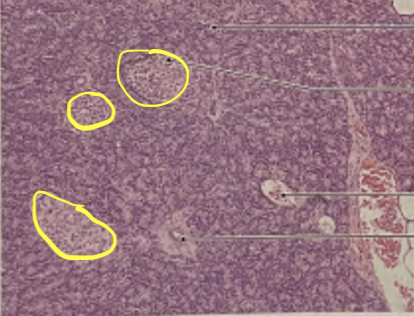
What part of the pancreas does this microscopic image show?
pancreatic islets (islet of Langerhans)
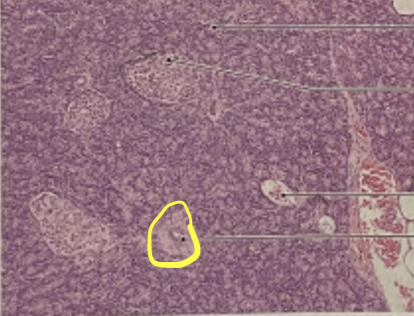
What part of the pancreas does this microscopic image show?
pancreatic duct
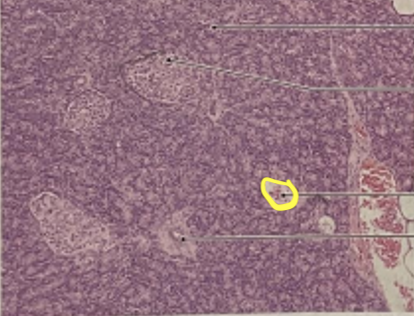
What part of the pancreas does this microscopic image show?
blood vessel
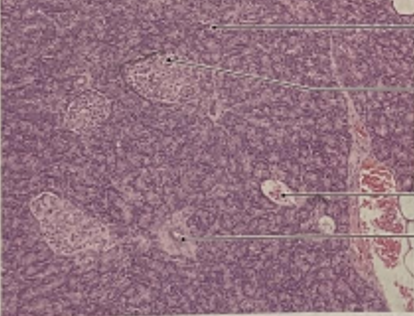
What are surrounding the pancreatic islets in this microscopic image?
pancreatic acini (exocrine cells)
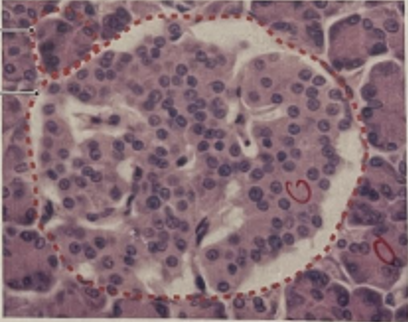
What is this microscopic image of?
magnified view of pancreatic islet with pancreatic acini surrounding it
What is the hormone present in the pituitary extract which initiates ovulation in the frog experiment?
luteinizing hormone (LH)
By using a rough (unpurified) pituitary extract, what other hormones are likely increased as well in the frog experiment & what do they do?
LH: ovulation in F
FSH: follicle stimulation in F
ACTH: stimulate adrenal cortex
TSH: stimulate thyroid for T3/T4 release
GH: rebuild faster & stronger
ADH: hold onto more water
oxytocin & prolactin: milk production & let down
MSH: skin darkening
Why must humans inject insulin, but fish respond to insulin in the water?
Insulin is a protein hormone that would be digested if taken orally in humans, so it must be injected to enter the bloodstream intact. Fish absorb insulin directly through their thin, vascular gill membranes, allowing it to diffuse into circulation from the water.
Why are early symptoms of hyperinsulinism neurological?
Excess insulin causes hypoglycemia. The brain depends on glucose for energy, so low blood glucose leads to neurological symptoms such as agitation, poor coordination, and loss of balance.
What are the physiological effects of hyperinsulinism, and why does 10% glucose reverse it?
Hyperinsulinism lowers blood glucose excessively, disrupting homeostasis and depriving the brain of energy. Placing the fish in 10% glucose raises blood glucose levels through the gills, restoring normal brain function and reversing symptoms.
List the effects of each solution added to the frog heart, paying careful attention to the strongest effect of each.
epinephrine
increases heart rate and force of contraction
stronger effect on force
acetylcholine
decreases heart rate and force of contraction
stronger effect on heart rate
hyperinsulinemia
having too much insulin in blood
hypoinsulinemia
having too little insulin in blood
hyperglycemia
high blood sugar due to glucose buildup in blood
hypogylcemic
low blood sugar due to low glucose in blood
ketone
natural energy-yielding substances produced by the liver from fat when glucose isn’t available
ketoacidosis
dangerous buildup of ketones in blood
diabetic shock
severe hypoglycemia (drop in blood glucose) from too much insulin or not enough food
diabetic coma
unconscious state from hyperglycemia (high blood sugar) to hypoglycemia (low blood sugar)
Your patient’s immune system has decided that their pancreatic beta cells look too much like the virus they contracted a few months ago and are now attacking and killing them off. When 85 to 90% of the cells have been destroyed, their insulin levels drop so low that the symptoms of diabetes mellitus appear.
Your patient reports confusion, slurred speech, lethargy, and smells of cheap wine. Alcohol is not the cause. . . what is?
Severe insulin deficiency has led to diabetic ketoacidosis (DKA)
fruity smell: acetone from ketone production & buildup
neurological symptoms: hyperglycemia, acidosis, dehydration, and electrolyte imbalance
Your patient’s immune system has decided that their pancreatic beta cells look too much like the virus they contracted a few months ago and are now attacking and killing them off. When 85 to 90% of the cells have been destroyed, their insulin levels drop so low that the symptoms of diabetes mellitus appear.
Before beginning treatment, what fuels are your patient’s cells using for energy (remember, what’s happening in the blood and in the cells can be very different!)?
Glucose cannot enter most cells even though blood glucose is high, so the body has to use fatty acids and ketone bodies for energy instead of glucose
Your patient’s immune system has decided that their pancreatic beta cells look too much like the virus they contracted a few months ago and are now attacking and killing them off. When 85 to 90% of the cells have been destroyed, their insulin levels drop so low that the symptoms of diabetes mellitus appear.
Before treatment, what is happening to their body’s fat stores?
Fat stores are being rapidly broken down via lipolysis because the body thinks it is starving. The liver converts fatty acids → ketones, leading to ketosis and metabolic acidosis
Your patient’s immune system has decided that their pancreatic beta cells look too much like the virus they contracted a few months ago and are now attacking and killing them off. When 85 to 90% of the cells have been destroyed, their insulin levels drop so low that the symptoms of diabetes mellitus appear.
What would you estimate their bodyweight to be? Normal, below normal, above normal?
Below normal
without insulin, the body breaks down fat and muscle for energy, and glucose is lost in the urine, leading to weight loss and dehydration
Why would fasting blood glucose be high?
decreased insulin → hyperglycemia
Why would blood ketones be high?
body breaking down fat to release ketones faster than body can get rid of them
Why would blood pH be low?
buildup of ketones = increased acidity
Why would hematocrit levels be high?
dehydration
Why would urine glucose be high?
too much sugar to the point where it cannot be absorbed & spills over into urine
Why would urine volume be high?
water is going with excess glucose
Why would urine pH be low?
clearing acidity from ketones → helpful because its getting higher levels out of the blood
Your patient is now being treated and takes injectable insulin on a regular schedule. They also have a medic alert bracelet. One afternoon, your patient was found unconscious. The paramedics arrived and seeing their diabetic bracelet, immediately took action. Imagine you’re in the wilderness and have to make this decision.
Considering the information on the last slide would you give them insulin or glucose?
glucose
Your patient is now being treated and takes injectable insulin on a regular schedule. They also have a medic alert bracelet. One afternoon, your patient was found unconscious. The paramedics arrived and seeing their diabetic bracelet, immediately took action. Imagine you’re in the wilderness and have to make this decision.
Why would you give glucose?
insulin could kill PT, giving more glucose has way less risk
Your patient is now being treated and takes injectable insulin on a regular schedule. They also have a medic alert bracelet. One afternoon, your patient was found unconscious. The paramedics arrived and seeing their diabetic bracelet, immediately took action. Imagine you’re in the wilderness and have to make this decision.
What two conditions could this person be experiencing?
Diabetic shock (severe hypoglycemia)
Diabetic coma (unconscious state for either hypoglycemia or hyperglycemia)
What is the number of insulin receptors controlled by?
negative feedback loop
What changes about the insulin receptors if over time there are higher insulin levels? What does this idea indicate?
overtime there are fewer and less reactive insulin receptors → Type 2 diabetes
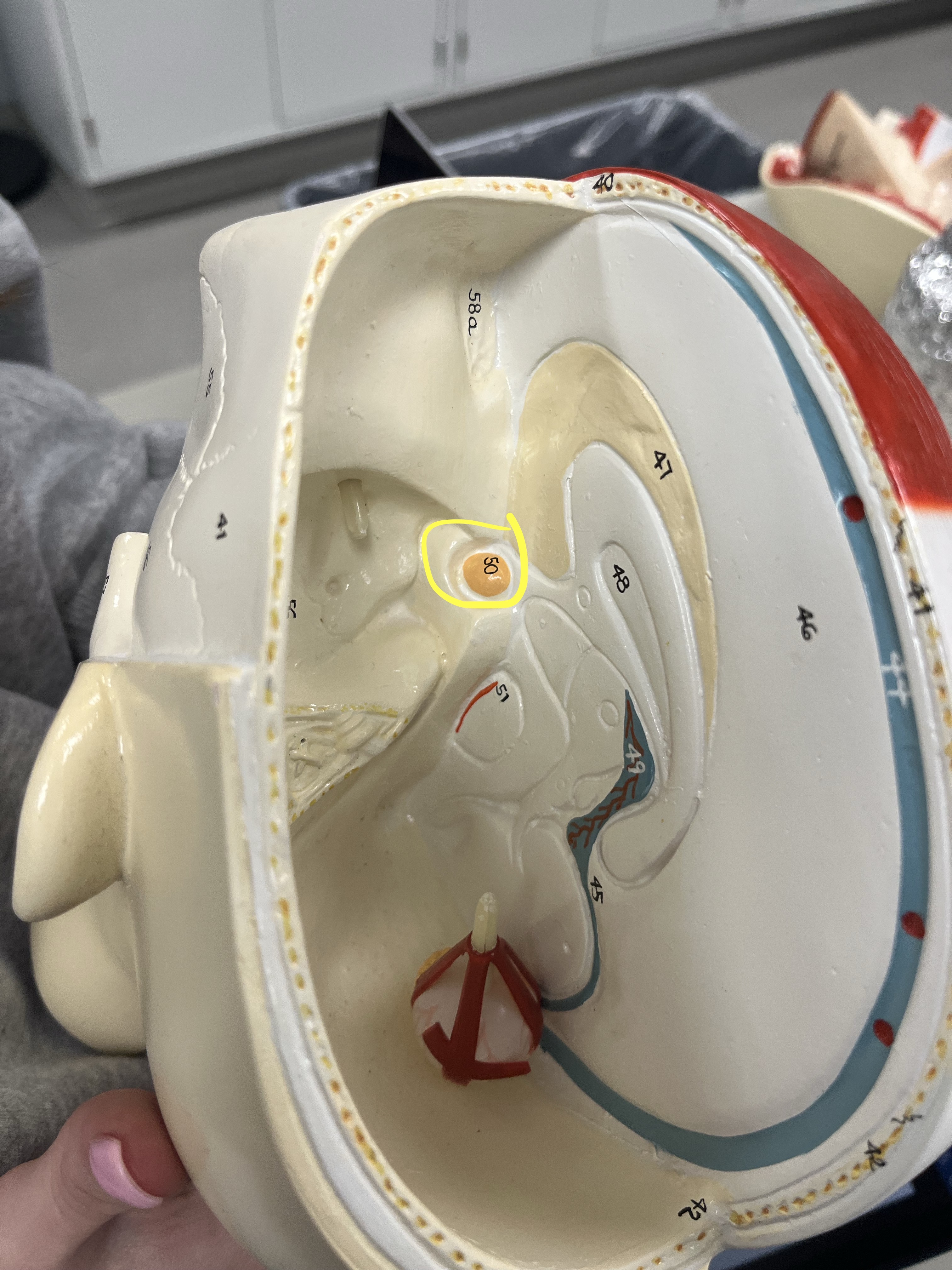
What gland does this show?
pituitary gland
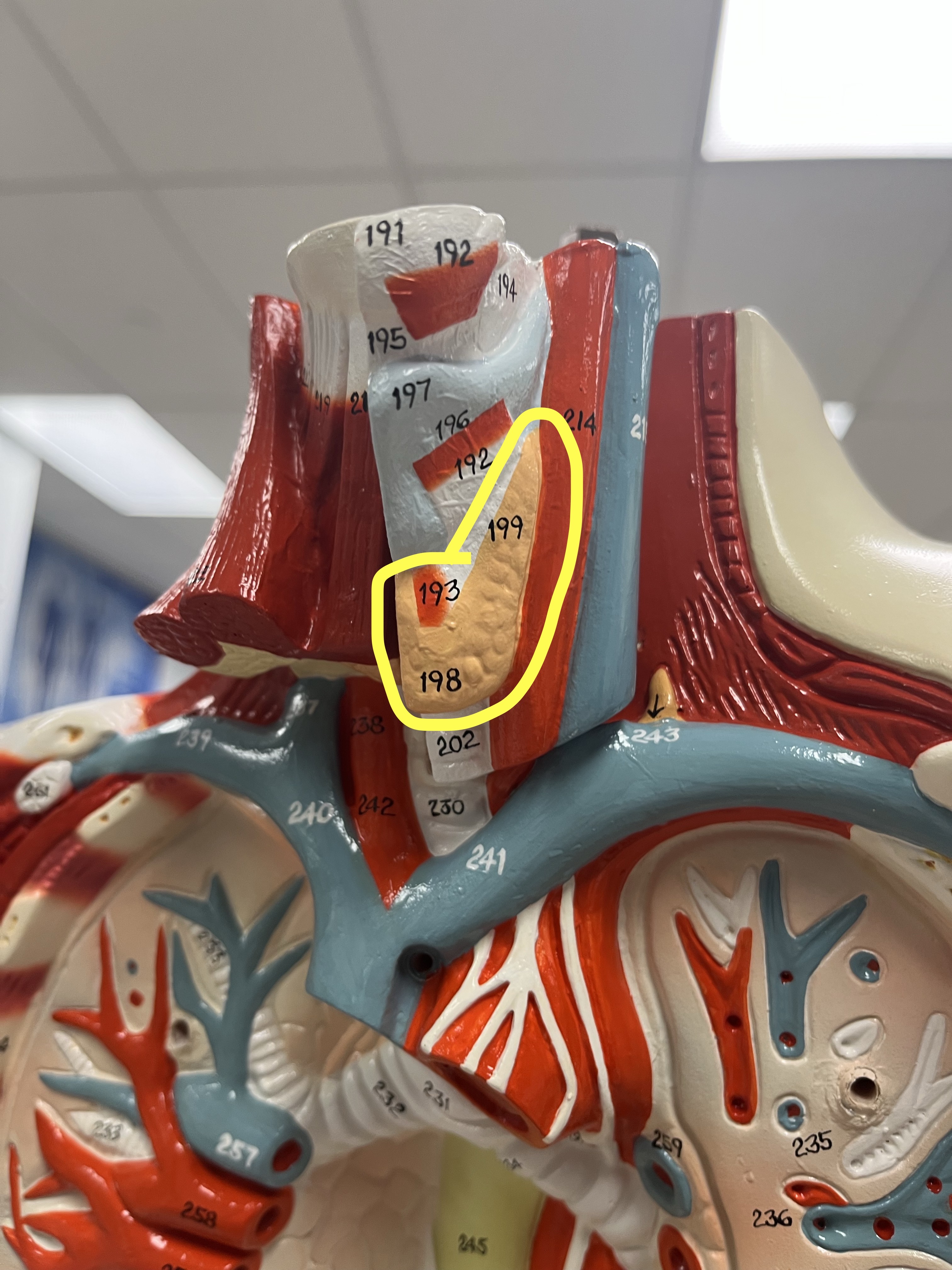
What gland does this show?
thyroid gland
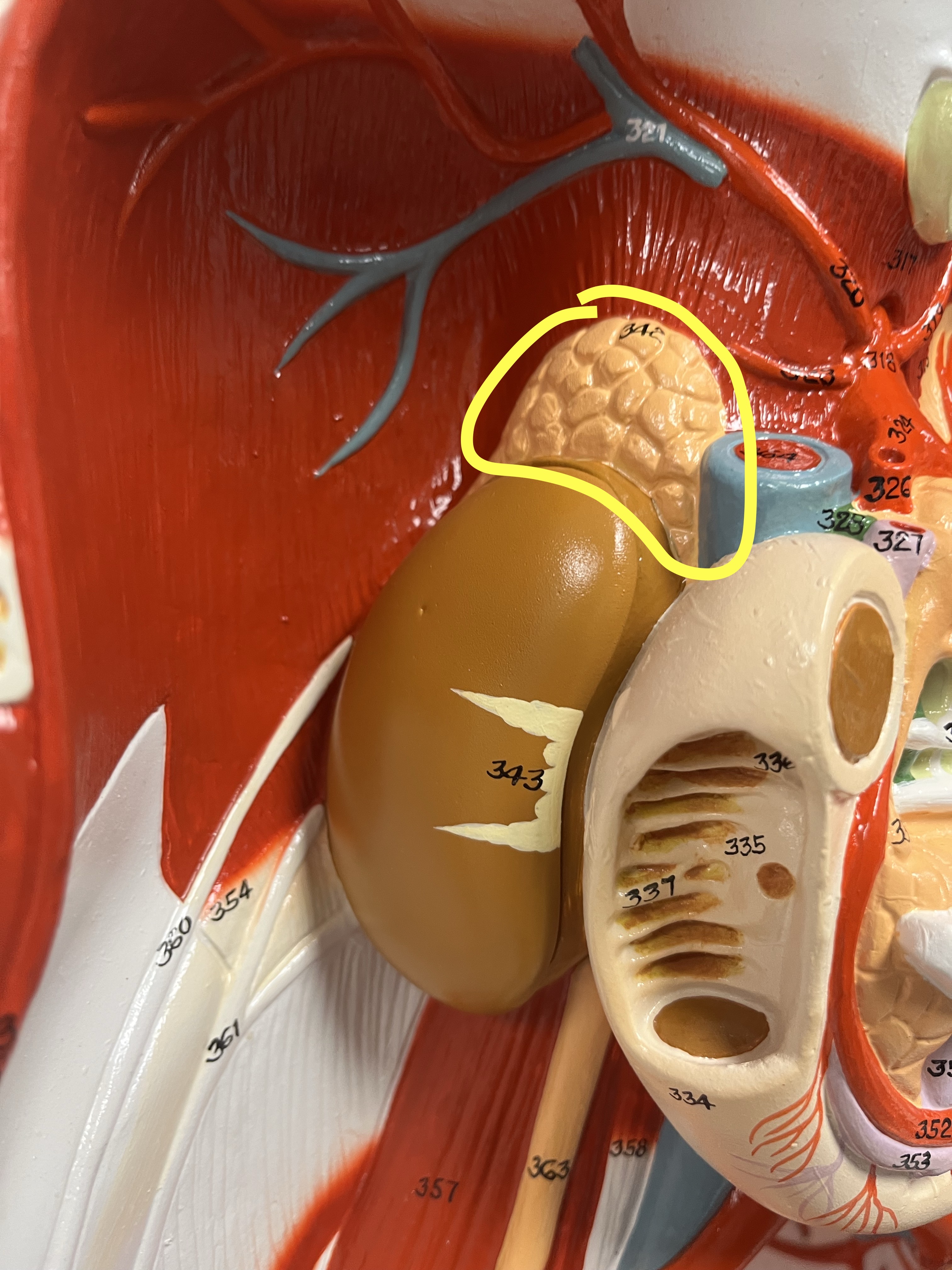
What gland does this show?
adrenal gland
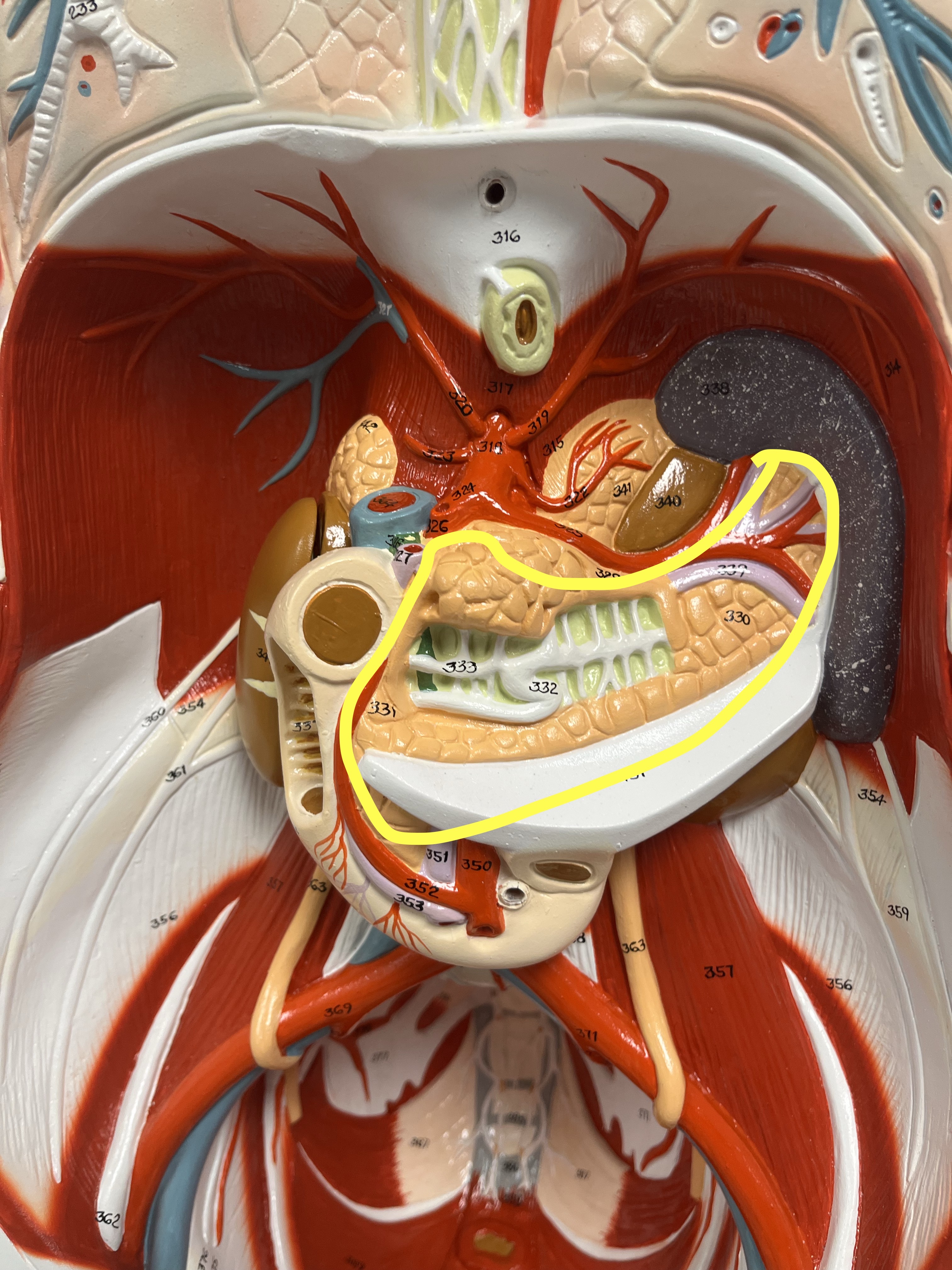
What does this show?
pancreas