CCE: Physio/Psychopharm
 Call Kai
 Learn
Learn Practice Test
 Spaced Repetition
 Match
Match Flashcards
 Knowt Play
1/182

There's no tags or description
Looks like no tags are added yet.
Name | Mastery | Learn | Test | Matching | Spaced | Call with Kai | Chat |
|---|
No analytics yet
Send a link to your students to track their progress
183 Terms
What is achromatopsia? what are different types?
(congenital) achromatopsia = inherited; complete 🚫🌈 color vision via lack of functioning CONE🍦cells
central (cerebral) achromatopsia = complete 🚫🌈color blindness from lesion (usually occipitotemporal region)
What is agnosia?
inability to name a common or familiar object, attribute, or action
associated w/ Broca's
What is agranulocytosis?
serious BLOOD disorder (unusually low # granulocytes, a type of white blood cell)
can get from taking carbamazepine (Tegretol)
What is akathisia?
reduction or absence of spontaneous movement ("cruel restlessness"); inability to sit still
[a·kuh·thee·zee·uh]
What is akinesia?
"a" = without
"kinesis" = movement
associated w/: antipsychotics
What is anomia?
"tip-of-the-tongue" phenomenon...
= without a name
can't RETRIEVE the word you're looking for (you know what you want to say)
can happen standalone or as symptom of aphasia
CAUSES:
What is anosognosia?
inability to recognize one's own neurological disorder
What are anticholinergic effects?
dry mouth, slurred speech, blurred vision, urinary retention, sex dysfunction
happens when a med BLOCKS the ACTION of ACETYLCHOLINE
CAN GET FROM:
- trad antipsychotics -- chlorpromazine (thorazine), fluphenazine (prolixin), thiothixene (narvane), haloperidol (haldol)
- TCAs: imipramine (trofranil), clomipramine
- MAOIs: phenelzine
What is aphasia?
impairments in PRODUCTION and/or COMPREHENSION of language as a result of brain damage
What does nicotine imitate the action of?
acetylcholine
What do opiates imitate the action of?
endorphins
What does alcohol do?
suppresses the release of glutamate and enhances GABA
Broca's aphasia
- aka: expressive, motor, & nonfluent aphasia
- cause? damage to Broca's area (usually LEFT FRONTAL lobe)
SYMPTOMS:
--> hard, slow, & difficult to speak; dysprosody (lacks intonation); anomia (inability to name familiar object, attribute, action); 🚫trouble w/repeating phrases (esp prepositions, conjunctions)
--> ✅insight (so frustration, anxiety, depression)
--> usually, comprehension mostly in tact (only lil impaired)✅
Broca's = "bro can't speak"
they know what they're trying to say, they just can't 🚫get it out in the way they're trying to
Wernicke's aphasia
- aka: receptive, impressive, sensory, & fluent aphasia
- cause? damage to Wernicke's area (located temporal lobe)
SYMPTOMS:
- 🚫trouble understanding 📝written & 🗣️spoken language & generating meaningful
- seems effortless, but it's devoid of content content
- usually anomia, paraphasia (substitution of words related in sound/meaning to intended words; ("paraphrase"-ia)), & probs w/repetition
- often 🚫unaware speech meaningless
- E.G., man in green shirt --> their intonation is so in tact you can almost tell what they're trying to say, it's just replaced by random words
What is conduction (associative) aphasia?
- caused by damage to arcuate fasciculus (which is connected to Broca's & Wernicke's area)
SYMPTOMS:
- ✅ comprehension - doesn't significantly affect comprehenion
- like Wernicke's -but does cause anomia, paraphasia, & impaired repetition (i.e., like Wernicke's
What is global aphasia?
- more widespread than Broca's, Wernicke's, or conduction aphasia
What is apraxia?
inability to perform skilled motor movements (in absence of impaired motor func.)... i.e., the hardware works, the software doesn't
What is asomatognosia?
failure to recognize parts of one's own body
e.g., feel like your leg is not your own
What is ataxia?
🚕aTAXIa 🚕 = can't TAXI around
aTAXIa = can't communicate (slurred speech), stand up (balance), or drive straight (severe tremors)
What is dysprosody?
speech poorly articulated & lacks intonation, rhythm, & stress(ed syllable) of speech
associated w/Broca's aphasia
What is Gerstmann's Syndrome?
☝️finger agnosia, R-L confusion, 📝agraphia, acalculia (can't maths)
What is paresthesia?
pins & needles feeling
can be side effect of TCAs
What is neuroleptic malignant syndrome (NMS)?
- rare, but potentially fatal side effect of antipsychotic drugs
- invovles rapid onset of motor, mental, & autonomic symptoms --> including: muscle rigidity, autonomic dysfunction, hyperthermia, tachycardia, & altered consciousness
can happen from:
- STARTING: DOPAMINE-BLOCKING
(trad antipsychotics)
- STOPPING DOPAMINE-INCREASING (dopamine increasing) meds
What is tardive dyskinesia?
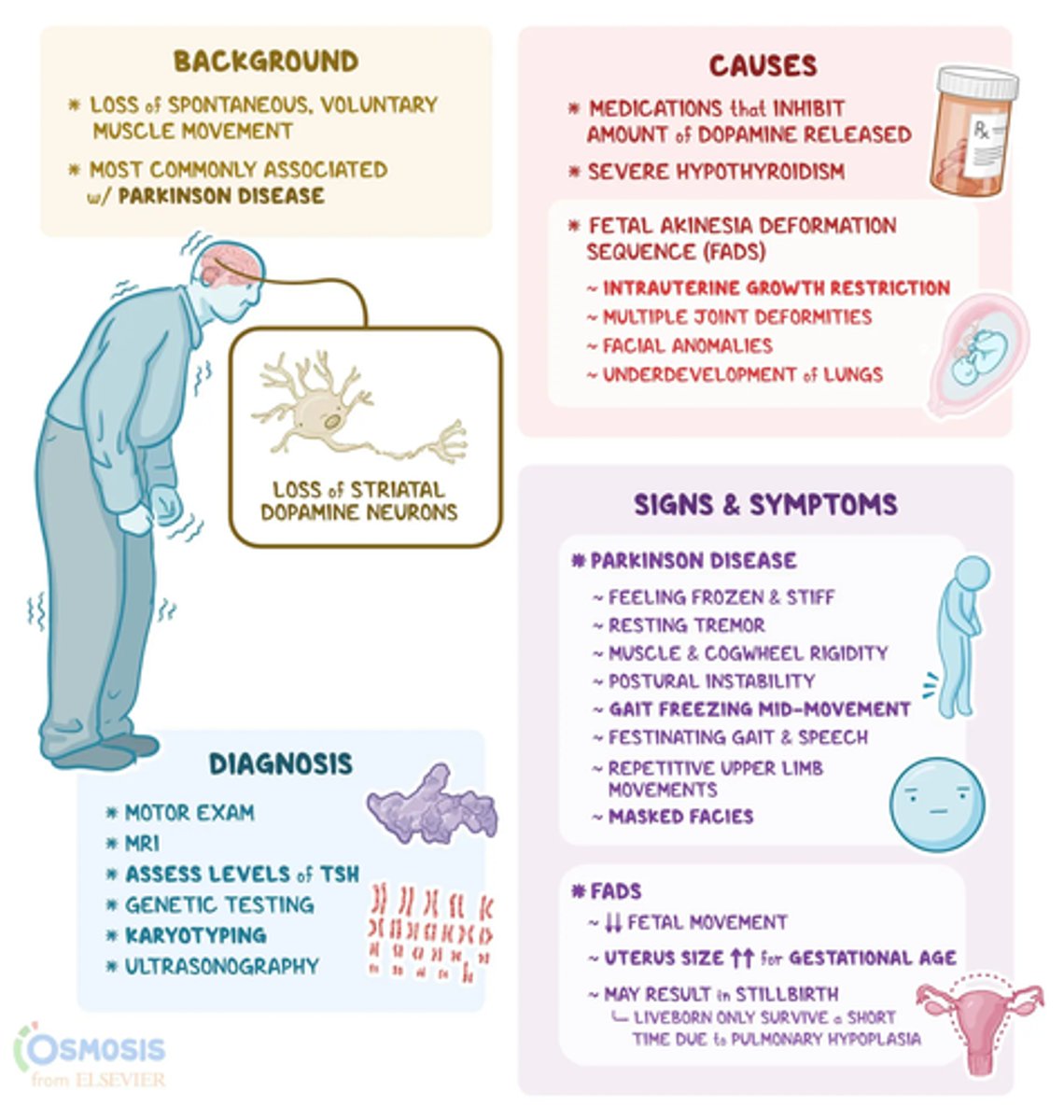
Parkinson's-like sx's -- involuntary, repetitive mvmts (face, limbs, torso); potentially PERMANENT
- can be from long-term use of anti-psychotics (dopamine agonists)
most SEVERE symptom risk w/traditional antipsychotics (bc act on dopamine)
What is prosopagnosia?
inability to recognize FAMILIAR FACES
What is synesthesia?
"joining senses"
rare condition where stimulating one sense triggers a sensation in another sense
What is visual agnosia?
can't PERCEIVE objects, even though you CAN SEE
Describe a neuron. What are the 3 components? What's the process of an action potential? What is the all-or-none principle?
1. neuron structure:
- DENDRITES = branch-like, RECEIVE info & pass to axon)
- CELL BODY = think regular cell - includes nucleus, mitochondria, ribosomes & Golgi complex
- AXON = TRANSMITS info from cell body to other cells
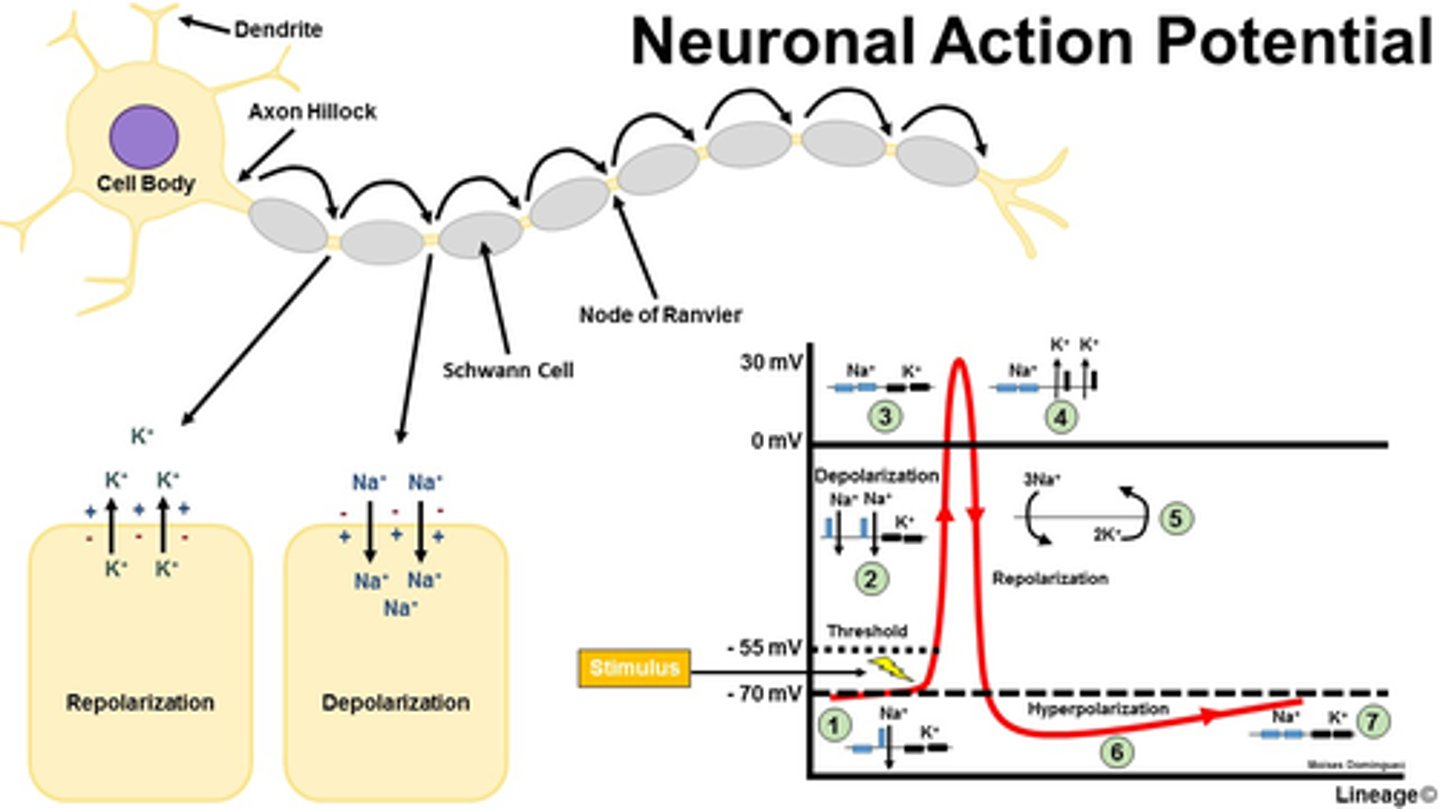
2. action potential:
1) when sufficient stimulation, Na+ channels open (causing ➕charged ions to flow in) -- depolarization
2) repolarization = "pumpkin" --> Na+ CLOSE; K+ channels OPEN; positively charged K+ ions leave
3) refractory period = cannot refire during this time
3. all-or-none principle: once stimulation exceeds the threshold, resulting action potential always same intensity
What are neurotransmitters?
chemical messengers that cross the synaptic gaps between neurons
What is Acetylcholine (ACh)? What is it involved in?
- throughout peripheral & central nervous system
- acts on 2 receptors: muscarinic & nicotinic
- effect = causes MUSCLES to CONTRACT
involved in: REM sleep, regulation of sleep-wake cycles, learning & memory
also:
1. Alzheimer's: DEGENERATION of cholinergic (ACh) cells (in entorhinal cortex & other areas that communicate directly with/hippocampus) believed to UNDERLIE MEMORY EFFECTS in ALZHEIMER'S
--> drugs used to SLOW this DOWN: tacrine (Cognex), donepezil (Aricept), galantamine (Reminyl), & rivastigmine (Exelon)
2. Myasthenia gravis: autoimmune disorder that attacks ACh receptors @ neuromuscular junctions..... effect: severe weakness of skeletal muscles
What is dopamine?
- catelcholamine, like norepinephrine & epinephrine
- involved in: personality, mood, memory, sleep; also involved in regulation of movement
- LINKED TO: dopamine hypothesis (schizophrenia linked to elevated dopamine levels or hypersensitivity of receptors); Tourette's (oversensitivity/excessive dopamine in CAUDATE NUCLEUS) & Parkinson's (degeneration of dopamine receptors @ SUBSTANTIA NIGRA causes tremors, muscle rigidity, & other motor sx's)
What is norepinephrine? What does it do & what is it implicated in?
- neurotransmitter
- function: important role in mood, attention, dreaming, learning, & some autonomic functions
- catelcholamine hypothesis (says some forms of depression due to lower-than-normal levels)
What is serotonin (5-HT)?
- NT usually exerting an inhibitory effect
- function: involved in mood, hunger, temperature regulation, sex activity, arousal, sleep, aggression, & migraine headache
- ELEVATED levels ==> contribute schizophrenia, Autistic Disorder, & food restriction in Anorexia
(think abt MDMA effects.... hallucinatory effects, DON'T want food, get really hot/sweaty...)
- LOW levels ==> aggression, depression, suicide, bullimia nervosa, PTSD, OCD
- abnormalities maybe also contribute to social phobia
What is Gamma-Aminobutyric Acid (GABA)?
- INHIBITORY neurotransmitter
- involved in: eating, seizure, anxiety disorders, motor control, vision, & sleep
- evidence for role in motor control: bc of research finding deterioration of GABA-secreting cells in BASAL GANGLIA ---contribute to---> motor sx's of HUNTINGTON'S
- LOW levels ==> linked to anxiety disorders (bc low GABA means you don't have the thing that calms down the system)
.... this is why benzo's & other CNS depressants reduce anxiety; they're ENHANCING effects of GABA (i.e., GABA agonists))
What is glutamate?
- an excitatory NT in many areas of the brain
- involved in: learning & memory (LONG-TERM POTENTIATION) (i.e., brain mechanism implicated in long-term memory)
- 🔑 word: EXCITOTOXICITY (excessive activity that can lead to seizures
what are endorphins?
- endogenous morphines;
- inhibitory neuromodulators
- analgesic properties
- theorized to work bc of substance P (involved in transmission of pain impulses)
Describe the structure of the spinal cord.
(A) SEGMENTS:
1. Cervical
2. Thoracic
3. Lumbar
4. Sacral
5. Cocyggeal
(B) Quadriplegia vs. Paraplegia:
- quadriplegia = loss of sensory/motor func. in arms & legs
- paraplegia = loss of sensory/motor func. in legs
How are the brain and spinal cord protected? Describe the meninges. What's important to know about cerebral ventricles?
(A) Meninges = dura mater, arachnoid, pia mater;
--> cerebrospinal fluid (CSF) between in subarachnoid (btw arachnoid & pia mater)
(B) cerebral ventricles/hydrocephalus:
- hydrocephalus --> blocked CSF flow ➡️ fluid build-up ➡️ enlarged ventricles
- enlarged ventricles --> Schizophrenia
Describe the peripheral nervous system (PNS).
CNS = brain & spinal cord
PNS = everything else
includes:
1. somatic nervous system (SNS): governs voluntary activity; includes sensory & motor nerves
2. Autonomic Nervous System (Sympathetic & Parasympathetic Branches): primarily involuntary (can be voluntary w/hyponsis, biofeedback, etc.); convey signals from receptors in viscera to CNS & CNS to smooth, cardiac (heart, bc involuntary) & glands
2a) Parasympathetic NS: rest & digest; CONSERVATION of energy
2b) Sympathetic NS: arousal, EXPENDITURE of energy; "fight or flight"
Describe the development of the CNS.
CNS Development
1. Proliferation
2. Migration
3. Differentiation
4. Myelination
5. Synaptogenesis
CNS development: proliferation
is the production of new cells. Early in development (@ ~2.5 weeks), cells lining the ventricles of the brain divide.
CNS development: migration
the directed movement of a single or group of cells toward their eventual destination in the brain after proliferation occurs.
CNS development: differentiation
Cells develop axons and dendrites; no longer look like other cells
CNS development: myelination
After axons form, This is the formation of the myelin sheath. Myelin sheaths are made of myelin, and myelin is produced by different types of neuroglia.
Glial cells create an axon sheath.
CNS development: synaptogenesis
the formation of synapses that continues throughout life
This is influenced by endogenous and non-endogenous factors.
How are the spinal cord & brain evaluated?
1. evaluation of spinal cord:
A) spinal X-ray - initial, diagnostic; bone-related injuries (fractures, dislocations)
B) MRI - soft tissue
1c) CT w/myelogram - (uses dye) more detailed info
C) EMG, SSEP
2. neuroimaging techniques:
STRUCTURAL = CT/CAT & MRI
FUNCTIONAL = PET, SPECT, fMRI
--> PET - for dementias, but can be negative in first stages
--> SPECT - lower res
--> fMRI - blood oxygenation
Describe the hindbrain
- medulla: brain, spinal cord info flow; 😮💨,🫀,🩸(BP), swallowing, coughing, sneezing; damage deadly
- cerebellum:
-- connected by pons
-- balance, posture, &
refined motor mvmts (along w/basal gang & motor cortex); sen
-- movement:
basal ganglia = initiates, cerebellum = timing & coordination
-- (cerebellum) damage = ataxia (slurred speech, severe tremors, loss of balance), autism, schizophrenia, ADHD
aTAXia = can't stand up (balance), communicate (slurred speech), or drive straight (tremors)
...like if DRUNK (cerebellum = alc damage cerebellum)
Describe the midbrain. What goes on here?
ALL INFO from
BRAIN --medulla--> spinal cord
- superior (visual) & inferior (auditory) colliculi
- substantia nigra = motor activity, brain's reward system
- reticular formation = through hind-, mid-, & forebrain; 🫁,😮💨, 🤮, 🧘♀️(posture), 🦿(locomotion), 💤REM;
--> reticular activating system (RAS) = consciousness, wakefulness, arousal; screens & wakes when higher power needed online... damage this and you're in a ✨🥕coma🥦✨
Brain structures located in the forebrain?
1. thalamus
2. hypothalamus
3. basal ganglia
4. limbic system
5. hippocampus
What is the function of the thalamus? Effects of damage to it?
is a "relay station" for all the senses (except 👃), also involved in language & memory
--> associated w/Wernicke-Korsakoff syndrome (i.e., thiamine deficiency via atrophy of neurons in thalamus & mammilary bodies in hypothalamus); caused by chronic alcoholism deficiency; from 🍺🍷; d/o starts w/Wernicke's encephalopathy (confusion, weird 👁️mvmts, & ataxia
What is Wernicke-Korsakoff syndrome?
a disorder caused by thiamine deficiency (via atrophy of neurons in thalamus & mammilary bodies in hypothalamus)
caused by alcoholism
STARTS W/Wernicke's encephalopathy, THEN Korsakoff syndrome
What is Wernicke's encephalopathy?
It's the start of Wernicke-Korsakoff syndrome;
- mental confusion
- abnormal eye movements
- ataxia (slurred speech, severe tremors, loss of balance)
What is the function of the hypothalamus? Effects of damage to it?
for homeostasis --> controls autonomic nervous system (body temp, movement) & endocrine glands, mediates basic drives (hunger/thirst, sex), & emotional expression (anger)
damage? can vary; but maybe uncontrollable laughter, intense rage & aggression
What's the suprachiasmatic nucleus? What does it do?
located in hypothalamus; regulates sleep-wake, circadian rhythms; maybe associated w/ seasonal affective disorder
What's the funciton of the basal ganglia? Effects of damage to it?
planning, organizing, voluntary movement (amplitude, direction); species-specific motor
--> (forebrain) caudate nucleus + putamen + globus pallidus
--> (midbrain) substantia nigra
--> species-specific motor
--> SMALLER-than-normal => ADHD
* associated w/Huntington's
What's the funciton of the limbic system? Effects of damage to it?
primarily, MEDIATIATING EMOTIONS; incudes HAC (hippcampus, amygdala, & cingulate cortex)
AMYGDALA = integrates, coordinates, & directs motivational/emotional activities; attaches emotions->memories; recall of emotionally-charged experiences
--> Kluver & Bucy => apes w/damaged amygdalas --> ⬇️fear, aggression; "psychic blindness" (Kluver-Bucy syndrome)
What's the funciton of the hippocampus? Effects of damage to it?
learning & memory; processing spatial/visual VISUAL, & verbal info; consolidating declarative memories (short-term➡️long-term)
What brain areas are part of the limbic system?
HAC:
1. Hippocampus
2. Amygdala
3. Cingulate cortex surrounds corpus callosum; attention, emotion, & 😩SUBJECTIVE exp. of PAIN (emotional responses to pain stimuli)
hippocampus
is a limbic system structure that is important for spatial and explicit memory and the consolidation of declarative memories.
amygdala
a substructure of the limbic system and is involved in the control of emotional activites, including the mediation of defensive-aggressive behaviors and the attachment of emotions to memories
Bilateral lesions in this and temporal lobes of primares produces Kluver-Bucy Syndrome.
integrates, coordinates, & directs motivational and emotional activities. It attaches emotions to memories and is involved in the recall of emotionally-charged experiences
cingulate cortex
surrounds the corpus callosum. It is involved in attention, emotion, & the subjective experience of pain (emotional responses to pain stimuli)
Kluver-Bucy Syndrome
characterized by reduced fear and aggression, increased docility and compulsive oral exploratory behaviors, altered dietary habits, hypersexuality, and "psychic blindness" (an inability to recognize the significance or meaning of events or objects).
Stems from damage to the temporal lobe, particularly the amygdala and hippocampus.
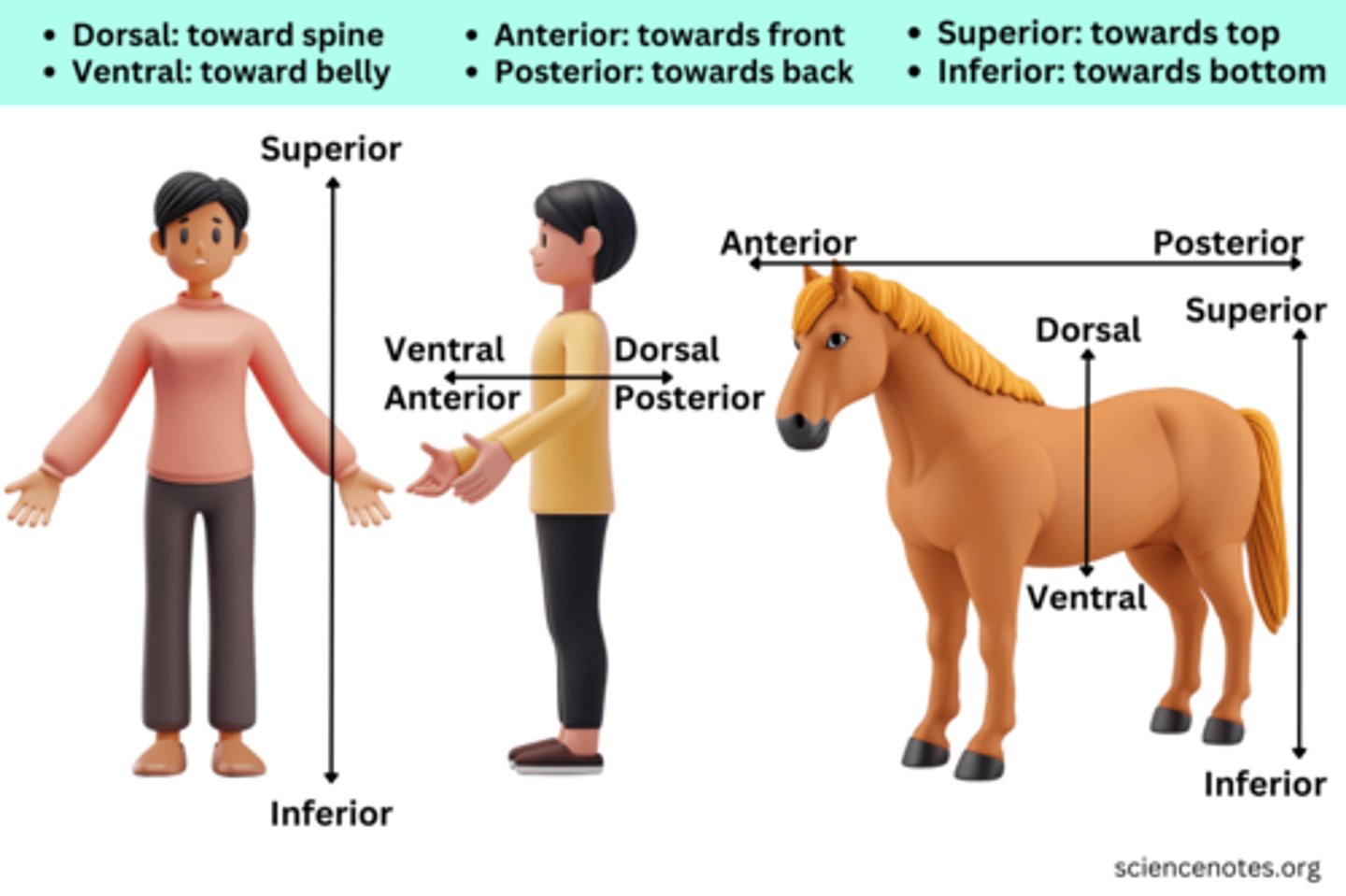
superior vs. inferior, dorsal vs. ventral, anterior vs. posterior
superior vs. inferior - superior: towards top; inferior: towards bottom
dorsal vs. ventral - dorsal: toward spine; ventral: toward belly
anterior vs. posterior - anterior: toward front; posterior: toward back
Describe the forebrain: cortical structures.
1. contralateral representation
2. brain lateralization
3. corpus callosum
4. Frontal lobe
5. Parietal lobe
6. Temporal lobe
7. Occipital lobe
contralateral representation
where the right side controls/receives information from the left side and the left side of the brain controls/receives information from the right side of the visual field.
An exception to this is olfaction (smell).
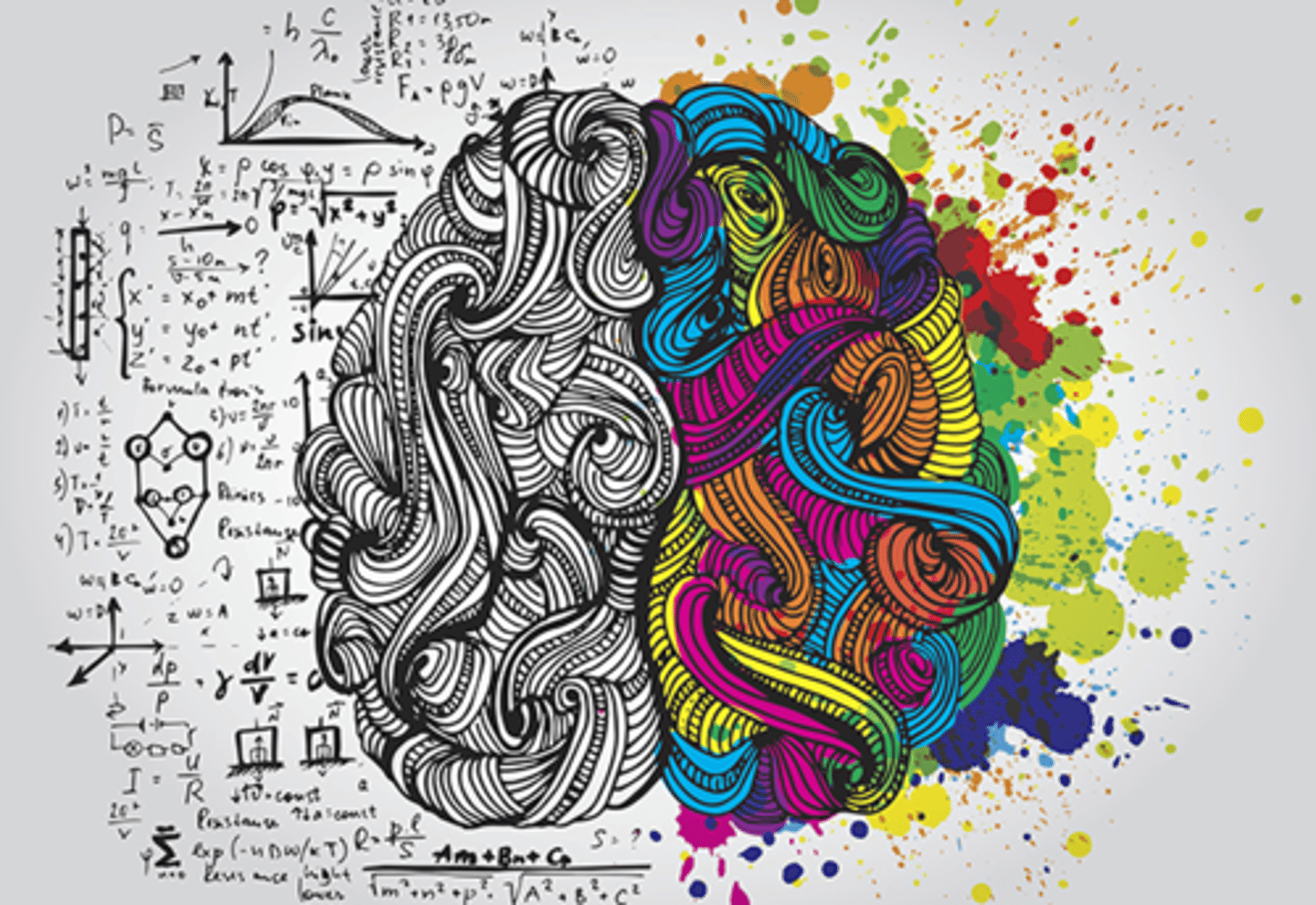
brain lateralization
is brain specialization, or the idea that different sides of the brain perform different functions.
The left side deals with written and spoken language and analytical or logical analysis.
The right side deals with artistic abilities, spatial information, and face recognition.
corpus callosum
bridges the left and right hemispheres. When this is severed, the two sides function independently (creating a split-brain patient).
Split-brain patients are not able to name or identify things in the left visual field. They also cannot use their right hand to draw or write out information from left visual field (because this would require communication across the hemispheres).
However, they can name and identify information in the right visual field because their language centeres (Broca's, Wernicke's) are located in the left hemisphere. While they can't use their left-hand to write this out (bc would require cross-hemisphere communication), they can use their right hand.
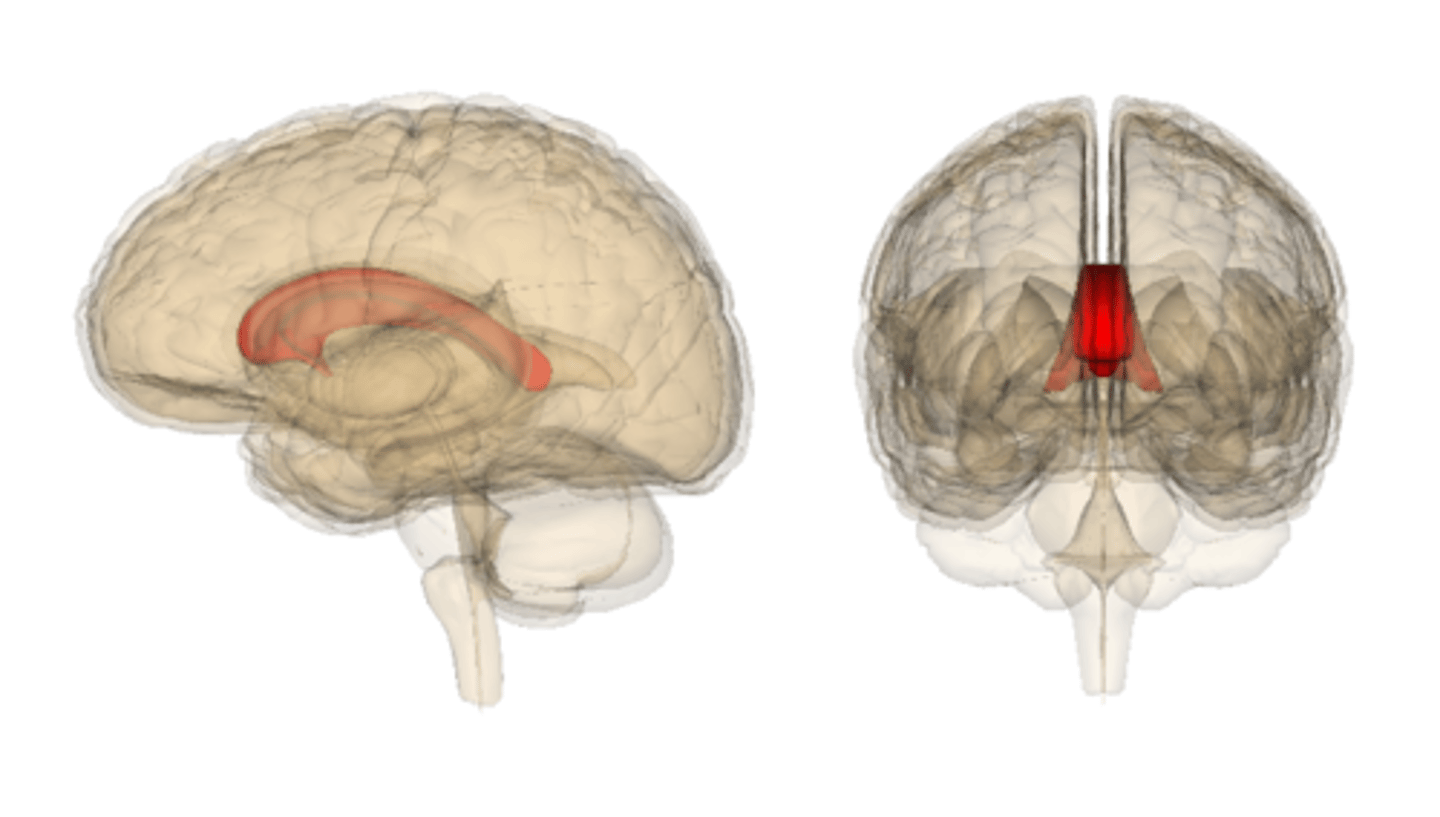
Frontal lobe
Deals with executive functions.
Includes: the primary motor cortex (precentral gyrus; moevement executor), supplementary motor area (SMA), premotor cortex, Broca's area, & the prefrontal cortex.
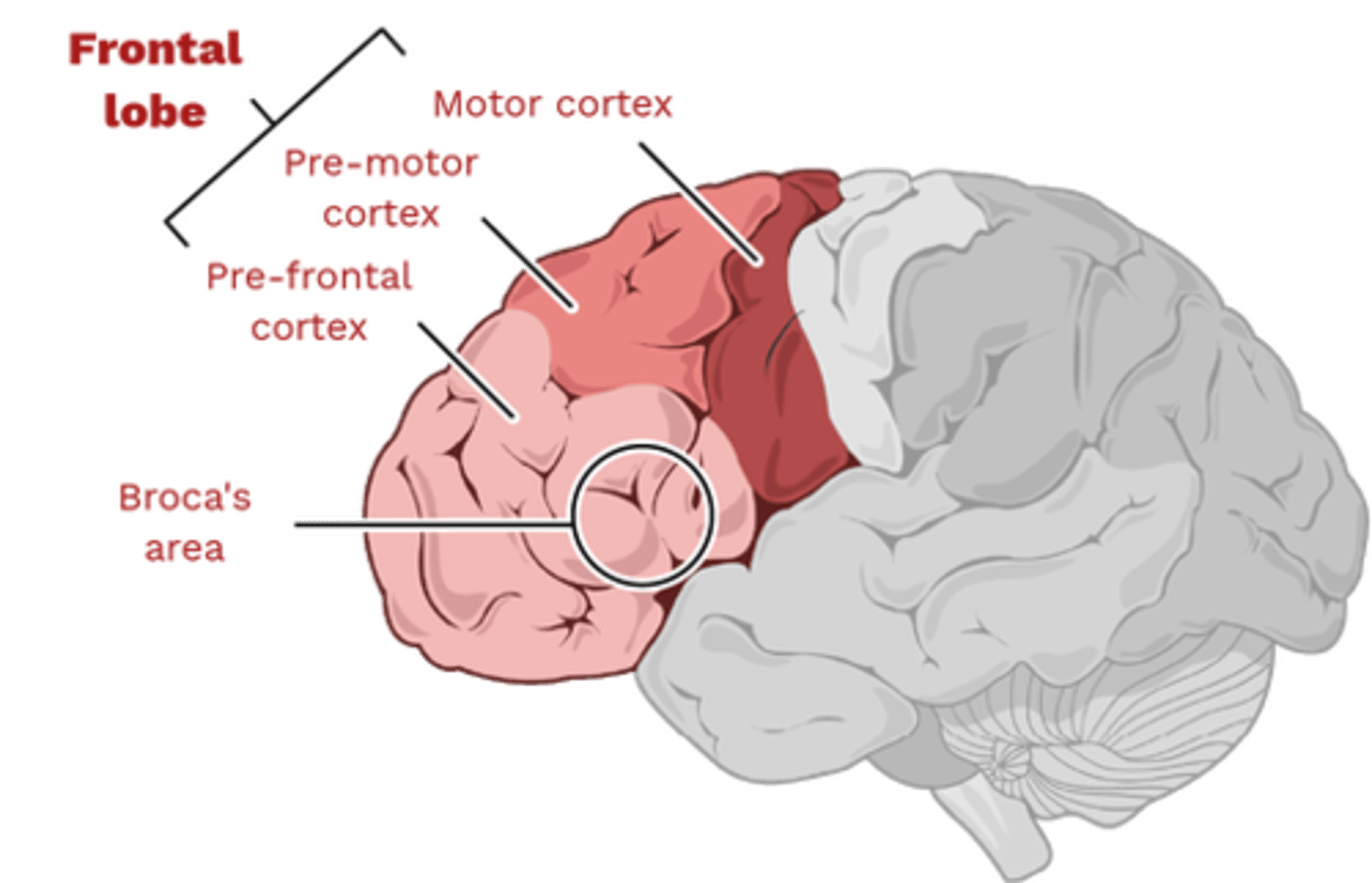
supplementary motor area (SMA)
Is involved in the planning and control of movement. It works w/other areas to create mental representations of movement.
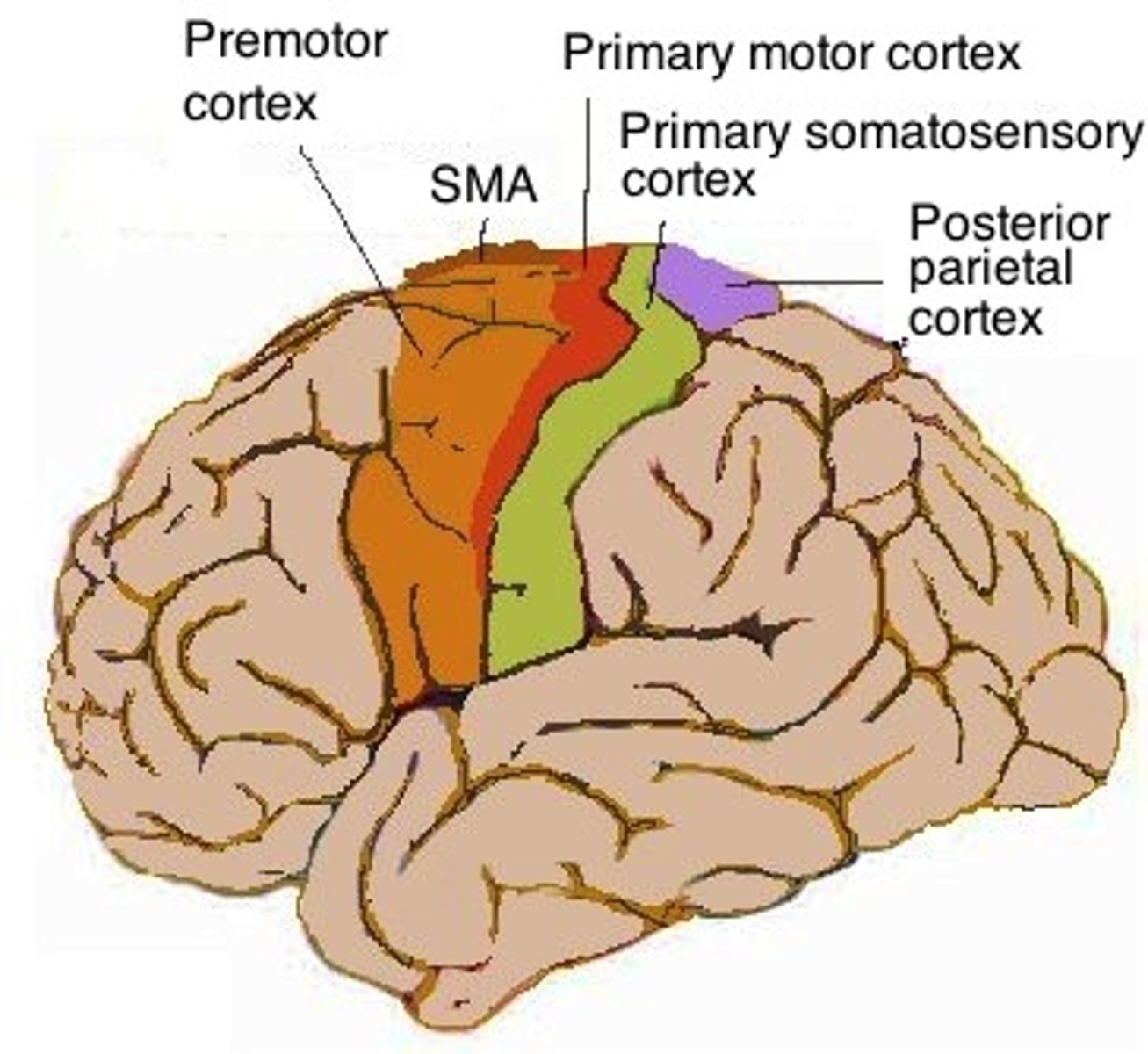
premotor cortex
is anterior to (in front of) primary motor cortex; responsible for the control of movement in response to external stimuli.
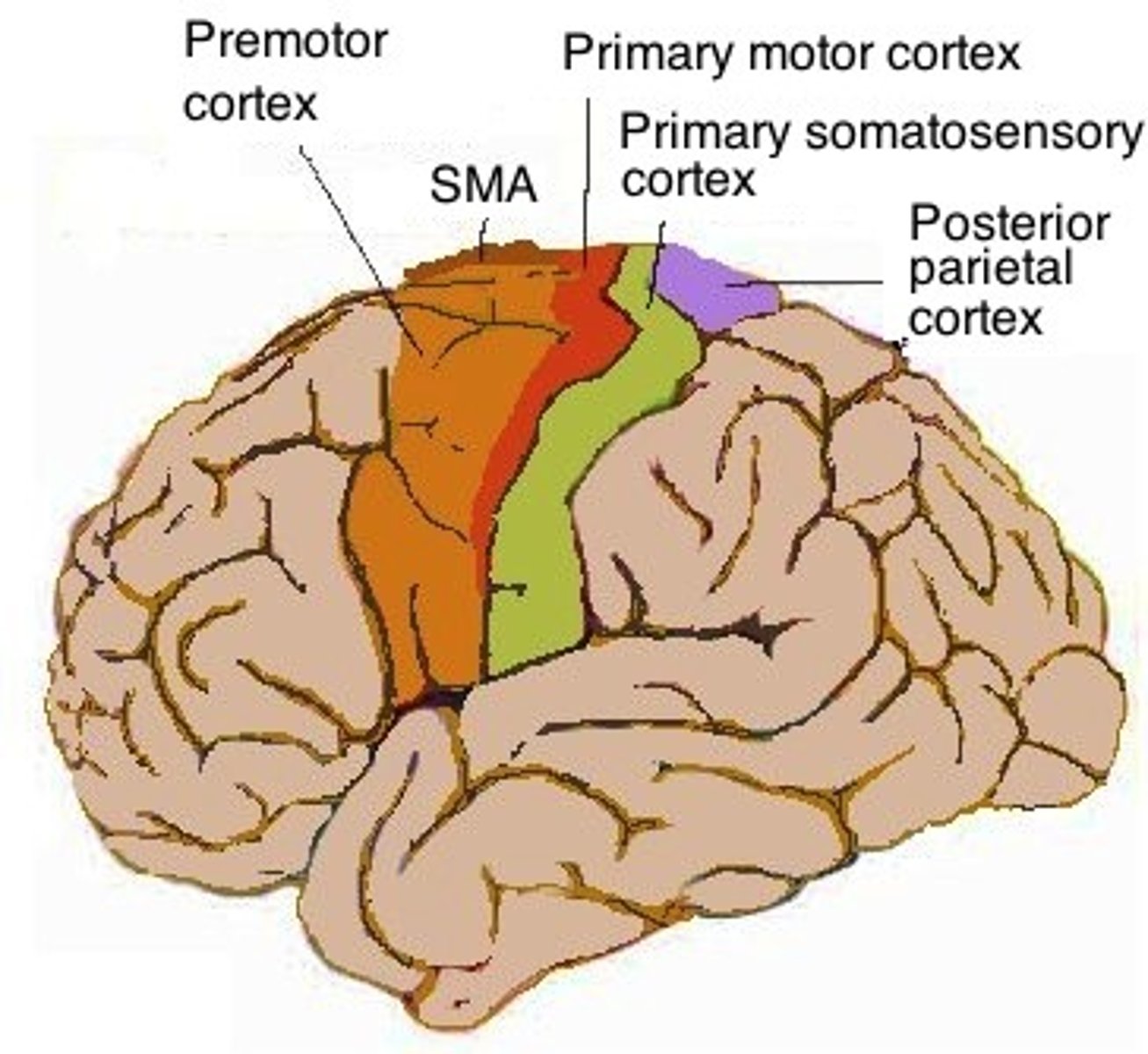
Broca's area
Controls language expression - an area of the frontal lobe, usually in the left hemisphere, that directs the muscle movements involved in speech.
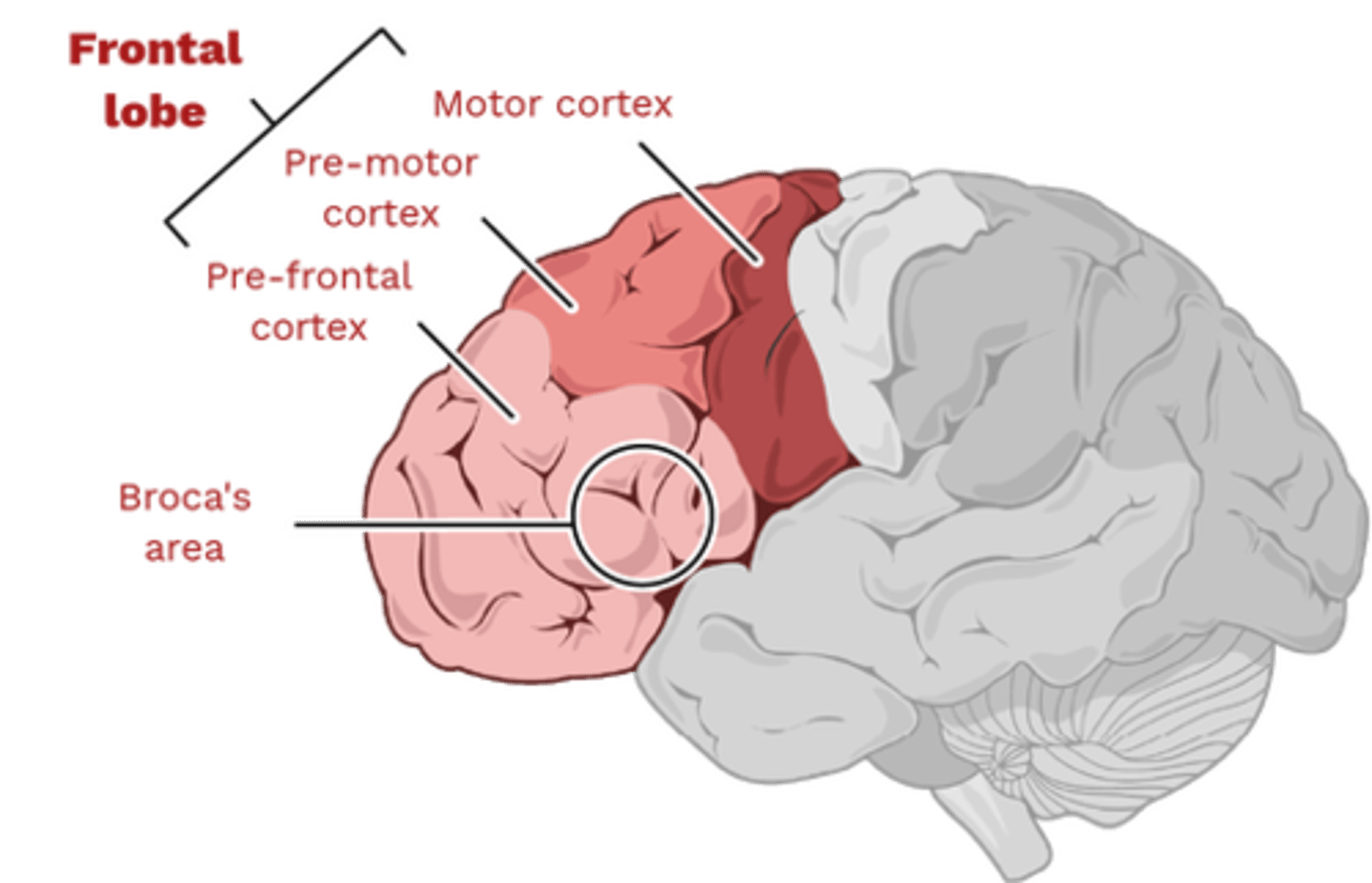
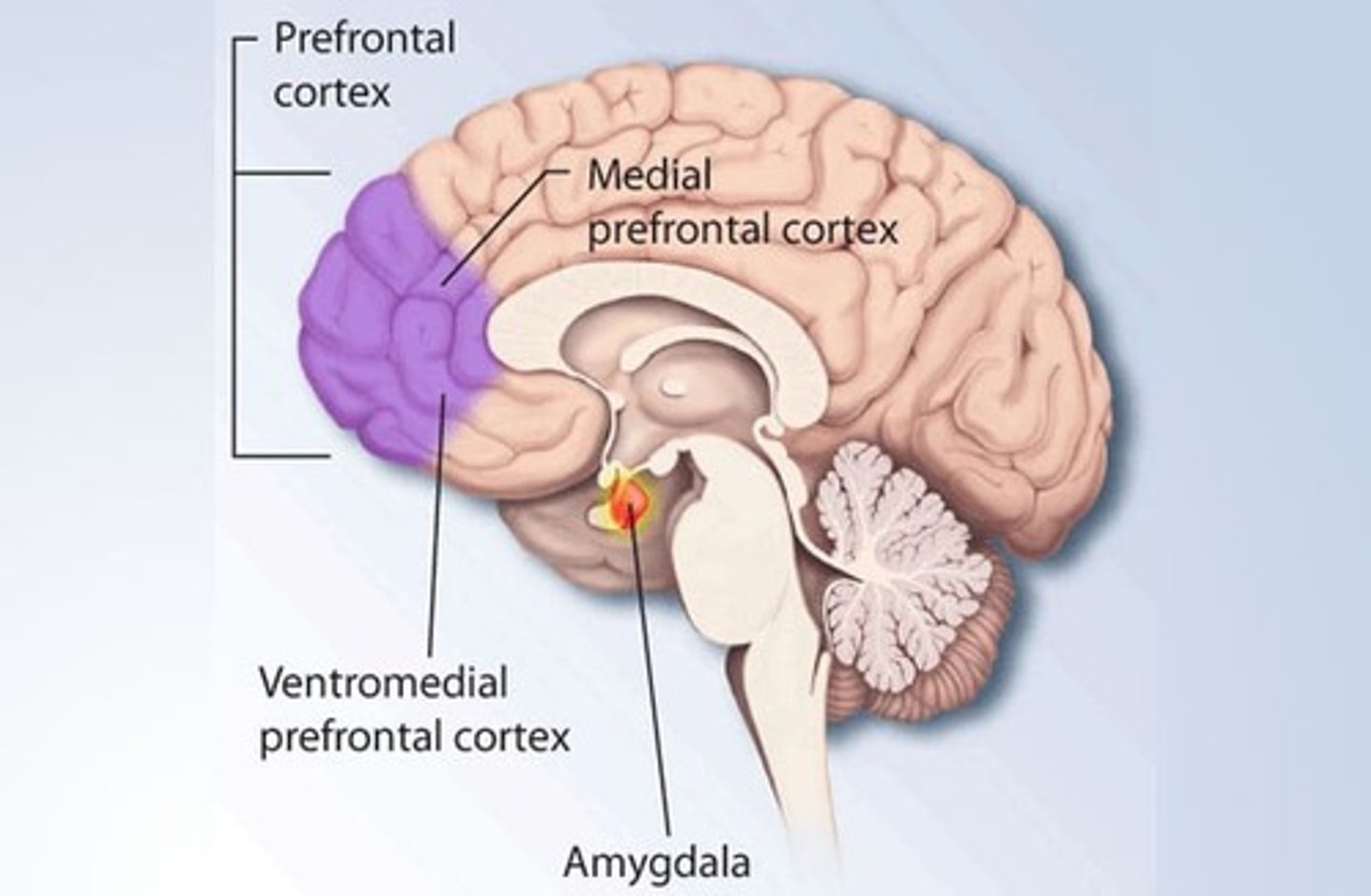
prefrontal cortex
is involved in complex behaviors (emotion, memory, attention, self-awareness, higher-order cognition).
includes the dorsolateral, orbitofrontal, and mediofrontal cortexes.
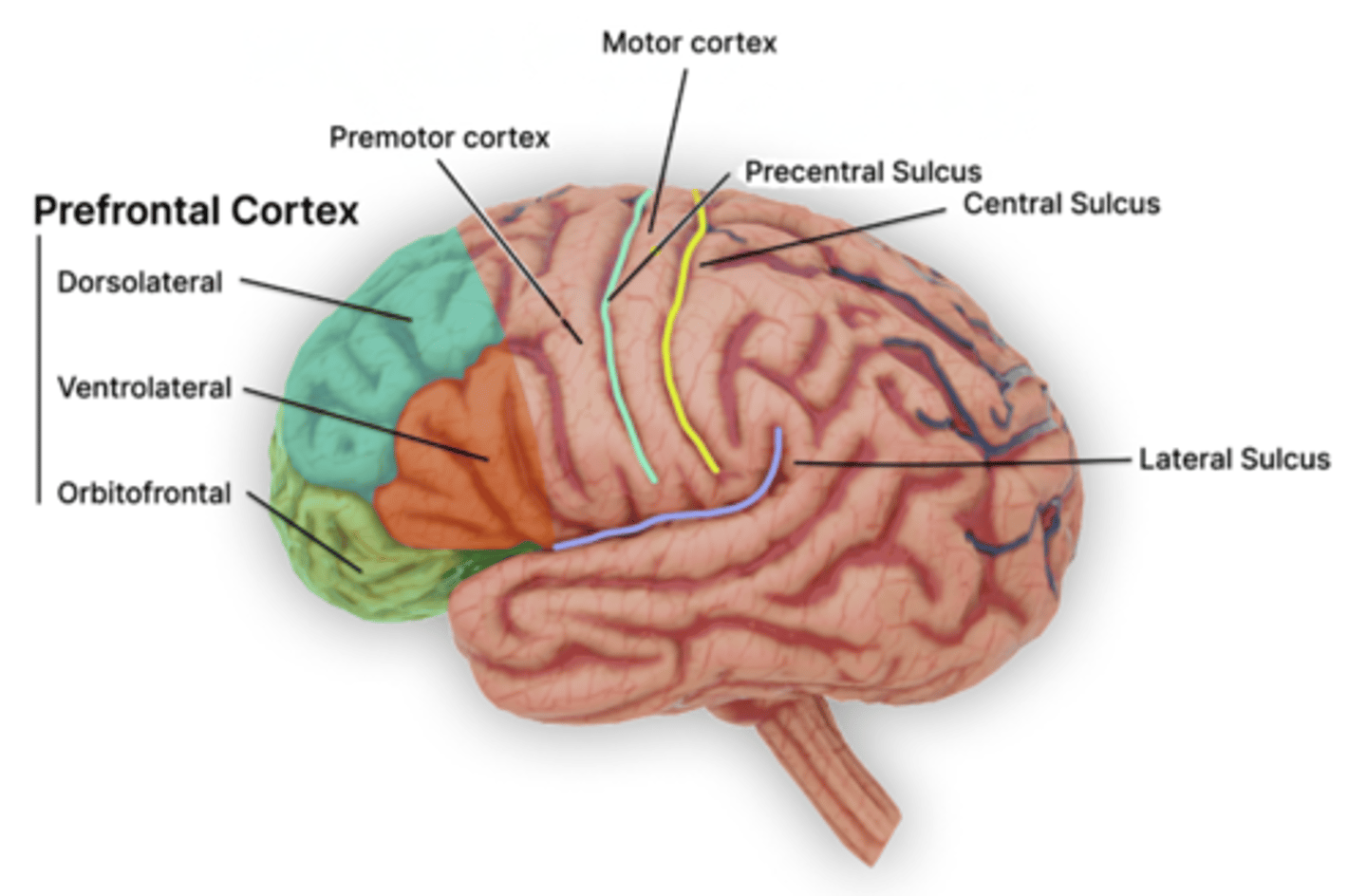
effect of damage dorsolateral prefrontal cortex
concrete, perseverative
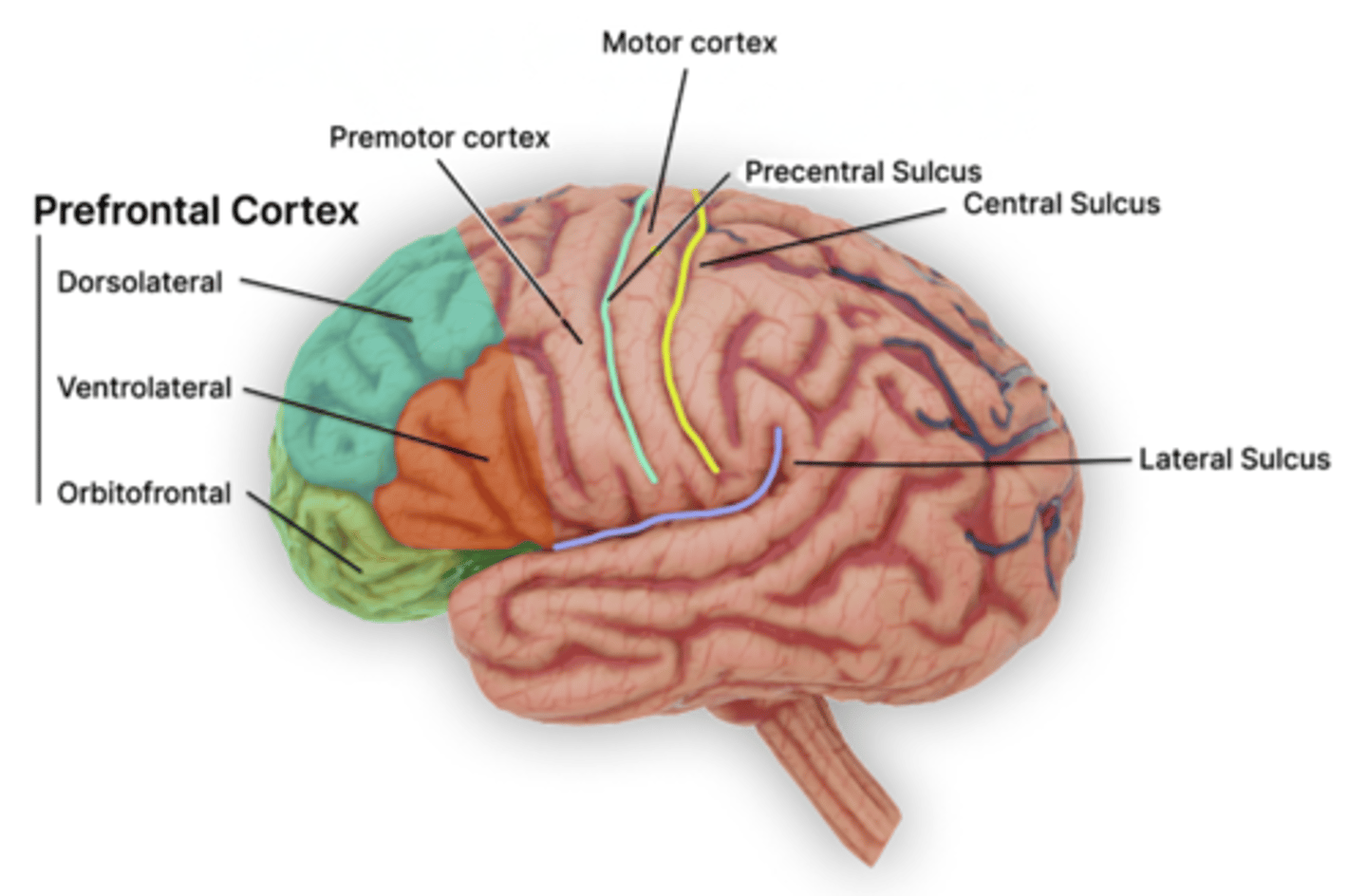
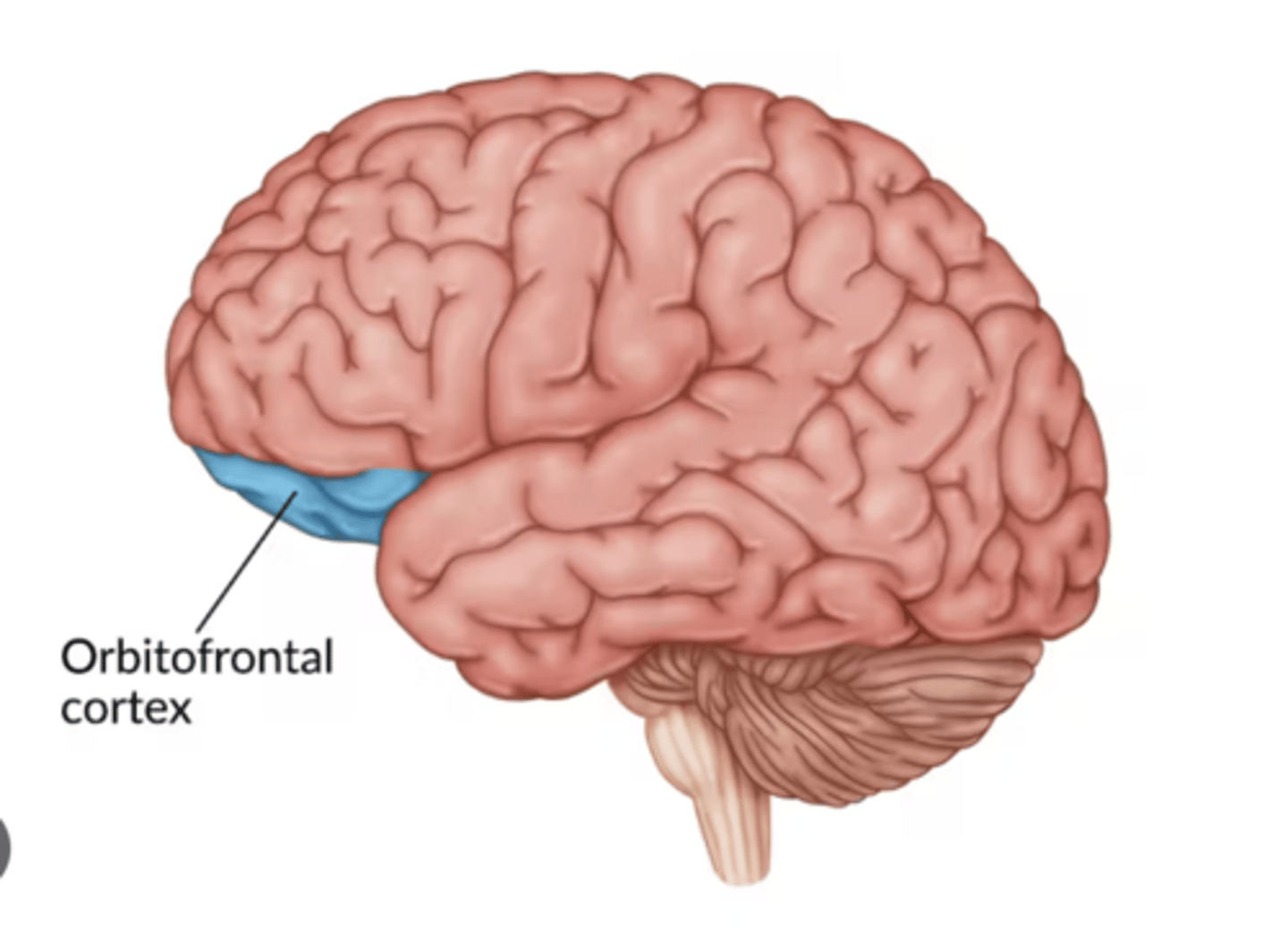
damage to orbitofrontal prefrontal cortex
pseudopsychopathy; disregard for moral/social rules
damage to mediofrontal prefrontal cortex
pseudodepression
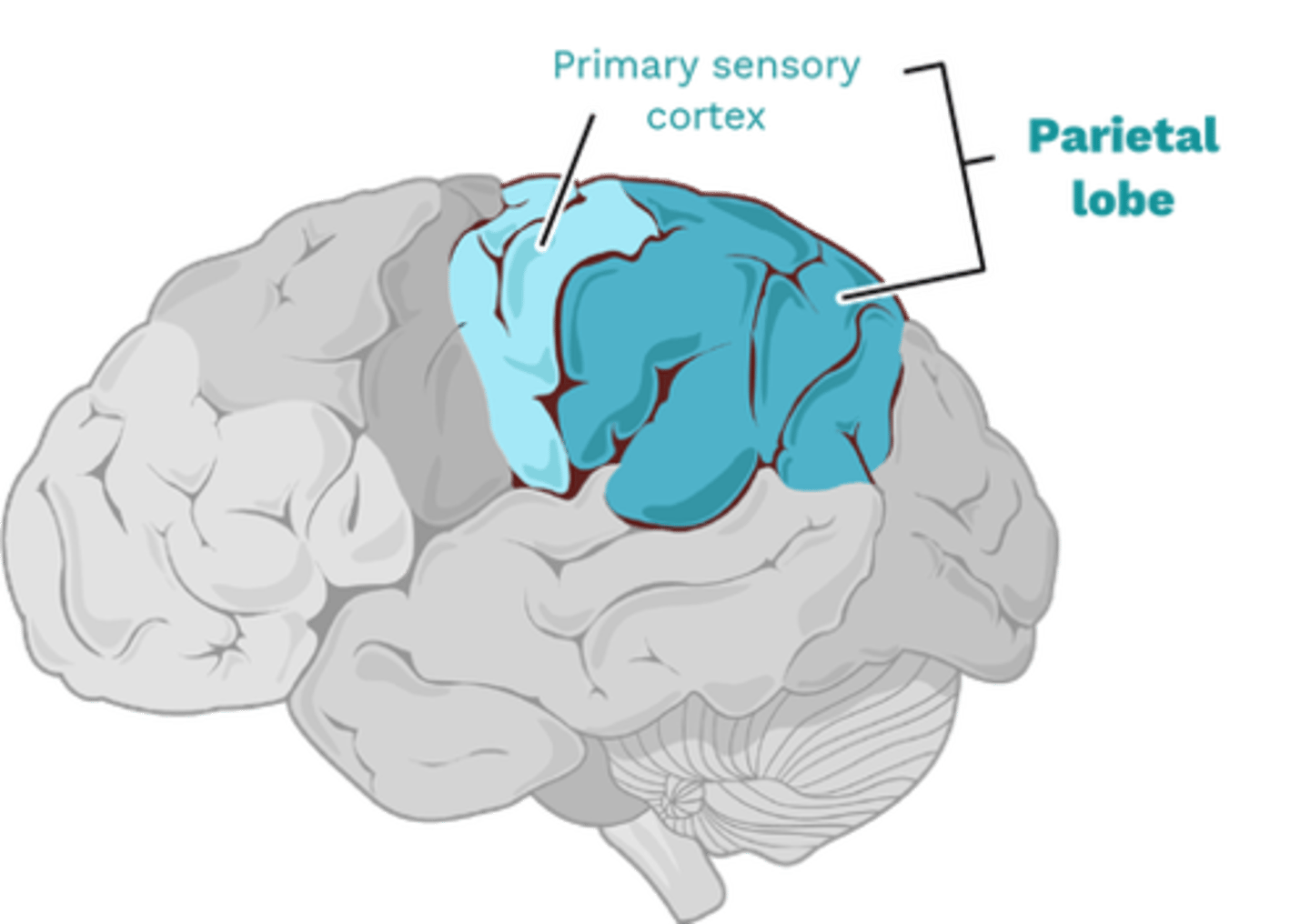
parietal lobe
contains the somatosensory cortex (esp. feeling of pressure, touch, pain; proprioception; gustation (taste)
damage:
- apraxia = 🦿inability to perform skilled motor mvmts
- anosognosia = 🚫insight/recognize own d/o
- Gerstmann's syndrome = ☝️finger agnosia, R-L confusion, 📝agraphia, 🧮acalculia (can't maths)
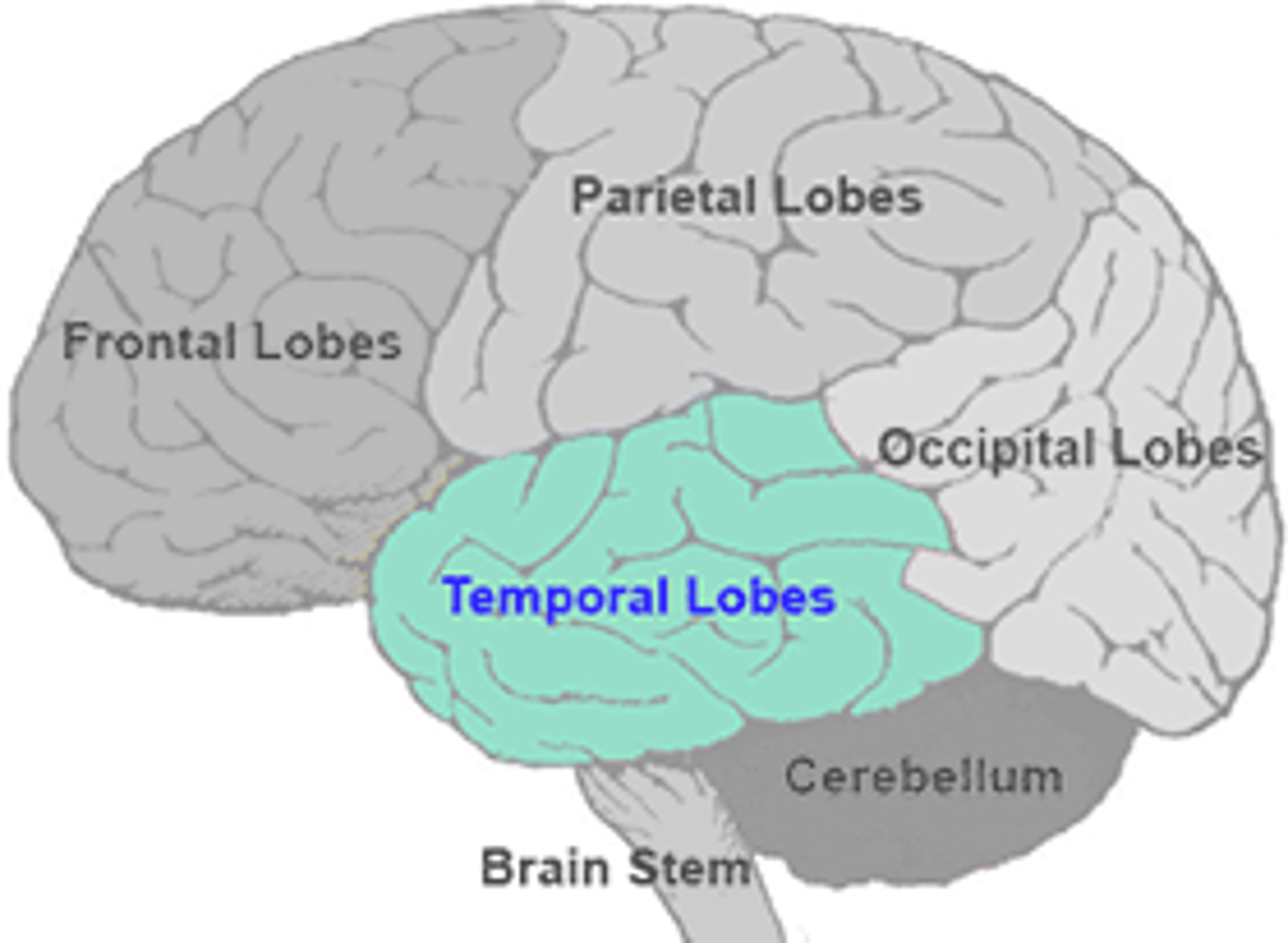
temporal lobe
one of the four major lobes of the brain, located on the side of the head, roughly behind the temples (hence the name). It plays a crucial role in auditory processing, memory formation, and language comprehension. Specifically, it houses areas like Wernicke's area, which is vital for understanding speech.
The temporal lobe houses the auditory cortex, Wernicke's area (on the left side), and long-term memories (encoding, retrieval, storage).
--> 👂auditory cortex = lesions here cause all things auditory distrubance (agnosia, hallucinations, etc.)
--> Wernicke's area = LEFT side; 🚫lang. comprehension & production
--> long-term memories = encoding, retrival, & storage
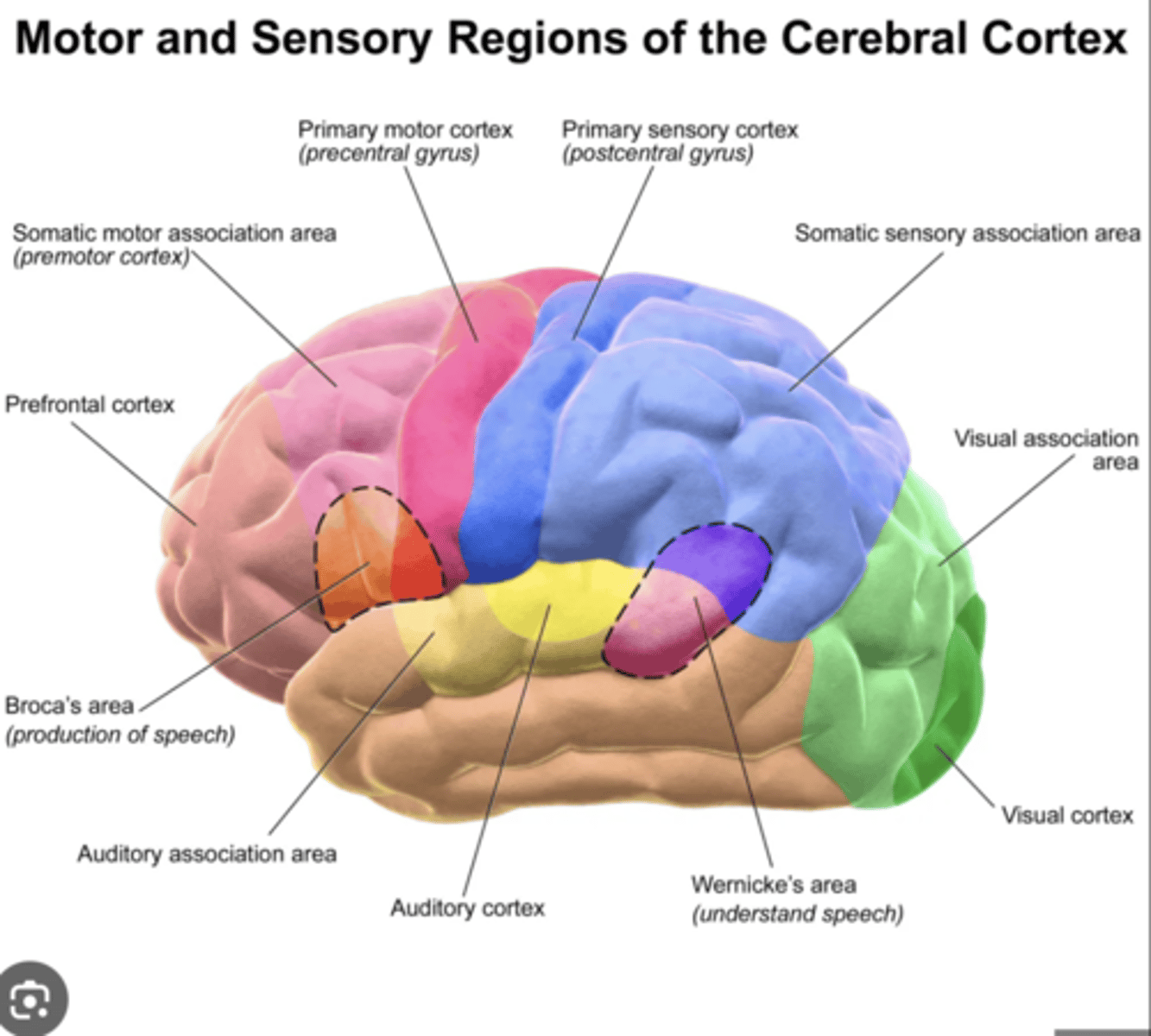
auditory cortex
the area of the temporal lobe responsible for processing sound information; lesions here cause all things auditory disturbance (agnosia, hallucinations, etc.)
Wernicke's area
responsible for language comprehension and production. Damage here leads to Wernicke's aphasia, a kind of fluent aphasia where speech sounds fluent and normal but doesn't have meaning.
It is located in the temporal lobe on the left side of the brain and is responsible for the comprehension of speech.
temporal lobe: long-term memories
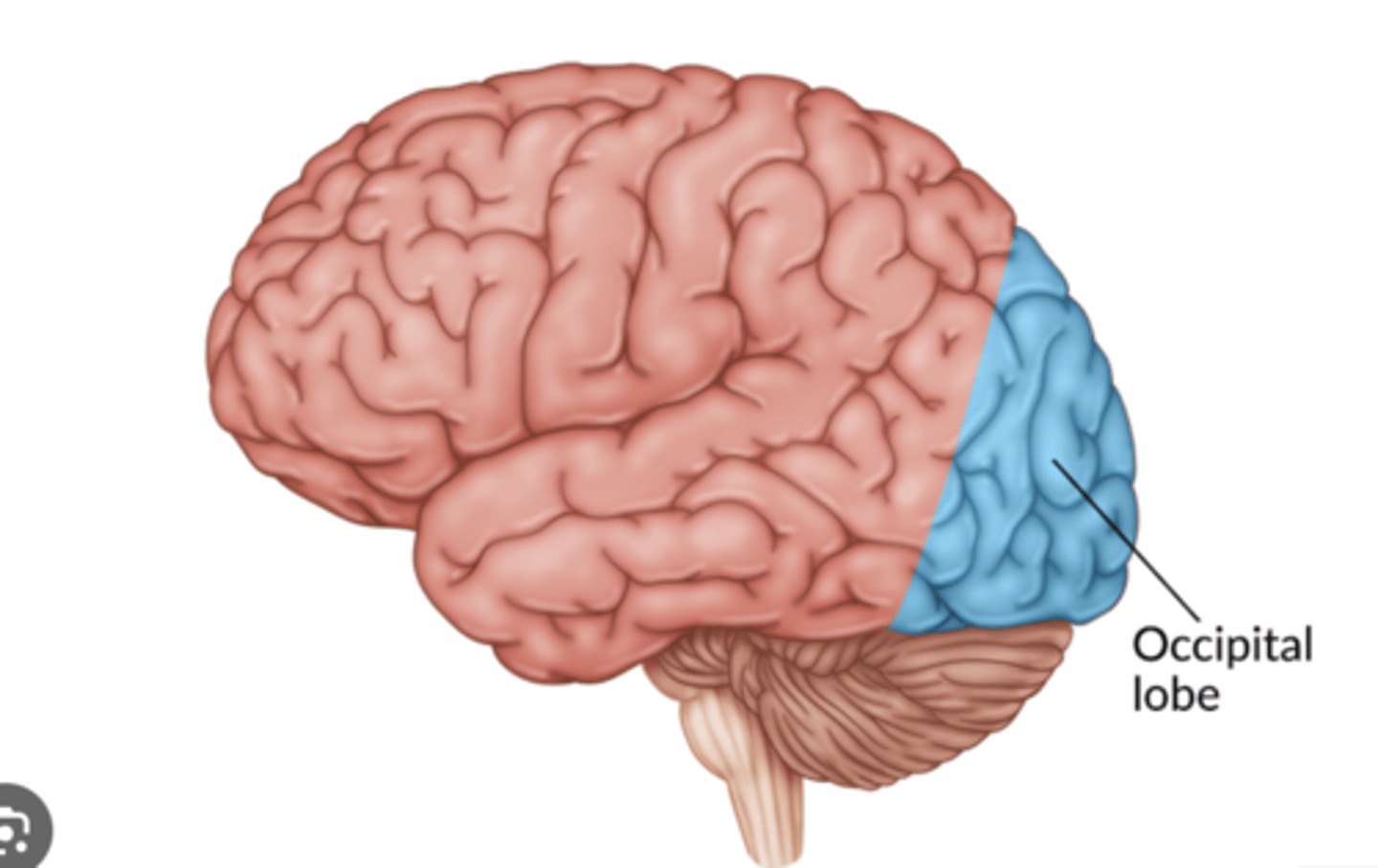
occipital lobe
contains the visual cortex. Damage can result in visual agnosia (inability to recognize familiar objects), color agnosia, word blindness, and/or scotomas (blind spots). Lesions at the junction of the occipital, temporal, & parietal lobes can produce prosopagnosia (inability to recognize familiar faces).
- back: high-res macular
- front: peripheral
damage?
- visual agnosia, visual hallucinations, cortical blindness
What are the trichromatic & opponent-process theories of color vision?
Young-Helmholtz TRICHROMATIC = 3 types color receptors:🍦(cones) 🔴🔵🟢; receptive to each primary color; all other colors are blend of these colors
Hering's OPPONENT-PROCESS = 3 types bipolar ↔️ -- 🔴🟢, 🔵🟡, ⚪️⚫️(e.g., activated by red, inhibited by green)
--> supported by negative afterimages
what is color blindness?
🧬 often, result of genetic defect that f*cks up 1+ type of cone; usually from gene on X chromosome, so MEN > women (recessive for women)
COMMON TYPES:
1) 🔴🟢= MOST common
2) 🔵🟡, 🌈 = much LESS common
what is depth perception/retinal disparity?
- depth perception = depends on combo of BINOcular & MONOcular cues
- retinal disparity = fact that 👀 see diff views; closer the object, ⬆️disparity
important concepts w/olfaction?
olfactory bulb --✉️signals--->
- primary olfactory cortex = PROCESSES & INTEGRATES signals
- orbitofrontal cortex = CONSCIOUS PERCEPTION of odors
- amygdala = olfactory MEMORY
What are cutaneous senses?
- pressure (touch)
- warmth &cold
- pain
what are dermatomes?
axons carrying info from cutaneous receptors
basically a unit that maps a sensory spot on body to specifc area of spinal cord
the "therapeutic window" refers to ________
the time frame when therapy combined with drug treatment is most effective.
The therapeutic window refers to the time between injury and drug treatment during which the treatment is still effective. Monitoring of individuals under drug treatment is recommended to ensure the therapeutic window and to treat any unusual reactions to a medication.
Which area of the brain do barbiturates depress that is involved in behavioral alerting, attention, and arousal responses?
The brain stem is important in the regulation of respiration, blood pressure, heart rate, GI functioning, and the states of sleep and wakefulness. Depressant drugs (i.e., barbiturates) interrupt impulses to the reticular activating system, which is located in the brain-stem, resulting in decreased arousal responses and attentiveness.
(B) The amygdala is a component of the limbic system and plays an important role in emotions and behavior.
(C) The hypothalamus is involved in daily activities like eating and drinking, in the control of the body's temperature and energy maintenance, and stress control. It also modulates the endocrine system through connections with the pituitary gland.
(D) The hippocampus is embedded within the temporal lobe. It regulates motivation, emotion, learning, and memory.
What is the pain/gate control theory?
our system can only handle SO MUCH sensory info... when there's too much, cells @ spinal cord become gatekeepers
- OLDER ==> LESS pain, symptoms, better coping (i.e., more closed off gates)
- coping: ACTIVE better overall
what are psychophysical laws?
= identify absolute threshold (MINIMUM stimulus needed to produce sensation)
vs. individual difference thresholds (smallest INCREMENT needed to notice DISCREPANCY)
What is Weber's Law?
⬆️the stimulus, ⬆️the interval needed to produce noticeable difference (i.e., like a ratio)
example: 1%
1g added to 10g
10g added to 100g
What is Fechner's Law?
physical stimulus changes LOGARITHMICALLY related to psych senses
i.e., experience of stim intensity changes arithmetically, while stim. intensity changes geometrically
What is Steven Power's law?
better for EXTREME RANGE
- led to desription of sensation as an exponential function
- led to predictions of, e.g., doubling 💡<2x perception, but 2x⚡️>2x perception
What are the learning & memory areas of the brain? Describe each.
- TEMPORAL LOBES = essential for ENCODING, STORAGE, RETRIEVAL of long-term declarative mems
deficits?
--> RIGHT temporal lobe = NONverbal deficits 👩🏼face-recognition, 🗺️ spatial position, maze-learning, & 😜🧠emotion memory.
--> LEFT temp. lobe damage == VERBAL (recall words, stories, recognition words, numbers)
- HIPPOCAMPUS = CONSOLIDATES
- AMYGDALA = FEAR conditioning, EMOTIONAL SIGNIFICANCE to memories
- PREFRONTAL CORTEX = EPISODIC MEMORY; constructive mem; FALSE recognition
- THALAMUS = processing incoming info & transferring to cortex; damage here: anterograde (🚫new) & retrograde (🚫old) amnesia, confabulation (Korsakoff's Syndrome)
- basal ganglia, cerebellum, and motor cortex = involved in procedural (sensorimotor memory) & implicit (nonintentional) memory
What are some neural mechanisms involved in learning & memory?
1. Long-term potentiation (LTP) = long-term strengtehning btw synapses
2. Protein synthesis/RNA = enhanced protein synthesis mins/hours after learning; inhibiting the synthesis of RNA can prevent memory/learning
What are the different types of aphasia?
1. Broca's aphasia = hard, slow, difficult to speak; AWARE
2. Wernicke's aphasia = EFFORTLESS, but devoid of content; UNAWARE
3. Conduction aphasia = anomia, paraphasia, probs w/repetition; from damage to arcuate fascicles
4. Transcortical aphasia =
- transcortical MOTOR aphasia = Broca's area
- transcortical SENSORY aphasia = Wernicke's area
- mixed transcortical aphasia = BOTH
5. Global aphasia = extensive disruption in production & understanding of language
What is the James-Lange theory of emotion?
SPECIFIC bodily reactions tied to SPECIFIC emotions
"you're afraid because your heart is pounding and your hands are shaking"
What is the Cannon-Bard theory of emotion?
- physio & assigning SIMULTANEOUS;
- more 🧠BRAIN MECHANISMS
What is the Two-Factor Theory of emotion?
COMBO of physio arousal & cognitive interpretation
--> Schachter & Singer