GI lecture 5 Large Bowel Disorders pt 1
 Call Kai
 Learn
Learn Practice Test
 Spaced Repetition
 Match
Match Flashcards
 Knowt Play
1/79

There's no tags or description
Looks like no tags are added yet.
Name | Mastery | Learn | Test | Matching | Spaced | Call with Kai | Chat |
|---|
No analytics yet
Send a link to your students to track their progress
80 Terms
Irritable bowel syndrome (IBS)
idiopathic chronic functional disorder characterized by abdominal pain or discomfort with alterations in bowel habits
Rome IV criteria
Recurrent abdominal pain on average for at least 1 day/week in the last 3 months associated with 2 of the following:
1. related to defecation
2. onset associated with change in stool freq
3. onset associated with change in stool form
other symptoms of IBS
gas, bloating, feeling of abdominal distention
straining or urgency
feeling of incomplete emptying with defecation
may have other somatic or psychological complaints
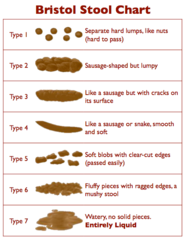
Bristol stool chart
IBS symptoms are exacerbated by
stress and irritants in the intestinal lumen
3 types of IBS
IBS-C: constipation predominant, type 1 and 2
IBS-D: diarrhea predominant, type 6 and 7
mixed IBS: characterized by intermittent periods of constipation and diarrhea
factors that play a role in IBS
GI motility dysfunction
visceral hypersensitivity
intestinal inflammation
fecal microflora differences
food sensitivities
genetics
early life stressors
female > male
GI motility dysfunction
increased freq and irregularity of bowel contractions, increased or decreased transit time, exaggerated response to cholecystokinin
visceral hypersensitivity
hypersensitivity of receptors triggered by bowel distention and bloating
intestinal inflammation
increased lymphocyte infiltration and release of mediators causing contraction, increased mast cell infiltration, elevated levels of pro-inflammatory cytokines
increased after enteritis
IBS diagnosis
positive diagnostic strategy w thorough H&P coupled with Rome IV criteria and selective lab eval
IBS labs
serologic testing to r/o celiac disease (anti-tissue transglutaminase and IgA levels) in pts w IBS/diarrhea symptoms
fecal calprotectin, CRP in pts w/o alarm features to r/u IBD
IBS diagnostic testing is based on
age, alarm symptoms, profession
symptoms that don't suggest IBS
nocturnal symptoms, progressive symptoms, weight loss, GI bleed hx, refractory symptoms, anemia
IBS-C treatment
laxatives (1st line)- soluble fiber, polyethylene glycol
secretory stimulators - linaclotide, plecanaide (2nd line), lubiprostone (3rd line)
laxatives improves constipation in IBS-C but not
abdominal pain
IBS-D treatment
Loperamide (1st line)
Cholestyramine (2nd line)
Rifaximin- avoid as 1st line due to effect on microbiome
Alosetron- females only and no GI tract abnormality
FODMAP diet
decrease these foods in IBS
Fermentable
Oligosaccharides
Disaccharides
Monosaccharides
And
Polyols
constipation
fewer than 3 bowel movements per week
hard/lumpy
difficulty during defecation (straining, sensation of obstruction or incomplete evacuation, need to perform manual manipulations)
constipation causes
neuromuscular disease
endocrine disorders
electrolyte anormalities
IBS-C
Hirschsprung's disease
medications
strictures
functional (low fiber diet, dehydration)
medications that can cause constipation
opioids, SSRIs, anticholinergics, diuretics, cholestyramine, CCBs
Hirschsprung disease
absent ganglion cells in large intestinal causing decreased contractions and innervation for normal peristalsis
failure to pass meconium
constipation treatment
education- increase fiber, water, activity level
fiber supplements
osmotic laxatives
may add bisacodyl if not responding
lubiprostone, linaclotide (newer treatments)
linaclotide should be taken at least
30 min before 1st meal each day
treatment for opioid constipation
lubiprostone (female only)
naloxegol, methylnaltrecxone bromide, naldemedine
inflammatory bowel disease (IBD)
characterized by diffuse mucosal inflammation
Ulcerative colitis (UC) and Crohn's disease
nicotine worsens prognosis in ____ but improves symptoms with ____
Crohn's; UC
IBD has _____ age distribution
bimodal- early in life and 7th decade
IBD diet factors
poss due to high fat, processed foods
medication that is associated w exacerbation of disease
NSAIDs
IBD 3 major pathways
genetic predisposition
immune dysregulation
environmental antigen
IBD can be induced after intro of
commensal bacteria
Crohn's inflammation can be relieved by
diverting fecal material away from active mucosal inflammation (ileostomy)
extra-intestinal findings in IBD
oral ulcers, oligoarticular or polyarticular non-deforming peripheral arthritis, spondylitis or sacroilitis, uveitis, erythema nodosum, pyoderma gangrenosum, non-infectious hepatitis, sclerosing cholangitis, thromboembolic events
MC derm manifestation in IBD
erythema nodosum
generally on extensor aspects of lower legs
parallels disease activity
pyoderma gangrenosum
uncommon
often preceded by trauma to the skin; painful, ulcerative cutaneous lesions that develop from single or multiple erythematous papules or pustules
does not parallel disease

MC extra-intestinal manifestation of IBD
arthritis/arthropathy
nondestructive peripheral arthritis primarily involving large joints, anklosing spondylitis, osteoporosis, osteopenia, osteonecrosis
MC ocular manifestation of IBD
episcleritis
irritation, itching, or burning
doesn't cause significant ocular complications or impaired vision
managed w topical therapy and treatment of IBD
scleritis
severe, constant, boring pain that worsens at night and in the early morning that radiates to face and periorbital region
can impair vision
does not parallel disease
treat w NSAIDs, corticosteroids, and immunosuppressive agents
Ulcerative colitis (UC)
inflammation limited to the mucosal layer of the colon
ulcers + mucosal edema
usual onset of UC
20-40s w another smaller peak in 7th decade
UC symptoms
recurrent diarrhea mixed w blood/mucus (main symptom)
bowel movements small and frequent, gradual onset, tenesmus, abdominal pain
more extensive disease- fever, weight loss, fatigue d/t anemia, malabsorption
UC signs
PE normal esp in mild disease
abdominal tendernesss on palpation (LLQ), fever, hypotension, tachycardia, pallor
rectal exams may reveal blood
hallmark of UC
continuous ulceration starting in rectum and limited to colon
can see inflammation of the ileum due to backwash from colon
mild UC
4 or fewer bowel movements per day w or w/o blood, no signs of systemic toxicity, and normal ESR
moderate UC
>4 loose, bloody stools per day w mild anemia not req transfusion and abdominal pain that is not severe.
May have minimal signs of toxicity including low-grade fever
severe UC
>/= 6 loose, bloody stools w severe cramps and evidence of systemic toxicity including fever, tachycardia, anemia, and elevated ESR
UC diagnosis
best made w colonoscopy - uniform inflammation, abnormal erythematous mucosa w or w/o ulcerations
supportive testing- perinuclear antibeutrophil cytoplasmic antibodies (pANCA)
CT scan- good for abscess location and symptoms od colitits
double contrast barium enema- fine mucosal detail
stool eval for blood, leukocytes, ova, parasites, culture, toxins
UC labs
CBC - anemia
CMP- low albumin, K, mag. elevated alk phos
ESR correlates w disease activity
type and cross if significant bleeding
treatment to induce remission in mild-moderate UC
mesalamine (5-ASA agent)- start w high dose. suppository or edema daily, acts as topical antiinflammatory. enema reaches prox sigmoid colon and splenic flexure
hydrocortisone suppository or foam preparation (
prednisone- 1 week then taper for 4-8 weeks
recommended treatment for pts w left-sided or extensive UC
start w oral 5-ASA plus rectal mesalamine
mild-moderate UC maintenance therapy
pts that respond to topical 5-ASA: daily mesalamine suppository or enema
pts that require oral 5-ASA: saily admin
treatment to induce remission in moderate-severe UC
anti-TNF therapy w or w/o immunomodulator (1st line)- expected response in days-8weeks. Infliximab, adalimumab, golimumab
cyclosporine can be used short term and effective to avoid surgery
thiopurine immunomodulators- azathiprine, 6-mercaptopurine. reduce T and B proliferation, decrease cytotoxic T cells and plasma cells
screening before starting anti-TNFs
hep B and C, TB, varicella, EBV, and CMV
anti-TNF contraindications
active, untreated infection, latent TB, demyelinating disease, uncontrolled HF, active malignancy
side effects of thiopurine immunomodulators
dose dependent- leukopenia, abnormal liver chemistries
dose independent- nausea, pancreatitis, infection, malignancy
goal of UC management once remission is achieved
maintain glucocorticoid-free remission and prevent clinical and endoscopic relapse
moderate-severe UC maintenance therapy
methotrexate
thiopurine analogues- may take up to 12 weeks
S1P receptor modulators- estrasimod, ozanimod
JAK inhibitors- tofacitinib, upadacitinib. reserved for nonresponders to initial therapy
JAK inhibitors side effects
cytopenias, dyslipidemias, liver energy, reactivation of TB, hep B and C
UC maintenance therapy for flare-ups
nicotine patches
abx to consider for UC maintenance therapy
cipro, bactrim, flagyl
other maintenance therapy meds
antidiarrheals
pain relievers
replacement of electrolytes, minerals, and vitamins lost to malabsorption
when to treat UC w surgery
massive hemorrhage
perforation
toxic megacolon
dysplasia/cancer
colectomy (can be curative)
toxic megacolon
non-obstructive dilation of colon >6cm, fever, tachycardia, leukocytosis, postural hypotension, decreased bowel sounds
anemia, severe pain, abdominal distention
can lead to total sepsis and cardiopulmonary collapse
toxic megacolon treatment
reduce distention to prevent perforation - bowel rest w NG tube
correct fluid/electrolyte imbalance
treat toemia and precipitating factors
meds- IV steroids, broad spectrum abx (ampicillin, gentamycin, metronidazole), cyclosporine
early surgical consult
Crohn's disease
chronic inflammation that can occur from pharynx to rectum. can have transmural ulceration, strictures, fistulae, and fissures
peak incidence occurs btwn 15-30yo and 2nd peak in 7th decade
Crohn's disease s&s
depends on location
cardinal- crampy abdominal pain, chronic intermittent diarrhea w or w/o gross bleeding, fatigue, weight loss
tenesmus, fecal urgency, malabsorption, dehydration and electrolyte abnormalities, leukocytosis
transmural bowel wall inflammation is associated w
perianal fistulas or abscesses
Crohn's disease physical findings
RLQ tenderness (different from UC which has LLQ), tender mass
sequelae of Crohn's disease
intestinal obstruction- postprandial bloating, cramping, pains, loud borborygmi
penetrating disease and fistulae
perianal disease assoc w Crohn's
large painful skin tags
anal fissures
perianal abscesses
extraintestinal manifestations of Crohn's
arthralgias, arthritis, iritis or uveitits, pyoderma gangrenosum, erythema nodosum, oral ophthous lesions, gallstones, nephrolithiasis
Crohn's diagnosis-imaging
ileocolonoscopy (1st) - ulcers, strictures, skip lesion
CT/MR enterography- bowel wall thickening, vascularity, mucosal enhancement, fat stranding
capsule imaging for small bowel
barium upper GI w/ small bowel follow-through
Crohn's diagnosis- labs
anti-saccharomyces cerevisae IgA and IgG antibodies (ASCA)
CBC, serum albumin, sed rate, CRP
stool cultures- pathogens, ova, parasites, leukocytes, fat, c diff
serum iron, ferritin, vit d, b12
mild Crohn's treatment
step up approach
-step 1: aminosalicylates +/- abx (flagyl, cipro-for fistula or abscess)
-step 2: corticosteroids
-step 3: immune modifying agents (thiopurine agents, methotrexate)
-step 4: biologic agents and/or surgery
mod-severe Crohn's treatment
top-down approach
-anti-TNF for induction and maintenance
-humanized monoclonal antibody (natalizumab- prevents accumulation of lymphocytes)
-interleukin inhibitors (ustekinumab) key role in inflammatory and immune responses
-methotrexate
natalizumab reserved for
patients who are intolerant or have lost response to biologic/immunosuppresive therapy
interleukin inhibitors indications
patients who failed or were intolerant to immunomodulators or corticosteroids, but never failed a TNF
or
patients who failed or were intoleerant to 1 or more TNF blockers
indications for sx in Crohn's
intractability to medical therapy
intra-abdominal abscess
massive bleeding
symtomatic refractory internal or perianal fistula
intestinal obstruction
Crohn's prognosis
symptoms are chronic and intermittent but disease course varies
higher risk for hematologic malignancy