Bed Mobility
 Call Kai
 Learn
Learn Practice Test
 Spaced Repetition
 Match
Match Flashcards
 Knowt Play
1/45

There's no tags or description
Looks like no tags are added yet.
Name | Mastery | Learn | Test | Matching | Spaced | Call with Kai | Chat |
|---|
No analytics yet
Send a link to your students to track their progress
46 Terms
What is bed mobility?
moving from one bed position to another
What precedes mobility?
stability
What precedes attaining?
maintaining
What precedes small base of support?
large base of support
What precedes high center of mass?
low center of mass
A typical progressive sequence of activities includes what?
-supine/supine on elbows
-prone on elbows
-hooklying
-rolling
-bridging
-quadruped
-sitting
-kneeling
-half kneeling
-modified plantigrade
-standing
How could a patient progress in a seated position?
going from using their hands for stability to no using their hands for support
What should you remember when performing bed mobility tasks with a patient?
-always obtain consent
-use appropriate safety techniques
-use body mechanics
-control centrally, direct distally
-apply contact appropriately
-provide a count-off so you and the patient work together
-use AMAP, ANAP
-minimize shearing forces
When lowering a bed rail what should you do?
check for clear lines, leads, and tubes
What is hooklying?
supine with knees bent
What are the advantages of hooklying?
-better utilization of the power muscles
-additional joint stability
-makes turning easier
What is bridging?
patient lifts the hips and lower back while supine allowing items to be placed underneath them
Why would the bridging technique need to be modified?
if a patient has weight-bearing restrictions on one LE
How does a patient scoot up in bed?
patient begins in hooklying with elbows back and out and pushes on elbows and feet to lift and shift hips
How does a patient scoot sideways in bed?
patient begins in hooklying with elbows back and out and pushes on elbows and feet to lift and shift hips laterally and upper body in same direction
What is another method a patient can use to move themselves in the bed?
using the bed rails or a trapeze
How does a patient roll from supine to sidelying?
patient turns head to look towards the direction they're going, abducts arm 45 degrees for stability, bends knee to cross over the other, reaches arm over for momentum and brings trunk into sidelying
How does a patient roll from sidelying to supine?
patient turns head to look towards the direction they're going, retracts scapula and extends shoulder back toward the bed
Clinician uses the functional task of bedpan placement to what?
engage to the patient in correct rolling techniques
How should a bedpan be positioned under a patient?
the wider end toward the patient's head in supine; head of bed is raised to place the patient in a normal elevated position; bedpan mimics the angle of the patient's hips and thighs
How does a patient roll from supine to prone?
patient moves through sidelying but does not abduct shoulder underneath in sidelying, instead they continue to bring upper body forward
How does a patient roll from supine to sitting through sidelying?
patient rolls to sidelying, brings both legs off the edge of the bed, pushes hand down into the bed extending the elbow, and abducts the left arm using it to push upright
What is long-sitting?
Sitting with hips flexed and knees extended
What is short-sitting?
sitting with hips and knees flexed
How does a clinician assist with long-sitting?
at the back of the shoulder girdle or by allowing the patient to pul on clinician's flexed arms (for patient who needs minimal assistance and has sufficient UE strength)
How does a clinician assist with sitting on the side of the bed?
clinical rolls patient to side sitting and a force couple to sit the patient up using maximum assistance
How does a clinician assist with sitting on the side of the bed to supine?
clinician lowers upper body to the bed (CCDD) while lifting both lower extremities onto bed at the same time and rolls them to supine
How does a patient go from supine to long-sitting?
patient props elbows then hands behind trunk and pushes down into bed contracting abdominals and lifting head
What is a tilt table?
padded table with footplate and restraint straps that can be tilted up or down
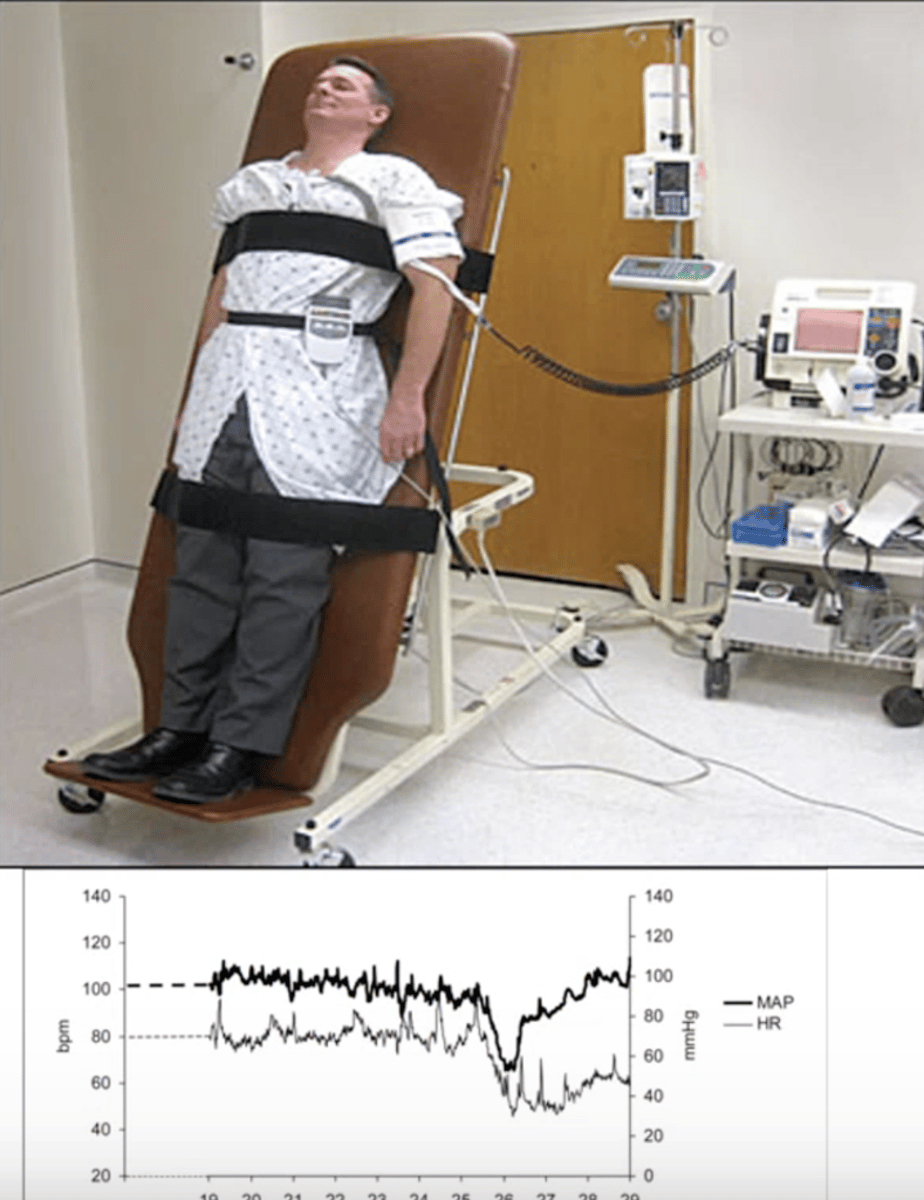
What is a tilt table used for?
patients who are not yet able to tolerate the upright postures of sitting or standing; allows for a controlled progression from supine to standing
What should you never do when a patient is on a tilt table?
leave the patient unattended unattended
How does a patient scoot sideways in sitting?
patient abducts the arm in the direction they're going, pushes down with hands into the bed and depresses shoulders to raise hips and move over
A tilt table requires a weight bearing LE on which leg?
at least one
How long can patients tolerate the tilt table?
20 to 70 minutes
What is the tilt table procedure?
-explain procedure to patient
-transfer patient to horizontal tilt table
-position feet on foot plate
-secure patient with straps
-measure vital signs
-elevate table
-monitor responses
-when done lower table, remove straps, transfer patient
What are bed mobility restrictions for a total hip arthroplasty?
-can flex hip past 90 degrees
-cant adduct hip past 0 degrees
-cant internally rotate hip past 0 degrees
-cannot sit sidelying to get to sitting
How do you sit a patient with a total hip arthroplasty up?
-remove abduction wedge
-prop up on elbows, then hands, behind the hips
-pivot on bed alternating UEs and LE
-sit on edge of bed, leaning posteriorly
What are bed mobility restrictions for hemiparesis?
-avoid pulling on the patient's weaker arm
-be alert to location of weaker extremities
-sit up from sidelying on weaker side
How does a patient with hemiparesis go from supine to sidelying?
-flex stronger hip and knee
-reach stronger arm across body
-lay stronger leg over weaker leg, turning torso
-roll toward weaker side
How does a patient with hemiparesis sit up?
--flex stronger hip and knee
-reach stronger arm across body
-lay stronger leg over weaker leg, turning torso
-roll toward weaker side
-bring both legs off the edge of bed
-press down into bed with stronger hand, pushing the torso upright
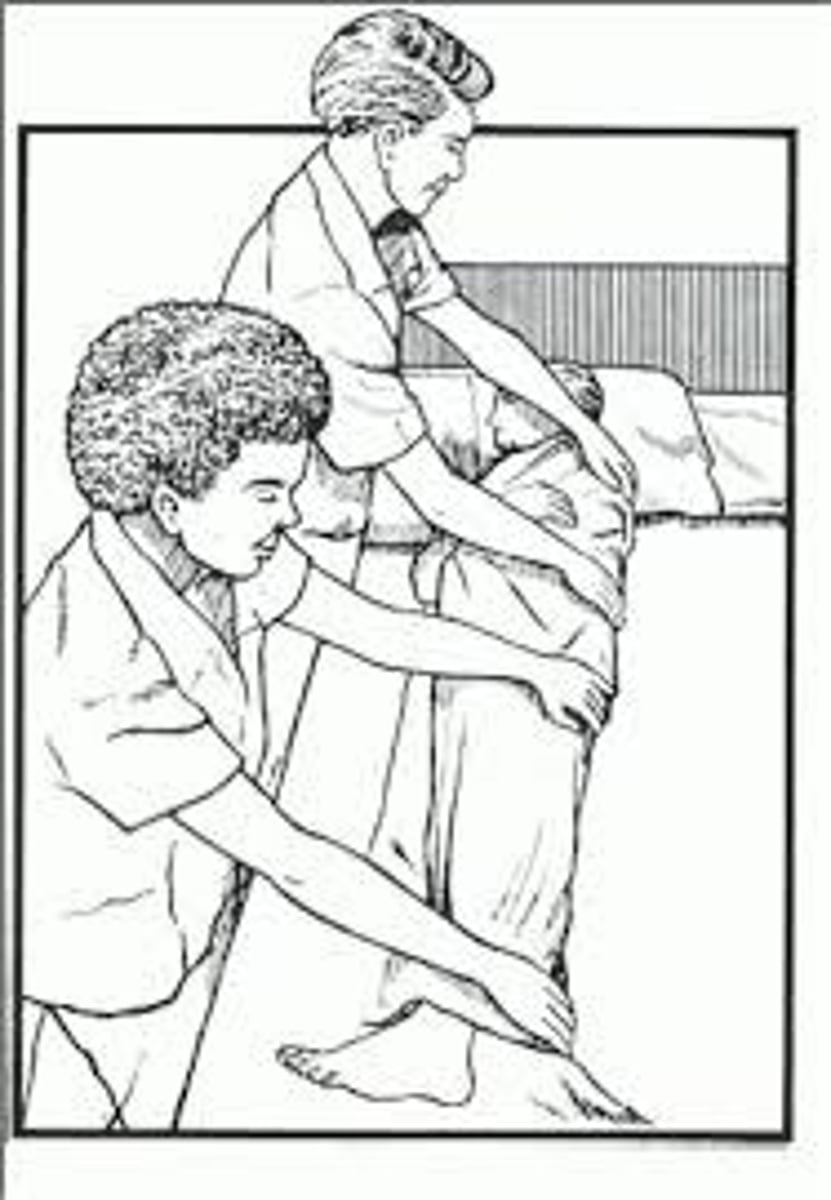
What is a logroll?
patient's shoulders and hips turn simultaneously, staying parallel throughout the roll
What are bed mobility restrictions for acute back surgery?
-no bending
-no lifting (more than 5 Ibs)
-no twisting
How does a patient with acute back surgery go from supine to sidelying?
-flex hip and knee on one or both LEs
-cross the trailing arm across the chest
-roll into sidelying, moving the trunk as one unit
How does a patient with acute back surgery go from sidelying to supine?
-abduct underside arm
-move legs off the bed
-press down with underside hand
-continue to push the torso upright
-keep shoulder facing straight ahead
How does a patient with acute back surgery go from sitting to sidelying?
-lean down onto one elbow
-lift legs onto the bed into sidelying
-keep shoulder and hips parallel
What are the bed mobility restrictions for spinal cord injury?
-movement ability depends on injury level
-C6 is the typical transition level between dependence and independence
-rolling is usually led by the head and upper body using momentum
-many activities performed in long sitting