Micro exam #1 study guide Johnson
 Call Kai
 Learn
Learn Practice Test
 Spaced Repetition
 Match
Match Flashcards
 Knowt Play
1/171

There's no tags or description
Looks like no tags are added yet.
Name | Mastery | Learn | Test | Matching | Spaced | Call with Kai | Chat |
|---|
No analytics yet
Send a link to your students to track their progress
172 Terms
Causes of death in the United States in the1900s: microorganisms
influenza and pneumonia
tuberculosis
gastroenteritis
diphtheria
typhoid fever
syphilis**
etc
Virulence
the degree of damage or disease severity that a pathogen (such as a bacterium, virus, or fungus) can cause to its host
much of the virulence of bacterial (and other microorganism infections) can be blamed by ________
the host - the immune system is what kills us 12-29% of the time
Who invented pasteurization, and what else did he invent?
Louis Pasteur
He developed the vaccines for rabbies and anthrax
Who is Robert Koch?
Founder of bacterialology
Coined Koch’s postulates for identifying dieases causing bacteria
microorg must be found in abundance in all orgs suffering from it, but should not be found in healthy orgs
microorg must be isolated and grown in a pure culture
microorg must be inoculated into a healthy specimen - specimen must suffer from the disease
microorg must be sampled from inoculated and identified as original causing microorg
Who discovered cells
Robert Hooke
Developed the microscope
Antoine Von Leeuwenhoek
Childbed fever
Puerperal fever
Difference between chemically defined, complex media, and simple media?
Chemically defined is media in which you know all the ingredients
Complex media is media that at least one ingredient is not chemically definiable
Simple media contains carbon and maybe salts
Selective vs differenital media
Selective - contains agents to inhibit growth of unwanted specimens to focus on a particular specimen
Differential - allows the growth of multiple selected specimens, but in a way that distinguishes them from each other
Microorganism can be indentified through:
Microscopic appearance
characterization of cellular metabolism
determination of products given off in growth, use of enzymes, and how they get energy
Genetic and immuelogical characteristics
capsule
bound more tightly to the cell denser and thicker than a slime layer. visible by negative staining. capsule drives massive immune responses
gram positive bacteria
cellular membrane/thick cell wall
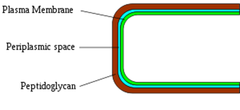
gram negative bacteria
cellular membrane/ thin cell wall/outer membrane

gram intermediate/acid-fast bacteria
cellular membrane/ intermediate cell wall of unusual
non gram stainable
cellular membrane/no cell wall
envelope
outer cover for the bacterial cell (composed of all cell coverings not just the cell membrane)
what features do all bacterial cells possess?
cell membrane
cytoplasm
ribosomes
cytoskeleton
one/few chromosomes
what features do most bacterial cells possess?
cell wall
glycocalyx
what features do some bacterial cells possess?
flagella,pilli,fimbriae
outer membrane
plasmids
inclusions
endospores
intracellular membranes (organelles)
universal trait to all living organisms
water

polyamines (putrescine and spermine)
breakdown of amino acids. coat the bacterial cell with a (+) charge so that other molecules that are (+) don't grab hold of the (-) charges cell. aka: environmental protection
They help produce biofilm
pleomorphism
cells of one species may vary in shape and size
Differences in a prokaryotic and eukaryotic flagella
Prokaryotic
1. Propeller movement
2. ion motor
3. not covered by cell membrane
Eukaryotic
Covered by cell membrane
Made of microtubules
ATP powered
Wave like motion
name the types of flagellar arrangements
monotrichous-single flagellum
lophotrichous-small bunches or tufts of flagellum
amphitrichous-flagella at both poles
peritrichous-flagella dispersed randomly
How to bacteria move towards a stimulus?
Chemotaxi: what attracts and causes the movement (stimulus)
Triggers the recepters to bind extracellular molecules (causing rotation of flagella)
Runs: cell moves towards stimulus
Tumbles: how the cell stops
pili
used for atachement and genetic exchange during conjunction
pili pore
a route of entry for antibiotics into the cell
pilE and pilS
pil E is recognized by the immune system and is destroyed but the pilS functions the same and has several different forms so that the immune system will not detect it
glycocalyx
composed of polysaccharides proteins or both. used to avoid phagocytosis/opsonization and for adhesion (biofilms) (makes them hard to detect)
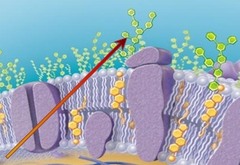
crystal violet stain (+/-)
both cell walls stain with the dye
grams iodine (+/-)
dry crystals trap in the gram + cell but there is no effect for the gram negative
alchohol decolorizor (+/-)
crystals remain in the gram positive cell and in the gram negative bacteria the outer membrane is weakened and the stained crystals loose dye
safranin (+/-)
the red dye has no effect on the gram positive bacteria but it stains the gram negative red
gram positive cell envelope
capsule is mostly polysaccharides, peptidoglycan staining at the surface.
gram negative cell envelope
capsule is mostly polysaccharides, peptidoglycan is stained in the middle
Mycobacterial cell envelopes
(mycobacterial also means acid fast and gram terminate bacteria). capsule (sugar), mycolic acids, arabinan, galactan, peptidoglycan, then the cell membrane
mycoplasma cell envelope
the cell walls are only present because of osmotic pressure that prevent the bacteria from lysing. cholesterol is important; the group of sterols provide more rigidity to keep from lysing
basic structure of the cell membrane
phosphoryl head group, glycerol derivative, and fatty acid side chains
passive transport
molecules move along their concentration gradient
active transport
molecules move against their concentration gradient (requires energy)
what do proteins provide for the cell membrane
structure, signaling pathway, ion transport, general transport, secretion systems
Types of protein structures
Primary - linear
Secondary - bending
Tertiary
Quaternary
Composed of amino acids
cytoplasmic membrane
provides a site for reactions especially atp synthesis
proton motive forces (PMF)
constant H+ is pumped out of the cell (used to power ATP)
efflux pumps
span the inner and outer membrane and some derive their power to export antimicrobial agents from the PMF
sterols
the eukaryotic membrane reinforcement agent
hopanoids/hopanes
the prokaryotic membrane reinforcement agent
cell wall function
provides rigidity to the cell. allow it to withstand osmotic shock or pressure
Prokaryotic shapes
Coccus - round
Bacillus - rod
Vibrio - curved rod
Spirillum - slighty curved or spiral shaped
Spirochette - looks like a spring
Branching filaments - look like branches
Lipopolysaccharide (LPS)
gram - bacteria have LPS on the outer membrane; when LPS is detected blood is sent to these locations. the organism gets the Fe2+ content it needs but causes the host to deteriorate (most dont mean to do it)
endotoxin
strengthening agent inside the cell (LPS)
pyrogen
a fever-producing substance (LPS)
Lipooligosaccharide (LOS)
when in the blood stream can become deadly and reduces the cells ability to perform apoptosis causing the cells to rupture capillaries

shape determining proteins
ftsZ=cocci
MreB=bacilli
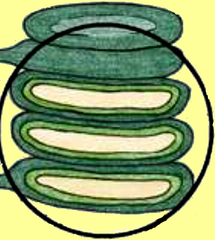
Thylakoids
extenstively folded intracellular membranes that produce atp in plant cells
gas vesicles
to increase buoyancy

storage granules
glycogen, phb and pha for energy; sulfur for oxidation

Disease causing Eukaroyte cells
Protozoa
Fungi
Helminths
Algae
Cilia
Similar but smaller than flagella, normally a ton of them
move in an oar like movement
Found in the esaphogus
How Fungi eat
thrive in nutrient poor enviroments (dummies)
Heterotrophic: acquire food from broad ranges
Saprobic: acquire food from dead plants and animals
parasitic
How do fungi grow?
Most grow in loose association/colonies
Components of fungi
Mycelium: mass of hyphae that makes up colony body
Septa: segments or cross walls that allow the transport or organells and nuterients across compartments
What are fungal infections called and where can they be found?
Mycoses - typically scalp, nails, skin, mucosal membranes
Algal infections
We know of parasitic green algae - these algal infections are largely unknow, and we are unsure how to treat them
Shellfish poisoning (ASP)
Protozoa
Most are harmless, some are parasitic
cytoplasm is divided into endo and ectoplasm
Can maintain shpae constantly, or constantly change shape
PRotozoa habitat and feeding
Hetertrophs
Some species have oral grooves for feeding
some are free range
some absorb food through the membrane
requirement for growth is availability of moisture
Protozoa reproduction cycle
binary fission or sexual reproduction
cycle - cyst (like spore), trophozite
Protozoa poisonings
Diarrheal, paralytic, and neurotoxic shellfish poisonings
Viruses
infect all taxonimic groups - even bacteria
most abundant biological entity
Influence the human and bacterial genome
Viral envelope
Viruses that form envelopes from host cell membranes, nuclear envelope, or endoplamsmic reticulum
they are pleomorphic
Components of a virus
Viron: fully formed virus
Nucleocapsid: capsid with a nucleic acid
capsid: protein shell that surrounds ncleic acid
Spikes: help virus connect to host cell
are either symmetrical, asymmetrical
General phase of animal cell virus infection/replication cylce
Absorption
Penetration
Uncoating
Synthesis
Assembly
Release
Host range
Limited types of cells virus can infect
Tropism
Specific viruses for specific tissues
Cytopathic effects
Damage to host cell from virus
change in shape (deformed)
develop of intercellular changes
inclusion bodies
syncytia
auxotroph
an organism that is deficient in the ability to synthesize an essential organic compound from the constituent parts
Provirus
Persistent infection in which the viral DNA in incorporated in the hosts DNA
Chronic latent state of a virus
Virus goes dormant and comes back when induced by stress
Oncoviruses
Viruses that cause cancer - thought to be an accident but the cause tumors
Epstein Barr Virus
Phage
Viruses that infect bacteria - known as bacteriophage
Can make bacteria more pathogenic
virophages are phages that infect other viruses
We use plaques to watch virus growth
Prions
spongiform encephalopathies
in human - Creutzfeldt Jacobs’s Disease (CJD)
in cows - mad cow disease
Viroids/Satellite Viruses
Viruses that infect plants
Made up of strands RNA - naked viruses
Certain viroids (AAV) can cause Hep D, but only in the presence of Hep B
How to cultivate viruses
viruses require living cells to replicate
In vivo - living animals used as host
in vitro - test tubes
essential nutrient
any substance that an organism can not make itself and must be provided to the organism
macronutrients
required in relatively large quantities and play principal roles in cell structure and metabolism
ex.. C, O, N, H, P, S necessary for protein fxn.. Mg2+ Ca2+, Fe2+, K+
micronutrients
trace elements, required in small quantities and involved in enzyme function and maintenance of protein structure---> Co Cu Mn Zn
Inorganic nutrient
an atom or simple molecule that contains a combination of atoms other than carbon and hydrogen
organic nutrients
contain carbon and hydrogen atoms and are the products of living things
ex.. carbohydrate, lipids, proteins, nucleic acids
Essential elements
Macro-elements
Na: cell transport
Ca: stabilizer of cell wall and endospores of bacteria
Mg: component of chlorophyll, stabilizer of membranes and ribosomes, involved in several enzymatic reactions involving an active site
Micro-elements
copper, cobalt, nickel, molybdenum, iodine, etc- needed in small amounts by microbes
(needed in small amounts but large amounts are toxic)
nutritional immunity
the withholding of critical nutrients from a pathogen by the host ex. Fe
____________ is the limiting nutrient during infection by a pathogen
Fe
heterotroph
organism whose carbon source must be organic
autotroph
organism whose carbon sources is inorganic
phototroph
microorganisms that photosynthesize
chemotroph
microorganisms that gain energy from chemical compounds
lithotroph
organism that uses inorganic molecules
organotroph
organism who uses organic molecules
chemoheterotrophs
majority of microbes that cause human disease
saprobes
free living organisms that feed on organic debris