Inborn Errors of Metabolism
 Call Kai
 Learn
Learn Practice Test
 Spaced Repetition
 Match
Match Flashcards
 Knowt Play
1/56

There's no tags or description
Looks like no tags are added yet.
Name | Mastery | Learn | Test | Matching | Spaced | Call with Kai | Chat |
|---|
No analytics yet
Send a link to your students to track their progress
57 Terms
Inborn errors in metabolism are defects in what?
- Metabolic Pathwars
When do Inborn errors of metabolism often present?
- In newborn period
Inborn errors of metabolism: Non-Specific features
- Failure to thrive
- Hypotonia: Decreased muscle tone
Which lab findings suggest Dx of Inborn Errors of Metabolism?
- Hypoglycemia: ↓[Glucose]
- Ketosis:
- Hyperammonemia
- Lactic Acidosis
Ketosis
- Body uses fat for energy instead of glucose
Why do inborn errors of metabolism cause ketosis?
- Blocked glucose/energy metabolism → ↑ fat breakdown → ketones
Hyperammonemia
- Excess ammonia in the blood
Why do inborn errors of metabolism cause hyperammonemia?
- Impaired ammonia disposal/urea cycle → ↑ ammonia in blood
Lactic Acidosis
- Problem breaking down lactic acid. results in low blood pH
Why do inborn errors of metabolism cause lactic acidosis?
- Pyruvate can't be metabolized normally → ↑ pyruvate → lactate
What can cause Newborn Hypoglycemia?
Good Girls Hate Old Fat
- Glycogen storage disease
- Galactosemia
- Hereditary fructose intolerance
- Organic Acidemias
- Fatty acid metabolism disorders
Which Glycogen Storage Diseases DON'T cause hypoglycemia?
- McArdle's Disease
- Pompe's Disease
Which Glycogen Storage Diseases DO cause hypoglycemia?
- Von Gierke's Disease
- Cori's Disease
What is seen in glycogen storage diseases with hypoglycemia?
- Fasting hypoglycemia: hours after eating
- Ketosis: Absence of glucose during fasting → FA breakdown → ketone synthesis
- Hepatomegaly: Glycogen buildup in liver
Von Gierke's Disease
- Severe hypoglycemia
- Lactic acidosis
Cori's Disease
- Gluconeogenesis intact → mild hypoglycemia
- No lactic acidosis
Hereditary Fructose Intolerance: Deficiency and Accumulation
- D: Aldolase B
- A: Fructose-1-Phosphate
Hereditary Fructose Intolerance: MOA
- Buildup of F1P → Depletion of ATP → Loss of gluconeogenesis/glycolysis
Hereditary Fructose Intolerance: Labs
- Hypoglycemia
- Lactic Acidosis
- Ketosis
Hereditary Fructose Intolerance: Presentation
- Starts just after weaned from breast milk (no fructose in milk)
- "Reducing sugars" (Glucose, Fructose, Galactose) in urine
- Hepatomegaly
Classic Galactosemia: Deficiency and Accumulation
- D: Galactose 1-Phosphate Uridyltransferase
- A: Galactose-1-Phosphate
Classic Galactosemia: MOA
- Accumulation of Glucose-1-Phosphate → ↓ ATP → shuts down gluconeogenesis/glycolysis
Classic Galactosemia: Presentation
- In first few days of life
- Vomiting/diarrhea after feeding
- Hepatomegaly
Classic Galactosemia: Dx
- Reducing sugars in urine
Classic Galactosemia: Labs
- Hypoglycemia
- Lactic Acidosis
- Ketosis
Organic Acidemias: Defect and Accumulation
- D: Abnormal metabolism of organic acids (Propionic and Methylmalonic Acid)
- A: Buildup of organic acids in blood/urine
Organic Acidemias cause what?
- Hyperammonemia via shutdown of urea cycle
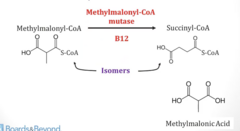
How does Succinyl-CoA relate to Organic Acidemias?
- Common pathway to TCA cycle
In Organic Acidemias, one of the steps is disrupted due to an enzyme deficiency

Organic Acidemias: Presentation
- Newborns (weeks/months)
- Poor feeding, vomiting, hypotonia, lethargy
Organic Acidemias: Labs
- Hypoglycemia
- Ketosis
- Hyperammonemia
- Elevated urine/plasma [organic acids]
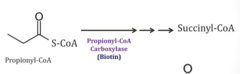
Propionic Acidemia: Deficiency and Accumulation
- D: Propionyl-CoA Carboxylase
- A: Propionyl-CoA → Propionic Acid

Propionic Acidemia: MOA
- Enzyme utilized to convert Propionyl-CoA → Methylmalonyl-CoA is deficient →→ Accumulation of Propionyl-CoA as it cannot be processed
Methylmalonic Acidemia: Deficiency and Accumulation
- D: Methylmalonyl-CoA Mutase
- A: Methymalonyl-CoA → Methylmalonic acid
Methylmalonic Acidemia: MOA
- Enzyme utilized to convert Methylmalonyl-CoA → Succinyl-CoA is deficient →→ Accumulation of Methylmalonyl-CoA as it cannot be processed
Maple Syrup Urine Disease: Type of Disorder, Deficiency, Accumulation
- T: Branched chain AA disorder
- D: α-Ketoacid Dehydrogenase
- A: AAs and α-Ketoacids in plasma/urine
Maple Syrup Urine Disease: Why does the urine smell sweet?
- AAs and α-Ketoacids accumulate in plasma/urine → α-Ketoacid of isoleucine gives urine sweet smell
Common Fatty Acid Disorders
- Carnitine deficiency
- MCAD (medium-chain-acyl-coA dehydrogenase) deficiency
Carnitine and MCAD deficiencies both cause what?
- Hypoketotic Hypoglycemia when fasting
Why do Carnitine and MCAD deficiencies both Hypoketotic Hypoglycemia?
1. Lack of FA breakdown → low [ketone bodies]
2. Overutilization of glucose → hypoglycemia
3. Lack of Acetyl-CoA for Gluconeogenesis
Carnitine and MCAD Deficiencies: Symptoms
- 3 months → 2 yrs // symptoms w/ fasting or illness
- Failure to thrive, altered consciousness
- Hypotonia
- Hepato and Cardiomegaly
- Hypoketotic hypoglycemia****
Primary Carnitine Deficiency: MOA and Presentation
- Normally moves FAs → mitochondria for metabolism
- Muscle weakness, cardiomyopathy
Primary Carnitine Deficiency: Labs
- ↓ Carnitine
- ↓ Acylcarnitine
MCAD Deficiency: MOA
- Poor oxidation of 6-10 carbon FAs → Dicarboxylic acids (6-10C) in urine
MCAD Deficiency: Labs
- Dicarboxylic acids (6-10C) in urine
- ↑ Acylcarnitine levels
Urea Cycle Disorders: General Characteristics
- Onset in newborn period (24-48hrs) after feeding
- Feeding causes protein load → symptoms
- Poor feeding, vomiting, lethargy, seizures
Urea Cycle Disorders: Labs
Isolated Severe Hyperammonemia:
- Normal: < 50 mgc/dl
- Urea disorder: > 1000 mgc/dl
Key finding*
Most common urea cycle deficiency
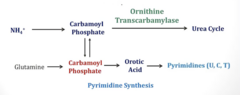
- Ornithine transcarbamylase deficiency
OTC Deficiency: Deficiency and Accumulation
- D: Ornithine Transcarbamylase (used for urea cycle)
- A: ↑ Carbamoyl Phosphate // ↑ Orotic Acid // ↑ Ammonia

Orotic Aciduria: Type of disorder
- Disorder of pyrimidine synthesis
Orotic Aciduria: Major features
- Megaloblastic Anemia
- Poor growth

Orotic Aciduria: Ammonia levels
- No issues with urea cycle → normal [ammonia]
Mitochondrial Disorders: General Characteristics
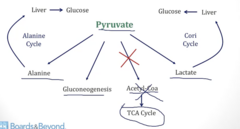
- Loss of ability to metabolize pyruvate → acetyl-CoA
- All cause severe lactic acidosis and elevated alanine
What is one of the most common mitochondrial disorders?
- Pyruvate Dehydrogenase complex deficiency
Why is hypoglycemia not common in mitochondrial disorders?
- The main issue is blocking Pyruvate → Acetyl CoA → Shunts towards Alanine/Lactate
- Although limited, pyruvate can still be metabolized into gluconeogenesis (less w/out acetyl coa) → no hypoglycemia

PDH Complex Deficiency: Deficiency and Accumulation
- D: PDH
- A: Alanine/Lactate
PDH Complex Deficiency: Key Findings
- Poor feeding
- Growth failure
- Developmental delays
PDH Complex Deficiency: Labs
- Elevated alanine
- Lactic acidosis
- NO hypoglycemia