Lecture 18- Innate Host Resistance
 Studied by 1 person
 Call Kai
 Learn
Learn Practice Test
 Spaced Repetition
 Match
Match Flashcards
 Knowt Play
1/32

There's no tags or description
Looks like no tags are added yet.
Name | Mastery | Learn | Test | Matching | Spaced |
|---|
No study sessions yet.
33 Terms
Immune system
This refers to the ability of an organism to protect themselves from pathogen infection.
Protecting oneself from infection requires the immune system being able to determine the difference between self and non-self.
Not always functioning properly.
Defense mechanisms
When an individual is exposed to a potential pathogen, the body responds to
that exposure by protecting itself.Innate Immunity
Adaptive Immunity
Innate Immunity
Nonspecific mechanisms that are in place to protect the host.
Try to prevent the pathogen from entering the body.
First line of defense
6 Types of Innate Immunity
Physical Barriers
Chemical Barriers
Cellular Defenses
Inflammation
Fever
Molecular Defenses
Adaptive immunity:
Antigen specific response induced by the host immune system.
Antibodies can be made to target all the potential pathogens.
Tailored to a specific pathogen.
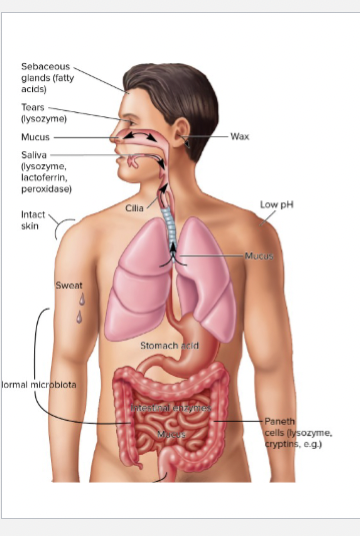
Nonspecific host defense: Physical Barriers
The skin and mucous membranes protect the body and internal organs
Made up of epithelial cells that create a physical barrier between the outside world and the internal one.
5 Physical Barriers
Skin
Mucous Membrane
Respiratory System
GI Track
Genitourinary Tract
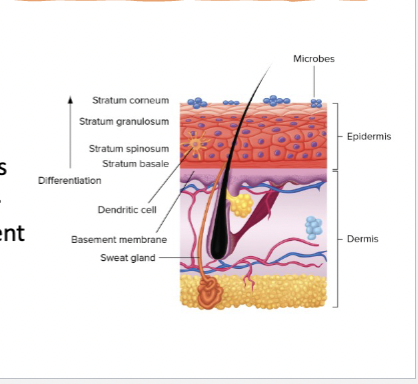
Skin
Exposed to microorganisms, toxins, sunlight, heat, cold, cuts, insects.
The 1st line of defense.
Outer layer consists of keratinocytes.
Keratin is produced by these cells which is used in production of hair, nails, and skin.
Different niches of microorganisms resident on the skin based on different microenvironments.
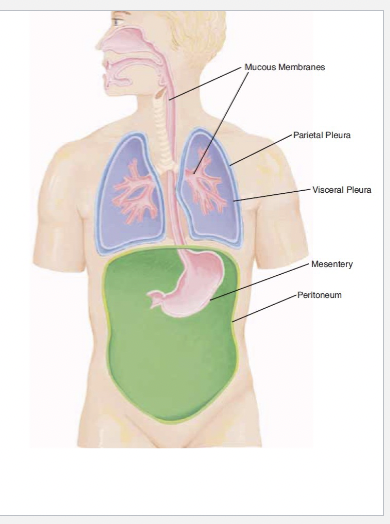
Mucous membranes
The mucous membrane covers the tissue and organs of the following systems and behaves as a physical barrier for organs.
• Respiratory track
• GI track
• Genitourinary
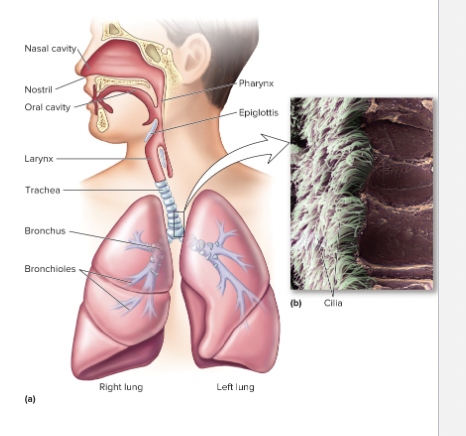
Respiratory system
•Average person breathes in about 10,000
microorganisms/day.
•Large (>10um) microorganisms get trapped by the hairs
and cilia in the nasal cavity.
• Cilia beat towards the pharynx which allows you to
cough out microorganisms.
• Coughing/sneezing: Physically flushing out the
pathogens.
•Small microorganisms (<10um) get caught in the
mucociliary blanket in the lower respiratory system.
• Cilia beat towards the mouth. Coughing and sneezing
clears the bacteria.
•Microorganisms that reach the alveoli are cleared by
alveolar macrophages.
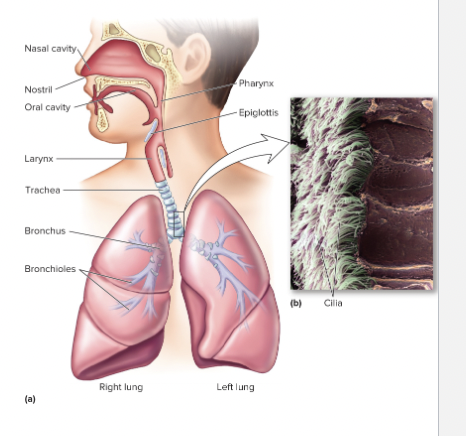
Large (>10um) microorganisms get trapped…
by the hairs
and cilia in the nasal cavity.
• Cilia beat towards the pharynx which allows you to
cough out microorganisms.
• Coughing/sneezing: Physically flushing out the
pathogen
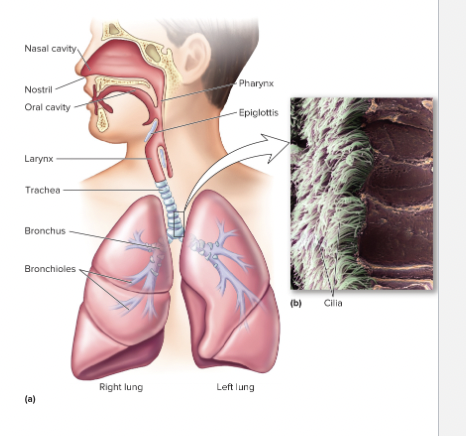
•Small microorganisms (<10um) get caught in the…
mucociliary blanket in the lower respiratory system.
• Cilia beat towards the mouth. Coughing and sneezing
clears the bacteria.
•Microorganisms that reach the alveoli are cleared by
alveolar macrophages.
GI Track
Microorganism ingested with food are often killed by the
acidic environment of the stomach (HCl, proteolytic
enzymes)Microorganism ingested with food are often killed by the
acidic environment of the stomach (HCl, proteolytic
enzymes)
Microorganisms in GI Track
Cysts, H. pylori, Clostridium are a few of the microorganisms that
can survive the stomach acid
What else can purge GI Pathogens
Peristalsis and shedding of the epithelial cells can also purge GI pathogens.
• Vomiting/Diarrhea: Physically flushing out pathogens.
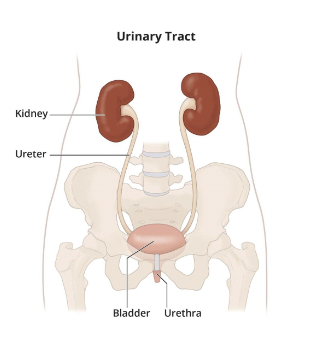
Genitourinary tract
• Microorganism typically cleared by flushing
with urine which is low in pH and contains urea
and other end-products that are toxic to
microorganisms.
• Women are 4 times more likely to develop UTI
because of the shorter urethra.
• Lactic-acid forming lactobacillus makes up the
microbiome of the female vagina. Creates an
acidic environment which makes it difficult to
invade.
7 Types of Chemical Barriers
Lysozyme
Transferrin
Lactoferrin
Antimicrobial Peptides
Complement System
Complement Activation
Cytokines
Lysozyme
an enzyme found in tears, saliva and mucus.
Functions to cleave the covalent bond between NAM-NAG peptidoglycan in bacterial cell wall
Transferrin:
A soluble protein in the blood that can bind iron. Bacteria require iron as a co-factor
Lactoferrin:
Binds iron in salvia and mucus in order to prevent bacterial growth.
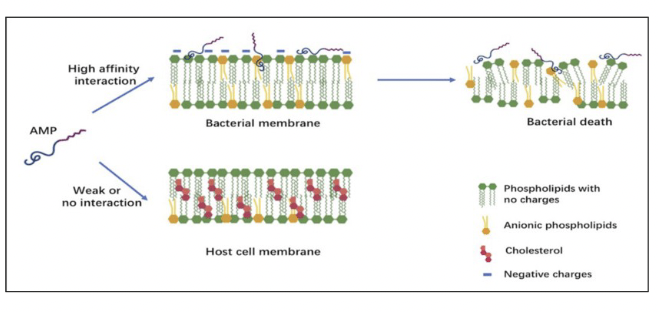
Antimicrobial peptides
Antimicrobial peptides are amphipathic.
Function by forming pores in membranes which result in microorganism lysis.
Example: defensins.
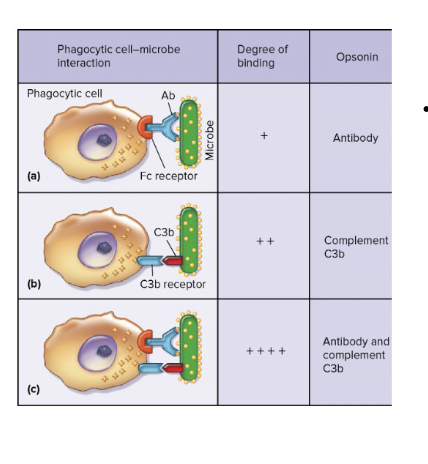
Chemical Barriers: Complement system
Is a form of innate immunity that involves a collection of proteins found in the serum
3 Outcomes of Complement System
Inflammatory response
Cell lysis of microbial cell
Opsonization: coating microbe with antibodies or other proteins (opsonins) that allow the microbe(opsonized) to be recognized by phagocytic cells.
Opsonization:
coating microbe with antibodies or other proteins (opsonins) that allow the microbe(opsonized) to be recognized by phagocytic cells
Overall components of Complement System
Complementation proteins are initially generated in the inactive form. They must first be activated to function.
Activation occurs by a cascade of proteolytic cleavage.
There are three pathways of complement activation:
Alternative
Lectin
Classical
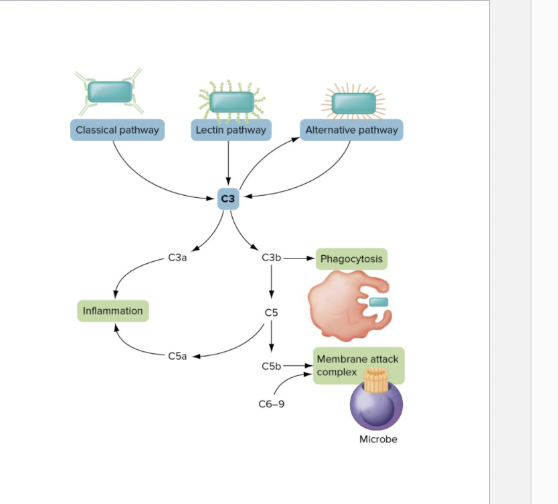
Three pathways of complement activatio
Alternative
Lectin
Classical
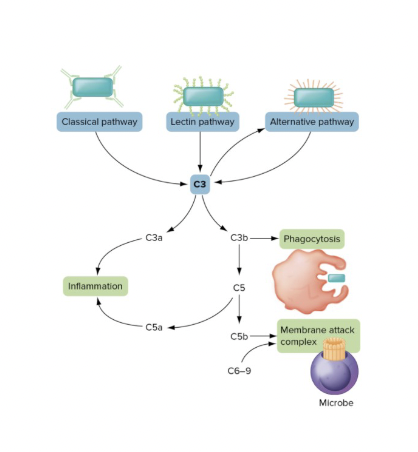
Complement activation- Alternative components
bacteria with repetitive structures such as LPS in gram – bacteria.
C3 protein is self cleaved into C3a and C3b.
C3b binds to bacterial cell surface.
C3b bound cells act as opsonin.
Prepared to be phagocytized.
Overall Alternative Function
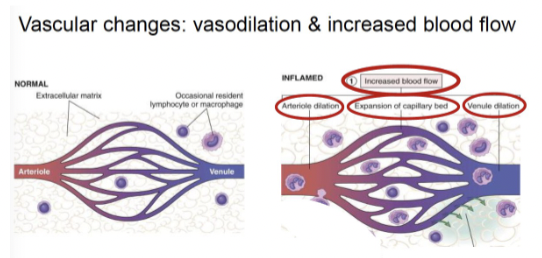
To bring about inflammation, C3a stimulates vasodilation of the host cell
Cytokines
small soluble glycoprotein released by one type of cell and has an impact on another population of cells using a signal transduction pathway
Production of cytokines is stimulated by…
bacterial, virus, parasite, tumors, inflammation
Production of 1 type of cytokine…
can promote the production of other types of cytokines.
Cytokines can bind to target host cells at a transmembrane receptor.
Small number of cytokines bound to cell receptors can induce a dramatic response
5 types of Cytokines
Chemokines
Interleukins
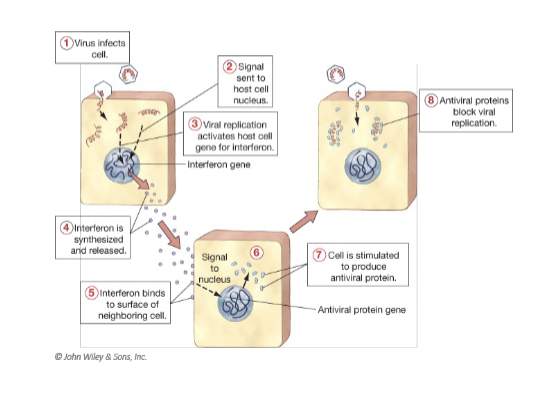
Interferons
Colony-stimulating Factors
Tumor Necrosis Factors
Interferons