Equine Husbandry
 Call Kai
 Learn
Learn Practice Test
 Spaced Repetition
 Match
Match Flashcards
 Knowt Play
1/212

Earn XP
Description and Tags
Year 1
Name | Mastery | Learn | Test | Matching | Spaced | Call with Kai | Chat |
|---|
No analytics yet
Send a link to your students to track their progress
213 Terms
FEI
the governing body of equestrian sport
British Horseracing Authority
governing body that regulates flat racing and jump racing horses
importance of horse height
to provide correct description for ID, certain classes have height eligibility, breed standards
requirements to measure horse height
measured to highest point of withers on level ground, no shoes on, feet trimmed, over 4 years old (fully grown)
hot blooded horse breeds
thoroughbreds and arabs
main use for thoroughbreds
racing
main use for arabs
endurance and showing
examples of cold blooded horse breeds
shire, clydesdale, suffolk punch, percheron, belgian draught (and more)
main use of cold blooded horses
working horses, meat, police horses
features of warm blooded horses
athletic and versatile, wide variation in size
main use of warm blooded horses
equine sports
native pony breeds
shetland, exmoor, dartmoor, fell, dale, connemara, new forest, highland, welsh (A, B, C, D)
horse passport scheme
all equids must have a valid passport for transport, veterinary treatment, slaughter for human consumption and sale and all must be microchipped
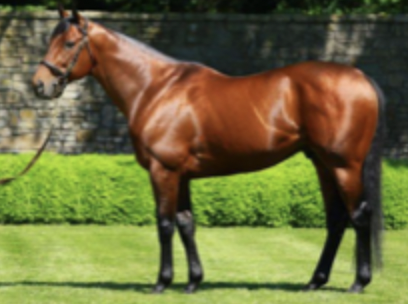
bay horse coat
brown coat, black mane and tale, black points
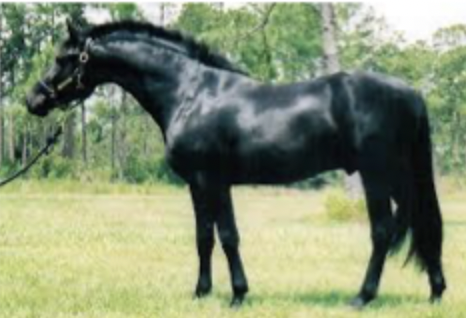
black horse coat
all black horse
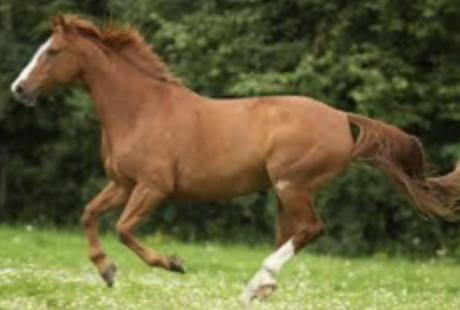
chestnut horse coat
ginger coat, main and tail (can vary in shade)
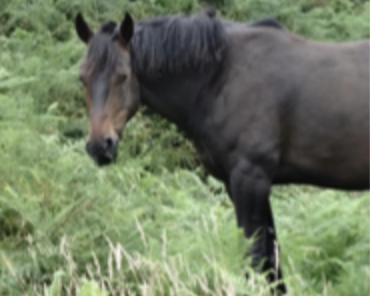
What are the features of a brown horse coat?
dark brown coat with no black points, black mane and tail
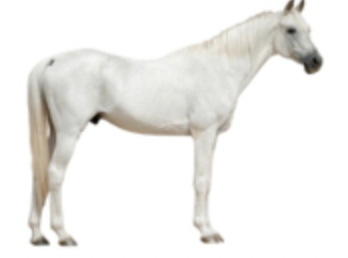
grey horse coat
black skin, coat fades over lifetime (not called white)
possible hoof appearances
white, black or striped
Farriers registration act
legislation ensuring that all farriery is conducted by members of the farriers registration council (except vets and supervised apprentices)
riding establishments act
legislation enforcing an annual license to be issued by the local council following inspection
requirements for grass kept horses
access to fresh water, shelter options, 0.5-1 hectares of suitable quality grazing per horse, parasite management, field rotation, weed control, adequate drainage
reasons to stable a horse
for rehabilitation, lack of grazing space, easier to monitor individuals
housing considerations for indoor horses
enough space to stand, freely move head and neck, lie down and turn 360, and space for someone to get around, dry comfortable floor with enough traction and adequate drainage, doors low enough to look over and wide enough to pass through, access to water, ventilation, windows to alleviate boredom, light, ideal humidity
bedding types
straw, wood shavings, shredded paper/cardboard, sand, hemp, flax, wood pellets, rubber matting
advantages of using straw for bedding
comfortable, absorbent, easy disposal, cheap
disadvantages of using straw for bedding
edible so can cause colic, potentially allergenic, can cause dust and fungal spores
advantages of using wood shavings for bedding
comfortable, very absorbent, produces less dust
disadvantages of using wood shavings for bedding
expensive, difficult disposal, accidental ingestion can occur
bedding systems
daily mucking out, deep litter system, banking at walls, full or half beds
routine equine healthcare practises
worming, vaccinations, farriery, grooming
worms in horses
most found in GI tract, worm egg counts useful but don’t give full picture, important to use targeted worming program to reduce resistance, pasture management can reduce incidences
routine equine vaccinations
equine influenza, tetanus, strangles, equine herpes (competition horses and pregnant mares), equine viral arteritis (breeding stallions)
different types of rugs
waterproof, stable, insect barrier, sweat rugs
reasons to rug horses
metabolic weight loss, cleanliness, clipped to reduce sweating
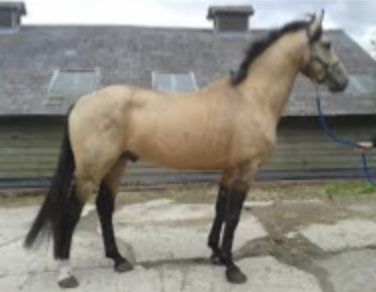
dun coat
golden coat with black mane and tail
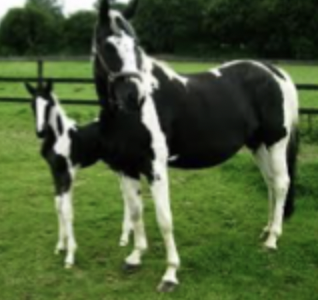
piebald coat
black and white patches
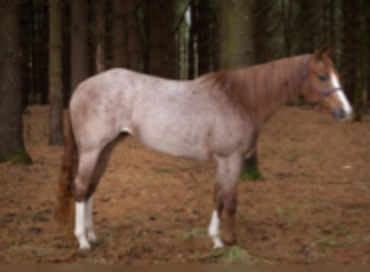
roan coat
base colour (any colour) is diluted with white hair
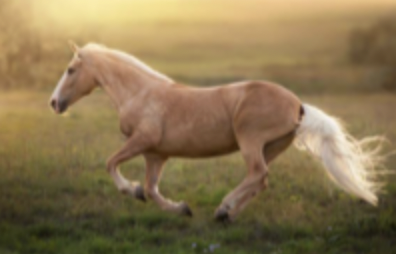
palomino coat
golden coat with cream mane and tail
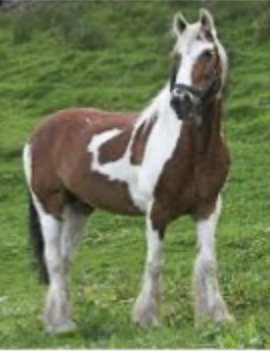
skewbald coat
patches of white and any other colour
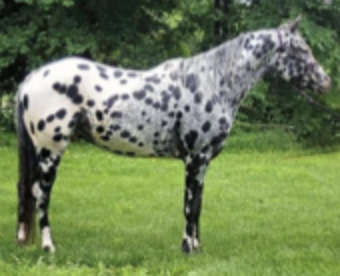
appaloosa coat
spotted coat
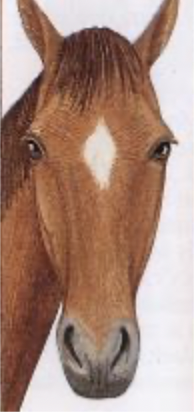
star face marking
mark between eyes that doesn’t extend down muzzle
stripe face marking
thin stripe down muzzle
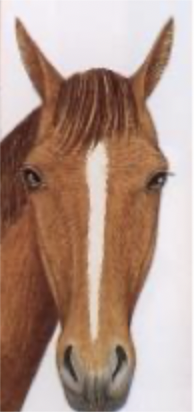
what are all forages composed of?
protein, fat, soluble carbohydrates which decreases as forage matures and structural fibres which increase as forage matures
examples of preserved forage
hay and haylage
ways to improve quality of hay
steaming can destroy moulds, fungi and bacteria but not mycotoxins, soaking reduces respirable pathogens and water soluble macro minerals but can increase bacterial count
features of haylage
fermented grass stored in an anaerobic environment, increased digestible energy and palatability, reduced dust, spoils quickly once opened, fermented sugars so lower water soluble carbohydrates
source of fibre for horses
sugar beet but must be soaked before feeding (or will swell in throat)
features of sugar beet
high in fibre, low sugar, no starch, palatable, calcium rich
features of straight cereals
starch based so limited digestibility, grains must be appropriately processed/cooked, fed to meet energy shortfall of athletic horses, do not provide full balanced diet, calcium phosphate imbalance
examples of straight cereals
oats, barley, corn, bran
types of commercial feeds
complete feeds, balancer, supplements, complementary feeds
how to calculate maintenance requirements for horses
measure body weight, determine appetite, consider physiological status and age
energy requirements for pregnant mares in early gestation
maintenance only
energy requirements for pregnant mares during late gestation
slow increase from maintenance at 9 months to maintenance plus 20% at 11 months
energy requirements for breeding mares during early lactation
double maintenance requirement
energy requirements for breeding mares during late lactation
maintenance plus 25%
energy requirements for stallions in breeding season
maintenance plus 25%
rough daily weight gain for 4 month old foals
0.85 kg per day
rough daily weight gain for 6 month old foals
approx 700g per day
rough daily weight gain for yearlings
0.5-0.65 kg per day
rough daily weight gain for 2 year old foals
0.2 kg per day
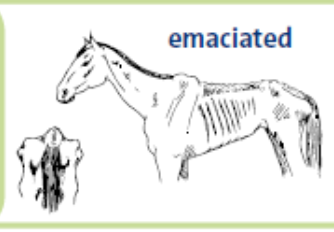
features of a horse with a body condition score of 0
marked ewe neck which is narrow and slack at base, clearly visible ribs, skin tight over ribs, spinous processes sharp and easily seen, angular pelvis, very sunken rump, deep cavity under tail
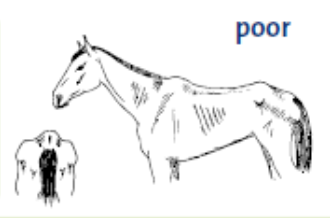
features of a horse with a body condition score of 1
ewe neck which is slack at the base, ribs clearly visible, skin clearly shrunken either side of spine, spinous processes well defined, rump sunken but skin supple, pelvis and croup well defined, cavity under tail
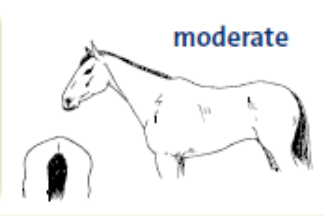
features of a horse with a body condition score of 2
narrow but firm neck, shoulder blade clearly defined, ribs just visible, spinous processes felt but not seen, rump flat either side of spine, croup well defined, slight cavity under tail
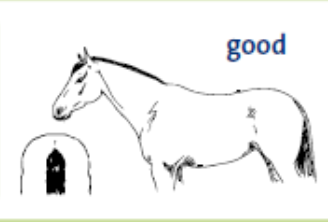
features of a horse with a body condition score of 3
firm neck, no crest, shoulder blades defined, ribs just covered and easily felt, no gutter along back, spinous processes covered but can be felt, pelvis covered by fat and rounded, no gutter, pelvis easily felt
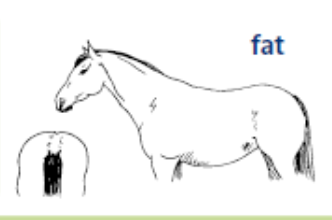
features of a horse with a body condition score of 4
slight wide and spongy crest on neck, ribs are well covered, gutter along spine to root of tail, fat stored either side of the spine to form slight apply bottom, pelvis only felt with firm pressure
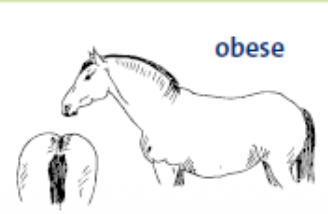
features of a horse with a body condition score of 5
very wide and firm crest with creases of fat, shoulder blade difficult to feel, ribs cannot be felt, deep gutter along spine, broad and flat back, marked apple bottom, pelvis cannot be felt
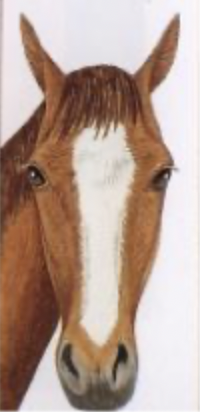
blaze face marking
stripe that extends down muzzle but doesn’t cross the nasal crest
snip face marking
marking between the nostrils
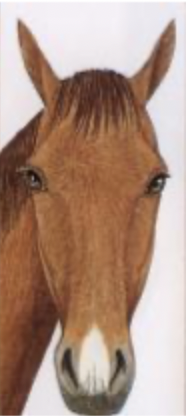
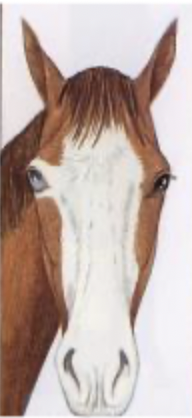
white face
marking that extends past the nasal crest and covers most of face
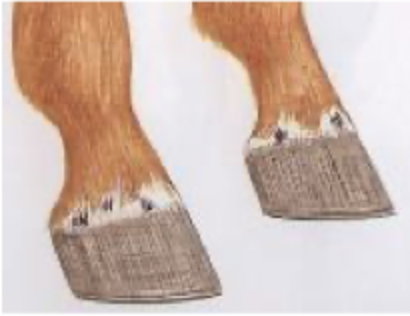
ermine marks
black spots on white coronet on horse feet
rules for describing limb and foot markings
marks to be drawn and described on passport using layman terms
types of hair whorls
simple, feathered, linear
simple whorl
circular whorl
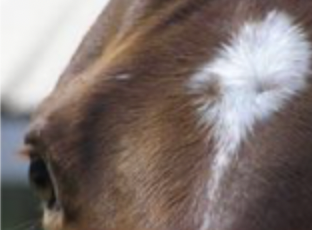
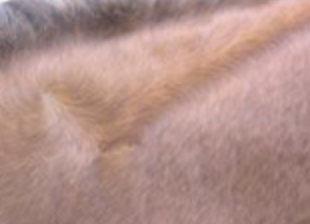
feathered whorl
whorl where hair meets along a line and then fans out in a feather shape
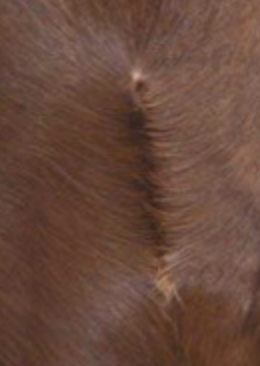
linear whorl
hair meets from opposite sides and stands up
What are the ways to make horses identifiable?
microchip and permanent brands
types of indoor housing
traditional stable/loose box, tether stalls, communal barn, American barn
natural horse eating habits
trickle feeders on seasonal, poor-quality pastures
horse saliva composition
mucus for lubrication, less bicarbonate than ruminants, limited amylase
which horse teeth are involved in prehension?
incisors
which horse teeth are involved in mastication?
molars
what type of forage do horses spend the most time chewing?
short fibre
what are the benefits of long-stem forage for horses?
provides a fuller range of dental excursions so promotes more even dental wear
components of horse diet
forage, concentrates, protein, macrominerals, microminerals, supplements
feeding methods
hay nets, racks, mangers, floor
complementary feed
any feed that is given alongside forage or grazing to provide a balanced diet
features of oat feed
palatable, can be fed whole or rolled, relatively high fibre, low digestible energy
features of barley feed
hard kernel needs to be treated, limited digestion in small intestine if uncooked which can lead to starch overload in hindgut
features of corn feed
lower fibre, higher energy than oats, limited digestion in small intestine if uncooked which causes starch overload in hindgut
features of bran feed
outer portion of wheat grains fed as a mash, high fibre, low protein
minimum forage for high intensity exercise horses
1% of body weight daily in dry matter
energy requirements for horses doing light work
maintenance plus 25%
energy requirement for horses doing moderate work
maintenance plus 50%
energy requirement for horses doing intensive work
double maintenance
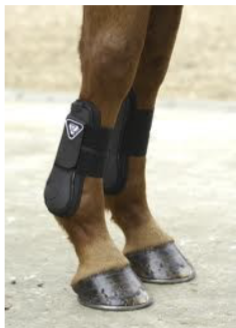
what piece of tack does this image show?
tendon boots
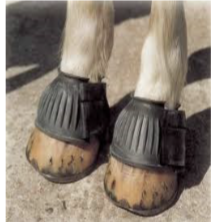
what piece of tack does this image show?
overreach boots
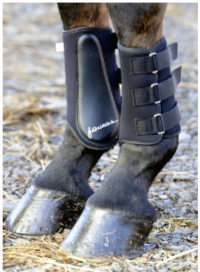
what piece of tack does this image show?
brushing boots
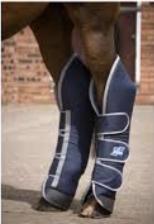
what piece of tack does this image show?
travel boots