Steps of Pathogenesis
 Call Kai
 Learn
Learn Practice Test
 Spaced Repetition
 Match
Match Flashcards
 Knowt Play
1/37

There's no tags or description
Looks like no tags are added yet.
Name | Mastery | Learn | Test | Matching | Spaced | Call with Kai | Chat |
|---|
No analytics yet
Send a link to your students to track their progress
38 Terms
What are the 5 Steps of Pathogenesis?
Entry - Portals
Adhesion
Invasion
Damage
Exit
What are the three portals of entry?
Mucous membranes: GI tract through food and water
Skin (intact): via hair follicles and sweat ducts
Parenteral route: Only accessed when skin is injured, helping microbes deposit directly into tissues
What is Salmonella’s ‘preferred’ portal of entry?
Salmonella needs to be ingested for a disease to occur
What does Virulence mean?
Virulence means how severe a microbe becomes
What is ID50?
ID50 is the number of microbes required to infect 50% of the population. A lower ID50 means greater virulence
What is LD50?
LD50 is the number of microbes required to kill 50% of the population. A lower LD50 means greater virulence
What are Adhesins?
Adhesins are special proteins on pathogens that allow them to attach to specific receptors on host cells
What are some examples of Adhesins?
Some examples of Adhesins include fimbriae and bacterial flagella and viral capsids (Gp120 spikes)
What is an example of a biofilm?
Biofilm example: Pseudomonas aeruginosa in lungs
What are the 4 ways microbes evade phagocytosis?
Inhibit adherence
Escape phagosome
Prevent phagosome-lysosome fusion
Survive in phagolysosome
What can inhibit phagocytosis?
Surface M protein and bacterial capsule inhibit phagocytosis
What are the three exoenzymes?
Exoenzymes:
Coagulase: forms blood clot around bacteria for protection
Kinase: digests blood clots formed by the body to spread infection
IgA proteases: destroys IgA antibody
What is Antigenic variation?
Antigenic variation is when a pathogen changes its antigens so that antibodies can’t bind to them as effectively
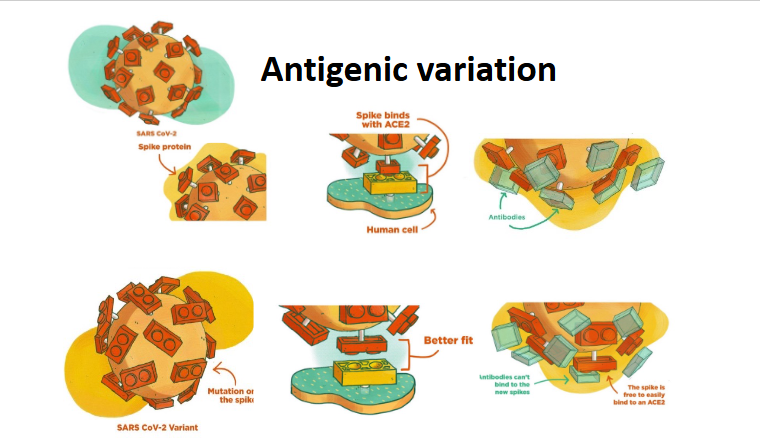
What are some examples of Antigenic variation?
Examples of Antigenic variation: Influenza virus, Neisseria gonorrheae
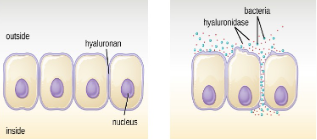
What do microorganisms secrete to break down host connective tissue and examples of this?
Microorganisms secrete a variety of extracellular enzymes that break down host connective tissue which allow penetration
Examples: Hyaluronidase, collagenase, nuclease
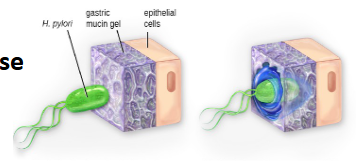
What does Helicobacter pylori release to neutralize stomach acid?
Helicobacter pylori releases urease to neutralize stomach acid
What are invasins and what do they do?
Invasins are proteins produced by pathogens and they rearrange host cell structure to force the cell to take the pathogen in
What are some examples of Invasins?
Invasins examples: Salmonella, Shigella
What are the three ways bacteria harm their host?
Direct damage
Competition over nutrients
Production of toxins (toxigenicity)
Describe direct damage
Direct damage is when bacteria multiply causing the host cells to be crowded and damaged by pressure
Describe competition over nutrients
Competition over nutrients are when bacteria produce their own proteins called siderophores that bind to iron more than our iron-binding proteins
They can also produce enzymes that damage our iron-binding proteins such as hemolysins
Describe production of toxins (toxigenicity)
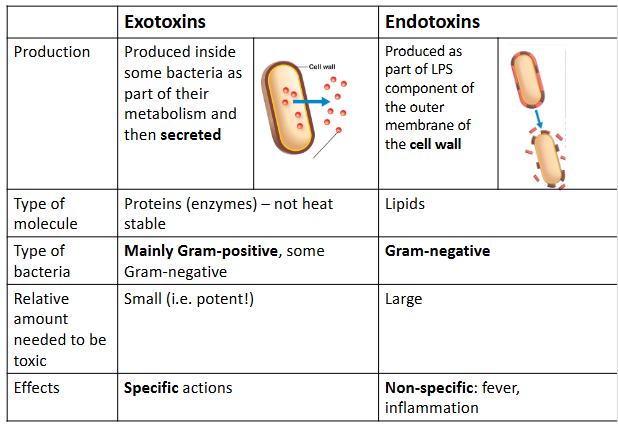
The production of toxins harms us directly because they are poisonous substances produced by microbes
What does Toxemia mean?
Toxemia is the presence of toxins in blood
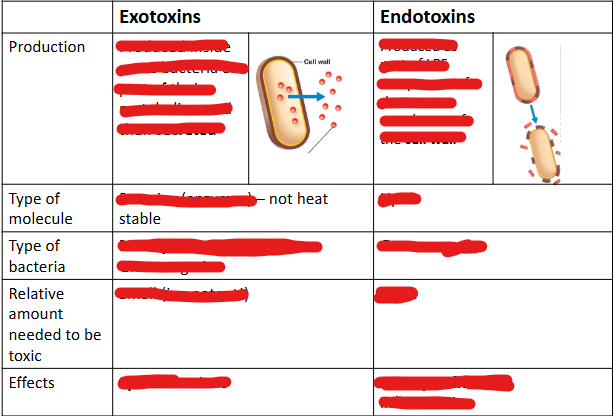
Exotoxins vs. Endotoxins chart
What are the three Exotoxins?
Intracellular A-B exotoxins
Membrane-disrupting exotoxins
Superantigens
What is Intracellular A-B exotoxins and examples of this?
Intracellular A-B exotoxins: contains an active (A) component and a binding (B) component
Examples: Tetanus toxin, botulinum toxin, cholera toxin
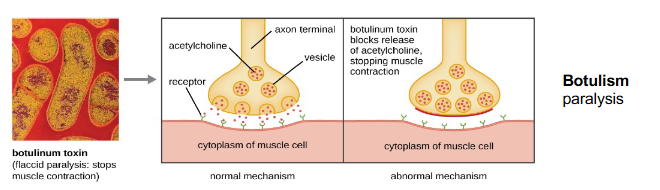
Describe the mechanisms of botulinum toxin
Botulinum toxin blocks the release of acetylcholine, stopping muscle contraction, leading to Botulism paralysis
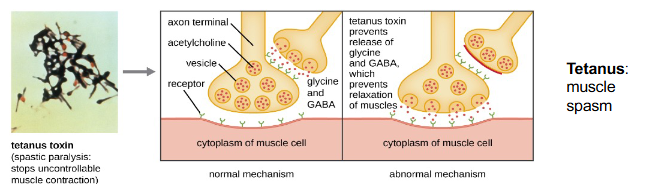
Describe the mechanisms of tetanus toxin
Tetanus toxin prevents the release of glycine and GABA, which prevents the relaxation of muscles, leading to muscle spasms
What do Membrane-disrupting exotoxins do to host cells and examples of this?
Membrane-disrupting exotoxins: leads to the lysis of host cells
Examples: C. difficile toxins, S. aureus alpha toxin
What do Superantigens do to immune response and examples of this?
Superantigens: provoke a very intense immune response which leads to a sudden release in cytokines
Examples: toxic shock syndrome toxin produced by S. aureus
When are Endotoxins released?
Endotoxins are released during gram negative bacterial multiplication
What symptoms do Endotoxins lead to?
Endotoxins lead to the same nonspecific symptoms, such as chills, fever, weakness
What is are some examples of diseases caused by endotoxins?
Endotoxin disease examples: Typhoid fever caused by Salmonella typhi, and neisseria meningitidis
How do endotoxins cause fever and inflammation?
Endotoxins cause fever and inflammation by producing interleukin-1. Interleukin-1 causes the hypothalamus to produce prostaglandins, bringing the body’s temperature higher resulting in a fever
What does TNF do to blood vessels?
TNF increases the permeability of blood vessels, leading to edema and shock
How do pathogens exit their host?
Pathogens exit their host through the same portals of entry
How do eukaryotic parasites exit?
Eukaryotic parasites can actively exit