biochem test 1 review part 2
 Call Kai
 Learn
Learn Practice Test
 Spaced Repetition
 Match
Match Flashcards
 Knowt Play
1/47

There's no tags or description
Looks like no tags are added yet.
Name | Mastery | Learn | Test | Matching | Spaced | Call with Kai | Chat |
|---|
No analytics yet
Send a link to your students to track their progress
48 Terms
A thermodynamically unfavorable reaction can be performed by
coupling it to a thermodynamically favored reaction.
The total free energy change of a thermodynamic reaction is
the sum of the separate parts; this process can aid in a reaction that would otherwise be unfavorable
Some reactions proceed even with deltaGo ’ > 0 becuase
concentration of the product is kept very low which results in delta gprime greater than 0
ATP is the
universal currency of cellular energy
phosphoryl group tranfsers
help to move around energy
ATP has
3 phosphoryl groups
Hydrolysis of all atp/amp/adp molecules creates a
inorganic phosphate product
oxidation is
loss of electrons
Reduction is
gain of electrons
What is the only exception to the standard amino acid structure
proline
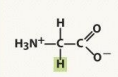
glycine G
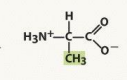
alanine A
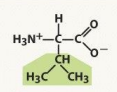
valine V
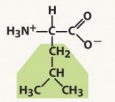
leucine L
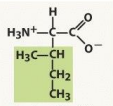
isoleucine
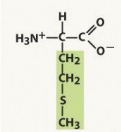
methione M
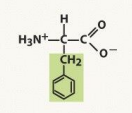
phenylanline F
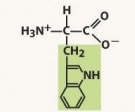
tryptophan W
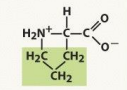
proline (P)
Aliphatic amino acids
G,A,V,L,I,M
NON POLAR SIDE CHAIN amino acids
G,A,V,L,I,M,F,W,P
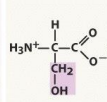
serine
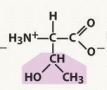
threonine T
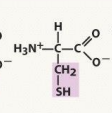
cysteine C
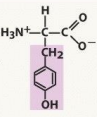
tyrosine Y
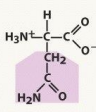
asparagine
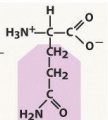
glutamine G
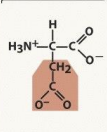
aspartate
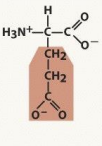
glutamate
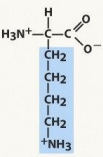
lysine
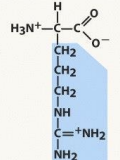
arganine
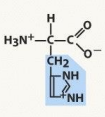
histidine
aromatic residues have
chromophoric properties which make them useful.
Because of the aromatic amino acids proteins typically show absorbance around
280nm on a spectra
CYS can form
disulfide bonds
H3n AND cooh ARE MORE
acidic ph groups
more basci ph groups are
H2N and COO-
acidc oh is
below 7
basic ph is
above 7
Linkage of amino acids results in
loss of one water molecule and joins carbonyl group to amino group to form a strong peptide bond.
linkage of amino acids results in a
polypeptide
formation of the peptide bond causes the
carboxyl and amino groups to lose their charge
peptide bond formation is a
condensations reaction between the alpha carbon of one of the amino acids and alpha amino group of another amino acid
N termis is the
NH3 group on one side of the peptide bond
the C termis the
c-o group on the other side of the peptide bond
peptide bonds demosntrate a
planar configuation
most aino acids generally are preffered as
cis/trans
to read a peptide or protein always read
left to right or n terminal to c terminal