IB DP Geography Unit 3: Resource Consumption and Security
 Call Kai
 Learn
Learn Practice Test
 Spaced Repetition
 Match
Match Flashcards
 Knowt Play
1/54

Earn XP
Description and Tags
Name | Mastery | Learn | Test | Matching | Spaced | Call with Kai | Chat |
|---|
No analytics yet
Send a link to your students to track their progress
55 Terms
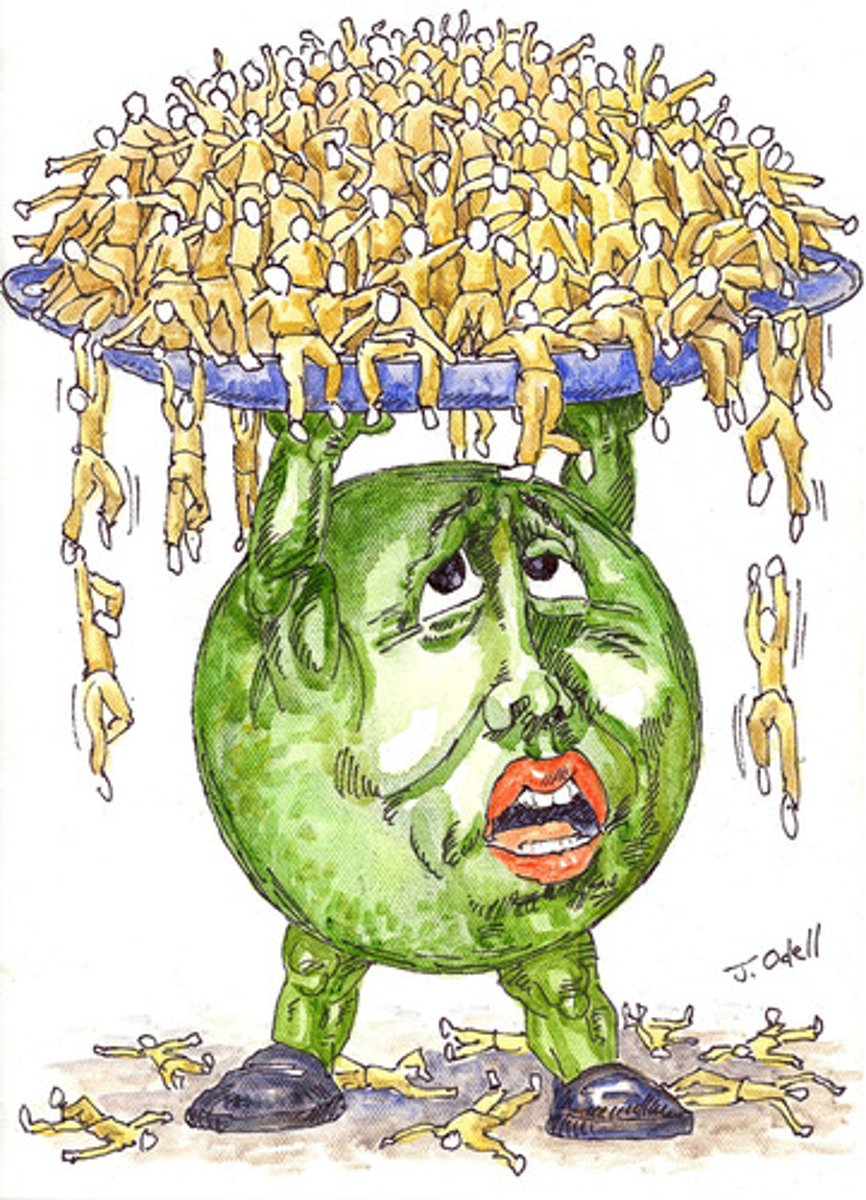
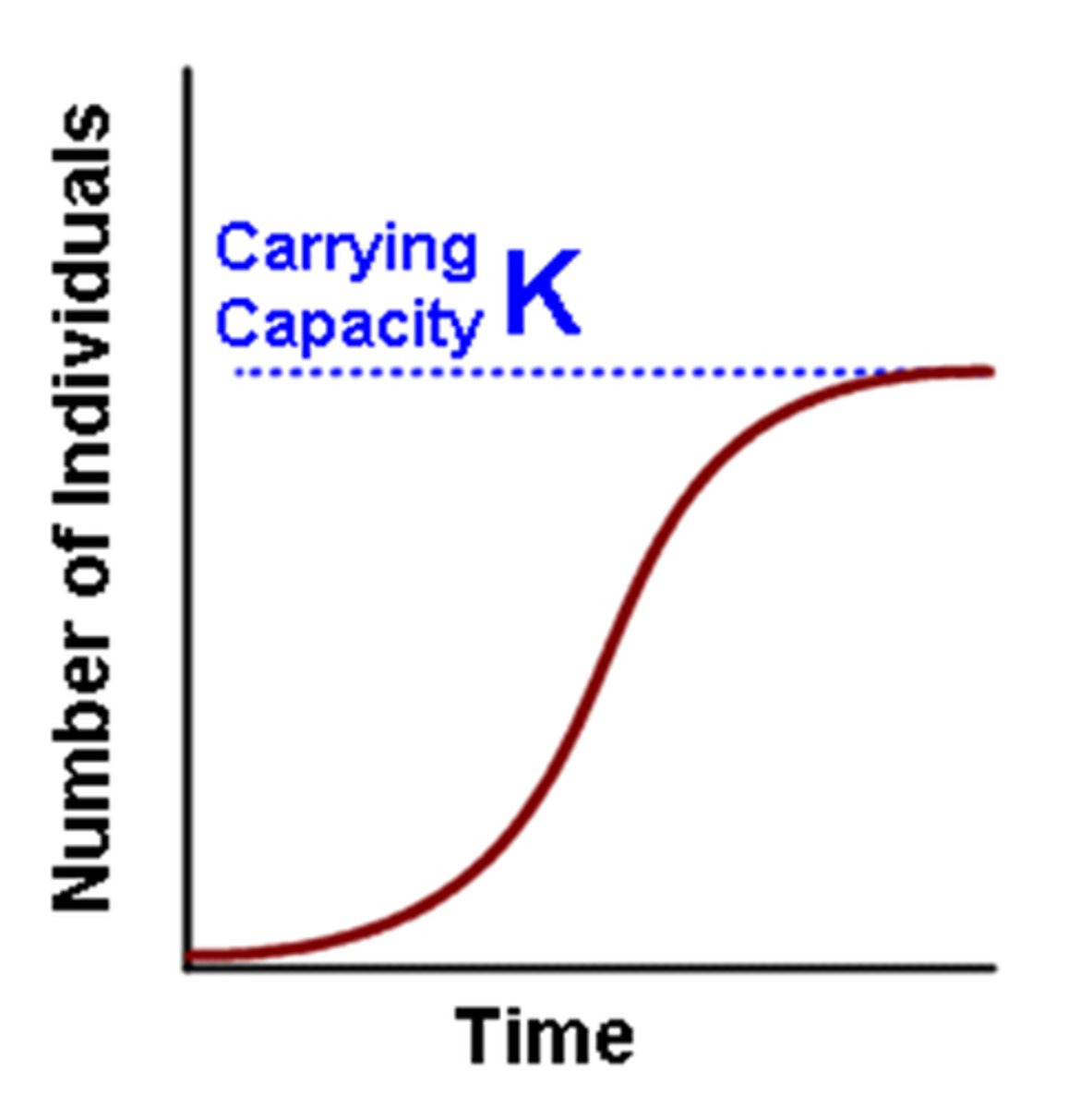
Carrying capacity
the maximum number of individuals of a species that the environment can sustainably support in a given area without degrading its resource base.
Reserves
Resources that are accessible and usable
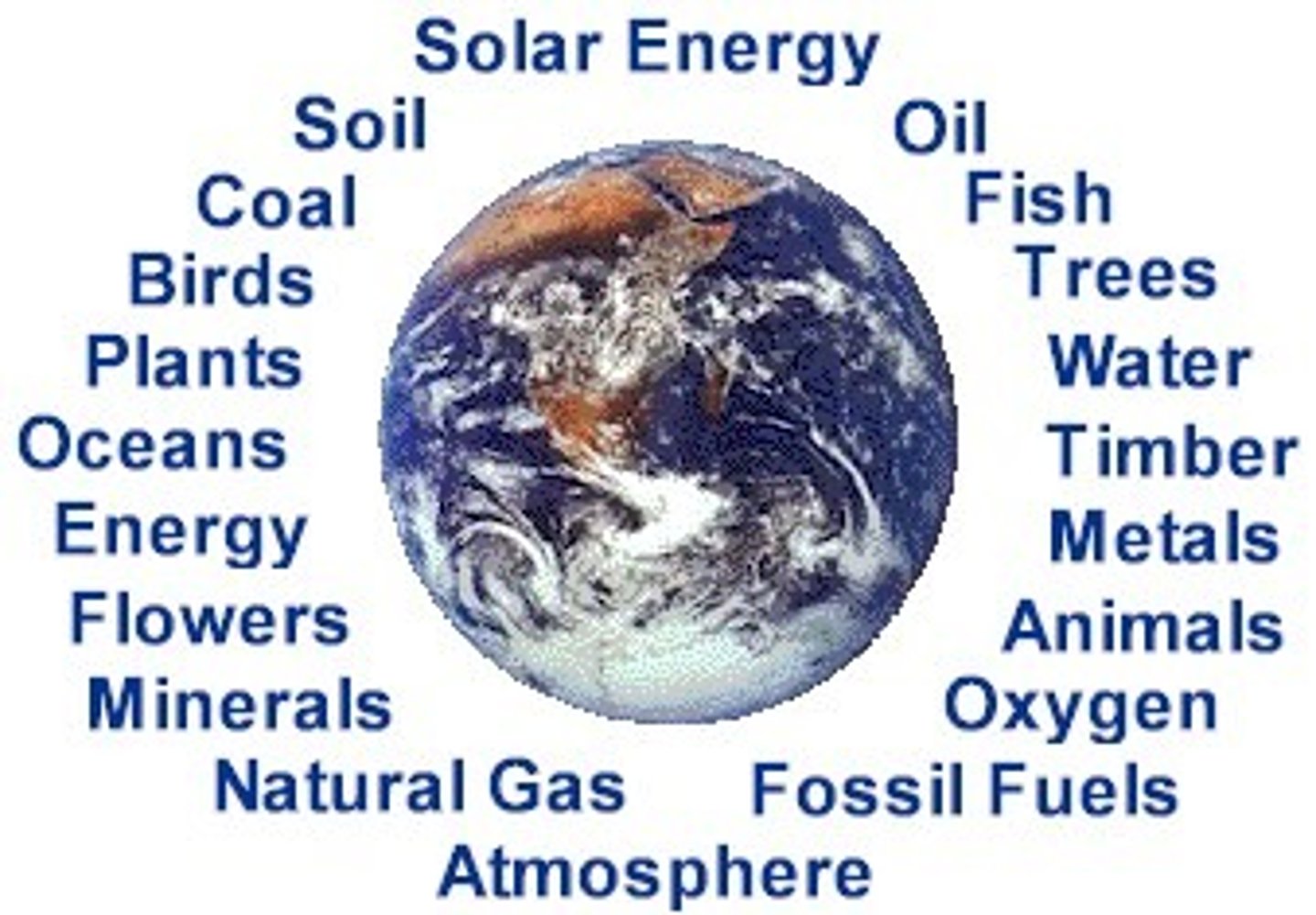
Resources
Anything useful to humans such as soil, oil, water and minerals.
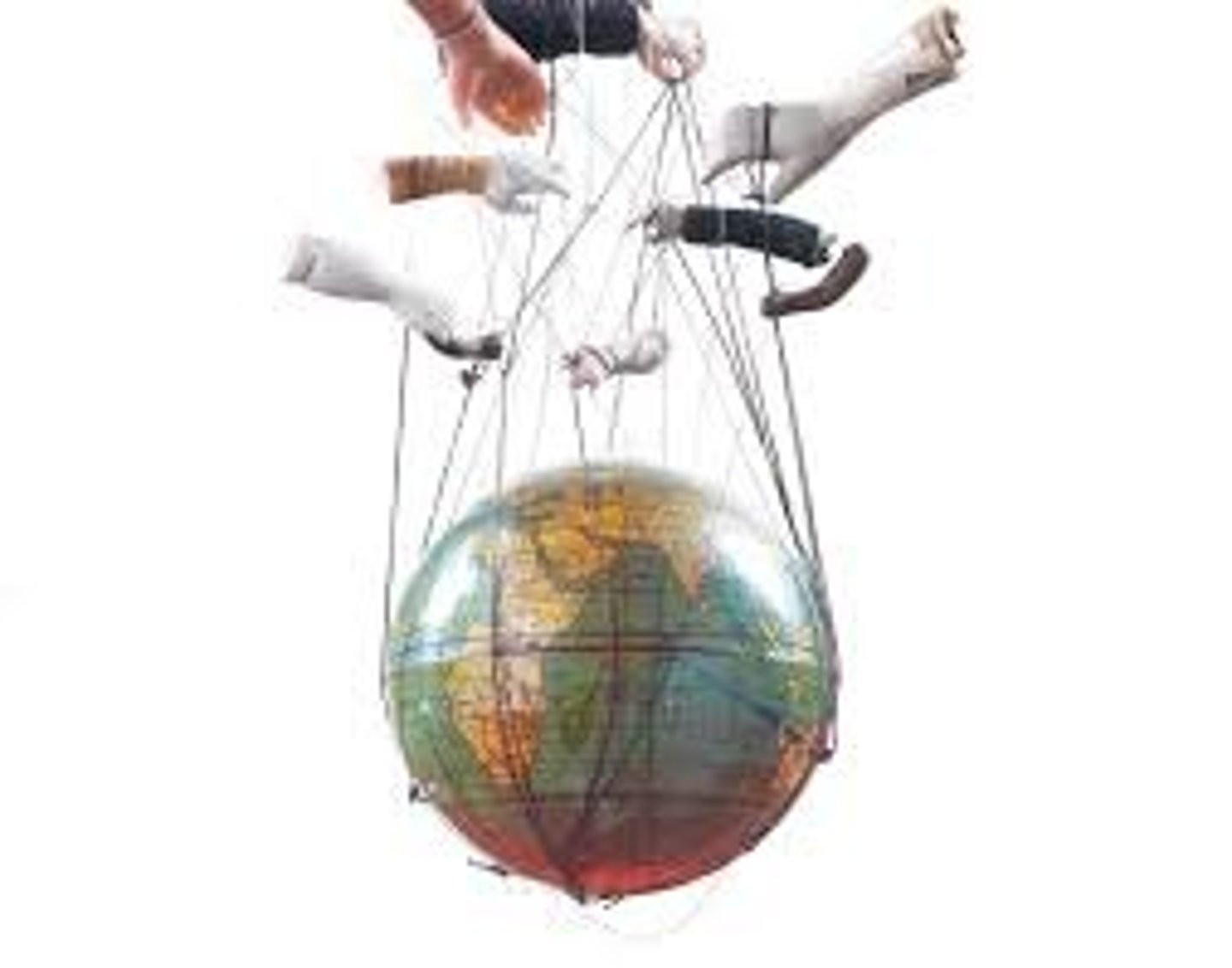
Geopolitics
Political relations among nations, particularly relating to claims and disputes pertaining to borders, territories and resources.
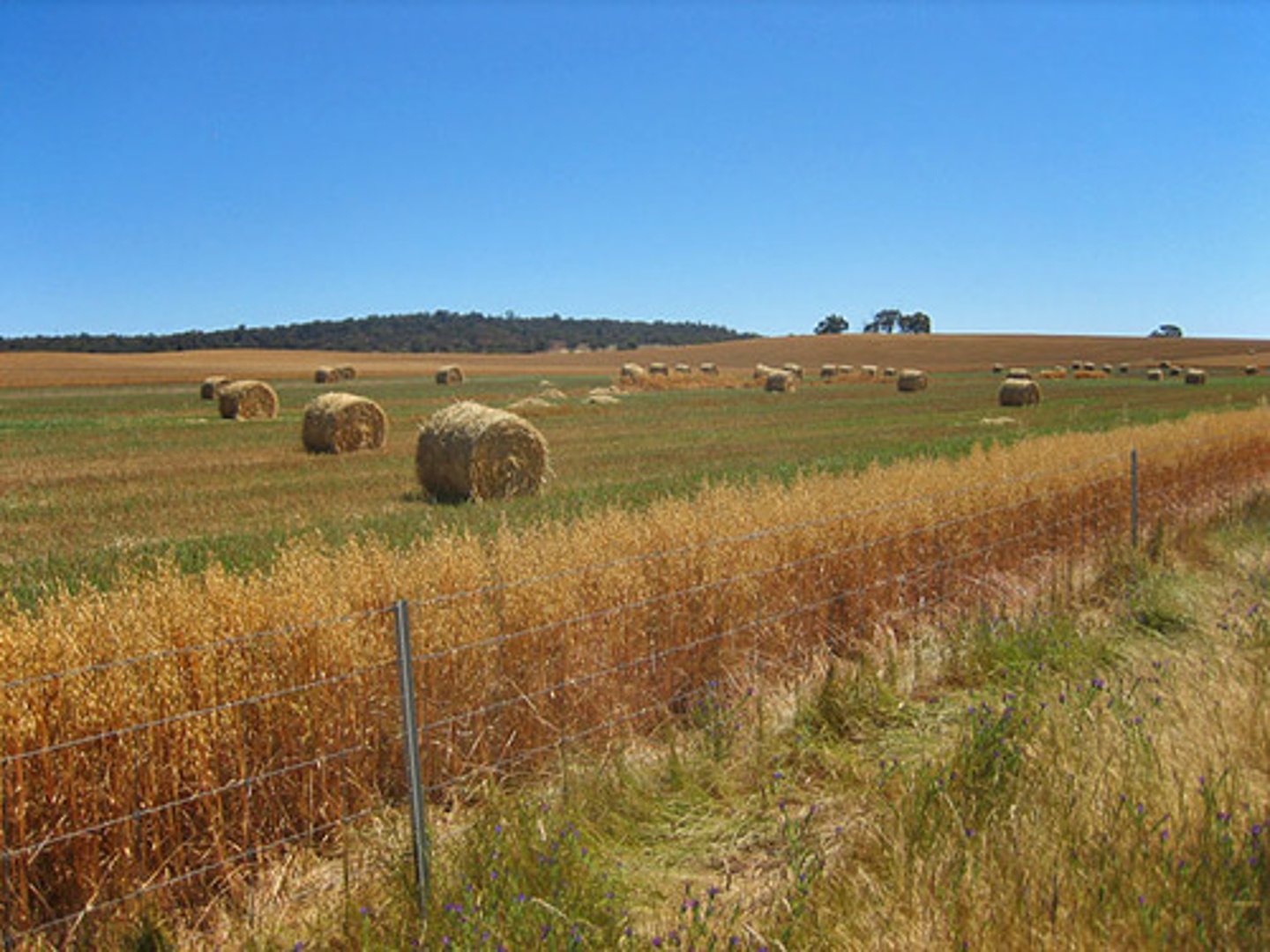
Arable land
Land used for growing crops
Pasture land
Land used for animal grazing
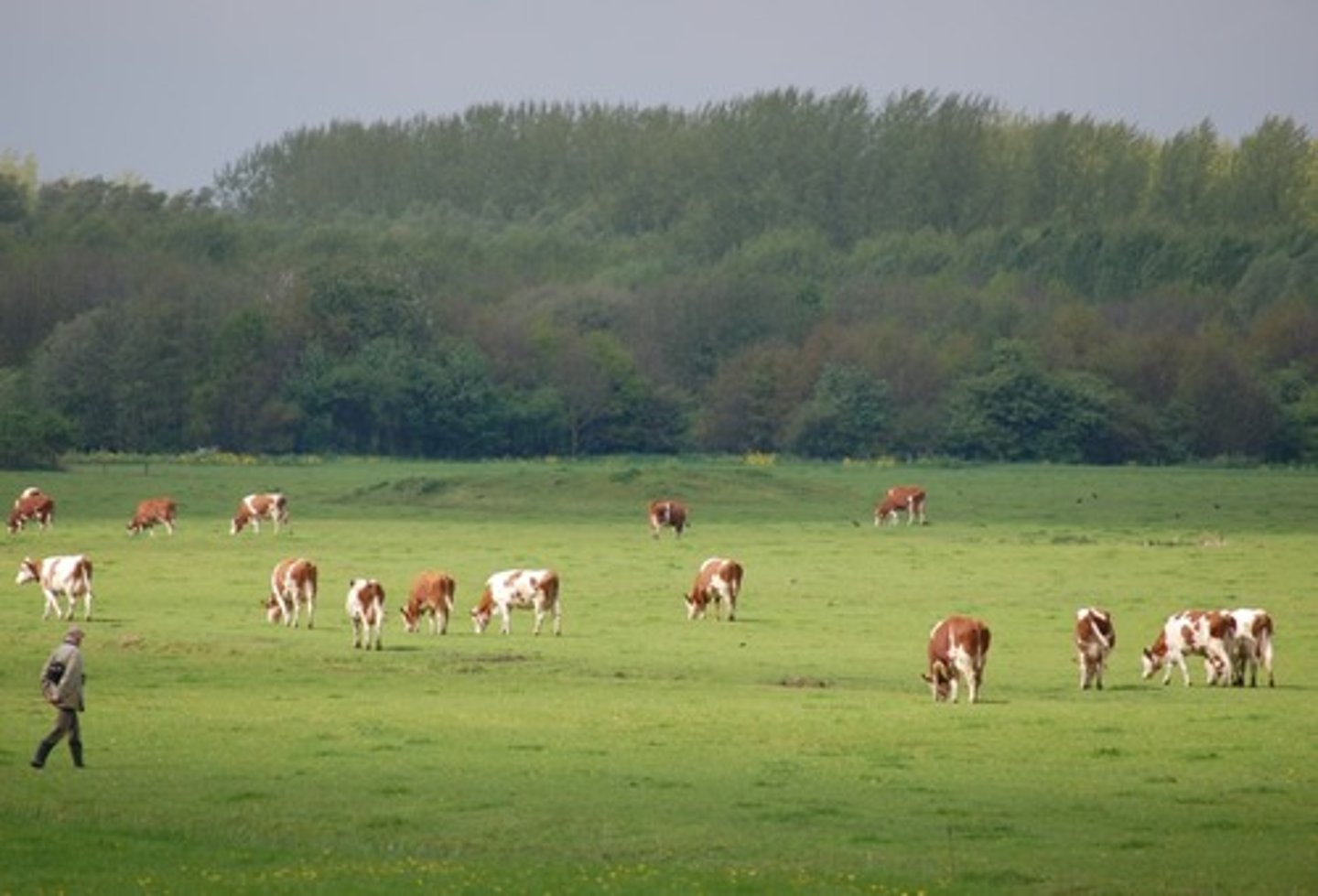
Energy security
Access to clean, reliable and affordable energy sources for cooking, heating, lighting, communication and productive uses
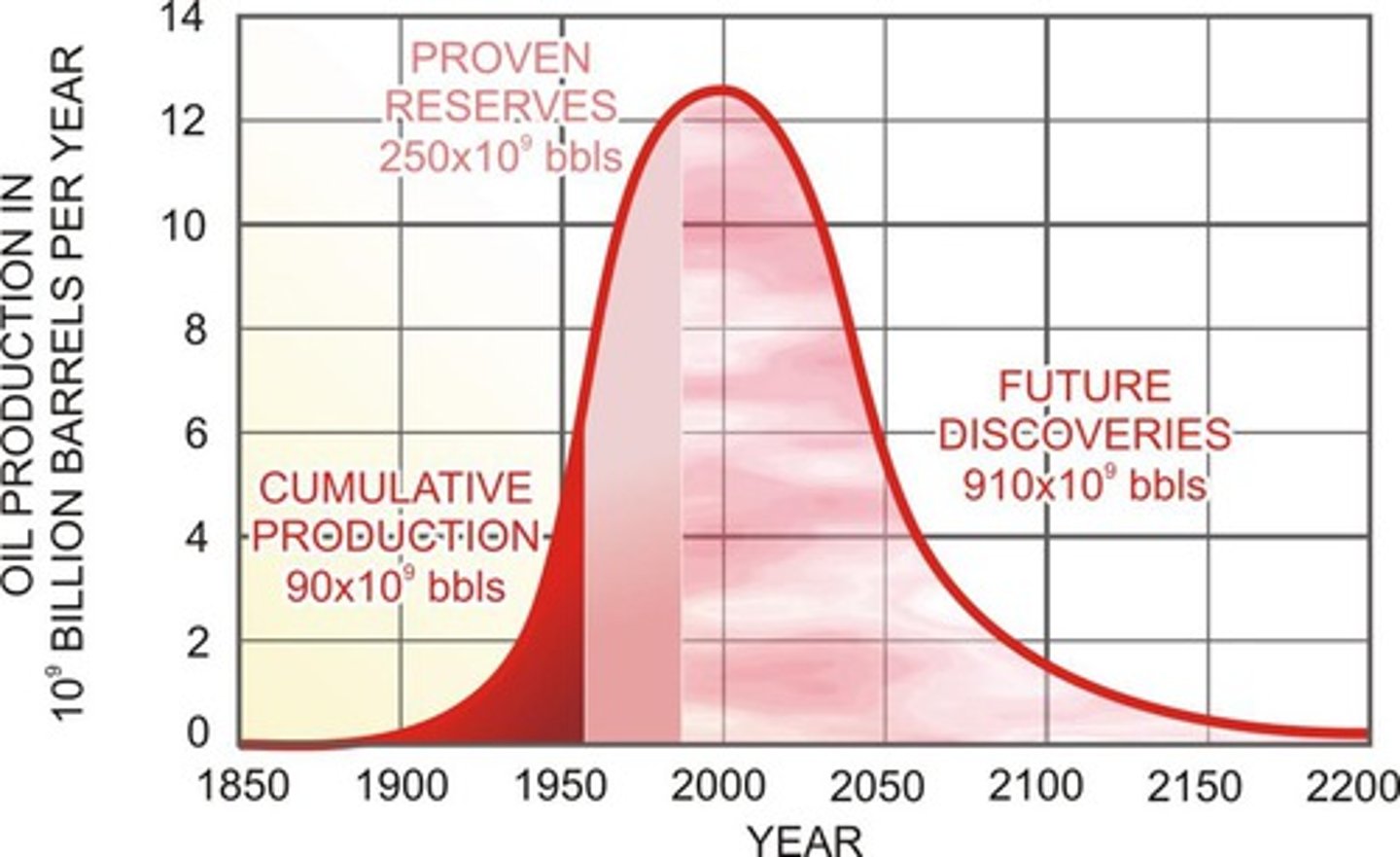
Peak oil production
The year in which the world or an individual oil-producing country reaches its highest level of production, with production decreasing thereafter
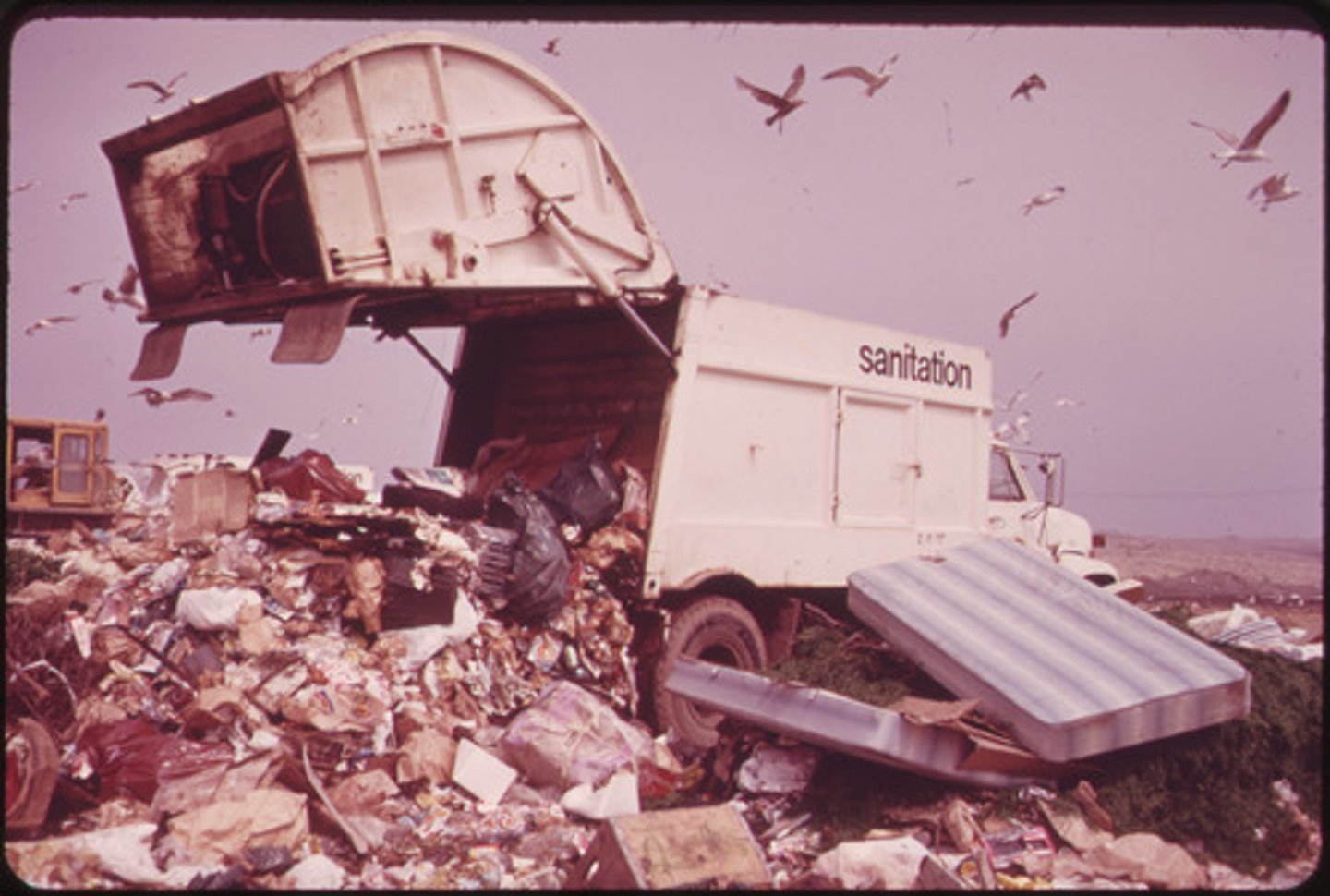
Landfill
The disposal of waste in large pits
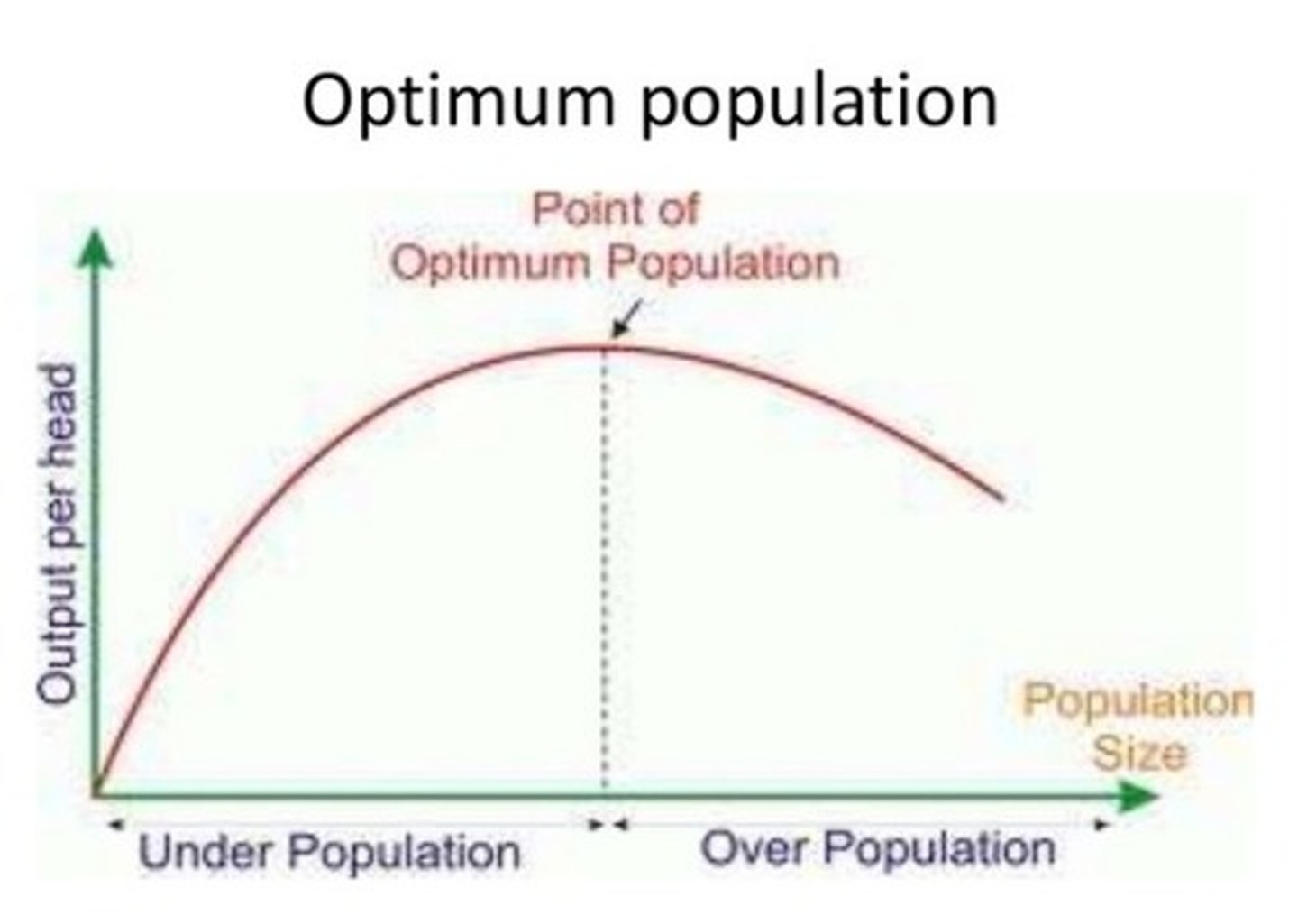
Optimum population
The number of people who, when working with all the available resources, will produce the highest per capita economic returns
Overpopulation
Occurs when there are too many people in comparison to the resources and technology available.
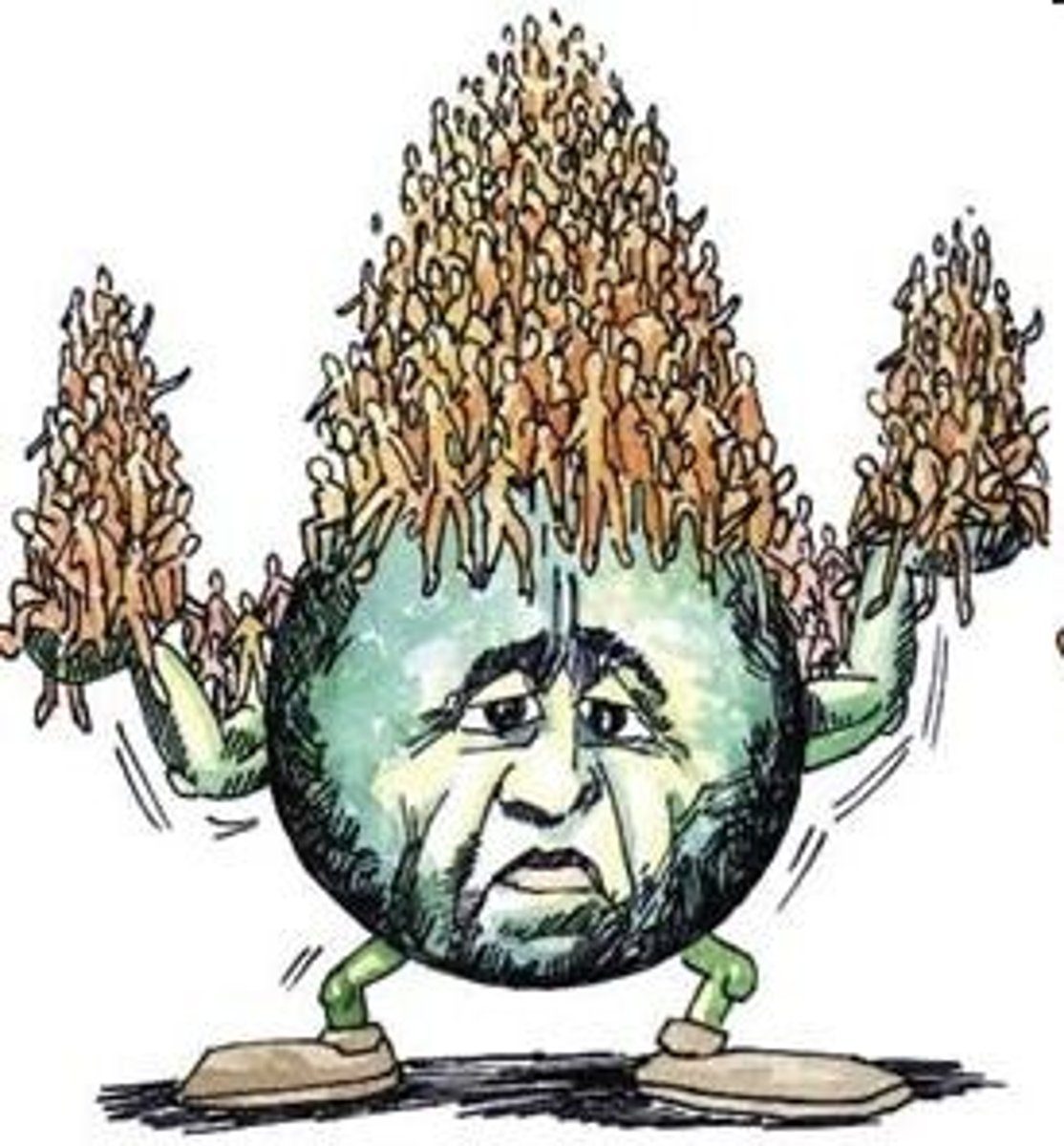
Underpopulation
Occurs when there are far more resources in an area than can be used by the people.
Human resource
People who provide labor, knowledge, and skills

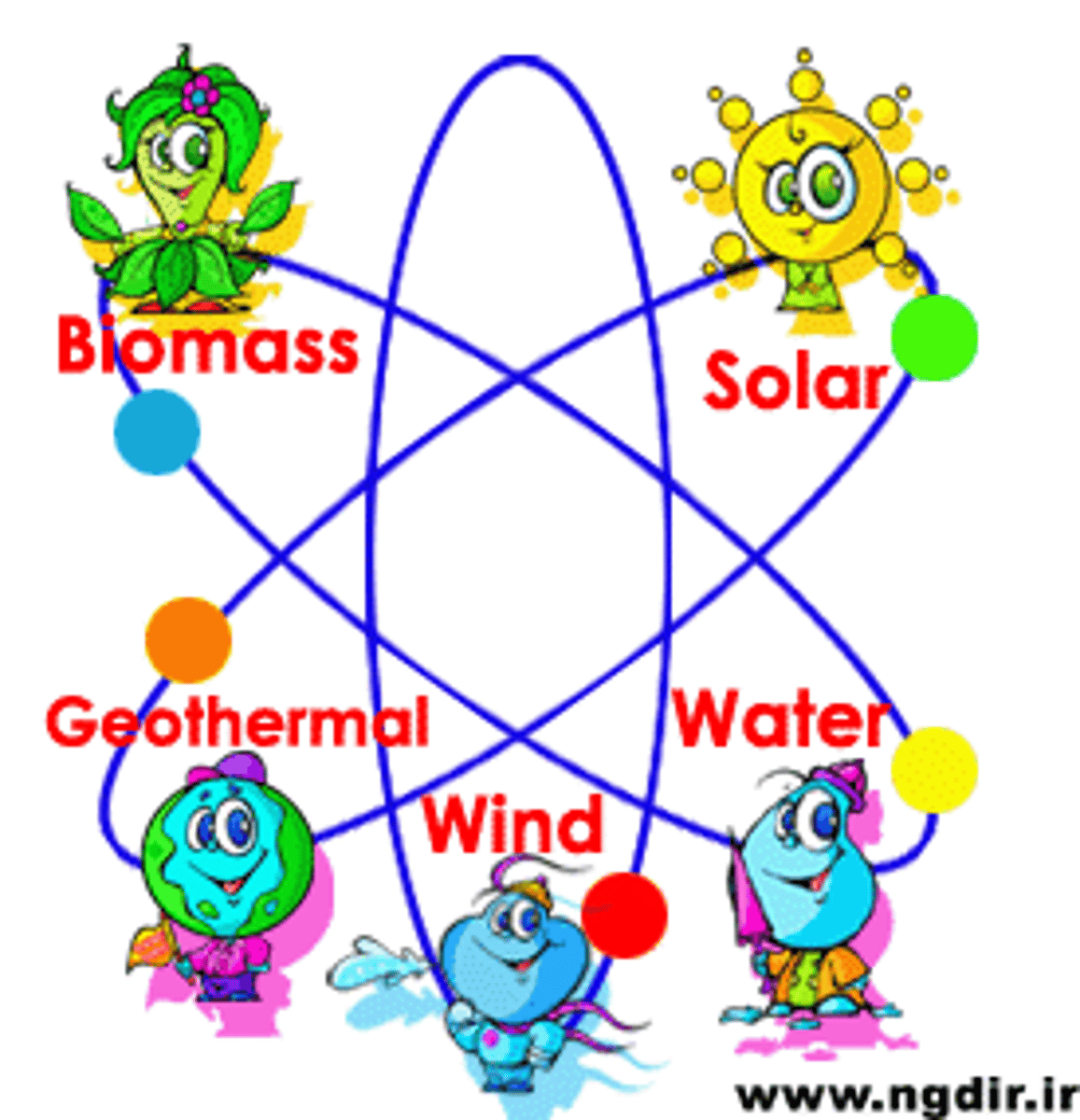
Renewable resource
A natural resource that can be replaced at the same rate at which the resource is consumed
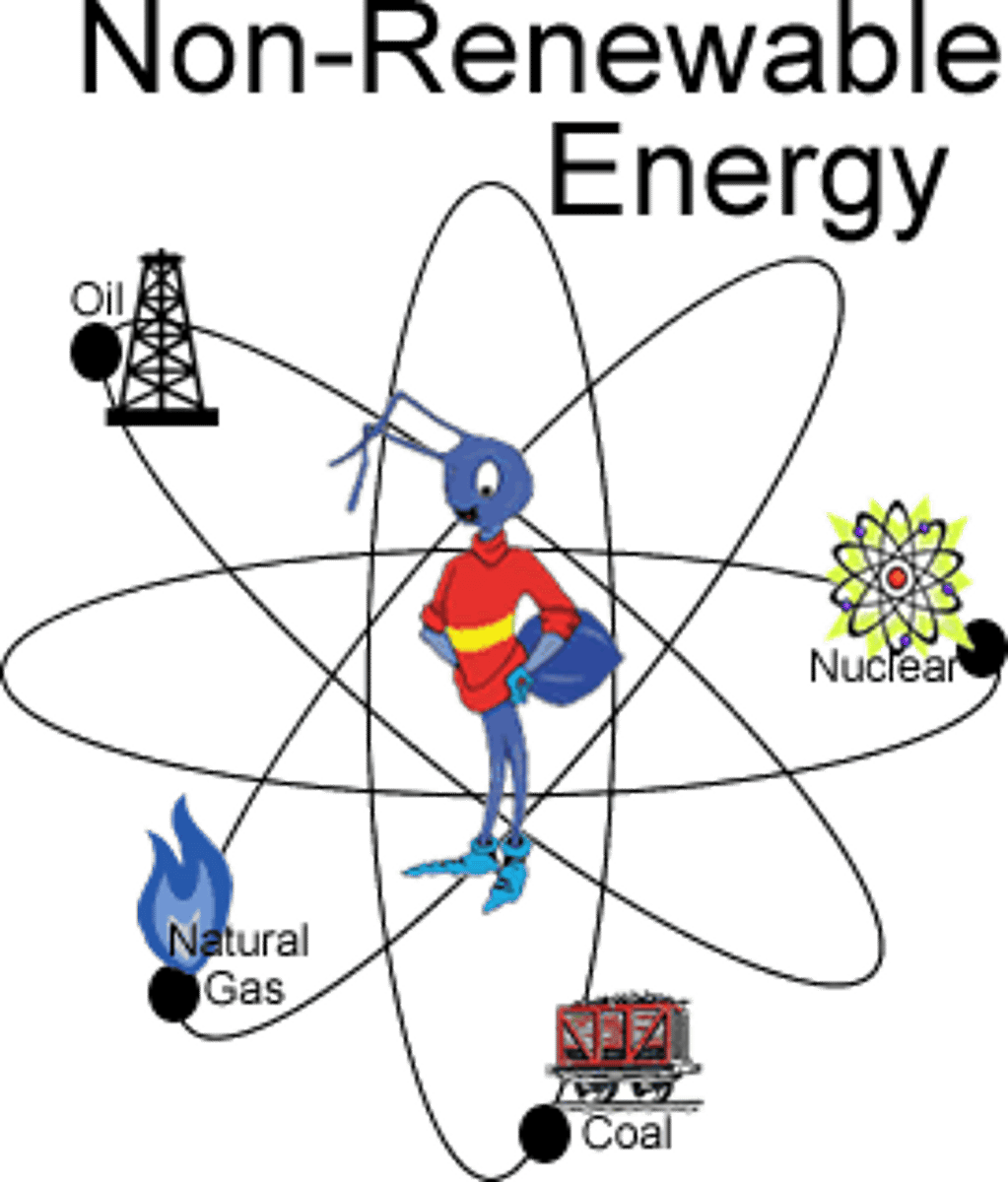
Non-renewable resource
A resource or raw material that cannot be grown or replaced once used
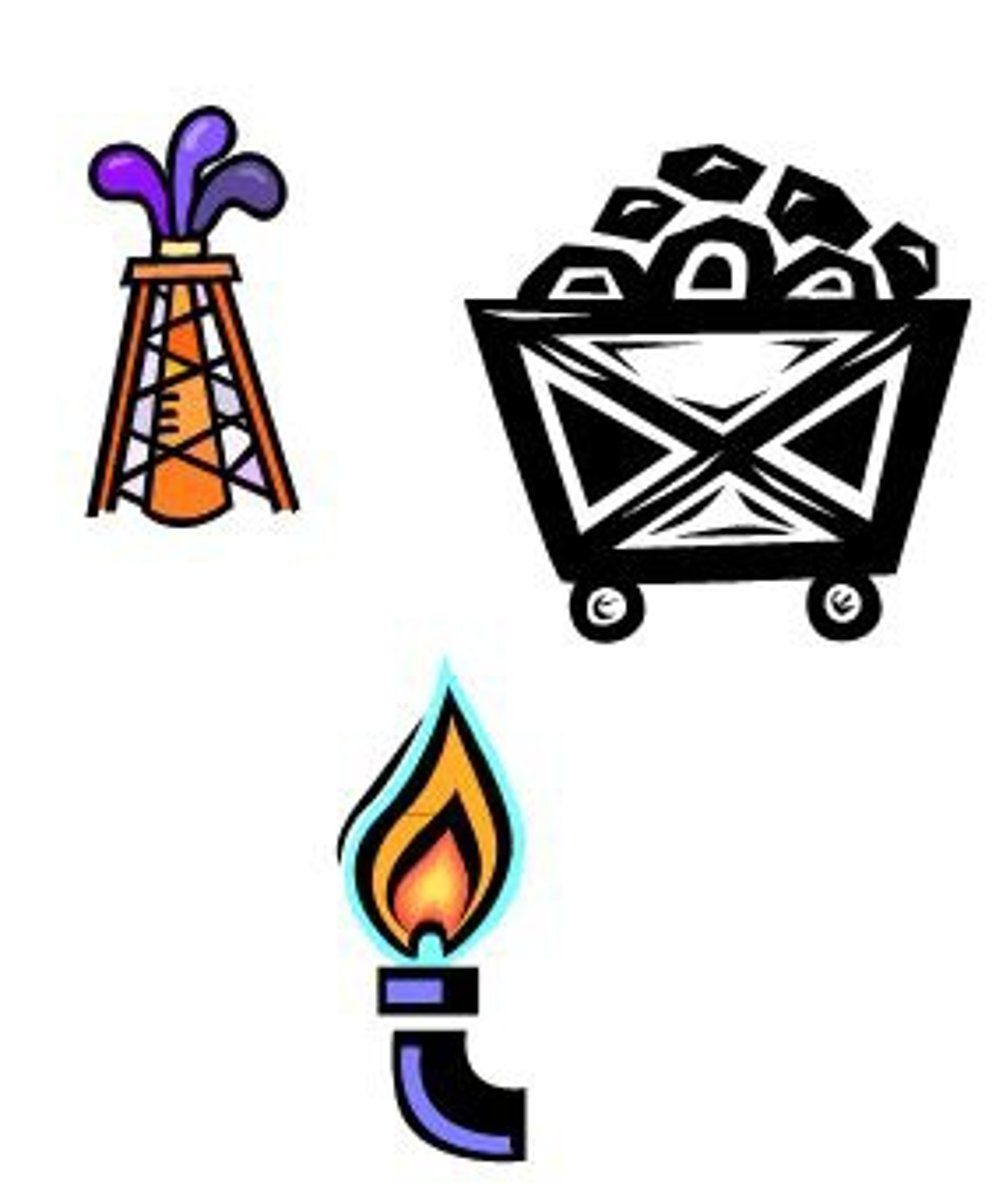
Fossil fuels
Coal, oil, natural gas, and other fuels that are remains of plants and animals
Stocks
Nonrenewable resource that's limited in quantity and can't be used more than once
Peak oil
The point at which global oil extraction is maximized
Environmental carrying capacity
The maximum number of people an environment can hold before the local environment becomes damaged
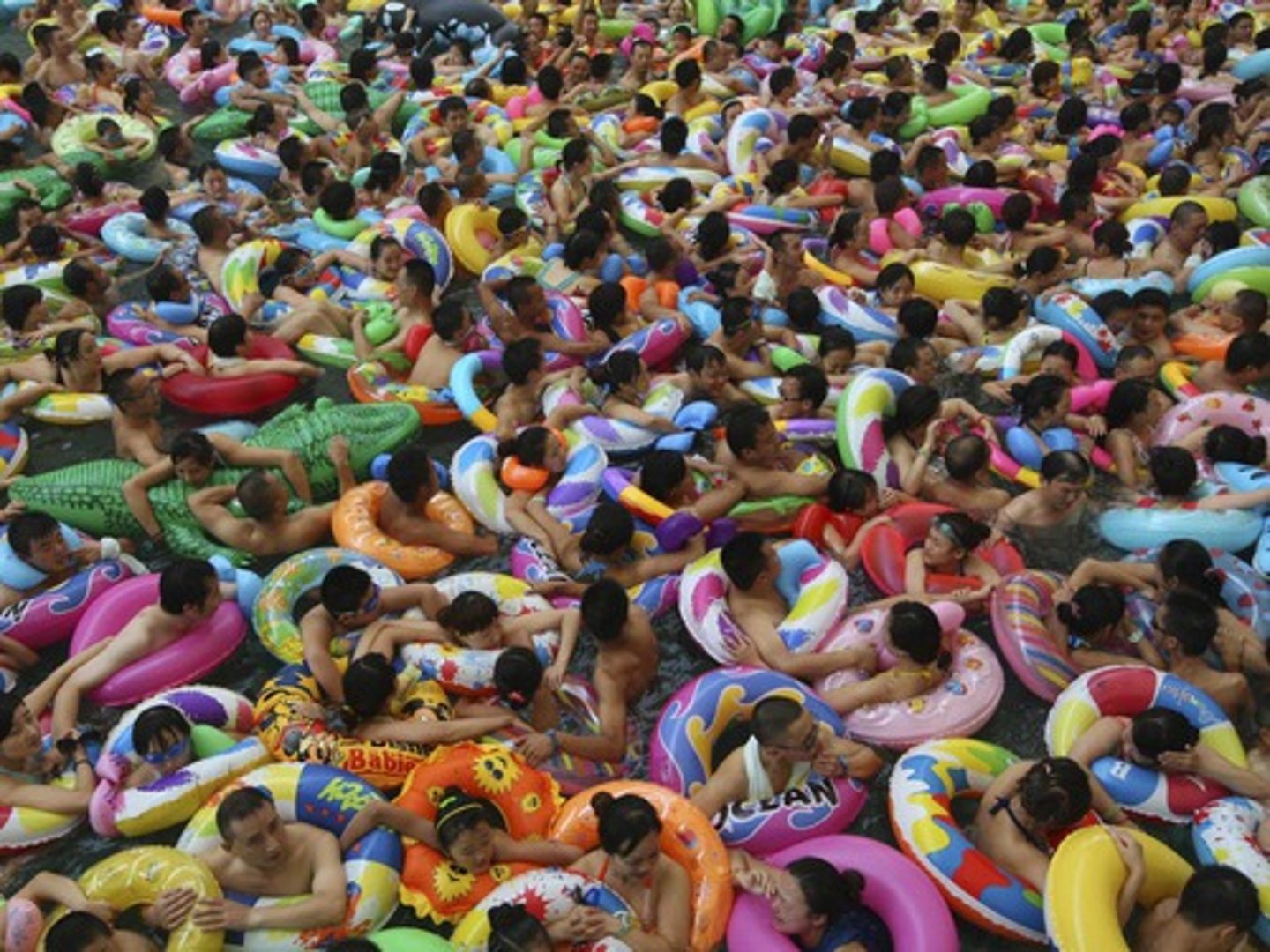
Perceptual carrying capacity
The maximum number of people in an area before residents consider an impact like noise to be excessive
Biocapacity
Estimates the sustainable resources and waste-absorbing capacity of Earth
Global hectare (gha)
One global hectare is equivalent to one hectare of biologically productive space with world average productivity
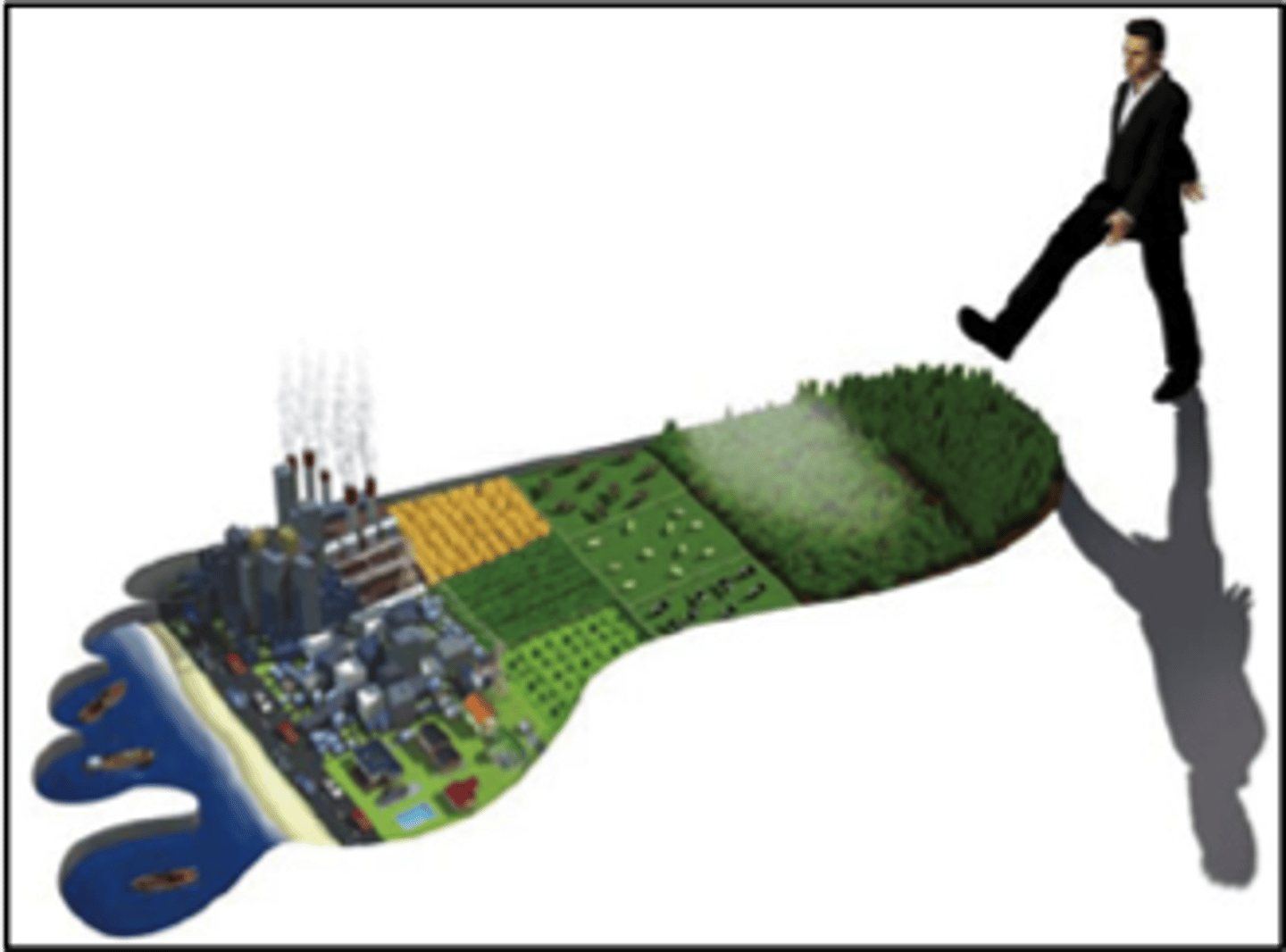
Ecological footprint
The hypothetical area of land required by a society, a group or an individual to fulfil all their resource needs. It is measured in Global Hectares (gha)
Ecological creditor
Country's whose ecological footprint is lower than their biocapacity
Ecological debtor
Countries whose ecological footprints exceed biocapacity
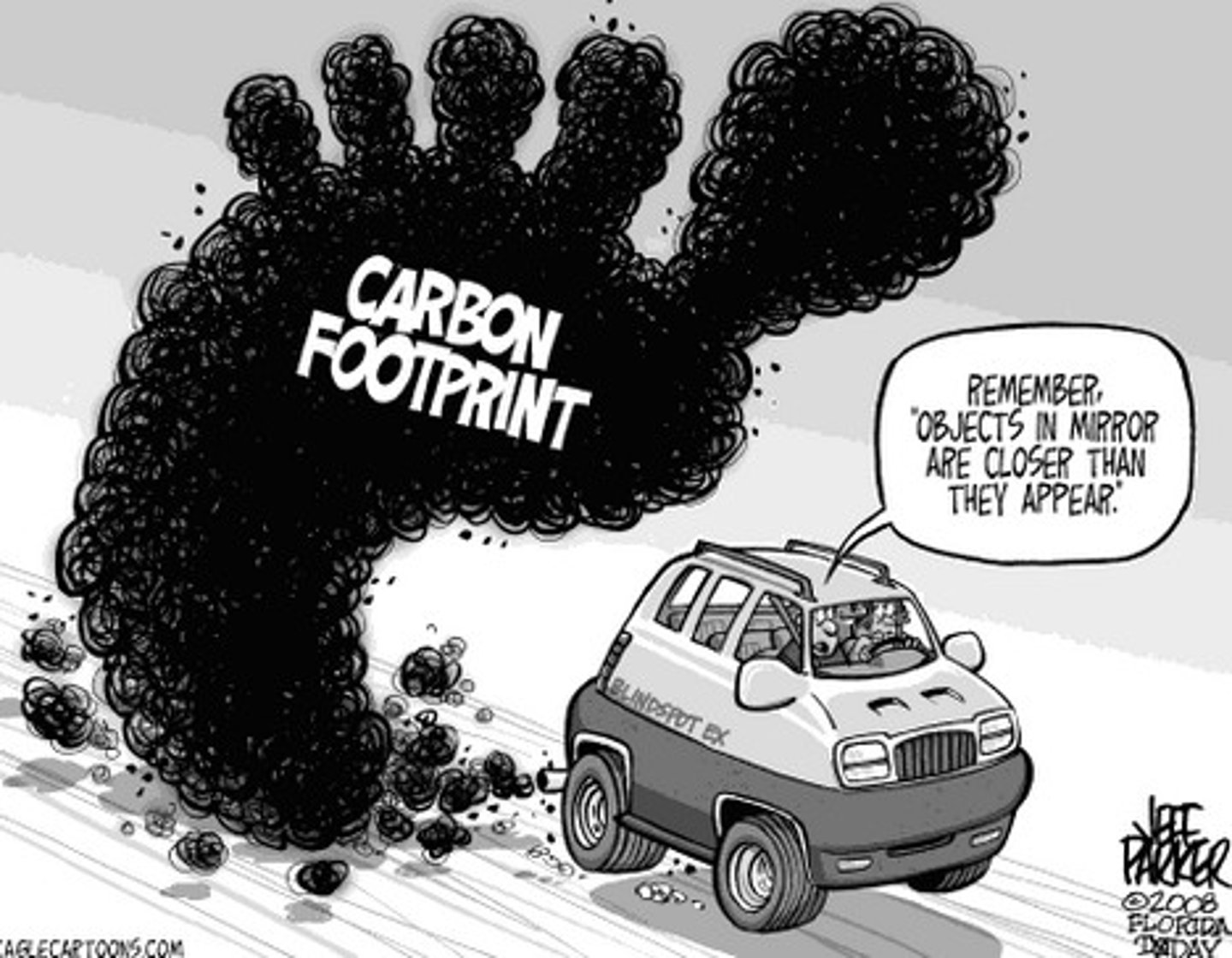
Carbon footprint
Measure of the impact human activities have on the environment in terms of the amount of greenhouse gases produced, measured in units of carbon dioxide
Biomass
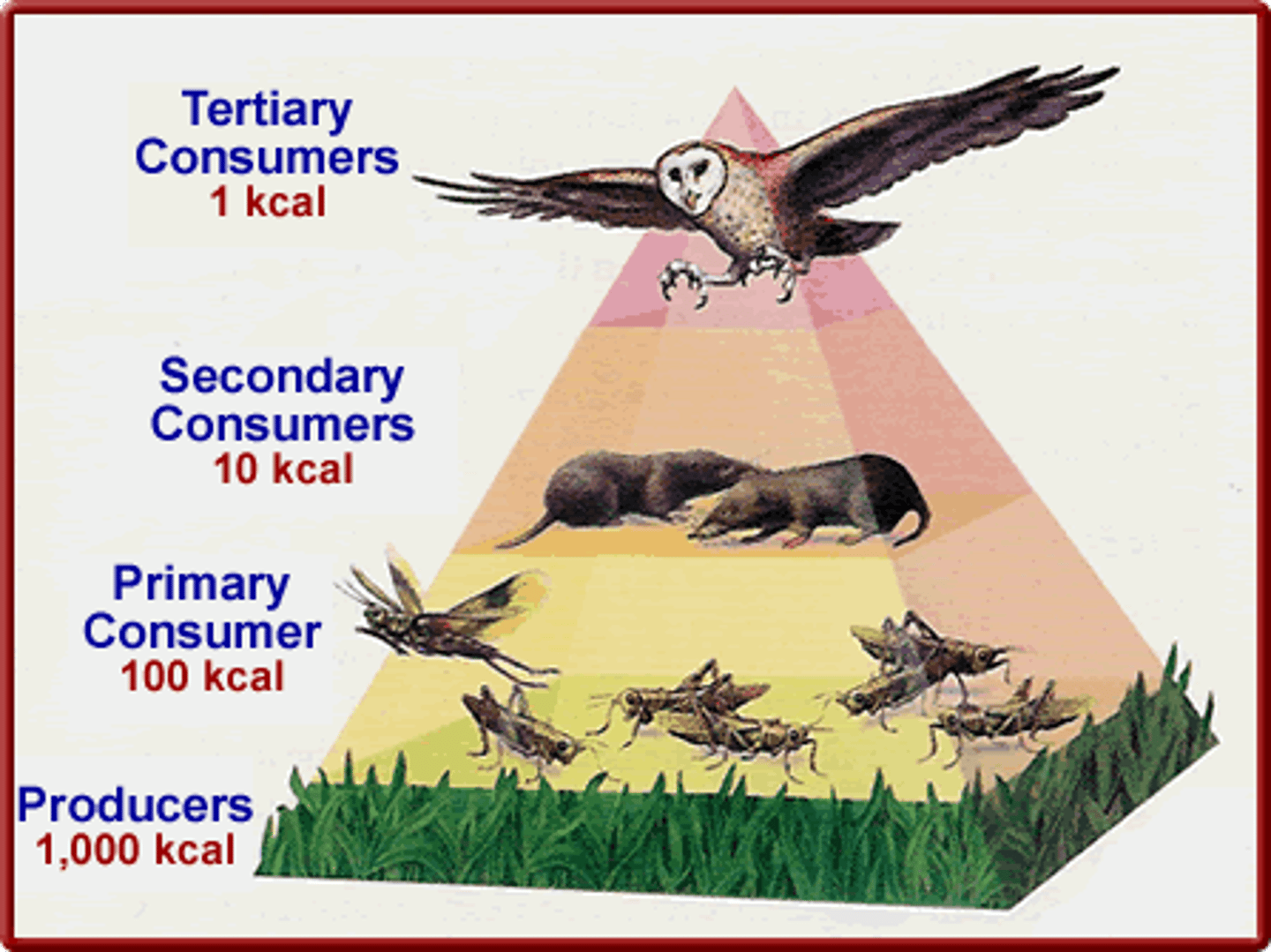
A measure of the total dry mass of organisms within a particular region
Conservation
Management of a natural resource to prevent exploitation, destruction, or neglect. (National Geographic)
Preservation
Maintenance of a resource in its present condition, with as little human impact as possible
Economy of scale
the cost to produce each item goes down as a company makes more products
Food Security
The state where all people, at all times, have physical, social, and economic access to sufficient, safe, and nutritious food to meet dietary needs.
Nexus
The interrelationship, interdependence and interactions between water, food and energy.
Middle Class
Group classified by the World Bank as having an income per capita of between $1025 and $12475
World Overshoot Day
The day when humanity has used up all the resources that it takes the planet to regenerate
Unconventional Oil and Gas
Oil and gas that is accessible with new technologies e.g. shale gas, fracking, tar sands (usually higher cost of production and riskier)
Renewable Energy
Naturally occurring theoretically inexhaustible source (e.g. Solar, wind, tidal, biomass)
Non - Renewable Energy
A finite resource that does not renew at a sufficient rate (e.g. Oil, Coal, Gas)
Water Security (UN)
Reliable access to an adequate quantity and quality of safe drinking water and sanitation to sustain livelihoods and socio-economic development.
absolute poverty
severe, life-threatening condition where individuals or households lack the income for basic necessities for survival, such as food, clean water, shelter, and healthcare.
relative poverty
a condition where individuals or households lack the necessary income or resources to maintain the average standard of living within their specific society
social exclusion
The outcome of multiple deprivations (unemployment, poor skills, low incomes, poor housing, high crime environments, bad health and family breakdown) that prevent individuals or groups from participating fully in the economic, social, and political life of the society in which they live.
Embedded Water (Virtual Water)
The volume of freshwater used in the production process of an agricultural or industrial product.
Water-Food-Energy Nexus
The complex, interlinked relationship between these three resources, where a change in one sector directly impacts the availability or security of the other two.
Malthus’s Theory of Population (Pessimistic View; Overpopulation)
Population grows exponentially while food production grows arithmetically, eventually resulting in a catastrophic "population check" that influences the birth rate or death rate via famine, war, or disease.
Neo-Malthusian Theory of Population
Modern thinkers who support Malthus's general premise but expand it to include a wider range of finite ecological resources beyond just food, such as oil and arable land.
Boserup’s Theory of Population (Optimistic View; Underpopulation)
population growth drives agricultural innovation and intensification; food supply expands to meet growing demand.
Julian Simon’s Theory of Population
As resources deplete, prices increase, and therefore people will invest time to innovate technologies to discover more resources either through increasing its yield, finding a substitute, or managing society for the resource.
Resource stewardship
the responsible planning and management of resources to ensure availability for current and future generations.
Circular Economy
An economic model designed to minimize waste by reusing, repairing, redesigning, refurbishing, and recycling existing materials and products for as long as possible.
Linear economy
A traditional "take-make-dispose" industrial model where raw materials are collected, transformed into products, used, and ultimately discarded as waste.
Indigenous economy
an economic system and framework rooted in the cultural values, traditional knowledge, and governance of Indigenous peoples, characterized by reciprocity, ecological sustainability, egalitarianism, and community well-being
Sustainable development goals (SDGs)
A collection of 17 global goals set by the United Nations to address social, economic, and environmental challenges by 2030