LONG LECTURE EXAM 2 ratio
 Call Kai
 Learn
Learn Practice Test
 Spaced Repetition
 Match
Match Flashcards
 Knowt Play
1/50

There's no tags or description
Looks like no tags are added yet.
Name | Mastery | Learn | Test | Matching | Spaced | Call with Kai | Chat |
|---|
No analytics yet
Send a link to your students to track their progress
51 Terms
Recollect the specimen due to false elevation
A hemolyzed potassium sample is reported as 6.5 mmol/L (critical high). The most appropriate laboratory action is to:
Short draw on sodium citrate tube
Which of the following pre-analytical errors would most affect coagulation test results?
May dilute specimen
with IV fluid
A patient on IV infusion has blood drawn from the same arm above the IV site. How may this affect test results?
Cortisol
Which analyte is MOST
affected by diurnal variation,
requiring standardized morning
collection.
To prevent cellular
metabolism altering
analytes
Which of the following is the main reason plasma is separated from cells within two hours for most chemistry tests?
Citrate - Serum - EDTA
Which blood collection order-of-draw prevents cross-contamination of additives that could interfere with coagulation testing?
All of the above
Which of the following is the most important factor in ensuring specimen integrity?
a. Proper labeling
b. Correct technique
c. Timely transport to the laboratory
d. All of the above
All of the above
Which of the following may cause hemolysis in blood specimens?
a. Vigorous shaking
b. Using a small bore needle
c. Prolonged tourniquet application
d. All of the above
Whole blood specimens
obtained from the
venous circulation are
most commonly used in
Clinical Chemistry.
Which of the following
statements is INCORRECT?
Volatile solvents
evaporate into the air
cushion, and viscous
solutions resist
aspiration.
A technician is pipetting ethanol (volatile) and glycerol (viscous) using an air-dispenser pipette but contains inconsistent results. Why is an air-displacement pipette unsuitable for these liquids?
Prevents aspiration of
incorrect volume.
When aspirating liquid, why should a pipette be held vertically rather than at an angle?
Too rapid plunger release during aspiration.
While pipetting serum, air bubbles consistently appear in the tip. What is the most likely cause?
To prevent splashing, aerosols, and volume inconsistencies.
Why should aspiration and
dispensing be done slowly and
smoothly?
To perform analytic
procedures that provide
accurate and precise
data for diagnosis and
treatment.
Which of the following best
captures the primary purpose
of clinical chemistry as a
quantitative science?
Any reagent prepared must be labeled with date/time of preparation and concentration.
Which statement correctly reflects best practice in reagent preparation for clinical chemistry laboratories?
Amniotic Fluid
Which body fluid would be
least likely chosen for
evaluating kidney function but
more likely for assessing
intrauterine fetal conditions?
Labor-intensive processes with limited precision and high variability between technologists.
Prior to the development of
automation, most tests in the
1960s were performed
manually. Which of the
following represents the
greatest disadvantage of such
manual testing?
Dry reagent strips require manual color comparison, while wet and dry chemistry systems utilize spectrophotometric measurement.
In differentiating wet and dry
chemistry systems, which of
the following is the most
accurate
Endocrinology
Which of the following areas of Clinical Chemistry is most directly concerned with the quantitative determination of hormone levels?
Low Coefficient of thermal expansion
Which property of borosilicate
glass test tubes make them
preferably for high temperature
applications such as dry-heat
sterilization?
Cumulative stress and
corrosion from repeated
use.
In terms of clinical centrifuge safety, the most common cause of rotor failure is
III and IV only
A serum sample for bilirubin
determination was initially tested undiluted, but the
analyzer flagged the result as
above the measuring range. To
resolve this, a first dilution was
performed by adding 0.1 mL of
serum to 1.9 mL of diluent.
However, the analyzer again
flagged the result as above the
measuring range. A second
dilution was then prepared by
mixing 2.0 mL of the first
diluted sample with 3.0 mL of
diluent. This final diluted
sample was measured and
showed a value of 4.8 mg/dL.
Which of the following
statements is CORRECT in
reporting the final bilirubin
concentration?
I. The final bilirubin
concentration is 82.08
umol/L.
II. The final bilirubin
concentration is 14.04
umol/L.
III. The final bilirubin
concentration is
240.00 mg/dL.
IV. The final bilirubin
concentration is
4104.00 pmol/L.
III and IV only
Which of the following Rules in
Rounding Off Numbers is/are
INCORRECT?
I. If the first figure
dropped is less than
5, the last figure kept
should be unchanged.
II. If the first figure
dropped is greater
than 5, the last figure
kept should be
increased by 1.
III. If the first figure
dropped is 5, then the
last figure kept should
be unchanged if that
last figure is odd.
IV. If the first figure
dropped is 5, then the
last figure kept should
be increased by 1 if
that last figure is
even.
Leading zeros (to the
left of the first nonzero
digit) are significant.
Which of the following Rules in
Identifying Significant Figures
is/are INCORRECT?
41.00 degrees
Fahrenheit
A medical technologist was assigned with the responsibility of monitoring and documenting the temperature of several refrigerators in the clinical laboratory to ensure proper storage of reagents and samples. During one of the routine checks, the temperature of the refrigerator used for storing blood samples was recorded at 50°C. What is the equivalent temperature in degrees Fahrenheit?
3.0 M
During preparation of buffer solution in the lab, a medical technologist started with 4.0 L of a concentrated stock solution. To achieve the desired working concentration, the technologist diluted the stock solution by adding 1.0 L distilled water, resulting in total volume of 5.0 L. After mixing, the concentration of diluted solution was measured to be 2.4 M. What was the concentration of the original stock solution?
Tube B = 7,
Tube C = 49,
Tube D = 343,
Tube E = 2401
A medical technologist prepared 5 tubes and labelled them Tubes A to E. Tube A contains 9 ml of pure/undiluted serum. Tube B to E contains 6 ml of diluent. 1 ml of sample from Tube A is added to Tube B and was mixed. 1 ml of mixture from Tube B was added to Tube C. The same procedure was done until Tube E. What is the dilution factor in Tubes B, C, D, and E?
5.50 mmol/L
A patient's glucose level was initially reported as "above measuring range" by the clinical chemistry analyzer, indicating the concentration was too high to measure accurately. To obtain a measurable result, the medical technologist on duty diluted the serum sample toy pipetting 20.00 uL of the original serum into 0.60 mi of diluent and thoroughly mixed the solution. The diluted sample was then reanalyzed, yielding a glucose concentration of 3.2 mg/cL. What should be the reported value in SI unit?
1/256
A medical technologist
prepared 5 tubes and labelled
them A to E. Tube A contains
4ml of pure/undiluted serum.
Tubes B to E contain 3ml of
diluent. 1ml of the sample from
Tube A is added to tube B and
was mixed. 1mL of the mixture
from Tube B was added to the
the same procedure was done
until Tube E. What is the final
dilution of Tube E?
0.83 M
What is the molarity of a
solution containing 52.6 g of
KCl dissolved in 854 ml of
water? Round off the final
answer to 2 decimal places.
(Atomic mass: Cl = 35.45, K =
39.0183)
Long tourniquet
application; remove the
tourniquet promptly
What is the primary cause of
"hemoconcentration" during
venipuncture, and how can it
be prevented?
Statements II and IV are correct
II. Establish specific guidelines
IV. Ensure newly hired personnel abide by policies as established by the institution
Which of the following is a part of maintaining quality laboratory processes?
Statements I, II, and III are correct
I. Training of laboratory personnel
II. Documentation of laboratory procedures
III. Keeping a log of known errors over time for each instrument
good quality program includes
Statements I, II, and III
are correct
I. They are stable &
homogenous
II. Level 1 control
contains low to
normal
concentration of
analyte
III. Level 2 control
contains normal to
high concentration
of analyte
Which of the following correctly
describes control solutions
being used for Quality Control?
Statements I and III are
correct
I. It is a solution that
contains a known
amount of an
analyte to be
assayed.
III. A single calibrator
run is good
for 28 days.
Which of the following are TRUE about a calibrator?
Statements I, II, and III are correct
I. Proper patient identification before initiating venipuncture.
II. Correct ordering of tests.
III. Proper specimen collection.
Pre-analytical Quality Assurance includes:
Statements III and IV are correct
III. Review of test results for possible transcription errors.
IV. Verification of correct interpretation of laboratory tests by physicians.
Post-analytical Quality Assurance includes:
Statements I, II, and III are correct
I. Identifying the root cause of the error in the laboratory workflow
II. Streamline a process so results can be released faster.
III. Eliminate variation in the procedure
Goals of lean six sigma
includes:
Statements I, II, and III are correct
I. This is caused by a random error.
II. There is westgard violation of R4s
III. Reject the run.
Given a cholesterol test where the level I control has a mean of 190 and SD OF 3 and the level 2 control material has a mean of 256 and SD of 4. What is the proper interpretation when the control values observed across a run on a sample day are 197 for L1 and 240 for L2.
Only statement IV is correct
IV. Entails error within defined limit
Which of the following are true
about TEa?
Statements II and IV are
correct
II. NEQAS proficiency
testing
IV. Lung center of the
philippines
Parts of external quality control:
Statements I and III are correct
I. Delta check
III. Internal quality control
Assess the patient’s most
recent result for a particular
test as compared to the
patient’s previous value refers
to:
Statement I, II, and III are correct
I. The reagents have deteriorated.
II. There is systematic error
III. Trend started on Day 11
Based on the Levey-Jennings Chart below, what can you observe?
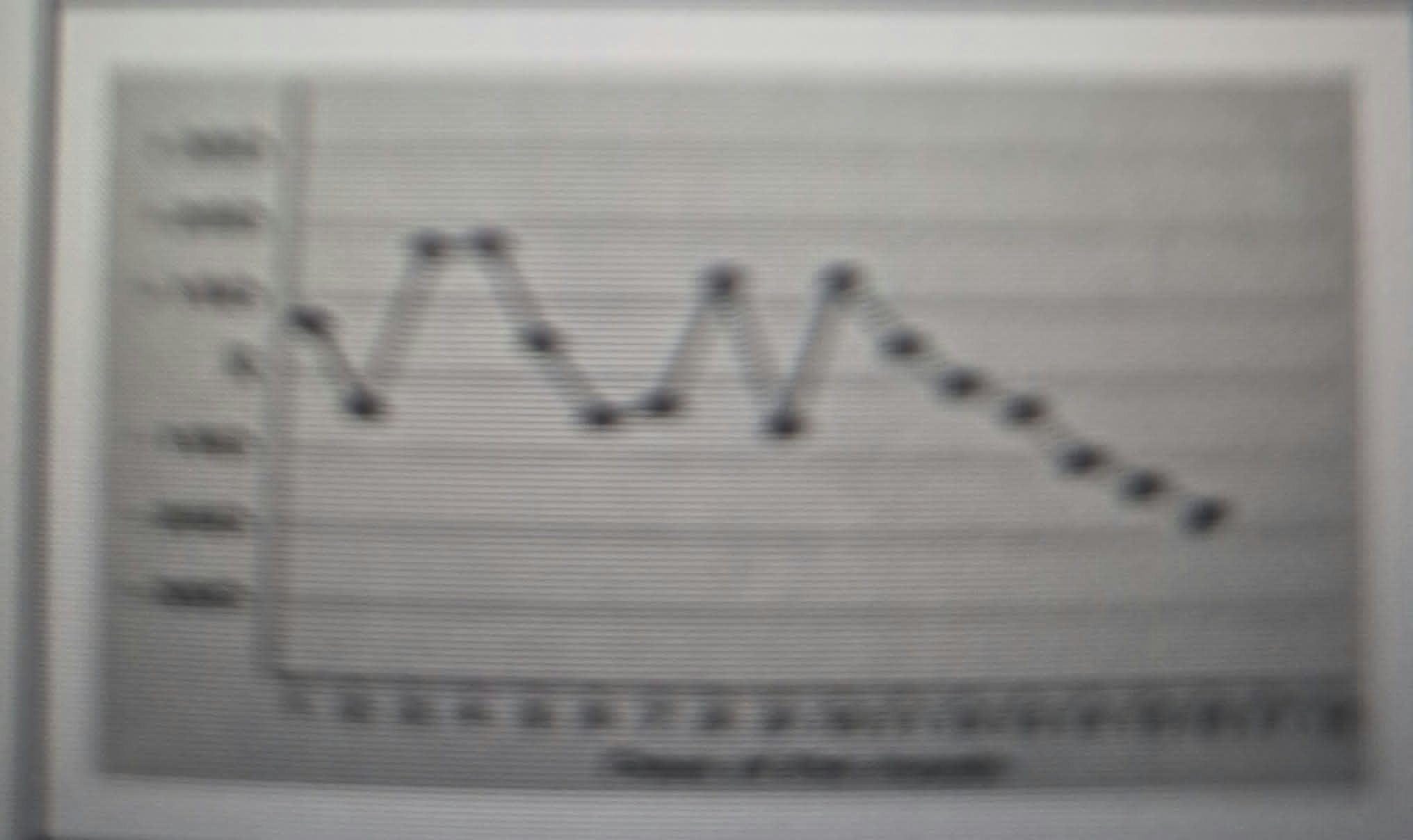
Statement II and IV are correct
II. Bias = 3%
IV. Sigma Metric Scale is 2 sigma
Based on the Method Decision
Chart below, which data is/are
correct?

Statement II and IV are correct
II. Mislabeling of patient’s sample
IV. Voltage and temperature fluctuation
What is/are the possible causes of error for this type of westgard violation?
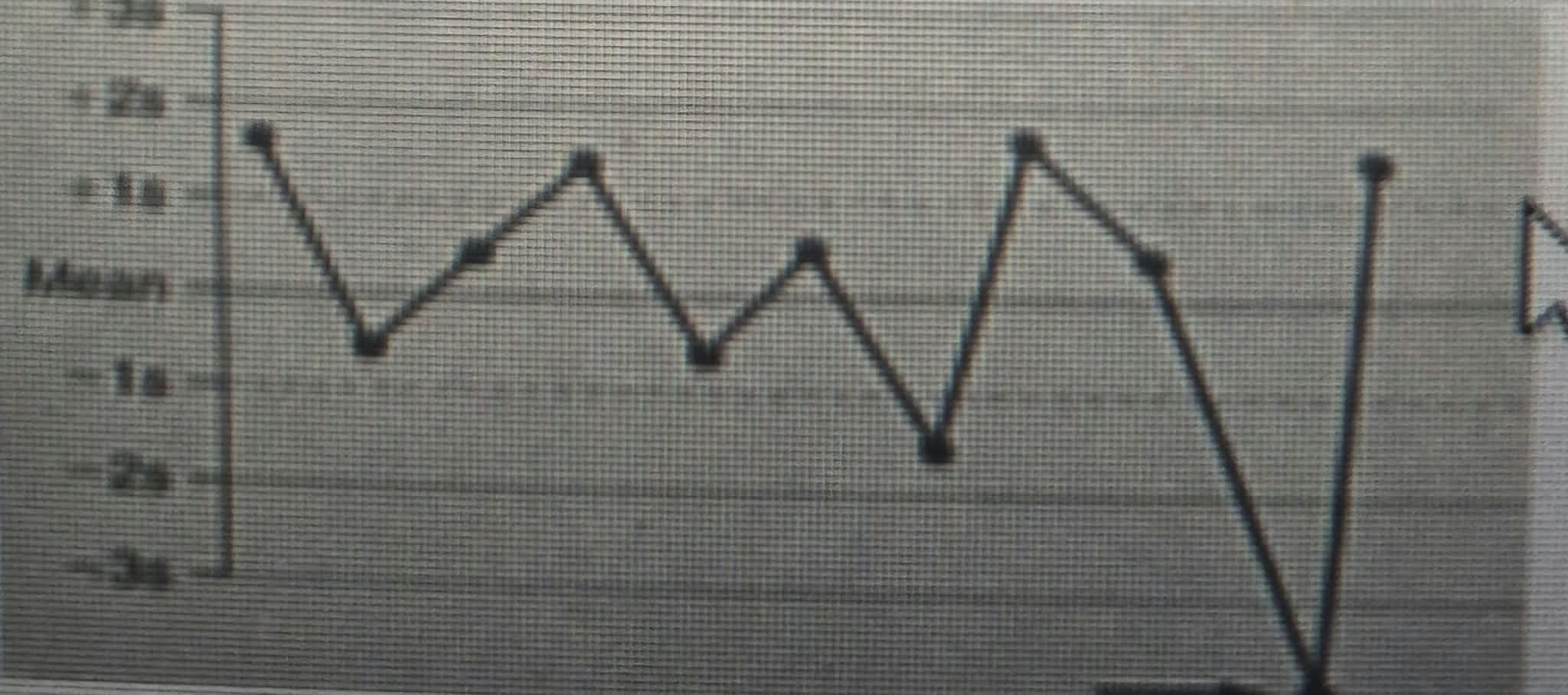
Statement IV only
V. Random Error
Identify the type of Error on
Day 15.

3.4
HSY Centrifuge Manufacturing
Company has a six-sigma
metric scale in its
manufacturing operations.
What is the total number of
defects if 1,000,000 centrifuges
are manufactured?
Green Belt
Which level of six sigma will
lead and manage when
implementing the DMAIC
strategy?