PESTLE: Political Factors
 Call Kai
 Learn
Learn Practice Test
 Spaced Repetition
 Match
Match Flashcards
 Knowt Play
1/32

There's no tags or description
Looks like no tags are added yet.
Name | Mastery | Learn | Test | Matching | Spaced | Call with Kai | Chat |
|---|
No analytics yet
Send a link to your students to track their progress
33 Terms
The Political Environment
Government policy has a direct impact upon firms and their decisions
What are the main aims of the Government?
Low and stable inflation
Low levels of unemployment
Economic growth (GDP)
A balanced budget
What is Economic Stability?
One of the key roles of any government is to create the conditions for economic and political activity
Instability means businesses are likely to delay investment (unpredictable returns) and this is harmful to economic growth
Benefits of Economic Stability
Job creation
Business Confidence
Higher Consumer Spending
Economic Growth
Higher Tax Revenue
Business Start-Ups
Government seek to promote enterprises (tax breaks/grants/advice) within the economy as this creates new jobs and wealth
Penetrates new tax revenue streams and they increase levels of competition within the market
What is a Patent?
A patent is proof an idea belongs to a particular business
Lasts up to 20 years and gives exclusive rights to use/make licence/ even seek the invention
What are the Problems of a Patent Law?
Only valid for the country in which they have registered
Expensive
If the patent is challenged then this might require an expensive court battle
What are the Benefits of a Patent Law?
Patent encourage business investment in R&D
A patent holder can licence it’s idea to others for a fee
Protection against a rival businesses copying your ideas and allow you to generate higher levels of profit
What is the Competition Law?
Competition encourages investment and improved levels of efficiency
It drives down prices and provides greater choices for consumers.
Government and Market Power
Competition and Markets Authority (CMA) investigates and assess any industry that they believe to be acting against consumer interests——> (e.g higher prices)
The takeover and merger of firms is also investigates by the CMA if it is feared that they might become too large and exploit market power.
Deregulation of Markets
The removal of rules and regulations that prevented competition
—>e.g only one bus service is provided might have been allowed to separate on a specific route
Prices, choices and efficiency is improved for the consumer
Is Deregulation Always Right?
The Financial Crisis of 2008 was seen by many economists as a direct result of financial mismanagement brought about through a deregulation of the financial markets
Why do Governments Legislate?
Child Care Seats
Smoking in Public Areas
Sugar Tax on Soft Drinks
Surcharge on Plastic Bags
Environmental Legislation
Encourages businesses to modify their economic activity so that they take more account of the wider environment (minimise pollution and environmental wastes)
Pressure Groups
Pressure groups and their lobbying of MP”s can modify business and government behaviour
—> e.g: the ban on smoking in pubs and clubs from 2007
Government and UK Trade
Despite the UK’s vote to leave the EU in 2019, the European Union remains a key market for UK Trade.
Negatives of Leaving the EU
Trade barriers and increased costs
Customs bureaucracy e.g Red Tape: All imports and exports now need customs declaration, leading to delays, staff time lost, workload and compliance costs
Supply Chain Disruption: Tariffs and non-tariff barriers extra checks caused by logistical delays
Investment Slump: driven by uncertainty
Labour and Skills Shortages: decline in the EU worker inflows essentially in health, hospitality, transport and regulations
Less negotiating power for UK
Benefits of Leaving the EU
Streamlined regulations— can reduce the EU regulations the UK has to follow
Global trade expansion— the UK can create trade deals independent of the EU (e.g India,Australia)
Don’t have to use EU suppliers
Less affected by EU shocks (e.g Greece)
The Government and Taxation
These are two main types of tax that government are able to apply to influence economic activity
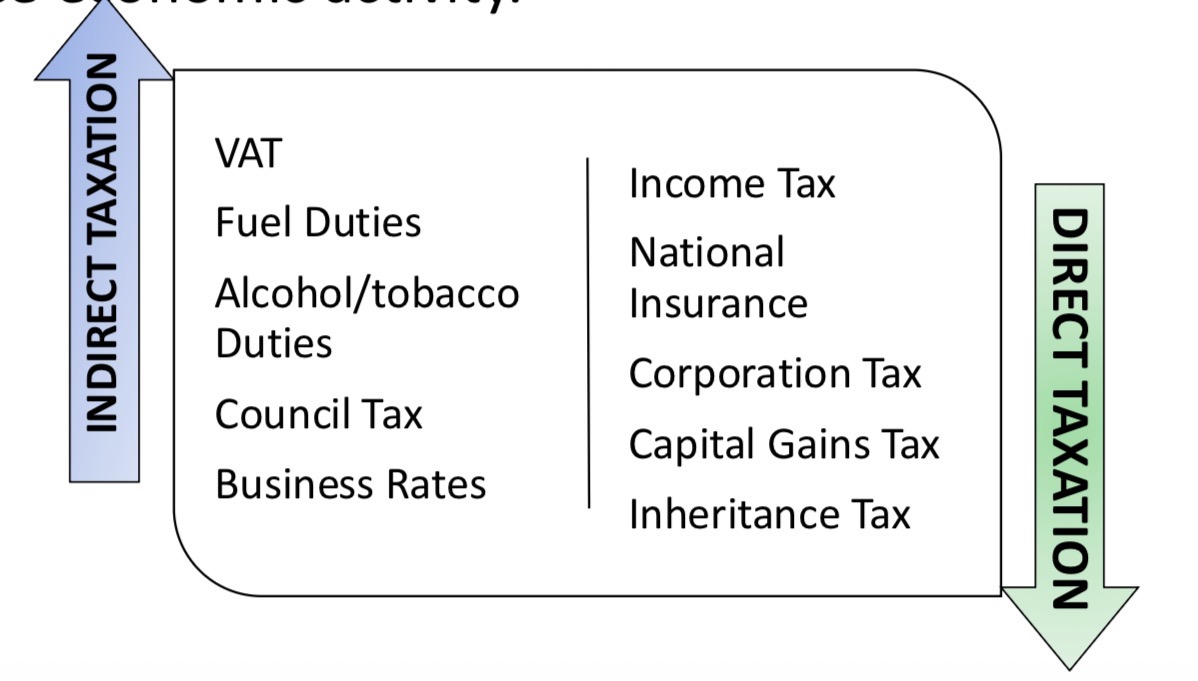
The Effects of Taxation
Lower rates of taxation help to encourage economic growth as consumers have more disposable income that they spend in shops and businesses
Raising taxes suppresses demand and prevent large rises in the rate of inflation
Any rises in taxes on businesses= Higher Prices for Consumers
What are Subsidies?
Money granted by the government to help an industry business keep costs and therefore prices low and encourage competition
—> e.g: solar panels, child care, car scrappage scheme
Why do Governments Subsidise?
Financial assistance to poorer families (e.g free school meals, child care for under 2’s)
Support infant industries (e.g 3D Printing)
Political motive to protect jobs
What is a Monetary Policy?
The use of interest rates and manipulation of the money supply to influence levels of consumer spending/demand
To create a stable economic environment by maintaining low rates of inflation and avoiding recession
This is controlled by the Bank of England
How Monetary Policy works?
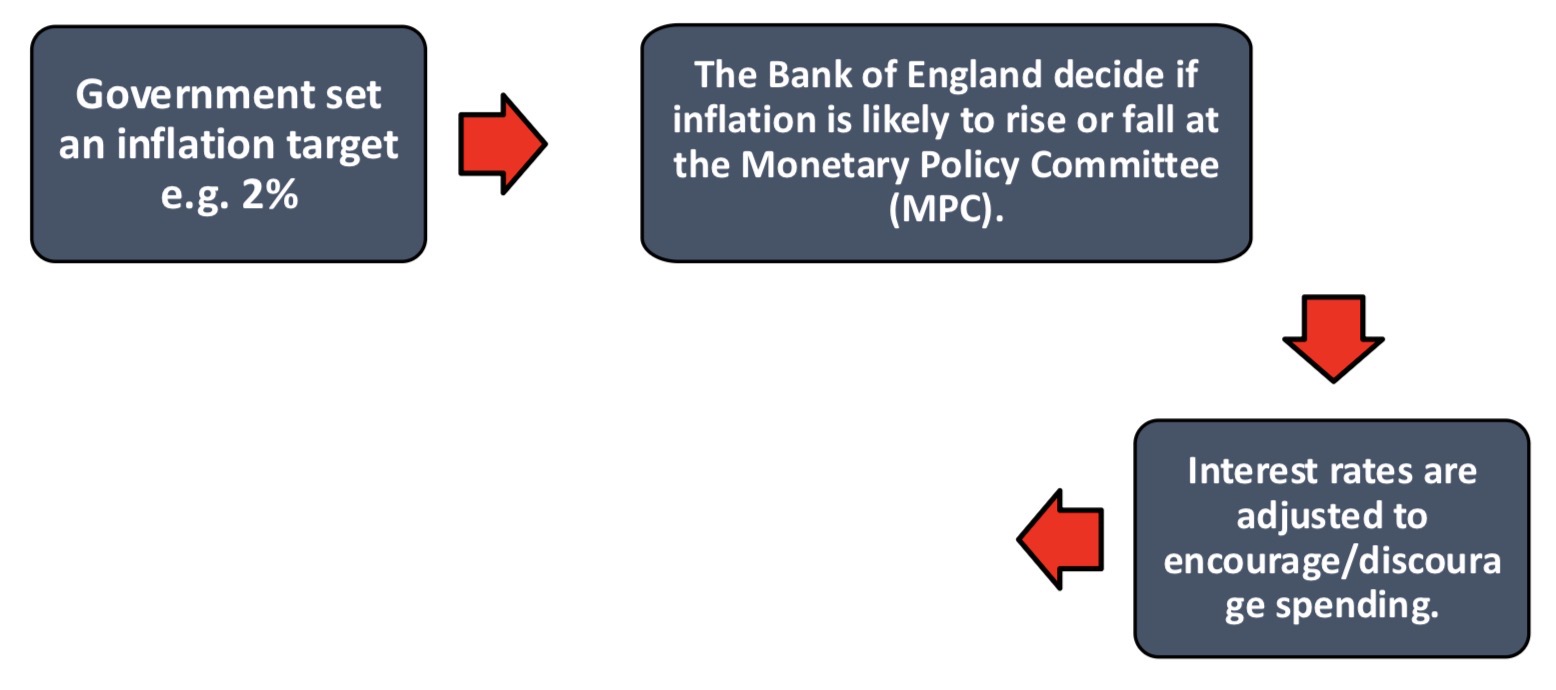
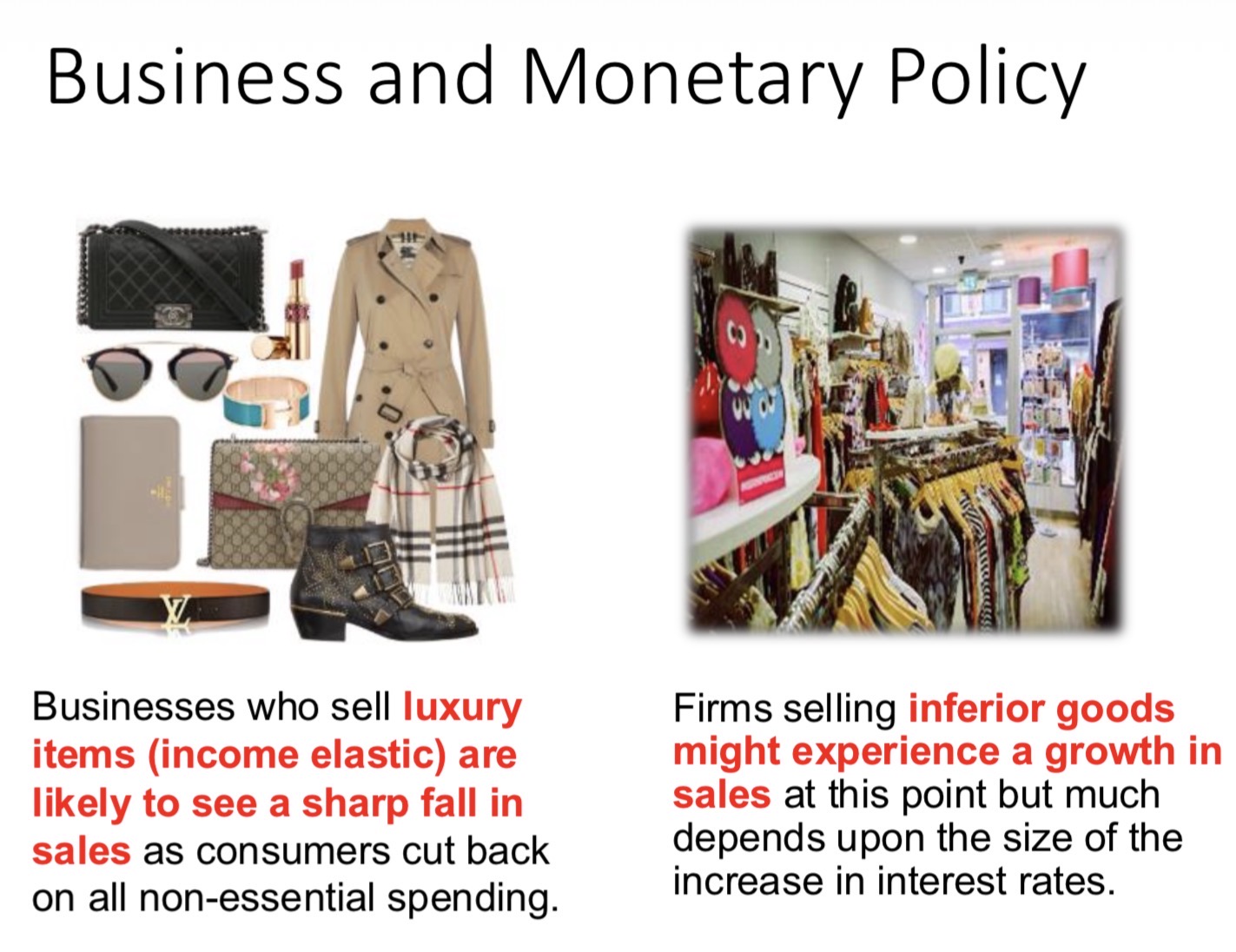
Business and Monetary Policy
If interested rates rise = more expensive mortgages/loans for consumers= consumers have less money available to spend.
Businesses will also experience a rise in their costs as they are likely to hold loans on which they pay interest
What is Fiscal Policy?
Changes in the government spending or taxation in order to influence levels of demand and economic activity
What are the Main aims of Fiscal Policy?
To stimulate economic growth
Maintain low and stable rates of inflation
Provide economic stability avoiding “boom and bust” economics
Expansionary Fiscal Policy
Increasing spending and cutting taxes
This increases consumer spending because they have more disposable income
This means additional revenue for businesses and increases demand, encouraging firms to hire more staff and push forward with investment as confidence levels increase
Contractionary Fiscal Policy
Decreases spending and raises taxes in an effort to suppress economic growth
Higher taxes decreases consumer spending spending
Businesses might also see their taxes rise and this increase in their costs and a loss in demand
Fiscal Policy and Business
The impact depends upon the sizes of the changes to government spending and taxation rates
Governments have to consider their own levels of borrowing and this can determine fiscal policy
—>e.g: the period of austerity (tightening spending) in the UK since 2010
Government and Private Sectors
With over £100 billion worth of private sector goods and services purchased annually by the government they are a key customer for many businesses in the UK
—>e.g: UK defense contractors, shipbuilders, and some road builders
Competitive Tendering
Used to try and ensure value for money for the UK taxpayers.
Sealed bids are submitted for contracts by interested suppliers
Allows new entrants to the market competition
Government Services
Private sectors businesses also now have the opportunity of supplying services that had previously been provided by the state ( e.g academy schools and prisons)
The aim is to increase levels of competition and so drive down prices
Whilst this has provided some services more cheaply, it has also led to accusations of low quality and necessary cost cutting as private firms are driven by a profit motive