History of Package Design
 Call Kai
 Learn
Learn Practice Test
 Spaced Repetition
 Match
Match Flashcards
 Knowt Play
1/52

There's no tags or description
Looks like no tags are added yet.
Name | Mastery | Learn | Test | Matching | Spaced | Call with Kai | Chat |
|---|
No analytics yet
Send a link to your students to track their progress
53 Terms
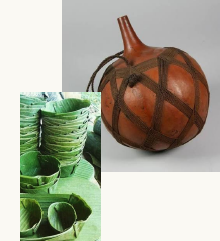
Examples of Natural Containers
gourds, shells, leaves
Early Innovations
Over time, humans made their own containers from eartheware, animal organs and skins, and weaved grasses.
Early Innovations
This allowed people to store surplus food.
Early Innovations
This made life easier by reducing the time needed to search for food daily. The ability to store goods was a key step in the growth of civilizations.
Fabrics and Fibers
first made from furs, evolved into woven fibers that could be turned into bags and wrappings.
Paper and Paper Products
was one of the first true packaging materials, first used in China around 200 B.C.
Sheets made from mulberry
were used to wrap food and protect goods. This invention laid the foundation for flexible packaging.
Paper and Paper products
during the Tang Dynasty (618 to 907 CE), where paper was wrapped around food and
fragile items such as tea leaves and medicine.
Wooden packaging
As the use of paper packaging didn’t travel to Europe until much later, people made do with
papermaking
spread from China to the Middle East, then into Europe
Papermaking
It eventually reached America in 1690. This spread became a common material for wrapping and storing products across cultures.
Natural containers
They were easy to find and served as temporary holders for food and water.
Natural containers
Humans first relied on this to to provide containers.
Commercial paper bags
were first manufactured in 1844.
natural containers and advanced plastics
Each solved problems of storage, transport and preservation.
bag-making machine
In 1852, Francis Wolle invented this which allowed mass producton. These developments made packaging more efficient and accessible.
Cardboards
By 1900, corrugated shipping cartons replaced heavy wooden crates. This made trade and shipping faster and more cost-effective.
Robert Gair’s Accident
In the 1870s,he accidentally discovered that cutting and creasing paperboard at the same time created cartons. This mistake led to a breakthrough in packaging. His innovation gave rise to semi-flexible packaging still used today.
Cereal Cartons
Kellogg’s pioneered the use of paperboard cartons for cereal.
Cereal Cartons
They combined a waxed inner bag for freshness with a printed outer box for branding.
Cereal Cartons
This was one of the first times packaging also became a tool for advertising.
Environmental Concerns
By the late 20th century, plastics reduced the use of paper in packaging. Recently, paper has
regained popularity due to…
Environmental concerns
Designers now use recycled and eco-friendly papers to create sustainable packaging.
Glass
Made from sand, soda, and limestone, glass provided durable and reusable containers.
Glass-making
began as early as 7000 B.C.and became an industry in Egypt by 1500 B.C.
Blowpipe Innovation
It also allowed round and uniform containers to be made. This changed glass from a luxury to a more common packaging material.
Blowpipe Innovation
The Phoenicians invented this in 300 B.C., which sped up glass production.
glass packaging
By the 17th and 18th centuries, molds allowed decorative designs and labels to be added to containers. This increased both beauty and practicality of
Transparent glass
appeared in the early Christian era.
Clear Glass and Molds
By the 17th and 18th centuries, molds allowed decorative designs and labels to be added to containers. This increased both beauty and practicality of glass packaging.
Phoenicians
Invented the blowpipe in 300 B.C.
Industrial Glass
The first automatic bottle-making machine was patented in 1889. It could produce 20,000 bottles a day, making glass containers affordable. Even today, glass remains popular for premium products.
Metals
Stronger and cheaper alloys were developed later. These made containers more practical and widely available.
Tin Plating
was discovered in 1200 and spread to Europe by the 1600s.
Tin Plating
It protected iron containers from rusting. This breakthrough made metal containers safe and
reliable for packaging.
Napoleon
In 1809, he offered a reward for food preservation methods.
Napoleon’s Challenge
In 1809, Napoleon offered a reward for food preservation methods. Nicholas Appert discovered sealing food in tin containers and boiling them could keep food safe.
Nicholas Appert
He discovered sealing food in tin containers and boiling them could keep food safe.
Peter Durand
In 1810, He patented the sealed cylindrical can.
Cylindrical Can
This invention allowed long term storage of food for trade and military use. It quickly became one of the most important packaging innovations in history.
Aluminum and Can Opener
Aluminum foil entered the market in 1910, and aluminum cans appeared in 1959.
can opener
invented in 1875, made cans more practical to use. These changes made metal
packaging more convenient for households.
Collapsible Tubes
were first used for paint in 1841. Later, they were adopted for toothpaste in the
1890s and food in the 1960s. This was an early form of flexible metal packaging.
Plastics
were developed in the 19th century, starting with styrene (1831), vinyl chloride (1835), and celluloid (1870).
Expansion in 1900s
Plastics became common after WWII with materials like cellophane
and polyethylene.They were used for wraps,insulation, and later, everyday
packaging. This revolutionized how products were stored and sold.
Polyethylene Terephthalate (PET) Bottles
were introduced in 1977 for beverages. By the 1980s, they became the standard for many drinks and food products.
Environmental Issues
Today, recyclable and biodegradable plastics are being developed. Packaging
design is now focused on reducing plastic waste.
Labels and Branding
English merchants began
marking goods to protect buyers from fraud.
Smith Brothers
In the 1660s, English merchants began
marking goods to protect buyers from
fraud. Their ‘cough drops’ in 1866 pioneered official trademarks in packaging. This turned packaging into a tool for trust and marketing.
Modern labels
Today, labels carry branding, nutrition, instructions, and safety information
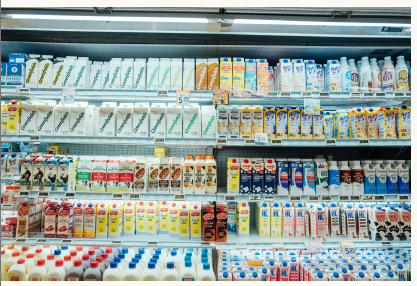
Modern packaging
They help consumers make informed choices and build company identity.
Modern packaging
It is as much about communication as it is about protection.
Polyethylene Terephthalate (PET) bottles
They were strong, lightweight and easy to recycle.