CLAS241 - High Classical Period (450-400 BCE) (copy)
 Call Kai
 Learn
Learn Practice Test
 Spaced Repetition
 Match
Match Flashcards
 Knowt Play
1/22

There's no tags or description
Looks like no tags are added yet.
Name | Mastery | Learn | Test | Matching | Spaced | Call with Kai | Chat |
|---|
No analytics yet
Send a link to your students to track their progress
23 Terms
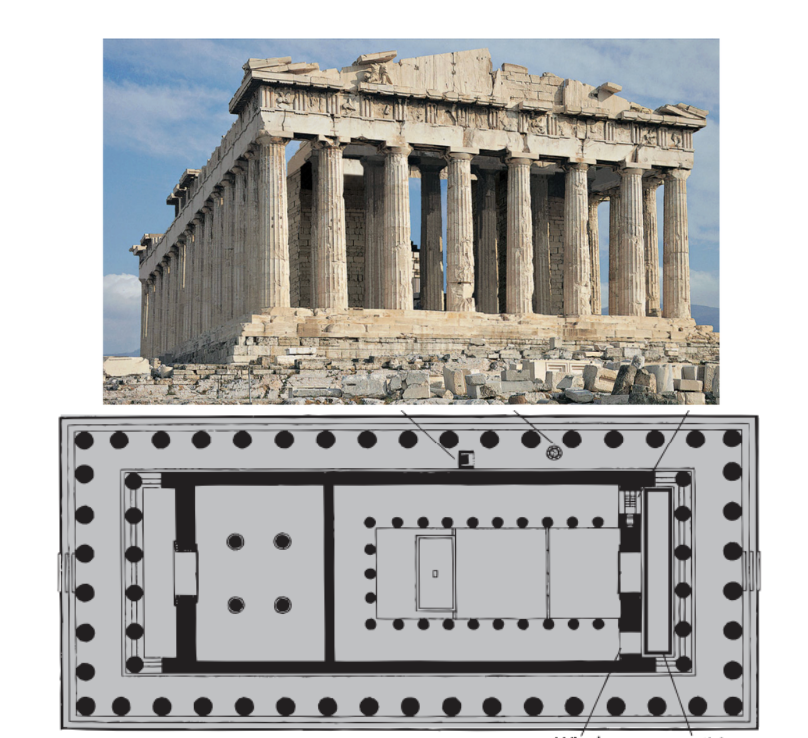
Plan of the Parthenon — Athens — Iktinos and Kallikrates
Temple dedicated to Athena
Major investment, used best architects, sculptors, etc.
Doric Order
- No base on columns
- Triglymetope friezeGeneral ratio of 9:4 (Plan and Elevation)
- Gives building good flow
- Meant to look perfect (no straight lines, most optical refinements)Parthenon: 4 Ionic Columns in the opisthodomos (for decor)
One Doric and One Ionic Frieze
Optical refinement: triglyphs dont perfectly align with columns, but corner columns are thicker and triglyphs adjust so they look centred over each column and the whole doric frieze looks balanced
Begins to abandon Doric Order
From the early Archaic to High classical period: the short doric order columns became longer, thick shafts became thinner, rectangular metopes became square - the sheer bulk of the buildings was reduced by decreasing the entablature
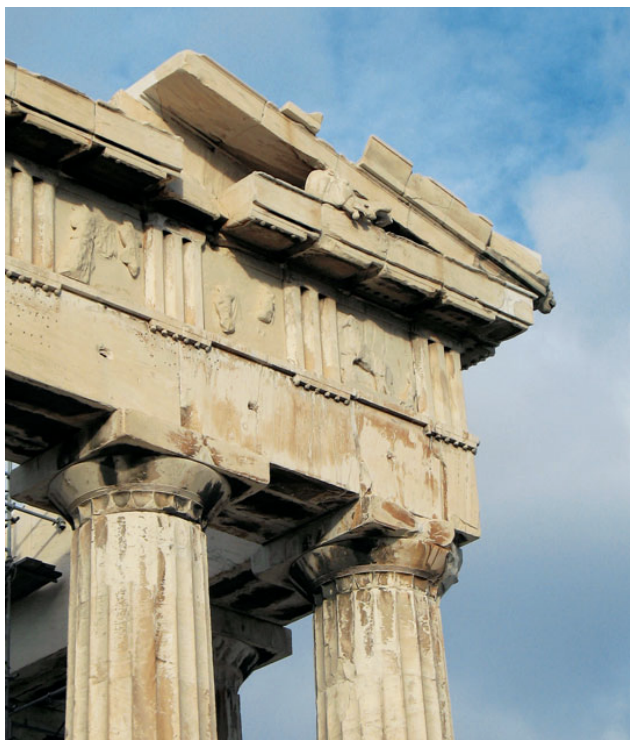
Parthenon, NE Corner
Size? Idk
Shows doric column and capital
Shows achitrave and frieze course (metope and triglyph) and cornices
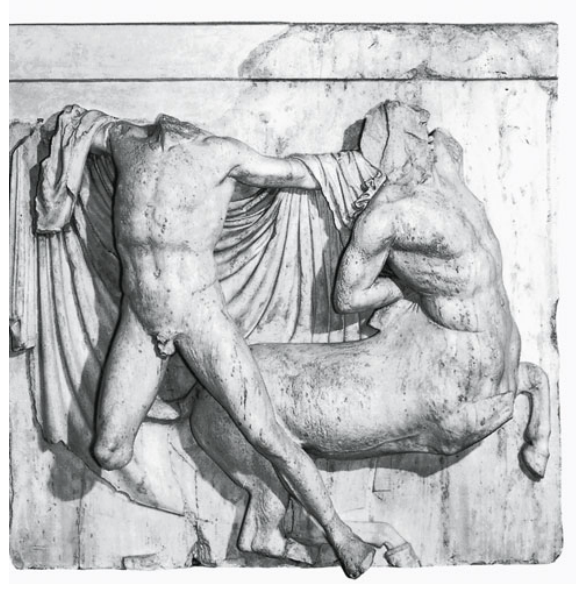
Parthenon, Metope
Greeks vs. Centaurs
Looks like transitional period bodies (Riace Warriors and Artemisian God)
- Lots of musculature and flow (X shape)
- Cloak acts as a backgroundBeefier bodies → athlete to body builder
- Torso looks stuck into the centaur (contrasts the natural flow of old sculpture)Greeks look younger, ideal
Centaurs look wild
Muscles exaggerated on all sculptures in the Parthenon
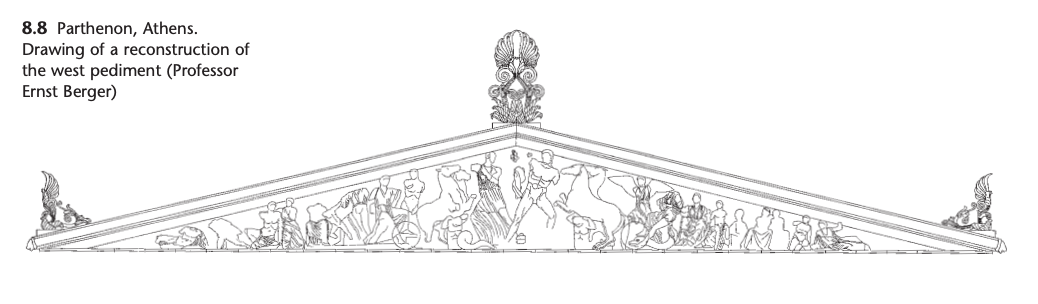
Parthenon, Reconstruction of W Pediment
Athena vs. Poseidon
Shows the contest between Athena and Poseidon:
Who was to be the patron deity of Athens (divine protector of Athens)
Athena and Poseidon spring apart in a great “X” composition in the center.
Their outward movement is contained by the chariot groups behind them
While seated and reclining figures continue into the corners
Middle has an olive tree → Athena’s gift of the first olive tree won
Poseidon’s gift was a salt spring but he lost
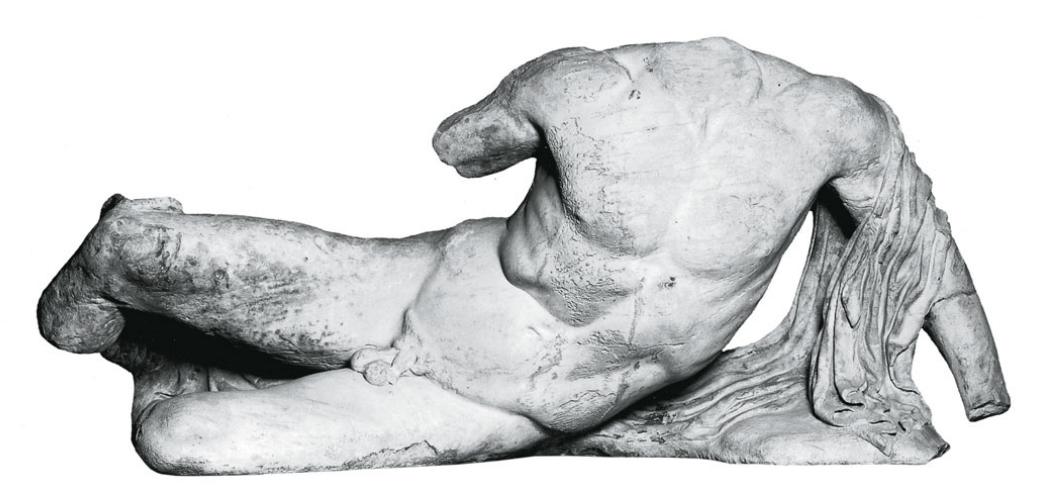
Parthenon, the River Ilissos
From the west pediment (contest bw Athena and Poseidon)
Reclining male figure, personification of the river Illisos
Calls to mind the river gods of the olympia pediment
Body does not look natural (no flow); torso looks stuck on
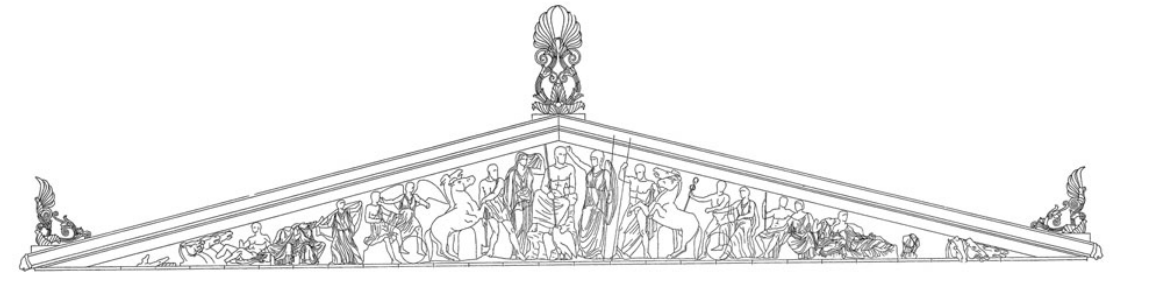
Parthenon, Reconstruction of the E Pediment
Birth of Athena
The central group is lost (athena and zeus), but it seems Athena was shown fully armed and standing next to her farther, Zeus, whose head she had just emerged
Other Olympian gods were watching the event
The designer specified the time of the event: dawn
Heads of the horses of helios (the Sun) rise above the floor of the pediment (the horizon) on the south end
Opposite corner - heads of the horses of selene (the moon) are all that can be seen, sinking, as night gives way to day, darkness to light
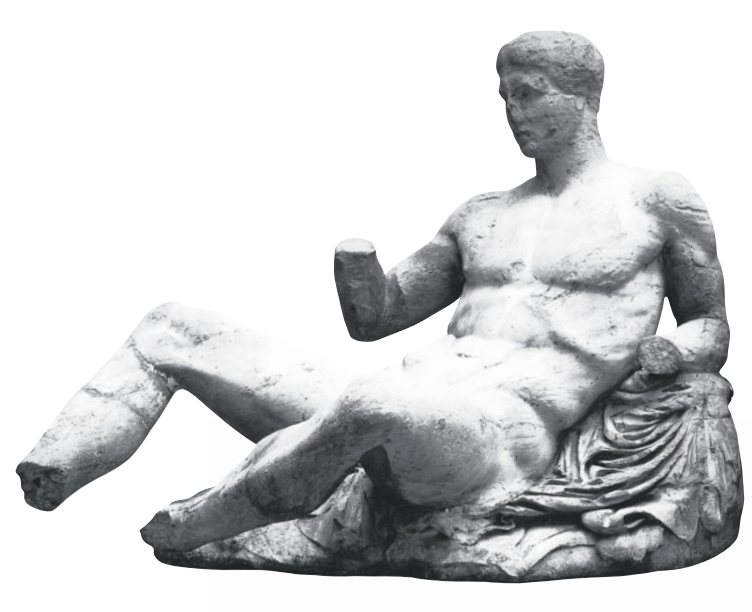
Parthenon, Relining male
From East pediment (the birth of athena)
Nude male gazes at the sun, unaware of her birth
Might be Dionysus
Larger musculature
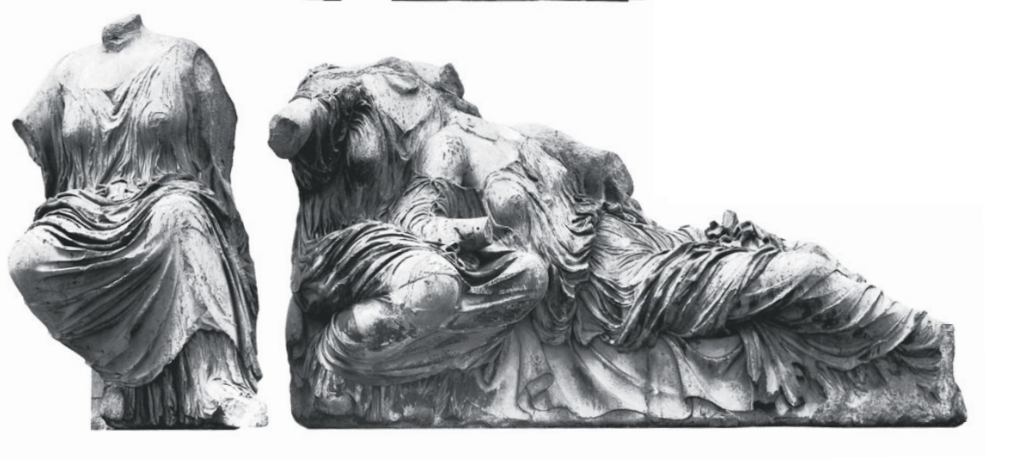
Parthenon, Three Goddesses
Chiaroscuro: The interplay b/w light and shadow
- Deeper drapery, folds, wrinkles
- Clinging to body, body details show through
- Has much more depth than other works w/ drapery
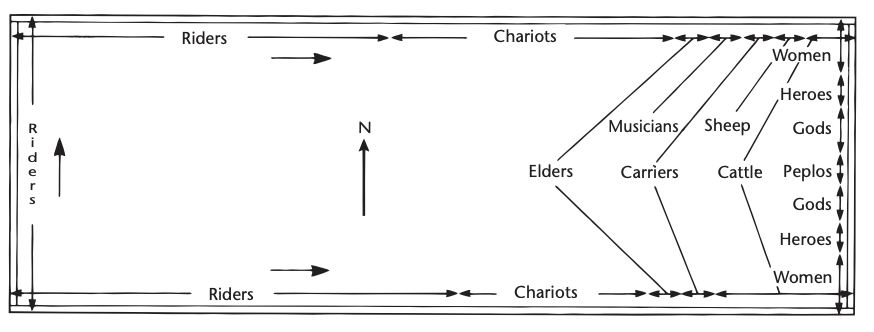
Parthenon, Ionic Frieze
12 m above ground, 1 m high, 160 m long
Nowhere more than 6 m deep
Slightly leaning
Panathenaic procession (perfected version of the festival), mirrors e/o to culminating moment (Peplos), for viewers
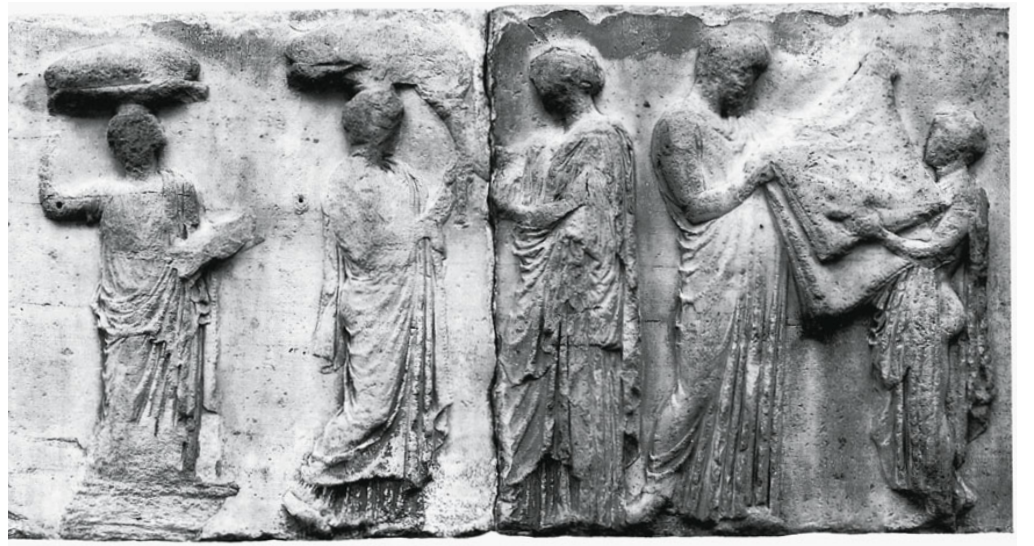
Parthenon, Peplos Incident
Central scene in the Panathenaic festival
Young girl gives a peplos to the chief archon (ruler of everything) or Erechteus’ (first king of Athens) daughter?
- Peplos: newly woven cloak to be put onto the statue of AthenaDifferent types of rulers
Butt showing (not appropriate for a girl) → maybe a guy?
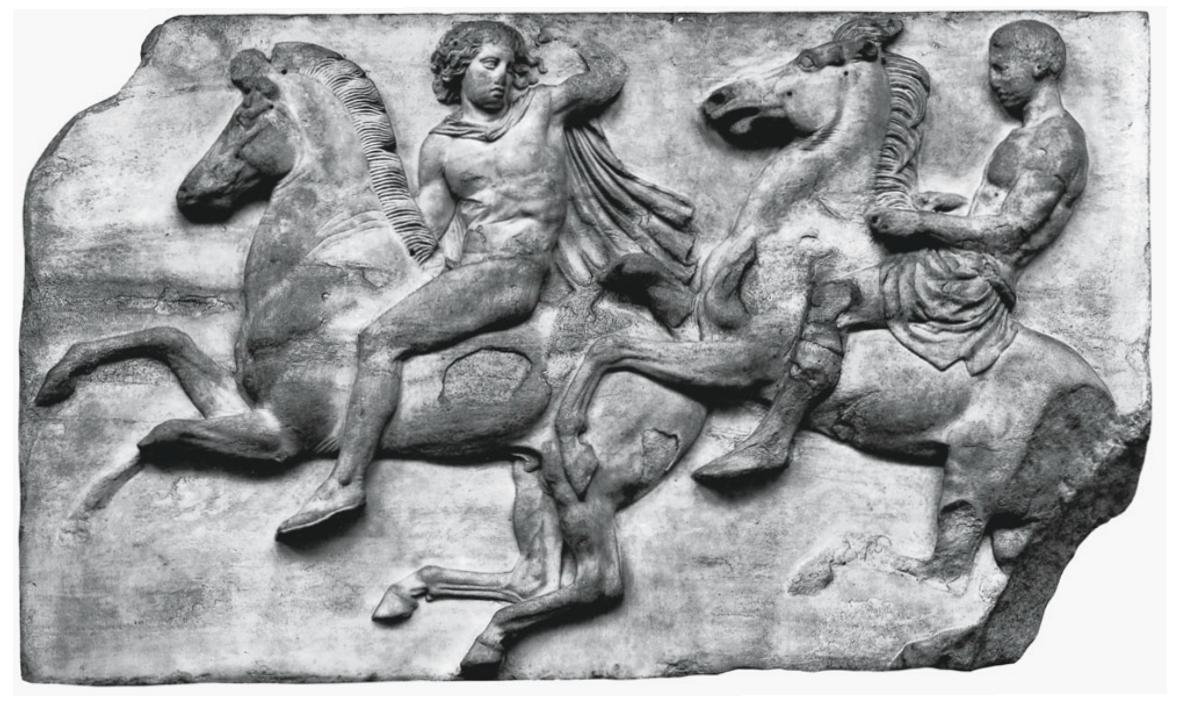
Parthenon, Riders
Riders entering a festival
Classical bodies and face
Chiaroscuro w/in the clothes
More musculature on animals (like humans)
- Mane is flowing, uses ChiaroscuroShallow relief but great depth
- More variation and layers
- Compared to gigantomachy, which looks like bodies on top of e/oNo saddle/sterum; humans move the horse using their legs
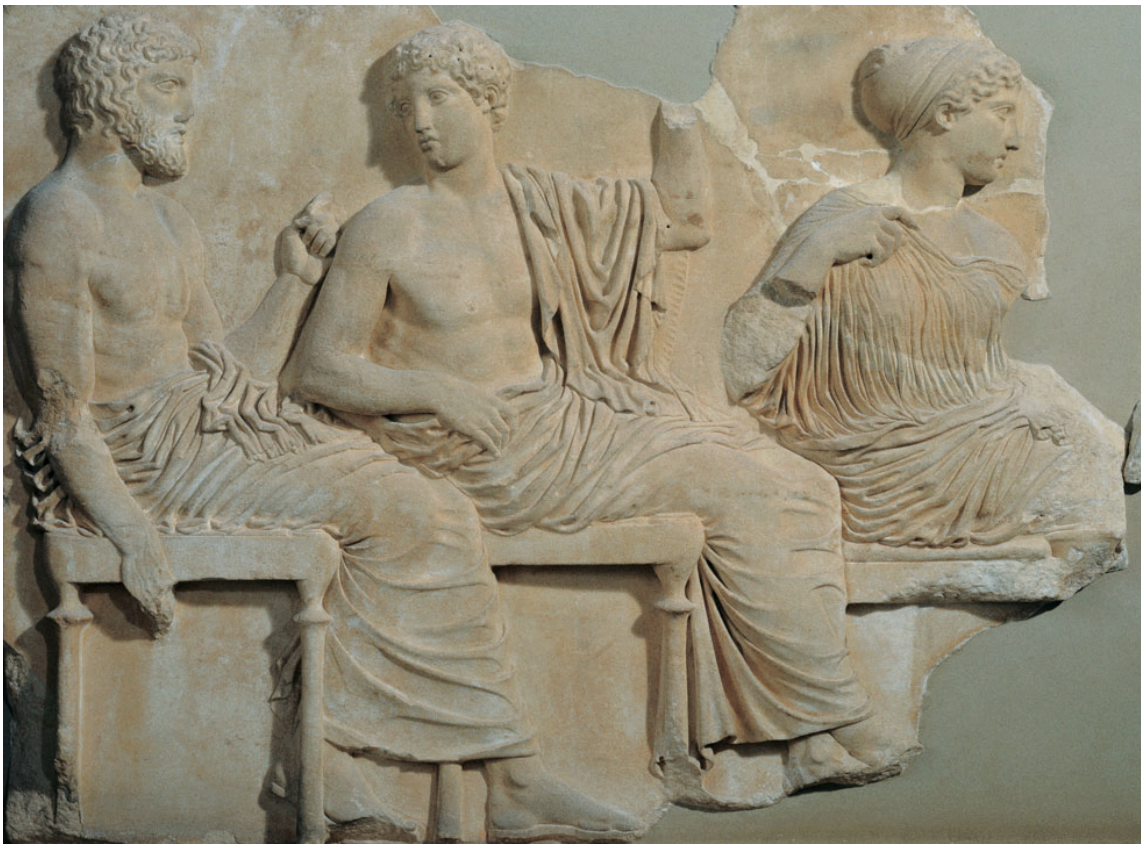
Parthenon, Seated Gods
Left: Zeus
Gods look more idealistic than humans (more everlasting)
Play b/w light and shadow on drapery
Drapery on women are more see through (see body details, like breasts)
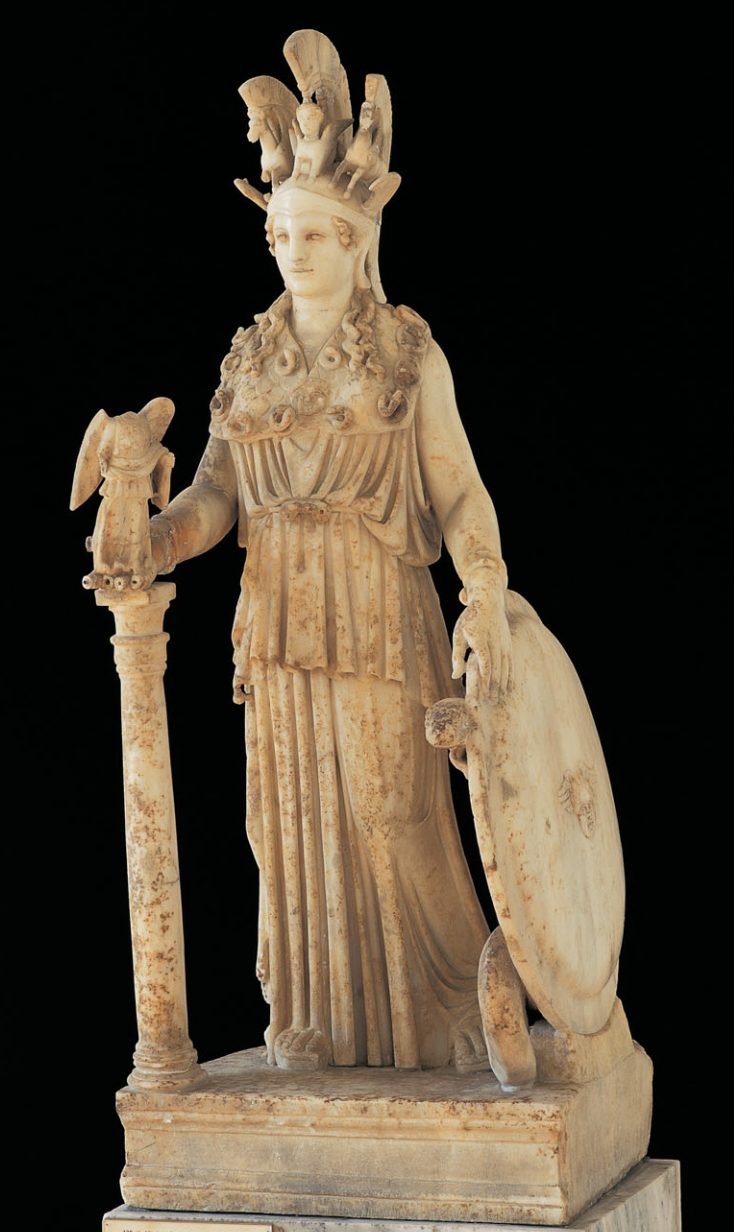
Varvakeion — Phidias
The Athena Parthenos was a chryselephantine (ivory + gold) statue
Money from the Delian League
Literary descriptions
- Which is why some recreations look visually different (ex. different head pieces, some w/o column beneath hand. some w/ thinner drapery)Greek vs Centaurs depicted on her sandals
Greeks (Athenians) vs Amazons depicted on her shield
- Myth that amazons sacked Athens
- Showing the glory of Athens
- Some figures have an overhand chop
- Woman pulling another person’s hair
- Theory that Pheidias and Perkale’s faces were depicted on the figures; but, this is defensible b/c all the faces look the same (all trying to promote and ideal human)
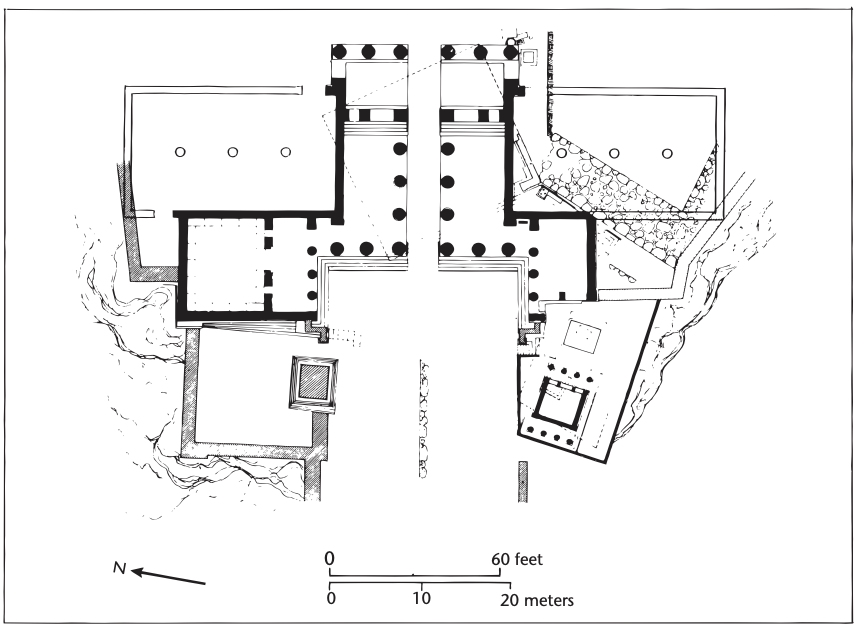
Plan of the Propylaia — Athens — Mnesikles
After parthenon
Pinachotiki “Picture Museum” — Tiny art gallery (one room) wooden pictures hung
Another section was cut which never got used (not sure why)
N/S sides had rooms that mirror e/p
- S side wasn’t used because it has a Bronze Age wallDoric Order w/ Ionic columns (similar to Parthenon)
Propylaia — had many gateways > frames view
- N door was used more
- N side — able to see the acropolis better
- Outside framed to give a perfect ¾ view → shows greatnessRoof coffers to remove weight
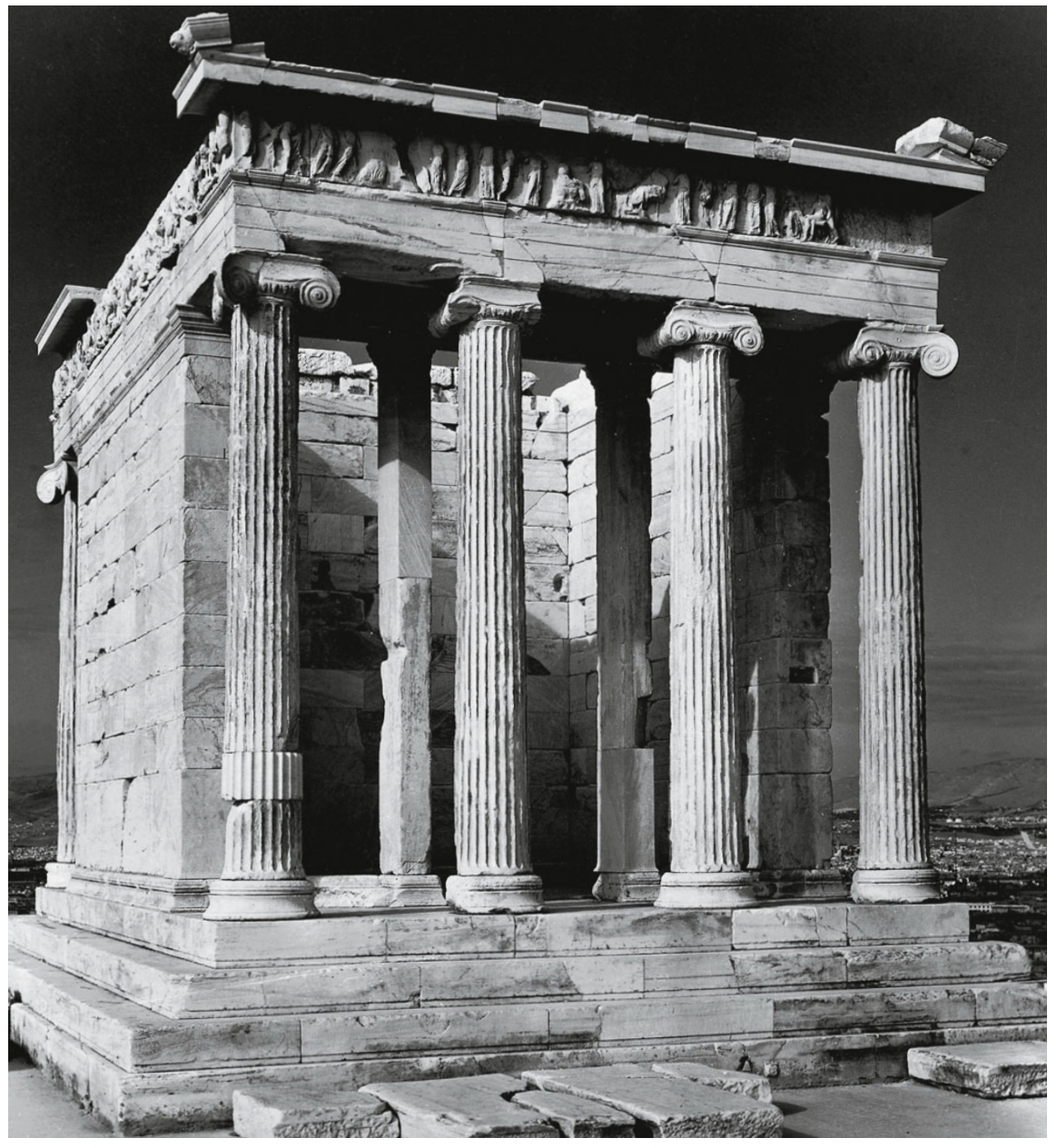
Temple of Athena Nike — Athens
The temple is fully Ionic
- Column directly resting on base
- Curly decoration at top
- Running friezeProbably w/ Ionic frieze interpretation
- Greeks fighting Greeks (Athenians vs Spartans)
- Historical event
- Athenians broke tradition and put a historical piece on a templeWould’ve had a fence (showing sculptures like Nike adjusting her sandal)
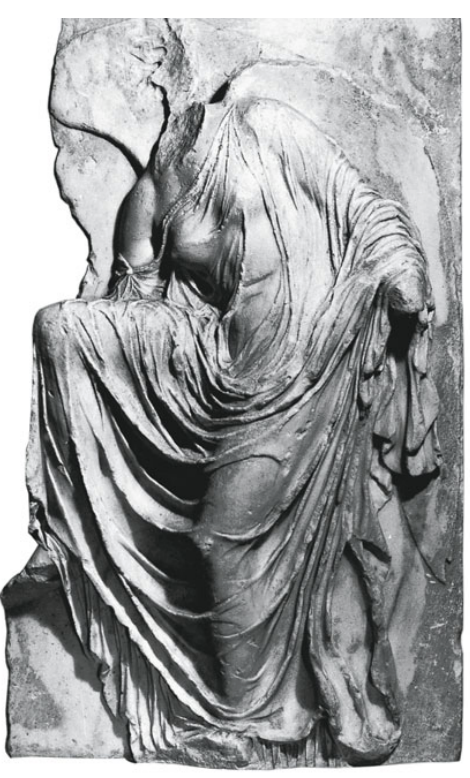
Temple of Athena Nike, Nike Adjusting Sandal
Balustrade added in 410s BCE
Series of Nikes in procession
Example of “wet look”
- Drapery clingier and see through
- Definition of body details
- Wearing clothes but it doesn’t look like it (can see flesh and silhouette very clearly)
- Chiaroscuro
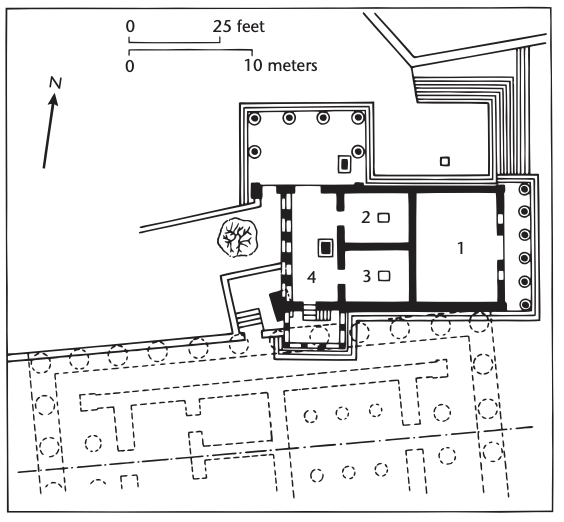
Plan of the Erechtheion — Athens
Ionic and Split level; Several cults; Very influential
The last of the buildings on the acropolis to be finished
Split level: 3 levels
- All 4 sides are seenTomb of erectious
Most sacred place to Athena
Olive tree where Athena would’ve been born
Dotted outline was a temple sacked by Persians
Porch on the S side most copied — Looking towards Parthenon
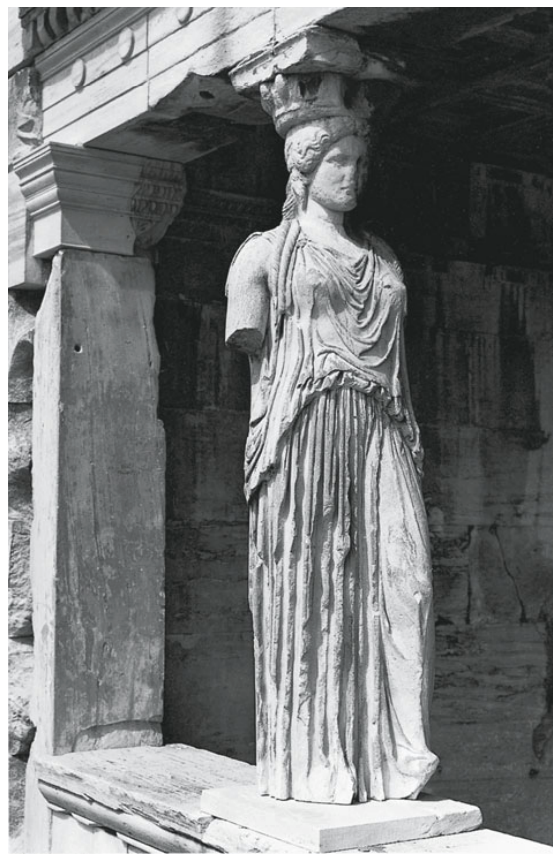
Erechtheion, Caryatid
“The porch of the maidens”
Ionic columns replaces w/ maidens
Caryatid = Kore = Girlmaiden
- Probably priestesses to Athena — Looking towards Parthenon
Link to Siphnian Treasury (also had caryatids)
In the style of classical period
Daedalic looking statue, ritually washed, peplos put on it
Contrapposto figures
- Free leg and weight legDeep cut drapery folds
Overall weighty appearance
- Thick shoulder, body, waist
- Since Greeks did not understand weight distribution
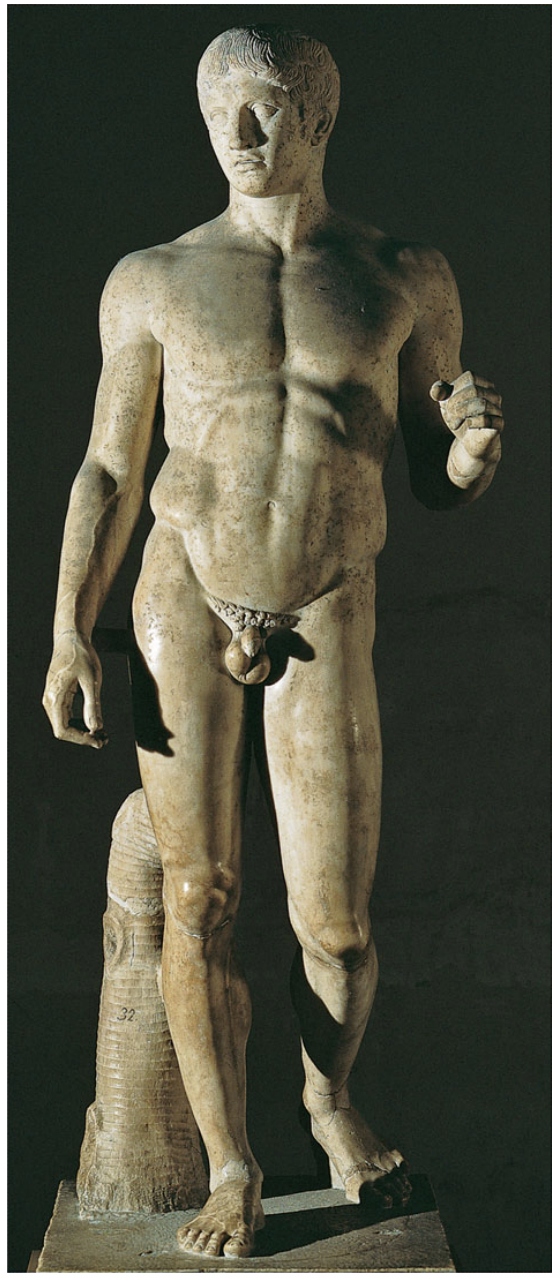
Doryphoros (Spear Bearer) — Polykleitos
Possibly Achilles or Theseus
Walking stance
- Front leg behind (look at position of foot)
- Often copied or used as inspiration in antiquityFamous b/c of math + philosophy used in statue
Flow from top to bottom on both sides of statue (not a hard X)
- Cross flow to bodyKey idea is symmetry → Greeks thought of symmetry as everything was in proper proportion to e/o
Ideal proportion was 1:7 → changed up the general proportion of the statue from 1:6; more realistic proportion
Holding sword in R hand and shield in L
HAIR is very flat against scalp
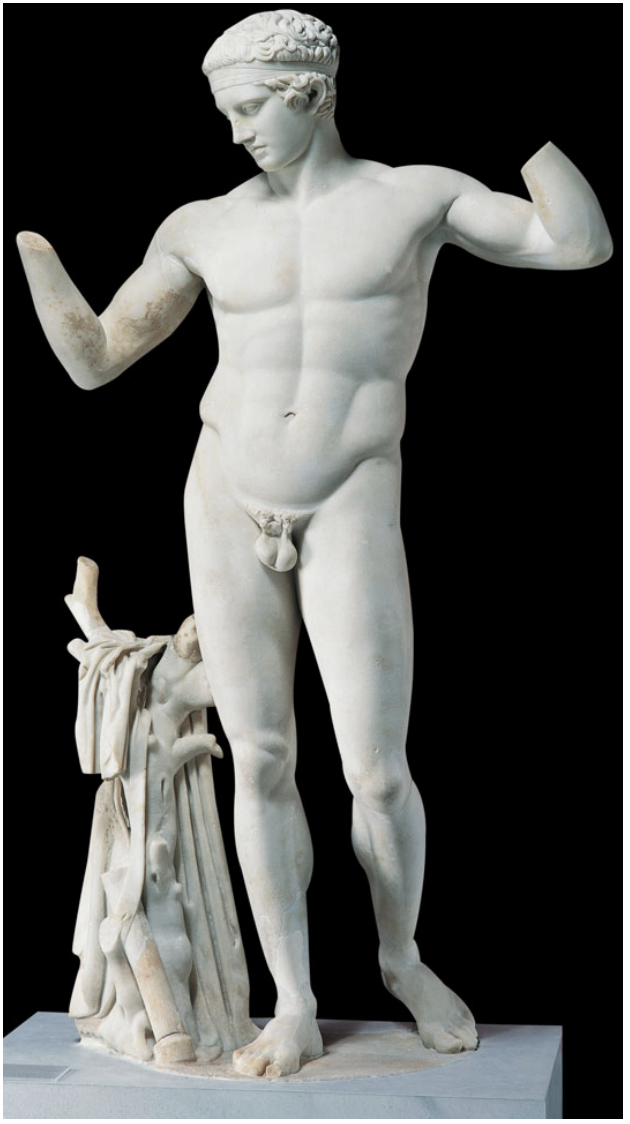
Diadoumenos (Filet Binder) — Polykleitos
Similar to Doryphoros
Proportions, swing of the hips, the curve of the motion through the figure, the hands
Shows Polykleitos had a distinctive style
Same body as silhouette as Doryphoros
Later since movement of hair
- Hair has more volume compared to the otherThis style of hair will become more popular in later pieces
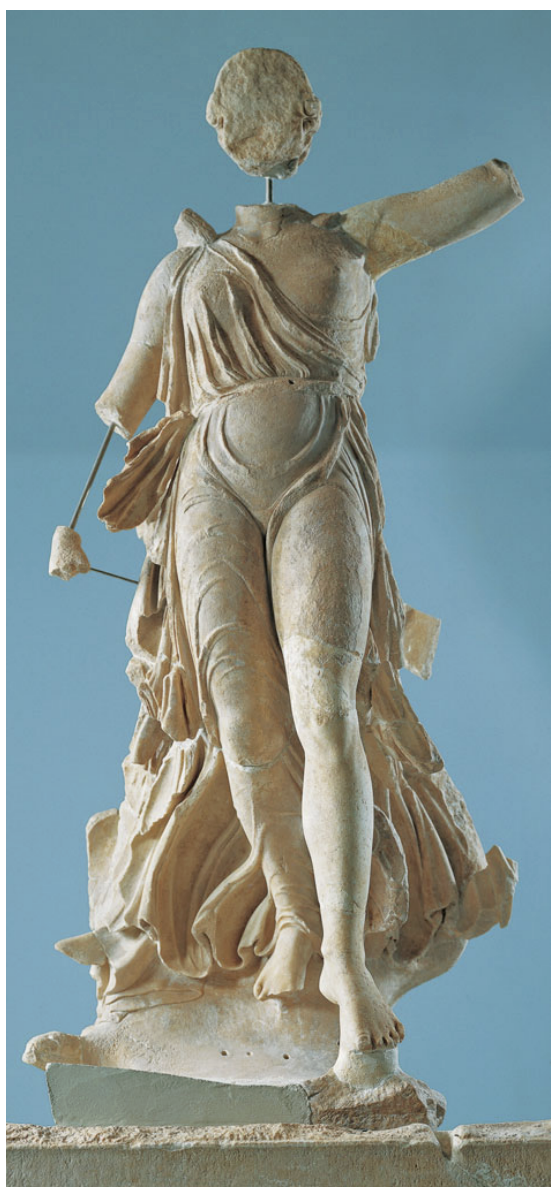
Nike — Olympia — Paionios
By Paionios
Dedicated in front of the Temple of Zeus at Olympia
Full of movement and action
High on a pedestal
- Position of legs and feet make it seem like Nike could be landing onto the pedestal
- Wind forcing drapery to cling to legsWe look to drapery
Starting to see a lot of Amazons (one breast uncovered)
- Myth of them cutting off one breast to comfortably use a bow and arrow during fights/hunts
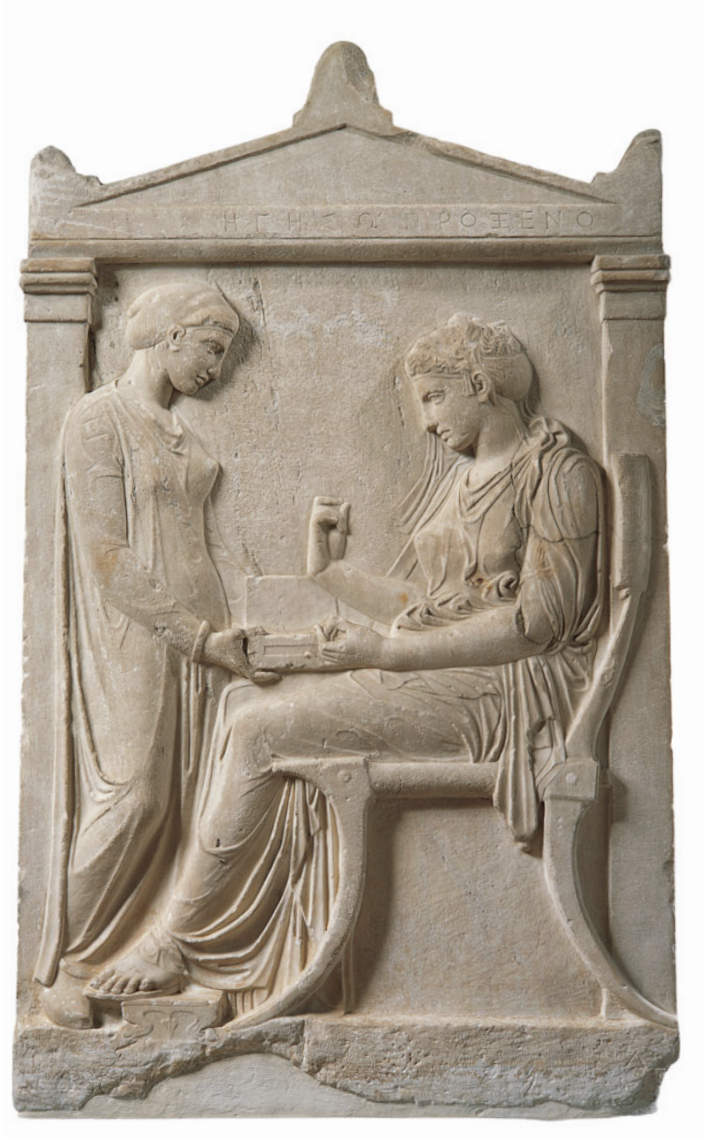
Grave Stele of Hegeso — Athens
Start to appear ca. 430 BCE
Represents the dead as alive
Generic + Inscription → they would just pick out random ones, and customize their name onto it
Gravestone/gravemarker
Rich people used these
Laws changed b/c there was no room for any others
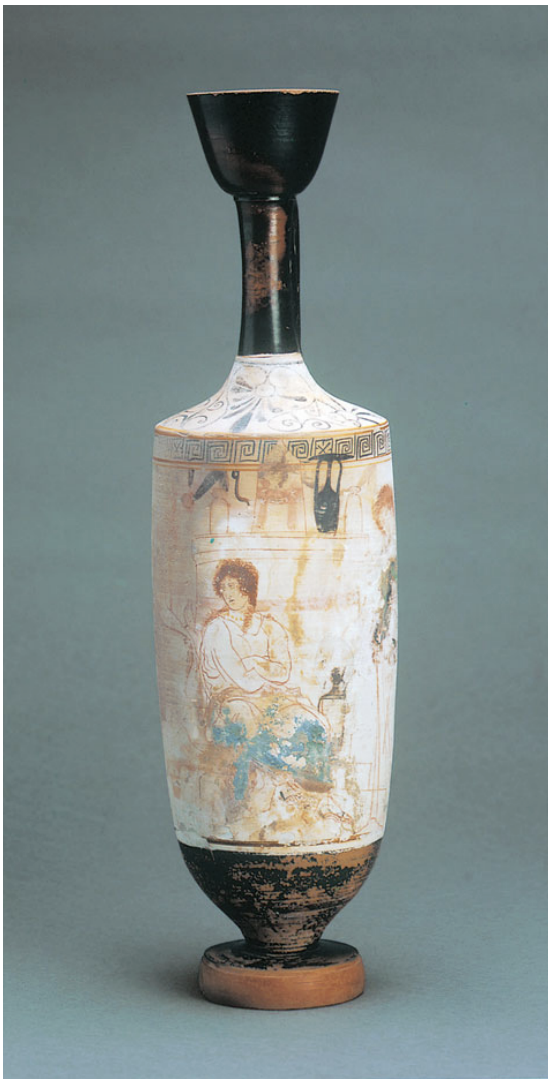
Attic White Ground Lekythos
Started in Archaic period
Height is High Classical
Very fragile material
Primarily funerary → pour in olive oil and slowly seeps down into grave as an offering
Defines mass by line, not shading
Slightly different kind of firing process (added on after firing)
- White FiguresNot using shading; parts separated by only lines
B/c of the material, you need to do more linework on figures instead of shading