ENVR Exam 2
0.0(0)
Studied by 0 people Call Kai
 Learn
Learn Practice Test
 Spaced Repetition
 Match
Match Flashcards
 Knowt Play
Card Sorting
1/80

Earn XP
Description and Tags
Last updated 2:54 PM on 2/27/23
Name | Mastery | Learn | Test | Matching | Spaced | Call with Kai | Chat |
|---|
No analytics yet
Send a link to your students to track their progress
81 Terms
1
New cards
Metamorphic Rocks
pre-existing rocks that have been subjected to increasing temperature and/or pressure
2
New cards
temperature and pressure
typically, __*blank*__ and __*blank*__ increase with depth
3
New cards
stresses
confining pressure and differential stress
4
New cards
confining pressure
rock experiences the same force on all sides
5
New cards
differential stress
rock does NOT experience the same forces on all sides
6
New cards
stress
can change the shape of the rock and shorten in the direction of maximum stress
7
New cards
as the rock shortens
the rock can develop planar features that are perpendicular to direction shortening
8
New cards
foliation
planar texture in metamorphic rocks
9
New cards
types of metamorphism
contact and regional
10
New cards
contact metamorphism
magma and/or hot fluids rising in the crust heat immediately surrounding rock
11
New cards
regional metamorphism
heat and pressure are applied to large area through burial or tectonic plates moving towards one another
12
New cards
parent
original rock
13
New cards
daughter
metamorphic rock resulting from heat and pressure
14
New cards
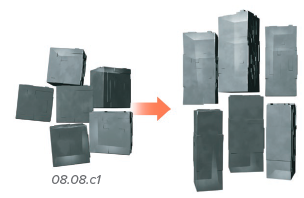
recrystallization
formation of cleavage and foliation is aided by the _____ of existing materials and the growth of new materials
15
New cards
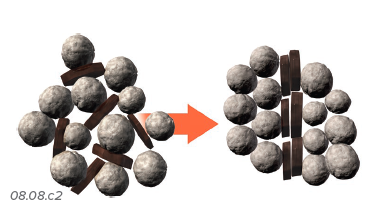
remobilization
chemical constituents diffuse, dissolve, or partially melt in one place and then form crystals in another place
16
New cards
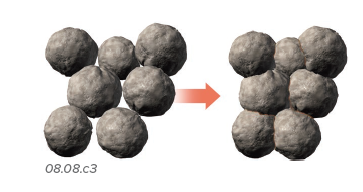
pressure solution
formation of cleavage -material dissolves from highly stressed edges of grains and precipitates elsewhere in the rock or is carried away by fluids
17
New cards
igneous rocks
Earth’s mantle is partially molten rock and is brought up to the crust where it cools into
18
New cards
what causes rock to melt?
change in temperature, change in pressure, change in composition or water content
19
New cards
how does molten rock cool
temperature gradually decreases within crust, temperature quickly decreases above the crust, specific minerals will crystalize at specific conditions
20
New cards
composition
tells us where the magma came from
21
New cards
texture
tells us how molten rock cooled
22
New cards
faster cooling rate results in
smaller crystals
23
New cards
slower cooling rate results in
larger crystals
24
New cards
extrusive volcanic igneous rocks
rocks cooled quickly at the surface
25
New cards
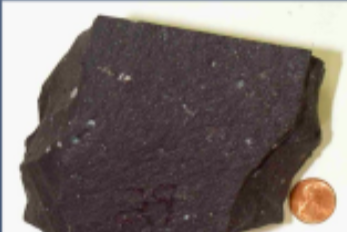
aphanitic
fine-grained
26
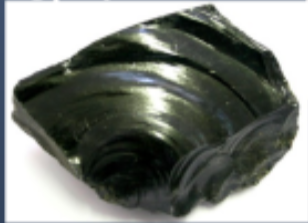
New cards
glassy
very fine-grained
27
New cards
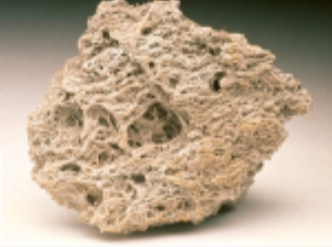
vesicular
bubbly
28
New cards
intrustive (plutonic) igneous rocks
rocks cooled slowly below the surface
29
New cards
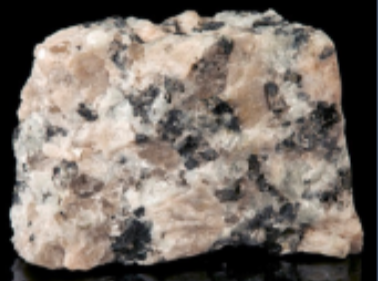
phaneritic
intrusive (plutonic) - coarse-grained
30
New cards
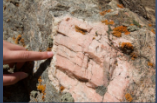
pegmatic
intrusive (plutonic) - very coarse-grained
31
New cards
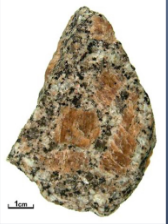
porphyritic texture
two different cooling rates
32
New cards
igneous rocks are defined by
composition (felsic or mafic) and texture (rate of cooling)
33
New cards
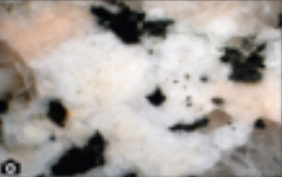
granite
34
New cards
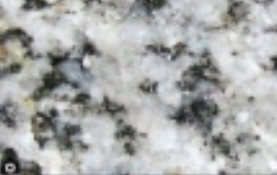
diorite
35
New cards
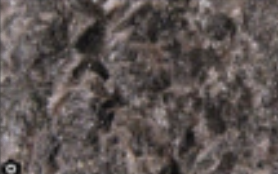
gabbro
36
New cards
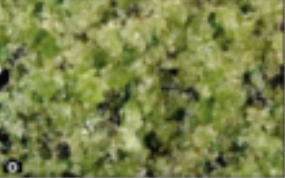
periodotite
37
New cards
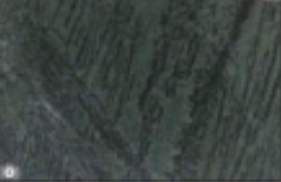
komatite
38
New cards
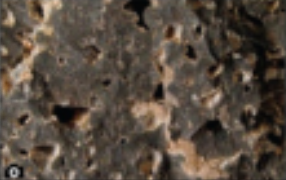
basalt
39
New cards
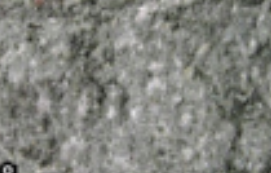
andesite
40
New cards
rhyolite
41
New cards
moho
42
New cards
the mantle can be best described as
semi-solid and mafic (roughly the same composition as olivine)
43
New cards
the outer core can best be described as
liquid; made mostly of iron
44
New cards
deepest mine on earth goes down to
crust
45
New cards
Evidence of Tectonic Plates
1. Continents “fit” together
2. Distribution of Fossils
3. Evidence of glaciers
46
New cards
paleomagnetism
convection in outer core and rotation of earth causes iron in core to move, creating a magnetic field
47
New cards
continental crust
enriched in Si, Al, and K
48
New cards
oceanic crust
enriched in Mg, Fe, and Ca
49
New cards
mantle
enriched in Mg and Fe
50
New cards
core
enriched in Fe and Ni
51
New cards
composition layers
coninental crust, oceanic crust, mantle, and core
52
New cards
mechanical layers
lithosphere, asthenosphere (upper mantle), mesosphere (lower mantle), outer core, inner core
53
New cards
lithosphere
brittle, cold, broken up into pieces
54
New cards
asthenosphere (upper mantle)
viscous, ductile
55
New cards
mesosphere (lower mantle)
solid, partially molten
56
New cards
outer core
liquid
57
New cards
inner core
solid
58
New cards
rocks from deep eruptions
can tell us interior layers are made out of
59
New cards
seismic waves from earthquakes can tell us about
the physical nature of Earth’s layers
60
New cards
seismic waves
travels faster through denser materials and through solids
61
New cards
a seismic wave
is a burst of energy traveling through Earth
62
New cards
refraction of seismic waves traveling in different media
causes the waves to curve
63
New cards
earthquakes generate
Primary and Secondary waves, which curve through the Earth
64
New cards
P-waves
are refracted inward at the liquid outer core because they slow down
65
New cards
Seismic waves are refracted
away from the Shadow Zone
66
New cards
S-Waves (secondary, shear, or side-to-side wave)
is slower than the P wave and arrives after it; they cannot travel through liquid
67
New cards
Seismic Tomography: red =
seismic waves; rising masses of hot mantle
68
New cards
Seismic Tomography; blue =
fast seismic waves; cooler, dense plates
69
New cards
lithosphere/asthenosphere
based on physical properties, brittle/ductile
70
New cards
Marie Tharp
developed the first map of the Atlantic sea floor in 1957
71
New cards
Tharp created the map using
sonar technology used to detected submarines in WWII and proposed the mid-Atlantic ridge as a rift
72
New cards
Bruce Heezen
initially dismissed the proposal until he discovered a cluster of seismic activity along the ridge
73
New cards
Harry Hess
developed the theory of Sea-Floor Spreading as the mechanism for Wegener’s Theory of Continental Drift
74
New cards
Norman L. Bowen
Began experimental studies to determine the order of crystallization of silicate minerals from magma
75
New cards
index minerals
series of minerals that form under unique metamorphic pressures and temperatures
76
New cards
volcano
naturally occurring rupture in the crust that allows lava, volcanic ash, and/or gases to escape
77
New cards
Mount Yasur
stratovolcano (composite volcano)
78
New cards
79
New cards
magma
molten rock within Earth’s crust
80
New cards
lava
molten rock above Earth’s crust
81
New cards
phenocrysts
larger crystals are called