distillation + reflux
 Call Kai
 Learn
Learn Practice Test
 Spaced Repetition
 Match
Match Flashcards
 Knowt Play
1/12

There's no tags or description
Looks like no tags are added yet.
Name | Mastery | Learn | Test | Matching | Spaced | Call with Kai | Chat |
|---|
No analytics yet
Send a link to your students to track their progress
13 Terms
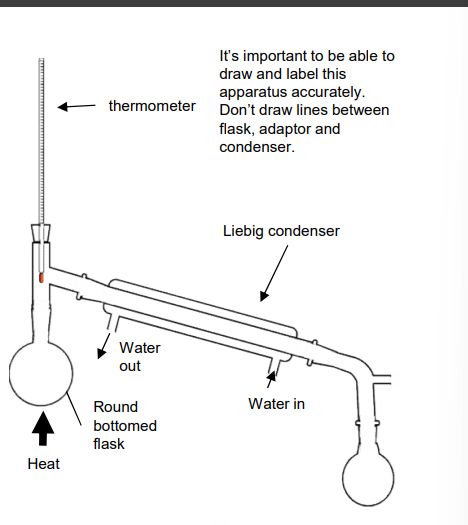
diagram
purpose of distillation
separate a mixture of liquids with different boiling points
prepare an organic liquid - and immediately separate it.
reagant for distillation
potassium dichromate with conc h2so4
conditions
use a limited amount of dichromate and warm gently and distil out the aldehyde as it forms
why do you use antibumping granules?
to allow smooth boiling by forming smaller bubbles - prevent splashing up the sides of the flask due to bubbles caused by vapours
provides a larger surface area so that smaller, more controlled bubbles can form
condenser - why must water come in at the bottom and leave at the top
water fills the condenser fully -
condenser cold enough
condense… gas → liquid
how to maximise product yield
heat around boiling point (don’t go too close to boiling point of other substances in the mixture)
place collection vessel in beaker of ice cold water - to keep the product condensed (as product is volatile - minimise the loss of vapours)
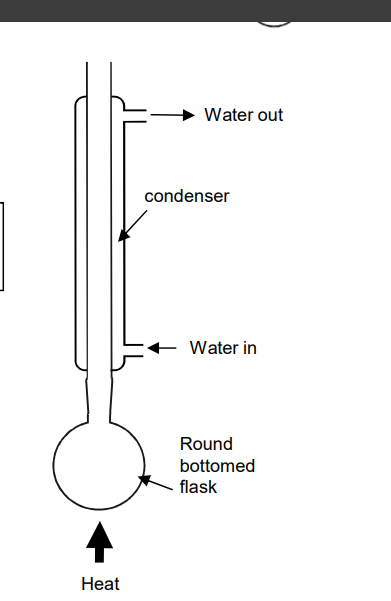
reflux diagram
when is reflux used?
used for heating organic reaciton mixtures for long periods eg. for full oxidation of alcohol to carboxylic acid
condenser prevents organic vapours from escaping by condensing them back into liquids
what should you remember when drawing reflux
no lines between condenser and flask
dont have top of condenser sealed
why use a heating mantle and not bunsen burner
organic substances are flammable - important to have no naked flames
principle of reflux
a mixture of liquids is heated to their boiling point for a prolonged time
vapour is formed which escapes from the liquid mixture
vapours cool and condense back into liquid
return to liquid mixture
why must the reflux apparatus must not be fully sealed?
prevents pressure build up