CFB 13- Nutrition: Energy Metabolism and Weight Management
 Call Kai
 Learn
Learn Practice Test
 Spaced Repetition
 Match
Match Flashcards
 Knowt Play
1/90

There's no tags or description
Looks like no tags are added yet.
Name | Mastery | Learn | Test | Matching | Spaced | Call with Kai | Chat |
|---|
No analytics yet
Send a link to your students to track their progress
91 Terms
Energy intake = energy output
What is energy balance?
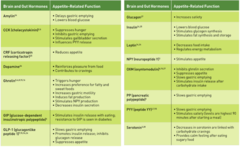
Brain, gut, and adipocyte hormones
What regulates appetite?
Weight gain
Energy intake > energy output
Energy imbalance: positive energy balance is
Pregnancy, lactating women, building muscle mass, fat deposition, building glycogen stores
Examples of positive energy balance
Weight loss
Energy intake < energy output
Energy imbalance: negative energy balance
Excessive exercising
Fasting
Reducing diets
Starvation
Under-nutrition
Excessive vomiting/diarrhea
Examples of negative energy balance
Depends on Total Energy Expenditure (TEE)
How much do you need to eat?
Resting energy expenditure (REE)
Thermic Effect of Food (TEE)
Physical Activity PA
Total Energy Expenditure (TEE) consists of
Amount of energy needed to sustain the body at REST for 24 hours
- Brain
- Heart
- Body temperature
- Muscle mass dependent
What is Resting Energy Expenditure
Obtain Weight in kg (divide pounds by 2.2)
REE Male = 900 + 10*(weight in kg)
REE female = 800+7*(weight in kg)
How to calculate REE
energy to run all body functions at rest
Basal Metabolic Rate
Increases energy expenditure
Increases muscle mass
Physical Activity (PA) effect on energy
Cost of digestion/absorption
What is thermic effect of food?
True
T/F: The basal metabolic rate can be changed by muscle mass
Sedentary
What physical activity level has a physical activity coefficient of 1.0-1.39?
Low active
What physical activity level has a physical activity coefficient of 1.4-1.59?
Active
What physical activity level has a physical activity coefficient of 1.6-1.89?
Very active
What physical activity level has a physical activity coefficient of 1.9-2.5?
Sedentary or low active
What activity level do most Americans fall under?
REE X activity factor
How much Kcal do you need a day? TEE aka calories needed calculated by
Resting energy expenditure (more muscle mass)
Total energy expenditure (cost of physical activity and moving the body is higher)
Athletes and very active individuals have a higher...
True
T/F: Nutrient requirement in athletes is different for water, calories, electrolytes, CHO
BMI (body mass index)
Waist circumference
Body composition measures
[Weight in pounds/(height in inches)^2] x 703
OR
(weight in KG)/((height in m)^2)
How to calculate BMI
True
T/F: oral cancer risk is associated with BMI. Low BMI poor oral cancer outcomes
Waist circumference measured at the level of the umbilicus (belly button)
How is waist circumference measured?
18.5
What is considered an underweight BMI?
Men: at least 3% body fat
Women: at least 12% body fat
What percent of body fat do men and women need to survive?
Osteoporosis, osteopenia
Infertility
Compromised immune system
Lethargy
Underweight increases the risks of:
Equal/greater than 25 = obese
Equal /greater than 30 = morbidly obese
BMI values for obese and morbidly obese
True
T/F: If one has a BMI
INCREASE in physical activity and DECREASE in calorie intake
For healthy and maintained weight loss, need both
Android "apple" & Gynoid "pear"
Two types of fat distribution patterns
Central fat body distribution = greater healthy risk
Android "apple" distribution characterized by
Lower body fat distribution = lower health risk
Gynoid "pear" distribution characterized by
Type II diabetes
Hypertension
Cardiovascular disease
Higher rates of cancer
Joint problems
Early deaths
Obesity is associated with:
Genetics
Dietary habits
Environmental
Others
Causes of obesity?
LOSE FAT, not lean tissue or water, maintain adequate vitamins and minerals
* Patient compliance is essential
* Genetic factors are not understood
Goals of Weight loss
Fewer calories than usual intake
What is a reducing diet?
- Leads to 1 lb of weight loss/ week
- 1000-1200 calories/day in Females
- 1200-1600 calories in Males
- Caloric deficit depends on sex, weight, physical activity
What is a fixed reducing diets
Low to highest risk:
LCD (low calorie diet)
VLCD (very low calorie diet)
Total fast (0 cals - NOT safe; wastes lean tissue)
Rank risk of side effects with different reducing diets from low to high medical/nutritional risks
What are very low calorie diets (VLCDs)?
Weight Watchers, Jenny Craig, LA Weight Loss
- Structured low-calorie diet
- Exercise
- Lifestyle modification
- Group support
Examples of GOOD weight loss programs?
Lower calorie, lower fat conventional foods
I.e frozen low calorie meals and liquid diet meals
What are meal replacements?
1. Portion controlled products
2. Easy to follow
3. Little thought
4. Eat with conventional foods
5. Supply needed extra fiber, fluid, nutrients
6. Anyone can buy in supermarket
Benefits of meal replacement
- Moderate obesity 25-30 BMI who wish to lose 5% body weight or maintain lower weight
- Good for people who have trouble with environmental triggers
- Busy lifestyle
Who are meal replacement options recommended for?
Balanced diet
What kind of diet is this

Low Carb diet
What kind of diet is this

Low fat diet
What kind of diet is this
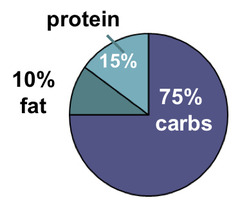
High protein diet
What kind of diet is this

- fat has more cals than carbs
- low saturated fats heart healthy
- adequate protein
Low Fat diet advantages
- slow weight loss
- often not low enough in calories
- cravings
- feel hungry
- Extremes (Ornish) hard to saty on
- stimulates insulin + fatty acid synthesis
LOW FAT: disadvantages
Initial rapid weight loss
Feel full - fat inhibits gastric emptying
Easy - don't count calories
Encourages fat burning and ketogenesis
LOW CARB diet: advantages
- Ketones - acidic
- Low in fruits/veggies needed
- Gluconeogenesis will still continue
- Cravings for carbs
- Low compliance (cheating)
LOW CARB: disadvantages
Protein Sparing Modified Fast (Optifast)
- Protein based shakes
- Based on the principal that proteins can be used for energy, glucose (gluconeogenesis), and to maintain body protein levels
- 400-600 kcal/day
- Supplemented with vitamins and minerals
- Rapid, unsustainable weight loss
- Difficult to transition back to real food
High protein diet: First generation
Low calories, but not fasting levels, Real Food (e.g. Zone diet, Keto diets, protein powder diet)
What is the next generation high protein diet?
- Normal food
- Higher protein, Lower fat than Adkins-like diets
- Protein can be used to make ATP, glucose, and muscle
- Better compliance than other diets
High protein diet: next generation advantages
- Not appropriate for people with any kind of liver or kidney disease
- Still must control portion size
- Low in fiber, vitamins A, B6, E, K, thiamin, folate.
- Mineral deficiency - Calcium, Magnesium, Iron, Potassium
High protein diet: next generation disadvantages
- Unlimited protein and animal products
- Eat the way our ancestors did
- Tied to cross fit
- Low carb - Non-starchy vegetables
- Minimal fruit
- Low in: Fiber, Calcium, Vitamin K
What is Paleo diet?
- High fat diet, encourages ketogenesis
- Ketones are burned less efficiently than fatty acids
- Long term risks outweigh weight loss benefits
Keto diet
Weight loss (often rapid)
Reduced body fat
Increased HDL
Easy to follow
Keto diet: pros
Limited diet
Long term consequences (kidneys, ketoacidosis, nutrient deficiencies, heart disease, cancer, diabetes, alzheimers)
Keto diet: cons
Both high and low percentages of carbohydrate diets were associated with increased mortality
- Minimal risk observed at 50-55% carbohydrate intake
What does this study show about carb intake?

- Fasting has been tied to longevity in animals
- Lots of intermittent fasting techniques (16 hours - every day, 24 hour fast one to two days a week)
- Unclear how long one needs to fast to see beneficial adaptations
- Benefits:
- - Heart health
- - Reduce blood pressure
- - Regulate blood sugars/ insulin
- - Reduce risk of neurodegenerative disease
- - Remove toxins
must be done the right way to work
What is intermittent fasting?
Meridia (sibutramine)
Xenical
Oxempic
Phentermine
FDA approved weight loss medications
- Appetite suppressant
- Withdrawn from market due to blood pressure concerns in 2010
What does Meridia (sibutramine) do?
- Inhibits pancreatic lipase (fat breakdown) & fat absorption
- Limits absorption of fat soluble vitamins
What does xenical do?
Induces satiety (fullness)
What does Ozempic do?
appetite suppressant
What does phentermine do?
1. Gastric & Pancreatic Lipase inhibitor - Orlistat, Xenical, & OTC Alli
2. Must be taken with low fat meals (
What are Orlistat/Xrnivsl/Alli steps to use?
- Anti-obesity drugs
- INCREASE satiety and fullness, DECREASE snacking
- Mechanism - keep food in the stomach longer
- Work on 1 GLP-1 receptors.
- Ideal for obese patients.
- Only one piece of the puzzle.
Side effects:
Nausea
Constipation
Slow Gl, Gl shut down.
Loss of muscle mass
How do GLP-1 meds (Semaglotide/Ozempic) work?
Increase
How do GLP-1 meds change insulin secretion, resistance, and sensitivity?
Decrease
How do GLP-1 meds change gastric emptying?
Increase satiety, insulin selectivity, neuroprotection, cognition
How do GLP-1 meds change brain function?
Only for the severely obese after trying other ways to lose weight
- BMI > 35 with comorbidites
- Or BMI > 40
- Must be at least 100 lbs over ideal body weight
When is bariatric surgery used?
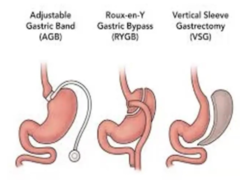
- Roux-en-Y Gastric Bypass
- LAP-BAND
- Vertical Sleeve Gastrectomy
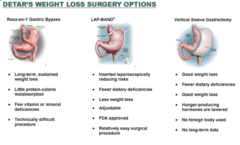
What are the three types of bariatric surgery?
Up to 49%
In Bariatric patients, what is the postoperative deficiency of vitamin B (thiamine)?
25-80%
In Bariatric patients, what is the postoperative deficiency of Vitamin D?
30% up (up to 45% after 2 yars)
In Bariatric patients, what is the postoperative deficiency of iron?
21-33%
In Bariatric patients, what is the postoperative deficiency of zinc?
- Provide BMI charts & healthy weight ranges.
- Screen patients for obesity and nutrition concerns
- Discuss HEALTHY goals of weight loss
- Refer pts to qualified health professionals (dietitians, exercise physiologists, MDs)
- Consult a Registered Dietitian (RD)
How can a dentist help?
True
T/F: no two patients are the same
False, NOT ALWAYS
T/F: weight loss and weight maintanence are ALWAYS the same diet
True
T/F: In order to achieve weight loss, you must burn more calories than you eat
False, MUSCLE burns more cals than fat. More muscle = higher metabolic rate
T/FL fat burns more calories than muscle, the more fat you have the higher your metabolic rate
True
T/F: generally, reduce simple carbohydrates, eat more veggies, less refined grains/starch and fruits in moderation
True
T/F: generally, reduce/eliminate processed foods i.e high in sodium
- Start slowly adding calories
- Add a few calories to each meal (spread it out)
- Stay away from added sugars and processed foods
- Focus on adding more protein, fruits/veggies/ "healthy fats"
- Choose calorie dense foods such as: dried fruits, avocado, adding dairy to soups
What are the healthy ways to gain weight?
Nuts, legumes, pb, whole grain, fish, chicken/turkey breast
Ways to maintain/increase protein
Increased periodontal disease
How does Type II diabetes impact oral health?
True
T/F: Poor diets impact bone health and oral bone tissue