Lab Equipment
 Call Kai
 Learn
Learn Practice Test
 Spaced Repetition
 Match
Match Flashcards
 Knowt Play
1/36

There's no tags or description
Looks like no tags are added yet.
Name | Mastery | Learn | Test | Matching | Spaced | Call with Kai | Chat |
|---|
No analytics yet
Send a link to your students to track their progress
37 Terms

Beaker
Glass container, most are pyrex; common sizes are 100 ml, 25 ml, 400 ml; it can be used as a container, shows approximate volume, and may be heated

Bunsen Burner
A metal heating device connected to a gas outlet with rubber tubing; used to heat chemicals in beakers or test tubes; has adjustable air-hole allowing some control of temperature

Buret
It is marked with a milliliter scale and fitted with a stopcock; used to dispense and accurately measure volumes of solution during titrations.
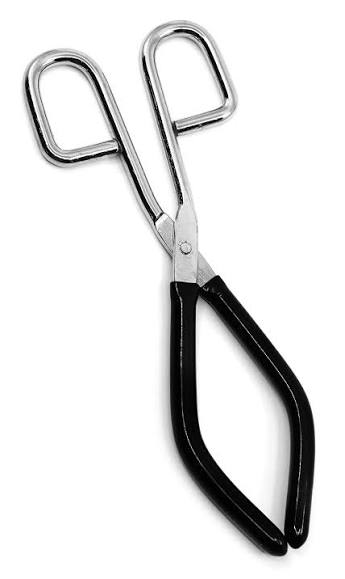
Beaker Tongs
Metal with rubber ends; used to handle hot beakers
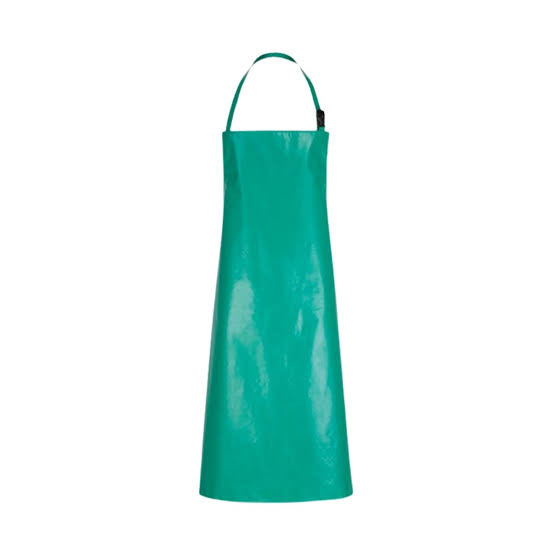
Chemical Apron
Chemical resistant rubberized apron used to protect clothing
Crucible and Cover
Made of porcelain; used to heat small amounts of solid substances that are being heated strongly at high temperatures

Crucible Tongs
Metal utility tongs used for hot crucibles; spring-like jaws with a jaw opening
Dropper
Glass tip with a rubber bulb; used to transfer small amounts of liquids

Electronic Balance
Used for quick, accurate massing
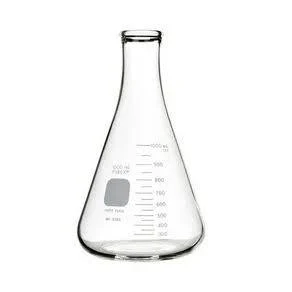
Erlenmeyer Flask
Container; common sizes are 125 ml, 250 ml, 500 ml; may be heated; it has a thin neck and a wide base; used to hold liquids when carrying out reactions and preparing solutions

Evaporating Dish
Porcelain dish; used to hold a solution while the solvent is removed through evaporation, leaving the dissolved solute behind. (often using heat)

Florence Flask
Used to hold liquids when carrying out reactions (no heat use flat-bottomed; even heating required use round-bottomed)
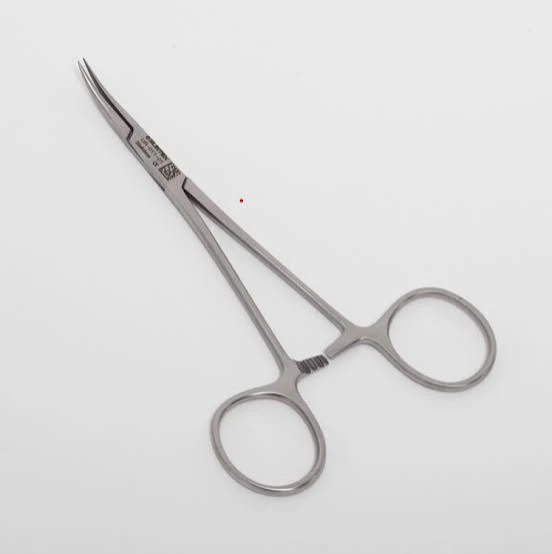
Forceps
Metal or plastic, straight-tipped instrument used to isolate and remove small particles

Funnel
Made of glass or plastic; used to hold a filter paper and can be used in pouring (to avoid spills)
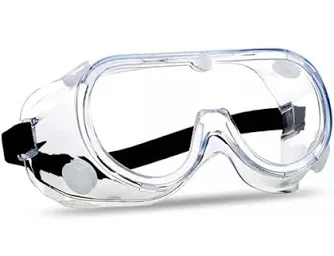
Goggles
Used to protect eyes
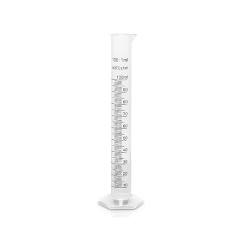
Graduated Cylinder
Marked with milliliter (ml) scale and is used to measure volume
Heat Resistant Gloves
Used to handle hot glassware or other hot lab equipment
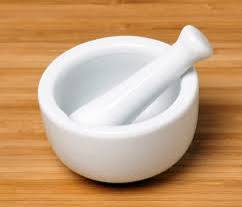
Mortar and Pestle
Heavy porcelain dish with grinder; used to grind chemicals to a powder
Clay Triangle
Triangular wire frame with clay material coverings; used to support a crucible

Pipette
Used to accurately transfer small volumes of liquid from one container to another.
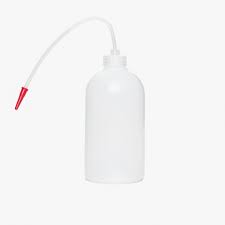
Plastic Wash Bottle
Squeezable plastic bottle; used to dispense distilled water

Iron Ring
Iron ring with screw fastener; comes in several sizes; used to fasten to the ring stand as a support for an apparatus

Ring Stand
Metal rod that is upright and sits on a heavy base; used as a support and has many uses
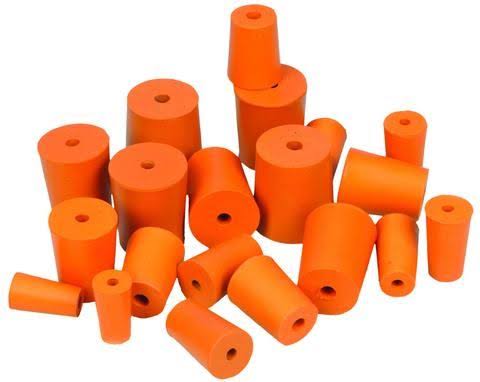
Rubber Stopper
Used to cap the openings of glassware such as test tubes or Erlenmeyer flasks

Scoopula
Made of metal; used to transfer solid chemicals
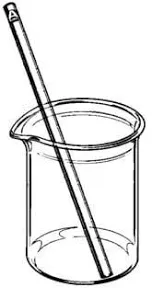
Stirring Rod
Made of glass; used to stir combinations of materials
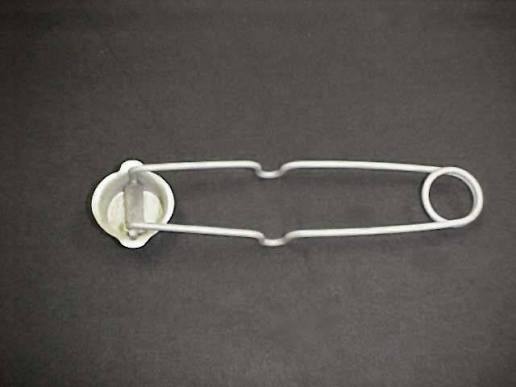
Striker
Made of metal and has a flint; used to ignite the Bunsen burner
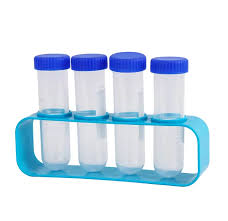
Test Tube
Glassware that comes in many sizes; it has many uses and can be heated

Test Tube Brush
Brush with wire handle; used to scrub thin glassware

Test Tube Clamp
Metal clamp with a screw fastener, a swivel and lock nut, an adjusting screw, and a curved clamp; used to hold an apparatus (test tube or burette) to the ring stand
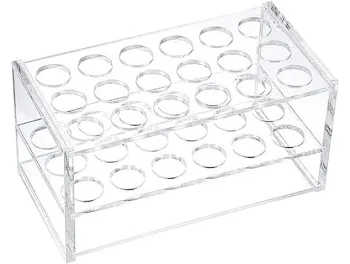
Test Tube Holder
Made of metal; has a clamp with a spring handle; used to hold a test tube
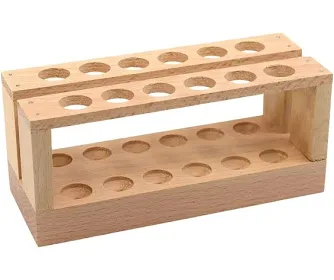
Test Tube Rack
May be made of wood, metal, or plastic; used to hold test tubes in an upright position

Thermometer
Used to measure the temperature of substances during laboratory investigations. Thermometers may be alcohol-filled or digital.
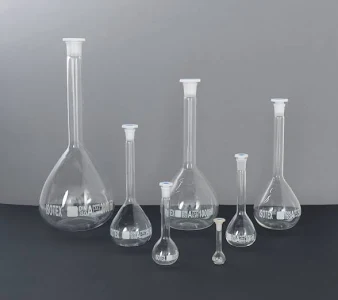
Volumetric Flask
Used when mixing accurate concentrations of solutions. Each flask has a volume marking which is very exact and can be stoppered.
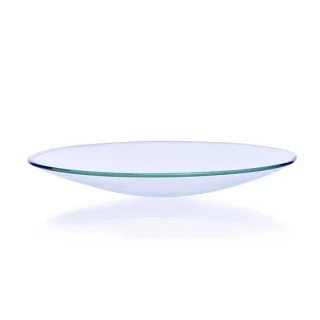
Watch Glass
Curved glass; may be used as a beaker cover or for evaporating very small amounts of liquid
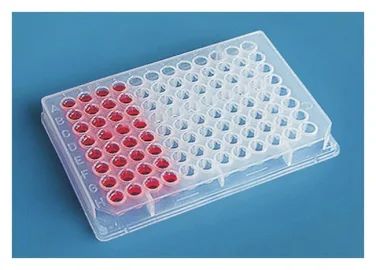
Well Plate
Small plate with several wells; used for reacting small amounts of chemicals

Wire Gauze
Wire screen with ceramic fibered center; used to spread the heat of a flame