Periodic Table Trends: Ionization, Electronegativity, Atomic Radius & More
 Call Kai
 Learn
Learn Practice Test
 Spaced Repetition
 Match
Match Flashcards
 Knowt Play
1/24

There's no tags or description
Looks like no tags are added yet.
Name | Mastery | Learn | Test | Matching | Spaced | Call with Kai | Chat |
|---|
No analytics yet
Send a link to your students to track their progress
25 Terms
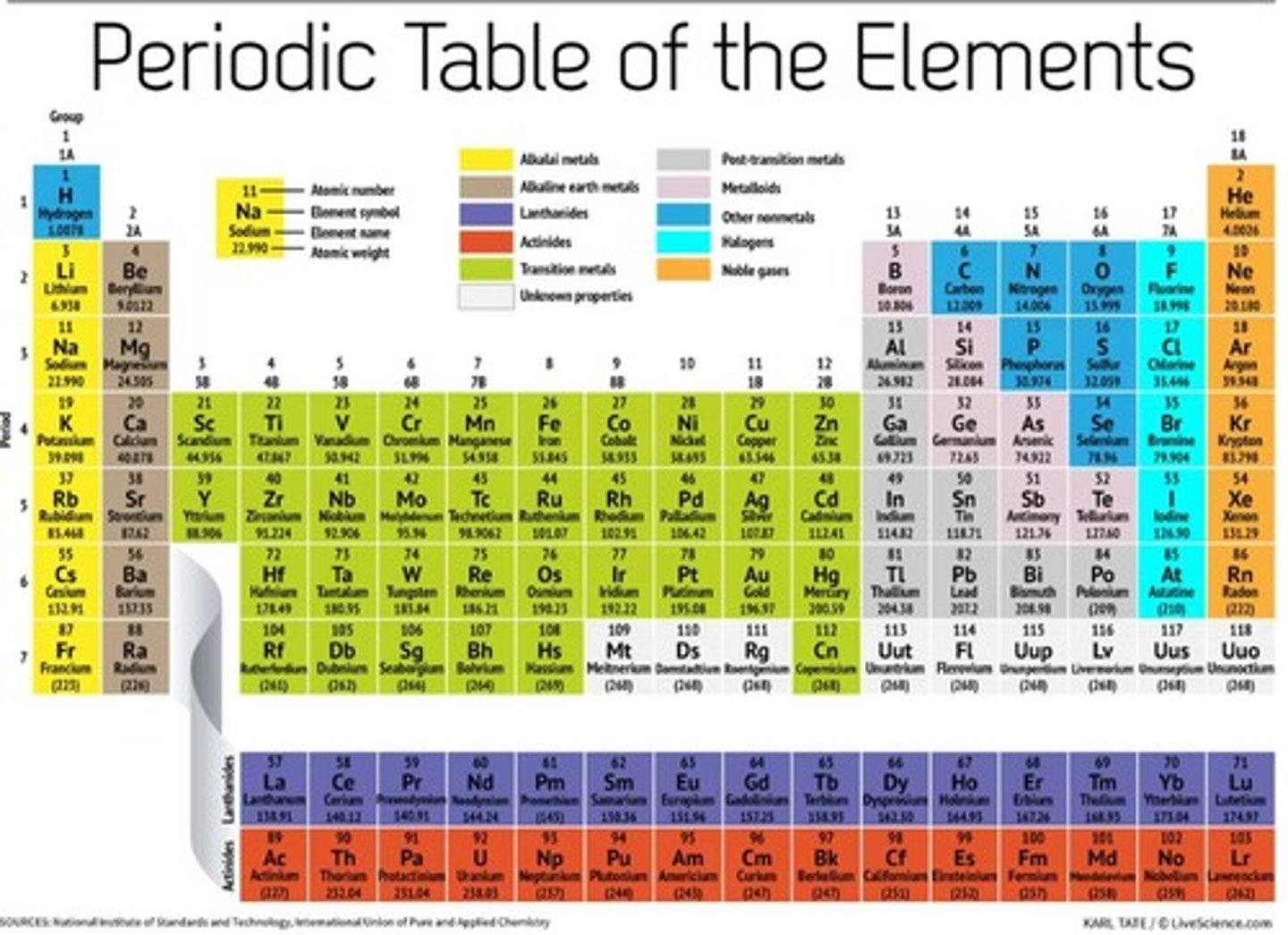
What is Periodic Trends?
Patterns across the periodic table with chemical and physical properties.
What causes a periodic trend?
It occurs changes in shielding, nuclear charge and distance of valence electrons.
What is shielding effect?
It is a reduction of effective nuclear charge in the outer shell; inner shell acts as a barrier
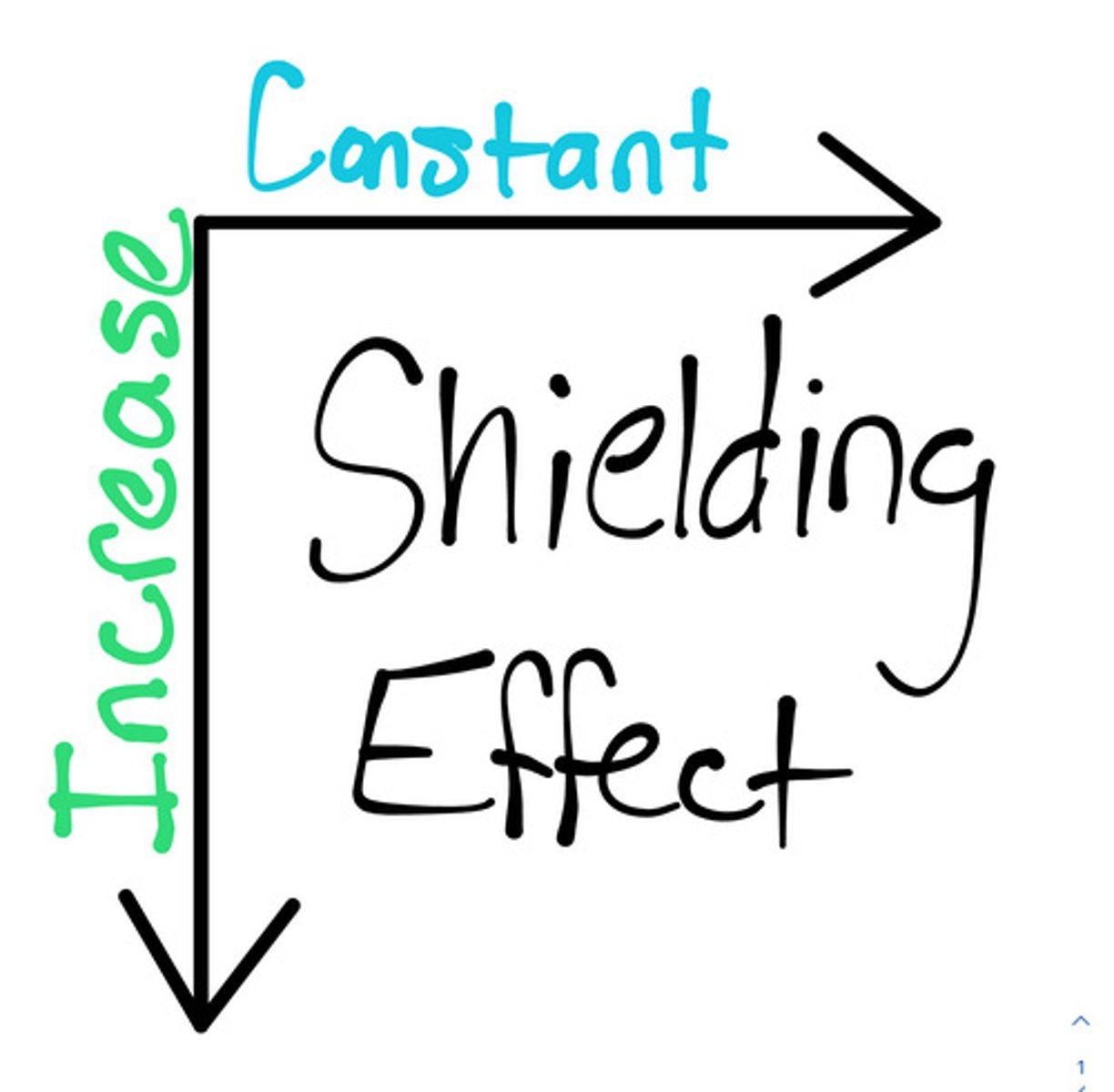
Why does shielding increase down a group and stay constant across?
Increasing is due to the more inner electron shells and constant is due to electrons being added to the same principle of energy level.
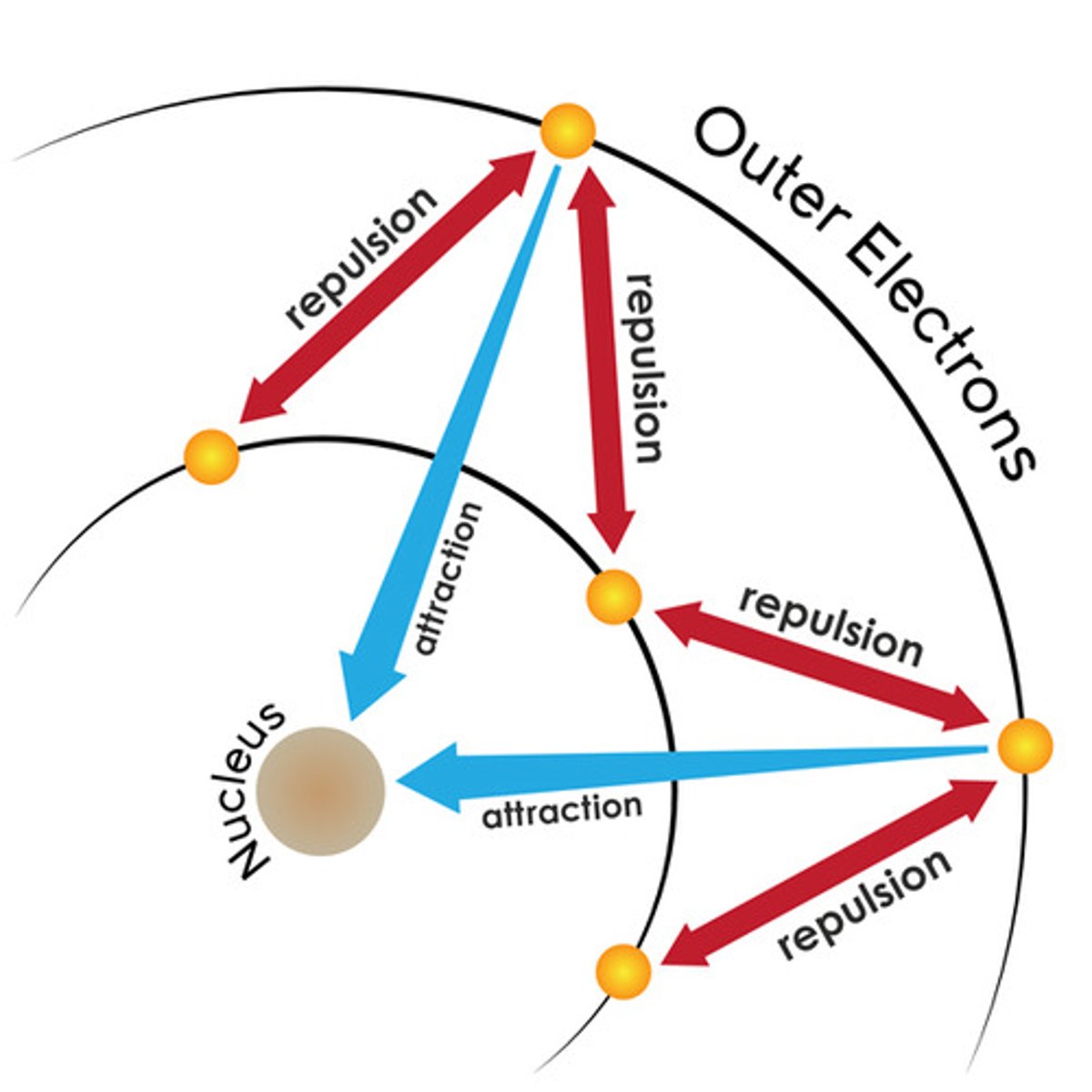
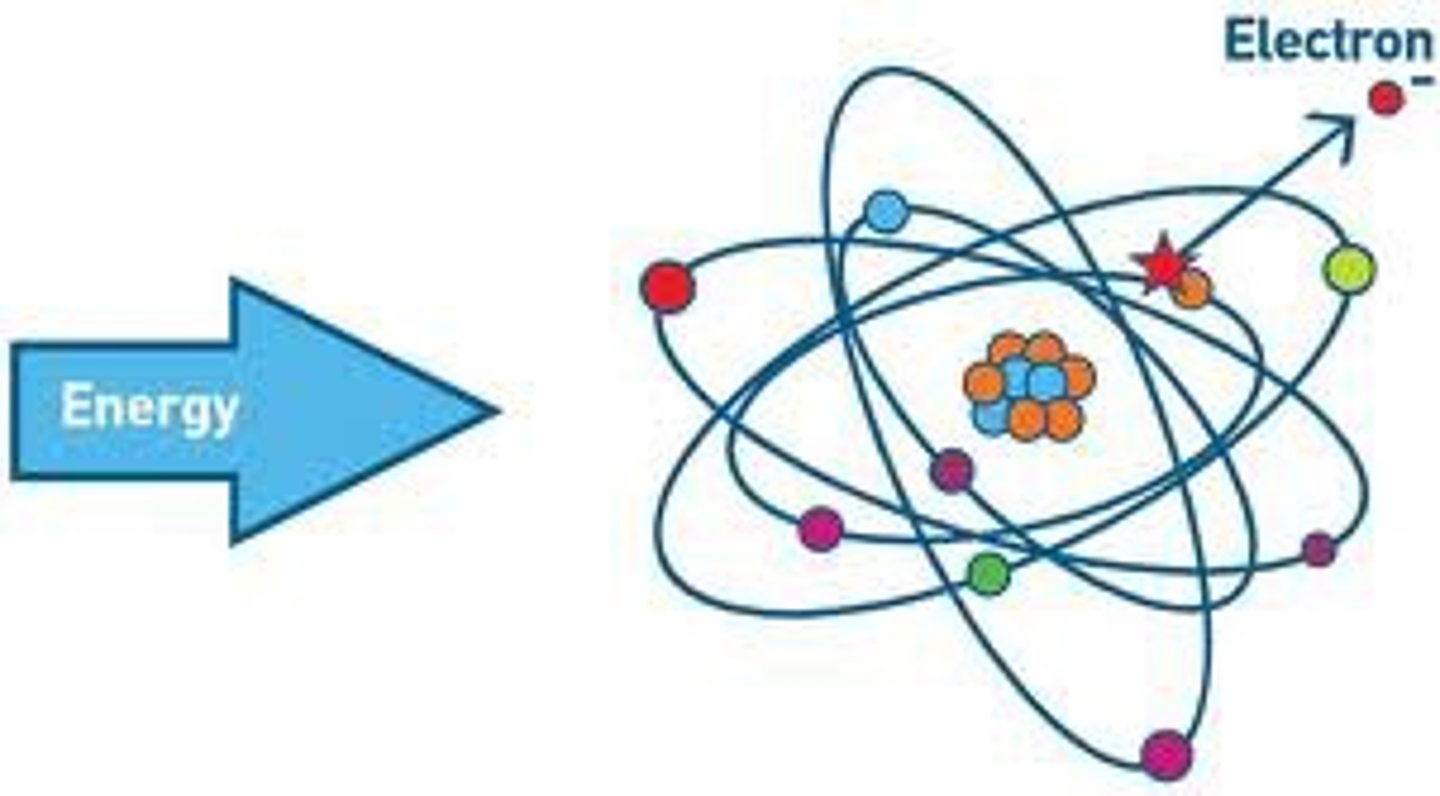
What is ionization energy?
Energy required to remove an electron from a neutral atom.
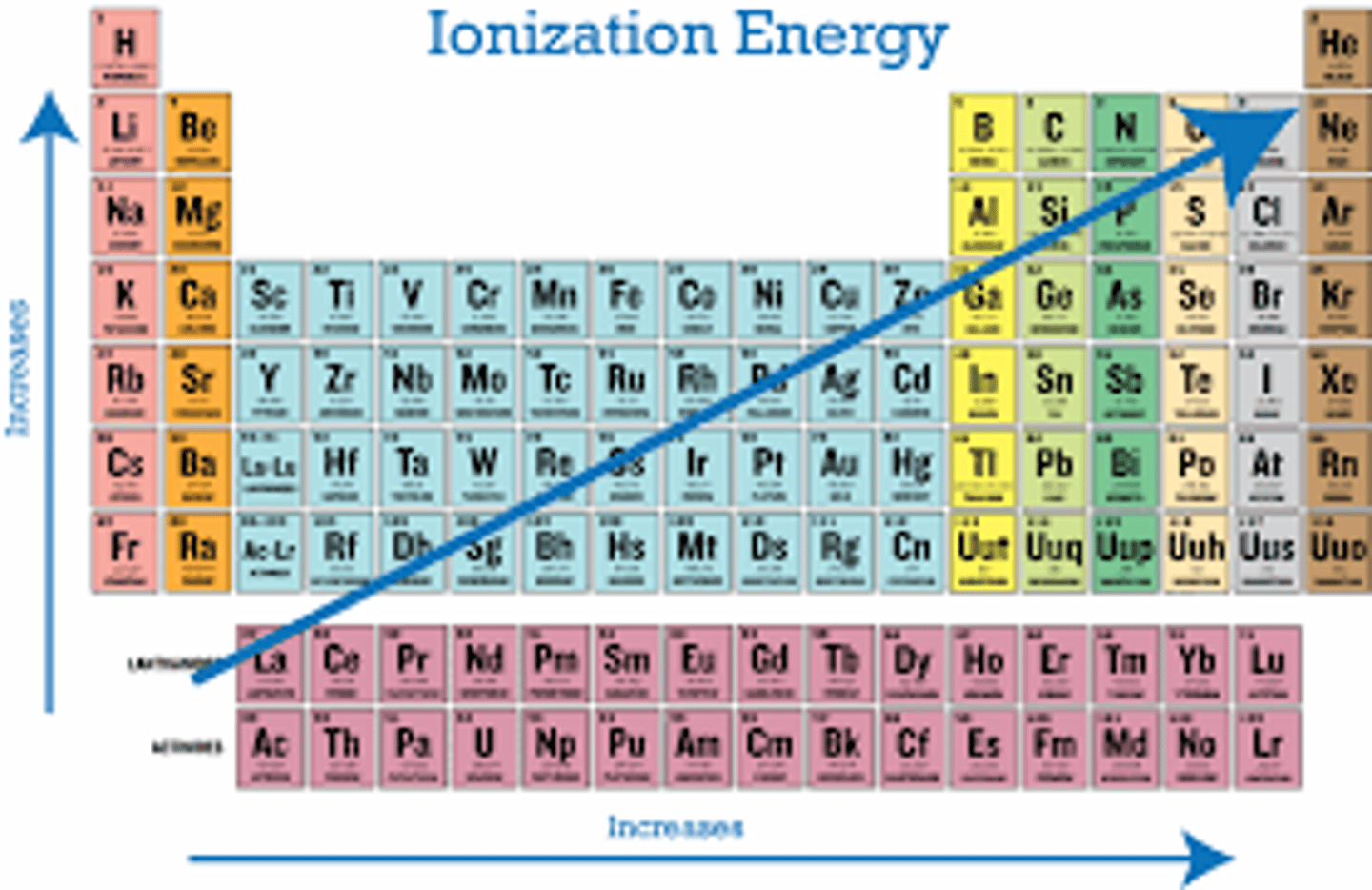
How does ionization energy move down a group and move across a period?
Ionization energy decreases down a group and increases as it goes across.
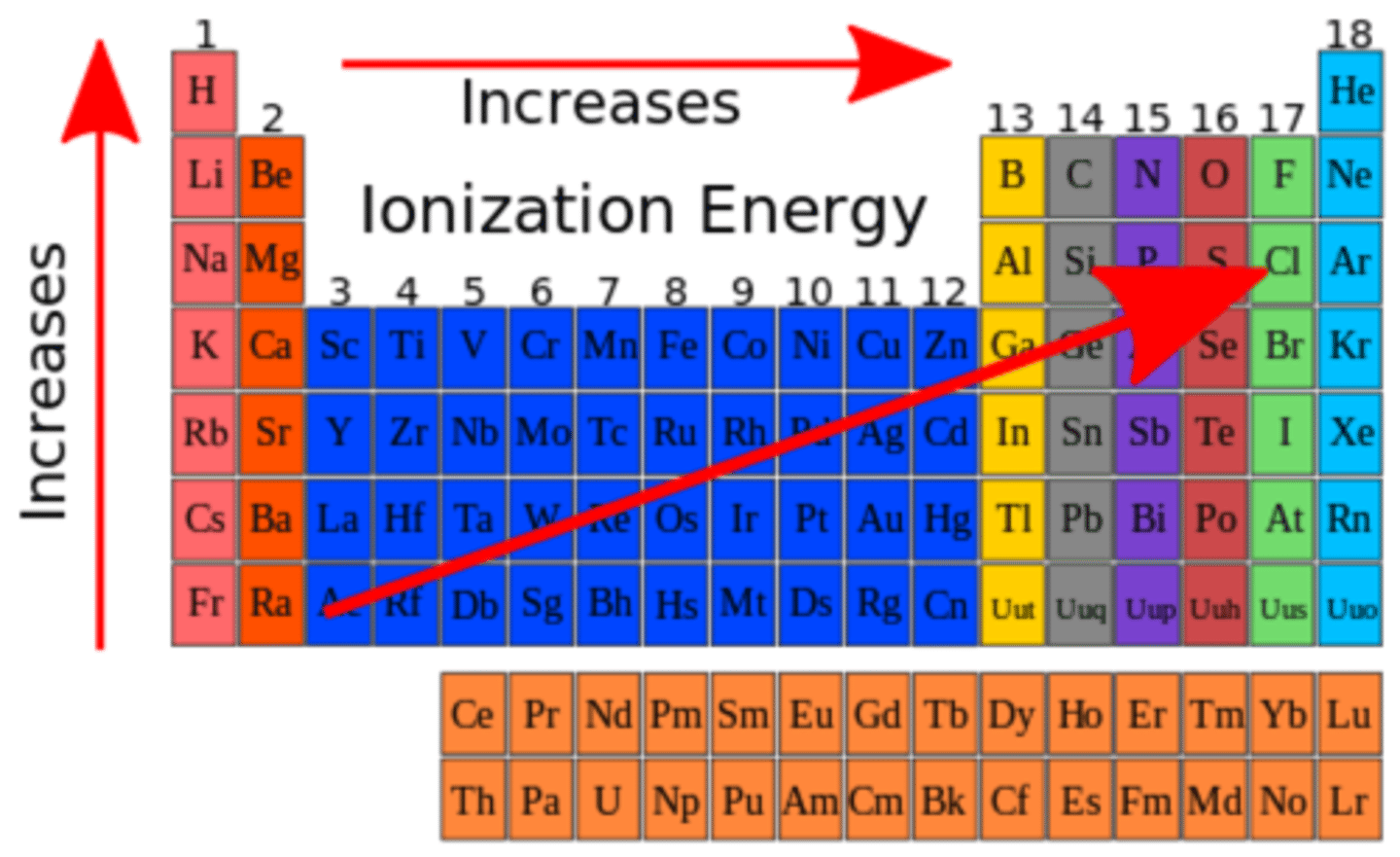
Why does ionization energy decrease down and increase across?
The atomic radius and electron shielding increases down a group and it increases due to more nuclear charge.
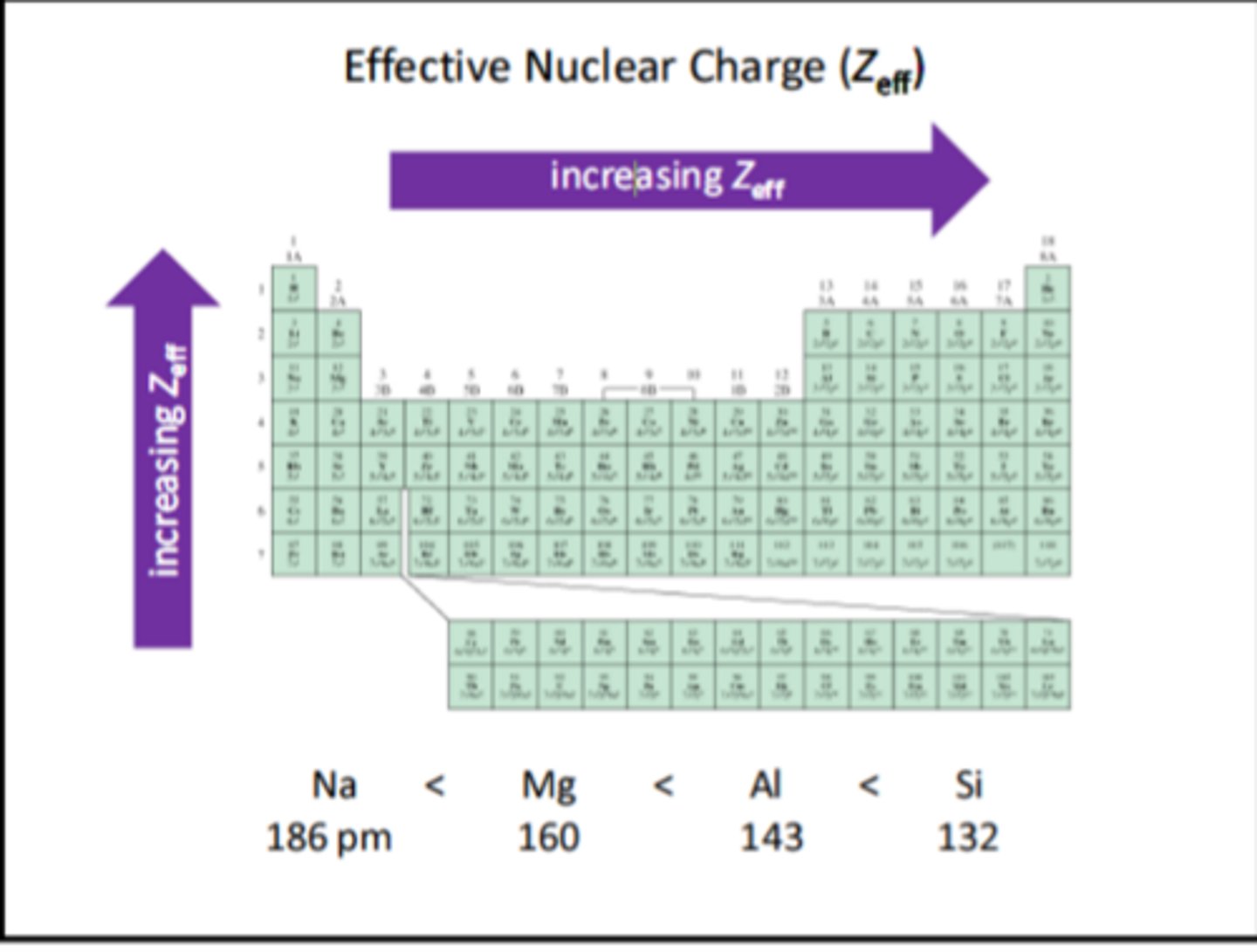
Which atom has a greater ionization energy: Na and K
Na (Sodium) because it is above Potassium so it increases.
Which element has the highest Ionization energy: F, Mg, He, P
He (Helium) has the highest ionization energy because it has a smaller atomic radius and high nuclear charge.
What is electronegativity?
The measure of a atoms ability to be able to attract electrons in a bond.
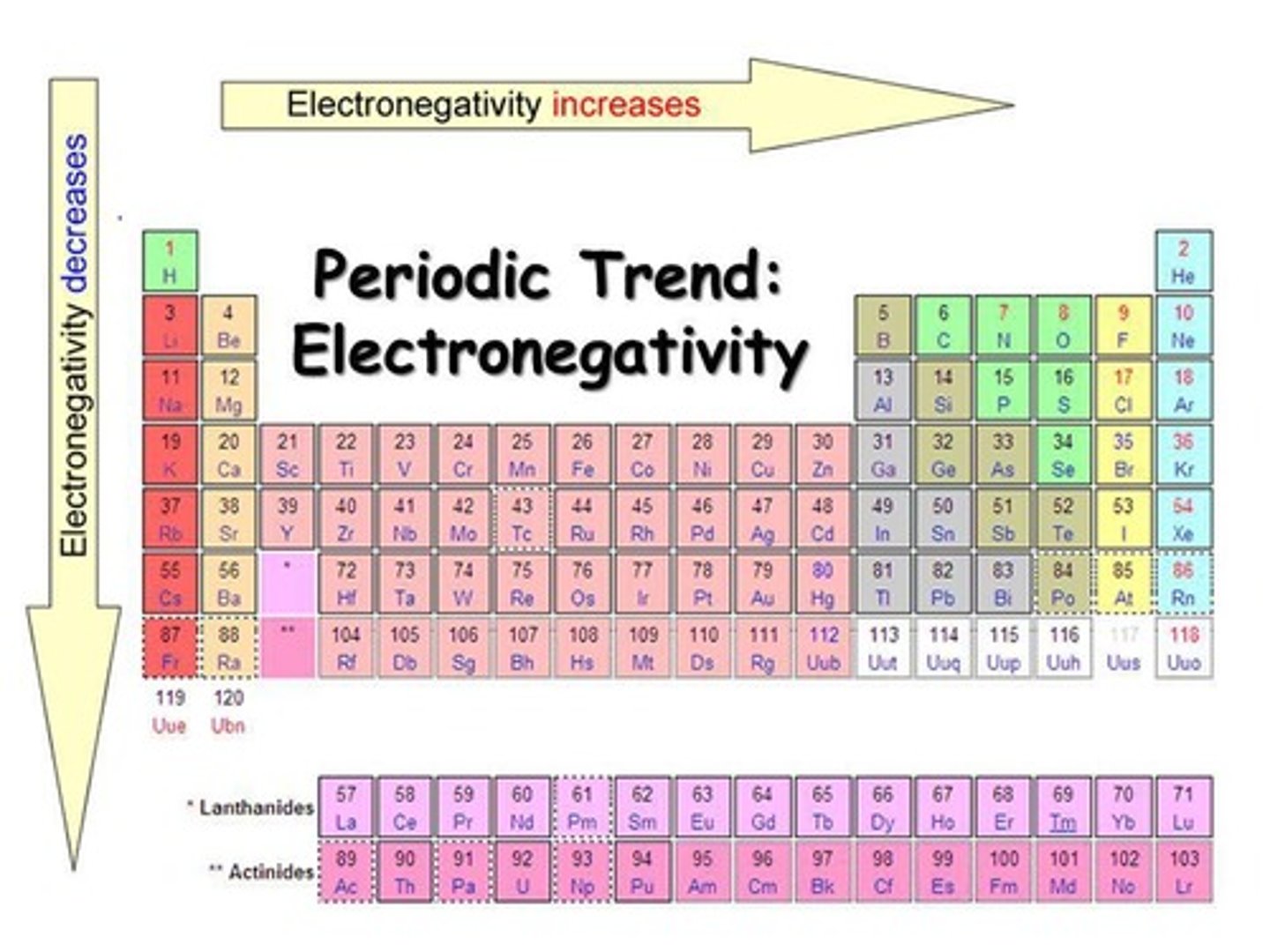
How does electronegativity change down a group and across a period?
Across the period it increases from left to right and it decreases from top to bottom.
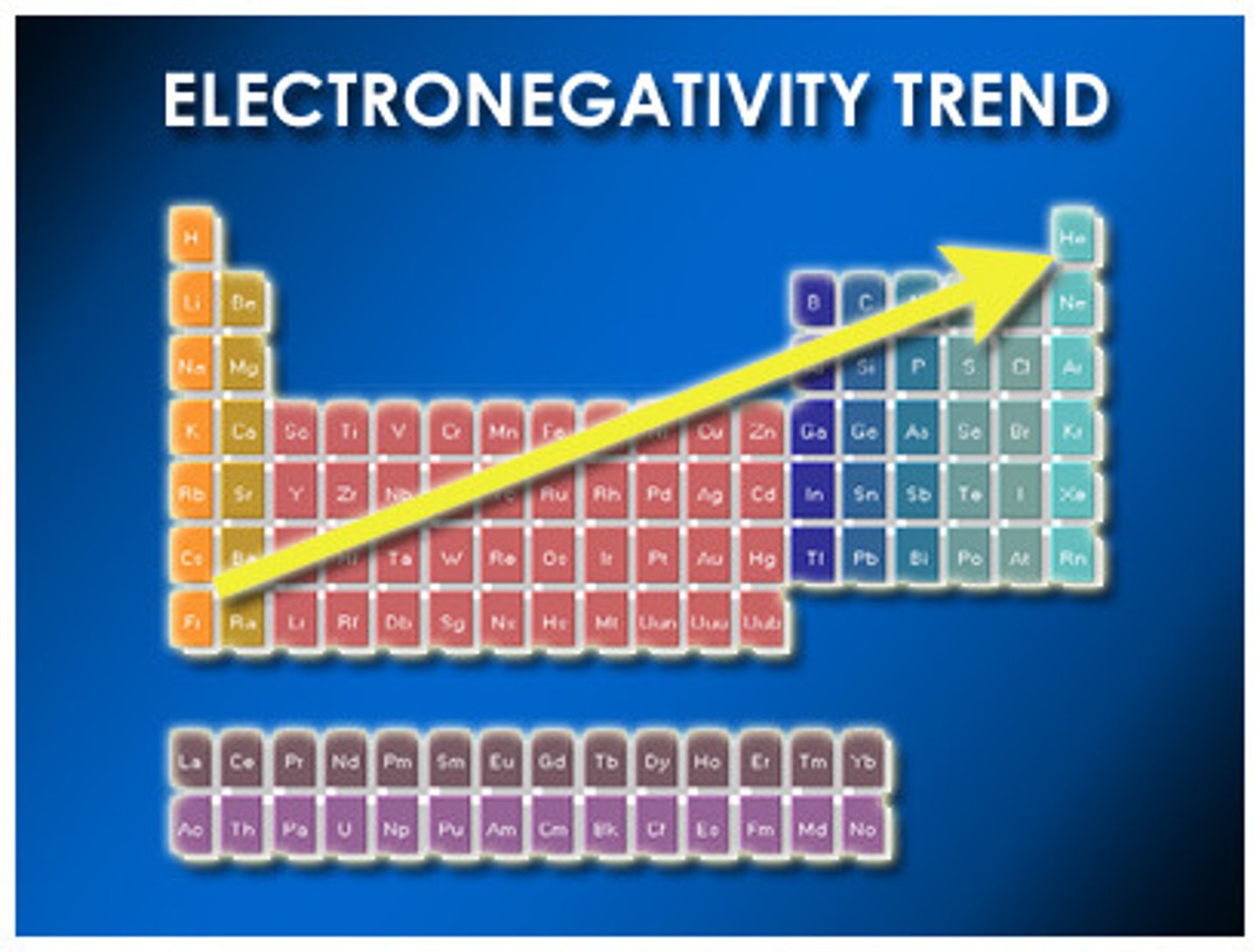
Why does electronegativity decrease down a group and across a period.
When it moves across, the nuclear charge increases, though when it goes down there are more shells, weaker nucleus and harder to pull.
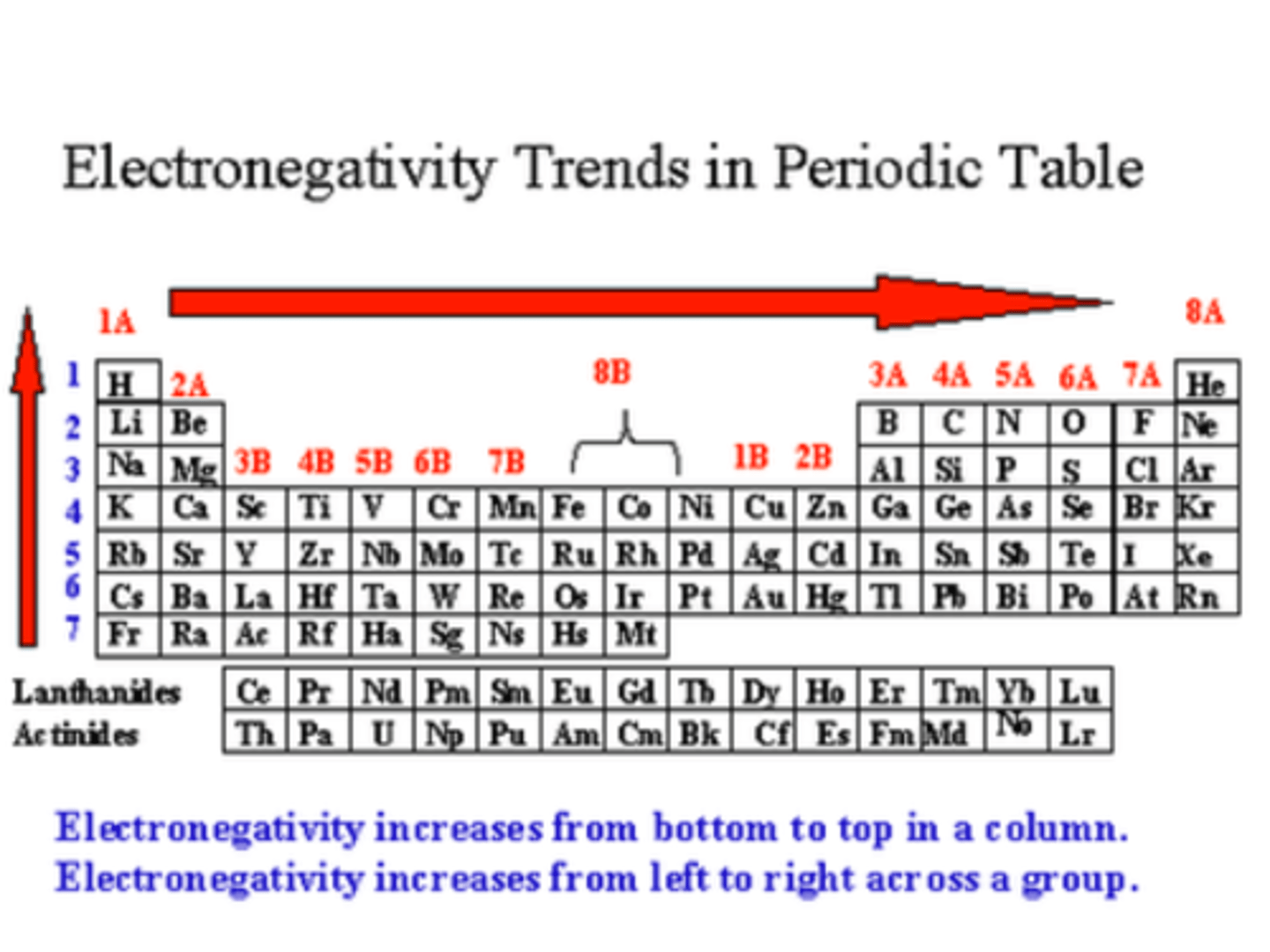
Which atom out of the pair as a greater electronegativity: Ca and Ga
Ga (Gallium) has a higher electronegativity since it is leaning more to the right.
What is an atomic radius?
It is the size of a atom which is measured from the nucleus towards the outermost electron
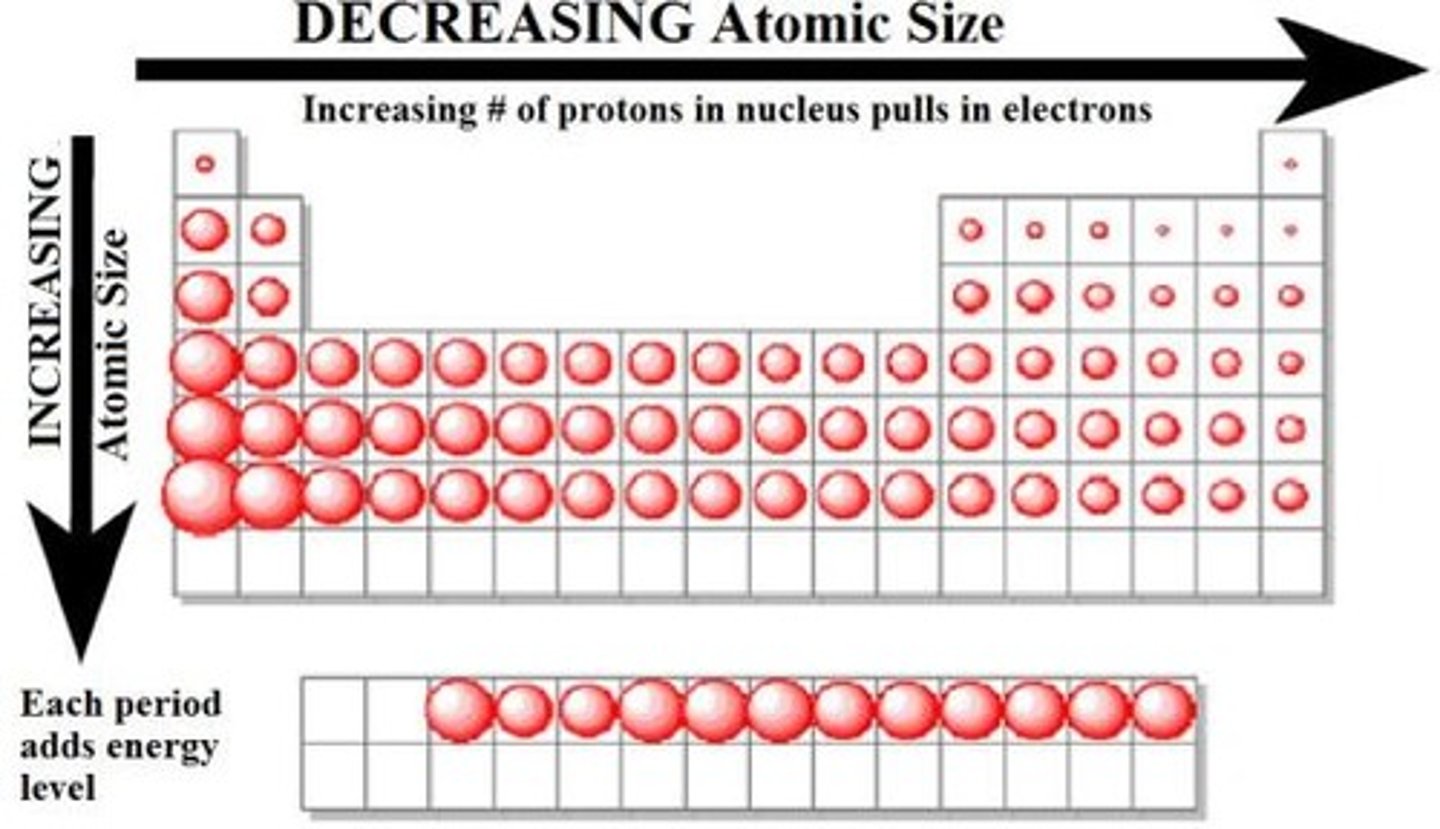
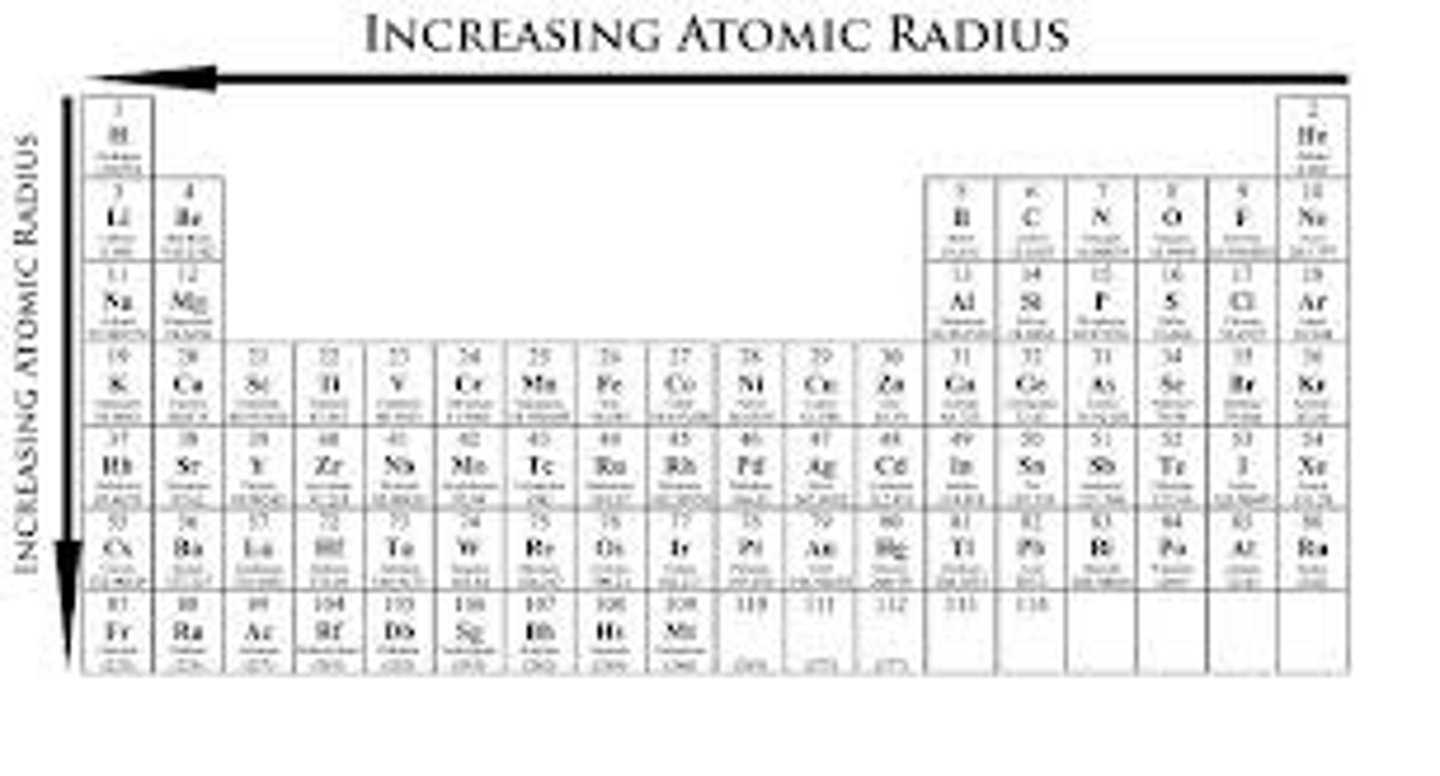
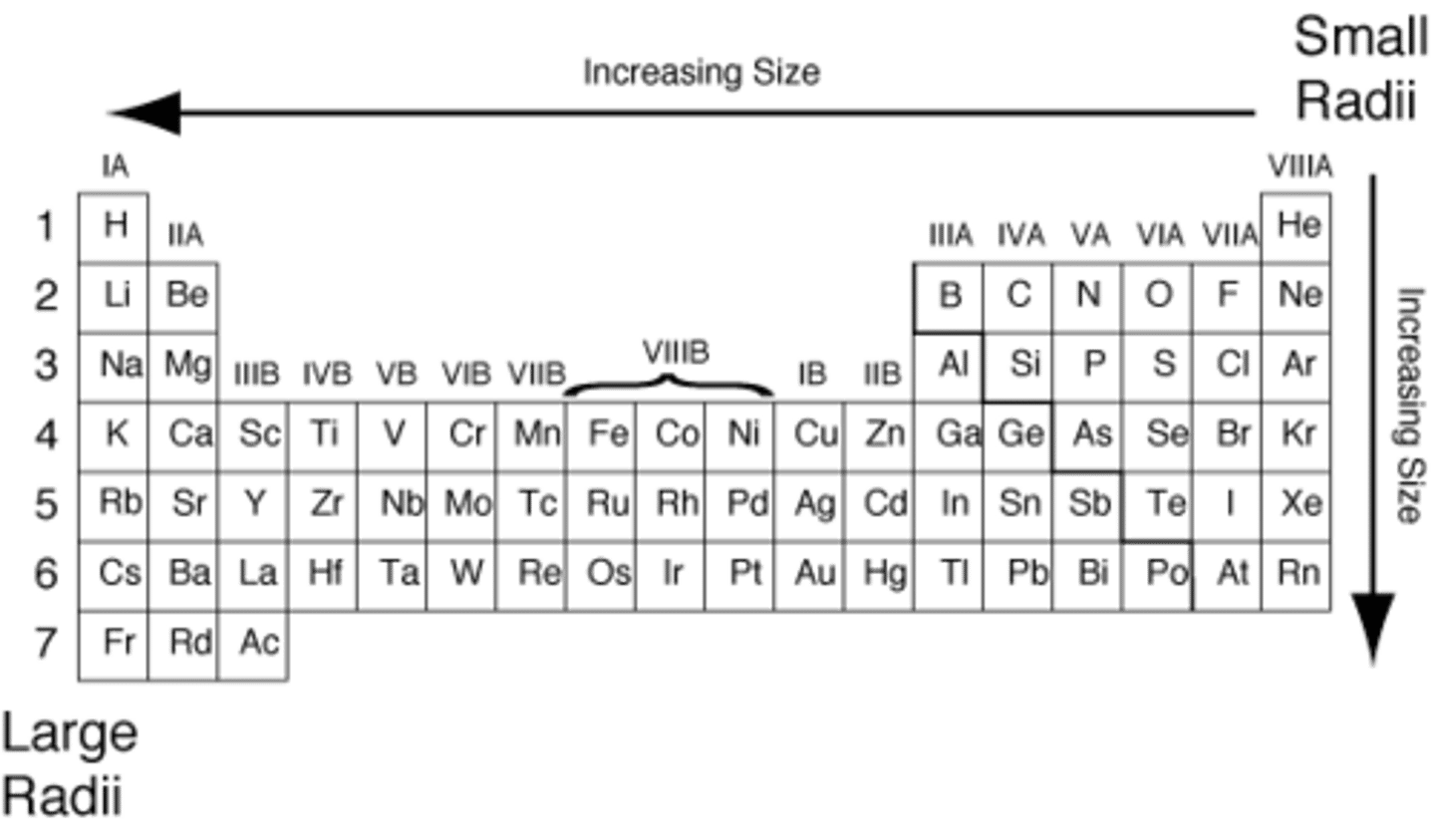
How does the atomic radius change across the periodic table and down a group?
As it moves left to right it decreases, and as it goes top to bottom it increases
Why does a atomic radius increase down a group and decrease across?
As the atomic radius increases more energy levels are added which increases the distance and as it decreases across there is a greater nuclear pull.
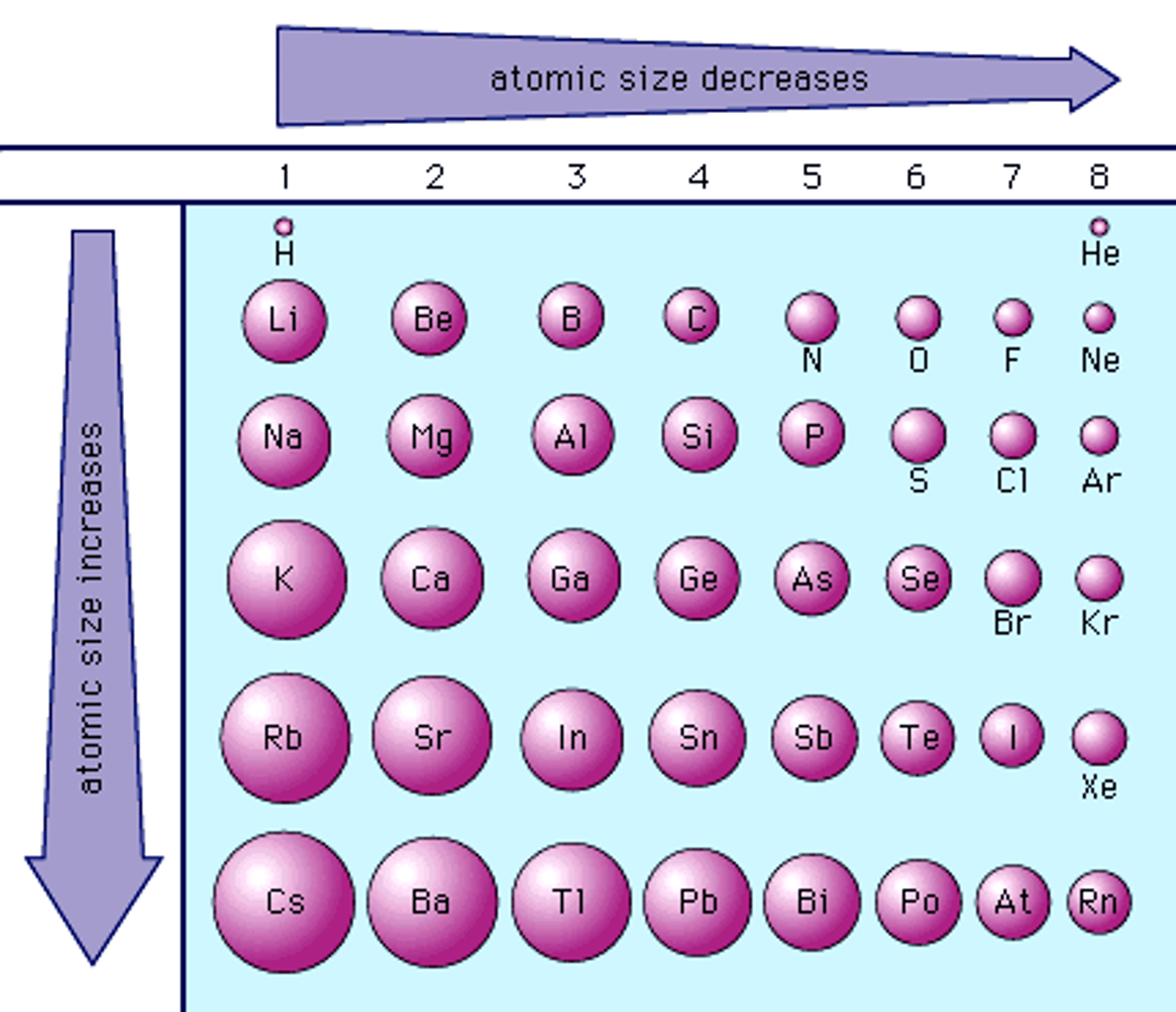
Which out of the pair has a larger atomic radius: Al and B
Al (aluminum) because it is more down so it increases.
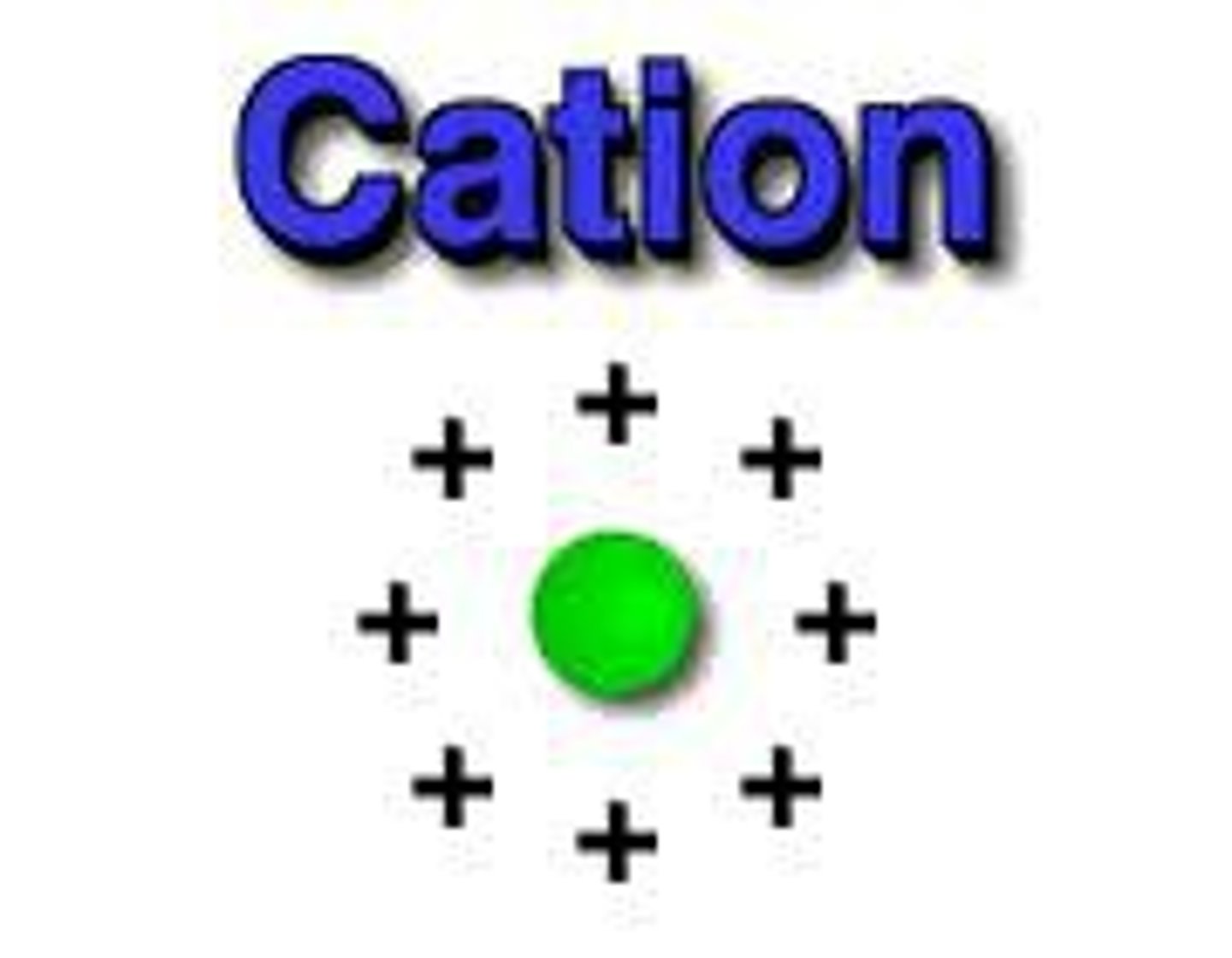
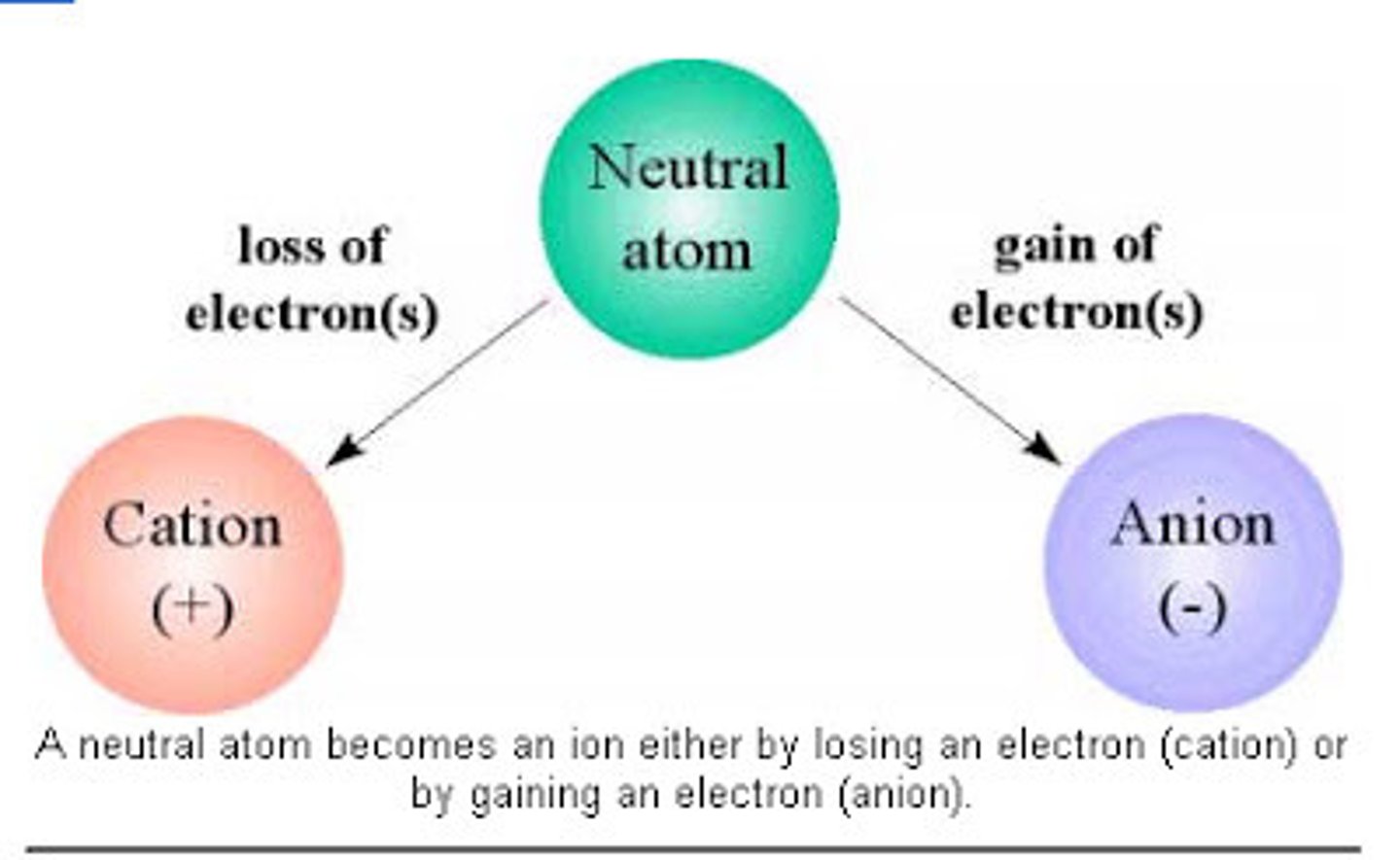
What is a cation?
It is a positively charged ion and formed when losing electrons.
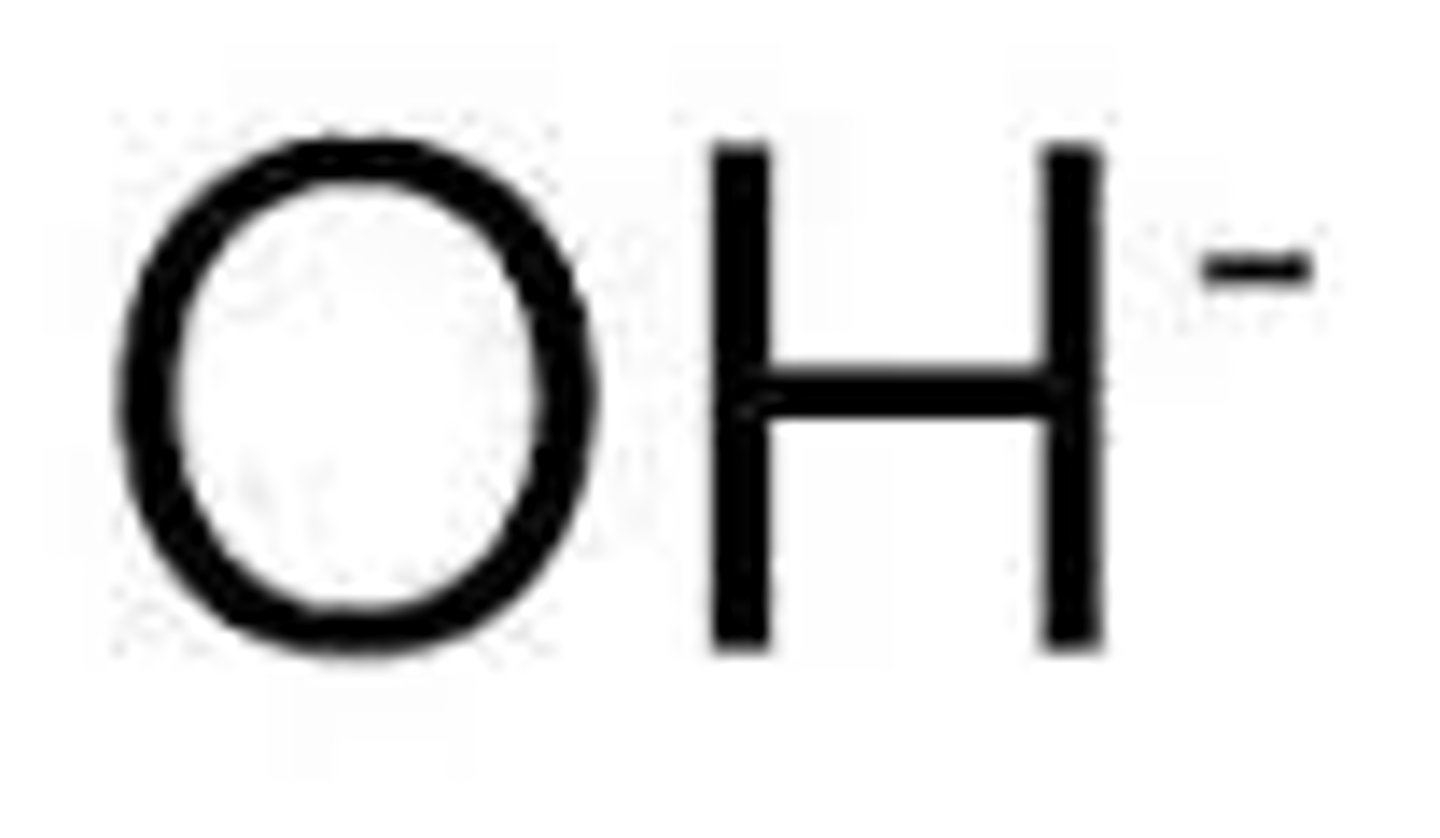
What is a anion?
It is a negatively charged ion formed by gaining electrons.
Why are anions larger than cations?
This is due to the added electrons, so there is a increase in size and repulsion.
Why are cations smaller than anions?
There is a loss of electron with a reduce of repulsion and removed energy level.
Which is larger: K+ or K?
K (Potassium) is larger due to more shells, a larger atom and more distance
Which is larger: Cl- or Cl?
Cl- is larger because it gains an electron with larger raidus
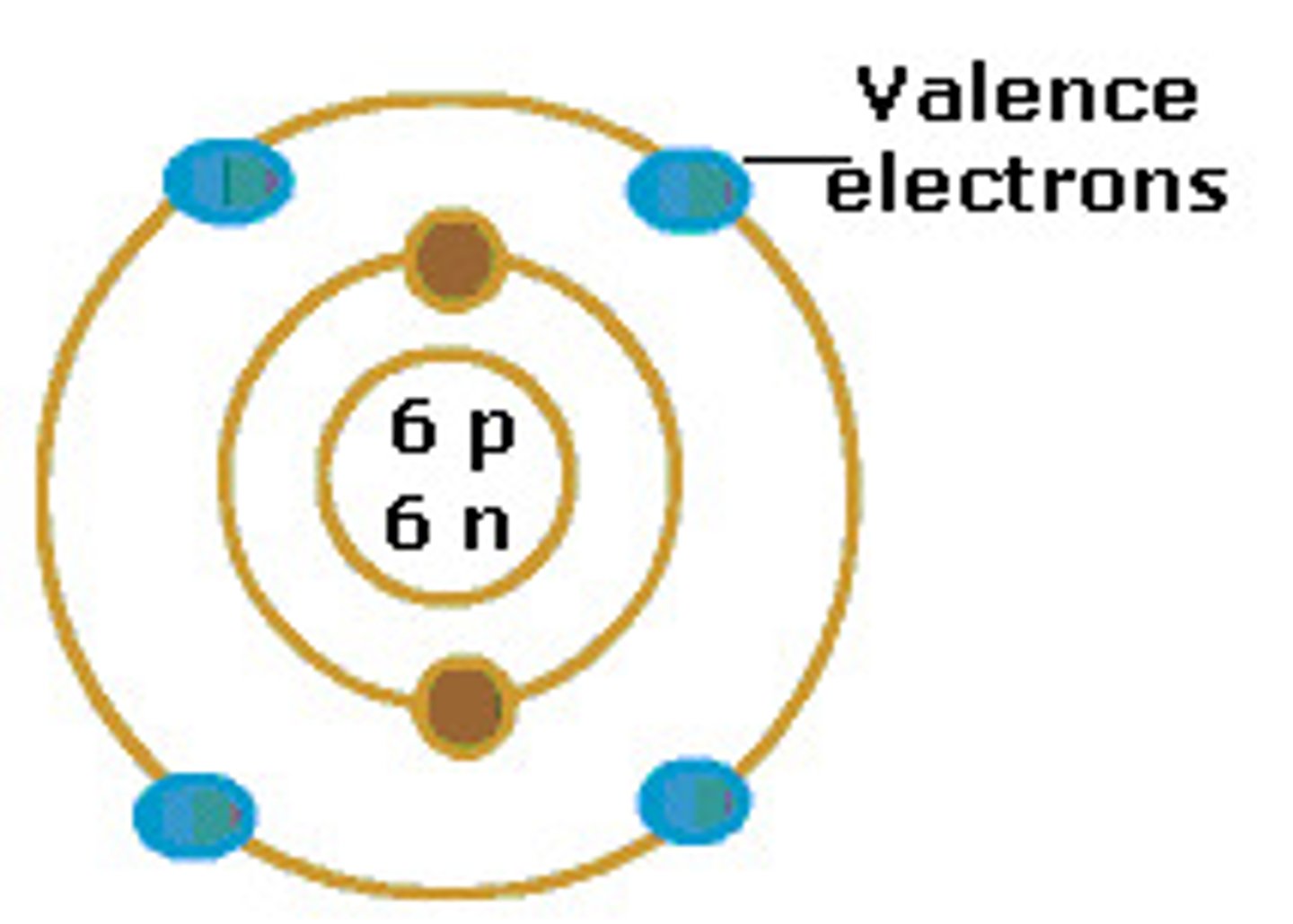
What determines an element's chemical behavior?
Its valence electrons determine it.
What trend explains why nonmetals form anions and what trend explains why metals form cations?
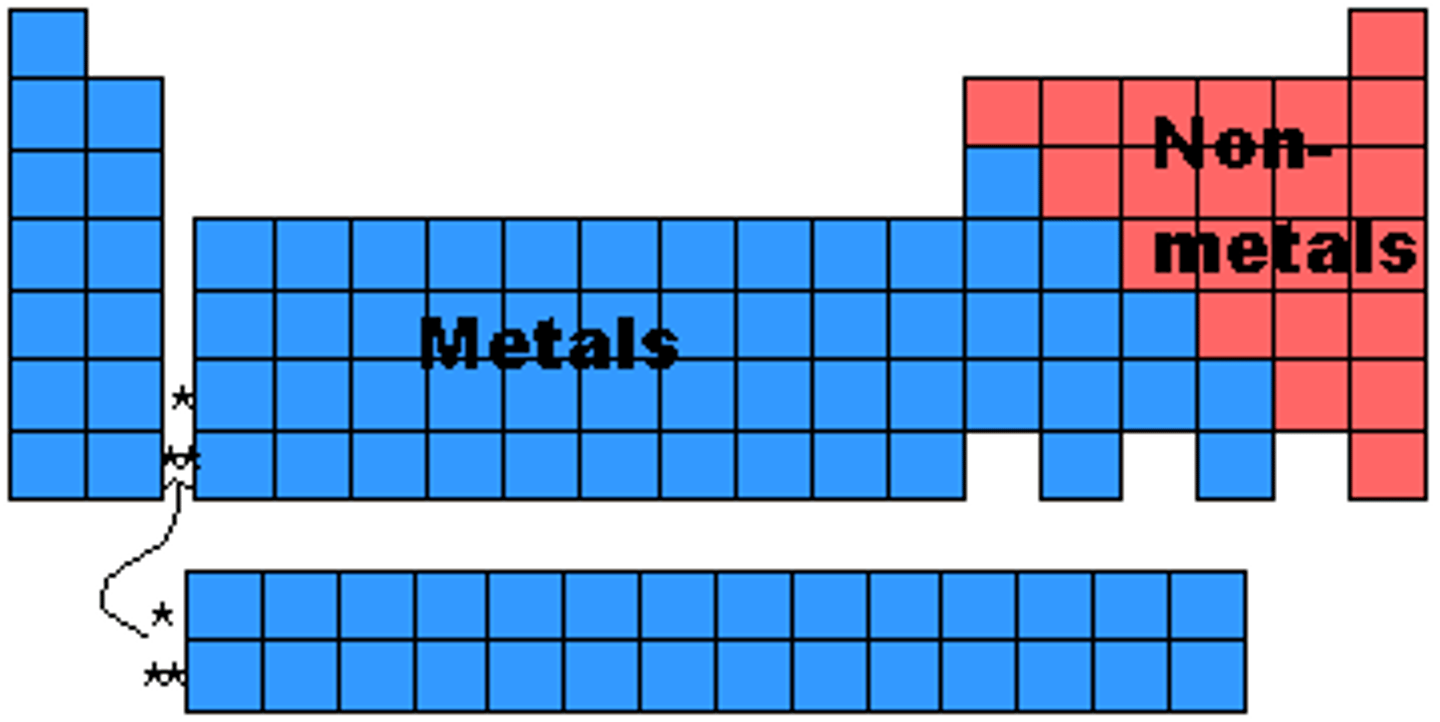
Low ionization energy explains why metals form cations and high electronegativity explains why nonmetals from anions.