Infection Control: Pathogens, Transmission, and Prevention Strategies
 Call Kai
 Learn
Learn Practice Test
 Spaced Repetition
 Match
Match Flashcards
 Knowt Play
1/50

There's no tags or description
Looks like no tags are added yet.
Name | Mastery | Learn | Test | Matching | Spaced | Call with Kai | Chat |
|---|
No analytics yet
Send a link to your students to track their progress
51 Terms
What is an infection?
The presence of a pathogen (bacteria, virus, fungi, etc.) that leads to a chain of events in the body.
What are the components of the chain of infection?
Infectious agent, reservoir, portal of exit, mode of transmission, portal of entry, susceptible host.

What is a reservoir in the context of infection?
A place where pathogens live and multiply, such as humans, animals, food, water, soil, and inanimate surfaces.
What are common portals of exit for pathogens?
Respiratory tract, GI tract, GU tract, mucous membranes, blood/bodily fluids, and transplacental.
What are the modes of transmission for infections?
Contact, droplet, airborne, and vector-borne (e.g., mosquitoes).
What is a susceptible host?
An individual who is more likely to contract an infection due to factors like immunocompromised status or breaks in skin.
What are the four stages of an infection?
1. Incubation period, 2. Prodromal stage, 3. Illness stage, 4. Convalescence.

What occurs during the incubation period of an infection?
The time interval between the entrance of the pathogen and the appearance of the first symptoms.
What is the prodromal stage of an infection?
The interval from the onset of nonspecific signs and symptoms to more specific symptoms.
What characterizes the illness stage of an infection?
The interval when the patient manifests signs and symptoms specific to the type of infection.
What happens during the convalescence stage of an infection?
The interval when acute symptoms of infection disappear, with total recovery taking days to months.
What are pathogens?
Micro-organisms or microbes that cause infection, including bacteria, viruses, fungi, prions, and parasites.
What is the treatment for bacterial infections?
Bacterial infections are treated with antibiotics.
How do viruses reproduce?
Viruses use the host's genetic machinery to reproduce.
What is the treatment for fungal infections?
Fungal infections are treated with antifungals.
What are prions?
Protein particles that can cause diseases, such as the new variant of Creutzfeldt-Jakob disease.

What are some examples of parasites?
Protozoa (e.g., malaria, toxoplasmosis) and helminths (e.g., flatworms, roundworms).
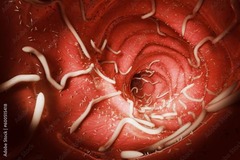
What is virulence?
The ability of a pathogen to invade and injure a host.
What is a healthcare-associated infection (HAI)?
Infections that a client acquires while in a healthcare setting, such as MRSA or E. Coli.
What is the best way to prevent infections in healthcare settings?
Hand hygiene.
What is an iatrogenic infection?
A type of HAI caused by a diagnostic or therapeutic procedure.
What factors put people at risk for infection?
Inadequate hand hygiene, immunocompromised status, recent surgery, indwelling devices, breaks in skin, poor oxygenation, impaired circulation, chronic or acute disease, poor hygiene, poor nutrition, and recent exposure to IV drug use or unprotected sex.
What are common findings in a person with an infection?
Fever, fatigue, inflammation, and specific symptoms related to the type of infection.
What are common symptoms of infection?
Fever, chills, increased pulse, increased respiratory rate, malaise, fatigue, nausea/vomiting, abdominal cramping/diarrhea, enlarged lymph nodes, inflammation.
What lab test indicates a possible infection?
WBCs greater than 10,000.
What diagnostic procedures can help determine the presence of infection?
X-rays, CT scans, MRIs, biopsies.
What is the importance of hand hygiene in infection control?
Frequent and effective hand hygiene prevents the transmission of infectious organisms.
What is aseptic technique?
A technique that is free from pathogenic organisms.
What should patients be educated on regarding immunizations?
Required and recommended immunizations and where to obtain them.
What is the purpose of isolation guidelines?
To reduce the transmission of infectious organisms through actions like hand hygiene and barrier precautions.
What are standard precautions?
Precautions that apply to all bodily fluids (except sweat) to prevent infection.
What are airborne precautions used for?
To protect against droplets smaller than 5mcg, such as measles and tuberculosis.
What is required for airborne precautions?
A private room, masks for caregivers, and negative pressure airflow.
What do droplet precautions protect against?
Droplets larger than 5mcg that travel 3 to 6 ft from the client.
What are contact precautions?
Precautions to protect against direct client and environmental contact infections.
What is a protective environment?
An intervention to protect immunocompromised clients, requiring a private room and positive airflow.
What are antipyretics used for?
To lower fever, examples include acetaminophen and aspirin.
What is antimicrobial therapy?
Treatment that kills or inhibits the growth of microorganisms.
What is multidrug-resistant infection?
Infections where pathogens adapt and become resistant to previously effective antibiotics.
What should patients be educated about regarding antimicrobial therapy?
Complete the full course and avoid overuse of antimicrobials.
What are common manifestations of localized infection?
Edema, pain or tenderness.
What are common manifestations of systemic infection?
Fever, malaise, increased pulse and respiratory rate.
What is the role of PPE in infection control?
To protect healthcare workers and prevent the spread of infection.
What should be done with contaminated laundry?
Bag it per facility policy to prevent contamination.
What is the significance of monitoring fever in patients receiving antipyretics?
To determine if the medication is effective.
What should be done if a patient has C. diff?
Use soap and water for hand hygiene, as hand sanitizer is ineffective.
What is the recommended action after contact with blood or bodily fluids?
Wash hands with soap and water.
What is the importance of maintaining medication schedules for antimicrobials?
To ensure therapeutic levels of drugs in the blood.
What should be done between procedures if large amounts of bodily fluid are encountered?
Change PPE to prevent contamination.
What is the purpose of monitoring antimicrobial levels?
To ensure therapeutic levels are maintained prior to initiating therapy.
What is the recommended practice for disposing of infectious dressing material?
Dispose into a single, nonporous bag without touching the outside.