Lec 3
 Call Kai
 Learn
Learn Practice Test
 Spaced Repetition
 Match
Match Flashcards
 Knowt Play
1/53

There's no tags or description
Looks like no tags are added yet.
Name | Mastery | Learn | Test | Matching | Spaced | Call with Kai | Chat |
|---|
No analytics yet
Send a link to your students to track their progress
54 Terms
Immunoglobin is a type of ….
… antibody. A type of MOLECULE!
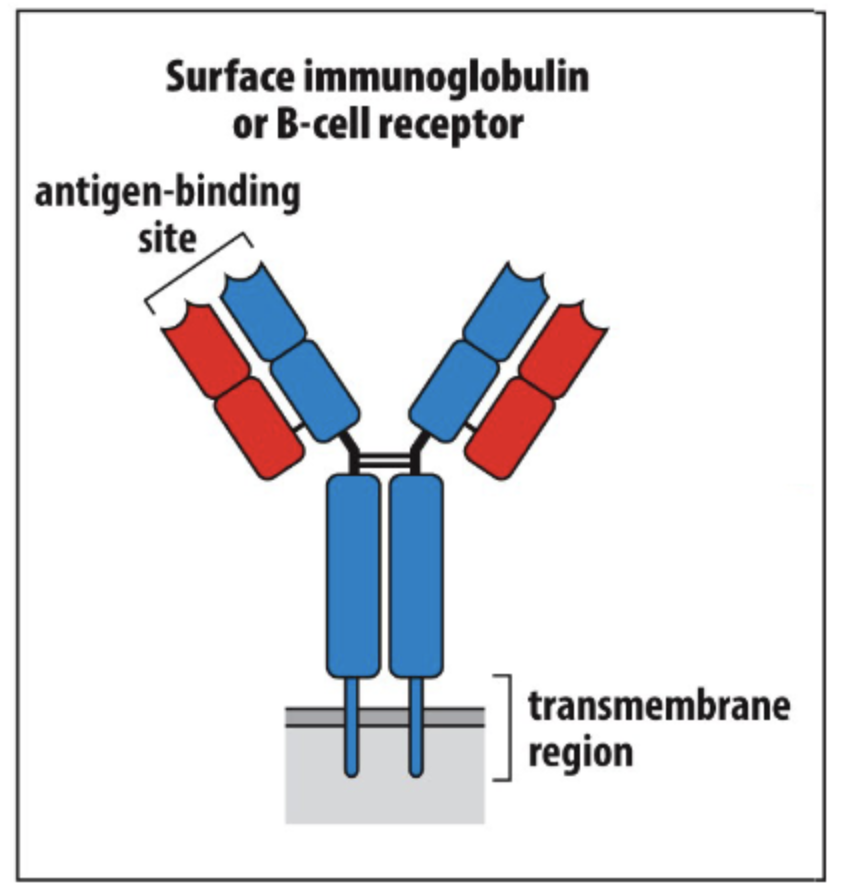
The immune system of cells and….
The immune system of cells and molecules.
What are the cells of the immune system?
Hint: white knights!
WHITE BLOOD CELLS
Why are white blood cells called white?
When you centrifuge a blood sample, it stratifies into 3 distinct layers:
55% plasma
<1% buffy coat (where the white blood cells are found)
45% erythrocytes (red blood cells)

What else is in the buffy coat?
The buffy coat contains white blood cells (leukocytes) and platelets (thrombocytes)!
Shittttt. There’s a LOT of white blood cells.
Can you name some?
macrophage
natural killer cells
monocytes
neutrophils
eosinophil
lymphocytes (CD8 T cells, B cells, regulatory T cells, CD4 T cells)

Leukocyte =
leuko = “white”
cyte = “cell”/”container”/”receptacle”/”body”
Lymphocyte =
lympho = from the lymphatic tissues (lymph nodes)
Our immune cells come from the ____ in the bone marrow.
Our immune cells come from the stem cells in the bone marrow.
The bone marrow produces all of the body’s blood cells and platelets.
Stem cells specializing, or well in general changing from one type to another, is called:
called differentiation

When a cell is choosing how it differentiates, its final specialization/end type is called the cell’s:
the cell’s FATE
T/F; Once differentiated, immune cells travel.
true! Immune cells migrate to almost every corner of the body.
Immune cells migrate to almost every corner of the body via ….
…via chemotaxis.
What are liver cells called?
Hepatocytes
What are kidney cells called?
Renal cells

T/F: Immune cells adapt to their environment within tissues.
True!
What is the macrophage in a liver called?
Kuppfer cell
What is the macrophage in a brain called?
Microglial cell
T/F: Cells are the individual units of organisms.
true!
Do all cells have a nucleus?
yes EXCEPT red blood cells.
Why don’t red blood cells (erythrocytes) have nuclei?
Red blood cells do not have a nucleus to maximize the space available for hemoglobin, which allows them to carry as much oxygen as possible throughout the body.
T/F: The nucleus contains DNA.
true!
basic bio question but if every cell contains a copy of all our genetic material, how can cells be different?
epigenetics! dna may have all our genes, but how/if they EXPRESS them is what matters!
Recall the central dogma of molecular biology:
DNA —> transcription —> RNA —→ translation —→ protein

When a gene is transcribed and translated into a protein, we say that the gene is ___________.
When a gene is transcribed and translated into a protein, we say that the gene is expressed. This is gene expression.
We define cells based on what they make. We generally focus on what is on the __________ of the cell because it’s easy to study.
We define cells based on what they make. We generally focus on what is on the SURFACE of the cell because it’s easy to study.
If a cell expresses a protein, we say it is POSITIVE for the protein. If not, NEGATIVE. Give me some examples!
Hint: blood cells are AB+, B+, A-, etc.
blood types (A+, B-, etc)
Antibody+
CD3+

B cell is antibody [+ / -] and CD3 [+ / -].
B cell is antibody+ and CD3-.

T cell is antibody [+ / -] and CD3 [+ / -].
T cell is antibody- and CD3+.

What the cell makes defines what the cells do, scientifically this can be said as:
“Phenotype defines function”
If a cell is super known for the proteins it makes AKA its markers, it will sensibly define….
If a cell is super known for the proteins it makes AKA its markers, it will sensibly define an entire LINEAGE of cells. AKA define the cell type.
The collection of everything made by the cell is called its:
The collection of everything made by the cell is called its: CELLULAR / TRANSCRIPTIONAL PROGRAM
Cells can also be divided further into subtypes. Examples?
…

Okay enough about cells…. How do immune cells interact with each other and other cells in their environment?
via MOLECULES!
Immunity after all is achieved by cells doing what with each other?
Immunity after all is achieved by cells COMMUNICATING with each other!
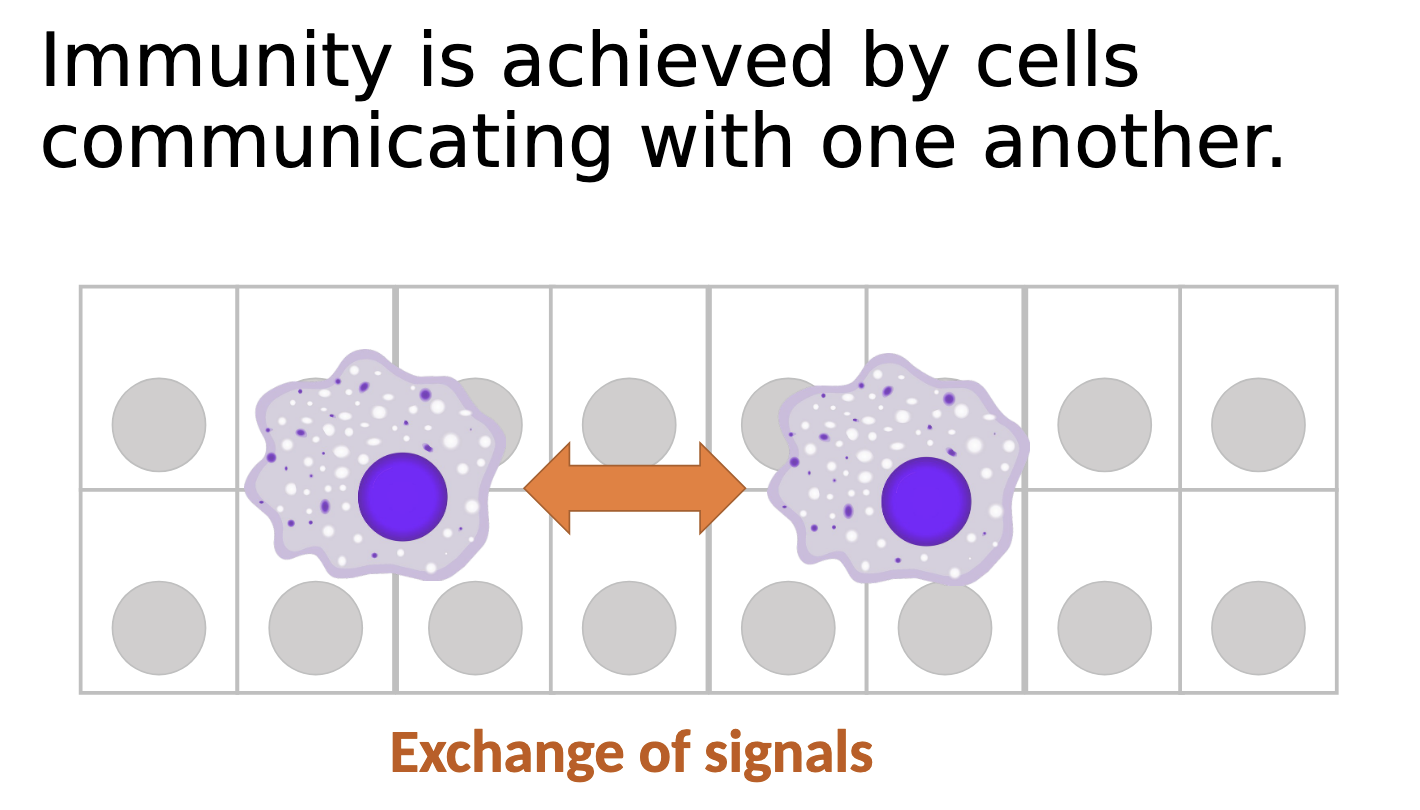
T/F: Immune cells cannot send/receive signals to non-immune cells in their environment.
FALSE. They definitely can and do 🙂

But HOW do cells communicate?
Via molecular interactions! Through receptors and ligands (aka locks and keys)!
Ok so when cells communicate, their receptors and anothers’ ligands lock-and-key, THEN WHAT?
then the cell changes how it acts BECAUSE there is a change in gene expression.
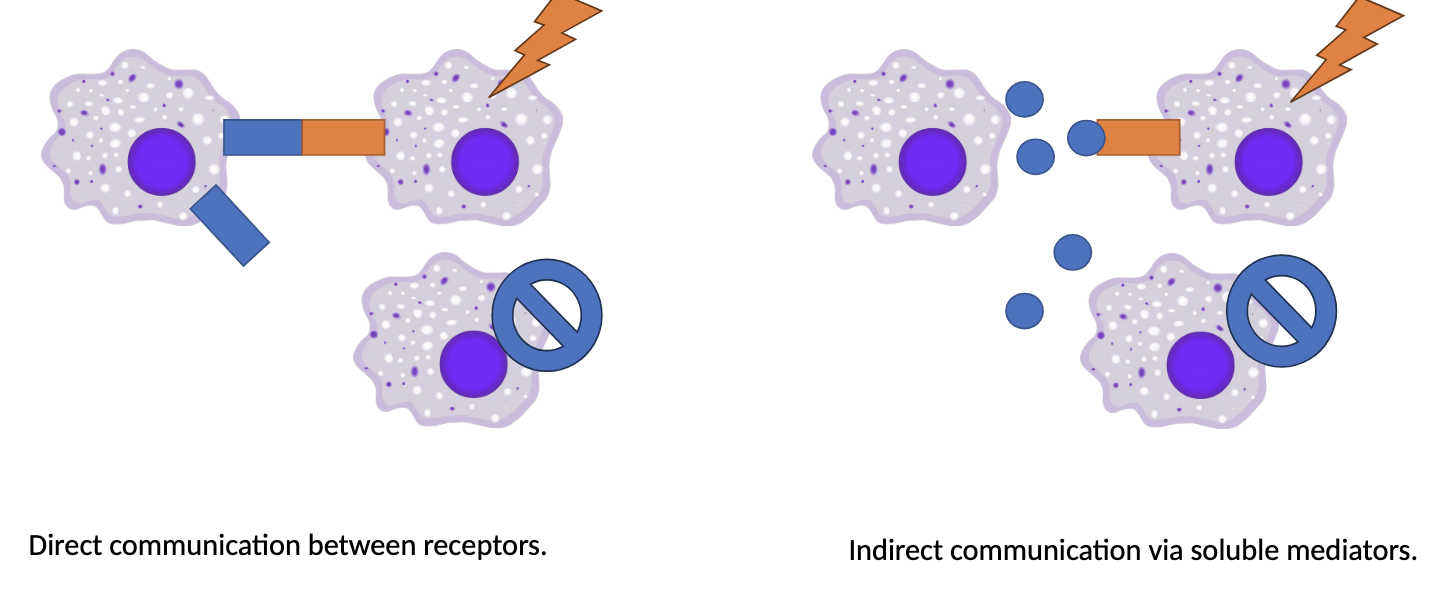
Cells can communicate via direct or indirect methods. How?
Direct: forms a synapse btwn receptors
Indirect: via soluble mediators

T/FL Cells can ONLY respond to a ligand if they express the appropriate receptor.
true!
What do we call the matching ligand:receptor pair?
A cognate pair!

A cognate pair is LIKE matching with LIKE.
….

Okay well receptors are on the surface of a cell, how does that signal make its way to the nucleus to change gene expression?
via secondary messengers who then signal transcription factors to enter the nucleus and transcribe new products
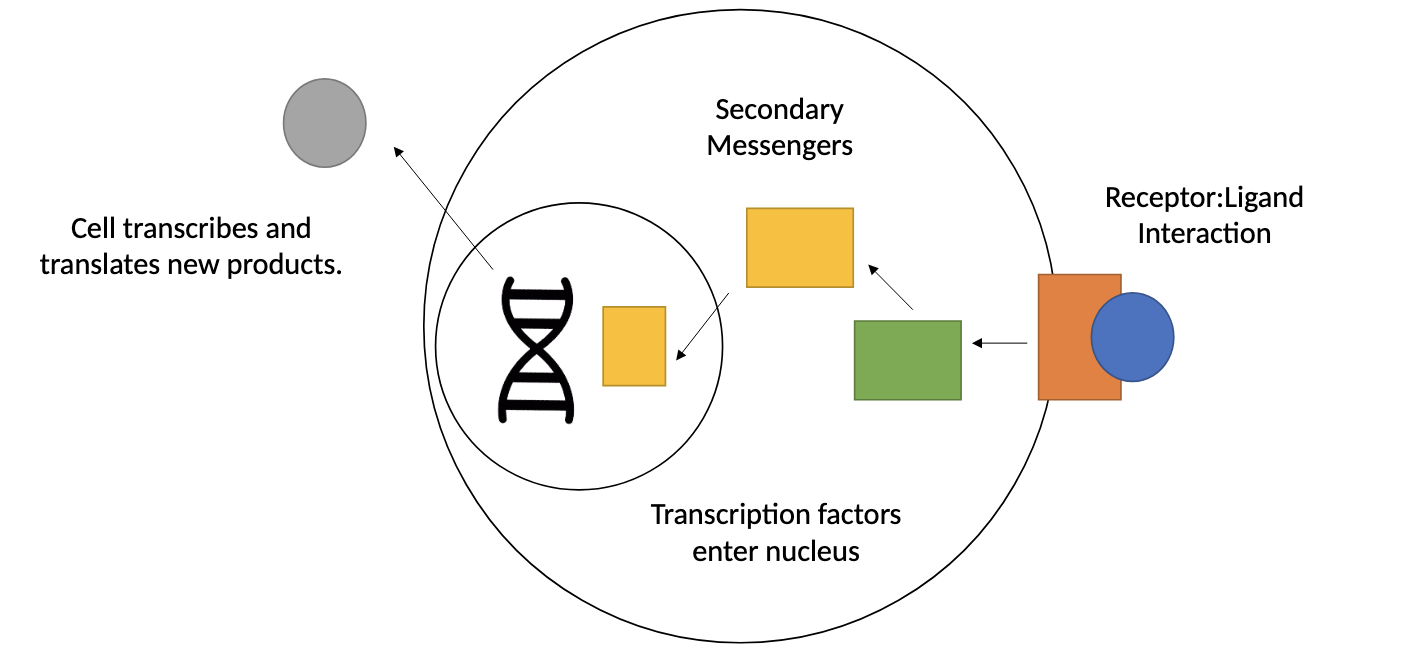
How do viruses infect cells?
Rem. viruses can only replicate if it uses the machinery of the host cell. Virus infects cell, viral DNA is detected by immune receptors inside the cell (our cells are LOOKING for viruses lol!), secondary messengers migrate to nucleus to change transcription, infected cell Infected cell changes gene expression to produce interferons, interferons signal to nearby cells to STOP transcribing
Types of receptors and their functions:
…
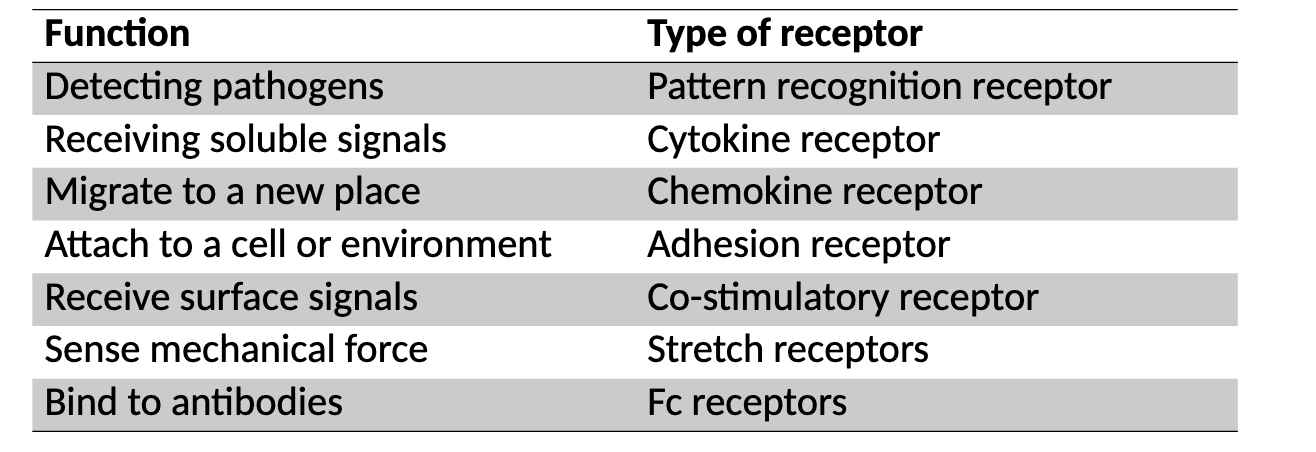
Immunologists are annoying because over time they discovered the same thing with no way of communicating to each other and so coined many different terms for the SAME discovery.
Hepatocyte growth factor is also called….
Hepatocyte growth factor = hepatocyte stimulating factor = B cell stimulating factor 2
Immunologists are annoying because over time they discovered the same thing with no way of communicating to each other and so coined many different terms for the SAME discovery.
Human growth factor is also called….
Human growth factor = human stimulating factor = B cell stimulating factor 2
What is a standardized naming system used to identify and classify the specific proteins found on the surface of human cells, particularly immune cells?
The CD system! Cluster of Differentiation or Classification Determinant
Each distinct surface molecule is assigned a unique number (e.g., CD1, CD2, CD3, CD4, etc).
Recall the CD system, helper T-cells are universally known as _____+ cells, while cytotoxic T-cells are known as _____+ cells.
Recall the CD system, helper T-cells are universally known as CD4+ cells, while cytotoxic T-cells are known as CD8+ cells.
T/F: There are over 370 CD molecules.
true!
What does the word “Cytokine” mean?
cyto = cell
kine = kinetics / movement
A cytokine is thus a signalling molecule that makes a cell move or change.
What does the word “Interleukins” mean?
inter = between
leukins = leukocytes (immune cells)
An interleukin is thus a molecule that signals between immune cells.
Do interleukins ONLY signal with immune cells?
nahhh!! they explore outside of their friend group too — they also signal with non-immune cells!!
T/F: There are approximately 50 interleukins.
IL-1, IL-2, IL-3, IL-4, etc.
True!